


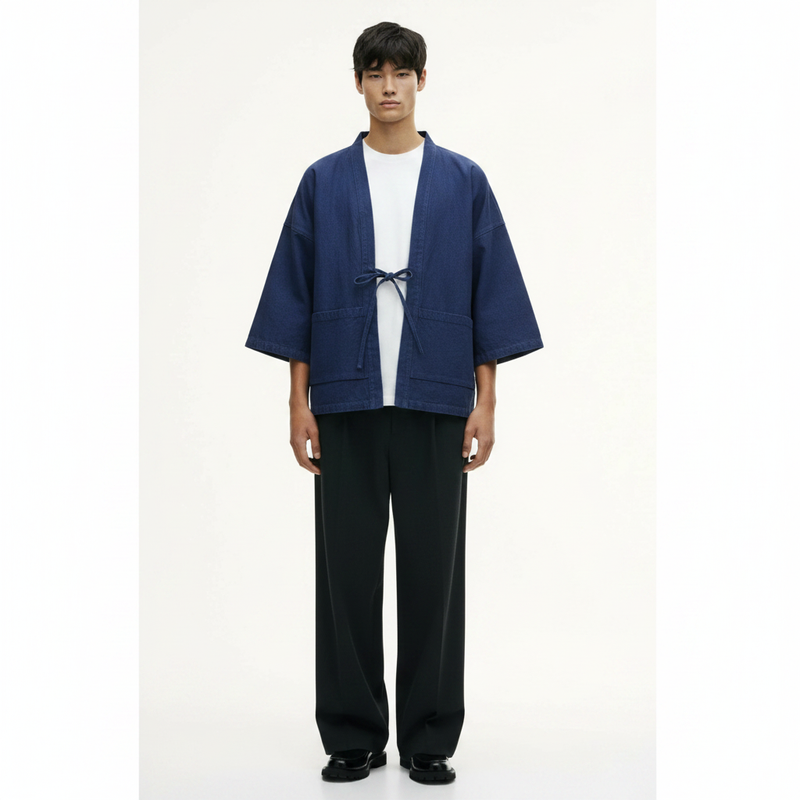


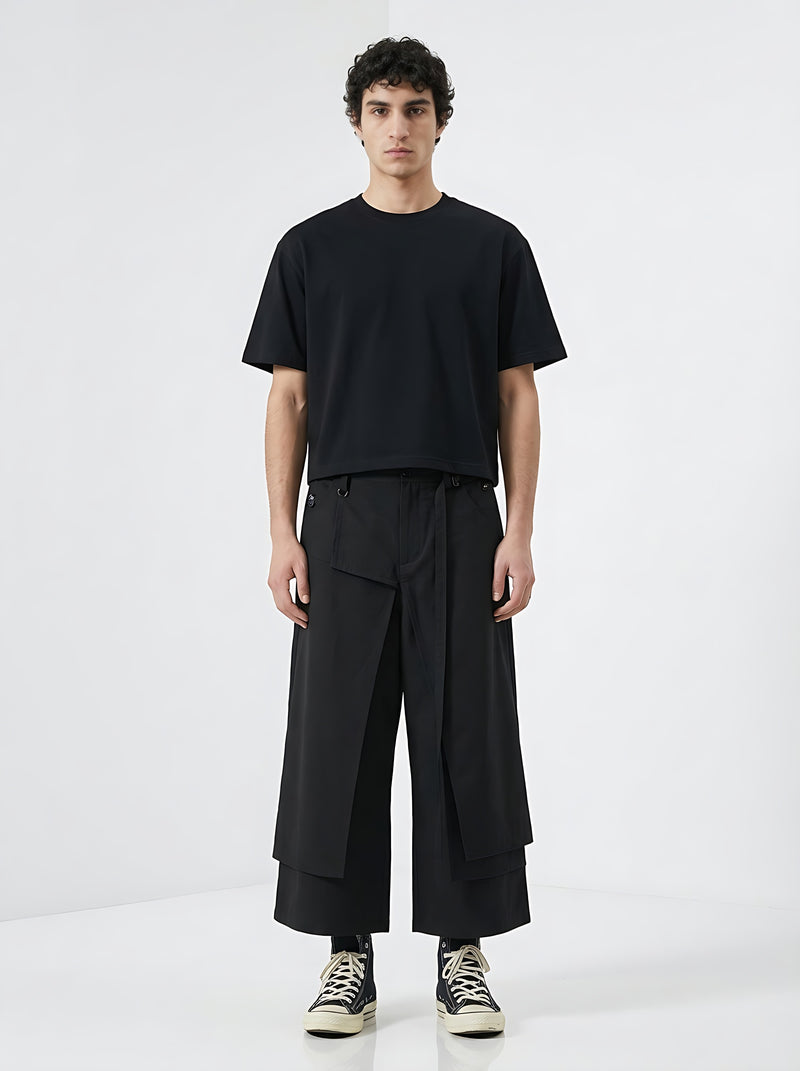
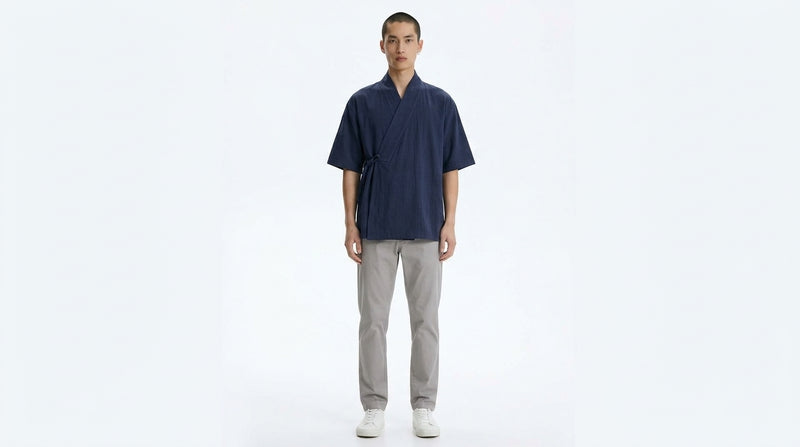
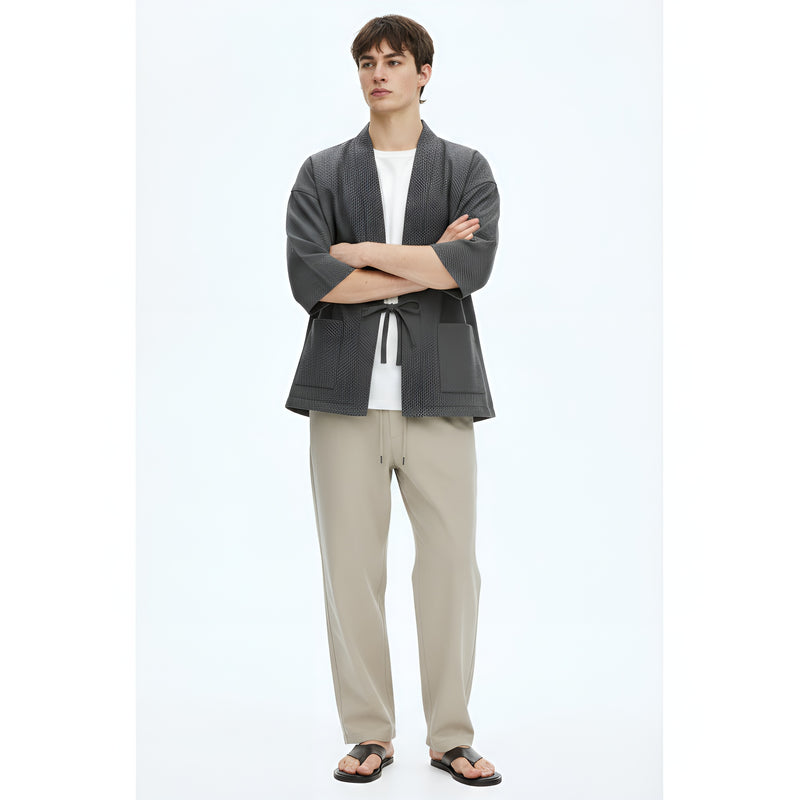
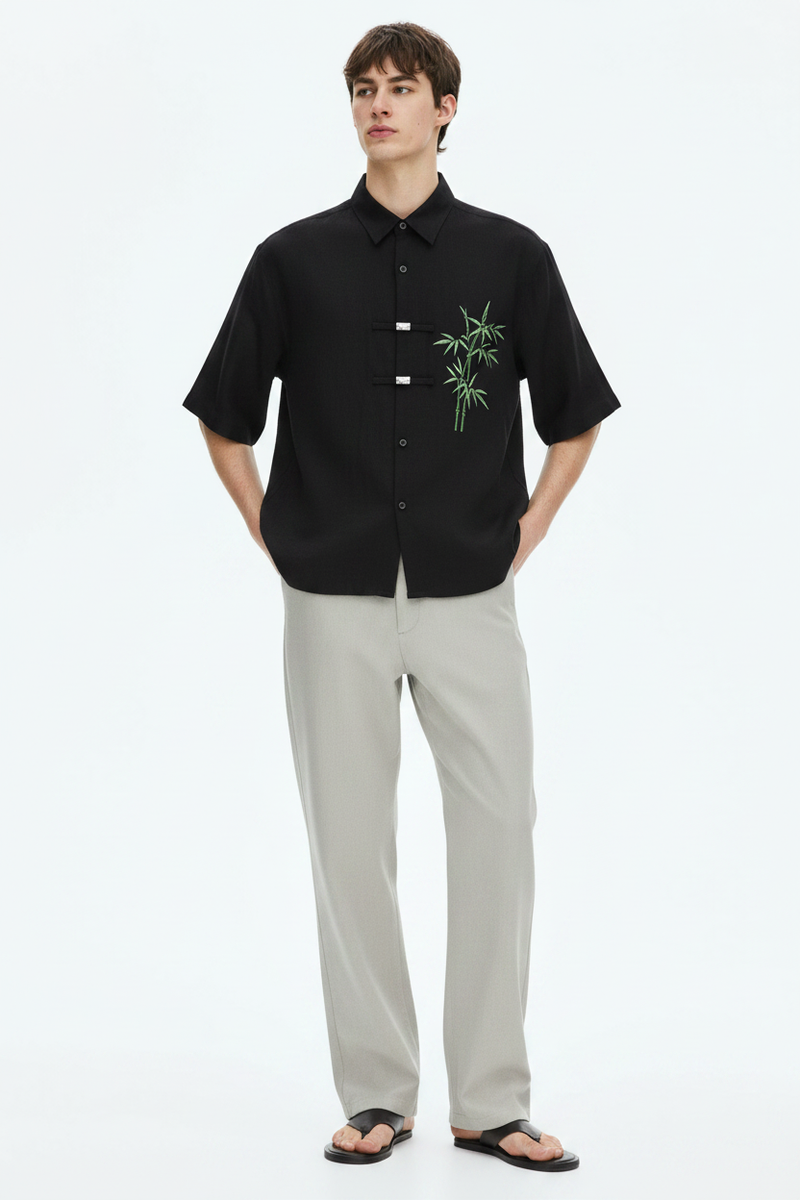


Hakama and harem pants get confused because from a few metres away they do the same thing. Both are loose, both keep the thigh free, and both read as unmistakably not a Western trouser. Up close they are built in opposite ways, and that decides where each one works.
Where the volume comes from
A hakama gets its width from pleats. A long piece of cloth is folded into pleats at the front and back and allowed to fall wide from a high waist, so the volume runs the full length of the leg.
A harem pant gets its room from the rise. The crotch is dropped, so fabric hangs below the seat instead of pulling across it. The volume sits high, through the seat and thigh, and the leg usually narrows or closes towards the ankle. Sarouel is another name for the same cut.
How they fasten
Hakama tie. Long cords wrap around the body and tie at the front, which lets one pair fit a range of waists and sit high over a kimono.
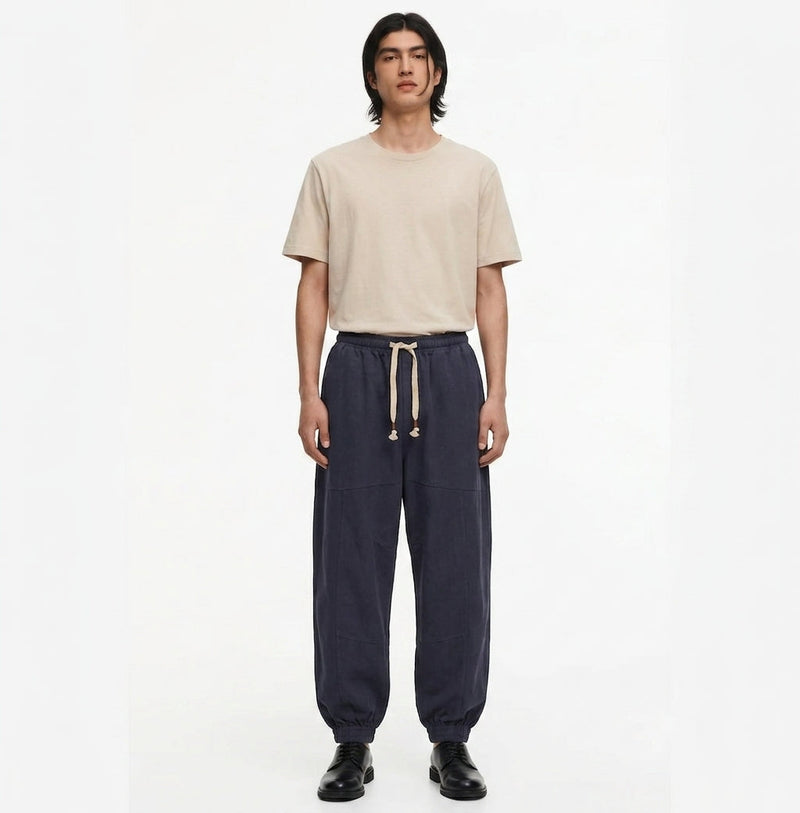
Modern harem pants mostly use elastic and drawstrings. On our own, Gelyu, Shinbo and Kireina all have elasticated waists with room to adjust. It is less ceremony and more everyday convenience.
The hem
A hakama falls open and wide to the ankle, often covering the feet. Harem pants vary. Kireina closes with an elastic cuff and Gelyu with a ribbed cuff, which gathers the volume and stops it cleanly. Pokku tapers and rolls. Shinbo finishes just short of the ankle.
Where each one is worn
Hakama are formal and traditional. They are worn over a kimono, in kendo, aikido and kyudo, by Shinto priests and at graduation ceremonies. Wearing one to the office would read as costume.
Harem pants are everyday clothes. They go with a tee and a low sneaker, and the Japanese-cut versions, pleated at the waist and closed at the ankle, read as a considered trouser rather than loungewear.
At a glance
- Volume: hakama through pleats, full length; harem through a dropped rise, high on the leg.
- Fastening: hakama tie with cords; harem mostly elastic and drawstring.
- Hem: hakama wide and open; harem cuffed, tapered or cropped.
- Setting: hakama formal and traditional; harem everyday.
Fabric does different work in each
A hakama needs cloth with enough body to hold a pleat. Traditional pairs are woven cotton or a stiff polyester blend precisely so the folds stay open down the full length of the leg; in a soft fabric the pleats collapse and the garment loses its shape entirely.
A harem cut has the opposite requirement. The volume comes from the rise, not from folded cloth, so the fabric has to fall. Linen and cotton-linen blends do this best, which is why the pairs cut this way are almost always in one of the two. A stiff fabric on a dropped rise stands away from the body and reads as a mistake rather than a shape.
How each one is sized
Hakama are sized by length, not waist. The cords wrap and tie, so one pair covers a wide range of waists, and what you actually choose is the drop from waist to ankle for your height.
Harem pants are the reverse: the hip figure decides the fit, because the waist is usually elasticated and adjusts itself. That is why a size letter tells you so little on this shape and why the hip measurement on each product page is the number worth reading.
If you want the hakama line without the hakama
This is the common case, and it is worth saying plainly: we do not sell hakama. What gets you closest to the silhouette is a wide, straight leg with the volume kept high — the cuts in Japanese pants and the fuller ones in baggy pants. A pleated waist helps, because pleats read as the hakama detail even when the leg is nothing like as wide.
What will not get you there is a dropped-rise harem cut with a cuffed ankle. It is a comfortable trouser and a good one, but the volume sits in the wrong place for the hakama look and the closed hem contradicts it.
Which one to choose
If you practise a martial art or are dressing for a ceremony, you want a hakama. For wearing out of the house, a harem pant gives you the same freedom through the seat in a shape that works with ordinary clothes. We do not sell hakama; the Japanese harem pants collection has five dropped-rise cuts, and what samurai pants are called covers the hakama side in depth.