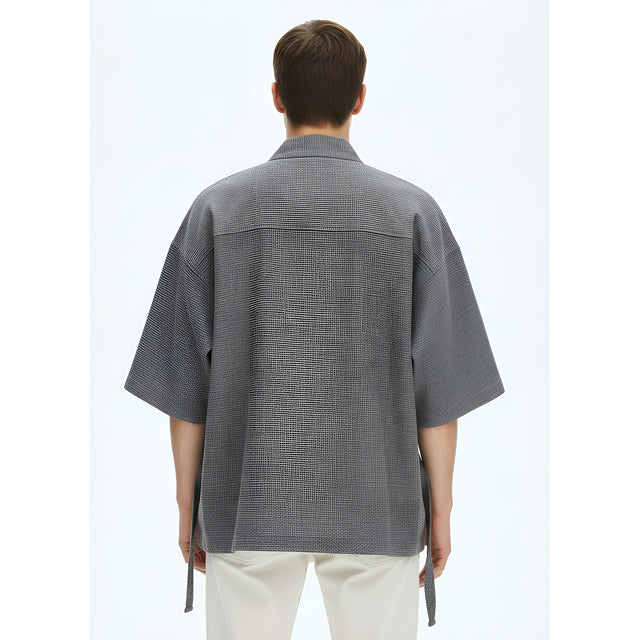
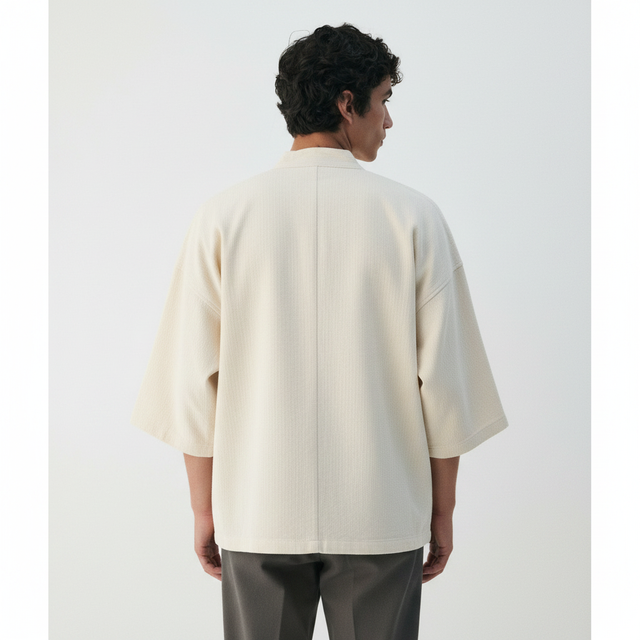
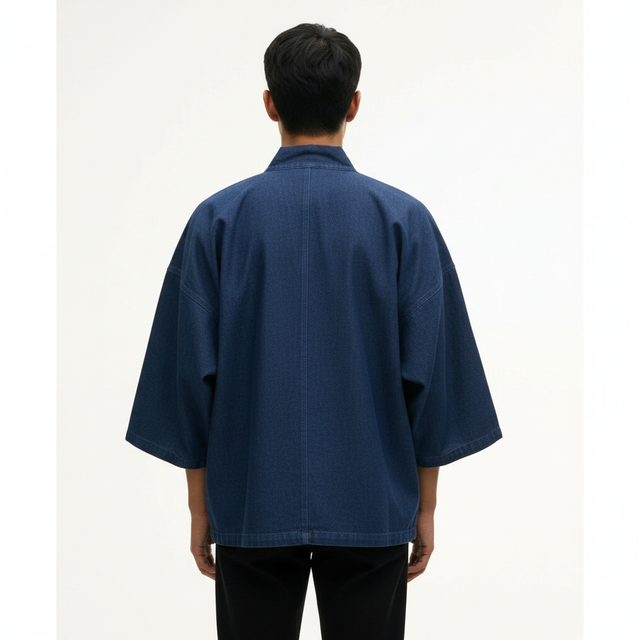
Noragi means field clothes. For centuries it was what farmers, fishermen and rural workers in Japan wore every day: a straight jacket in hard-wearing cotton, usually dyed with indigo and often reinforced with sashiko stitching where it took the most wear. It was made to be worked in, repaired and worn for years.
The defining detail is the closure. A noragi has no buttons. The front crosses over and is held by ties, which lets it sit flat, move with the body and adjust as you layer underneath.
The pieces here
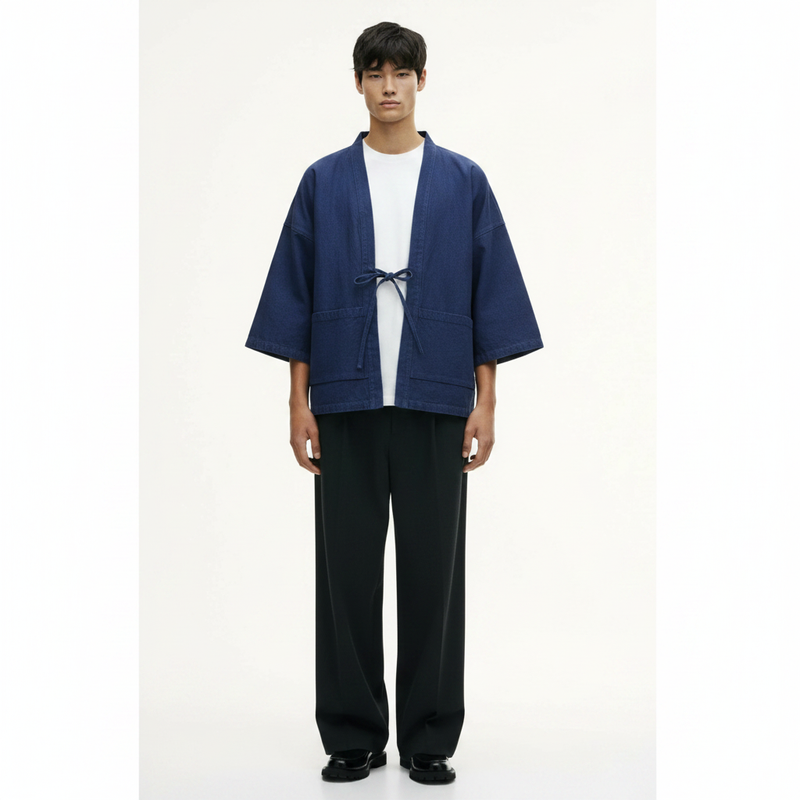
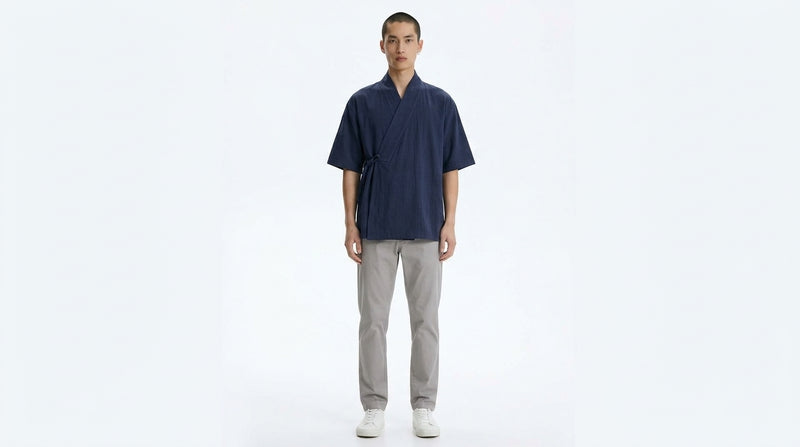
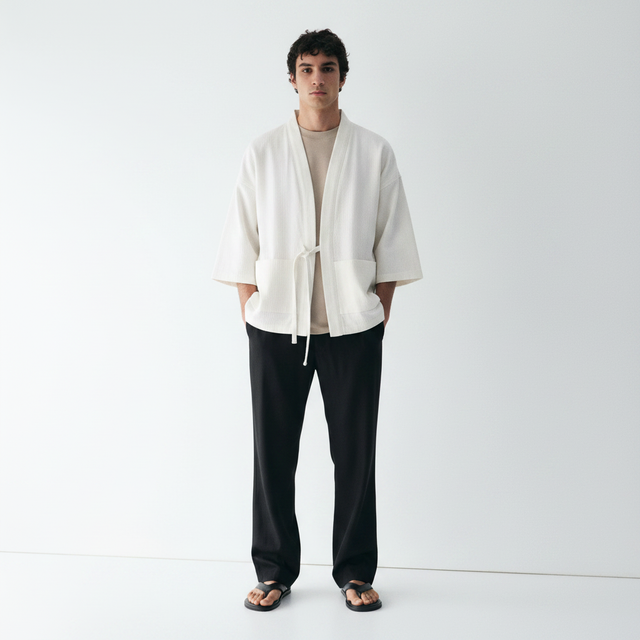
The Indigo Dyed Noragi Jacket is the traditional version. The front crosses over and fastens with a single inside tie, with two square patch pockets and wide three quarter sleeves. It is heavy cotton, dyed deep and left to fade at the seams with wear, so it changes the longer you own it.
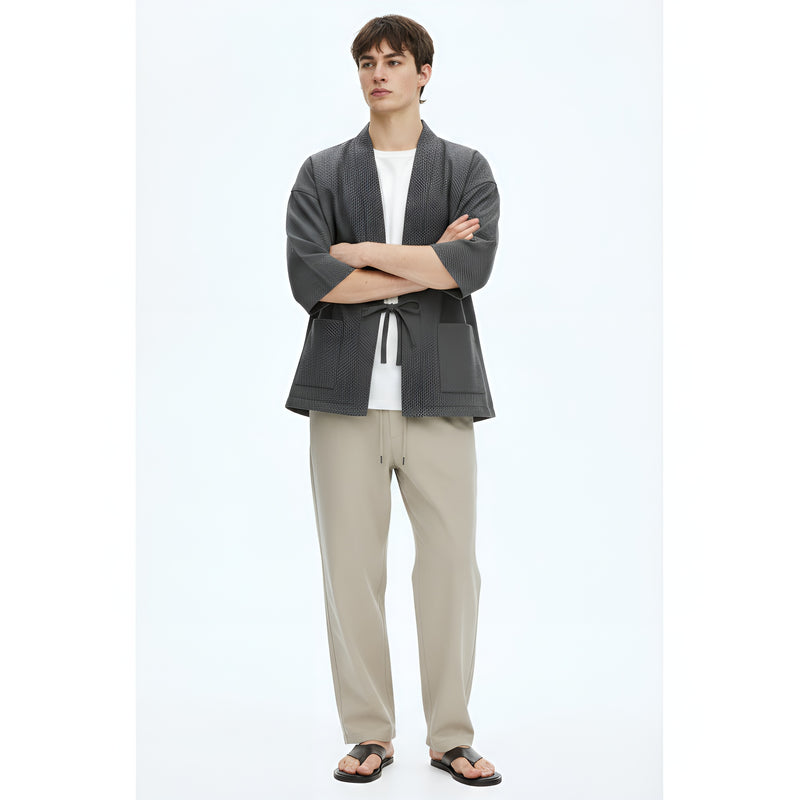
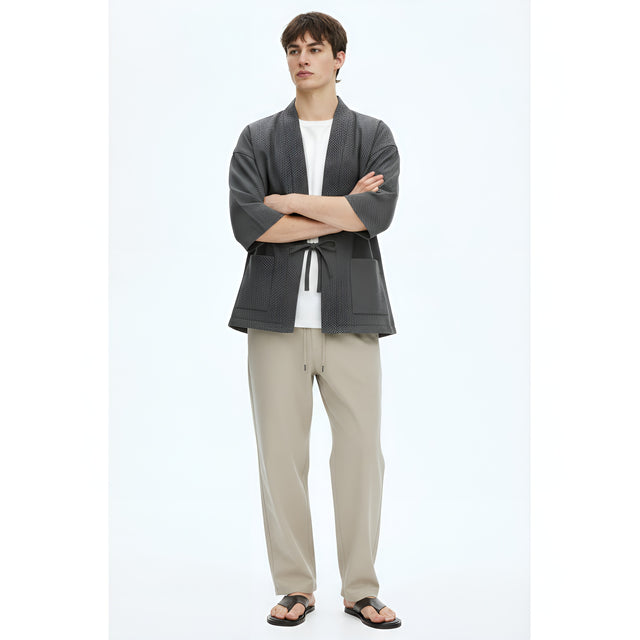
The Herringbone Noragi Jacket uses the same crossover front and inside tie, with patch pockets at the hip and three quarter sleeves cut wide. The cotton is woven in a fine herringbone and washed soft, so the weave reads as texture rather than pattern, and it is light enough to keep on indoors.
The Reversible Textured Haori Jacket is cut as a haori rather than a noragi, with a shawl collar, but it shares the tied front. The cotton linen has a crinkled surface that holds it away from the body in warm weather, and it is reversible, so the plainer face can be worn out.
Noragi, haori or kimono jacket
They get mixed up constantly. A noragi is a work jacket that ties shut. A haori is a short formal jacket traditionally worn open over a kimono. A men's kimono jacket is a modern everyday layer that borrows the kimono's sleeves and front. What is a noragi jacket goes through the differences in full.
How to wear one
Layer it over a tee with wide trousers, the way it was worn in the field. The cut is relaxed, so it sits over a light knit too. With Japanese pants the whole outfit reads as one silhouette; with jeans it works as a softer alternative to a denim jacket.
Caring for it
All three machine wash cold. The indigo and herringbone jackets wash with like colours and can hang dry or tumble dry low; the reversible jacket takes a gentle cycle, hangs to dry, and irons best while slightly damp.
Measurements come from the manufacturer's flat size table for each garment, converted to centimetres and mapped onto one size ladder. Available for 3 of the 3 garments here, last checked 2026-09-16. How we measure.
The traditional work jacket of rural Japan, whose name means field clothes. It has a straight body and a crossover front held by ties instead of buttons.
How does a noragi close?
With ties. The Indigo Dyed and Herringbone Noragi jackets both cross over at the front and fasten with a single inside tie.
Will the indigo fade?
Yes, gradually. The Indigo Dyed Noragi Jacket is dyed deep and left to fade at the seams with wear, which is part of how indigo cotton ages.
What is the difference between a noragi and a haori?
A noragi is a tied work jacket. A haori is a short jacket traditionally worn open over a kimono as more formal dress.






 XSSM+1Reversible Textured Haori Jacket
 XSSM+1Herringbone Noragi Jacket
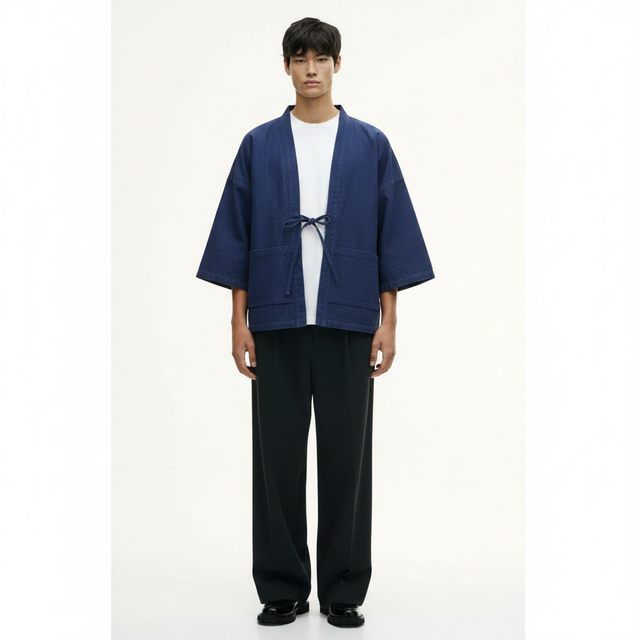 XSSIndigo Dyed Noragi Jacket