






The trousers people call samurai pants are hakama. They are wide, pleated trousers tied at the waist and worn over a kimono, and they have been part of Japanese dress for well over a thousand years. The samurai wore them, which is where the nickname comes from, but so did the imperial court, and today they are worn by martial artists, Shinto priests and graduating students.
What hakama are
Hakama are made from a long piece of cloth pleated at the front and back and tied around the body with long cords. The pleats give them volume without weight, and the ties let one pair fit a range of waists. They sit high, over the kimono, and fall wide to the ankle.
They were designed for movement. A mounted warrior needed legs that did not bind, and a pleated trouser that hid the feet made footwork harder for an opponent to read. That practical origin is why so much modern Japanese clothing still puts its room in the same places.
The two kinds of hakama
There are two forms, and the difference is between the legs.
- Umanori hakama have divided legs, like very wide trousers. The name means horse riding, and these are the samurai version.
- Andon hakama are undivided, closer to a long pleated skirt. They are easier to wear over a kimono and became common in everyday and ceremonial dress.
From a distance the two look almost identical, which is exactly the point of the pleats.
What the seven pleats mean
A traditional hakama has seven pleats, five at the front and two at the back. In the martial arts they are traditionally said to stand for the virtues of the samurai code, usually given as benevolence, honour, courtesy, wisdom, sincerity, loyalty and piety. Teachers differ on the exact list, but the idea that the garment carries a code of conduct is a large part of why it is still worn in the dojo.
Who still wears hakama
Hakama are standard dress in kendo, aikido, iaido and kyudo. Shinto priests and shrine attendants wear them, as do some performers of traditional theatre. And every spring, many women in Japan wear hakama over a kimono to their university graduation, a tradition that goes back to the first women students of the late nineteenth century.
Hakama and the Japanese pants you see now
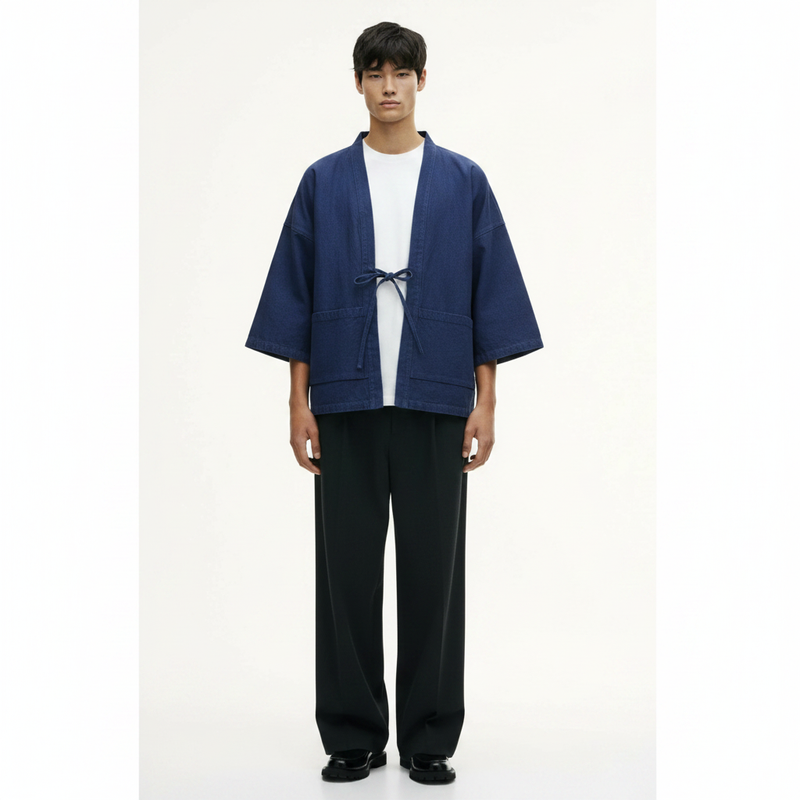
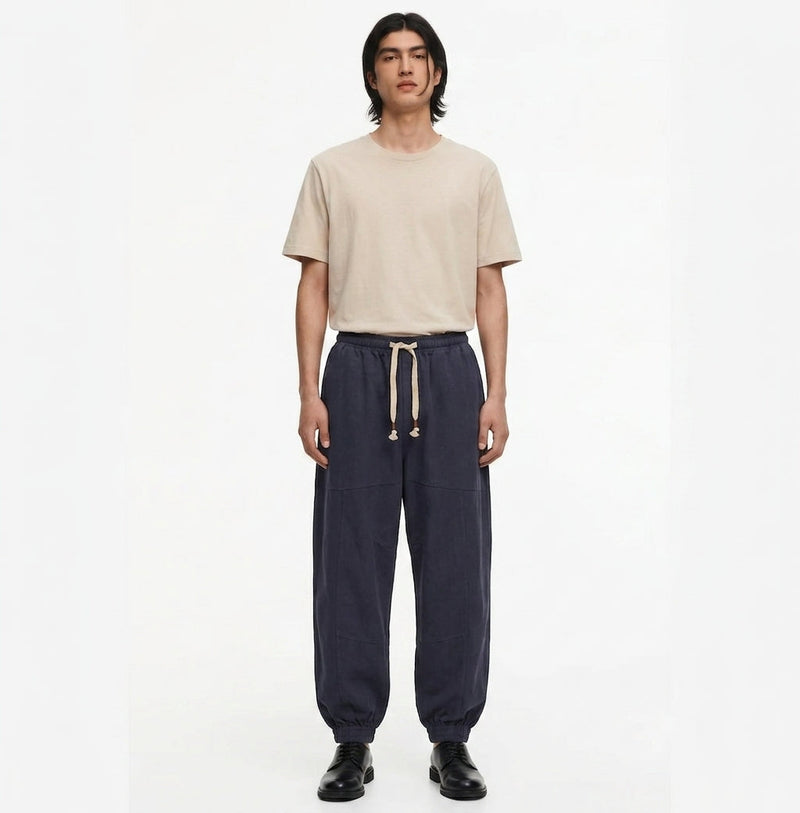
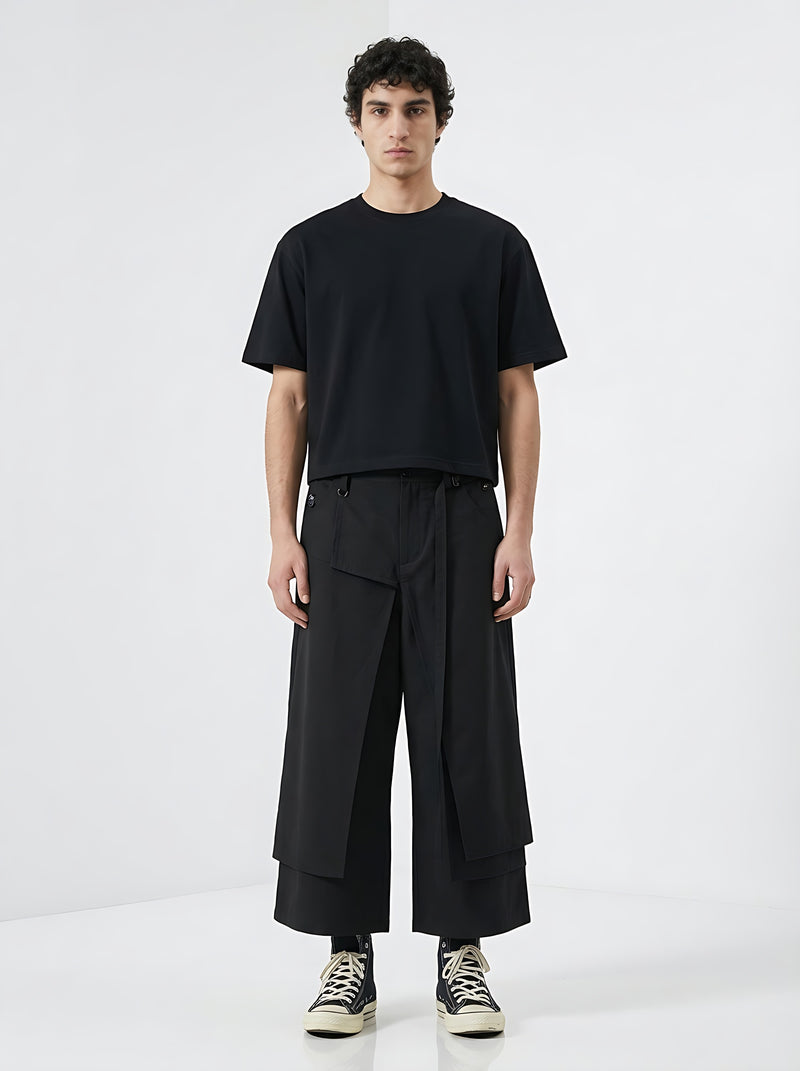
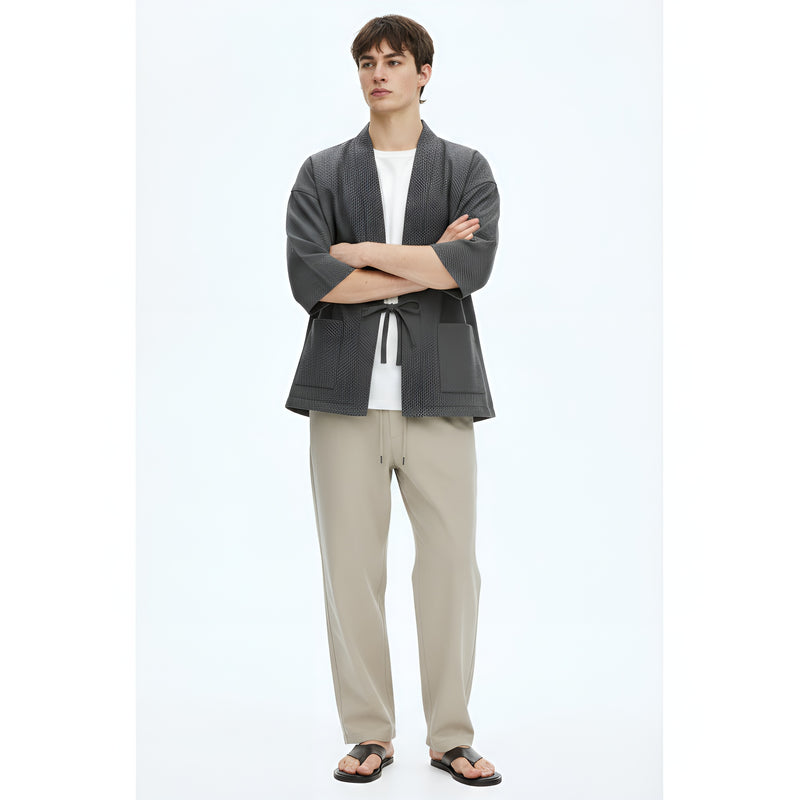
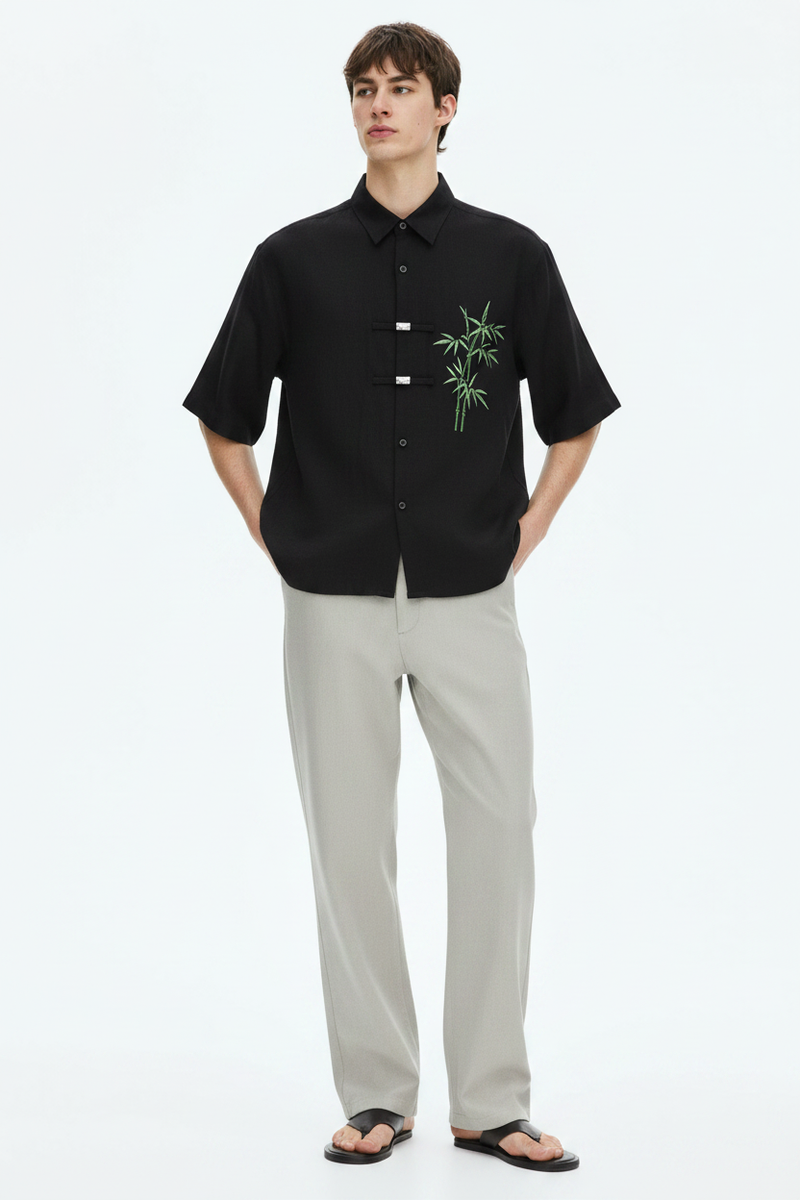
Very few people wear a traditional hakama day to day, but the shape never left. Modern Japanese pants borrow its proportions: room through the seat and thigh, a leg that falls rather than clings, and a waist that ties or gathers instead of fastening tight. The Japanese pants you find in streetwear are mostly harem, wide-leg and cropped cuts built on that logic.
We do not sell hakama. The closest shapes we carry are the wide and baggy cuts and the dropped-rise harem pants, which take the same room through the seat without the pleated front. Hakama against harem pants sets out exactly where the two differ.
Other traditional Japanese trousers
Hakama are not the only ones. Samue are the loose drawstring trousers of Zen monks, worn for temple work and now common as lounge wear. Tobi trousers belong to the construction workers who work at height, ballooning to below the knee and narrowing at the calf. Monpe are loose farm trousers gathered at the ankle. Between them they explain nearly every Japanese trouser shape in use today.