




Short answer: a hakama is a pair of wide, pleated trousers worn over a kimono in Japan. It has seven pleats, five at the front and two at the back, a stiffened back panel called the koshiita, and long ties called himo in place of a waistband. Samurai wore it for riding and ceremony, and kendo, iaido, aikido and kyudo still train in it today.
We sell everyday hakama pants, so this guide is written by a seller. It explains the garment first and the pairs we stock last.
Shop the hakama pants, or compare shops and prices in our hakama buying guide.
Where the hakama comes from
Hakama (袴) simply means the trousers worn over a kimono. Wide, pleated trousers of this kind reached Japan from the Asian mainland more than a thousand years ago, and by the Heian period (794 to 1185) they were part of court dress. Warriors adopted them because the divided legs let them ride. In the Edo period (1603 to 1868) a samurai's formal outfit, the kamishimo, paired a stiff sleeveless vest with matching hakama.
When samurai dress disappeared in the late nineteenth century, the hakama stayed. Schoolgirls in the Meiji era wore a skirt-like hakama over their kimono, which is why Japanese women still wear one to their university graduation. Men kept it as formal wear, and the martial arts kept it as a uniform.
The parts of a hakama
| Part | What it is |
|---|---|
| Pleats (hida) | Seven deep pleats, five on the front and two on the back. They run the full length of the leg. |
| Koshiita | A stiffened board sewn into the back at the waist. It sits against the lower back and keeps the posture upright. |
| Front himo | The long front ties. They wrap round the waist and cross at the back before tying at the front. |
| Back himo | The shorter ties attached to the koshiita. They come round to the front and tie over the front himo. |
| Legs (umanori) | Most hakama are divided into two very wide legs. An undivided, skirt-like hakama is called andon bakama. |
The pleats are often said to stand for seven virtues of the samurai code. This story is popular in dojos. It is a later explanation, not a documented reason for the cut.
What the seven pleats do
The pleats give the hakama its volume without bulk at the waist. When you stand still the fabric falls straight and the trousers read like a long skirt. When you step, the pleats open and the split between the legs shows. In kendo the width also hides the footwork from an opponent.
Types of hakama
| Type | Shape | Worn for |
|---|---|---|
| Umanori bakama | Divided into two wide legs. The name means "horse-riding hakama". | Martial arts, men's formal wear, everyday hakama pants |
| Andon bakama | Undivided, like a long pleated skirt | Women's graduation dress, some formal and stage wear |
| Karusan bakama | Full at the hip, narrowed below the knee | Work and travel, the ancestor of Japanese work trousers |
| Formal striped hakama | Umanori cut in striped silk (sendaihira) | Weddings and ceremonies, worn with a crested black kimono and haori |
Who wears a hakama today
- Martial artists. Kendo, iaido, kyudo and naginata practitioners train in a hakama. In many aikido dojos you wear one from your first black belt, in others from the first day.
- Grooms and guests at formal events. The most formal men's outfit, montsuki haori hakama, is a black crested kimono, a haori and a striped hakama.
- University graduates. Women wear a hakama over a bright kimono to their graduation ceremony.
- Shrine staff. Shinto priests wear hakama, and shrine maidens (miko) wear red ones.
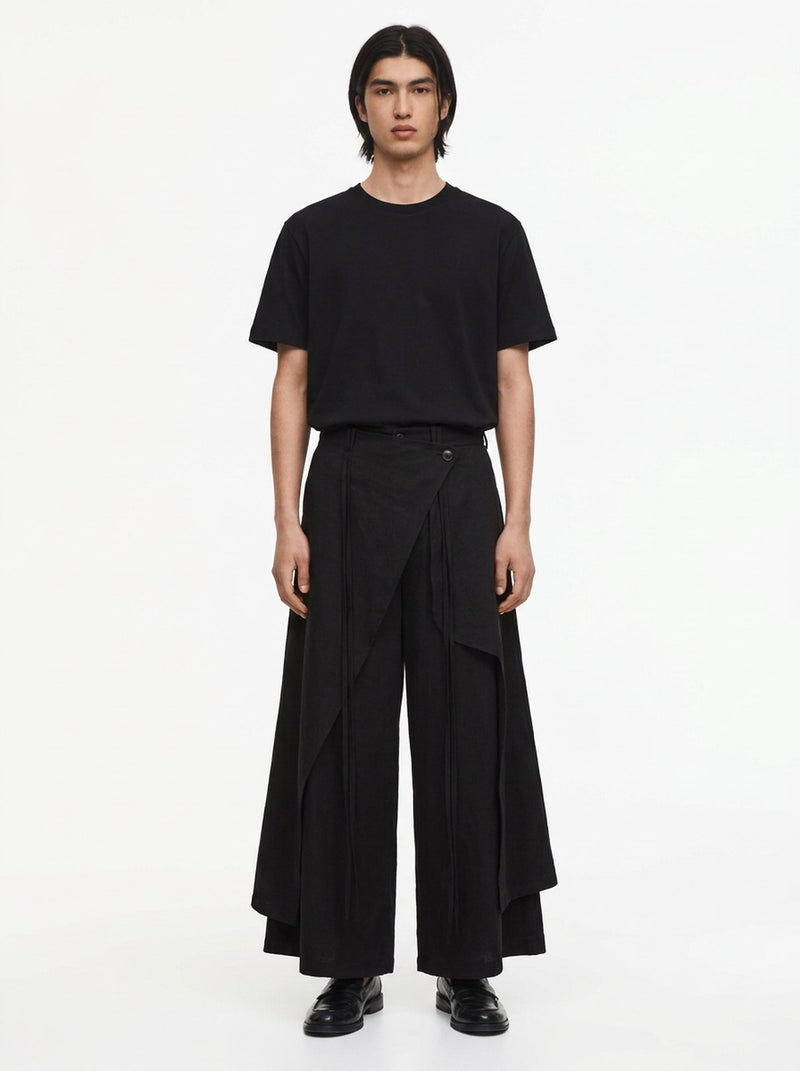
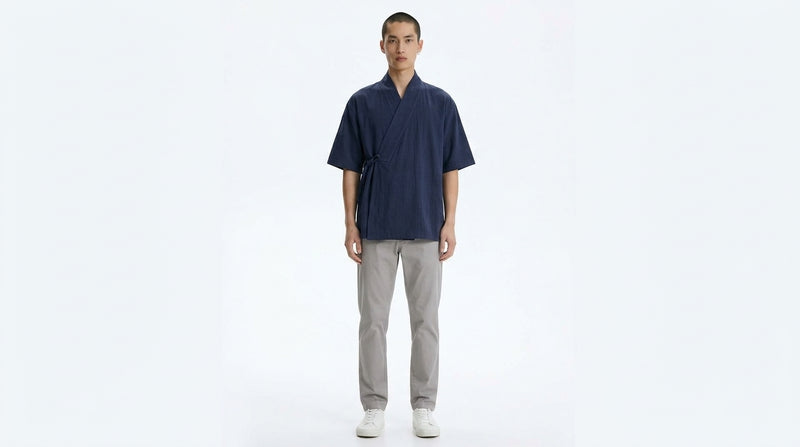
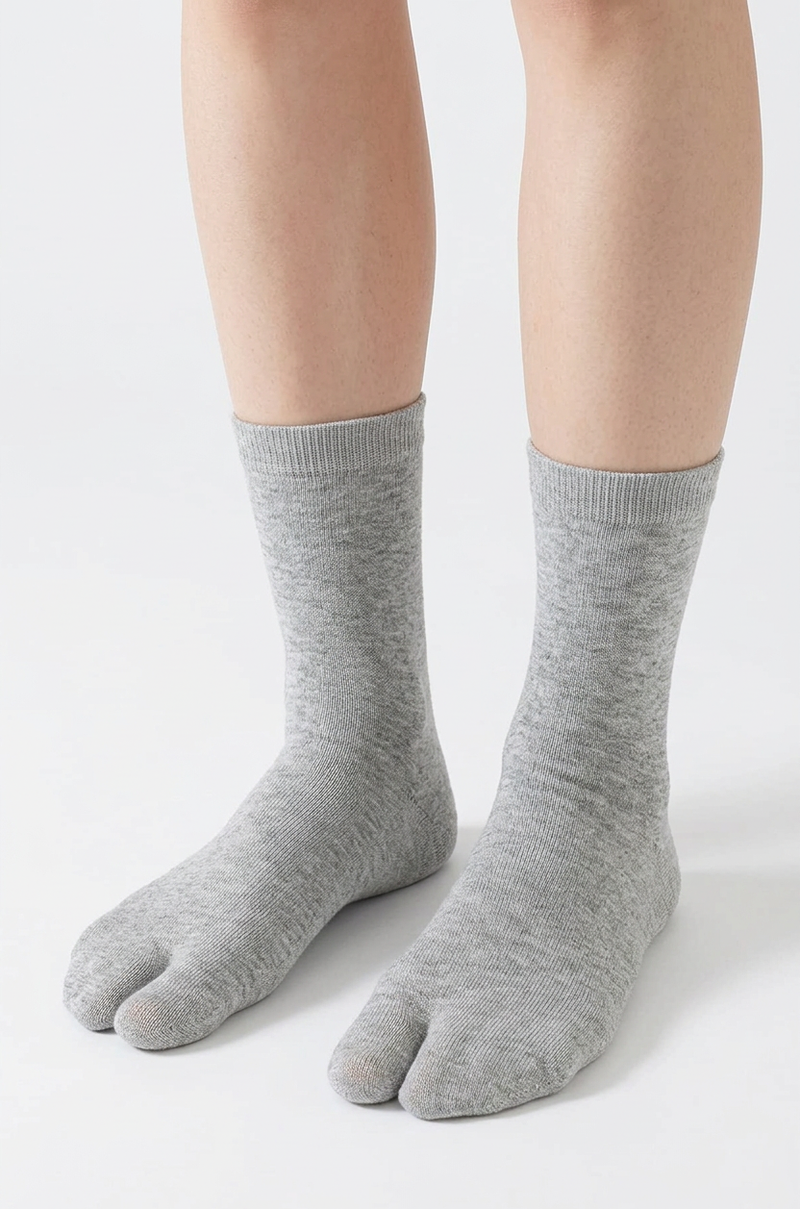
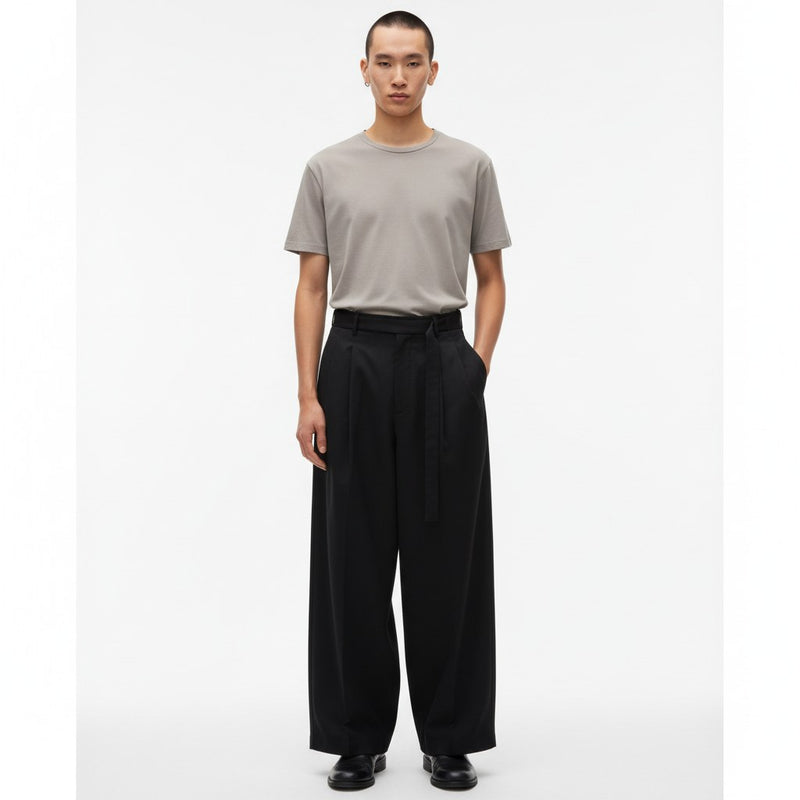
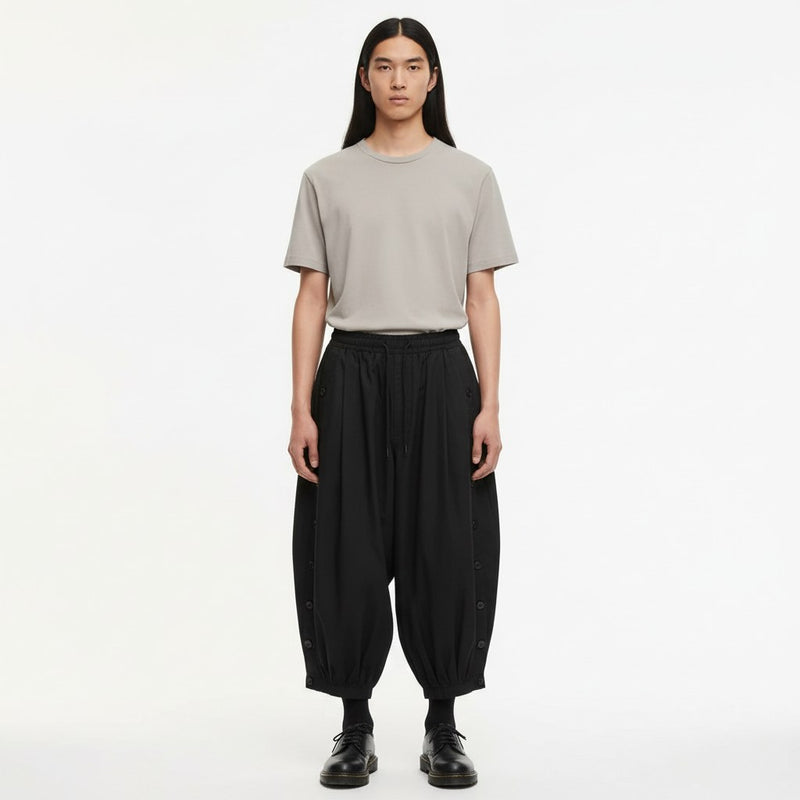
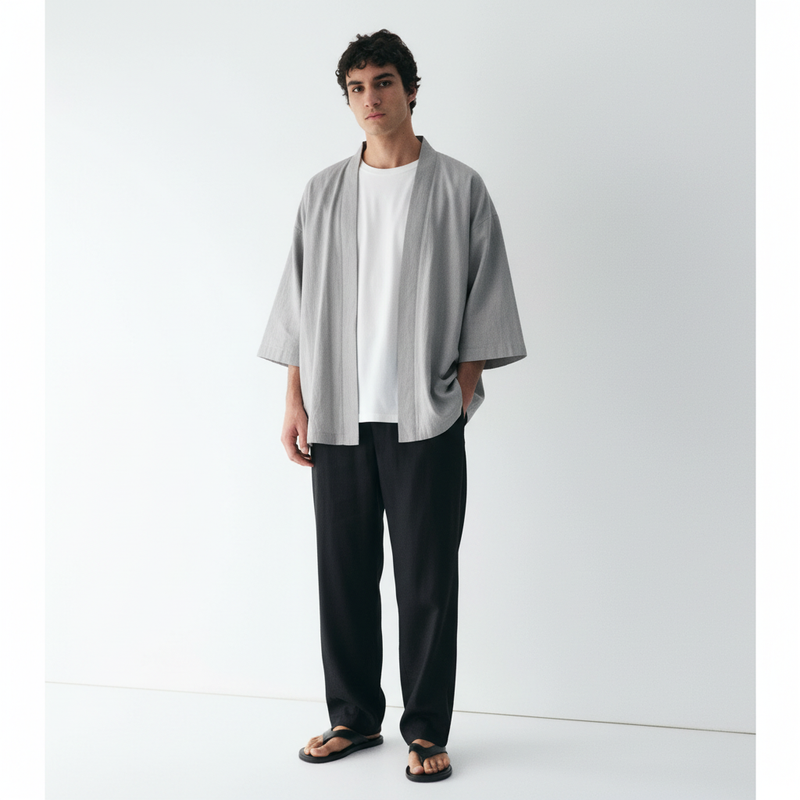
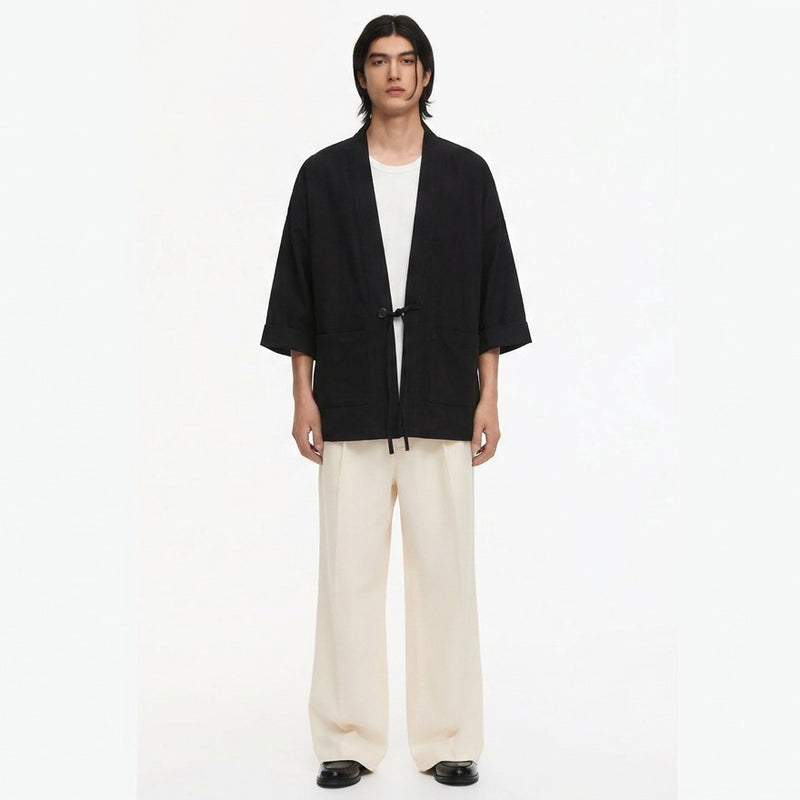
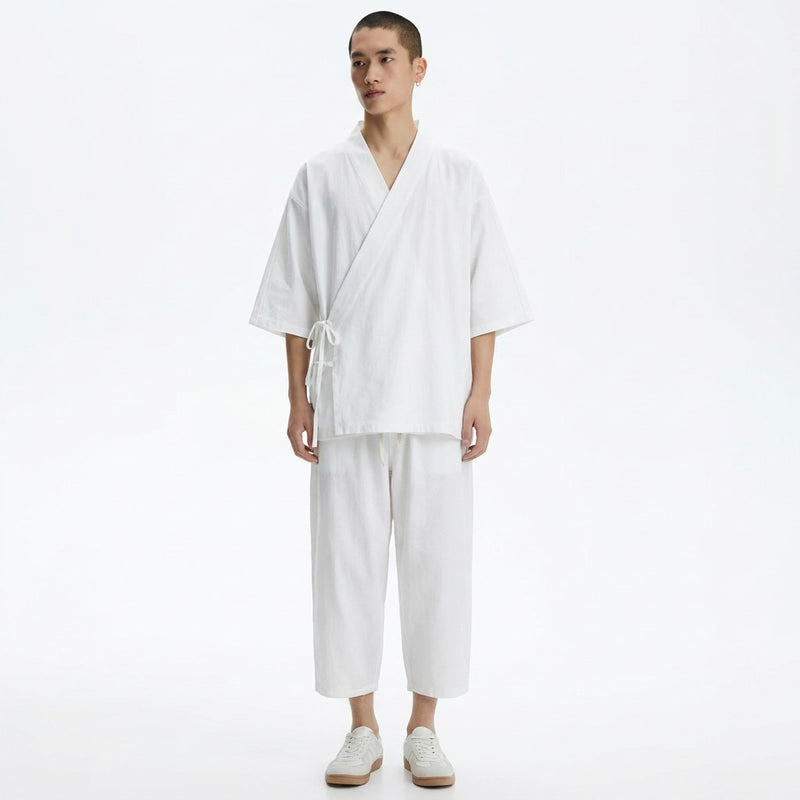
- Everyone else. Cut in cotton with a simpler waist, the hakama has become a wide-leg everyday trouser, worn with a tee or under a haori jacket, often with tabi socks.
How to wear and tie a hakama
- Step into the hakama and lift the front to just below your navel.
- Take the front himo round your waist, cross them at the back, bring them to the front and tie them just below the navel.
- Lift the back so the koshiita sits flat against your lower back.
- Bring the back himo forward and tie them over the front knot.
- Tuck the loose ends under the ties so nothing hangs.
For the full method with a diagram of the tie path, see how to tie a hakama.
Methods vary between dojos and styles, so follow your teacher if you train. Everyday hakama pants skip all of this. They close with an elastic back, a belt or a short tie and go on like trousers.
What to do if your hakama is too long
The hem of a hakama should sit at your ankle bone or just above it. If yours drags on the floor, there are three fixes.
- Tie it higher. With a tie waist, raise the front by two or three centimetres before you tie it. This is the usual fix in a dojo.
- Hem it. A tailor can take up the hem. The pleats run down to the hem, so ask them to keep the pleat lines when they press it.
- Size by length, not waist. Training hakama are sized by the himo-shita, the length from the ties to the hem. For everyday pairs, compare the length on the size chart with your own leg from waist to ankle.
Our hakama size guide lists every cut we make in cm and inches.
Hakama, samurai pants and harem pants
Samurai pants is the everyday name for the hakama. A harem pant is a different shape: wide at the hip, then gathered back in at the ankle. A hakama stays wide all the way down. Our guide to hakama vs harem pants compares the two, and what are samurai pants called covers the names.

Where to start if you want a pair
- For every day: the Dark Cotton Hakama Pants, $39.90, a wrap panel over a wide leg with side ties.
- The closest to the dojo original: the Cotton Kendo Hakama, $44.90, 100% cotton, seven pleats and long ties, in black, white or navy.
- The samurai look: the pairs in samurai pants, from $34.90.
- No size to choose: the one-size Belted A-Line Hakama Pants and Pleated Hakama Style Pants, $39.90, and the hakama skirt pants.
Every pair is in hakama pants. If you train, buy a dojo hakama from a specialist, and our guide on where to buy hakama pants names the shops.