




Short answer: a hanten (半纏) is a short Japanese jacket, hip length, with a collar band that crosses at the front and, in its winter form, a padded lining. Families in Japan wear the padded version over home clothes on cold days. A haori is the dressier open layer, and a dotera is the long padded robe. Our padded hanten jacket takes the house jacket outdoors.
For a printed one, the koi hanten jacket carries two koi leaping from a wave across the back, in padded cotton, one size, black or navy.
| Hanten | Haori | Dotera | |
|---|---|---|---|
| Length | Hip | Hip to thigh | Knee to ankle |
| Padding | Often (wata-ire hanten) | No | Heavy |
| Collar | Flat band, crossed | Folds back, hangs open | Flat band, crossed |
| Closure | Wrapped, sometimes short ties | Haori himo cords, or open | Belted with a sash |
| Worn | At home, quick trips out | Over kimono, or open over a tee | At home and at inns in winter |
What a hanten is
The hanten started as a plain working jacket in the Edo period. Craftsmen, carpenters and firefighters wore a straight, unpadded version dyed with a crest or the name of their trade, called a shirushi-banten. The padded house jacket came alongside it: the same short, straight cut, with cotton wadding between two layers of cloth. That padded form, the wata-ire hanten, is what most people mean by "hanten" today.
It survives because of how many Japanese homes are heated. Rooms are warmed one at a time, often around a kotatsu, the low table with a heater underneath, and corridors stay cold. A warm jacket you can throw on over pyjamas or a sweater and take off at the table fits that life better than a coat.
Hanten vs haori vs dotera
All three share the straight body and wide sleeve of the kimono family, so they are easy to mix up in photos. The differences are length, padding and how the front behaves.
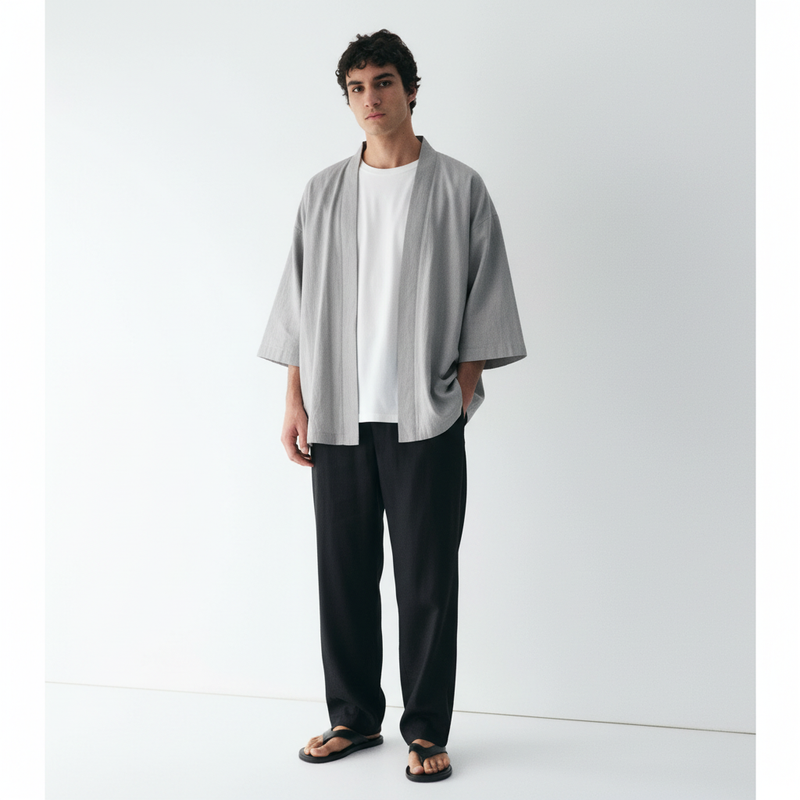
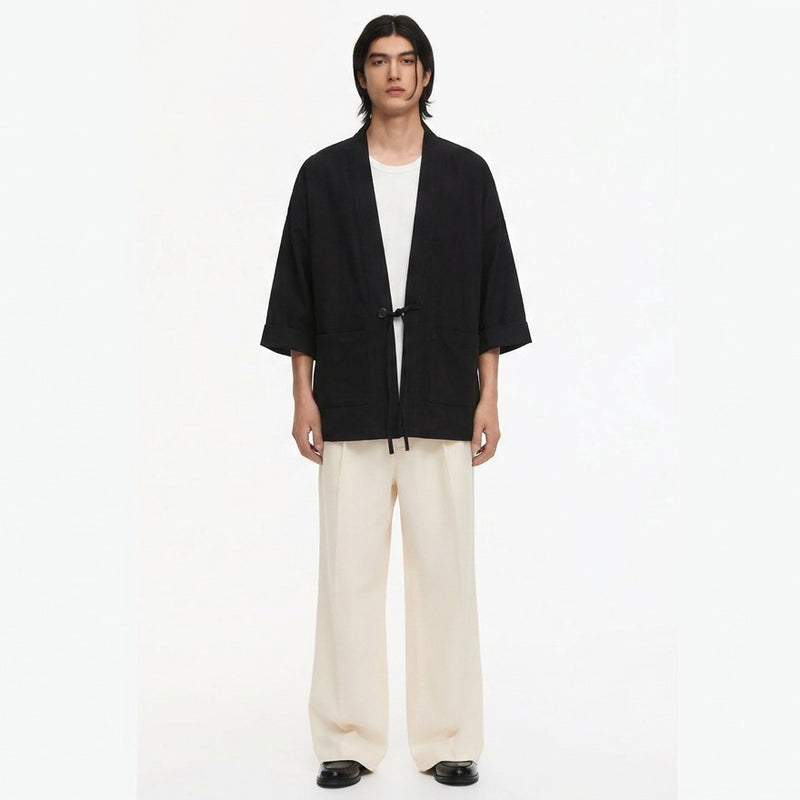
A haori is the open overgarment. Its collar folds back and it is made to hang open or be held by a pair of short cords at the chest. It is not padded, and it was the dressier layer of the three. Our haori jacket guide covers how it is cut and worn.
A dotera, called tanzen in western Japan, is the long version: a padded robe that reaches the knee or lower and is tied with a sash. Japanese inns hand one out in winter to wear over the yukata. A hanten is the short, practical version of the same idea, cut to the hip so you can move, cook and sit without it getting in the way.
How a hanten is worn in Japan
At home, over whatever you already have on: loungewear, pyjamas, a yukata or a sweater. It goes on when you leave the warm room and comes off when you sit back down. Many people also wear one for a short trip outside, to the shop on the corner or to take the bins out, which is why the padded hanten has a reputation as a comfortable, slightly unglamorous piece of home life rather than fashion.
Wearing one outside
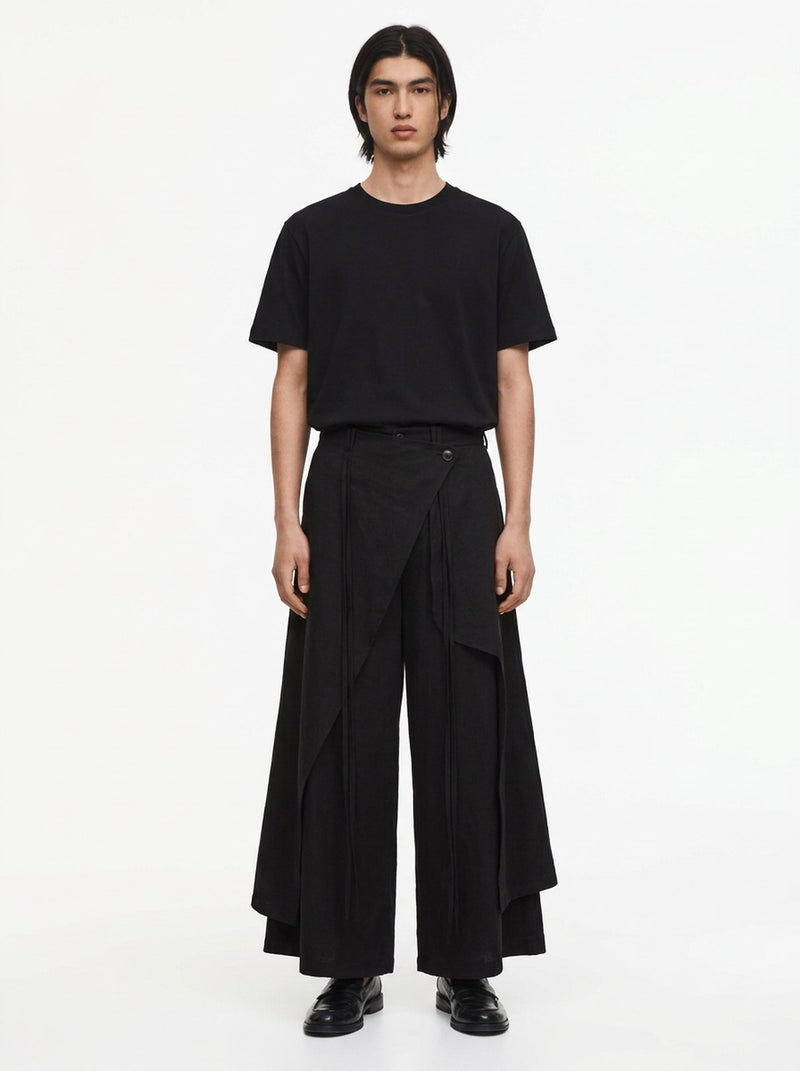
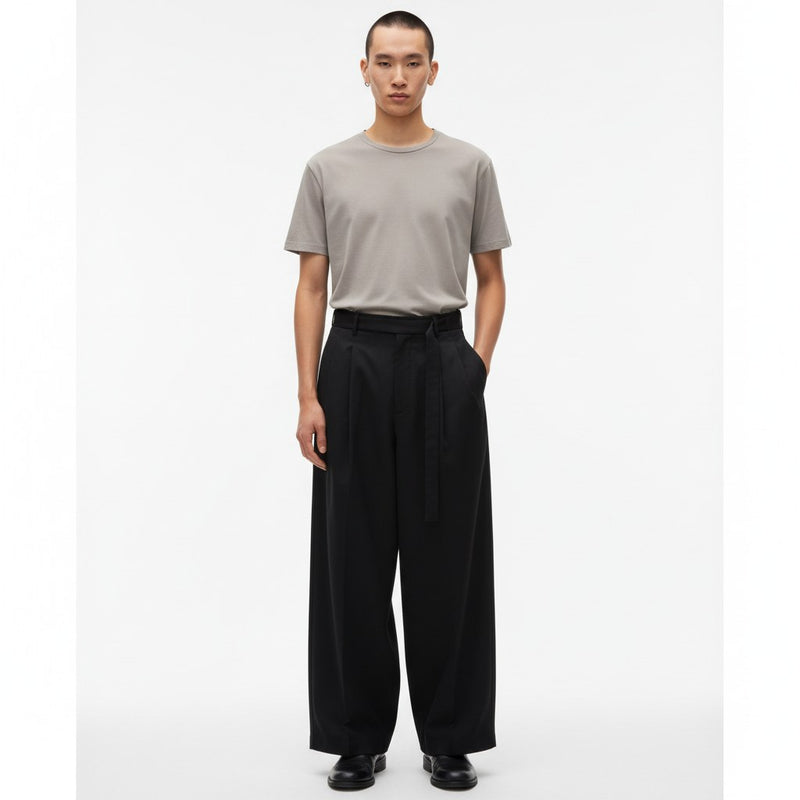
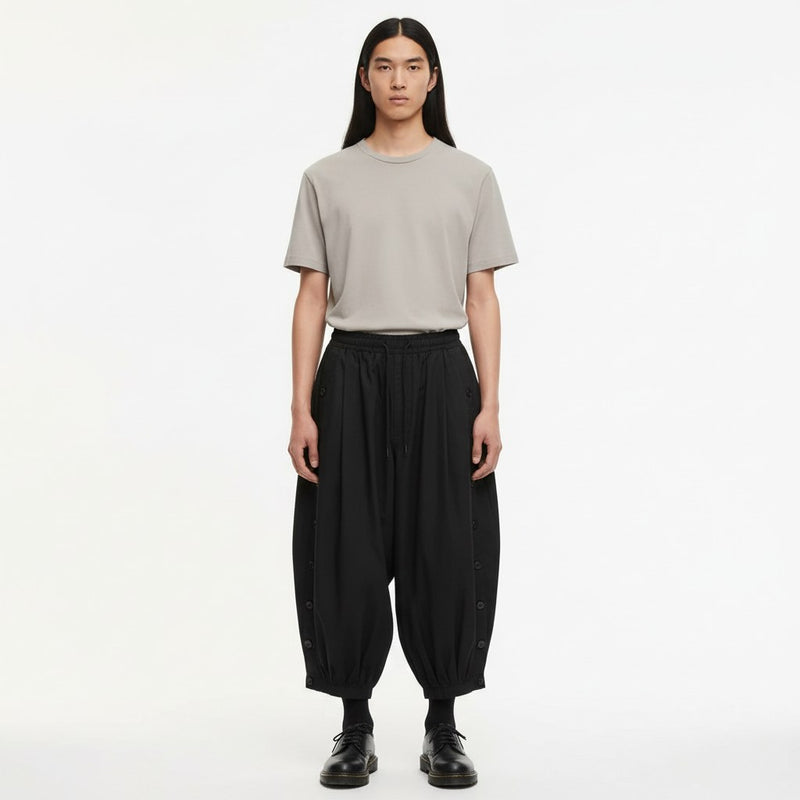
The boxy shape is the whole look, so balance it rather than fight it. Wide trousers keep the proportions even: hakama pants or a wide work pant both carry the volume of the jacket down to the ankle. Narrow jeans under a padded hanten make the top half look heavy.
Underneath, keep it plain. A hoodie, a heavy tee or a knit sits well under the crossed collar. Let the collar show at the neck instead of covering it with a scarf, because the crossed band is what makes the jacket read as Japanese at a glance.
Our padded hanten
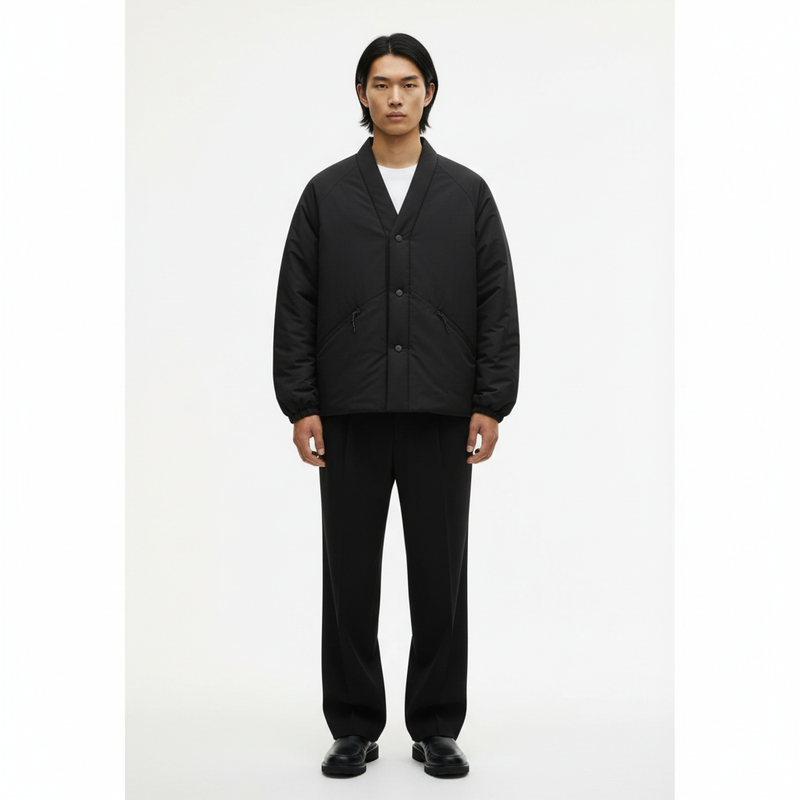
The Padded Hanten Jacket keeps the crossed kimono-style collar and the warm, boxy shape, and changes what it is made of so it can live outdoors. The shell is ripstop polyester with cotton padding, so it handles wind and rain on a city street. It closes with snaps, has zip hand pockets and raglan sleeves with elastic cuffs.
It comes in black or army green, sizes XS to L, at $69.90. The fit is loose and hip length. The chest measures 126 cm at XS, 134 cm at M and 138 cm at L, and the length runs 71 to 77 cm. That is roomy on purpose: take your usual size and it will still go over a knit.
Hanten, haori or noragi: which one
For warmth, the hanten. It is the only one of the three built to keep you warm. For an open layer over a tee from spring to early autumn, a haori. For a cotton work jacket that ties shut and gets better with wear, a noragi. All three sit with the rest of our Japanese jackets, and our guide to traditional Japanese clothing places each of them in the wider wardrobe.