







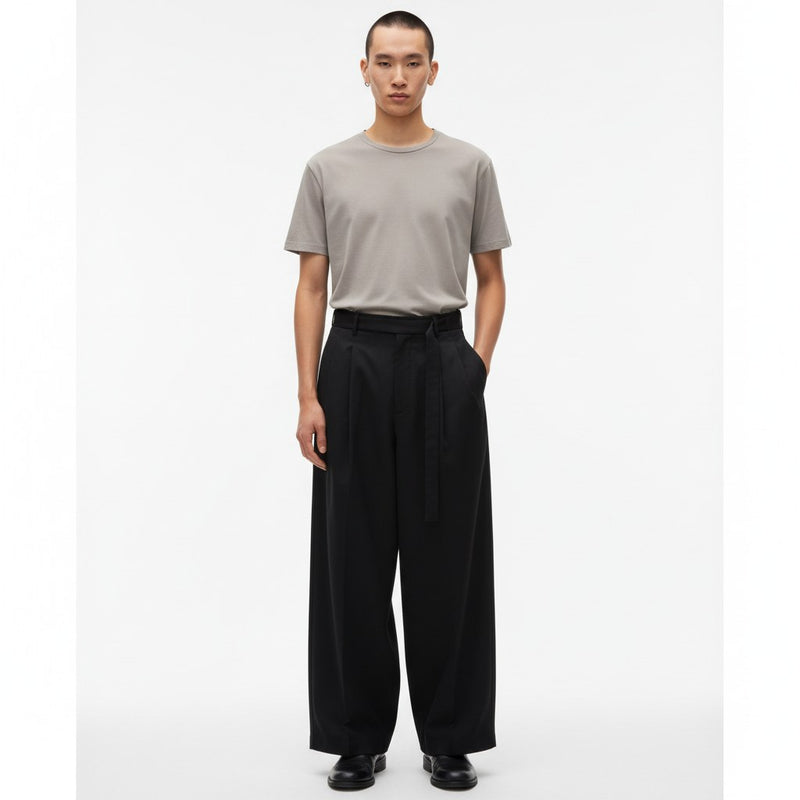
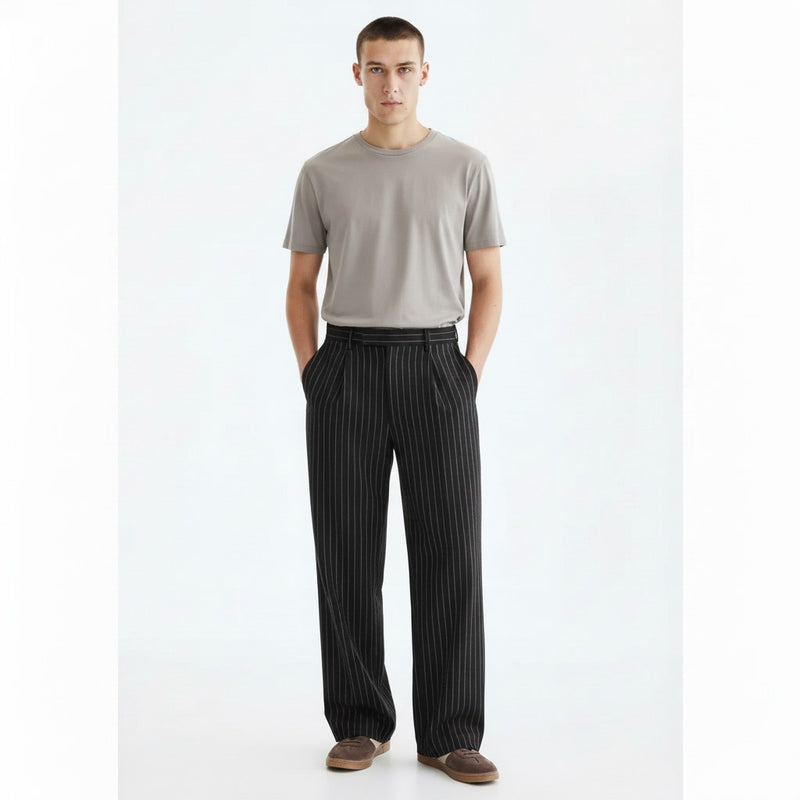

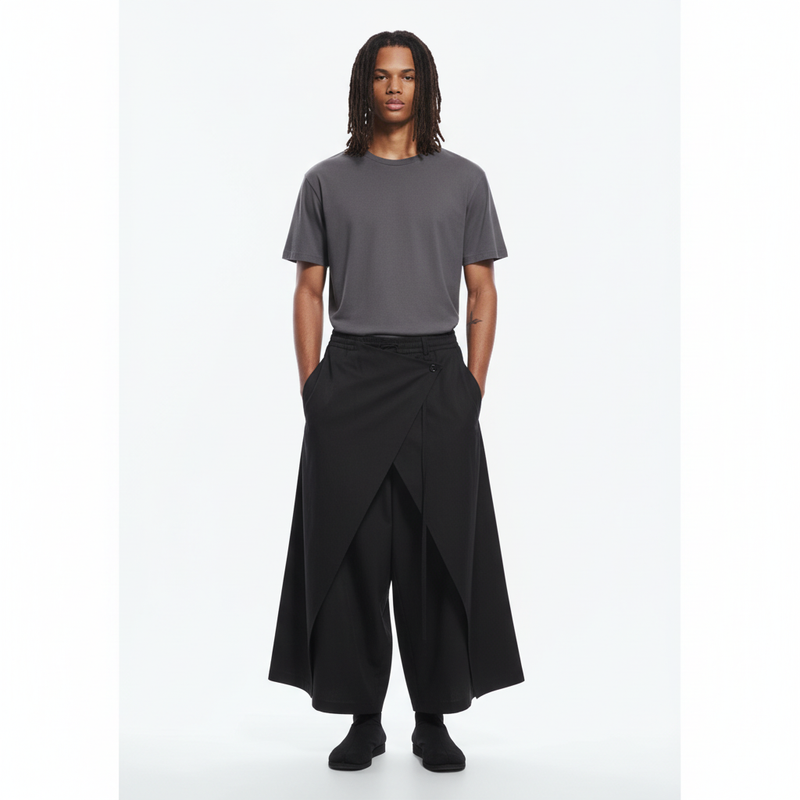
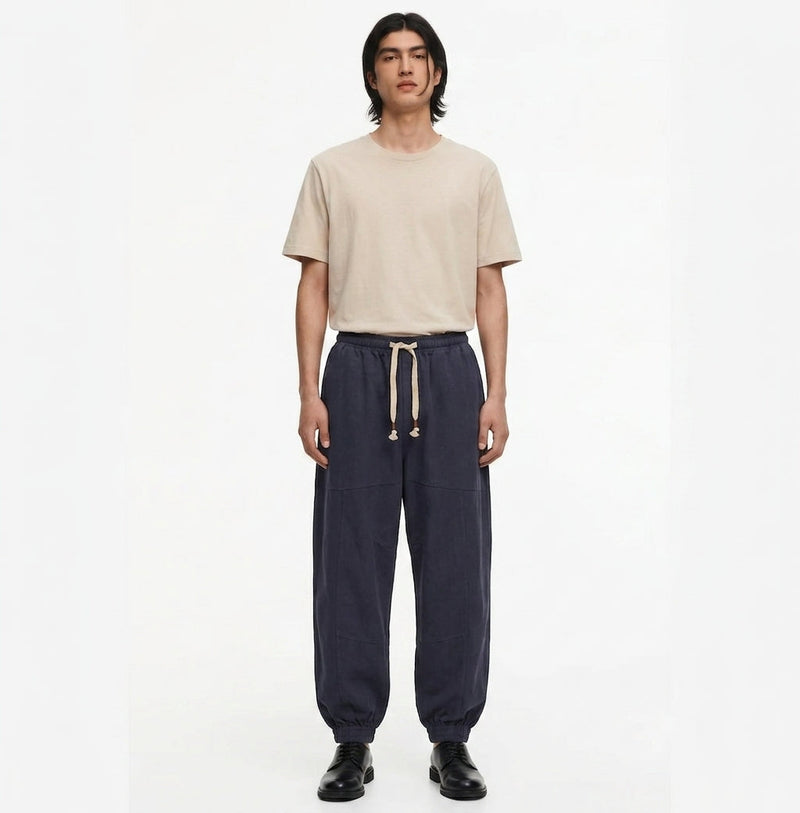










Sarouel and harem pants are the same garment. Sarouel is the older word, by way of French from the Persian shalwar; harem is the term that stuck in English-language retail. Search one and you get festival and boho shops; search the other and you get streetwear. The trouser is identical.

What defines the cut
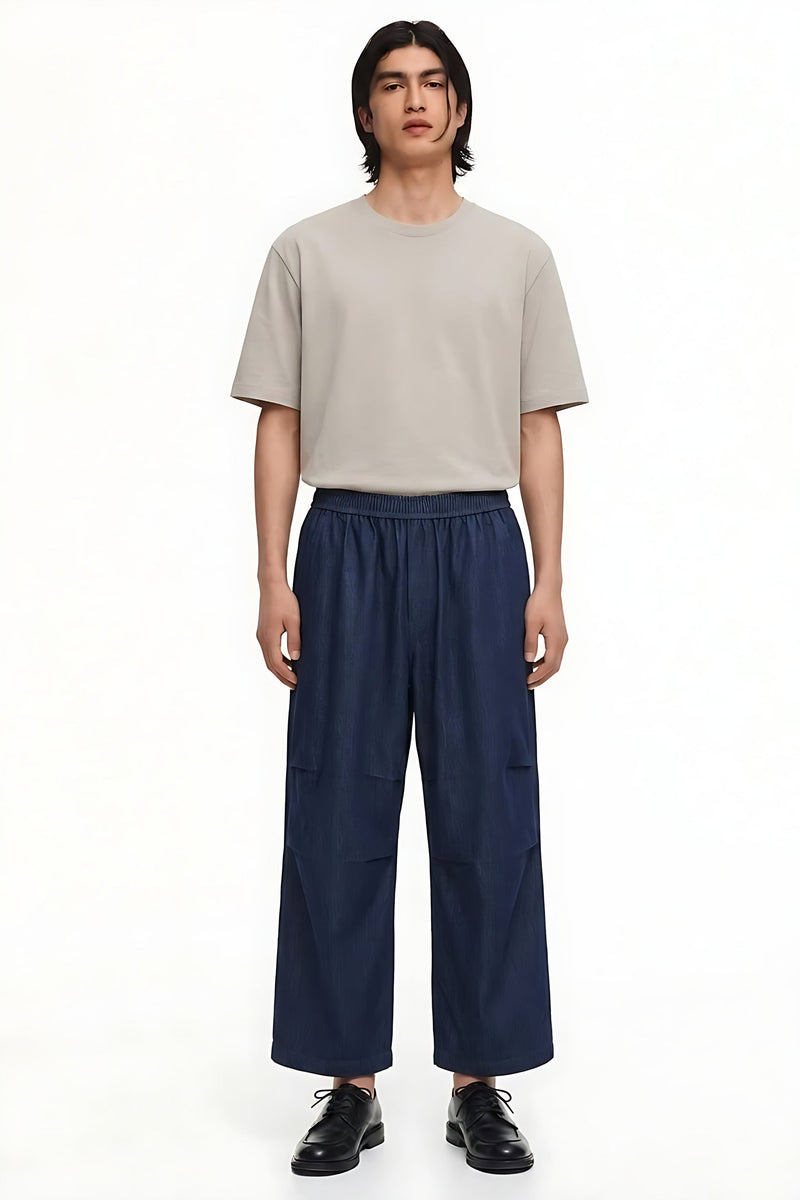
The rise. On a conventional trouser the crotch sits close to the body and the fabric pulls across the seat when you sit or stride. On a sarouel the crotch is dropped, so cloth hangs below the seat instead of stretching across it. Everything people like about the cut - the room through the thigh, the fact that it does not bind when you sit on the floor - comes from that one change.
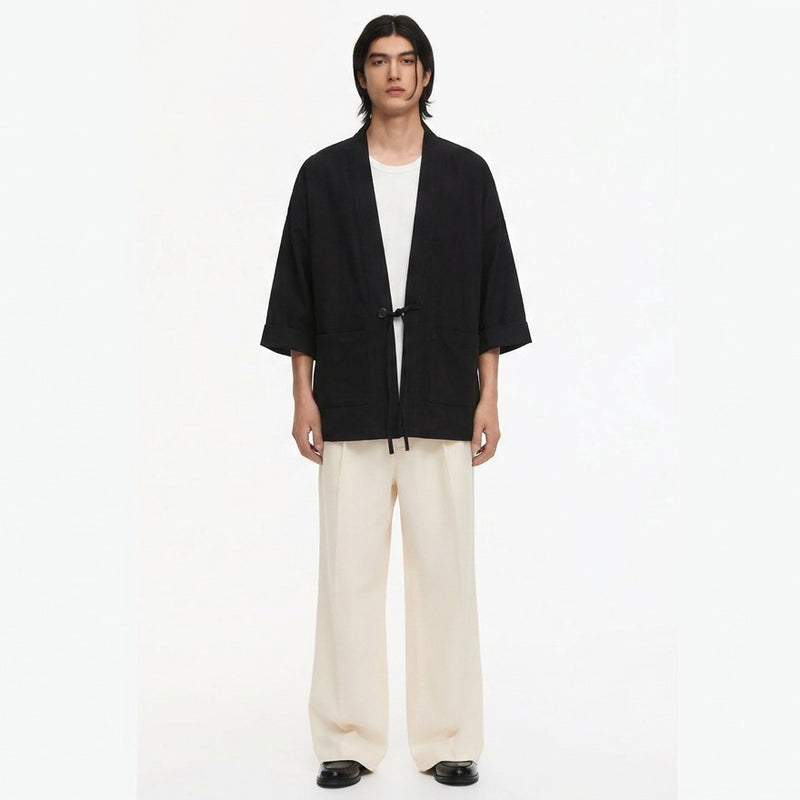
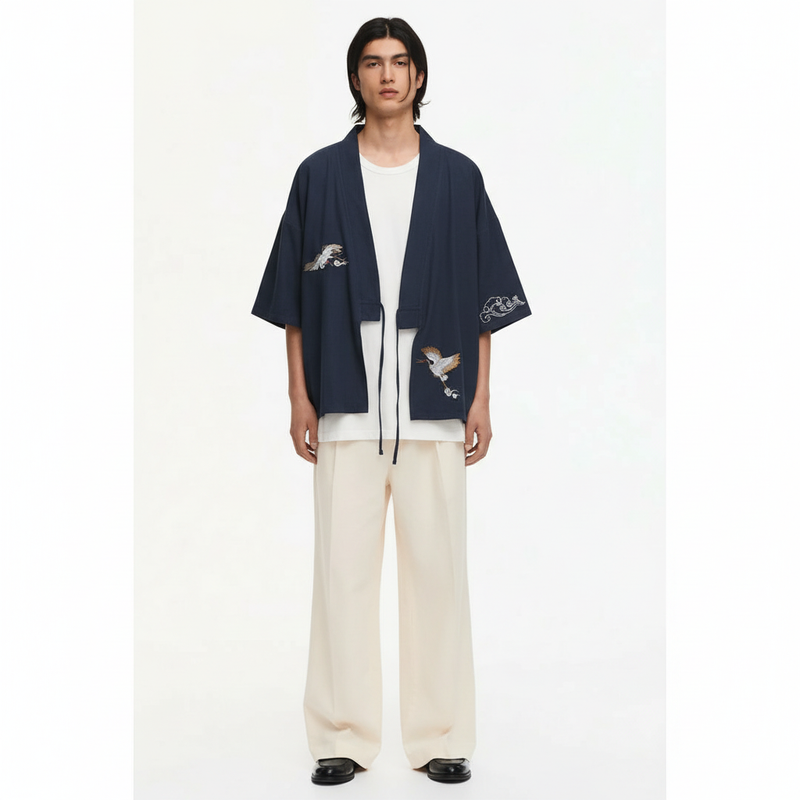
The Japanese relative is the hakama, which gets its room from pleats. See our men's hakama pants for that cut.
Where the volume goes
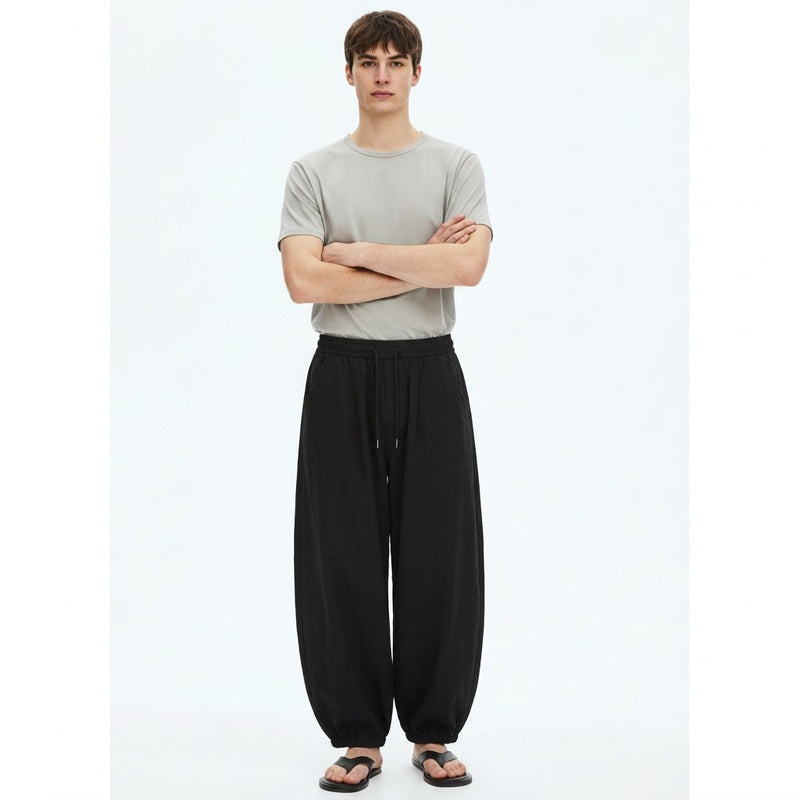
Volume sits high, through the seat and thigh, and the leg usually narrows towards the ankle, often closing in a cuff. That taper is what stops it reading as a skirt. A sarouel with no taper is a very different garment to wear.
The two things that go wrong
- Fabric too soft. Pleats collapse against the leg and the shape disappears. The cloth needs body.
- No ankle closure. A wide open hem catches on everything and the volume has nowhere to resolve.
Why the cuff matters more than it looks
An elastic or ribbed cuff is doing two jobs. It resolves the volume, so the leg reads as a deliberate shape rather than a lot of loose cloth, and it stops the hem catching on door handles, pedals and chair legs. On a wide linen leg that second job is most of the difference between a trouser you keep wearing and one you stop reaching for.
How to size one
Waist, and almost nothing else. The whole point of a dropped rise is that the seat and thigh are not load-bearing measurements - there is room designed in. Sizing up because you usually need room through the thigh is the common mistake, and it puts the crotch lower than the cut intends, which is where the cartoonish look comes from. Take your normal waist and trust the rise.
Length is the measurement worth checking instead. These are cut to close at the ankle, so outside length is the number that tells you where the trouser will sit - and outside length is what our size chart reports on every pair, measured from the waistband down the outer seam.
Does it read as costume?
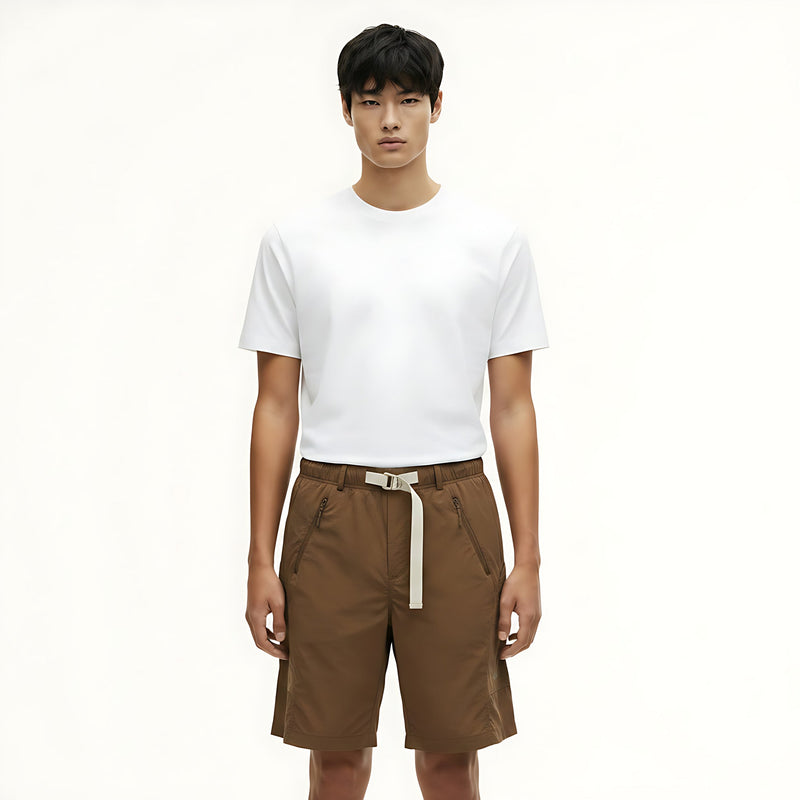
Not if the top half is quiet. The cut carries enough visual weight on its own that it wants a plain tee or a crew knit above it, and it fails the moment it is paired with something equally loose on top. Worn with a fitted upper half it reads as a considered silhouette; worn with an oversized hoodie it reads as pyjamas, and the fabric is not what decided that.
Choosing by weight, not by name
The useful question is not sarouel or harem, it is how much cloth you want moving. Our range splits cleanly along that line:
- Kireina - the lightest at 32% linen, XXS to 2XL, $39.90. The one you forget you put on.
- Sokai - the middle of the range in every direction, 50% cotton and 50% linen at midweight. The place to start if you have never worn the cut.
- Gelyu - the roomiest pleated cut, a cotton-linen blend at 65% cotton with enough body to hold the pleats open. This is the one people mean when they search sarouel rather than harem.
- Pokku - the same dropped rise cut in 80% cotton denim, so it has weight and grain instead of drape.
- Shinbo - cut for heat, and the widest size run we make at S to 5XL.
All five sit in Japanese Harem Pants.
If you want slim through the thigh
Then this is the wrong family, and no amount of sizing down will fix it - sizing down a dropped rise just moves the crotch somewhere uncomfortable. Look at wide-leg or straight-leg cuts instead, which give room without changing where the rise sits.
The short answer
Search whichever word you like. Buy on fabric weight and on whether the ankle closes.