

















Yukata and kimono get used as if one were a polite word for the other. They are not two names for one garment, and they are not two garments with an unclear border. A yukata is a kimono - specifically, an unlined cotton one. Everything else that separates them follows from that.

The lining is the whole difference
A formal kimono is lined, often silk, and built to be worn over other layers. A yukata is a single layer of unlined cotton. Once you take the lining out, the garment gets lighter, cheaper, faster to wash, and impossible to wear formally. Every other difference below is downstream of that one decision.
What goes underneath
A kimono is worn over a juban, an under-layer whose collar is meant to show at the neck. A yukata is worn against the skin, which is why it turns up at summer festivals and at ryokan inns as something closer to a robe. If you see a white collar peeking out at the throat, you are looking at a kimono.
The sleeve
Men's kimono sleeves are attached along more of the body and hang less deeply than women's. Yukata sleeves are shorter again. Neither reaches the dramatic hanging sleeve most people picture, which belongs to women's formal wear.
How each one closes
Both cross left over right - right over left is how the dead are dressed, and it is the one mistake worth never making. Both are held by an obi, but not the same obi. A kimono takes a wider, stiffer belt tied with more ceremony; a yukata takes a narrow, soft one that can be tied in a few seconds. Neither uses a button or a fastening of any kind, which is why the belt is doing structural work rather than decoration.
The fabric tells you before anything else does
Yukata is cotton, sometimes a cotton blend, and usually printed - indigo on white, or white on indigo, in patterns that were historically stencil-dyed. Kimono runs to silk, and the decoration is more often woven or hand-painted than printed. Put a hand on the cloth and the question usually answers itself before you have looked at the collar.
Where each one is worn
Kimono is ceremonial for most men now - weddings, funerals, formal occasions, tea. Yukata is summer, evening, and relaxed. Wearing a yukata where a kimono is expected reads roughly the way a dressing gown would at a wedding.
What to wear on your feet
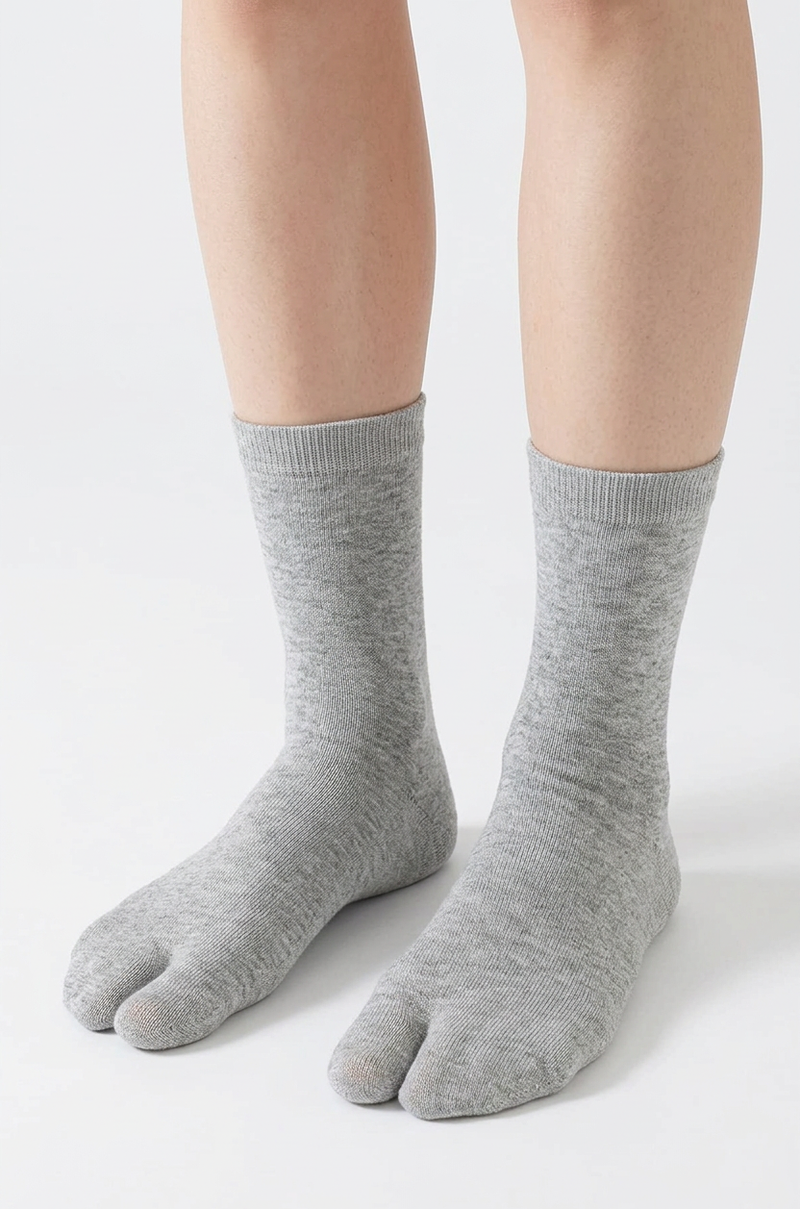
Footwear is the quickest tell after the collar. A kimono is worn with white tabi, the split-toe socks, inside zori, flat sandals with a thong between the toes. The split in the sock exists so the thong has somewhere to go. A yukata is worn barefoot in geta, the raised wooden sandals you hear on the pavement at a summer festival. Socks with a yukata read as a mistake, and bare feet with a formal kimono read as a worse one.
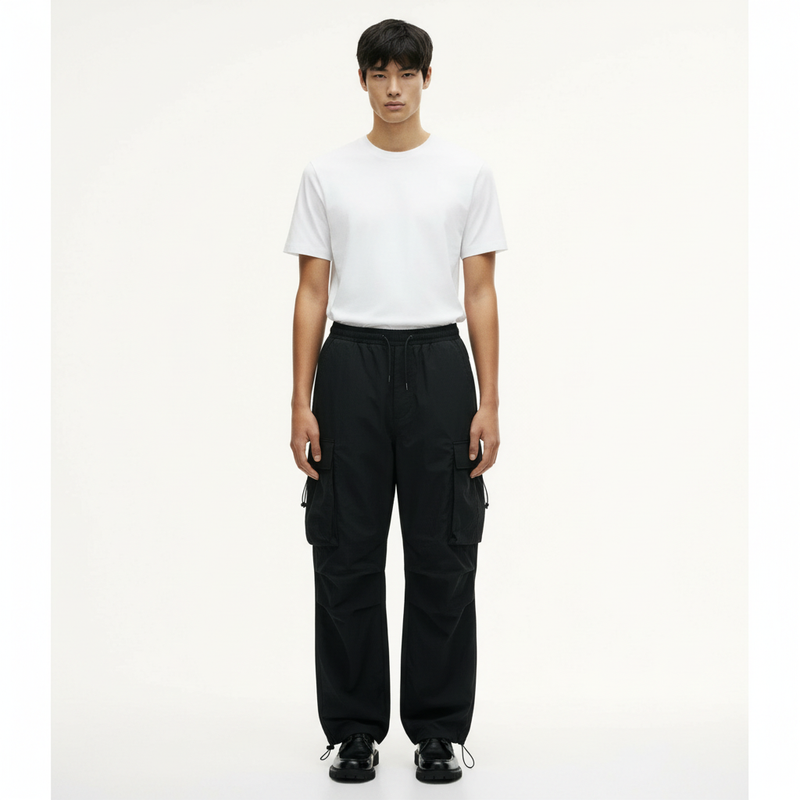
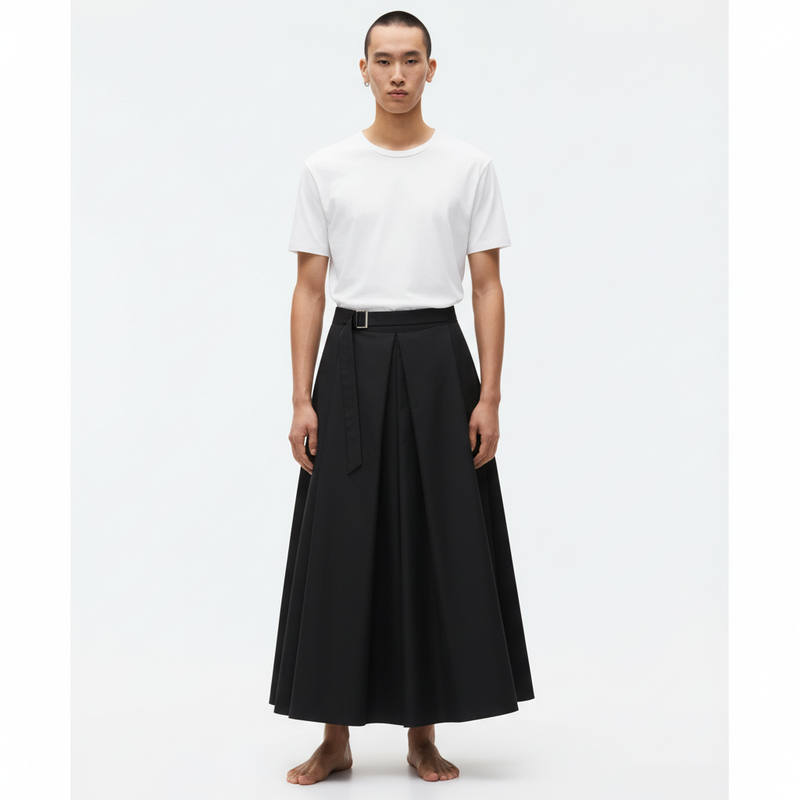
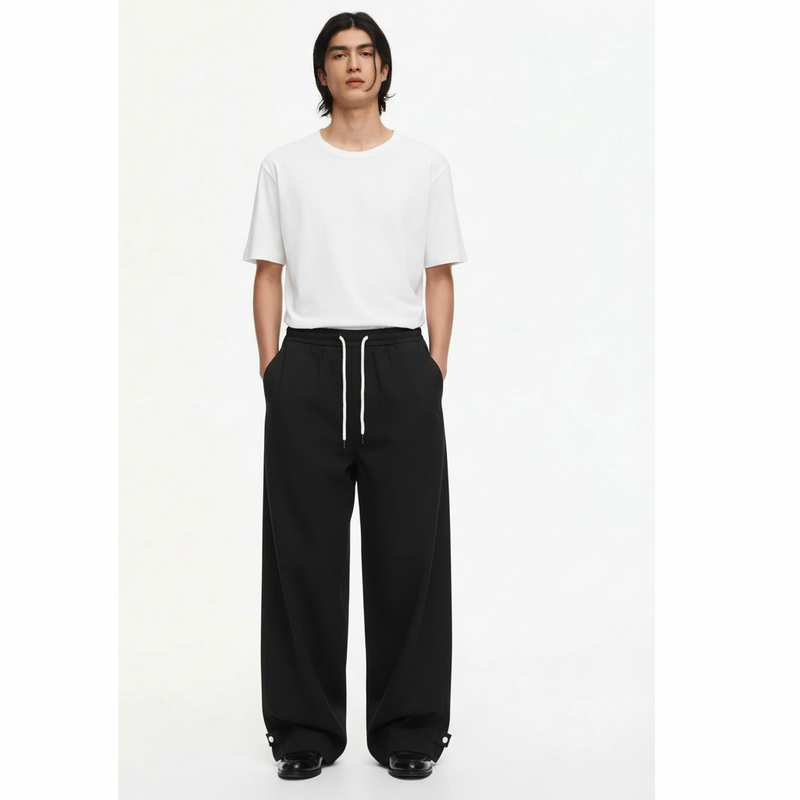
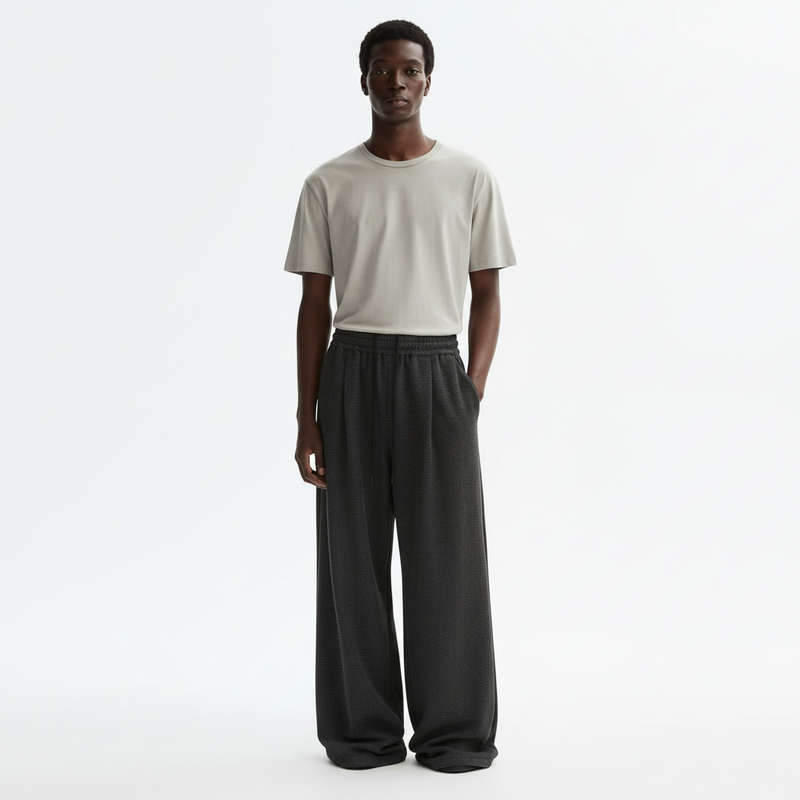
Tabi have outlived both garments. Split-toe tabi socks are now worn with ordinary sandals and under wide, cropped trousers, where the ankle shows.
Yukata vs kimono at a glance
| Yukata | Kimono | |
|---|---|---|
| Lining | Unlined, a single layer | Lined |
| Fabric | Cotton or cotton blend, usually printed | Often silk, woven or hand-painted |
| Underneath | Worn against the skin | Worn over a juban, collar showing |
| Belt | Narrow, soft obi, tied in seconds | Wider, stiffer obi |
| Feet | Bare, in wooden geta | White tabi socks and zori |
| Season | Summer | Any, lined for the cold months |
| Occasion | Festivals, inns, evenings | Weddings, funerals, tea, ceremony |
Haori is neither. It is a short jacket worn open over a kimono.
The season decides as much as the occasion
The traditional calendar splits the year three ways. From October to May a kimono is lined, which is called awase. In June and September it is unlined, called hitoe, but still worn over an under-layer. July and August belong to the lightest cloth of all, and that is where the yukata lives.
So the question is rarely just yukata or kimono. It is what month it is and where you are going. A lined silk kimono at a July festival would be as odd as a cotton yukata at a January wedding.
What changes for men
Men's versions are plainer. The colours run to indigo, grey, brown and black, and the patterns are small stripes, checks or solid cloth. The obi is different too. Men wear a narrow, stiff kaku obi or a soft, wide heko obi, and they tie it low on the hips, below the belly. Women tie theirs higher at the waist.
The sleeves on a man's kimono are sewn to the body almost to the armhole. That closed sleeve is the quickest way to tell a men's garment from a women's one on a hanger.
Three checks in five seconds
- Look at the neck. A second collar showing under the first means an under-layer, so it is a kimono.
- Look at the feet. Bare feet in wooden geta mean a yukata. White tabi in zori mean a kimono.
- Look at the cloth. Printed cotton means a yukata. Silk with a sheen or a woven pattern means a kimono.
Two out of three is enough to be right almost every time.
How a man puts on a yukata
Hold the yukata open with the sleeves on, and bring the back seam to the middle of your spine. Wrap the right panel across the body first, then the left panel over it, so the left side sits on top. Pull the collar close at the back of the neck and let it open into a soft V at the front.
A man's yukata is made to length. There is no fold at the waist, the way there is on a woman's, so the hem should already sit at the ankle. Wrap the obi twice round the hips, below the belly, and tie it at the front. Then turn the knot round to the back or slightly to one side. The whole thing takes two minutes once you have done it twice.
The part that matters if you are buying
Most people searching for a men's kimono do not want a ceremonial garment. They want the line - the crossover front, the wide sleeve, the drape - in something wearable on an ordinary day. That is a different purchase, and it is the one worth making.
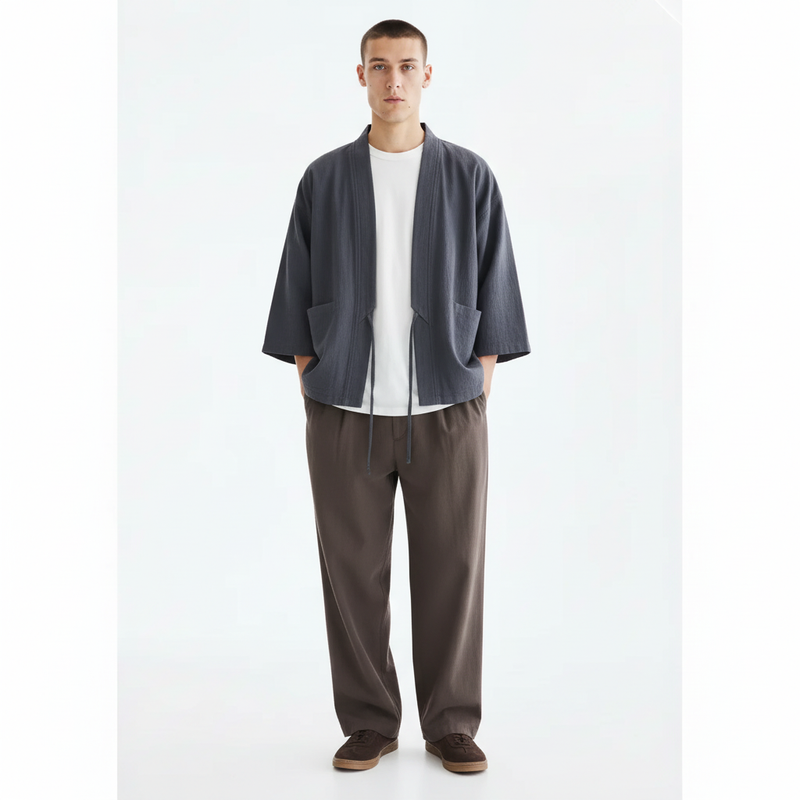
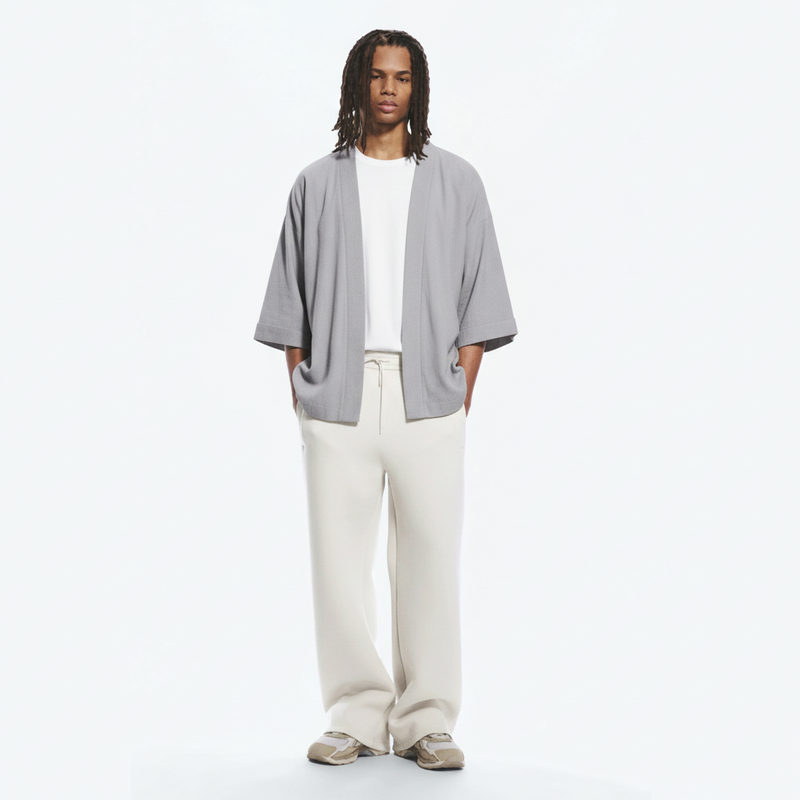
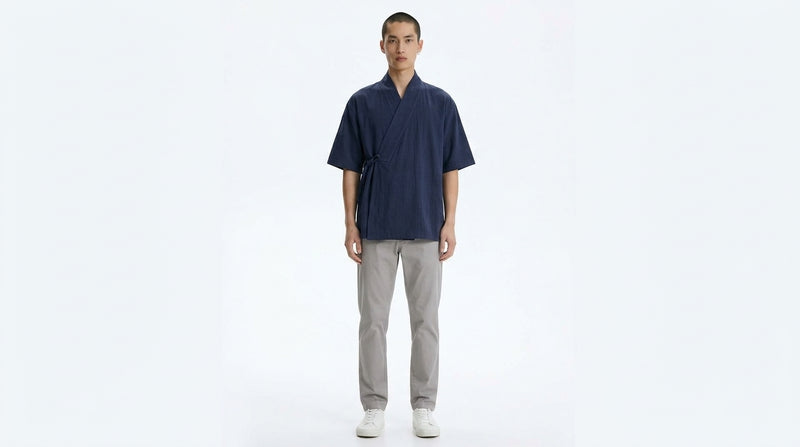
The Kimono Jacket Cotton takes the open-front shape in lightweight cotton and runs XS to XXL at $19.90. The Cross-Collar Kimono Shirt keeps the deep crossover and wide three-quarter sleeve, tied at the waist by a single inside tie. Both sit in Men's Kimono Jacket.

If you want the layer worn over the top rather than the garment itself, that is a haori, and it is a separate shape with separate rules.
Which one you actually want
If the occasion is formal and Japanese, a kimono, and it is worth being fitted properly. If it is summer and informal, a yukata. If what drew you in was the silhouette rather than the occasion - the crossover, the ease through the body, the sleeve - then neither, and an open-front jacket in cotton will get worn a hundred times more often. Start with Japanese Jackets.
Further reading
For the history of both garments, the V&A has a good introduction to the kimono, and the entries on the kimono and the yukata cover the regional and seasonal variations in more depth than a buying guide needs.
For all sixteen garments in one place, with their Japanese names, see traditional Japanese clothing.