
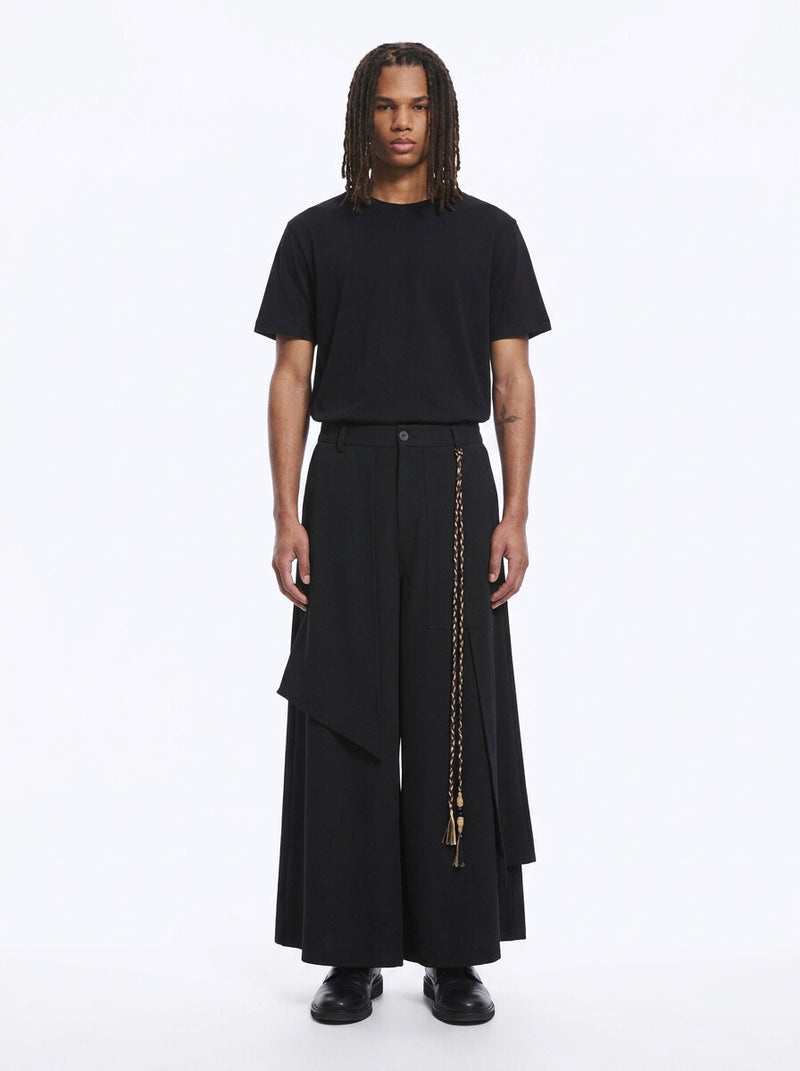
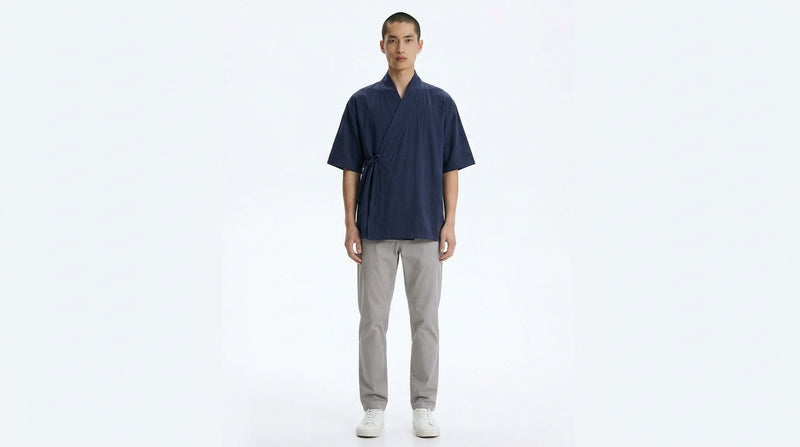

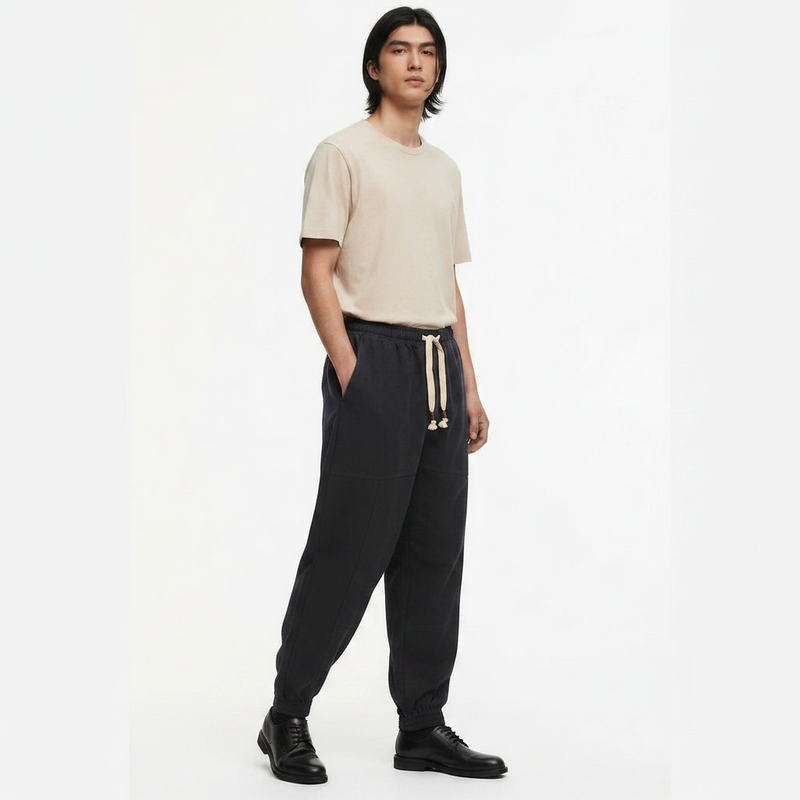
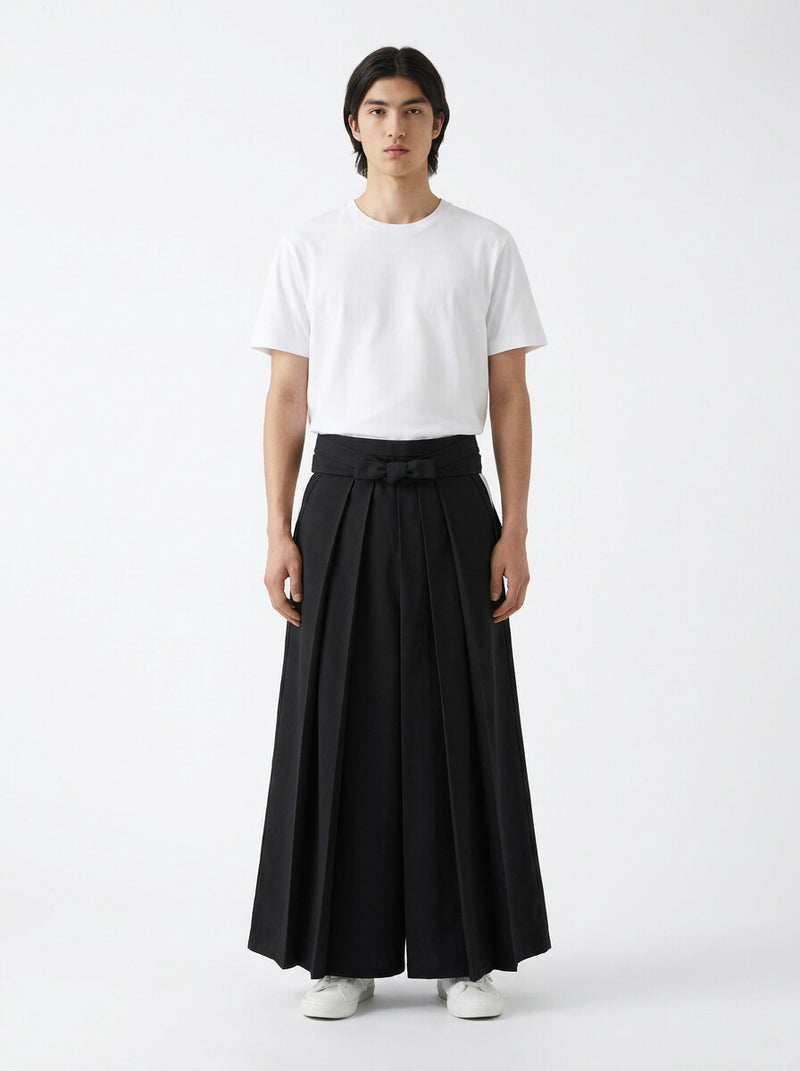

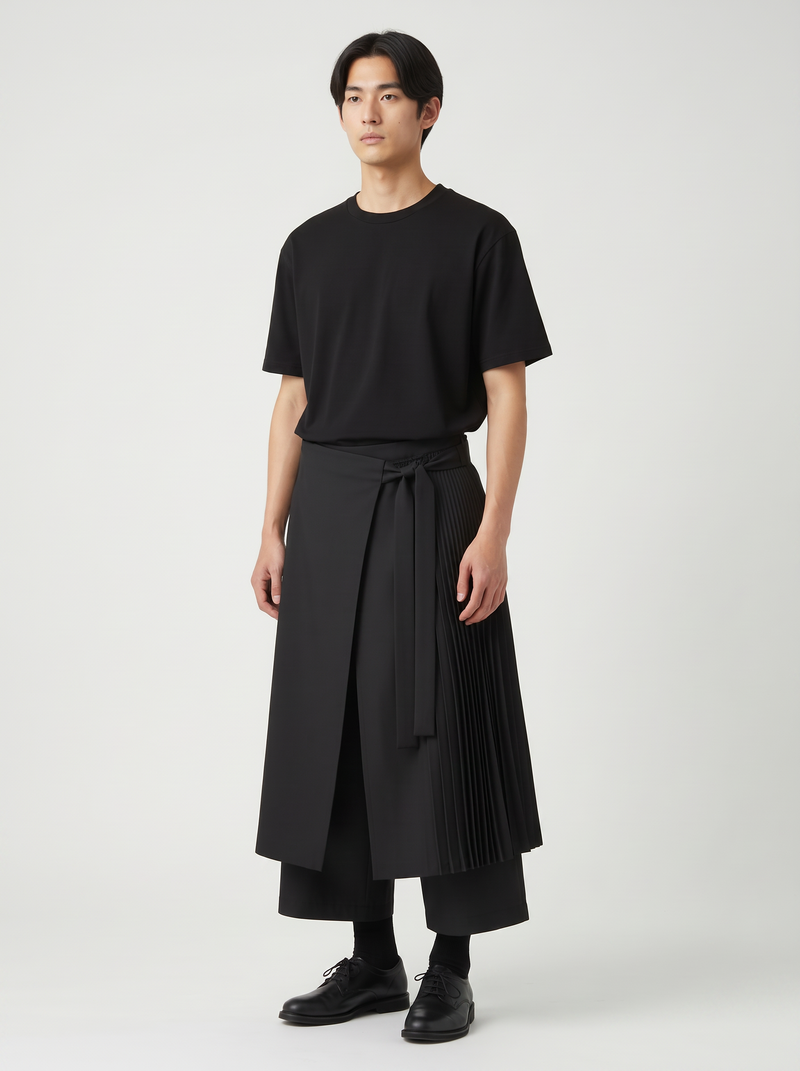
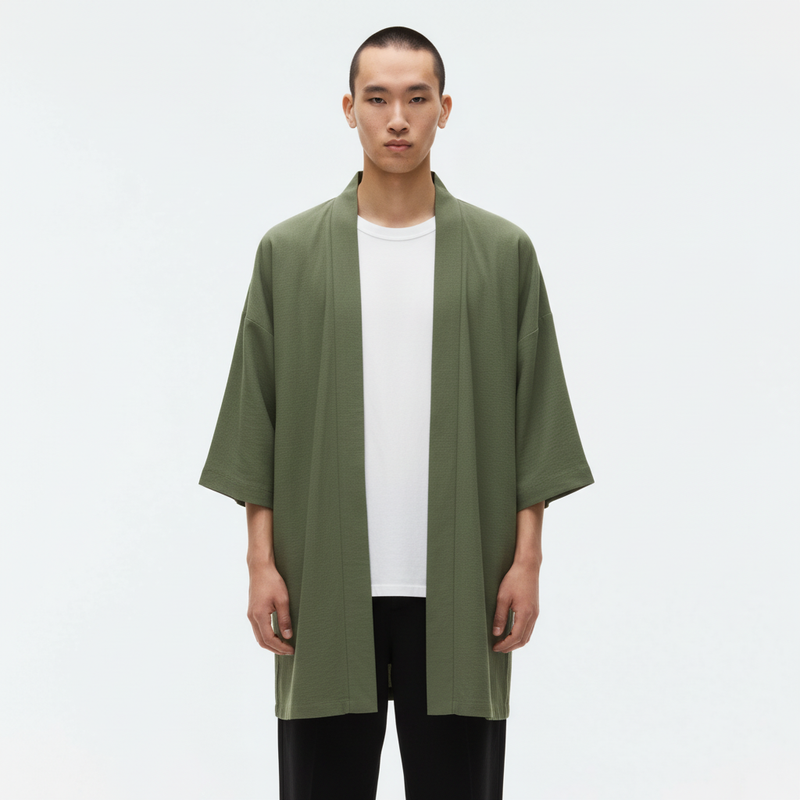


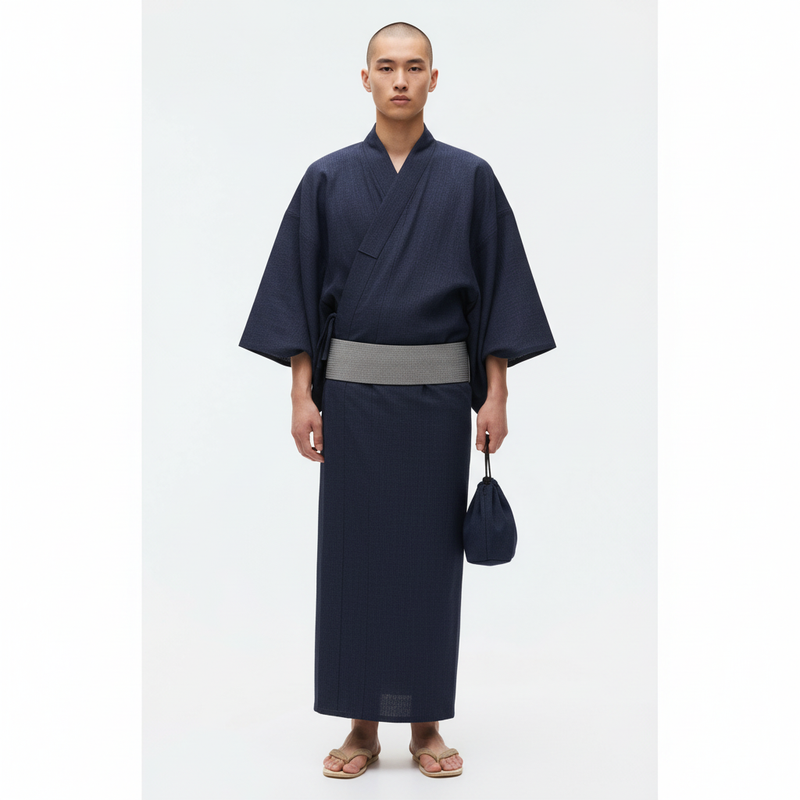
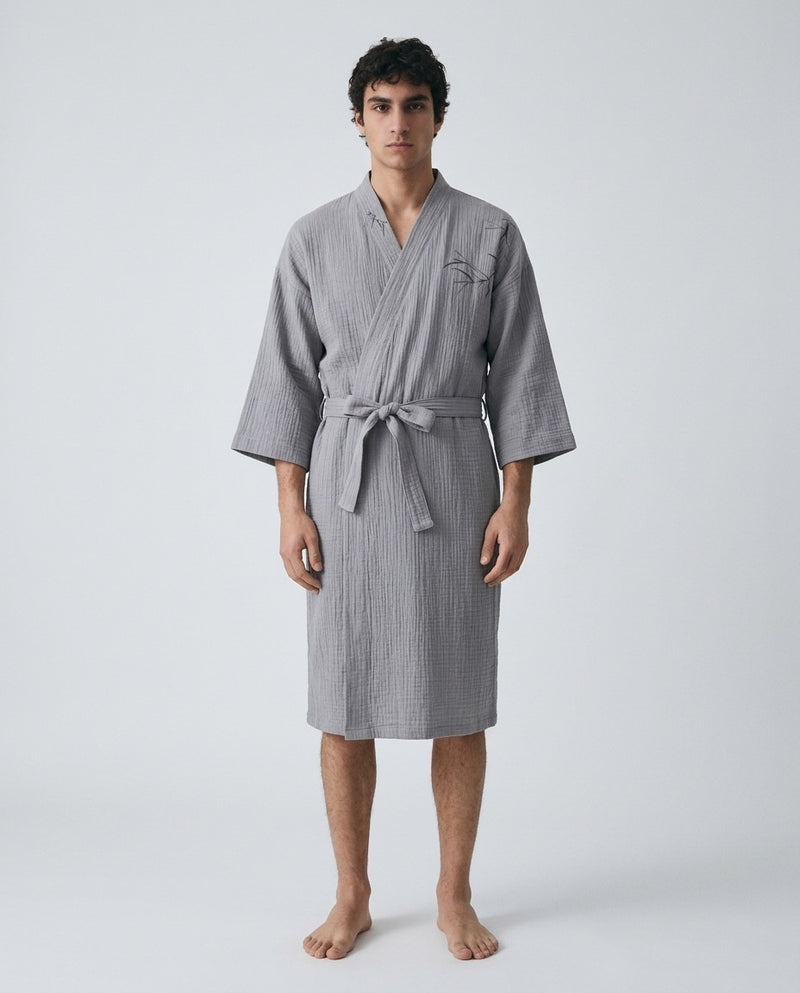


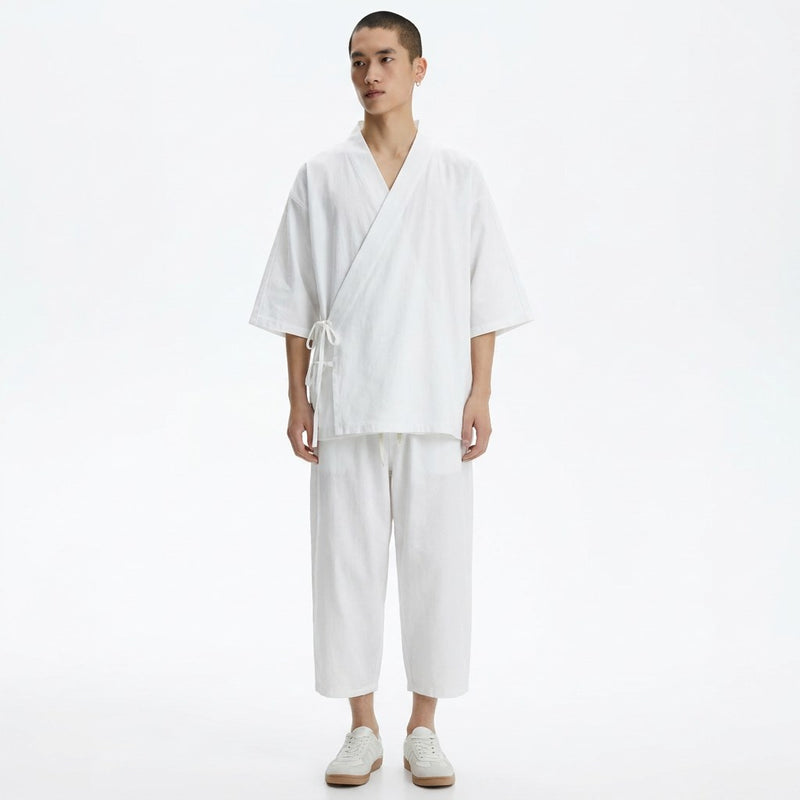
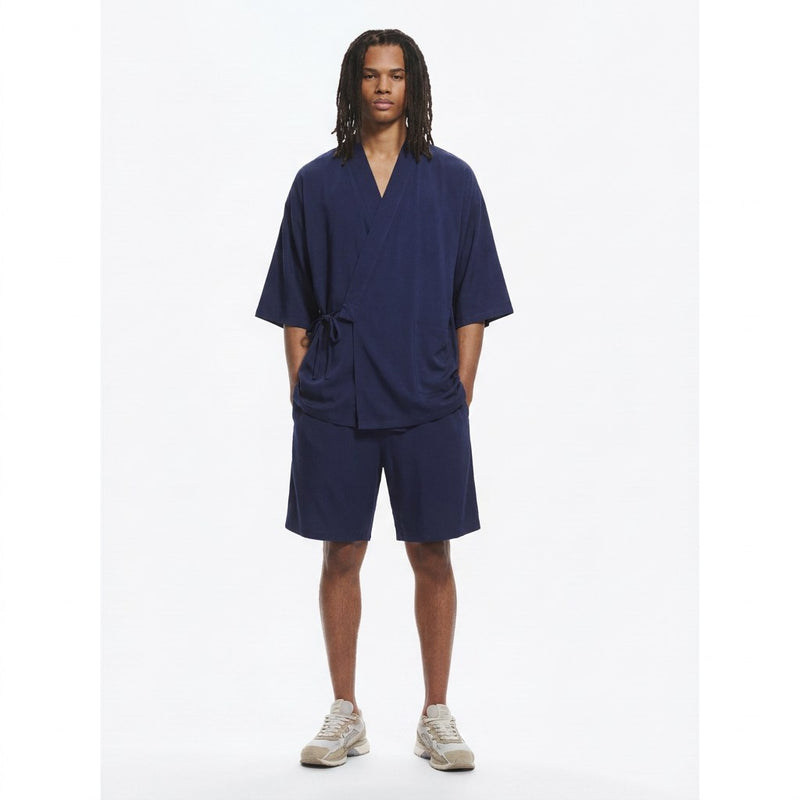

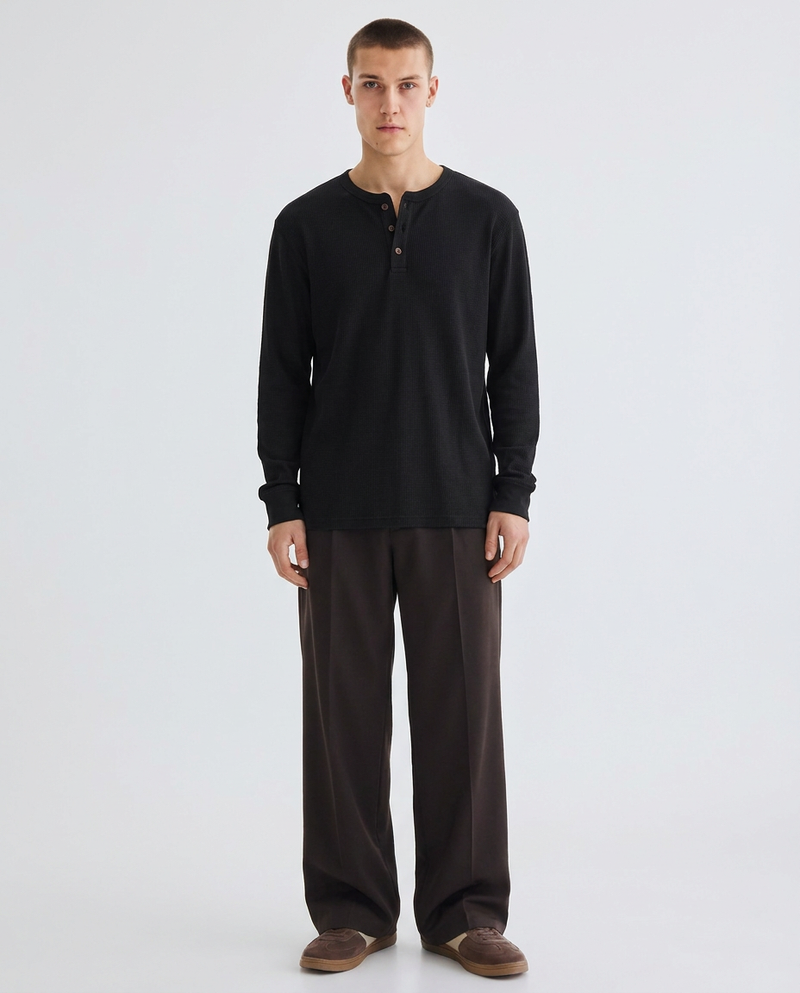
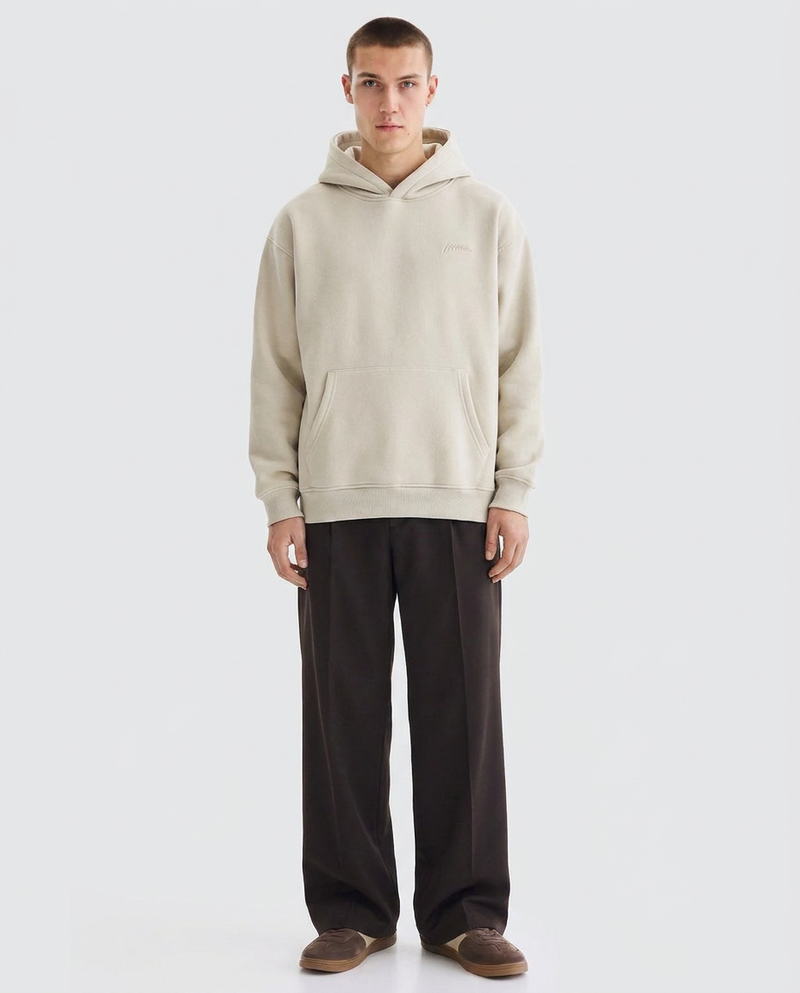

Linen is a plant fiber spun from the stems of flax. It breathes, takes in sweat and feels cool on a hot day, but it creases easily and usually costs more. Polyester is a synthetic fiber made from petroleum that resists wrinkles, dries fast and keeps its color, yet it traps heat and tends to hold body odor. For loose summer pants, linen is usually the better pick. The wide cut of Amaji's Igen Japanese pants is drafted for that kind of heat.
Polyester still wins in a few places, mostly travel and anything that has to stay crisp all day.
Linen vs polyester at a glance
| Linen | Polyester | |
|---|---|---|
| Source | Flax plant stems | Oil-based plastic (PET) |
| Airflow | High | Low in most woven fabrics |
| Sweat | Absorbs it and lets it evaporate | Absorbs almost none |
| Wrinkles | Creases easily, mostly at the lap and knees | Resists creasing |
| Drying | Slower | Fast |
| Odor | Rarely holds smell | Tends to hold body odor |
| With age | Gets softer | Can pill, otherwise changes little |
| End of life | Biodegrades if undyed and untreated | Does not biodegrade, sheds microfibers in the wash |
| Price | Usually higher | Usually lower |
How each one feels in summer heat
Flax fibers are long and stiff, so a linen weave stands slightly off your skin instead of clinging to it. Air moves through the gaps. When you sweat, the fiber pulls moisture in and lets it evaporate, so the cloth feels cool and fairly dry even when you are not.
Polyester behaves the other way. The fiber is a plastic and absorbs almost no water, so in an ordinary woven trouser the sweat stays between the fabric and your legs. By mid-afternoon in humid weather, that feels clammy. It also tends to hang on to body odor after a long hot day, where linen lets it go in the wash.
Sportswear is the exception. Brands knit polyester into wicking fabrics that spread sweat along the surface of the fibers so it dries quickly, which works well in a running shirt. Casual pants are rarely made that way.
Japan has long dressed for sticky summers with plant fibers. The word asa (麻) covers bast fibers such as hemp, ramie and linen, and summer clothes like the jinbei (甚平), a two-piece summer set of a tie-front top and shorts, were traditionally made of cotton or hemp.
Polyester vs linen: where the synthetic wins
Polyester is thermoplastic, which means heat sets its shape. Pressed creases and pleats stay put, and wrinkles from sitting fall out on their own. That is the main reason it shows up in uniforms and travel clothes.
- Travel: a polyester pair can come out of a packed bag looking presentable. Linen comes out looking lived in.
- Drying: it dries in a fraction of the time, after rain or a wash.
- Color: it holds dye well, so black stays black for longer. Linen fades toward softer shades.
- Price: it is cheap to produce, so polyester pants usually cost less.
Pleats show the difference most clearly. Many kendo practice hakama are polyester, often sold in Japan under the name tetron, because their seven pleats stay sharp through washing. Amaji's Kendo Hakama were in 6 of our last 67 orders. A pleated pant in a natural fiber relaxes into softer folds over time, which some people like and others find untidy.
Linen blends and linen-look fabrics
Most shelves sit somewhere between the two. Cotton linen is the usual blend in casual trousers: softer than pure linen on day one and a little less prone to creasing. Poly linen blends keep some of the texture and lose some of the wrinkles, but they breathe less as the polyester share rises.
Then there is "linen look" cloth, which may contain no flax at all. Slub-woven polyester or viscose copies the uneven texture convincingly in photos. Only the composition label tells you, at any shop, ours included. A product name describes a style. The label tells you the fiber.
In the hand, real linen has small irregular thick spots called slubs, feels cool and slightly crisp, and holds a crease if you squeeze a corner in your fist. Linen-look synthetics tend to be more even and slicker.
Which fabric suits Japanese style pants
Wide, relaxed Japanese cuts and linen go well together. A loose leg lets air circulate, and creases look natural on a wide drapey pant in a way they never do on slim chinos. If you want that relaxed shape with a softer feel from the start, cotton linen is the easy middle.
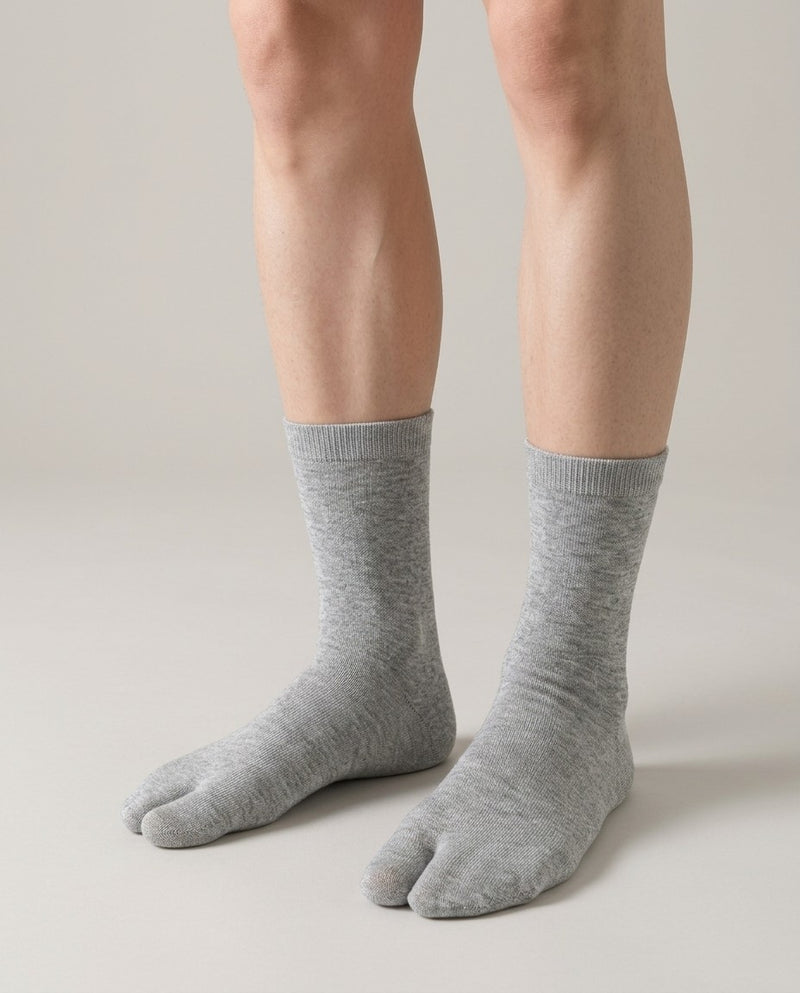
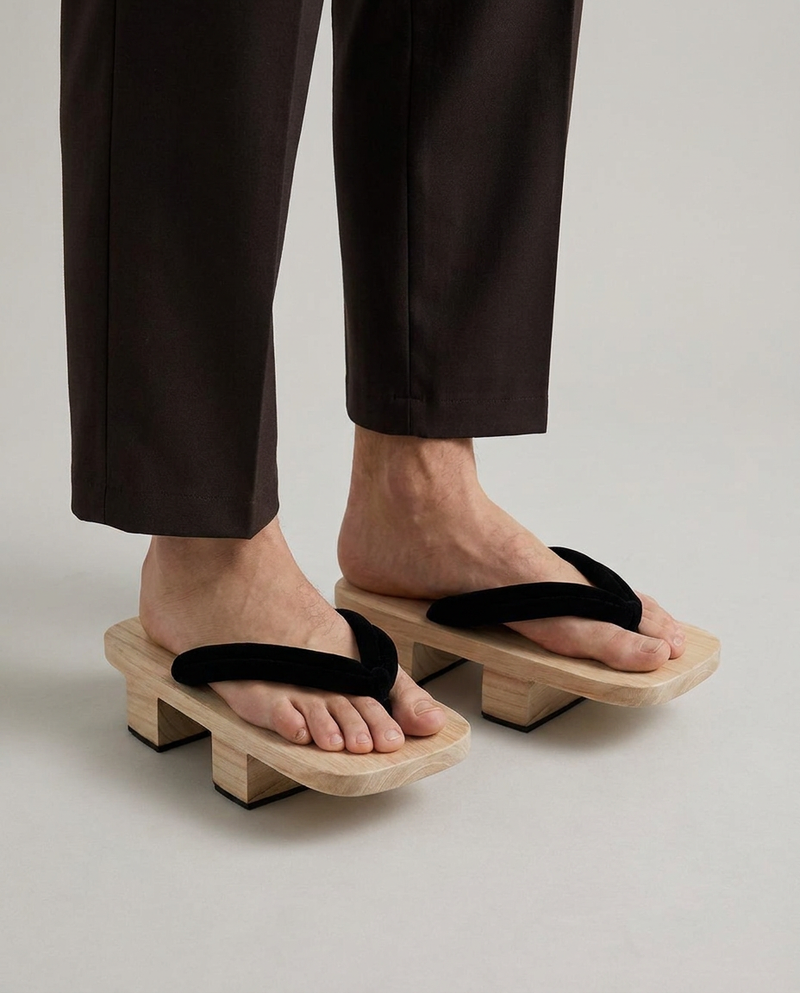
A few pairs we sell at Amaji, by cut. Amaji's Igen Men's Japanese Linen Pants are $89.00 and come in black, gray, mocha, green and blue, sizes XS to 3XL. The Yasumi Men's Cropped Linen Pants from Amaji ($95.00) end above the ankle, which leaves room to show sandals or Amaji's Grey Tabi Ninja Socks ($12.90). The socks were in 14 of our last 67 orders.

For less, Amaji's Men's Linen Work Pants have a straight relaxed leg at $39.90, and the Men's Cotton Linen Pants we sell at Amaji ($39.90) close with a tie belt. If you like pleats, Amaji's Linen Hakama Pants ($49.90) have a pleated wide leg and a buckle belt, in gray or black. Size M is listed for a height of 170 to 178 cm.

To be plain about what we are: Amaji sells affordable everyday pieces made in China. If you want linen woven in Japan, we are not that shop.
A simple way to decide
Pick linen when heat and comfort come first and a few creases do not bother you. Pick polyester when you travel a lot, need to look crisp all day, or want something dry by morning. Pick a blend when you want some of both, and read the label so you know the split.
One more difference: linen can shrink in a hot wash, while polyester barely moves. If a linen shirt has already shrunk, the guide on how to unshrink a linen shirt shows how much you can get back. And if cotton is also on your list, the linen vs cotton comparison covers that pairing.
Written by the Amaji team, November 3, 2026. How we write our guides.