
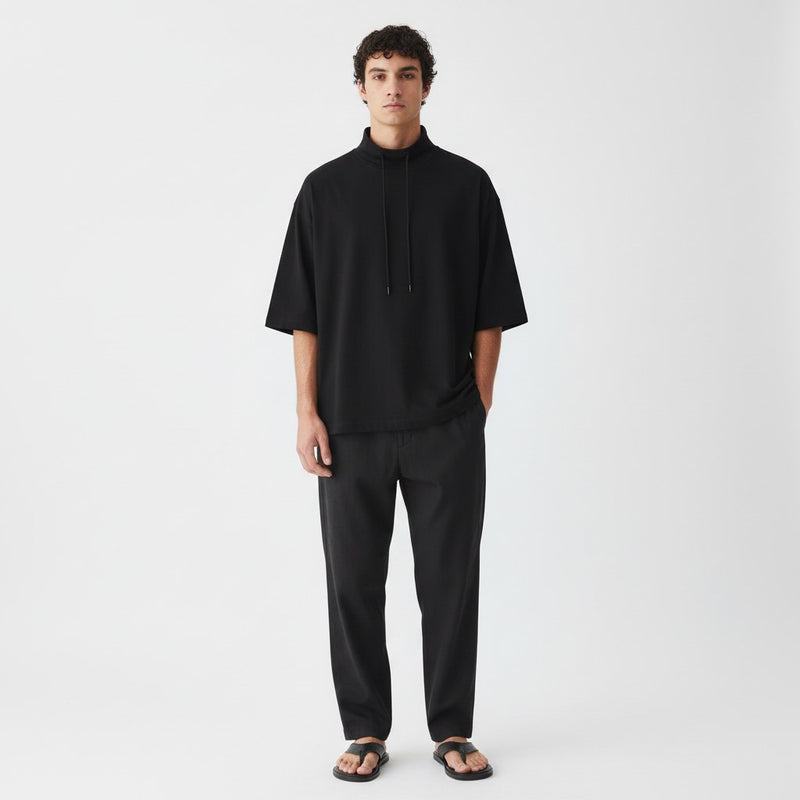


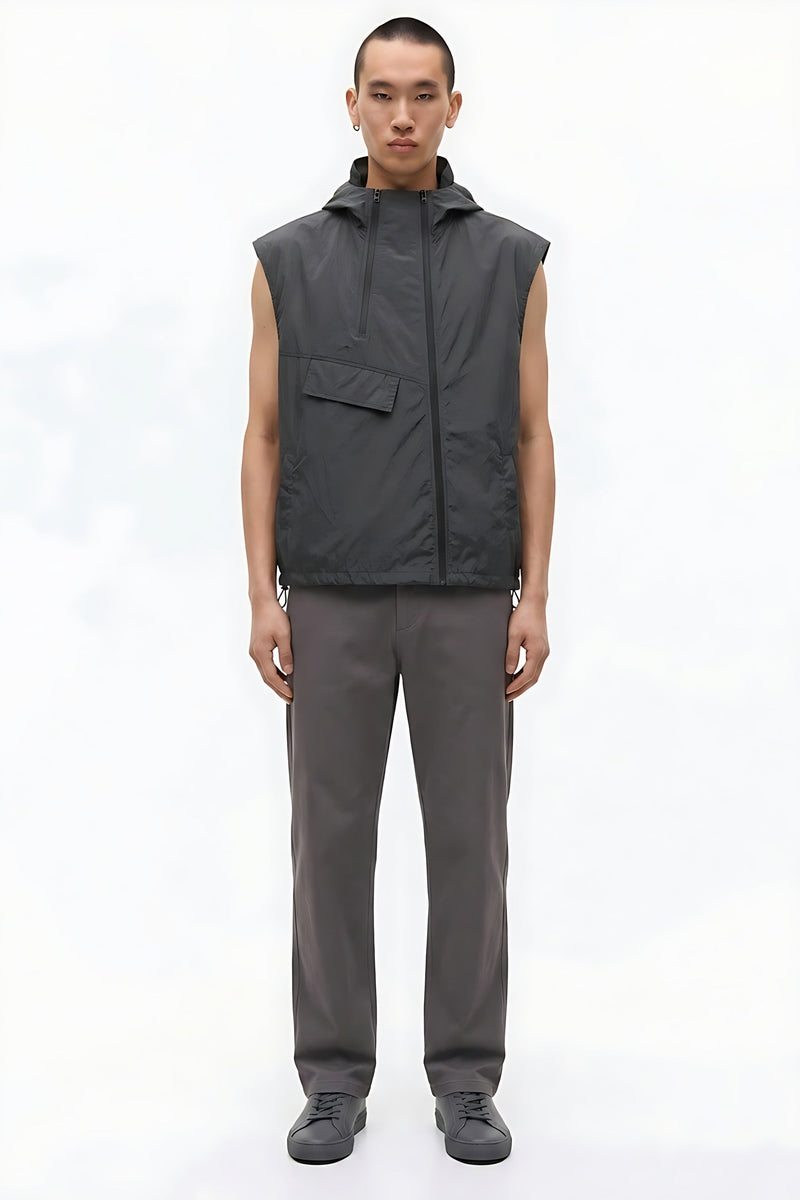

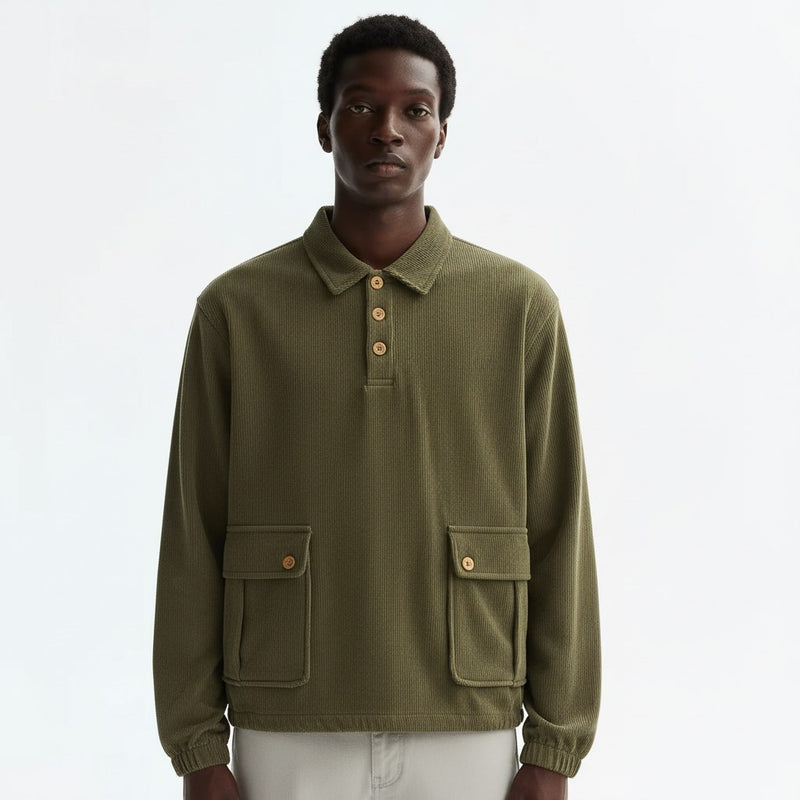
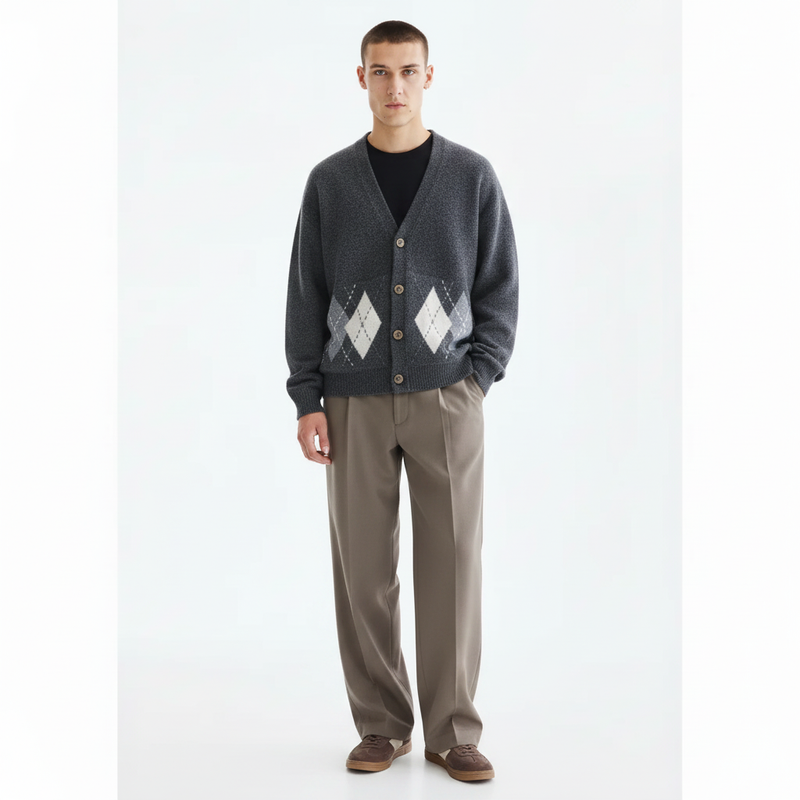




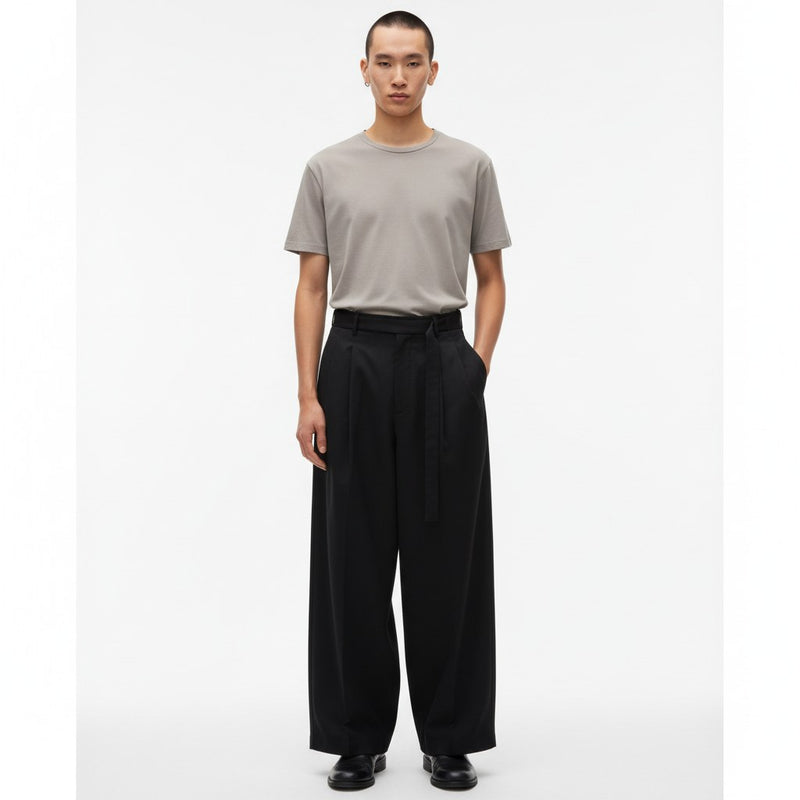
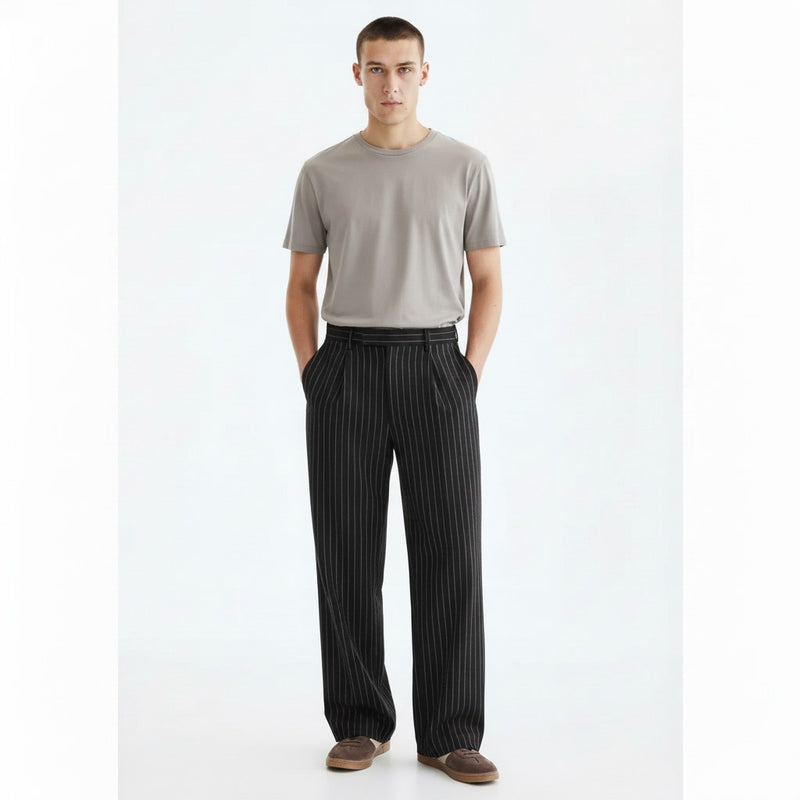

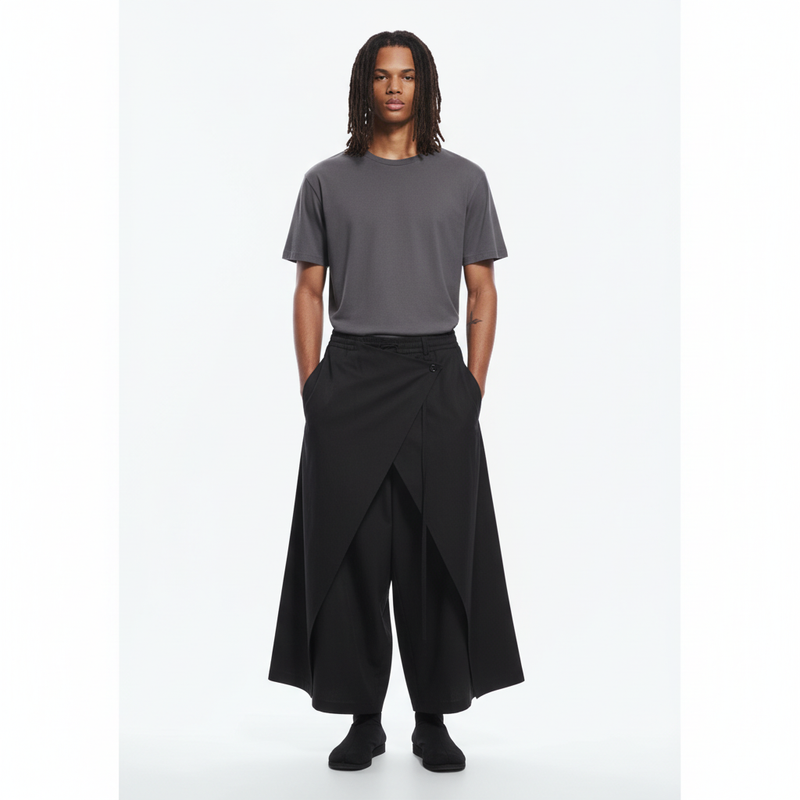
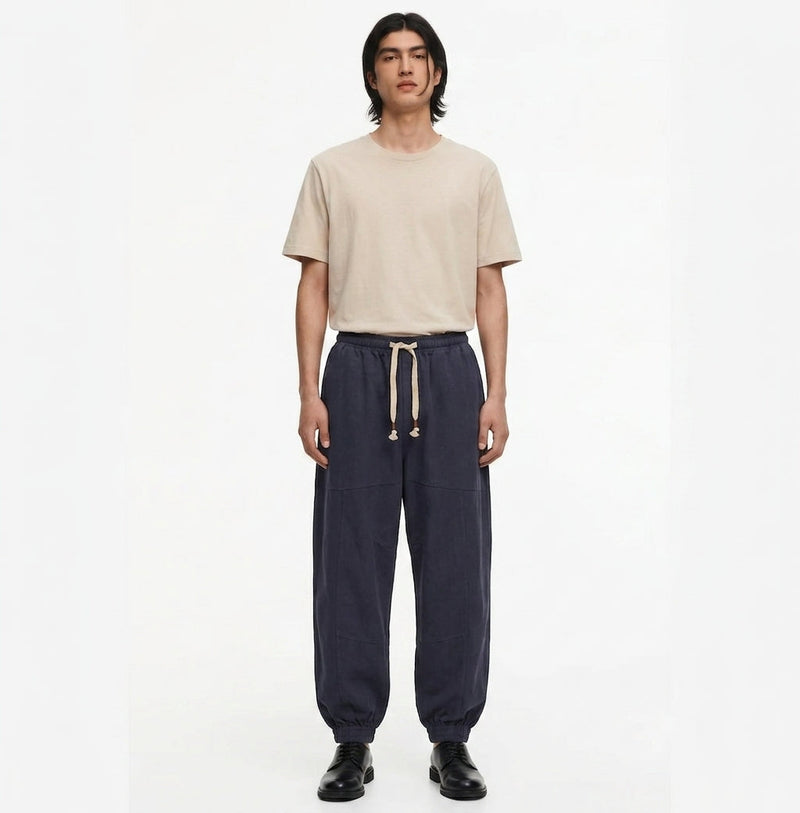


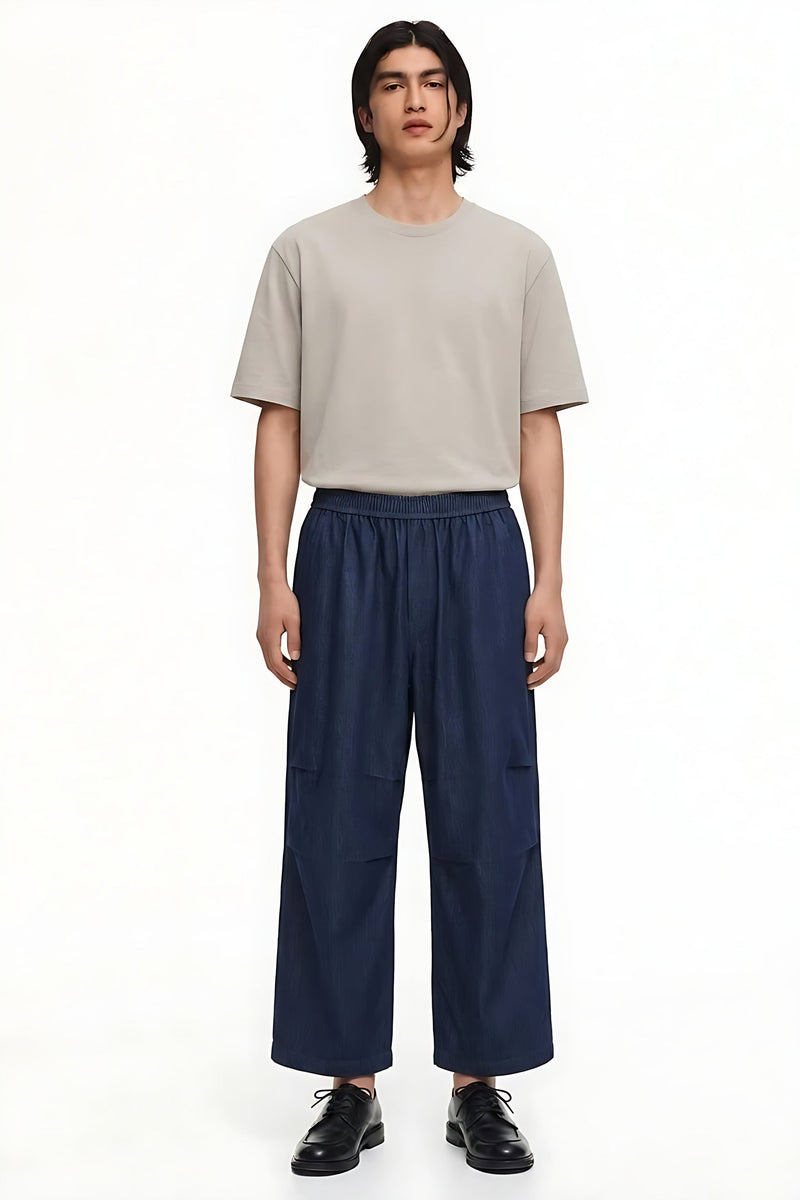

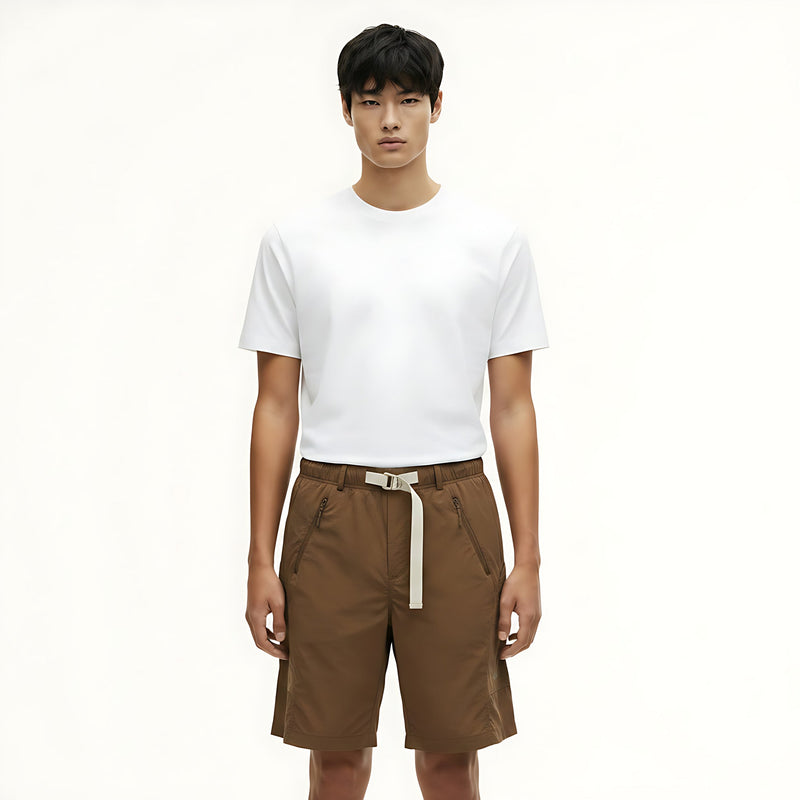

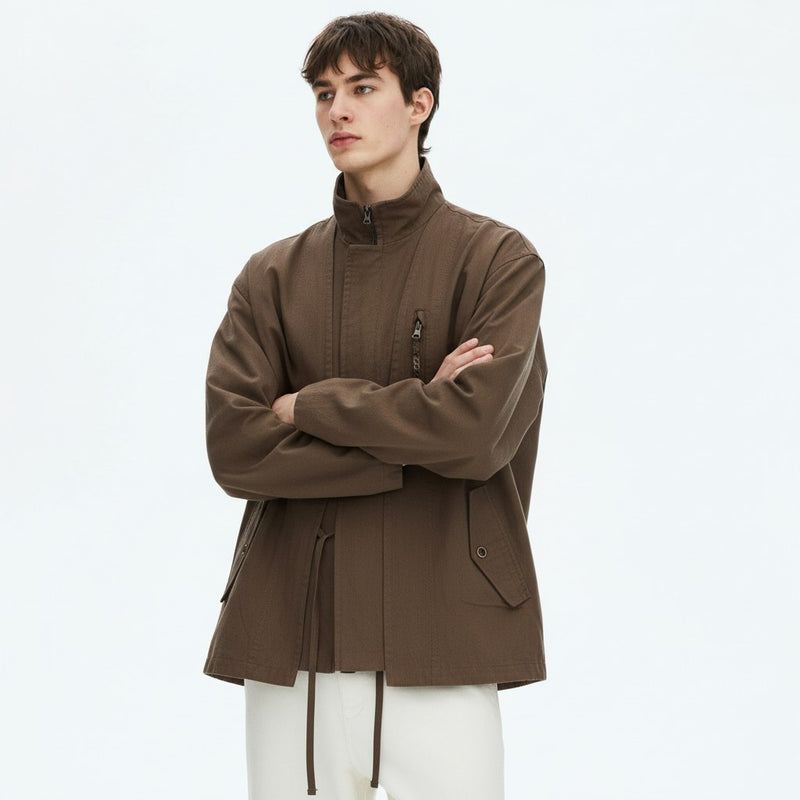

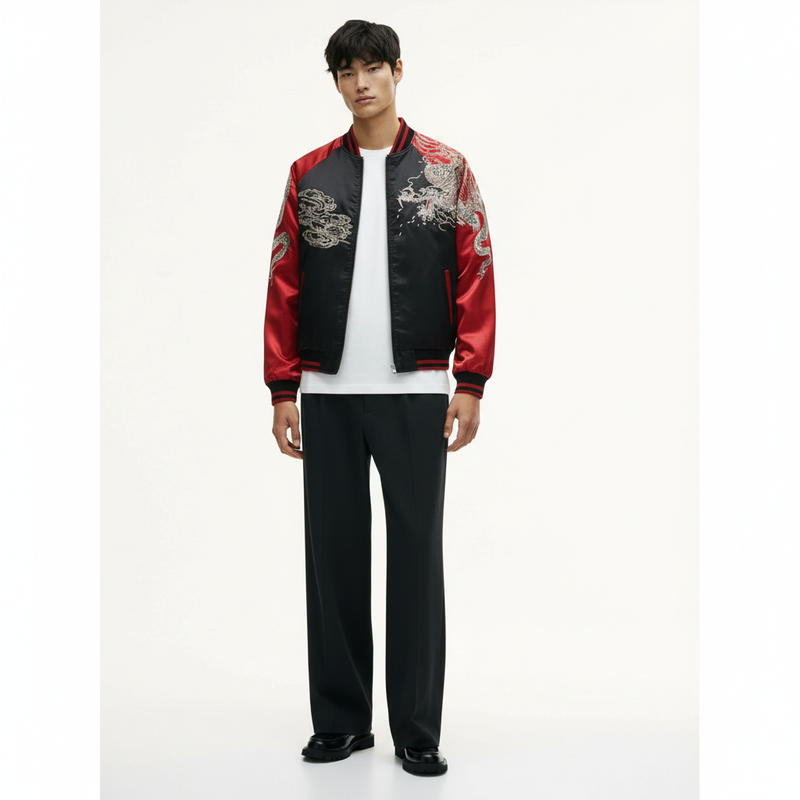


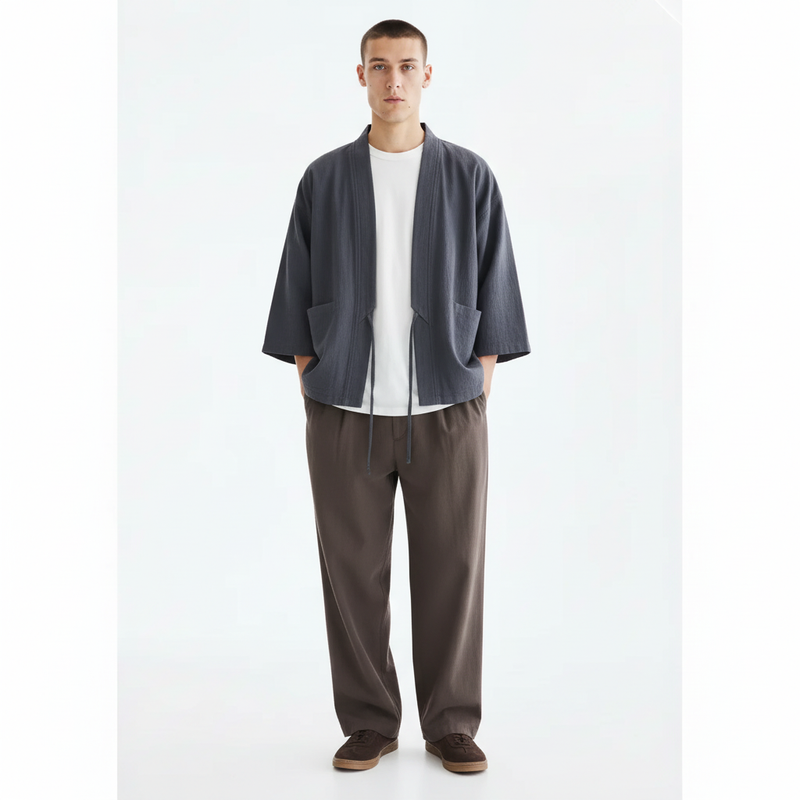
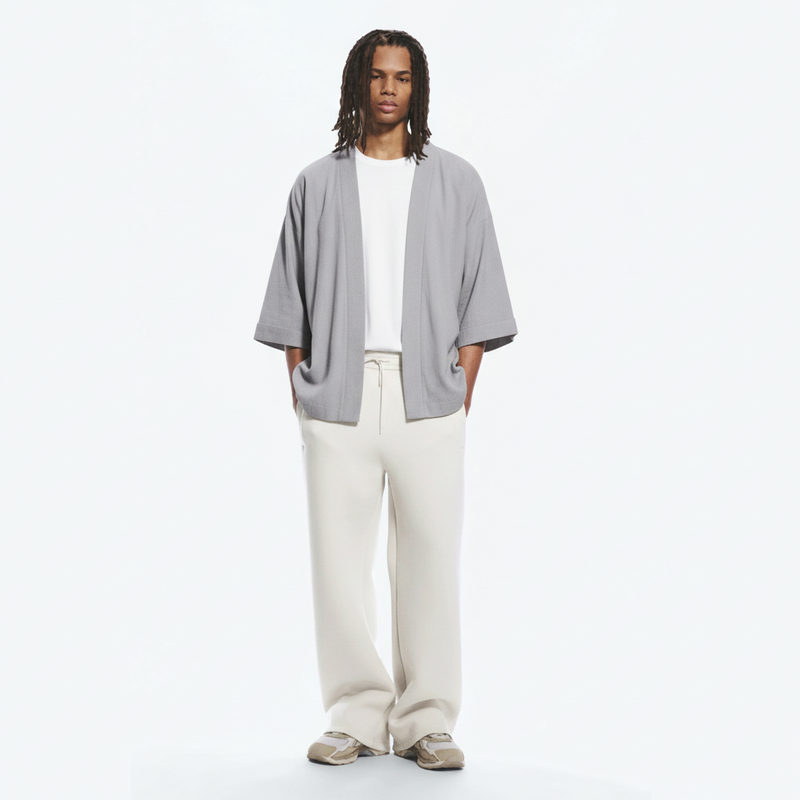
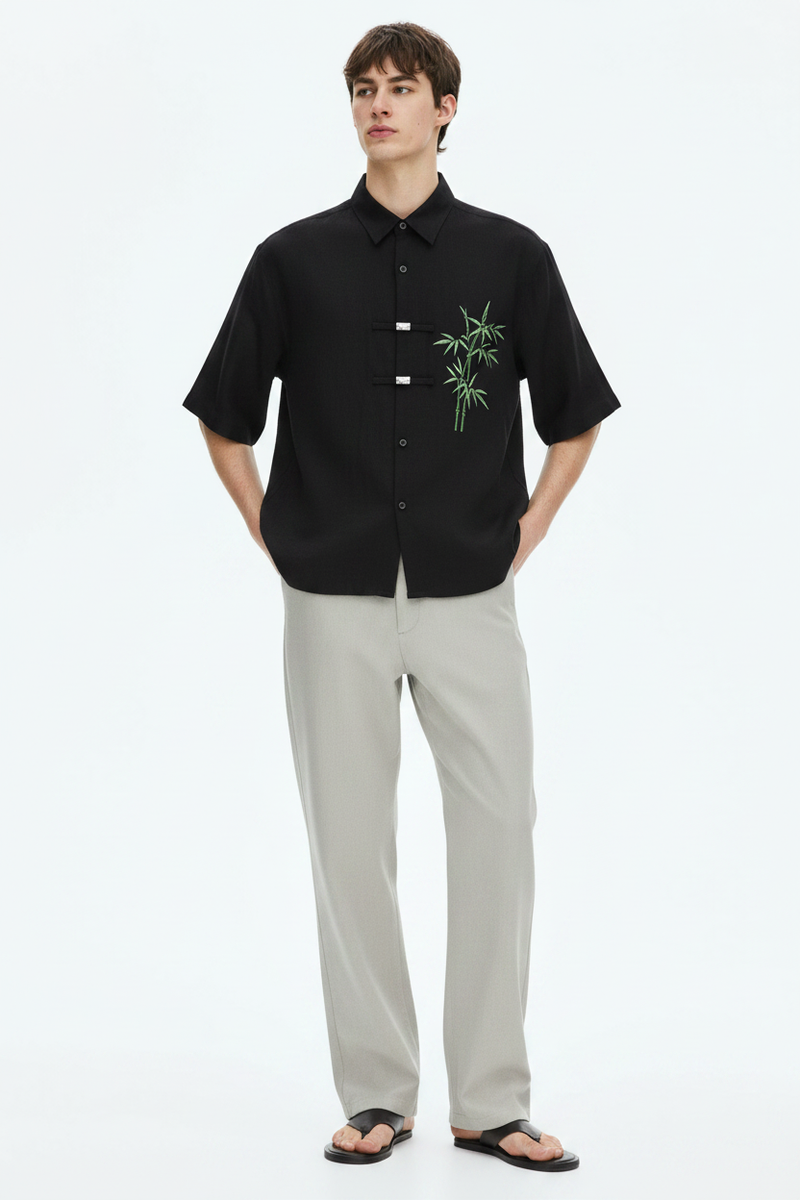
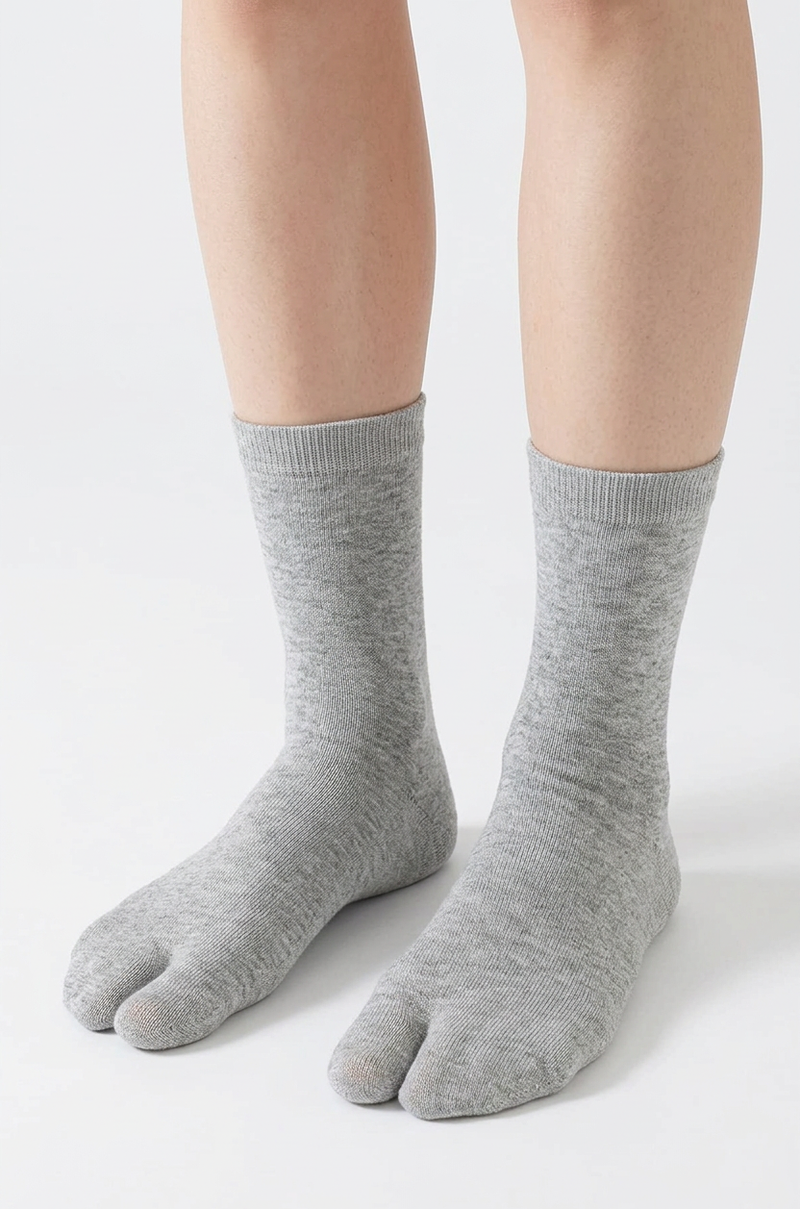
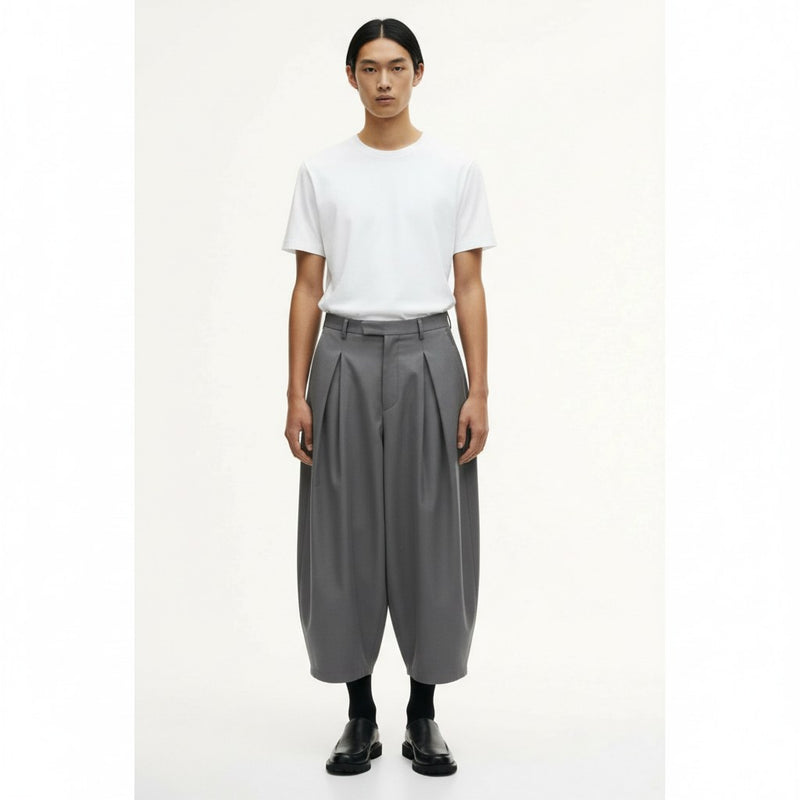


Short answer: Japanese clothing for men falls into two groups. The first is traditional garments now worn as everyday pieces: hakama, haori, noragi, the kimono jacket, jinbei, samue and tabi socks. The second is workwear and street cuts that grew out of them: tobi pants, monpe, wide work trousers, harem pants and the sukajan. Most men start with one wide trouser and one open jacket, and keep the rest of the outfit plain.
This page is the map. Each piece links to a guide that explains it and to the collection where we sell it.
The 12 pieces at a glance
| Piece | What it is | Learn | Shop | Our price from |
|---|---|---|---|---|
| Hakama | Wide pleated trousers tied at the waist, once worn by samurai | Samurai pants guide | Hakama pants | $34.90 |
| Harem pants | Dropped-crotch trousers, called sarouel in France | Hakama vs harem pants | Men's harem pants | $34.90 |
| Tobi pants | Scaffolders' trousers, wide to the knee and tight at the calf | What are tobi pants? | Japanese work pants | $39.90 |
| Monpe | Farm trousers that balloon and gather at the ankle | Work pants buying guide | Japanese work pants | $49.90 |
| Wide and baggy trousers | Loose cotton cuts from Japanese street style | Japanese streetwear pants | Japanese baggy pants | $34.90 |
| Noragi | The tied cotton work coat of rural Japan | What is a noragi? | Noragi jackets | $34.90 |
| Haori | A hip-length jacket worn open, first over a kimono | Haori jacket guide | Haori jackets | $19.90 |
| Kimono jacket | A short open jacket with the kimono's straight body and wide sleeves | How to wear one | Men's kimono jackets | $19.90 |
| Sukajan | The embroidered satin souvenir jacket from Yokosuka | Sukajan guide | Sukajan jackets | $59.90 |
| Jinbei | A short tie-front top with shorts or trousers, for summer and home | Where to buy a jinbei | Tie-Front Jinbei Set | $39.90 |
| Samue | The crossover jacket and trousers of temple work | Where to buy a samue | Wrap-Front Samue | $39.90 |
| Tabi socks | Split-toe socks made for sandals and jika-tabi | What are tabi socks? | Tabi socks | $9.90 |
The full-length kimono and the yukata are not on the list because we do not sell them. Our men's kimono guide and yukata vs kimono cover both, and the traditional Japanese clothing glossary lists 16 garments with their kanji.
Start with the trousers
The trouser sets the whole silhouette, so pick it first.
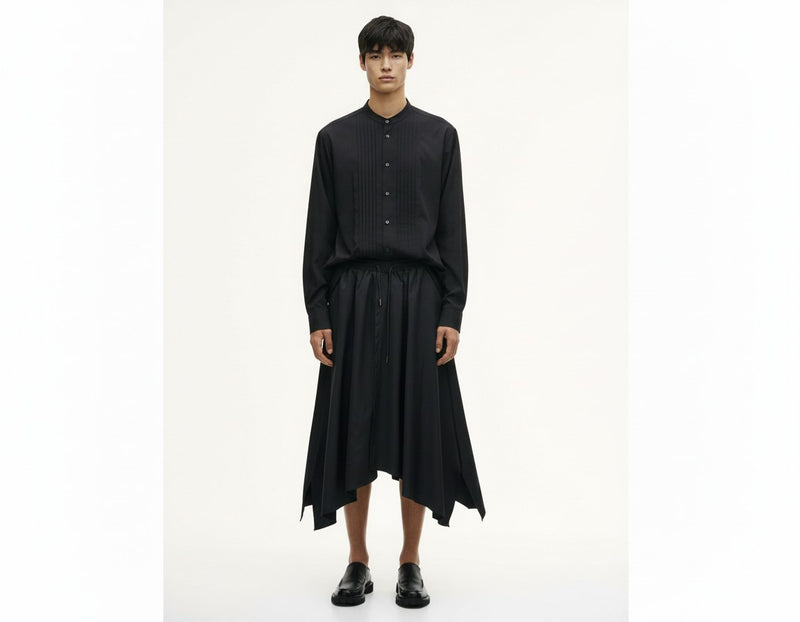
- Hakama if you want the most Japanese line. The leg is so wide it moves like a skirt.
- Harem pants if you want comfort and a lower crotch, without the pleats.
- Tobi pants or monpe if you like workwear. The narrow ankle sits on a boot.
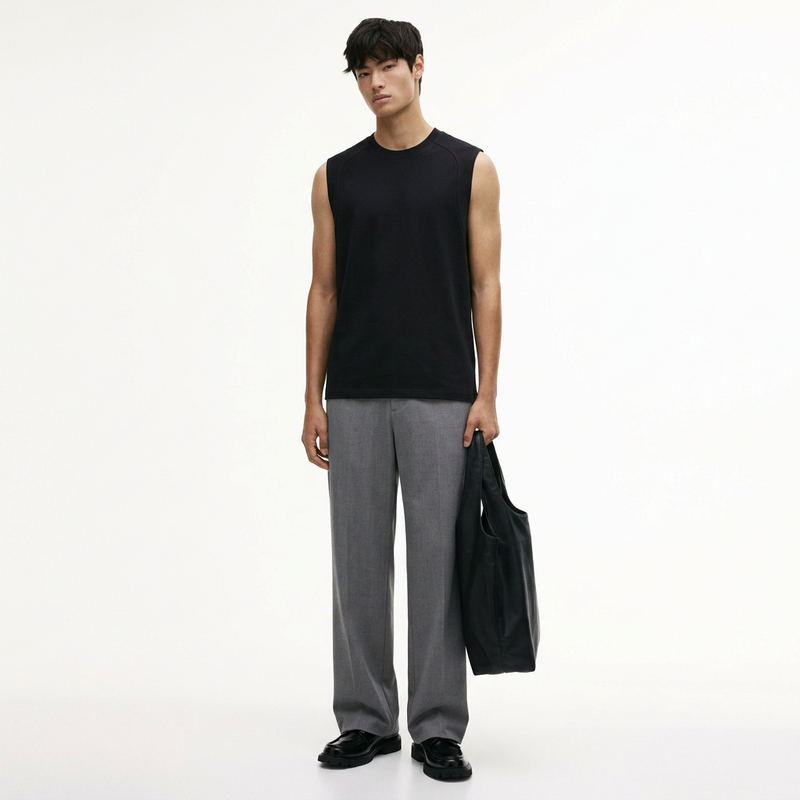
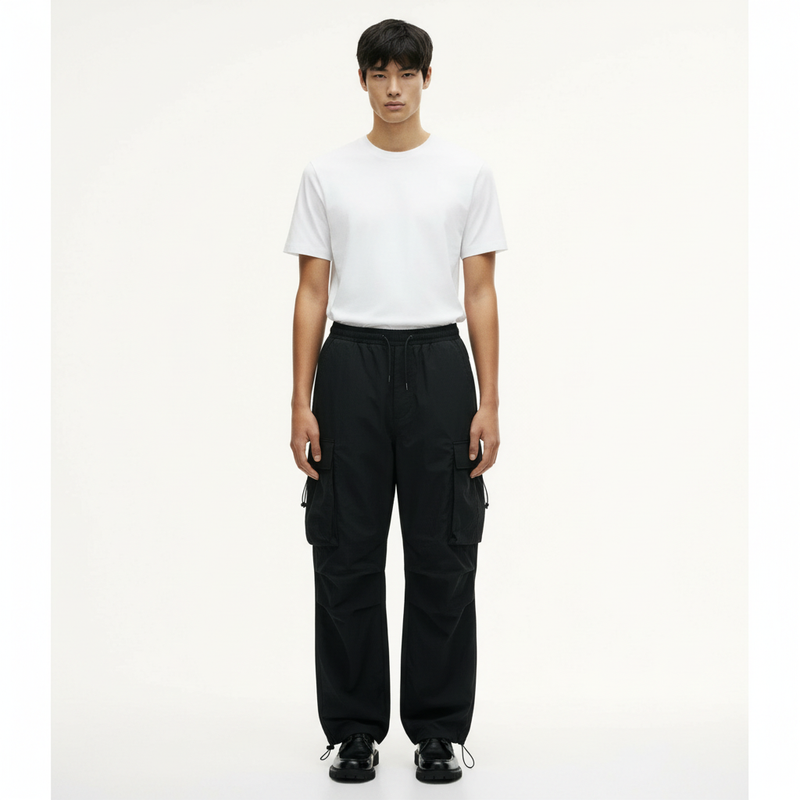
- Wide work trousers if you want the easiest step from jeans. They are loose but read as normal trousers.
Add one open layer
Japanese jackets are mostly worn open or loosely tied. A haori or a kimono jacket goes over a tee like a cardigan. A noragi ties across the body and works as a light coat. A sukajan is the loud option, so wear it with plain black trousers and nothing else printed.
Keep everything else quiet
- One wide piece at a time is easiest. Wide trousers plus a fitted or cropped top. Or a loose jacket with straight trousers.
- Use two or three colours. Black, indigo, grey, off-white and olive are the traditional palette.
- Show the shoes. Plain sneakers, boots or sandals with tabi socks. Cropped and tapered cuffs exist to show the ankle.
- Cotton and linen first. Natural fibres give the soft drape these cuts are designed for.
What Japanese clothing costs
We checked 837 men's and unisex listings in 15 online Japanese clothing stores on 29 September 2026. The median hakama cost $79.97, the median haori $47.99, the median jinbei $76.00 and the median samue $109.00. Pieces made in Japan cost more, with hakama from specialist dojo suppliers running into the hundreds. The full data, store by store, is in our Japanese clothing price survey.
Our pieces are made by partner workshops in China and cost less than the survey medians. We say so on every product page and on our about page.
Sizing for Japanese cuts
Many Japanese-cut pieces are sized small, and many traditional ones are one size with ties. Every product page lists the waist range and the outside length in centimetres and inches. Measure a pair of trousers you already own and compare the numbers, not the letter size.