








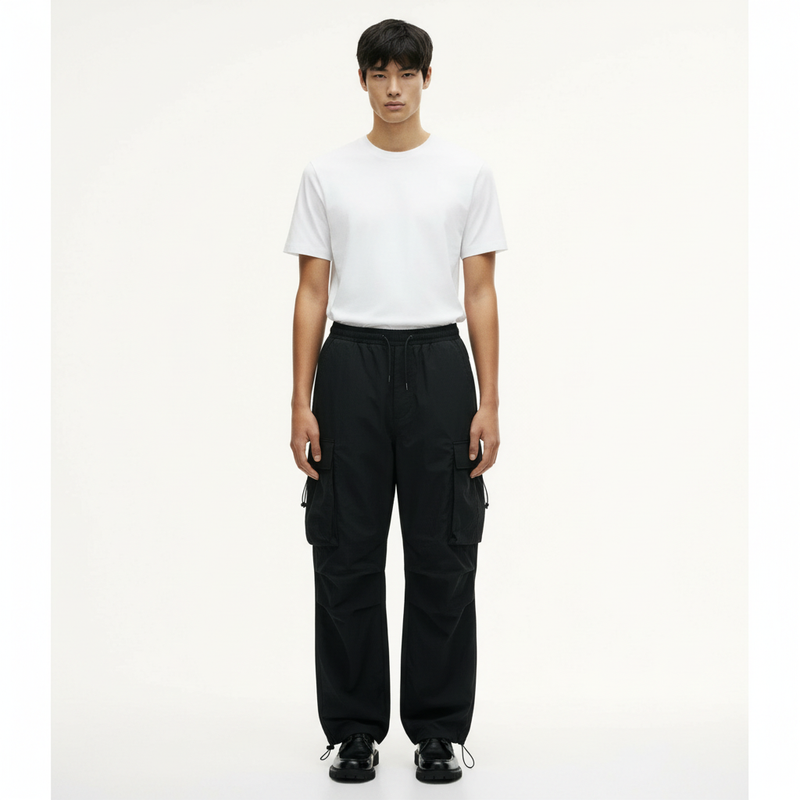
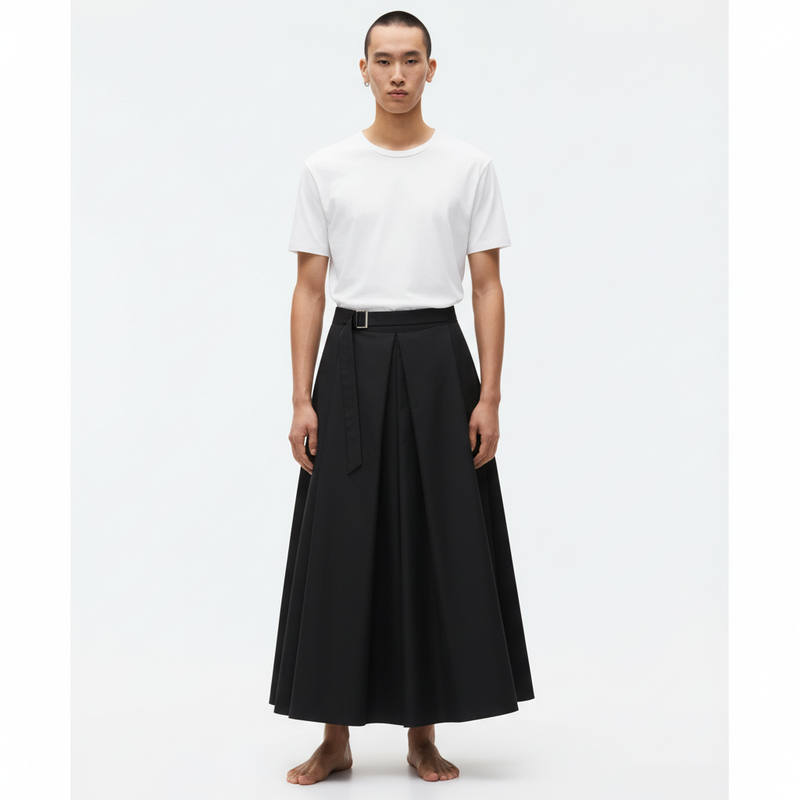
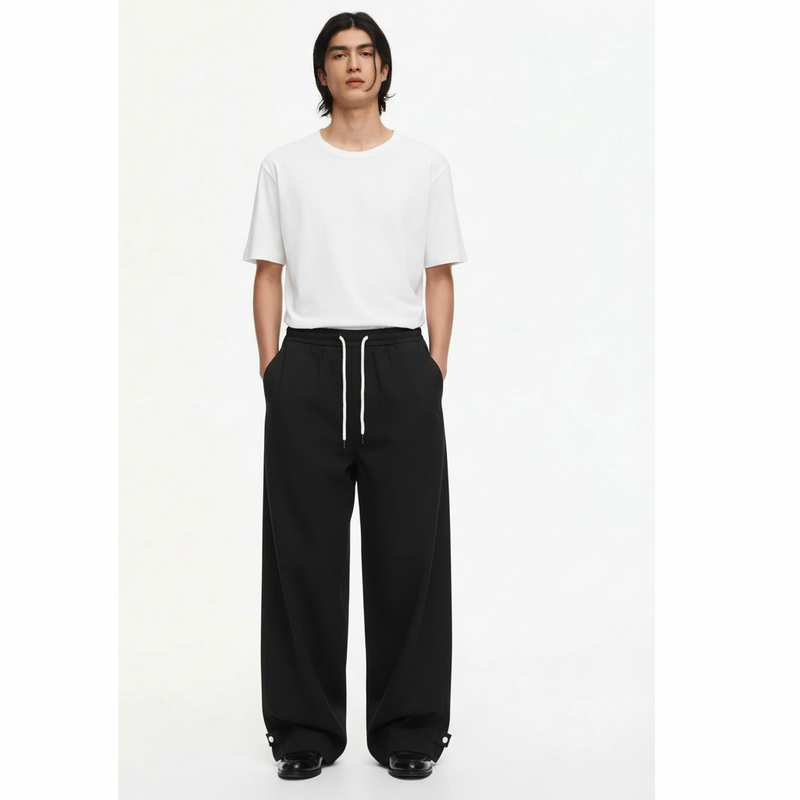
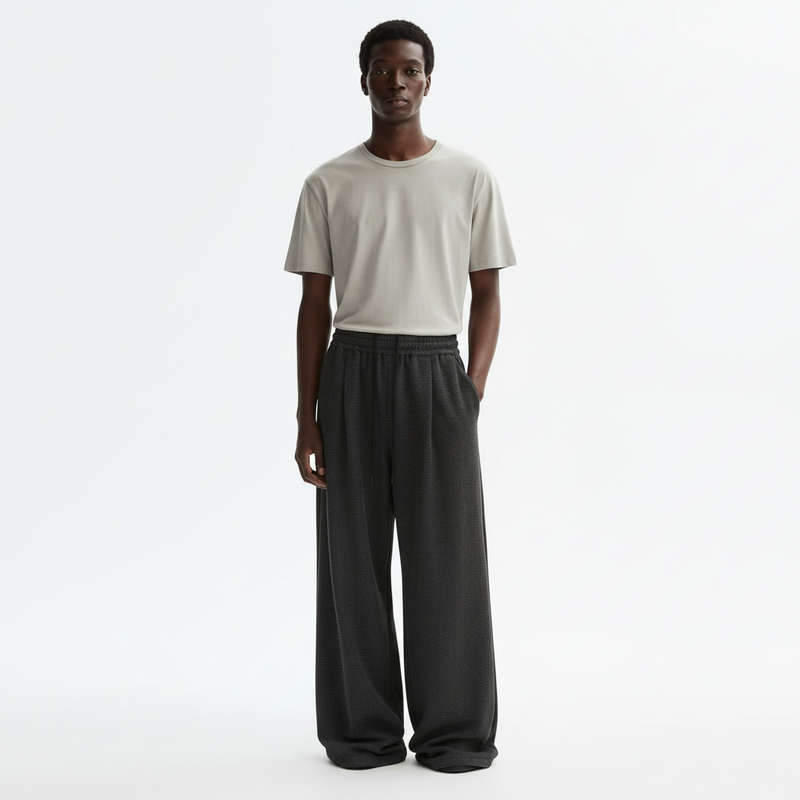


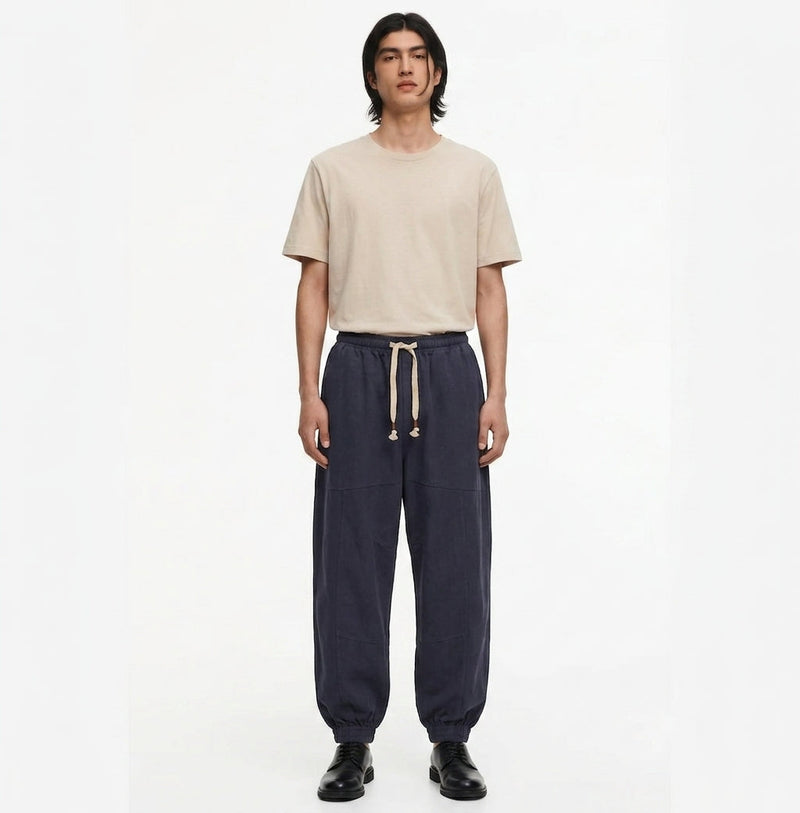


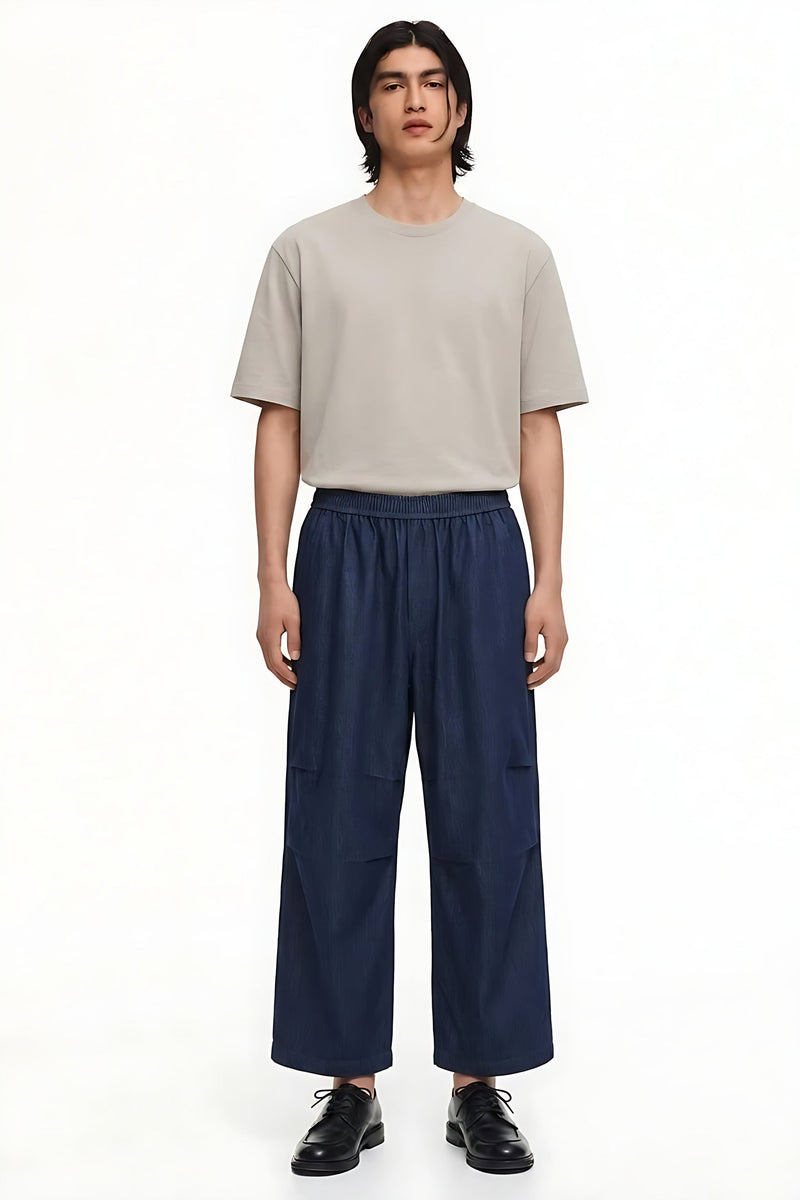



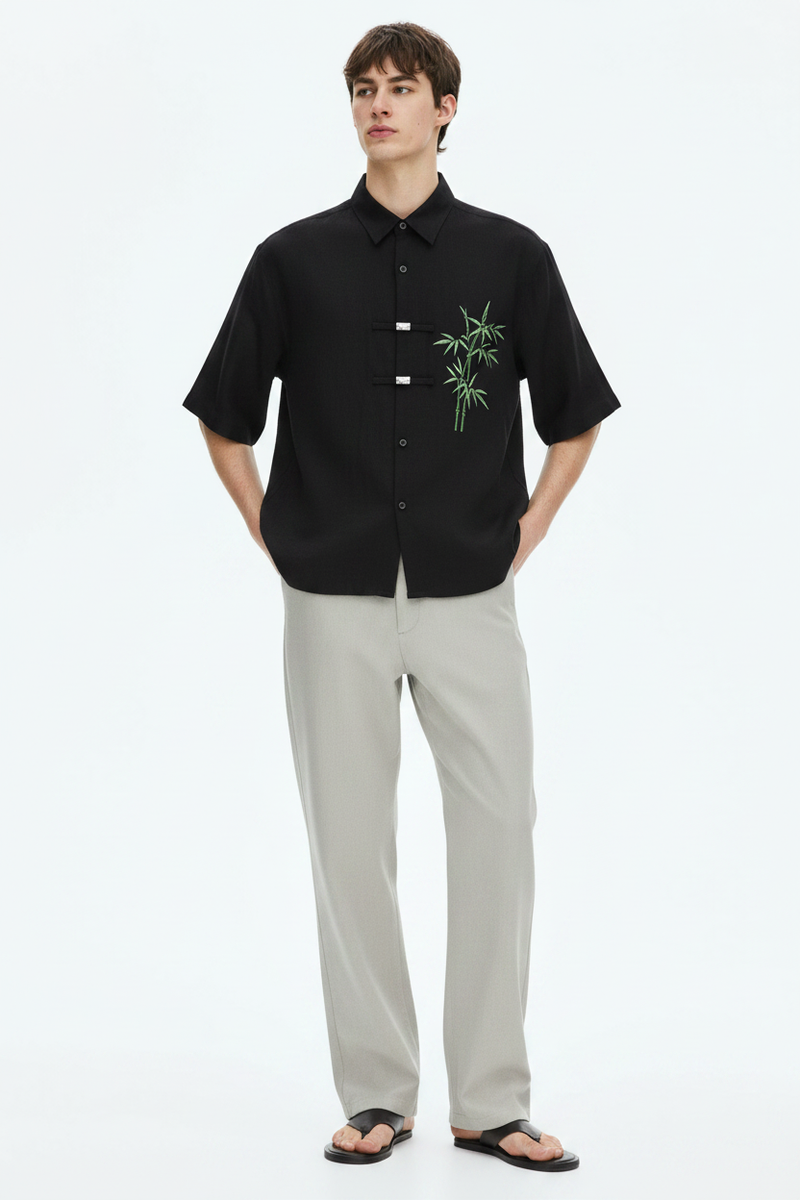


Traditional Japanese clothing is called wafuku, which simply means Japanese clothes, as opposed to yofuku, Western clothes. The core garments are the kimono, the yukata, the hakama and the haori, worn with an obi, tabi socks and sandals. Around them sits a family of work and summer clothes, from the noragi and samue to the jinbei and happi. This guide names sixteen of them.
Each one is described below in plain terms: what it is, who wore it, and whether it still gets worn today. Where a garment has its own guide on this site, it is linked.
The sixteen garments at a glance
| Name | Japanese | What it is |
|---|---|---|
| Kimono | 着物 | The full-length wrapped robe, lined, often silk |
| Yukata | 浴衣 | An unlined cotton kimono for summer |
| Hakama | 袴 | Wide pleated trousers tied over a kimono |
| Haori | 羽織 | A short jacket worn open over a kimono |
| Juban | 襦袢 | The under-robe worn beneath a kimono |
| Obi | 帯 | The sash that holds a kimono or yukata closed |
| Noragi | 野良着 | A tied cotton work jacket from rural Japan |
| Samue | 作務衣 | Monks' work clothes, a wrap jacket and trousers |
| Jinbei | 甚平 | A summer set of tied top and shorts |
| Happi | 法被 | A straight festival coat, often printed with a crest |
| Hanten | 半纏 | A padded short coat for winter |
| Tobi and monpe | 鳶, もんぺ | Work trousers, ballooned or gathered at the ankle |
| Sukajan | スカジャン | The embroidered souvenir jacket from Yokosuka |
| Tabi | 足袋 | Split-toe socks |
| Jika-tabi | 地下足袋 | Split-toe work boots with a rubber sole |
| Geta and zori | 下駄, 草履 | Raised wooden sandals and flat thonged sandals |
Formal dress: kimono, hakama, haori
Kimono
The kimono is the garment most people picture. It is a straight, full-length robe with wide sleeves, wrapped left over right and held by an obi. For men today it is mostly ceremonial, worn to weddings, funerals, tea and New Year visits. The cloth, the lining and the crest on the back say how formal it is.
Yukata
A yukata is a kimono without the lining, in cotton, for summer. It is worn against the skin at festivals, fireworks and hot-spring inns, with bare feet in geta. Yukata vs kimono sets out every difference between the two.
Hakama
Hakama are wide pleated trousers tied over the kimono, usually called samurai pants in English. They are still standard dress in kendo, aikido and kyudo and at university graduations. What samurai pants are called covers the two forms and the seven pleats, and hakama pants are the modern cuts.

Haori
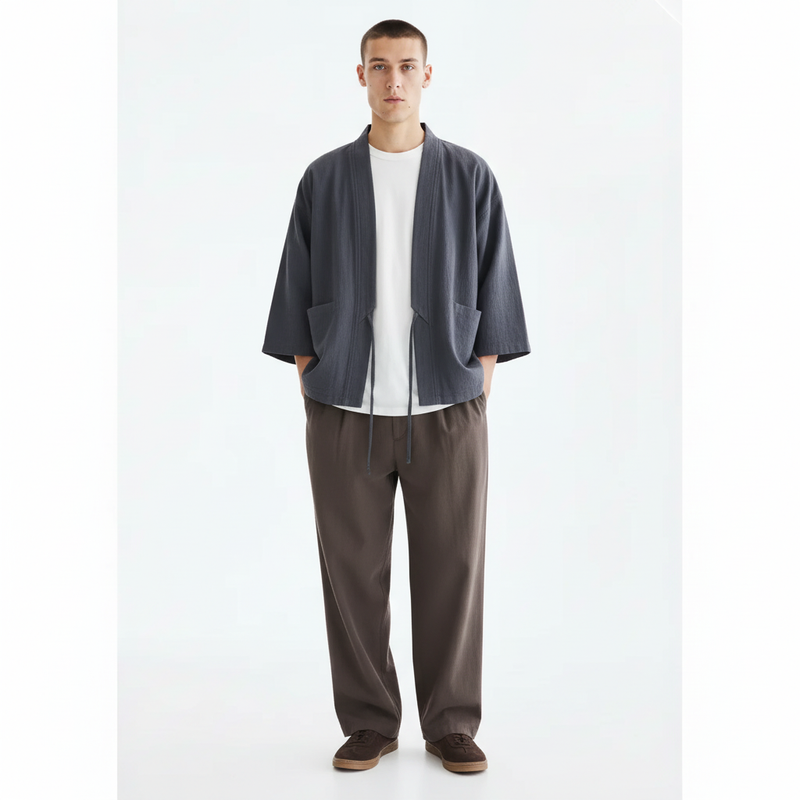
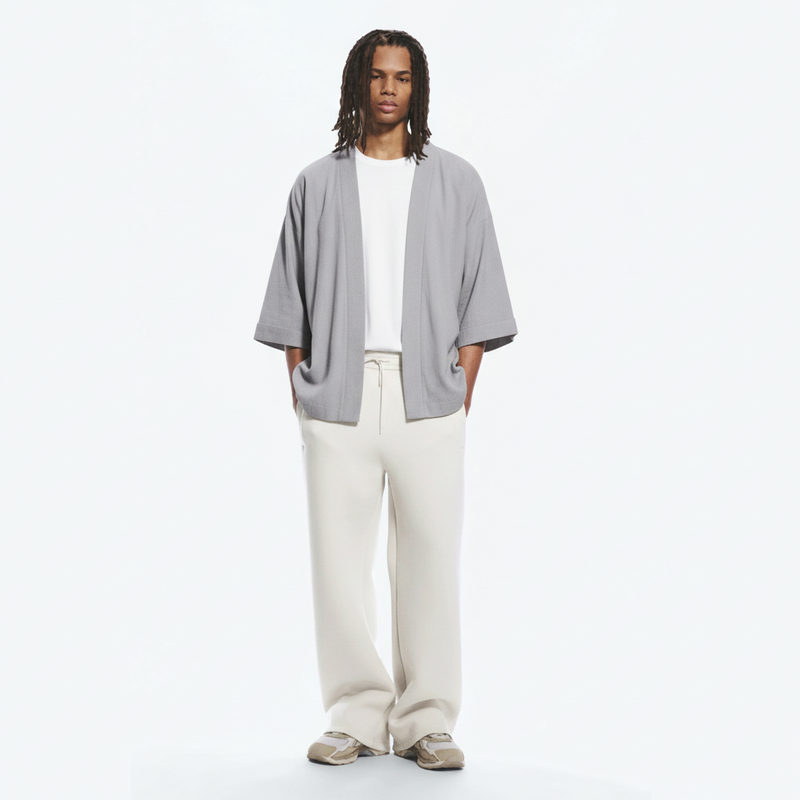
A haori is a hip or thigh-length jacket worn open over a kimono, closed if at all by a short cord at the chest. It was the layer that made an outfit formal. Worn over a tee, it is now one of the easiest Japanese pieces to wear day to day. The Open-Front Cotton Haori Jacket keeps the original cut: a straight cotton body and nothing to fasten. See the haori jacket guide and haori jackets.
Juban and obi
The juban is the under-robe, and its collar is the thin second line you see at the neck of a kimono. The obi is the sash. Men wear a narrow stiff one or a soft wide one, tied low on the hips.
Work and everyday clothes
Noragi
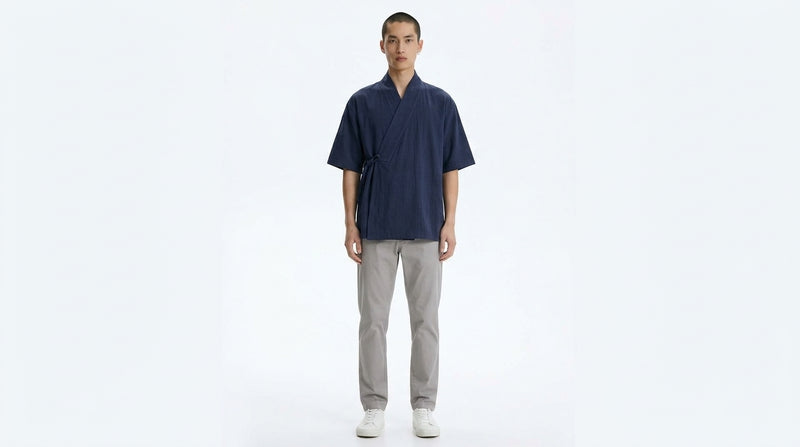
Noragi means field clothes. It is a straight cotton or hemp jacket that crosses over and ties shut, worn by farmers and fishermen and often dyed indigo and mended with sashiko stitching. What is a noragi jacket tells the full story, and noragi jackets are the ones we sell, from the Cotton Linen Noragi Jacket to the Reversible Denim Noragi Jacket.

Samue
Samue are the work clothes of Zen monks: a jacket that wraps and ties, with loose drawstring trousers. Craftsmen and potters wear them too, and they have become a popular set to wear at home.
Jinbei
A jinbei is the summer version, a short-sleeved top tied at the side with matching shorts or cropped trousers. Men and children wear them around the house and to summer festivals.
Happi and hanten
A happi is a straight-sleeved coat worn open at festivals, usually printed with a large crest or the name of a shop or neighbourhood. A hanten has the same straight lines but is padded for winter and worn indoors in cold houses.
Tobi trousers and monpe
Tobi trousers belong to construction workers who work at height. They balloon out to below the knee and narrow at the calf. Monpe are loose farm trousers gathered at the ankle. Between them they explain most Japanese work pants sold today.
Sukajan
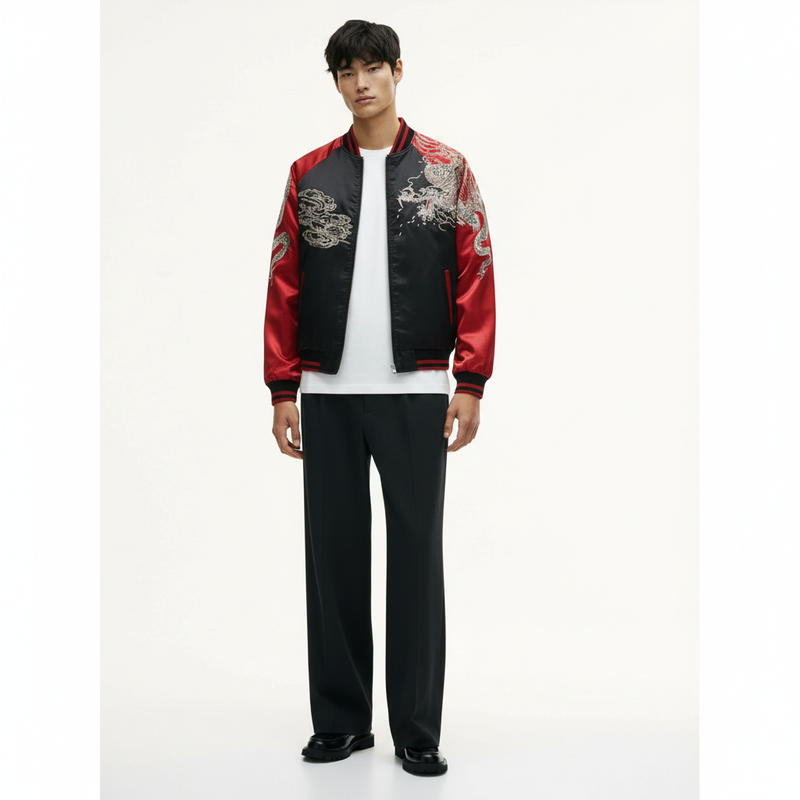
The sukajan is a modern entry. The name is short for Yokosuka jumper, after the naval base where American servicemen had satin jackets embroidered with dragons, tigers and eagles after the war. The sukajan jacket guide has the history, and sukajan jackets are here.
Feet
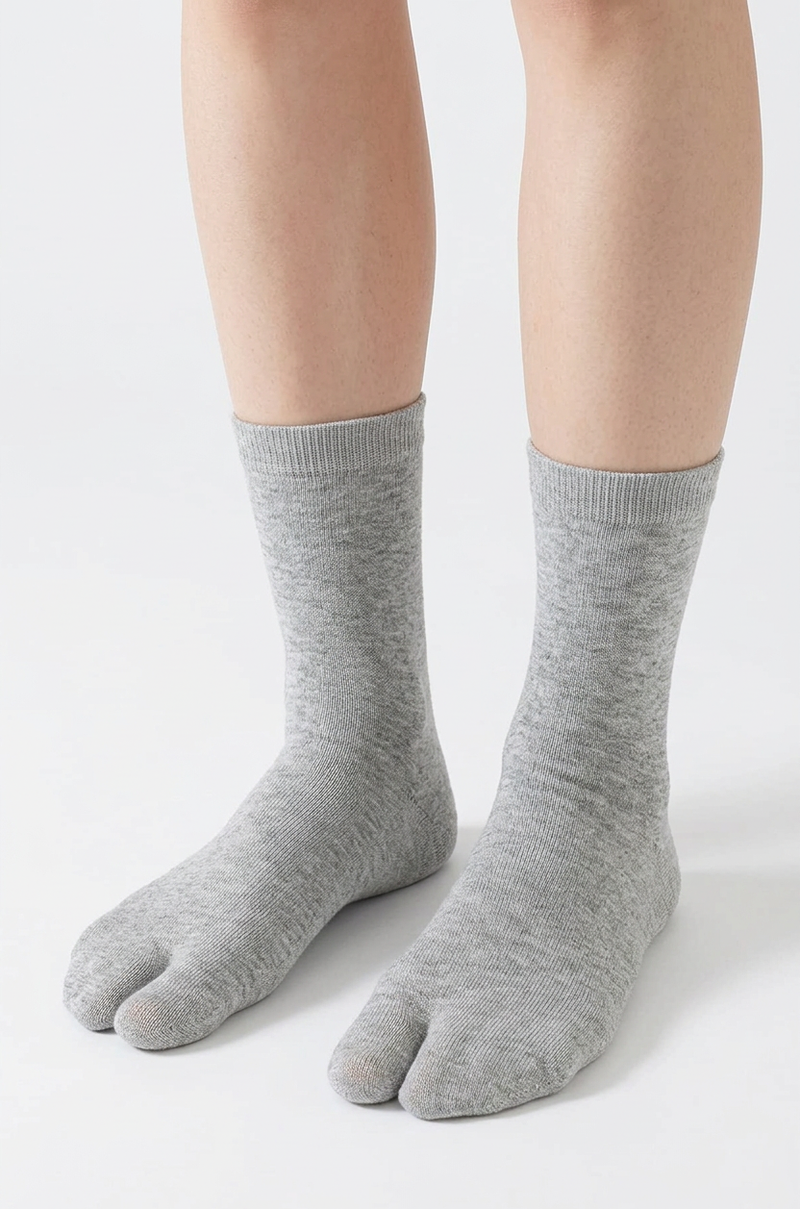
Tabi are split-toe socks, made so a sandal thong has somewhere to go. White ones go with formal kimono. Jika-tabi are the split-toe boot with a rubber sole, still worn on building sites and by festival carriers. Geta are raised wooden sandals, worn barefoot with a yukata. Zori are flat and worn with tabi and kimono. What are tabi socks explains the split toe, and the socks themselves are in tabi socks.
Which ones people wear today
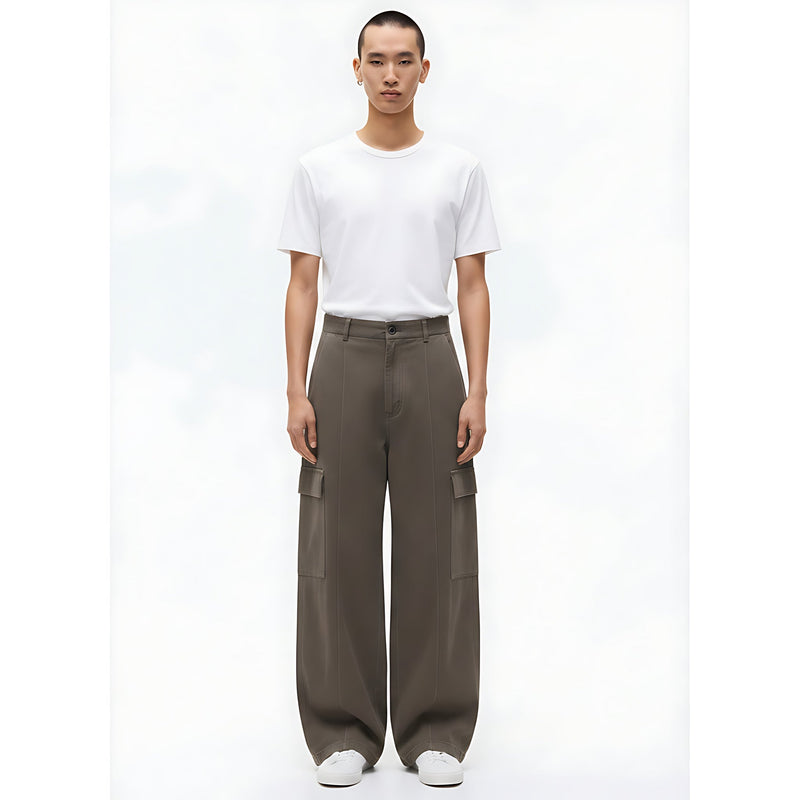
Outside ceremonies, very few people in Japan wear a full kimono. What survives in daily life is the lighter end: yukata in summer, jinbei at home, samue for craft work, tabi and jika-tabi on the job. Outside Japan, the pieces that travel best are the jackets and the trousers. A haori, a noragi or a kimono jacket works over a tee, and hakama-shaped or wide Japanese pants take the same room through the leg without the ceremony.

Worn as clothing, not costume, none of these is a problem. Cross every wrapped front left over right, keep ceremonial pieces for ceremonies, and treat the work clothes as the useful garments they were built to be.
Further reading
For the full catalogue, the list of items traditionally worn in Japan is thorough, and the V&A has a good introduction to the kimono. The entries on the samue, the jinbei and the sukajan go deeper on the lesser-known pieces.