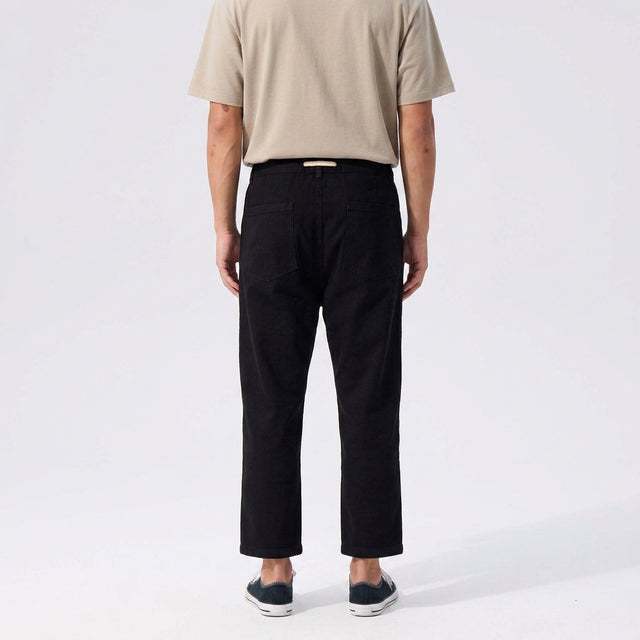
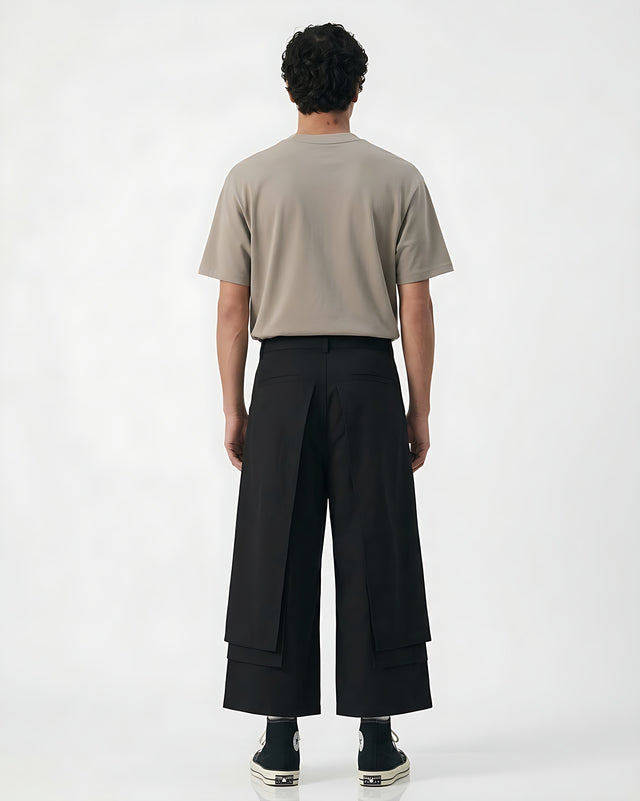
Eleven Japanese pants for men, from dropped-rise harem cuts to straight linen and cropped wide legs. Every pair lists its outside length, never an inseam.
Japanese pants is a family name rather than one garment. It covers the traditional trousers most people picture first, the hakama, and the working trousers that sat alongside it for centuries: samue, tobi and monpe. It also covers the modern cuts that borrowed their proportions, the harem, wide-leg and cropped trousers you now see across Japanese streetwear.
What ties them together is where the room goes. A Western trouser is drafted close to the body and loosened afterwards. Japanese cutting starts from movement, so the rise drops, the seat carries volume and the leg is allowed to fall instead of tracing the thigh. That is why these sit comfortably cross-legged, on a bike or squatting, where a fitted trouser pulls.
The category answers to more than one name. Japanese trousers and Japanese style trousers are the same search in British English, and Japanese men's pants is the American phrasing. They all land on the shapes below.
Hakama: the trouser everyone pictures
Hakama are wide, pleated trousers tied at the waist and worn over a kimono. They were the dress of the samurai and the court, which is why people searching for samurai pants almost always mean hakama. There are two forms. Umanori hakama have divided legs and come from horse riding. Andon hakama are undivided, closer to a pleated skirt.
They are still worn today in kendo, aikido, iaido and kyudo, by Shinto priests, and at university graduation ceremonies. The seven pleats are traditionally said to stand for the virtues of the samurai code. What samurai pants are called goes through the history properly.
We do not carry hakama at the moment. The closest shapes here are the wide straight legs and the dropped-rise harem cuts, which take the same room through the seat without the pleated front. Hakama against harem pants sets out exactly where the two differ.
Samue, tobi and monpe: the working trousers
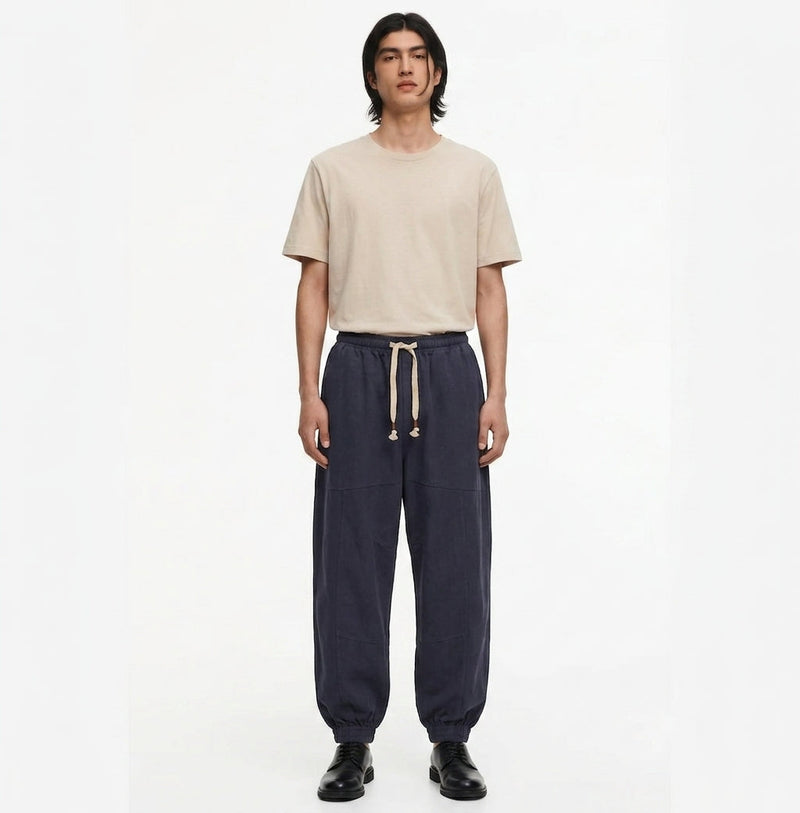
Samue are the work clothes of Zen Buddhist monks, a wrap jacket and drawstring trousers worn for temple chores. The trousers are loose, soft and gathered at the ankle, and they are now common as house and lounge wear across Japan.
Tobi trousers belong to the tobi, the construction workers who work at height on scaffolding. They balloon from the hip to below the knee and then narrow sharply at the calf so they tuck into boots. Monpe are loose farm trousers gathered at the ankle, worn widely by women during the Second World War. All three explain why so many Japanese cuts close at the ankle: volume above, control below.
Harem and sarouel: the dropped rise
Japanese harem pants are the modern cut most people buy first. The rise is lowered so the fabric hangs below the seat rather than pulling across it. Sarouel is the older name for the same garment, from the sirwal. Five pairs here are built this way: Sokai, Shinbo, Gelyu, Kireina and Pokku.
Inside that group the differences are real. Shinbo carries the deepest hip. Gelyu is the roomiest pleated cut and closes with ribbed cuffs at the ankle. Kireina is the lightest, pleated at the waist with elastic cuffs. Pokku is the only denim one and reads closest to a regular trouser. Sokai sits in the middle of the range and is the one to start with if you have never worn the shape.
Wide leg, cropped and baggy
Japanese baggy pants is the umbrella term for anything drafted with deliberate volume rather than sized up. A wide leg keeps the rise where it is and opens out instead. Balloon and parachute describe the same family, usually with a gathered or cuffed hem that pulls the volume back in.
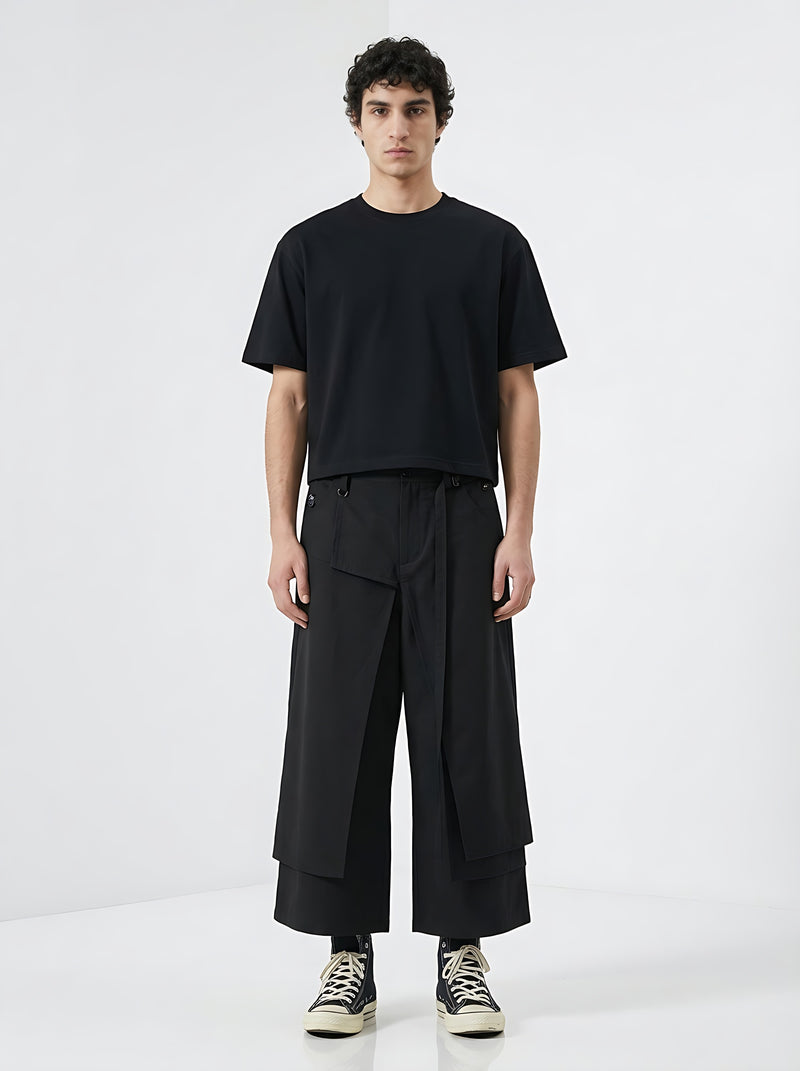
Igen and Yasumi are both 100% linen with a straight leg. Igen is the longest pair in the collection and hangs from the hip in one line. Yasumi is cut to a cropped line that finishes at or just above the ankle. Miyabi is the outlier, a relaxed straight leg in cotton corduroy with no dropped rise at all. The Japanese Wide Leg Trousers are a cropped wide leg in stretch cotton.
Two pairs are cropped on purpose. Sekino stops at the calf, the shortest thing here, cut wide and straight. Kotona is loose without being a harem cut and crops just above the ankle with a cuffed hem. Japanese joggers and sweatpants sit slightly apart again: soft cuffs, loungewear fabric. Kireina borrows the cuff but keeps a pleated waist and trouser fabric, which is why it works outside the house.
The fabric changes the trouser
Linen is the warm-weather answer. Igen and Yasumi are 100% linen, which breathes better than anything else here and creases across the lap, then falls out again on a hanger overnight. Kireina, Shinbo and Sokai are cotton and linen blends, lighter or heavier depending on the share of linen. Gelyu is a heavier cotton and linen blend with enough body to hold its pleats open.
Cotton handles the rest. Sekino and Kotona are 100% cotton, Kotona woven to a textured surface with some grip. The Japanese Wide Leg Trousers are stretch cotton. Pokku is cotton denim, so it has weight and grain. Miyabi is 100% cotton corduroy, the one to wear when it turns cold.
How to wear Japanese pants
Keep the top half closer than the bottom. A plain tee or a fitted knit lets the trouser be the shape in the outfit. Put something equally loose on top and the line disappears into fabric.
Shoes matter more than usual with a cropped leg because the ankle shows. A low sneaker or a sandal works under Sekino, Yasumi and the Japanese Wide Leg Trousers; a heavy boot fights them. Pokku's cuffs roll once to sit at the ankle or twice to clear it. The full straight legs, Igen especially, read closer to tailoring and take a shirt well.
Sizing: read the hip, not the letter
Size letters on loose trousers are inherited from whichever factory chart the garment came from, so they are not consistent between two pairs sitting next to each other. The hip figure is what decides the fit. It is fixed at each size, where most waists here are elasticated or drawstring and adjust.
Ranges differ by pair. Kireina starts at XXS, and Shinbo, Gelyu and Pokku run to 5XL. At size M, garment length runs from 90 cm to 103 cm across the group. Every pair lists its outside length, never an inseam, and Miyabi's chart is measured flat, so double its waist figure for the circumference. The Shinbo size guide works through a chart line by line.
Caring for them
Most pairs here wash cold and dry on a hanger, and each product page carries its own care guide. With linen, skip the tumble dryer, which is what actually shrinks it. Denim stiffens after a wash and loosens again within an hour of wearing, which is the fabric behaving normally rather than the size being wrong.
Measurements come from the manufacturer's flat size table for each garment, converted to centimetres and mapped onto one size ladder. Available for 11 of the 11 garments here, last checked 2026-09-16. How we measure.
The traditional ones are hakama, the pleated trousers worn over a kimono, alongside working trousers called samue, tobi and monpe. Modern Japanese pants mostly means harem, wide-leg and cropped cuts that borrow those proportions.
What are samurai pants called?
Hakama. Samurai wore them over a kimono, in a divided form for riding called umanori and an undivided form called andon hakama. They are still worn in kendo, aikido and kyudo.
Do you sell hakama?
Not at the moment. The closest shapes here are the wide straight legs and the dropped-rise harem cuts, which give the same room through the seat without the pleated front.
What makes a trouser Japanese cut?
A lower rise, volume through the seat, and a leg drafted to fall instead of tracing the thigh. The pattern starts from movement, not from a fitted block.
What is the difference between Japanese baggy pants and harem pants?
Baggy is the umbrella term for any cut drafted with volume rather than sized up. Harem pants are the subset with a dropped crotch, where the fabric hangs below the seat. A wide-leg trouser keeps the rise and opens out instead.
Are these the same as Japanese joggers?
Not quite. Joggers and sweatpants close at the ankle with a soft cuff and read as loungewear. Kireina and Gelyu use an ankle cuff too, but in trouser fabric, which is what keeps them wearable outside the house.
What sizes do these come in?
Ranges differ by pair. Kireina starts at XXS, and Shinbo, Gelyu and Pokku run to 5XL. Each product page lists its own range and a full size chart.
How long are they?
At size M, garment length runs from 90 cm to 103 cm. Sekino is the shortest and stops at the calf; Igen is the longest. Every product page lists outside length at every size.
Which Japanese pants are best for hot weather?
Igen and Yasumi, which are 100% linen, then the light cotton and linen blends in Kireina and Shinbo. Sekino is a cotton trouser built for heat because the hem stops well clear of the ankle.
How do I pick a size?
Read the hip measurement first and size to that. Most waists here are elasticated or drawstring and adjust, but the hip is fixed. Miyabi's chart is measured flat, so double its waist figure.




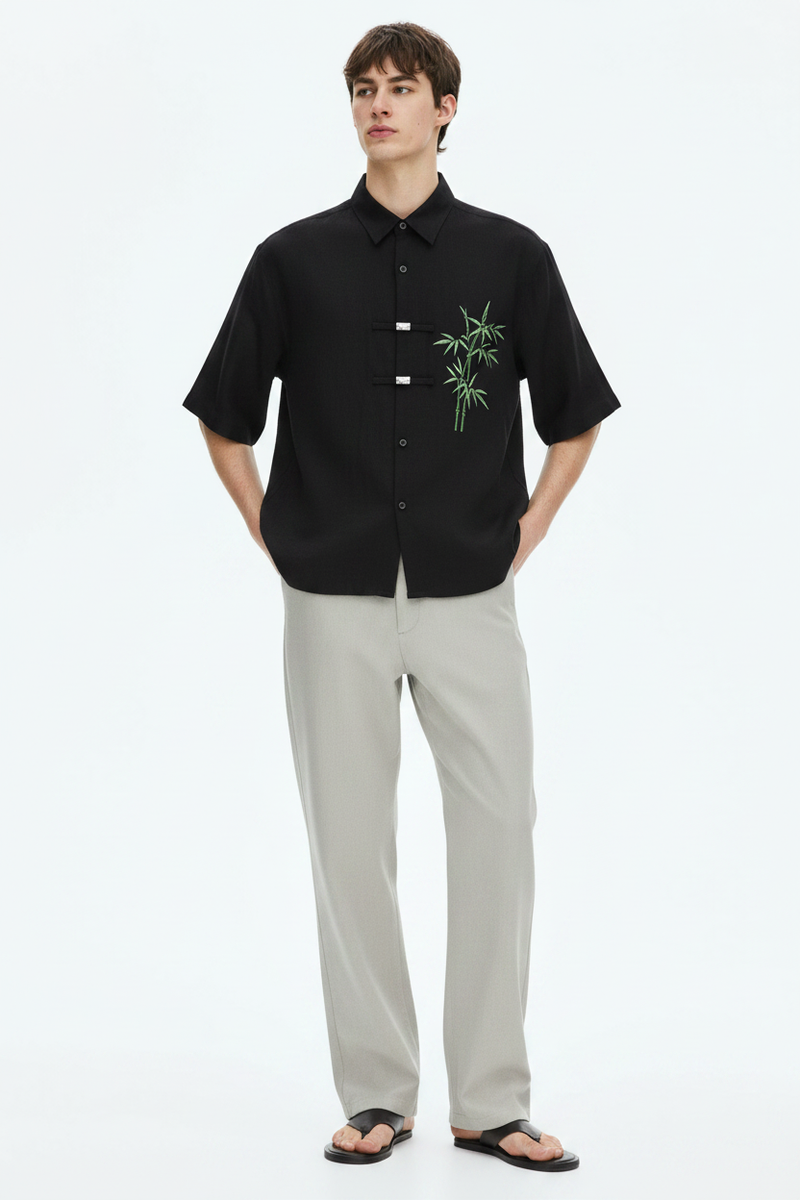


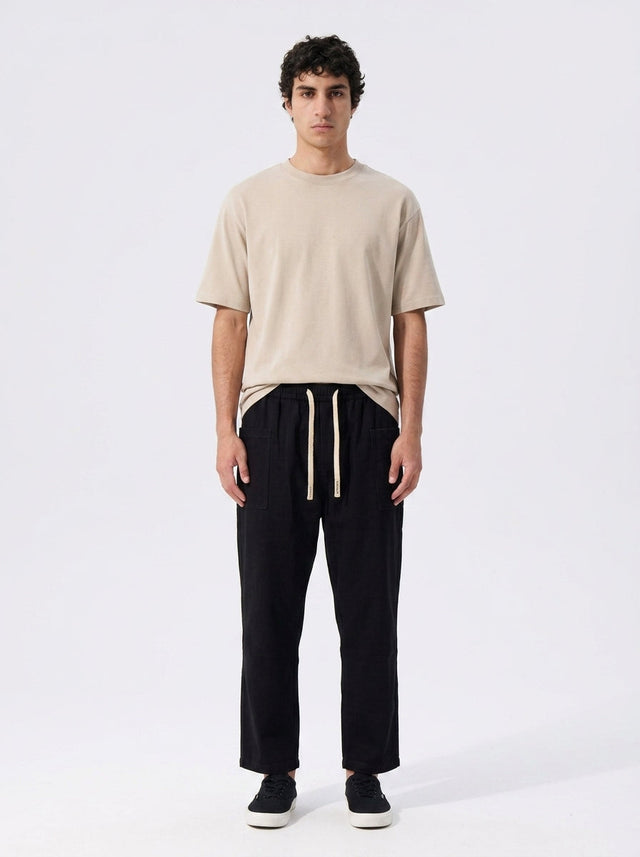 XSSM+4
 XSSM+4


 MLXL+4
 XSSM+4
 XSSM+4
 XSSM+4
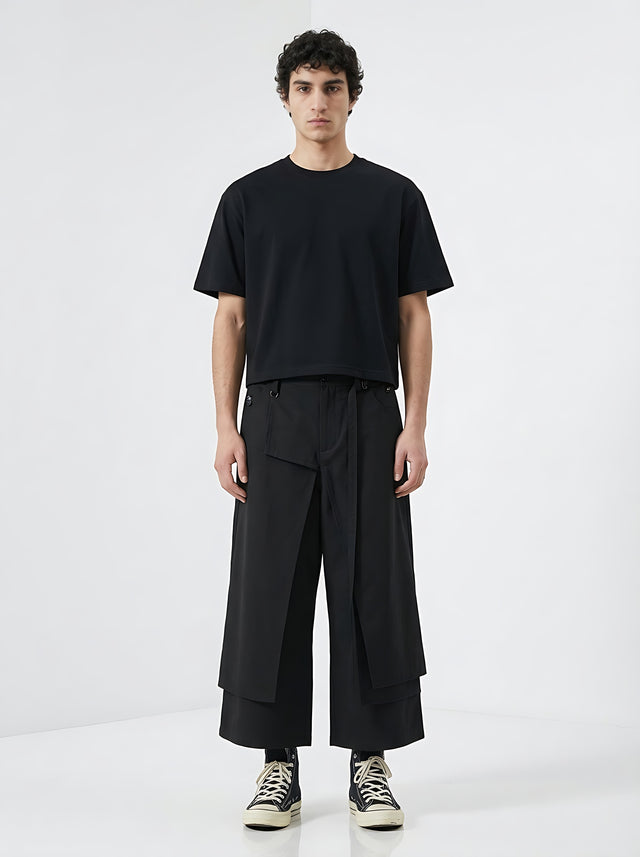 XSSM+3Japanese Wide Leg Trousers