




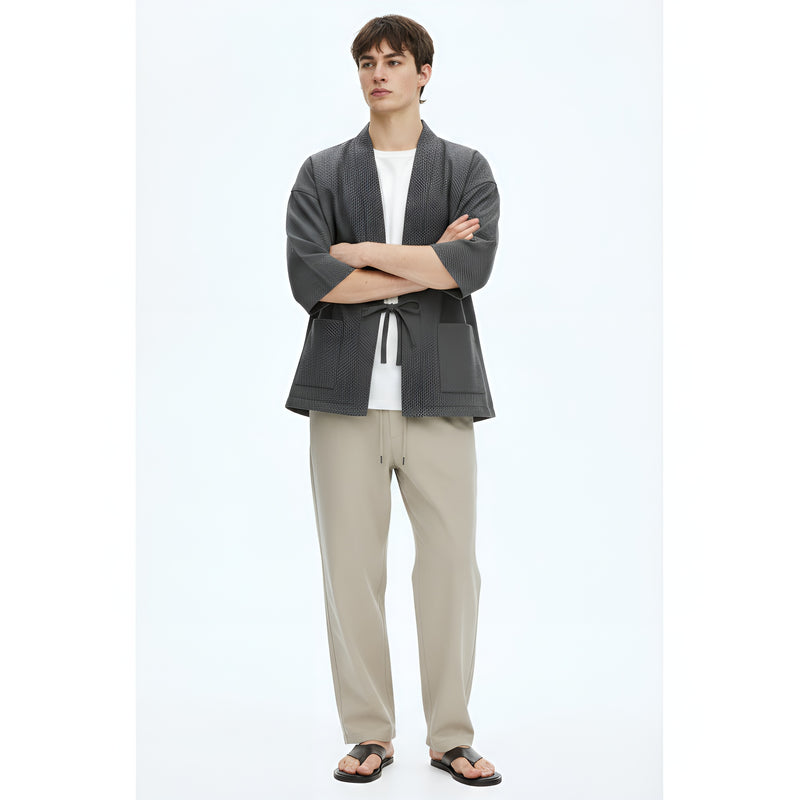


A men's kimono jacket is one of the easiest Japanese pieces to wear, and one of the easiest to get wrong. Worn well it is a light, relaxed layer that does the job of an overshirt. Worn badly it looks like you left the house in a dressing gown. The difference is almost entirely what you put with it.
Start with what a kimono jacket is
A kimono is a full-length robe that wraps and belts. A kimono jacket keeps only the upper half of the idea: the straight body, the wide sleeves and the front that hangs open or crosses over. It is closer to a light jacket than to a kimono, and it should be treated that way. For the full comparison with the haori and noragi, see what is a noragi jacket.
The one rule: only one loose layer on top
This is the mistake that turns a kimono jacket into a robe. The jacket is already wide through the body and sleeves. Put a loose shirt or another oversized layer under it and the whole top half becomes fabric. Wear it over something plain and closer fitting instead: a fitted tee, a tank or a thin knit.
What to wear underneath
- A plain tee is the default and never wrong. White, black or grey.
- A tank in summer, for the lightest version of the outfit.
- A fine knit when it turns cooler, as long as it is close to the body.
Avoid graphics under it. The jacket's shape is the detail, and a print competes with it.
Which trousers work
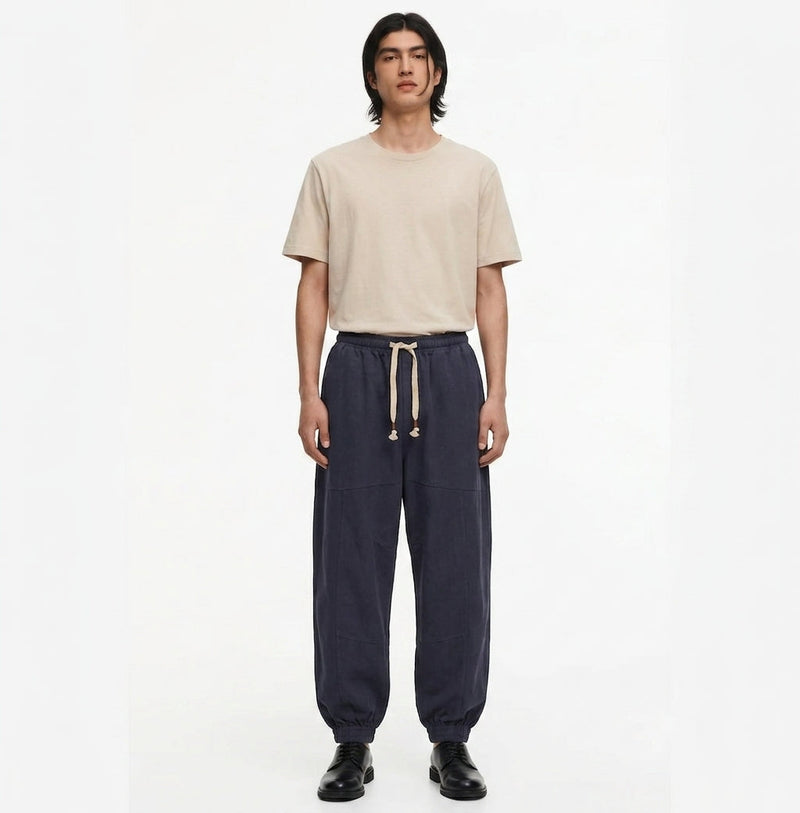
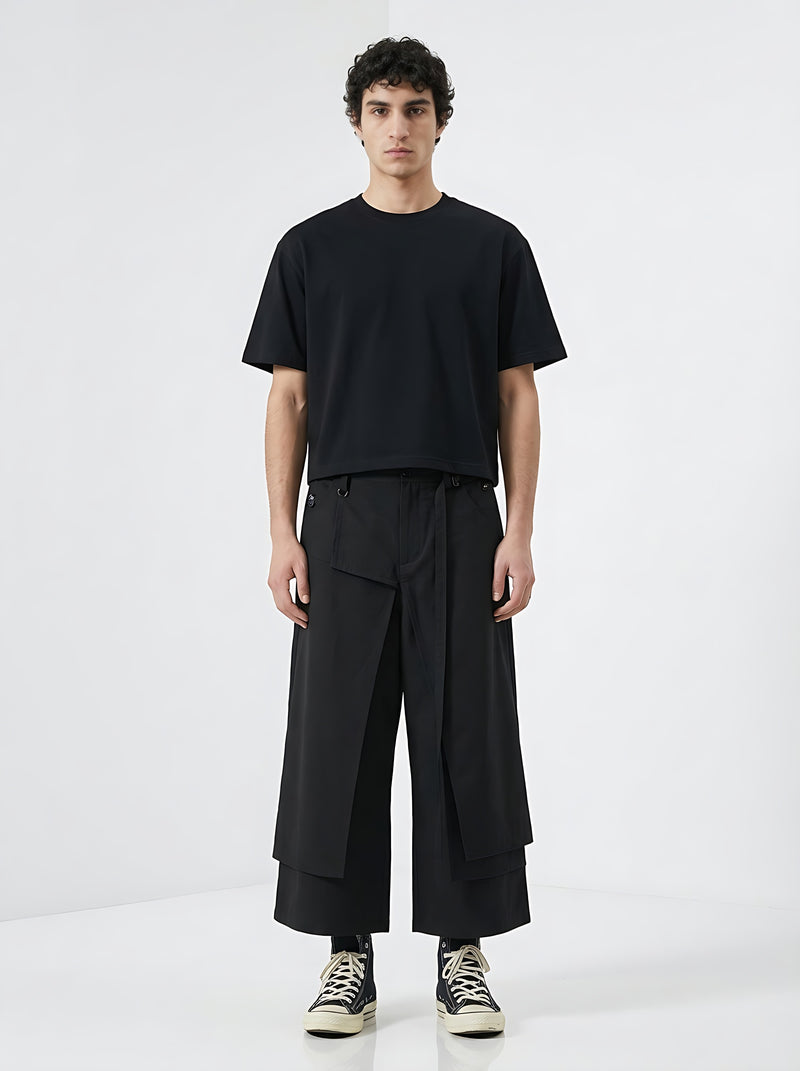
Because the top is loose, the trousers can go either way. Wide-leg trousers and Japanese pants give one continuous relaxed silhouette, which is the most natural pairing. Relaxed denim or straight trousers give a more Western read and are the easier start if you have never worn the piece. In summer it works over shorts. What does not work is a very slim trouser, which makes the top look even bigger.
Open front or crossover
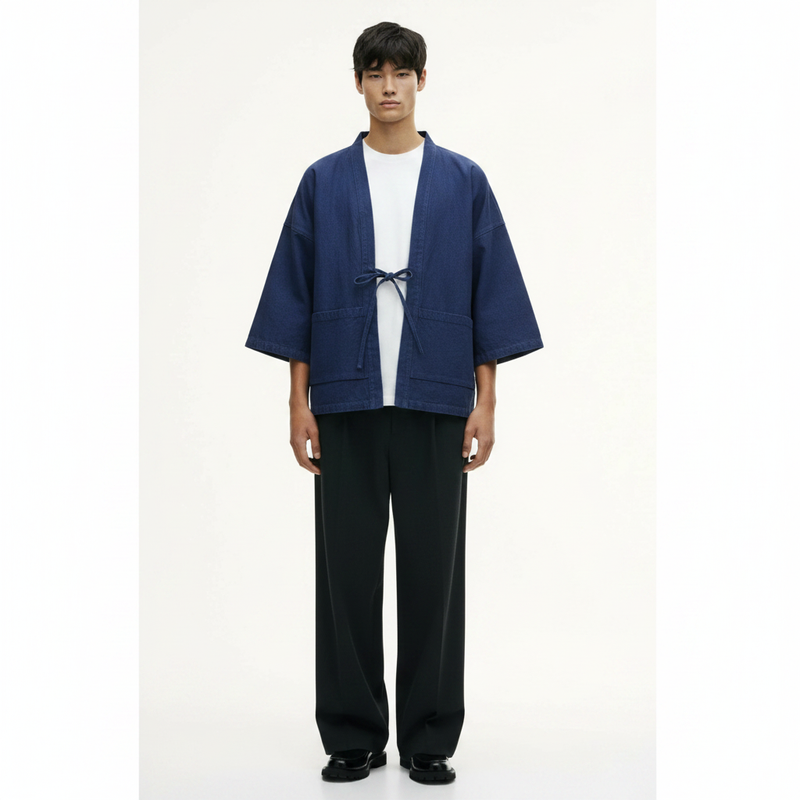
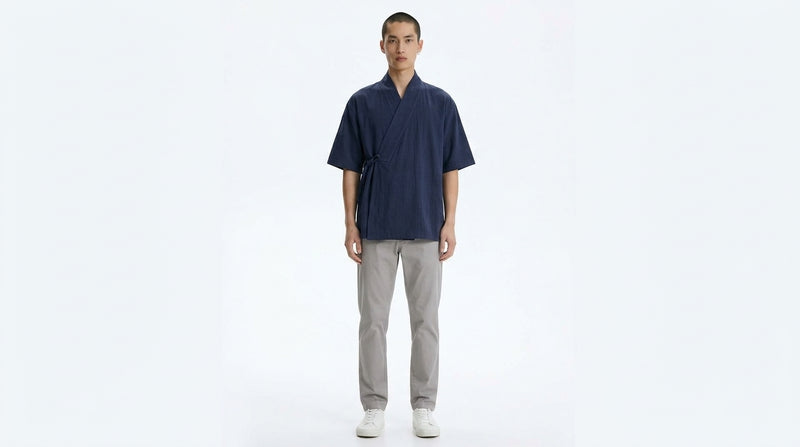
Kimono layers close in two ways, and they wear differently. The Kimono Jacket Cotton is open at the front, inspired by haori layers, so it hangs straight and works like an unbuttoned overshirt. The Cross Collar Kimono Shirt crosses at the front and ties at the waist, so it can be worn closed on its own as a shirt or open over a tee as a layer.
If you only buy one, the open front is the more versatile layer. The crossover is the one to choose if you want a piece that also works as a shirt.
Kimono jacket, kimono shirt, kimono cardigan: the same rack, different words
The category collects names faster than it collects styles, and they are not interchangeable in the way people assume.
- Men's kimono jacket is the open-front layer: no fastening, worn hanging.
- Kimono shirt, sometimes a male kimono top, is the crossover version that actually closes, so it can be worn on its own.
- Kimono cardigan is not a separate garment. It describes how the open-front jacket is worn, loose over a tee, and it is the phrase people reach for when they want to signal "not a robe".
- Kimono coat means something longer and heavier than either of these, usually mid-thigh or below and often lined. If you want outerwear, that is the word to search; neither piece here is one.
The distinction that matters when buying is only ever open versus crossover. Everything else is vocabulary.
How it should fit
A kimono jacket is drafted from straight panels, so it does not fit the way a Western jacket does. There is no armhole scye shaping the sleeve to the shoulder: the sleeve hangs off the body line, which is why the shoulder seam sits low on purpose and why sizing up "for room" is almost always a mistake. The room is already in the pattern.
Take your normal size. The Kimono Jacket Cotton runs XS to XXL in four colours, and the Cross Collar Kimono Shirt runs XS to L in three. If you are between sizes, the open front is forgiving either way; the crossover is the one to take at your true size, because the overlap needs to sit flat rather than strain across the chest.
Length is the thing to check rather than width. Both stop around the hip. Worn over a longer tee the layering reads deliberate; worn over a tee that is longer than the jacket itself it reads like the jacket shrank.
Three outfits that work
- The default. Open kimono jacket, plain white tee, Japanese pants or wide-leg trousers, low sneakers. One loose thing on top, one on the bottom, nothing fighting.
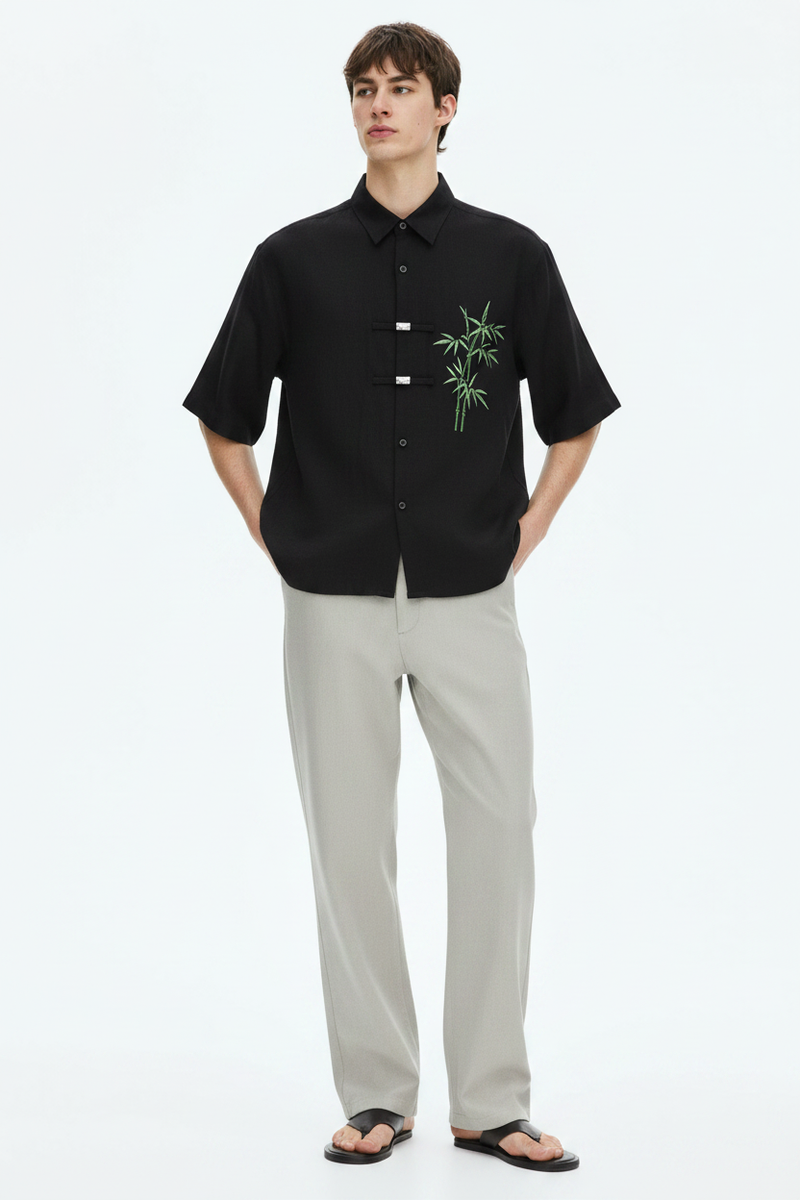
- Summer, lightest version. Crossover shirt worn closed on its own, cropped or wide trousers, sandals. No layer underneath at all — the shirt is the whole top half.
- Western read. Open jacket over a fine knit, straight or relaxed denim, loafers. This is the easiest start if you have never worn the shape, because only one element is unfamiliar.
What it is not
Four garments get confused here, and the differences are simple once seen side by side. A kimono is full length, wrapped and belted. A yukata is its unlined cotton summer version. A haori is the short jacket traditionally worn open over a kimono, and it is the closest relative of the piece you are buying. A noragi is the farmer's work jacket, which crosses over and ties shut. A kimono jacket borrows the sleeve and the front from the kimono and the job from the haori.
Caring for cotton
Both wash cold with like colours, no bleach, and hang to dry so the straight panels keep their line. A warm iron takes creasing out of the collar and, on the crossover, the overlap. Tumble drying is what pulls these out of shape, and it is the one thing worth avoiding.
Shoes and finishing
Keep shoes low and simple: a clean sneaker, a loafer or a sandal in summer. Heavy boots pull the outfit towards costume. Skip belts over the jacket, which is where the robe look comes back.
When to wear one
Warm days, travel, and anywhere you would reach for a light overshirt. Cotton kimono jackets breathe and pack flat, which is why they turn up so often on holiday. The full range is in men's kimono jackets.