


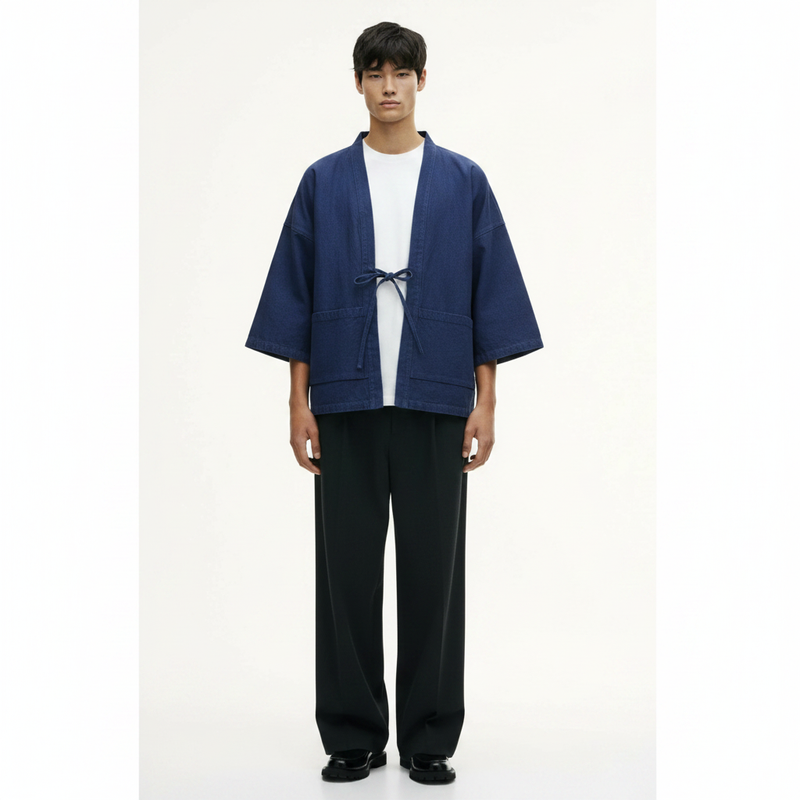


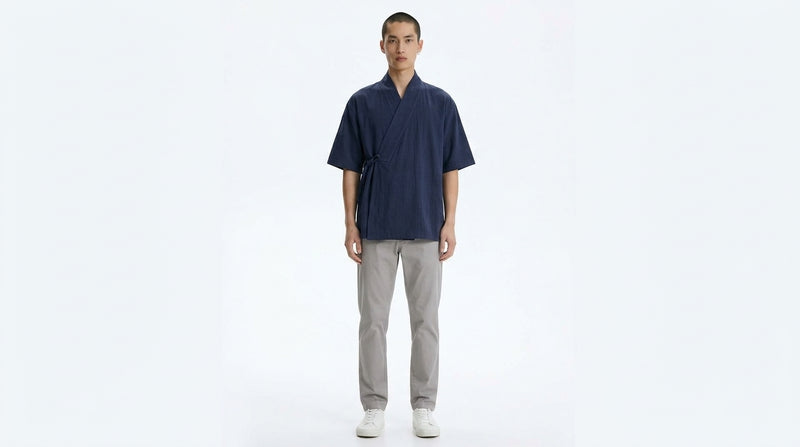
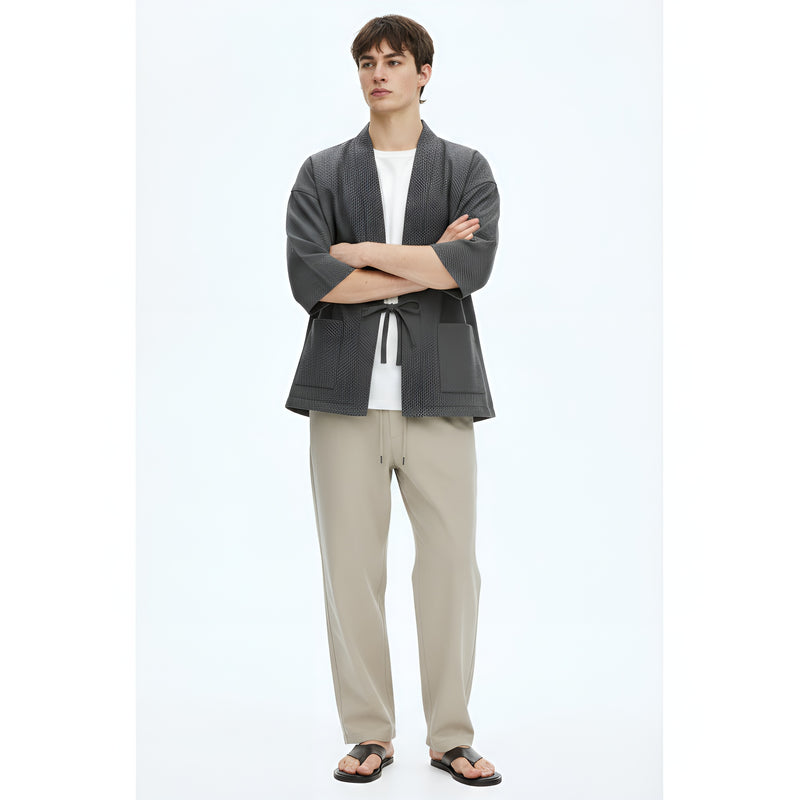
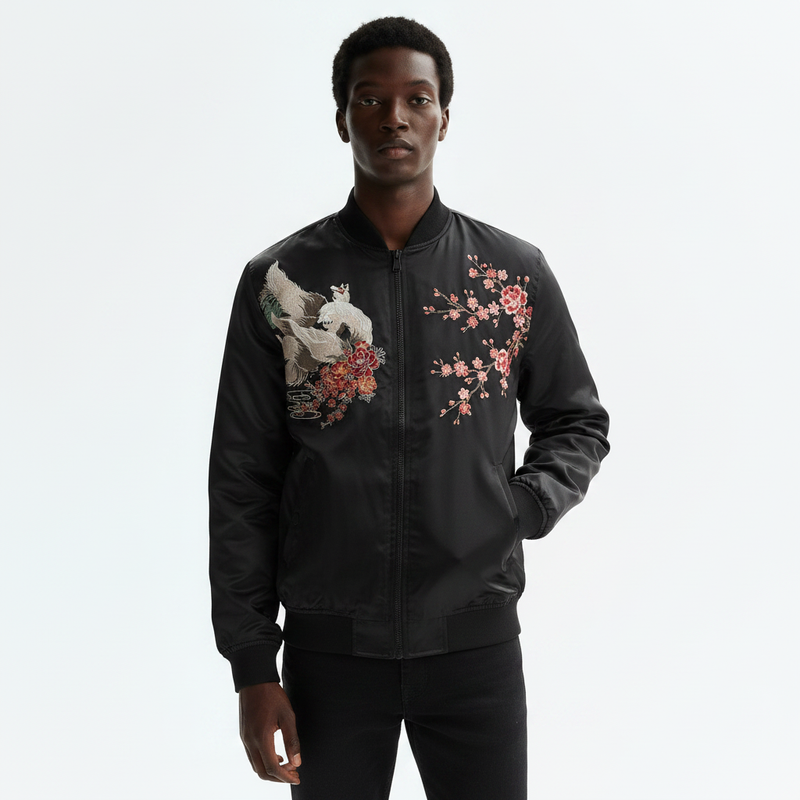
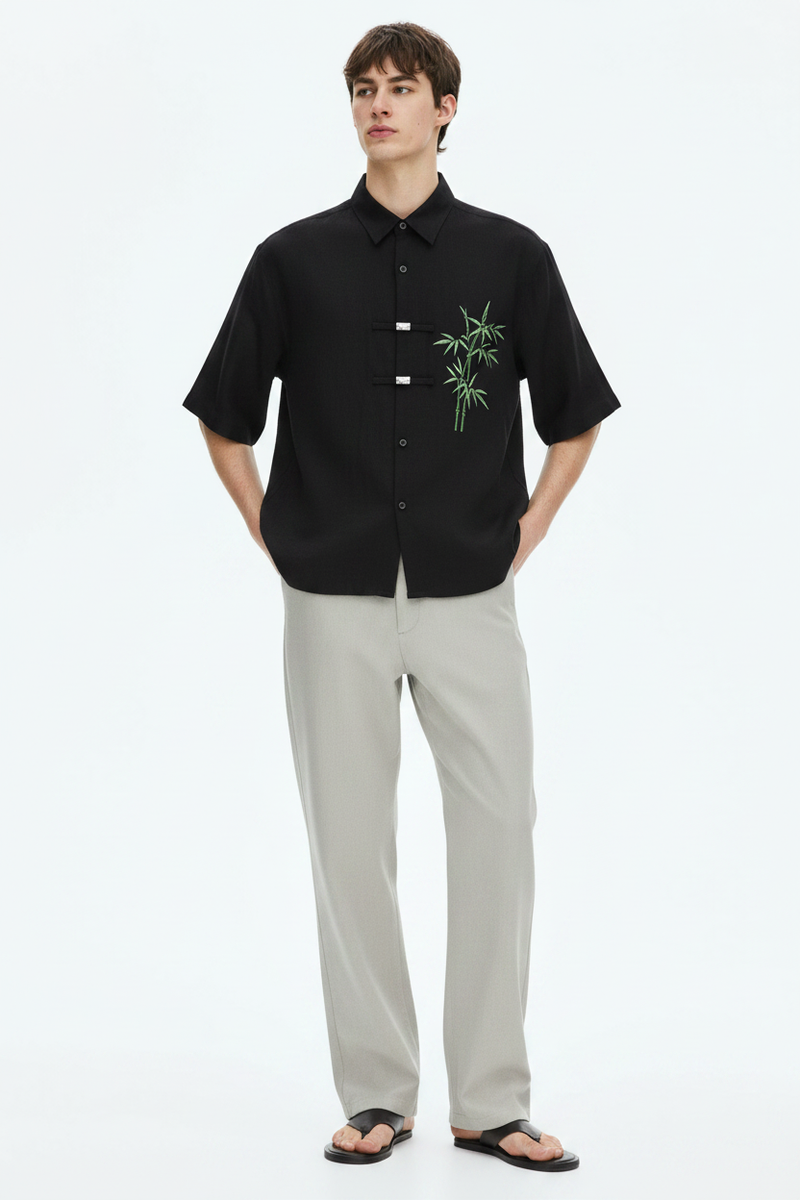


A noragi is a Japanese work jacket. The word means field clothes, and for centuries it was what farmers, fishermen and rural workers wore every day. It has a straight body, wide sleeves and a front that crosses over and ties, and it has become one of the most worn Japanese jackets outside Japan.
Where the noragi comes from
A noragi was made to be worked in. It was cut from hard-wearing cotton or hemp, usually dyed with indigo, and often reinforced with sashiko stitching, rows of small running stitches that strengthened the cloth where it wore through. A good one was patched and repaired for years, which is part of why old noragi are now collected.
Indigo was not only a colour choice. It was widely available, it hid dirt, and indigo-dyed cotton was believed to deter insects. The deep blue became the noragi's signature.
How a noragi closes
The defining detail is that there are no buttons. The front crosses over and is held by ties, which lets the jacket sit flat against the body, move freely and adjust as you layer underneath. Our Indigo Dyed Noragi Jacket and Herringbone Noragi Jacket both fasten this way, with a single inside tie.
Noragi, haori and kimono jacket
These three are mixed up constantly.
- Noragi: a work jacket that crosses and ties shut. Practical, relaxed, made to wear in.
- Haori: a short jacket traditionally worn open over a kimono, part of formal dress. See haori.
- Kimono jacket: a modern everyday layer that borrows the kimono's sleeves and front. See men's kimono jackets.
If you want something structured and a little formal, a haori. If you want something that gets better the more you wear it, a noragi.
How to wear a noragi now
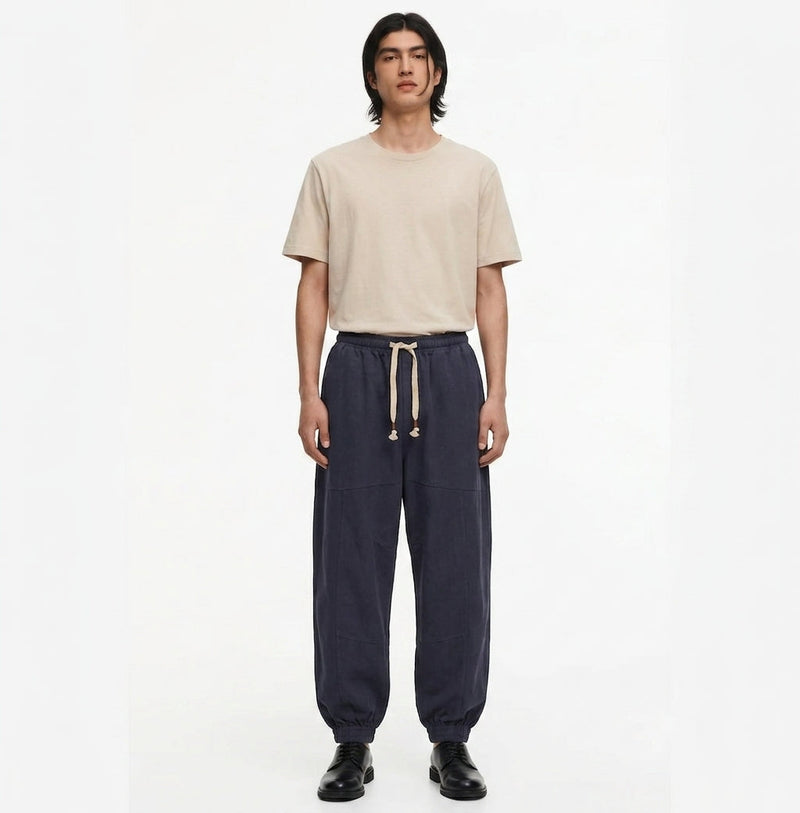
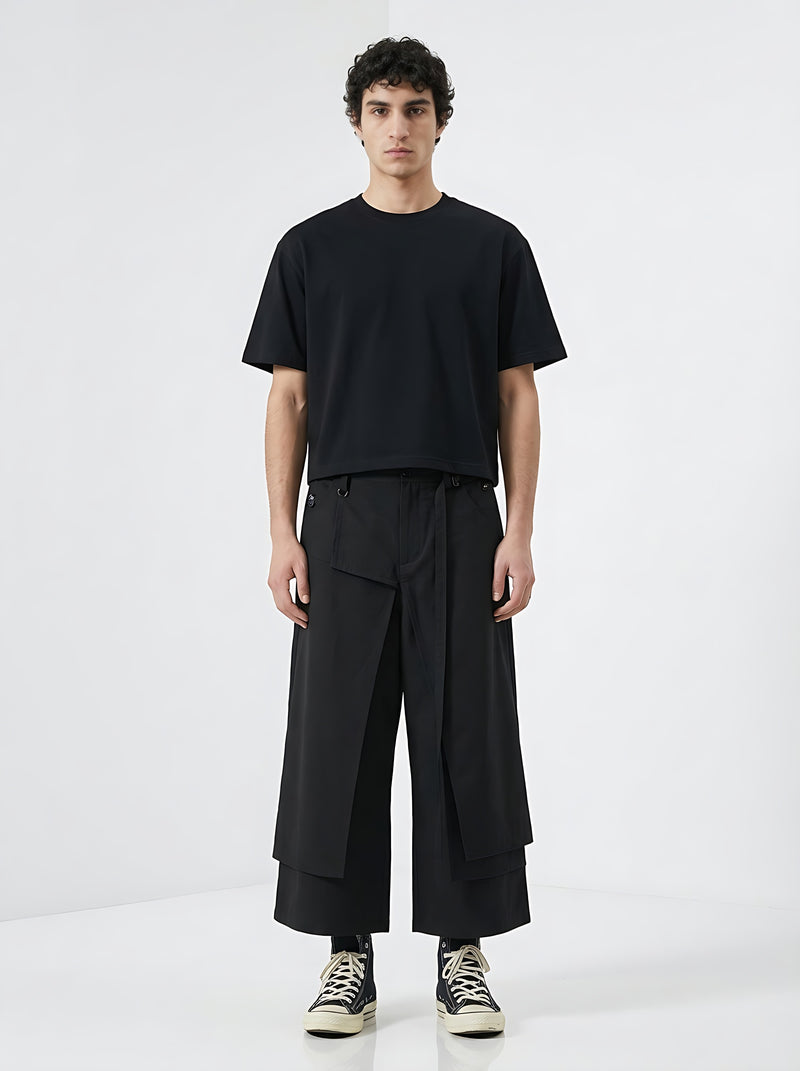
Wear it the way it was worn in the field: over a plain tee, with wide trousers. With Japanese pants the outfit reads as one silhouette. With straight jeans it works as a softer alternative to a denim jacket, and over a light knit it carries into cooler weather.
Keep what is underneath simple. The crossover front is the detail, and a busy shirt fights it.
How indigo ages
Indigo-dyed cotton fades gradually where it rubs, at the seams, cuffs and edges. That is the fabric working. Our indigo noragi is dyed deep and left to fade at the seams with wear, so it looks better in its second year than its first. Wash it cold with like colours and it will age slowly and evenly. The full range is in noragi jackets.