





a kimono belt is called an obi. Men wear a narrow, stiff obi called a kaku obi, about 10 cm wide and 4 m long, wrapped two or three times around the hips and knotted at the back. The soft, wide heko obi is the relaxed alternative for a yukata at home or a summer festival. There is no buckle: an obi is always tied.

The obi is what closes a kimono or yukata, which has no buttons. It also changes the outfit's shape: women's obi are wide and tied in large bows at the back, men's sit low and plain so the robe falls straight.
Types of obi
| Obi | Width | Worn by | Worn with | Usual knot |
|---|---|---|---|---|
| Kaku obi | About 9 to 10 cm, stiff | Men | Kimono, yukata, under a hakama | Kai-no-kuchi at the back |
| Heko obi | Wide and soft, scarf-like | Men and children | Yukata, at home and in summer | A loose bow |
| Hanhaba obi | About 15 cm, half width | Women | Yukata and casual kimono | Bows of many shapes |
| Nagoya and fukuro obi | About 30 cm | Women | Formal kimono | The drum-shaped otaiko |
In judo, karate and aikido the belt is also called an obi, and its colour shows the rank. That obi is cut and tied differently from a kimono obi.
Kaku obi vs heko obi
The kaku obi is the classic men's belt. Its stiffness keeps it flat and neat, which is why it is the one worn under a hakama and with a kimono for visits or ceremonies. Many are woven with the striped kenjo pattern of Hakata, in Fukuoka.
The heko obi is a long, soft length of cloth tied loosely around the hips. It is comfortable and quick, and fits a yukata for a fireworks night or a ryokan stay, but it reads as casual.
If you buy one, buy a kaku obi: it works with every men's kimono and yukata and is the only one that belongs under a hakama.
How to tie a men's kimono belt (kai-no-kuchi)
- Close the robe left side over right. This order matters: right over left is how the dead are dressed.
- Fold the first 30 to 40 cm of the obi in half lengthways. This short end is the te.
- Hold the te at your left hip and wrap the long end around your hips two or three times, keeping it low, below the navel.
- Fold the remaining long end back on itself so both ends meet at the front.
- Tie a simple knot with the te over the long end, then fold the long end into a flat loop and tie the te around it.
- Tighten, tuck the ends, and turn the whole obi clockwise until the knot sits at your back.
Under a hakama the obi goes on first, and the hakama ties wrap over it. Our guide on how to tie a hakama shows the order.
What you wear an obi with
- Kimono and yukata: always. Without an obi the robe falls open.
- Hakama: a kaku obi underneath, at the hips.
- Jinbei and samue: no obi. A jinbei ties closed at the front and a samue has its own ties, which is why both are easier everyday pieces.
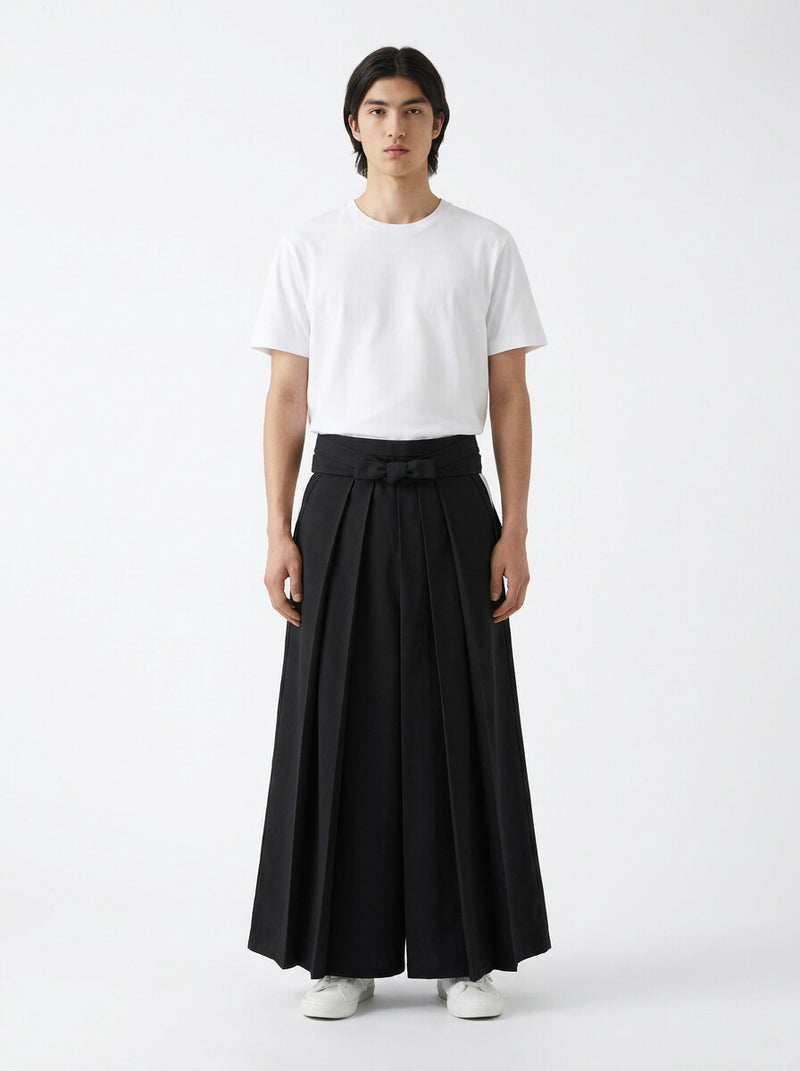
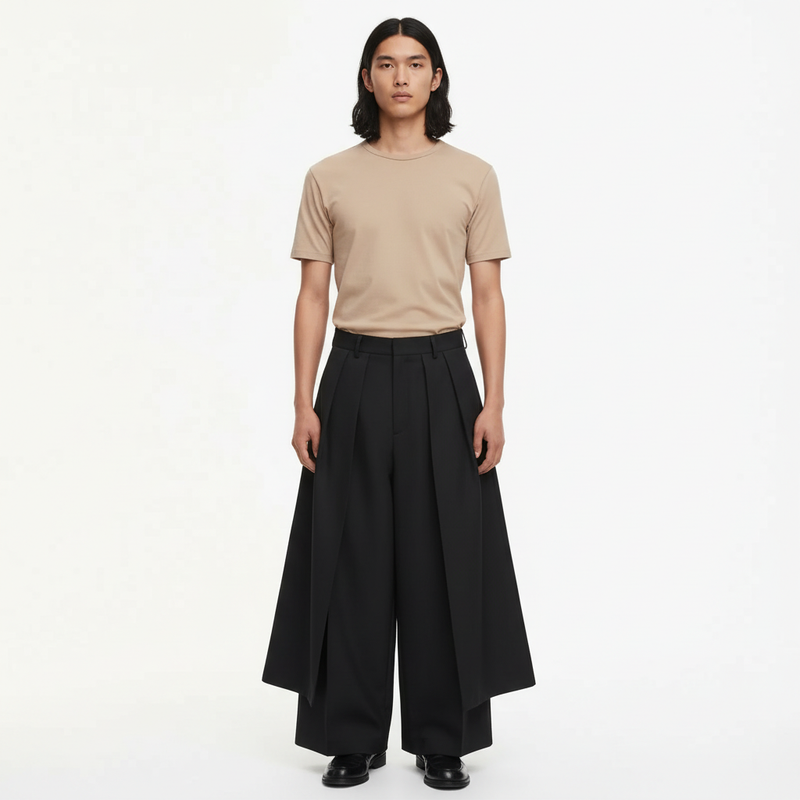
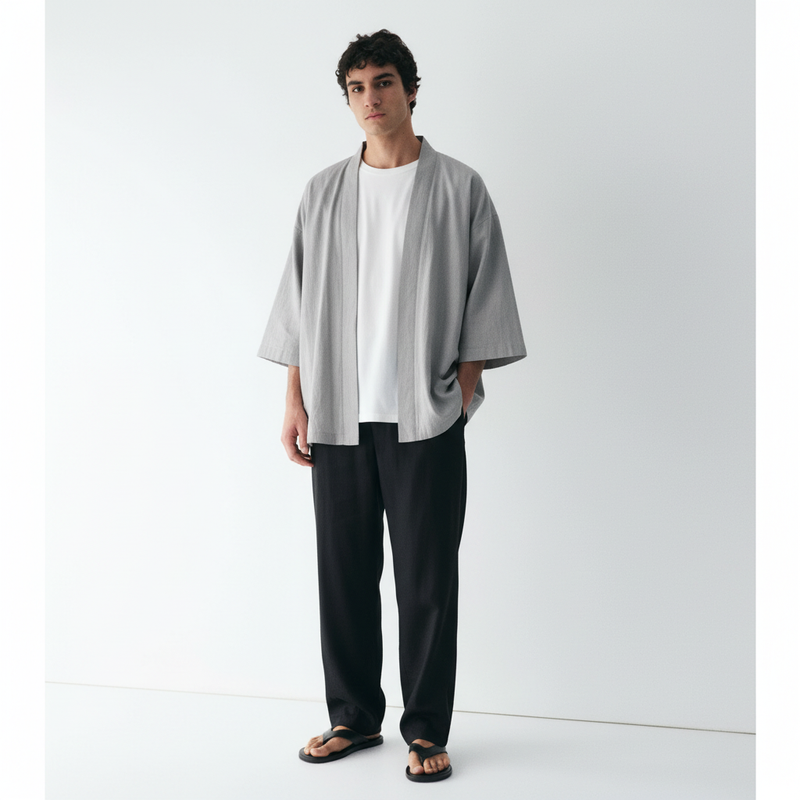
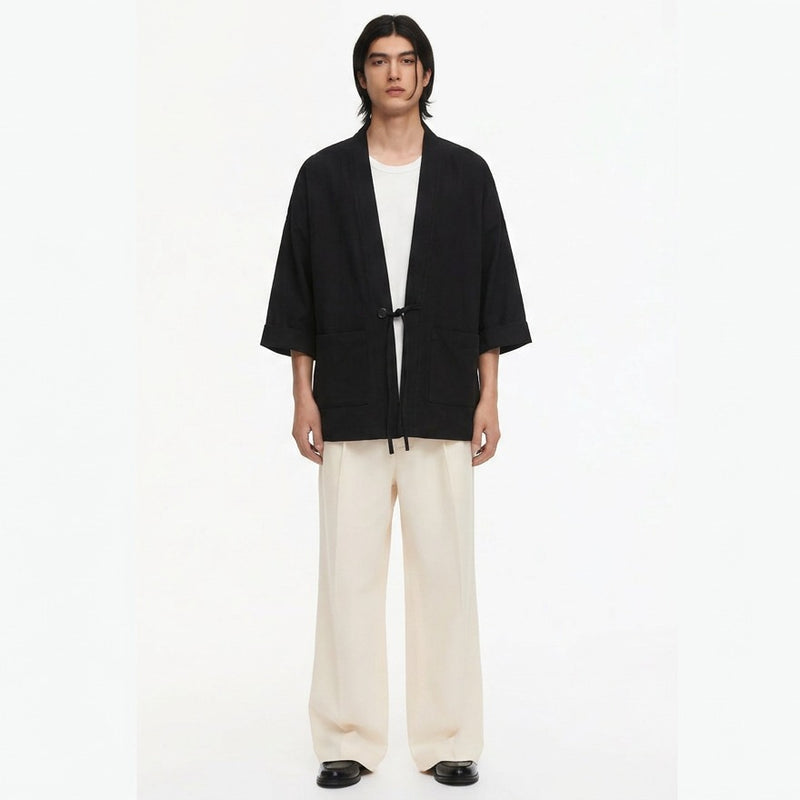
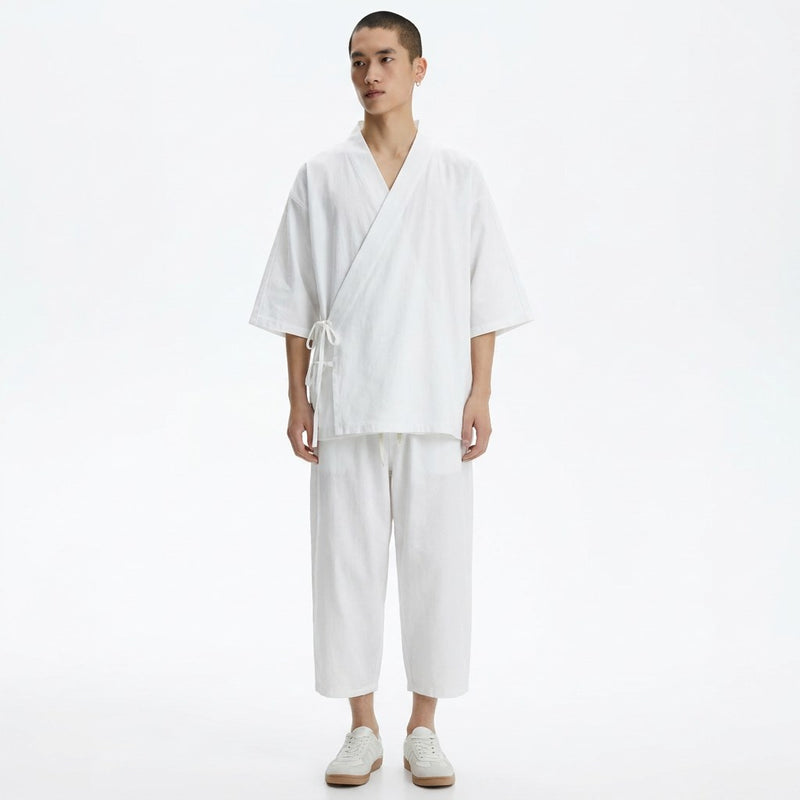
- Kimono jackets and haori: worn open, no obi. Our kimono jackets go over a T-shirt.
Length and sizing
A men's kaku obi is usually around 4 m long. That is long enough to wrap most waists two or three times and still leave the ends for the knot, so one size fits most people. If your hips are wide, wrap twice instead of three times.
Our kaku obi
The Amaji kaku obi is 400 by 10 cm, one size, with the kenjo stripe, in black, navy, white and black, beige or purple, at $29.90. It comes untied, so you tie it yourself the traditional way. For the rest of the outfit, see our guide to traditional Japanese clothing.
Written by the Amaji team, October 18, 2026. How we write our guides.