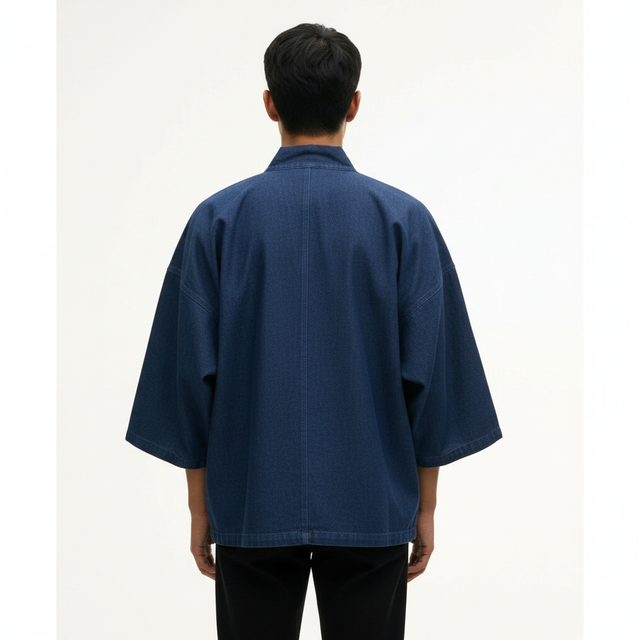
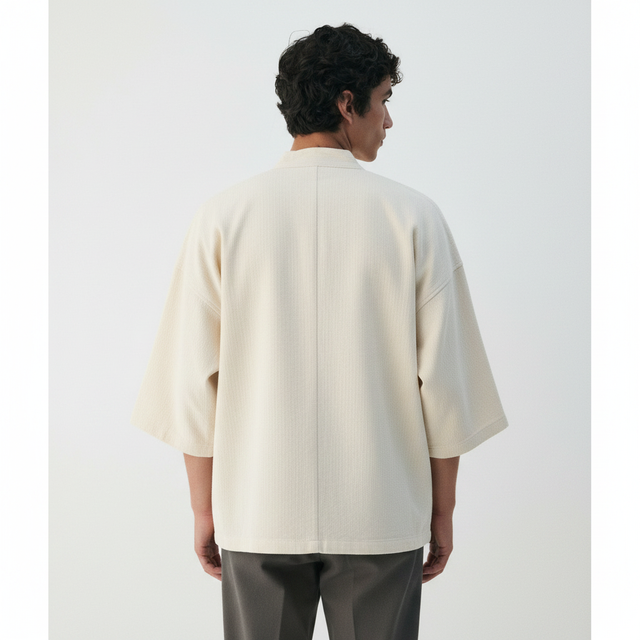
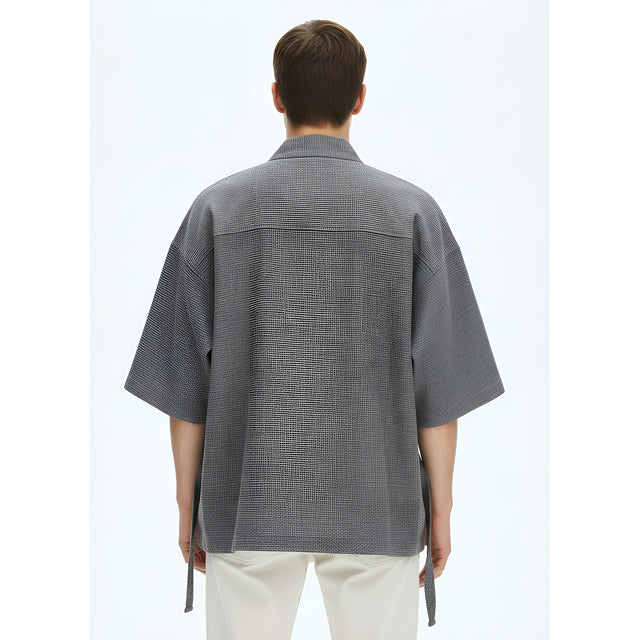
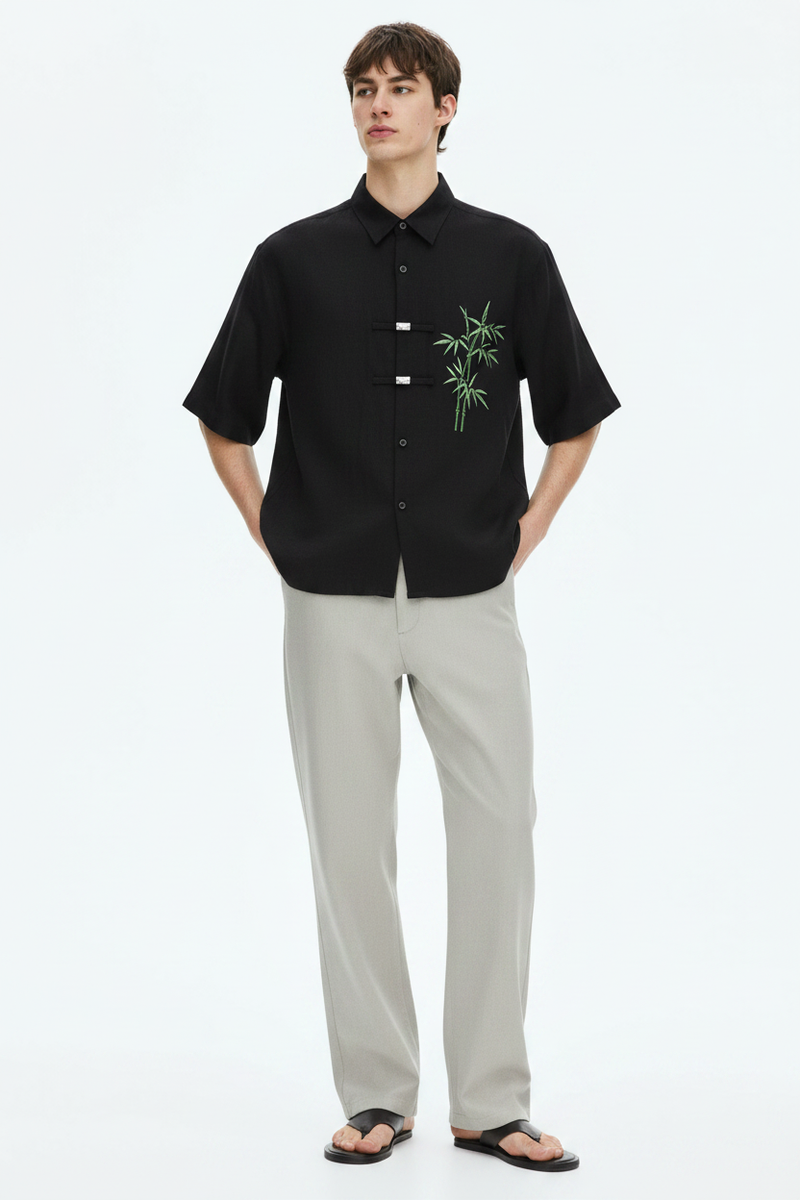
Frog closures, inside ties and kimono panels come from a tradition where the garment wraps instead of fastening through a placket. A knotted frog takes a second longer to do up. It also never breaks, never jams, and never needs replacing at a tailor.
The panels matter as much as the closure. A kimono body is cut from straight rectangles with no armhole scye, so the sleeve hangs from the body line and the whole jacket folds flat.
What makes a jacket Japanese style
Look for the wrap and the flat panel before the fabric. A Japanese-style jacket closes with a tie, a frog, or an overlap instead of a zip. It is cut from rectangles, not a shaped Western block, so it hangs on the body instead of fitting it.
Every jacket here follows that rule. None is a blazer reworked with Japanese trim. The pattern itself comes from the tradition.
The seven cuts
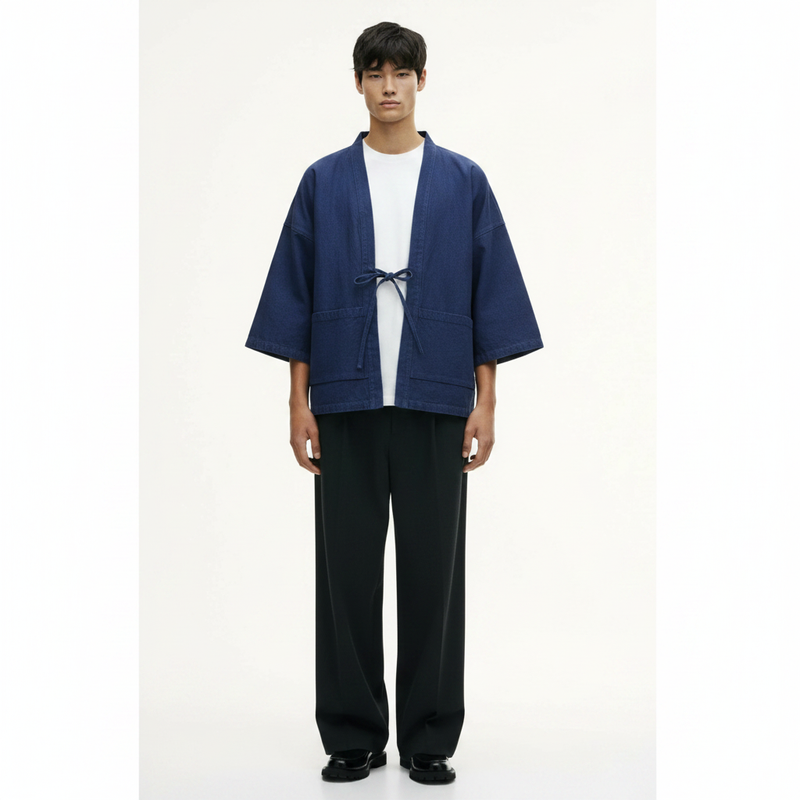
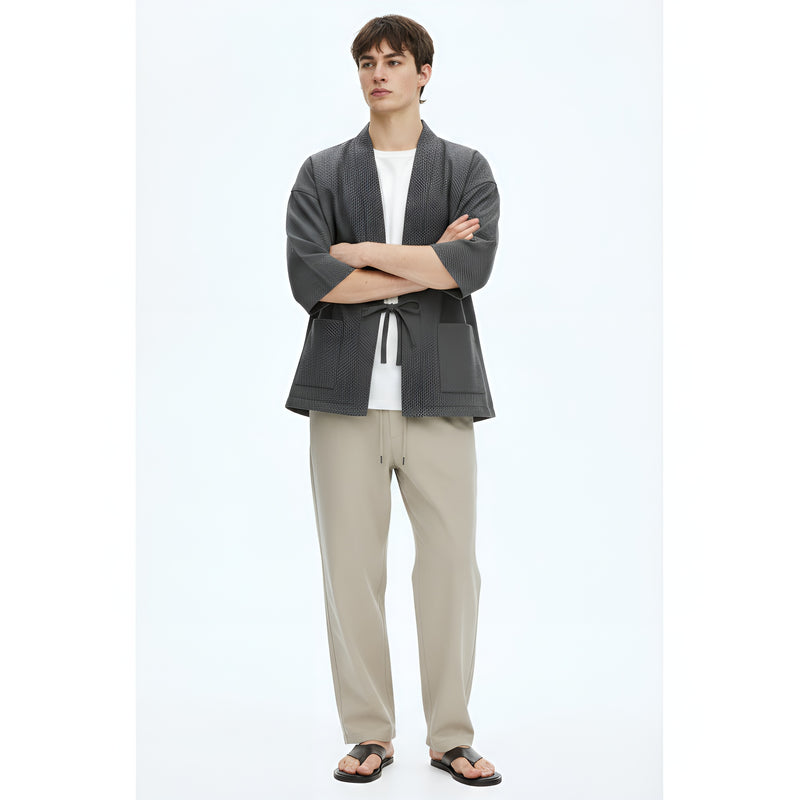
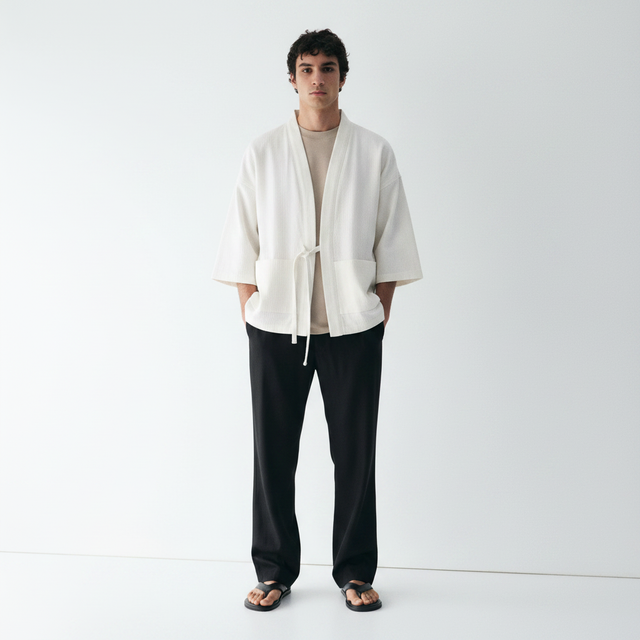
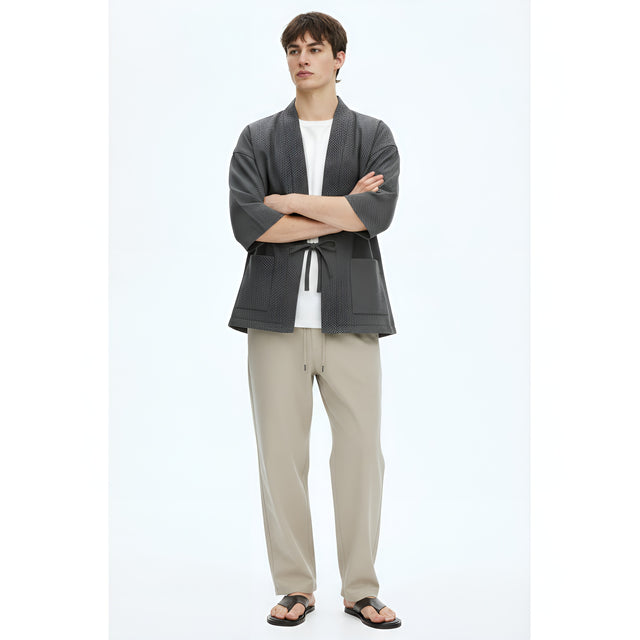
The noragi is the farmer's jacket: a crossover front held by a single inside tie rather than buttons. We cut it twice, once in indigo with two square patch pockets and once in a fine herringbone with three-quarter sleeves cut wide.
The haori is the open layer worn over everything else. The kendo haori is collarless with a straight button front, a single chest pocket and a squared hem, in indigo cotton. The reversible denim robe takes the same idea with a shawl collar and a narrow tie at the waist.
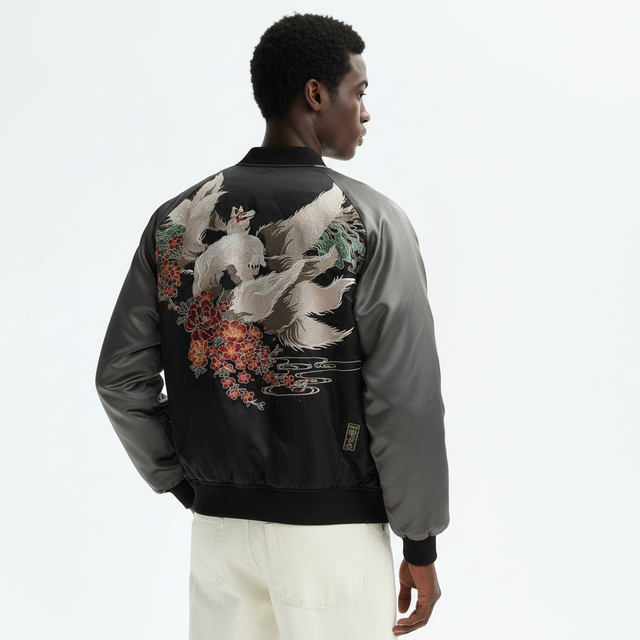
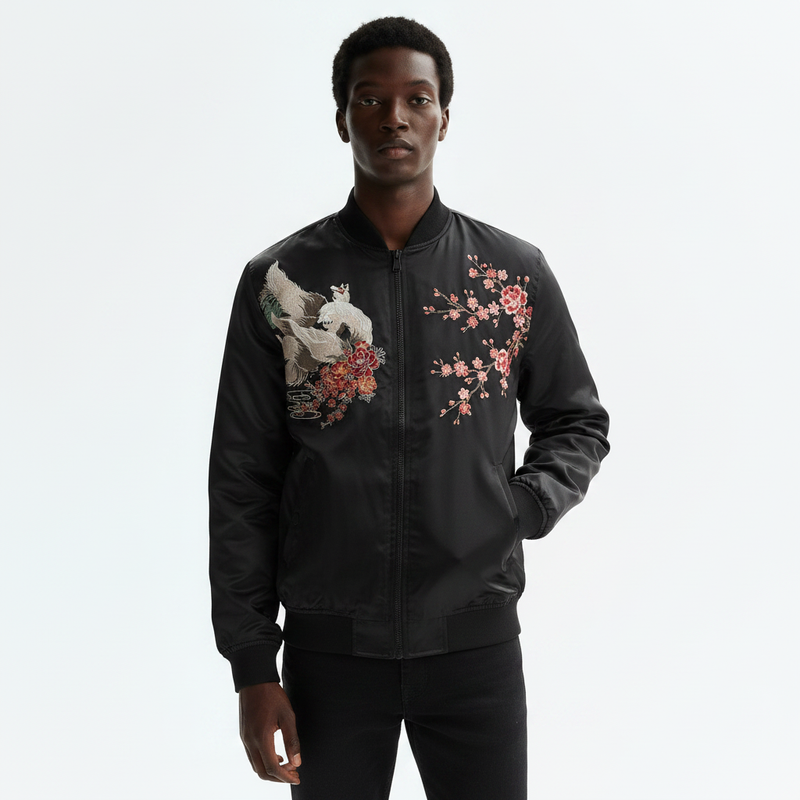
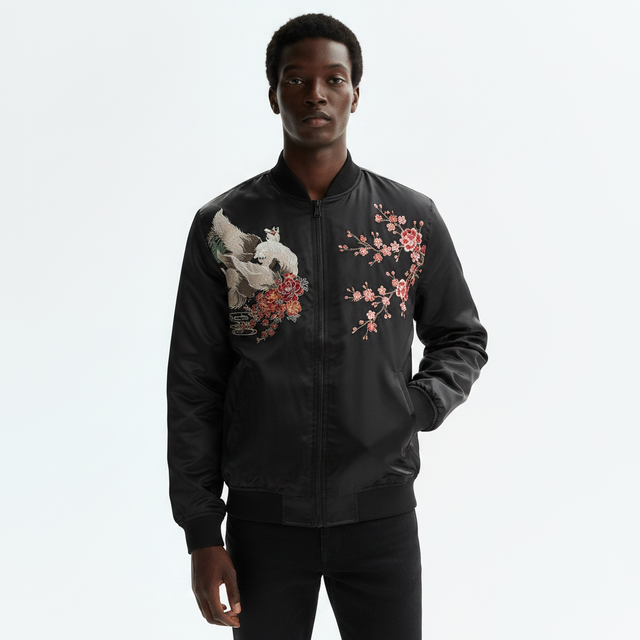
The sukajan is the souvenir bomber, embroidered with a nine-tailed fox that runs across the back in raised thread, with cherry blossom carried over the chest.
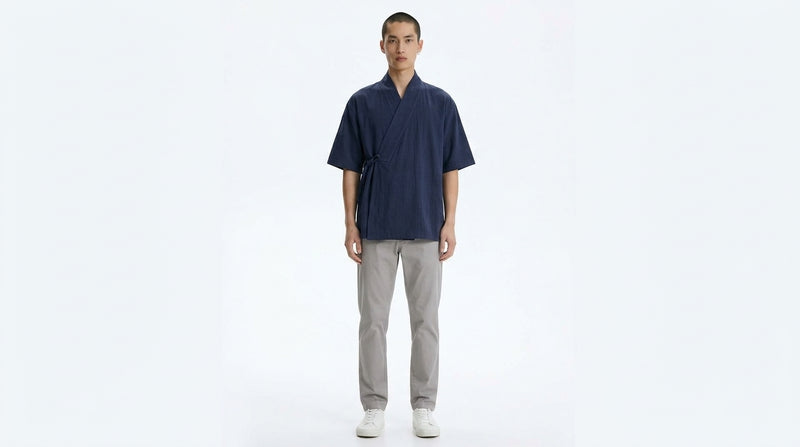
The kimono jacket is lightweight cotton in the straight-panel cut, made to layer open over a tee. The Tang jacket is cotton dyed with plant indigo and closed with hand-knotted frogs, which ages by lightening at the creases the way raw denim does.
5 of the 7 carry a full size chart, and sizes reach XS to 2XL across 9 colourways. The shoot uses models between 187 cm and 189 cm. Wash cold and hang dry, and wash the indigo pieces separately for the first few cycles because plant dye gives up color early.
Measurements come from the manufacturer's flat size table for each garment, converted to centimetres and mapped onto one size ladder. Available for 5 of the 7 garments here, last checked 2026-09-16. How we measure.
A noragi is the Japanese farmer's jacket. The front crosses over and fastens with a single inside tie rather than buttons, and the body is cut from straight panels with patch pockets at the hip.
What is a sukajan?
A sukajan is the Japanese souvenir bomber, known for heavy embroidery. Ours carries a nine-tailed fox across the back in raised thread with cherry blossom over the chest.
What is the difference between a haori and a kimono jacket?
Both are open layers cut from straight panels. A haori is the shorter coat traditionally worn over a kimono and hangs open without a fastening; a kimono jacket borrows the same straight-panel body in a lighter cloth made to layer over a tee.
What is a frog closure?
A knotted cord loop and toggle used instead of buttons. It takes a moment longer to fasten and it never breaks or jams.
How is a kimono jacket cut?
From straight rectangular panels with no shaped armhole, so the sleeve hangs off the body line and the whole jacket folds flat.
Will the plant indigo fade?
It is meant to. Plant indigo lightens at the creases and elbows the way raw denim does, so the jacket ends up mapped to how you wear it.
How do I wash the indigo jackets?
Wash cold, separately, for the first few cycles. Plant dye gives up color early and will tint anything else in the drum.






 XSSM+3
 XSS
XSS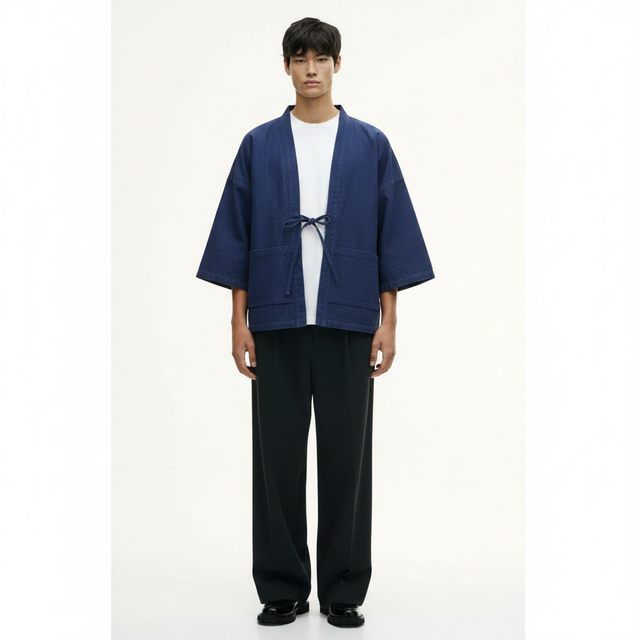 XSSIndigo Dyed Noragi Jacket
 XSSM+1Herringbone Noragi Jacket
 XSSM+1Reversible Textured Haori Jacket
 XSSM+2Nine Tailed Fox Sukajan Jacket
 XSSIndigo Kendo Haori Jacket