Japan has three well-known work trousers. Tobi trousers are worn by the construction workers who work at height; they balloon from the hip to below the knee and narrow sharply at the calf to tuck into boots. Samue trousers are the loose drawstring work clothes of Zen monks. Monpe are loose farm trousers gathered at the ankle. What they share is room where you bend and nothing loose where it could catch.
To be clear about this collection: none of the four pairs here is a tobi trouser. They are practical cotton trousers that take the same priorities, room through the thigh and a hem kept out of the way.
The four pairs
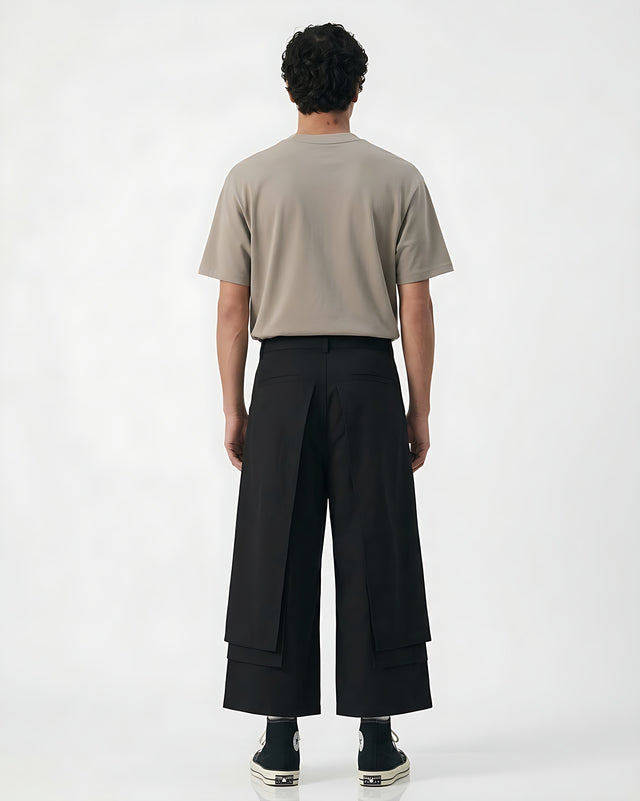
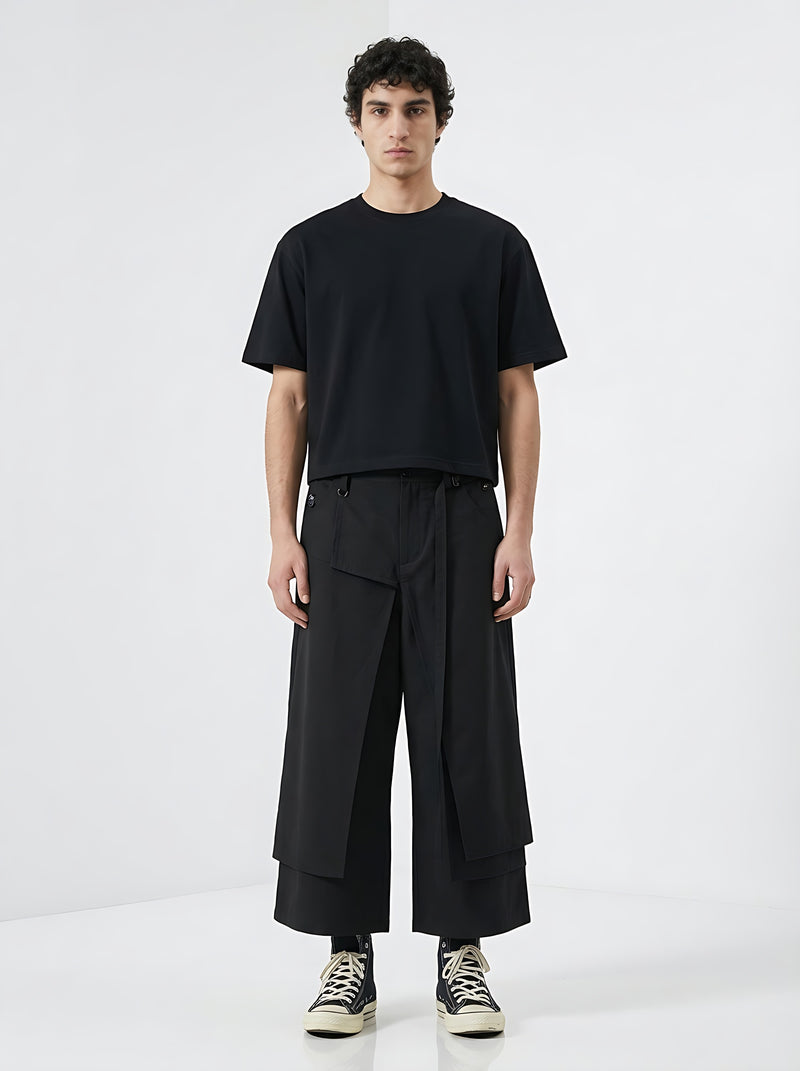
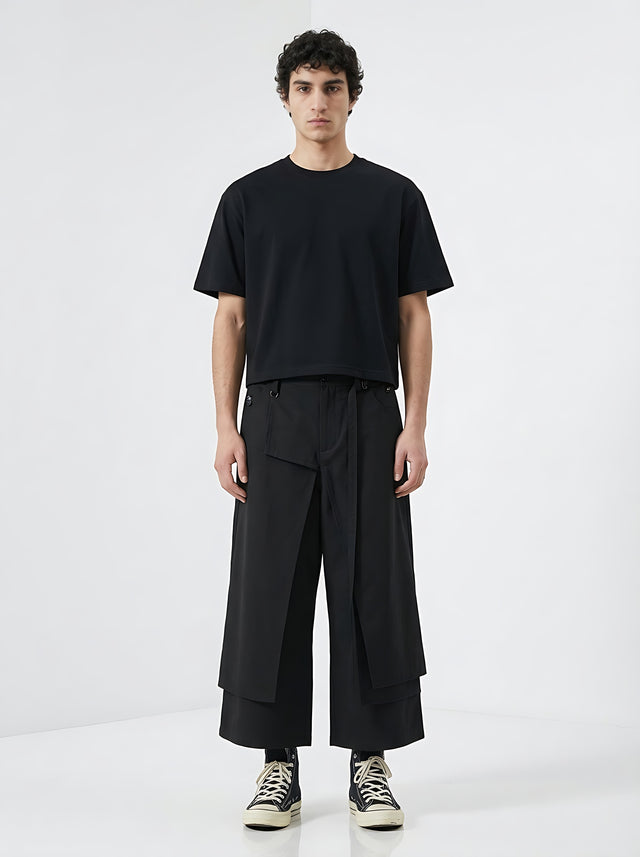
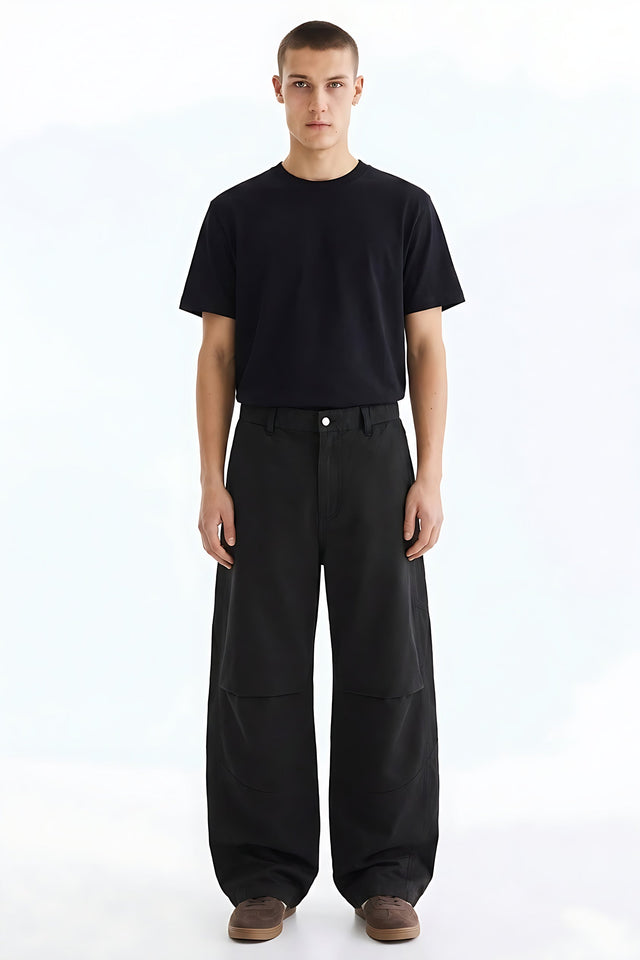
The Deconstructed Cargo Work Pants are the only full-length pair. They are 100% cotton in a wrinkle-resistant, structured weave that holds its shape through a full day and resists bagging at the knee and seat. Front pleats add structure at the waist, slash pockets keep the front clean, and the rise sits mid.
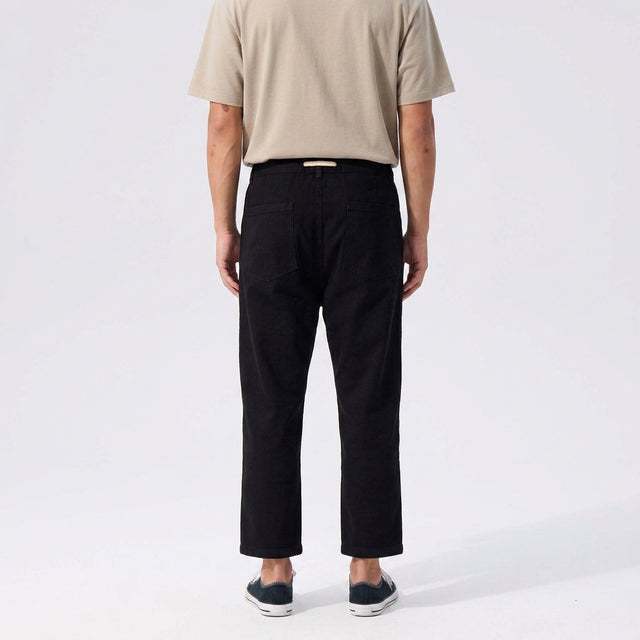
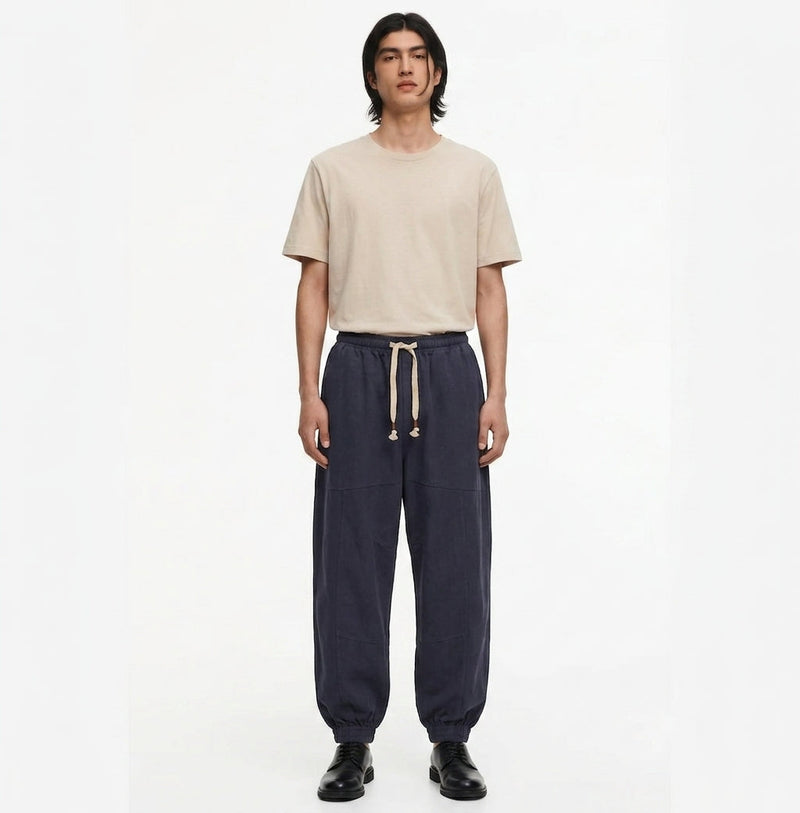
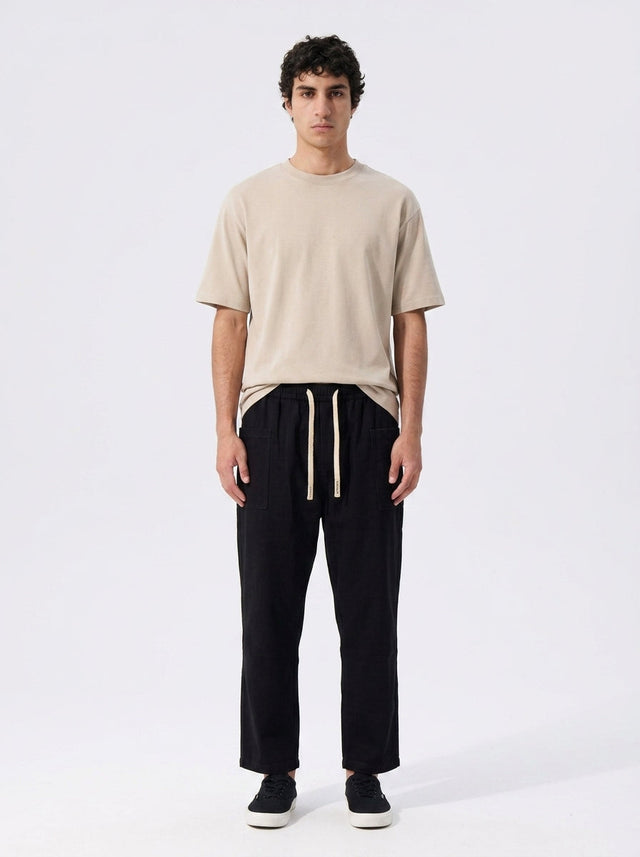
Kotona is loose without being a harem cut, in 100% cotton woven to a textured surface with some grip. The pockets open from the top rather than the side seam, so nothing falls out when you sit, and the cuffed hem crops just above the ankle. The drawstring waist genuinely adjusts.
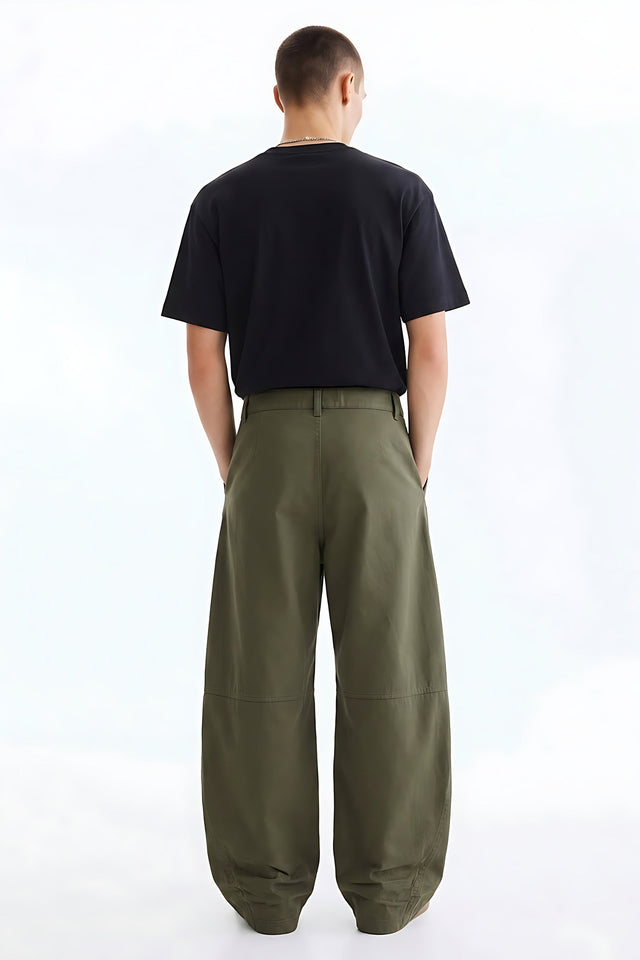
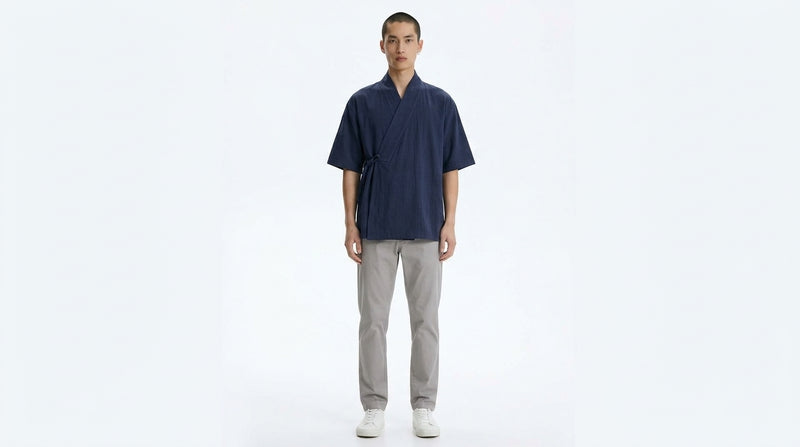
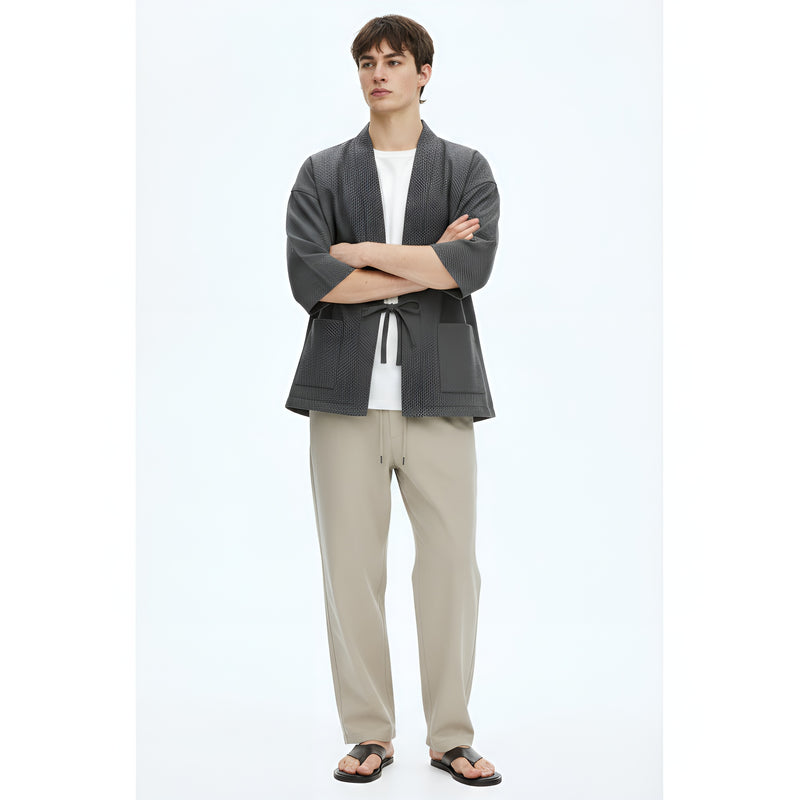
Sekino is cut wide and straight and stops at the calf, the shortest trouser we carry, in 100% cotton with an elastic waist and drawstring. It is a hot weather trouser that keeps air moving because the hem is nowhere near the ankle. The Japanese Wide Leg Trousers are a cropped wide leg in stretch cotton with a mid waist.
How to wear them
Three of the four show the ankle, so shoes matter: a low sneaker or sandal works, a heavy boot fights the cropped hems. The Deconstructed pants take a boot or any everyday shoe. Keep the top half plain and closer fitting.
Read the hip figure on each chart rather than the letter; the drawstring and elastic waists adjust but the hip does not. Every product page lists outside length, never an inseam. Each pair carries its own care guide, so follow the label on the Deconstructed and Japanese Wide Leg pants; Kotona will not shrink at a cold wash.
Measurements come from the manufacturer's flat size table for each garment, converted to centimetres and mapped onto one size ladder. Available for 3 of the 4 garments here, last checked 2026-09-16. How we measure.
The best known are tobi trousers, worn by construction workers who work at height, samue trousers worn by Zen monks for temple work, and monpe, loose farm trousers gathered at the ankle.
Are any of these tobi pants?
No. None of these has the tobi's balloon-to-calf shape. They are loose cotton work trousers that share its priorities: room through the thigh and a hem kept out of the way.
Which pair is full length?
The Deconstructed Cargo Work Pants. Kotona and the Japanese Wide Leg Trousers are cropped, and Sekino stops at the calf.
How should they fit?
Size to the hip measurement on each chart. The drawstring and elastic waists adjust, but the hip is fixed.


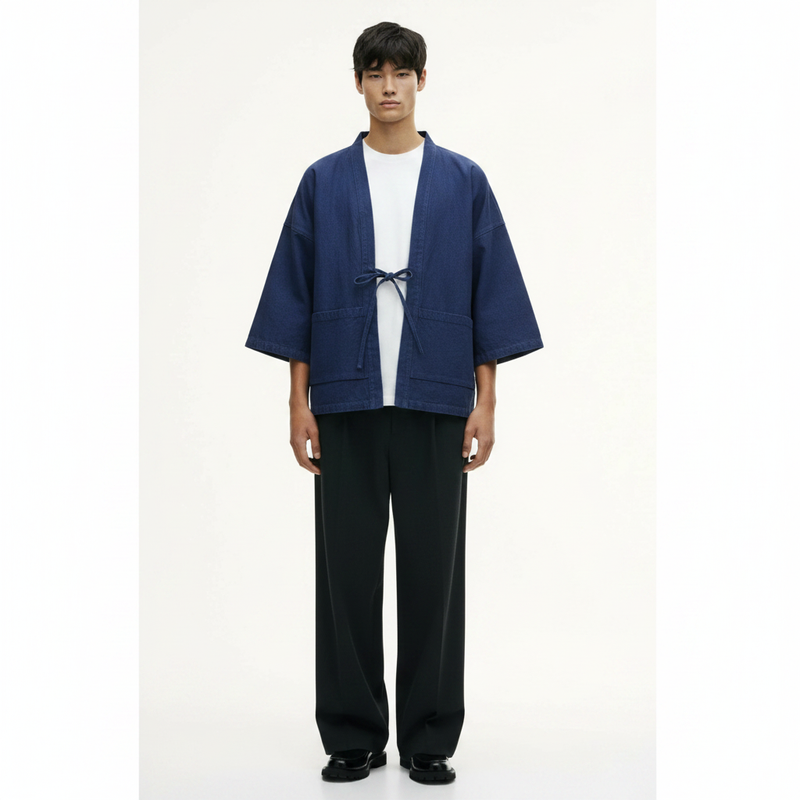




 XSSM+3Japanese Wide Leg Trousers
 XSSM+4
 SML+1
SML+1