


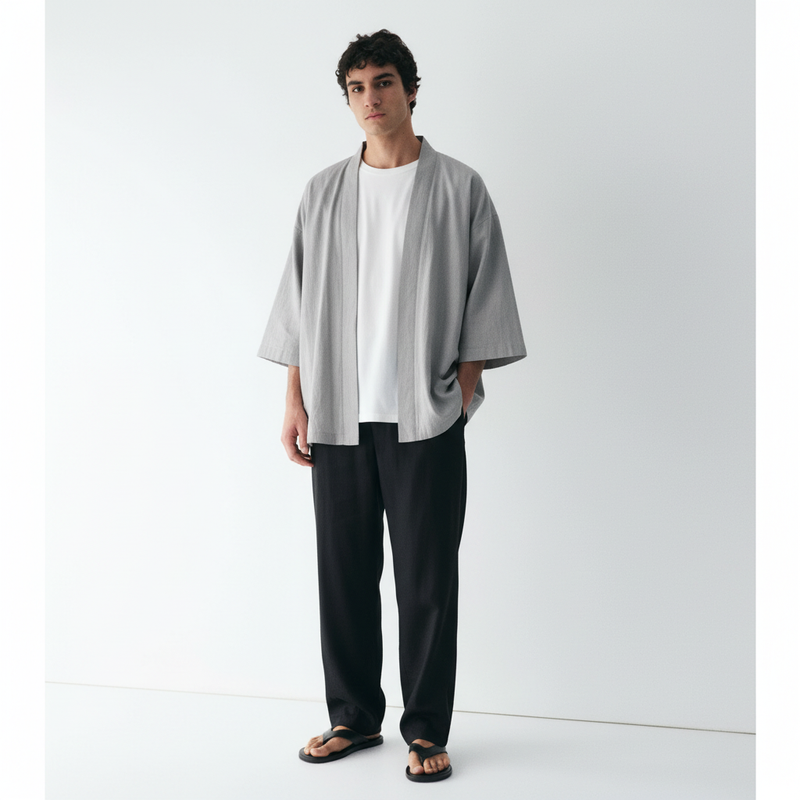
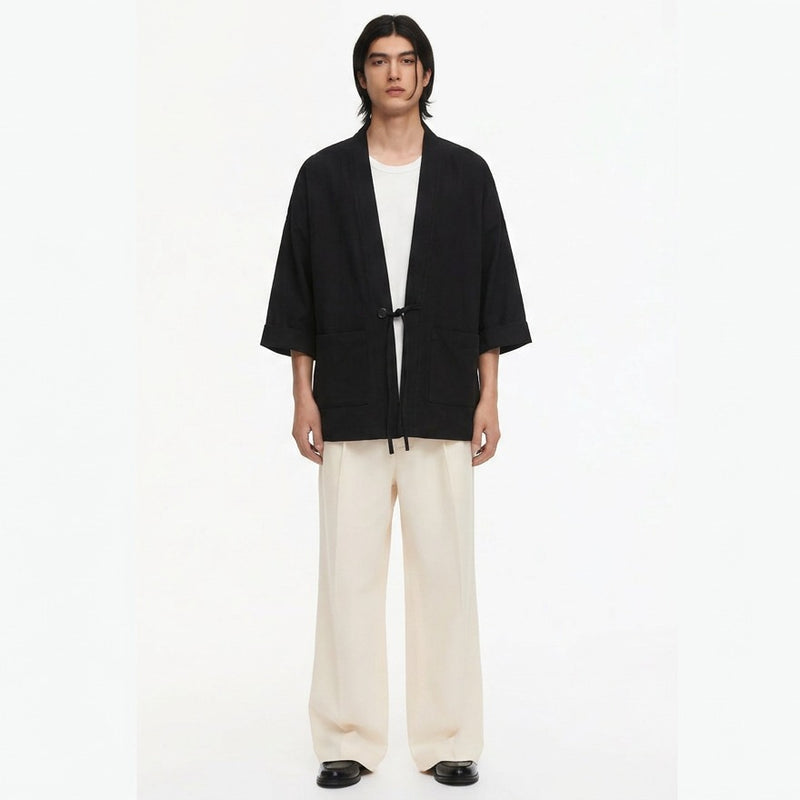
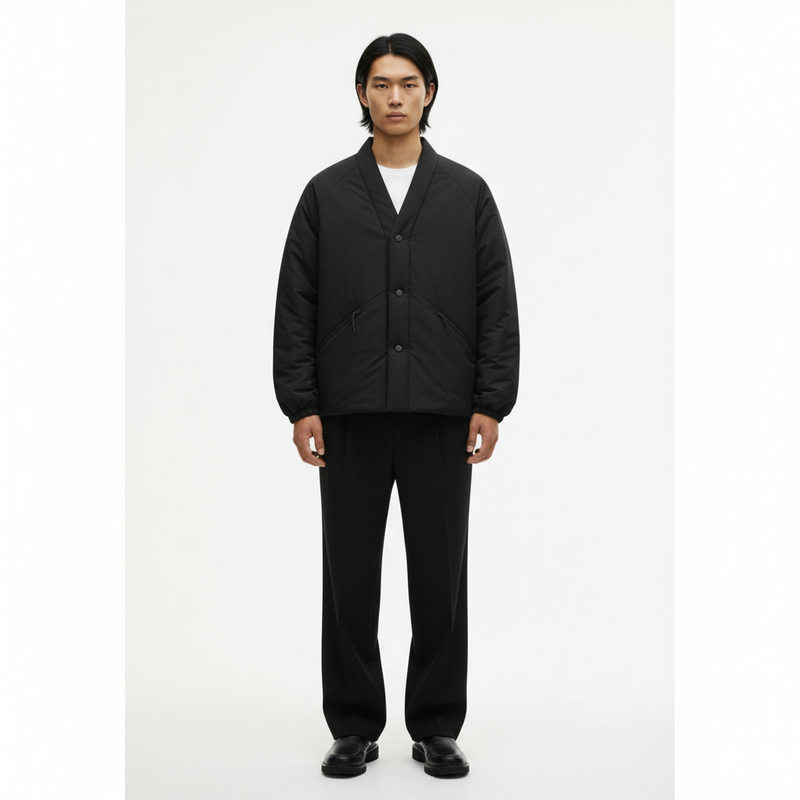
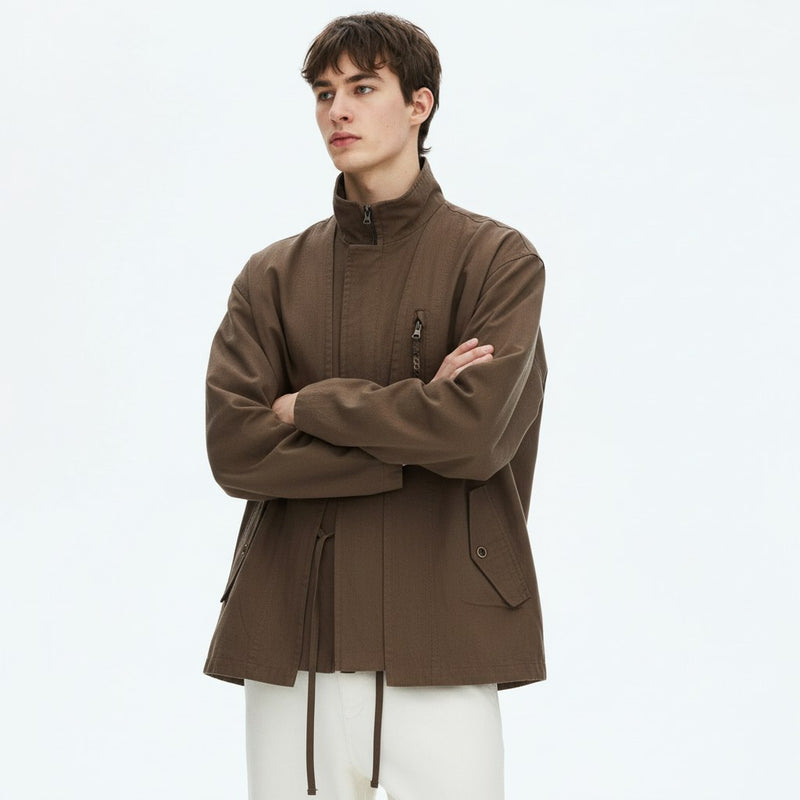
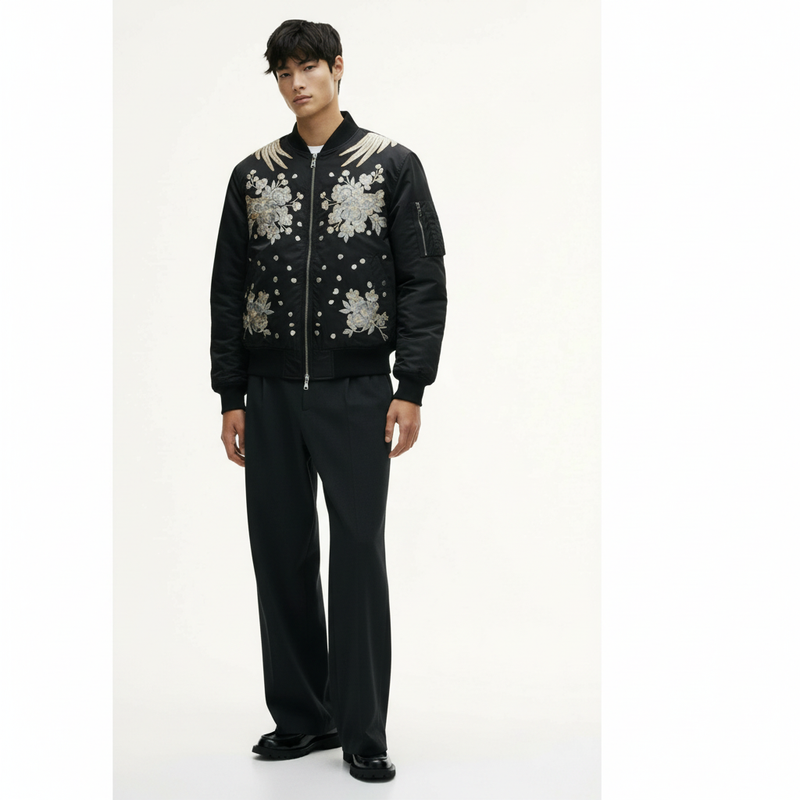

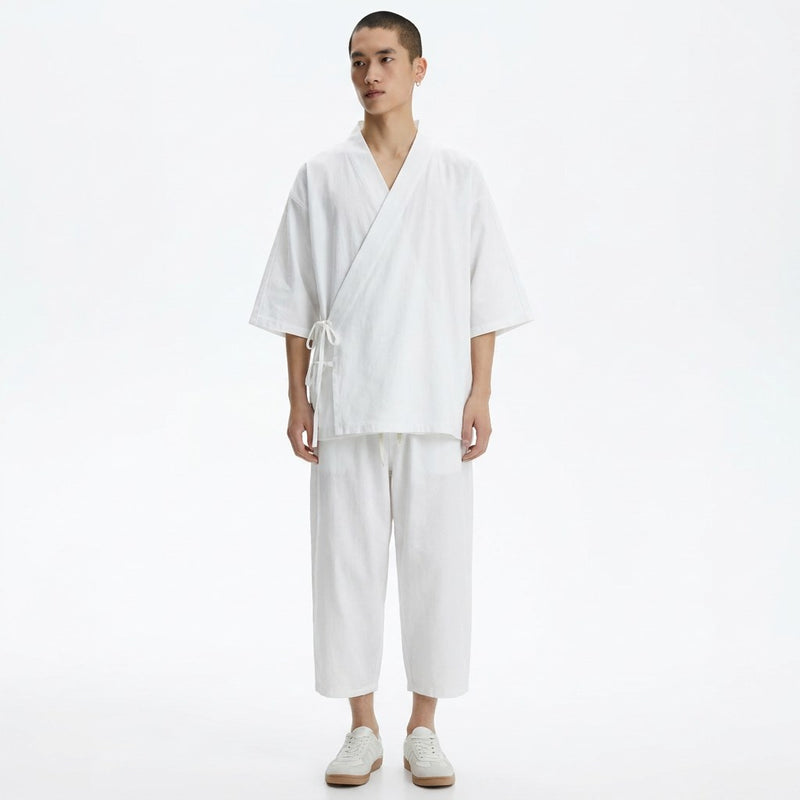


A women's haori (羽織), a straight-cut jacket worn open over a kimono, has the same basic shape as a men's haori. The differences are in the details: sleeves that hang open below the armhole, brighter patterns on the outside, and finer decorative ties. Today most women wear a haori as a light open-front jacket over everyday clothes, and many simply buy a men's cut in a smaller size. You can browse the styles we carry in our haori collection.
How women started wearing haori
The haori began as a men's garment. For most of the Edo period (1603 to 1868) it was worn by samurai and townsmen, while women were expected to go without. The first women to wear it openly were the geisha of Fukagawa in Edo. They took it up as a bold, slightly masculine statement and became known as haori geisha (羽織芸者), the "haori-wearing geisha."
By the Meiji era (1868 to 1912) the haori was ordinary wear for women, a light layer for errands, visits and cool days. Our haori guide covers the full history and the parts of the garment.
Women's haori vs men's haori: what is different
- Sleeves. Women's haori have a furi (振り), sleeve fabric that hangs free below the armhole, so the long sleeves of a kimono sit neatly inside. Men's sleeves are sewn to the body along most of their depth.
- Pattern. Traditional men's haori are plain outside and hide the decoration in the lining, the haura (羽裏). Women's haori more often show color and pattern on the outside.
- Ties. Both close with haori himo (羽織紐), a short cord tied at the center front. Men's formal himo are thick braided cords. Women's are usually finer and more decorative, sometimes beaded.
- Formality. A men's black montsuki (紋付), meaning "crested," haori with five family crests is formal wear for weddings and ceremonies. For women, a haori is a casual to semi-formal layer and is usually left off at the most formal events.
- Cut. Men's haori are built for broader shoulders and a longer body, which matters if you buy a men's size.
Women's haori, michiyuki and other kimono-style jackets
Shops use several names for loose Japanese-style jackets. Here is how they differ.
| Garment | How it closes | Where it is worn | Look |
|---|---|---|---|
| Haori (羽織) | Hangs open, optional ties | Indoors and out, can stay on inside | Straight panels, collar folded back down the front |
| Michiyuki (道行), a travel coat | Snaps or buttons, square neckline | Outdoors, removed at the door | Covers the kimono collar like a coat |
| Noragi (野良着), a work jacket | Wraps left over right, tied | Work and casual wear | Shorter and sturdier |
| Kimono cardigan | Open, no ties | Casual, a Western fashion term | Soft and flowing, often printed or sheer |
Haori also come in different lengths. Hip length feels casual, mid-thigh is a common middle ground, and a long haori that falls past the knee works like a light coat.
How to wear a women's haori today
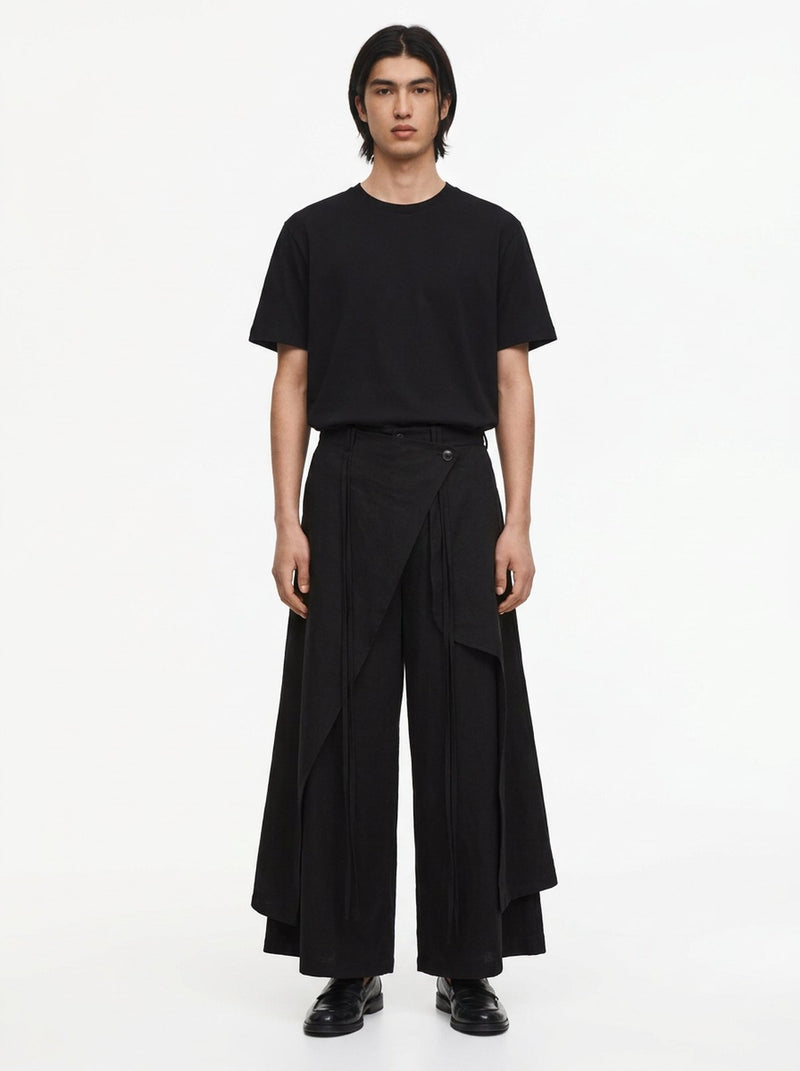
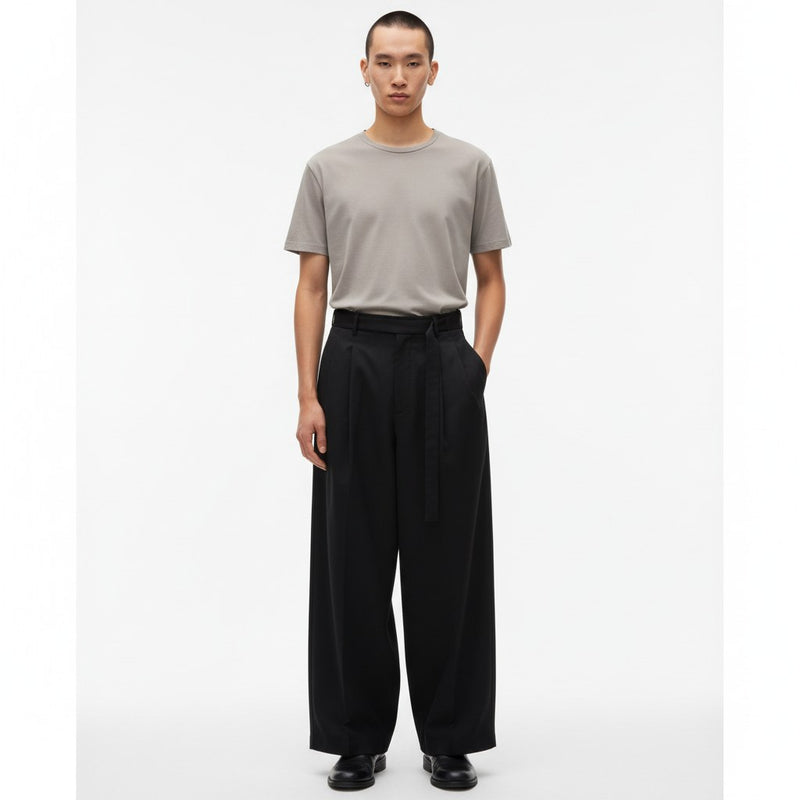
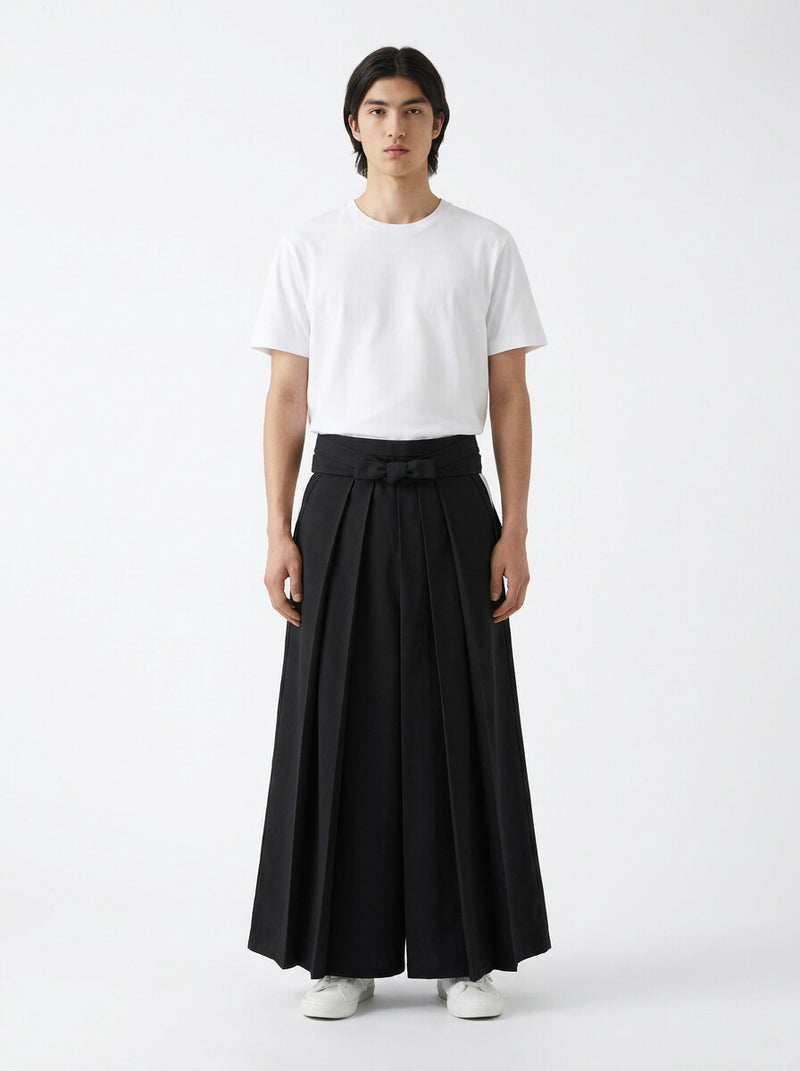
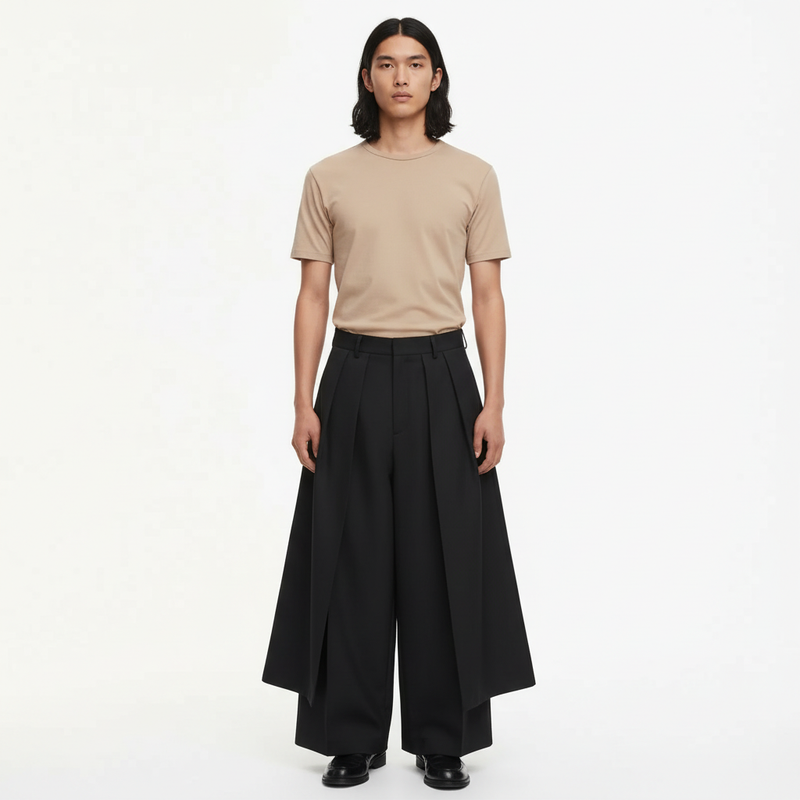
- Over a tee and wide pants. A plain top with wide-leg trousers or hakama pants keeps the long line of the jacket.
- Over a simple dress. A longer haori adds structure without hiding the shape.
- With jeans. A short haori over straight or wide jeans is the easiest everyday version.
- Over a kimono. The traditional way, with the kimono collar showing at the neck.

Most people wear a haori open. If you use the ties, keep them loose so the fronts still hang side by side. A haori does not wrap, so there is no left-over-right rule to follow.
Haori sizing for women in a men's cut
A haori is loose, so fit comes down to shoulder width, sleeve length and body length. Compare numbers, not letter sizes.
- Lay a jacket you like flat. Measure across the shoulders, from shoulder seam to cuff, and from the back of the collar to the hem.
- Compare those numbers with the size chart on the product page.
- For a neat fit, many women choose one men's size below their usual women's size. For an oversized drape, stay at your usual size.
- For a long haori, check the body length against your height so the hem lands where you want it.
What a women's haori costs
Vintage haori from Japan, many of them silk with the traditional women's sleeve, are widely sold second-hand and are the best route to an authentic women's cut. New haori from specialist shops had a median price of $47.99 in September 2026, with a quarter of them at $46.90 or less.
Women's haori at Amaji
To be clear about what we sell: Amaji haori are cut and labeled for men. They are affordable everyday pieces made in China, not vintage or made-in-Japan garments, and they do not have the open women's sleeve. Because a haori is a loose, straight-cut layer, many women wear them, usually starting at XS or S.
- Men's Summer Haori Jacket, $44.90, sizes XS to XXL, in Blue, Light Grey, Dark Grey, Black and White.
- Men's Long Haori Coat, $59.90, sizes XS to XL, in Black, Army Green and Navy. The long style that wears like a light coat.
- Men's Reversible Textured Haori Jacket, $56.90, sizes XS to L, in Gray.
- Men's Modern Open-Front Haori, $42.90, sizes XS to XXL, in Grey.
- Men's Southwestern Jacquard Haori Jacket, $89.00, sizes XS and S only, in Blue and Gray.
If you want a silk haori with the women's sleeve, a vintage kimono seller is the better choice. If you want an easy open-front jacket for everyday outfits, browse our haori collection, or read our haori buying guide to see how other shops compare.
Written by the Amaji team, October 18, 2026. How we write our guides.