


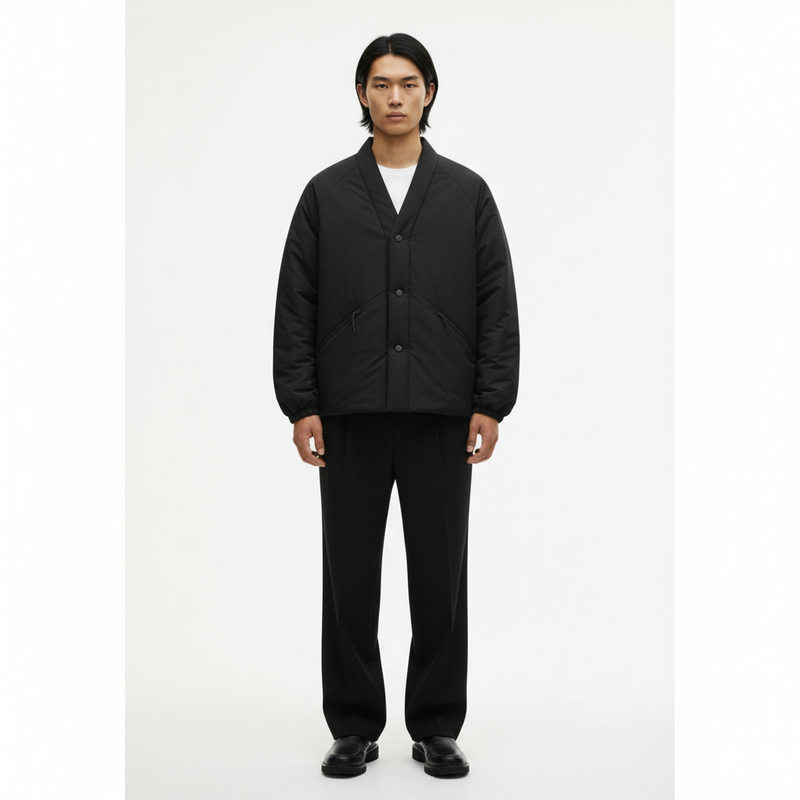
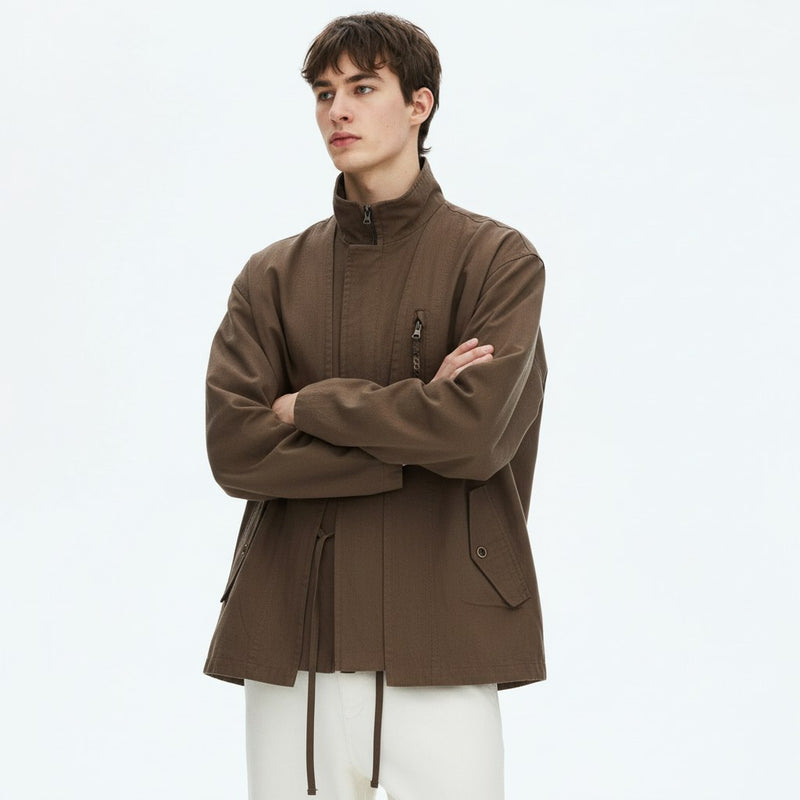
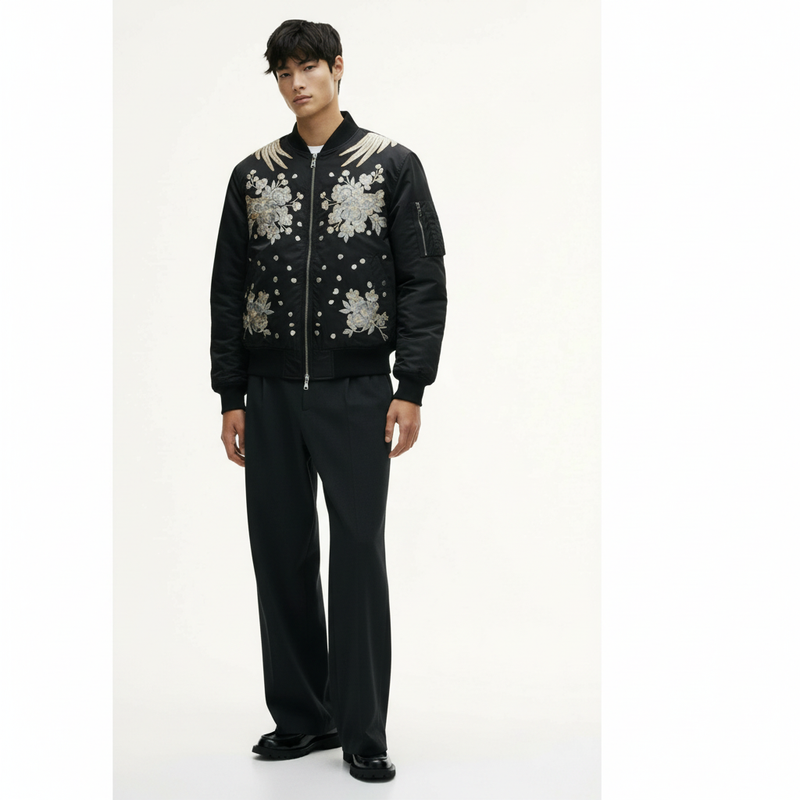

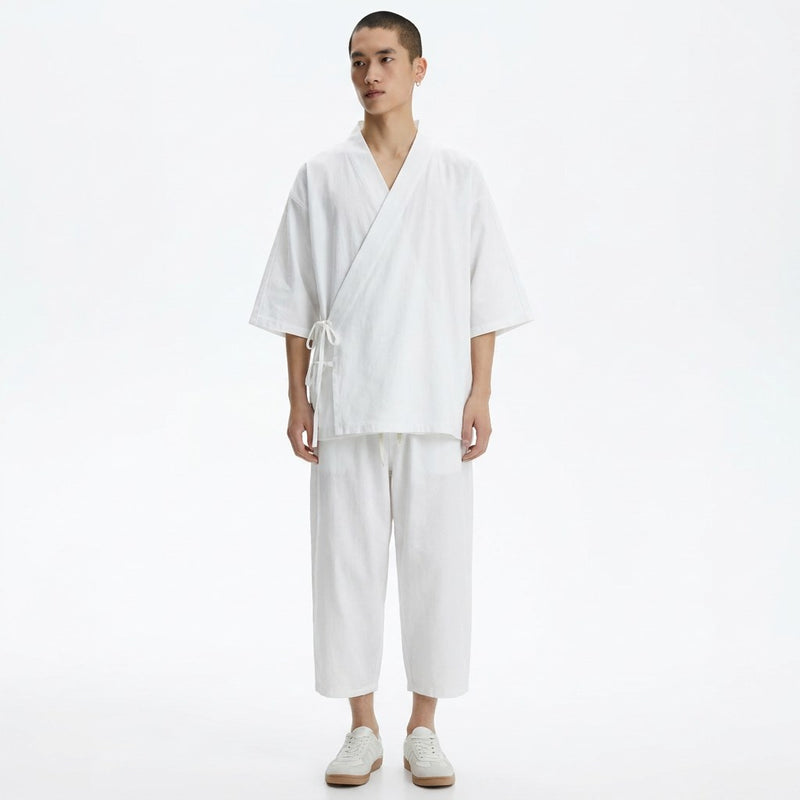


A noragi is Japan's traditional work jacket. The word means field clothes, and for centuries it was what farmers, fishermen and rural workers wore every day. It has a straight body, wide sleeves and a front that crosses over and ties, and it has become one of the most worn Japanese jackets outside Japan. Shop the noragi jackets, or compare prices across five shops in our noragi buying guide.
Many old noragi were stitched with geometric motifs like asanoha and kikko. Their meanings are in our guide to Japanese patterns.
Where the noragi comes from
A noragi was made to be worked in. It was cut from hard-wearing cotton or hemp, usually dyed with indigo, and often reinforced with sashiko stitching, rows of small running stitches that strengthened the cloth where it wore through. A good one was patched and repaired for years, which is part of why old noragi are now collected.
Indigo was not only a colour choice. It was widely available, it hid dirt, and indigo-dyed cotton was believed to deter insects. The deep blue became the noragi's signature.
How a noragi closes
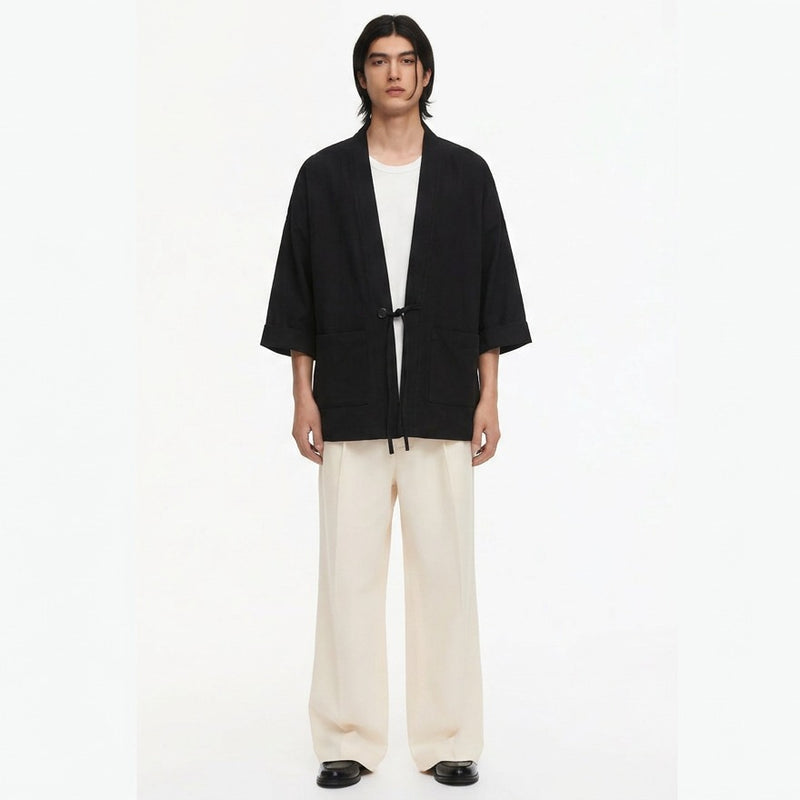
The defining detail is that there are no buttons. The front crosses over and is held by ties, which lets the jacket sit flat against the body, move freely and adjust as you layer underneath. Our Indigo Dyed Noragi Jacket and Herringbone Noragi Jacket both fasten this way, with a single inside tie. Every piece linked in this guide is one we sell at Amaji.
For how the noragi compares with the Western chore coat and the American work jacket, read our workwear jacket guide.
Noragi, haori and kimono jacket
These three are mixed up constantly.
| Noragi | Haori | Kimono jacket | |
|---|---|---|---|
| Origin | Rural work jacket | Formal layer over a kimono | Modern everyday layer |
| Closure | Crosses over and ties | Worn open, or held by a short cord | Open front or a single tie |
| Fabric | Cotton or hemp, often indigo | Silk or fine cotton | Light cotton |
| Feel | Practical, made to wear in | Structured, a little formal | Relaxed, easy to layer |
If you want something structured and a little formal, a haori. If you want something that gets better the more you wear it, a noragi.


How to wear a noragi now
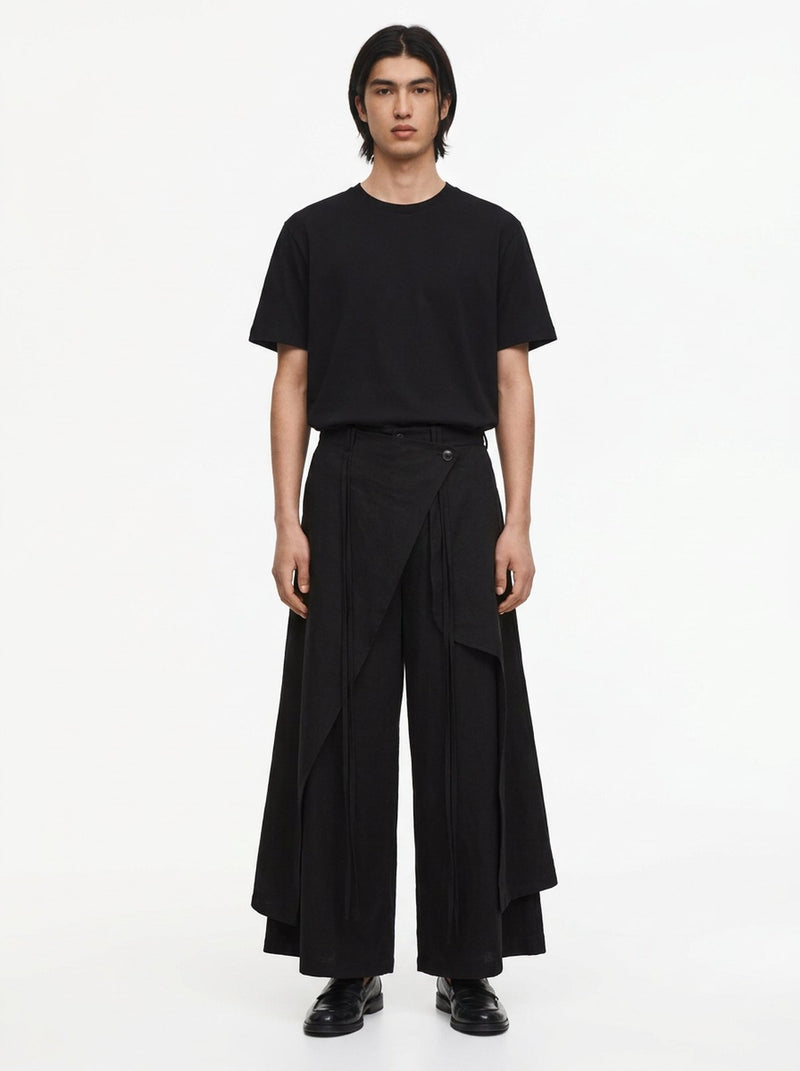
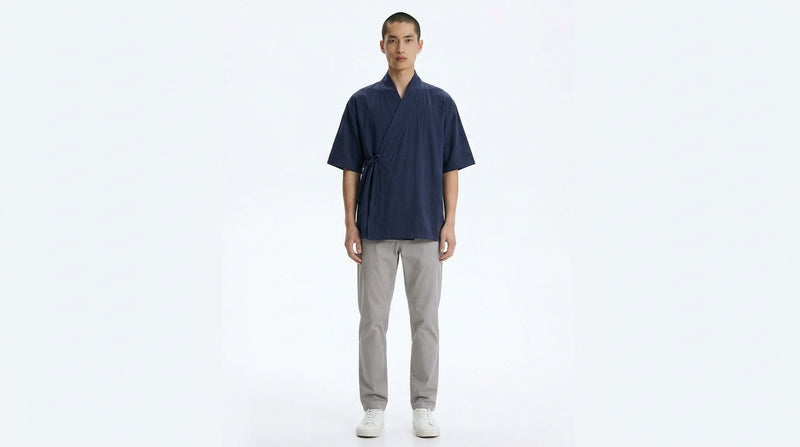
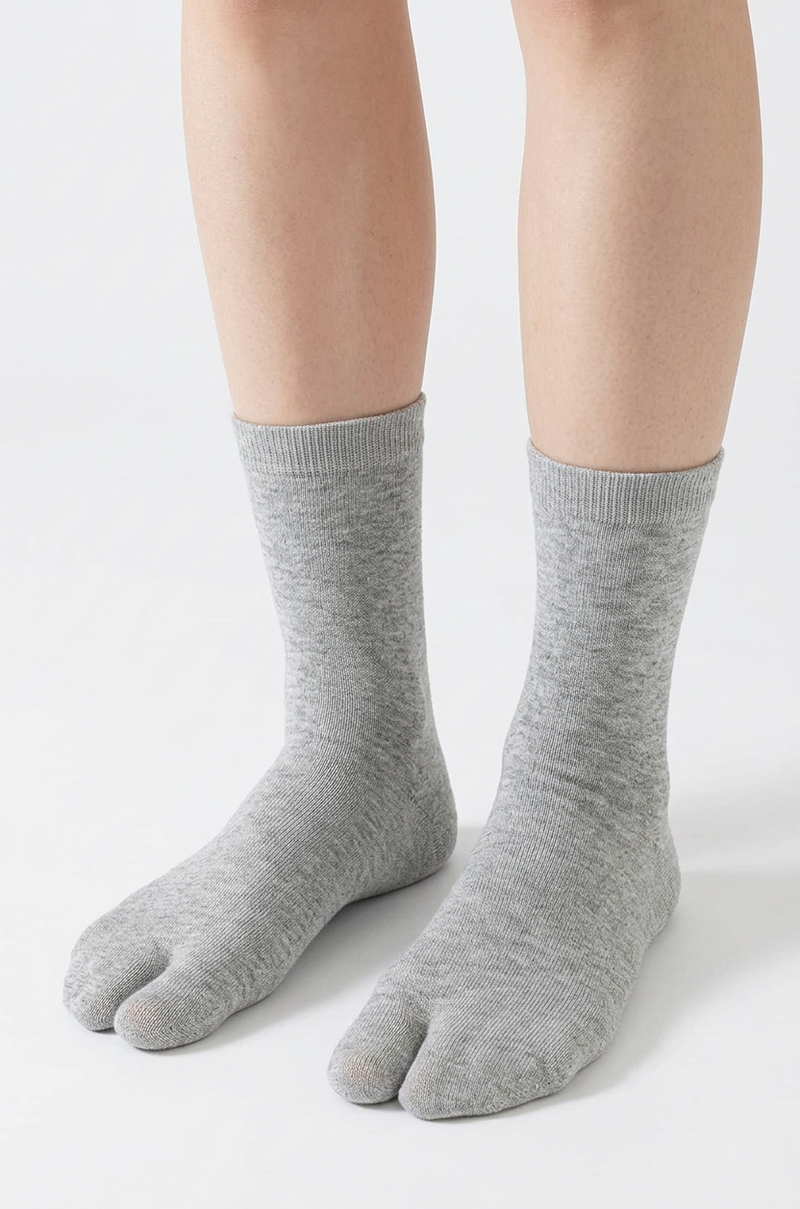
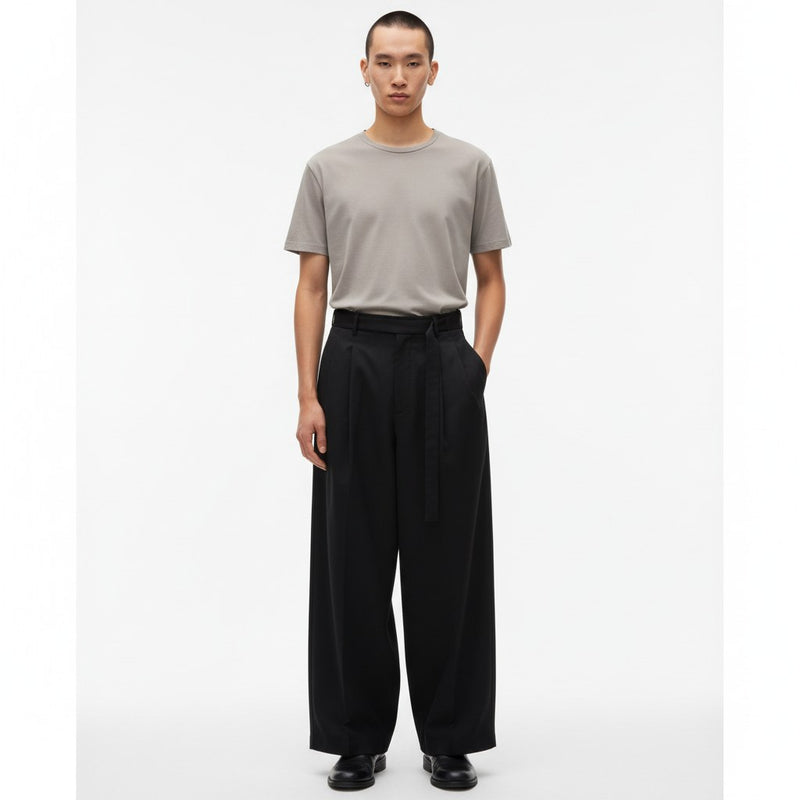
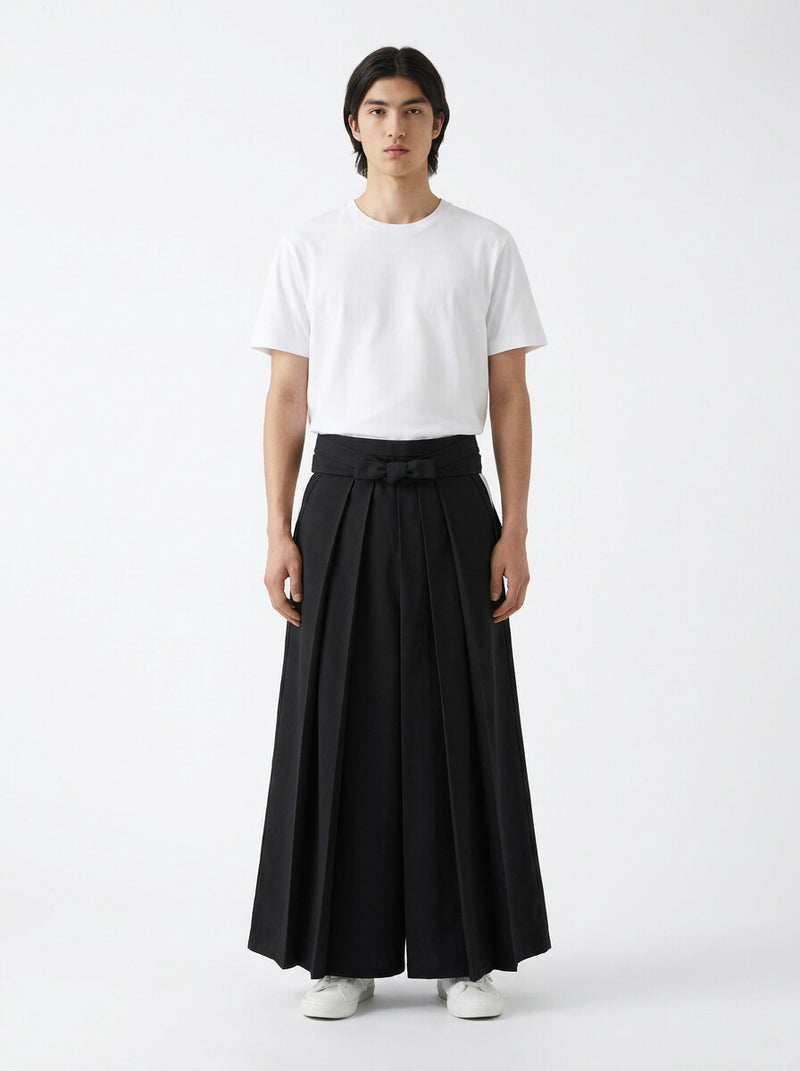
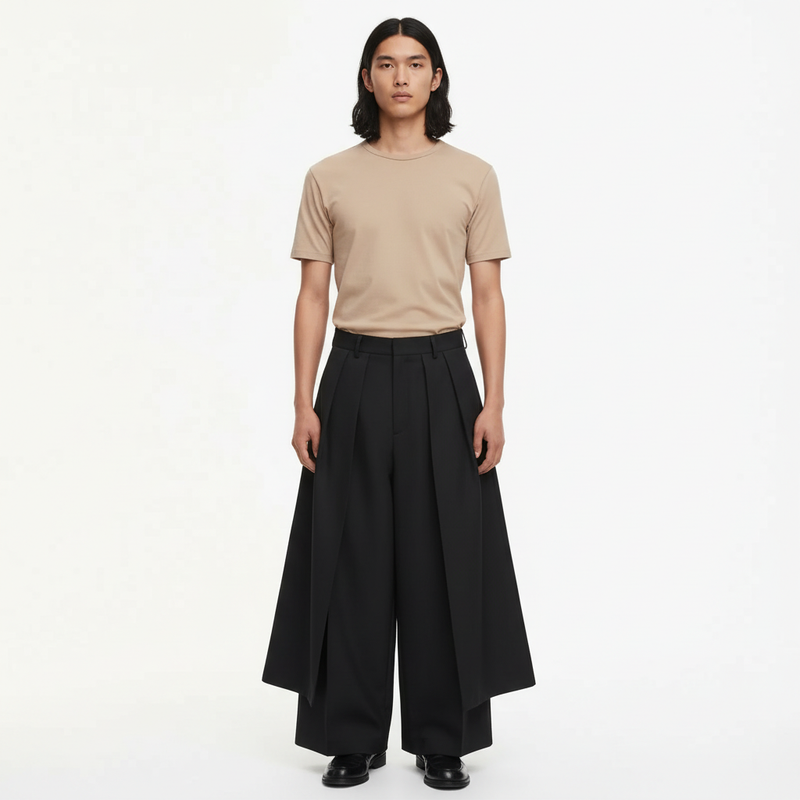
Wear it the way it was worn in the field: over a plain tee, with wide trousers. With Japanese trousers the outfit reads as one silhouette, and over hakama pants with tabi socks it is the closest modern version of what was worn in the field. With straight jeans it works as a softer alternative to a denim jacket, and over a light knit it carries into cooler weather.
Keep what is underneath simple. The crossover front is the detail, and a busy shirt fights it.
The noragi in Japan today
In Japan the noragi is not a fashion item so much as a surviving one. Antique pieces turn up in flea markets and vintage shops in Tokyo and Kyoto, usually indigo, usually patched, and usually sold by weight of history rather than by label. What made a Japanese noragi worth keeping was never decoration — it was that the garment could be repaired indefinitely.
That is the thread running from the original field jacket to the versions sold now. A noragi is a jacket with no hardware to break: no zip, no buttons, nothing to replace at a tailor. The only failure point is the cloth itself, and the cloth was designed to be mended.
Sashiko and boro: the repair tradition
Sashiko means little stabs. It is a running stitch worked in rows across a panel, originally to reinforce cloth at the shoulders, elbows and hem where a work jacket wore through first. Boro is what happens when that goes on for generations: layer over patch over layer, each repair visible, until the garment is more mending than original fabric. Both are now design languages in their own right, which is why so many modern jackets carry sashiko stitching that will never actually need to hold anything together.
None of the noragi here is a sashiko jacket — they are plain indigo, herringbone, cotton-linen and denim. It is worth knowing the difference before you shop, because sashiko commands a real premium and is frequently used loosely.
How a noragi should fit
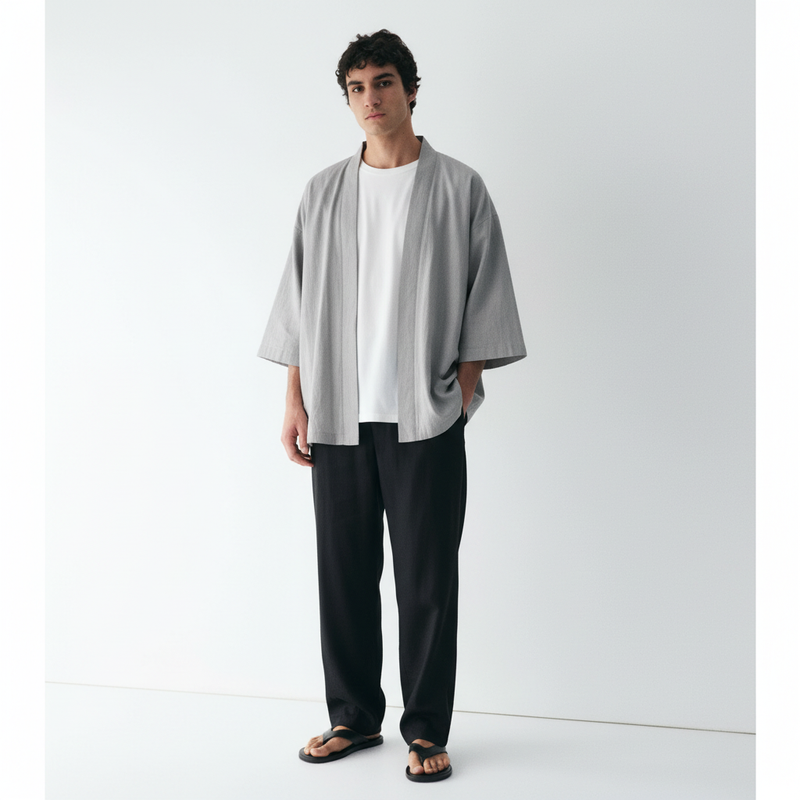
Straight panels, dropped shoulder, no armhole shaping: a noragi hangs from the body rather than fitting it. Take your usual size. The Indigo Dyed Noragi Jacket runs XS to S and the Herringbone Noragi Jacket XS to XXL. Two more tie the same way and also run XS to XXL: the Cotton Linen Noragi Jacket, in a textured grey cotton-linen weave, and the Reversible Denim Noragi Jacket, navy denim on one face and green cotton on the other.
The crossover needs a little room to sit flat, so if you plan to wear it over a knit rather than a tee, that is the one case for going up. Sleeves are cut wide and three-quarter on both, which is correct for the garment and not a sizing fault — the original was cut that way to keep cuffs clear of the work.
What to look for when buying one
- The closure. A true noragi crosses and ties. A jacket with buttons down a straight placket is a chore coat wearing the name.
- The cotton. Heavier cloth holds the shape and fades properly; thin cotton goes limp after a season.
- The dye. Deep indigo that fades at the seams is doing what it should. Even, permanent colour usually means pigment print, which will not age.
- The pockets. Square patch pockets set flat are traditional. Anything bellowed or zipped is a modern import.
Noragi, hanten, happi and the chore coat
A few other jackets get sold under the noragi name. Each is its own garment.
- Hanten is a padded winter jacket, cut on the same straight lines but quilted for warmth and worn indoors in cold houses.
- Happi is a festival coat, usually printed with a large crest or the name of a shop or neighbourhood, and worn open with a sash.
- A chore coat is the French work jacket, the bleu de travail. It has a straight placket, buttons and patch pockets. The closest European cousin to the noragi, but a different jacket.
If it ties shut and has no printing on the back, it is almost certainly a noragi.
Caring for a noragi
Wash it inside out, cold, and on its own for the first few washes, because indigo releases dye before it settles. After that, wash with dark colours. Line dry in the shade. Sunlight fades indigo unevenly on a hanger, and a tumble dryer shrinks cotton that was never pre-shrunk. Iron on the reverse while slightly damp if you want it crisp. Most people stop ironing a noragi after the first month, and it looks better for it.
Can you wear a noragi outside Japan?
Yes, and it has been worn that way for decades. A noragi is work clothing, not ceremonial or religious dress, so wearing one to the shop or the office carries none of the weight that wearing a formal kimono as a costume would. It was made to be useful, and a useful jacket travels.
What respects the garment is wearing it properly. Cross it left over right, like every Japanese garment with a crossover front. Tie it shut or leave it open, but do not belt it tight like a dressing gown. Treat it as the everyday layer it was built to be.
A small tear at a seam is the traditional excuse for a patch. Sew it with a running stitch in a contrasting thread and you have started your own boro.
How indigo ages
Indigo-dyed cotton fades gradually where it rubs, at the seams, cuffs and edges. That is the fabric working. Our indigo noragi is dyed deep and left to fade at the seams with wear, so it looks better in its second year than its first. Wash it cold with like colours and it will age slowly and evenly. The full range is in noragi jackets.
For all sixteen garments in one place, with their Japanese names, see traditional Japanese clothing.