
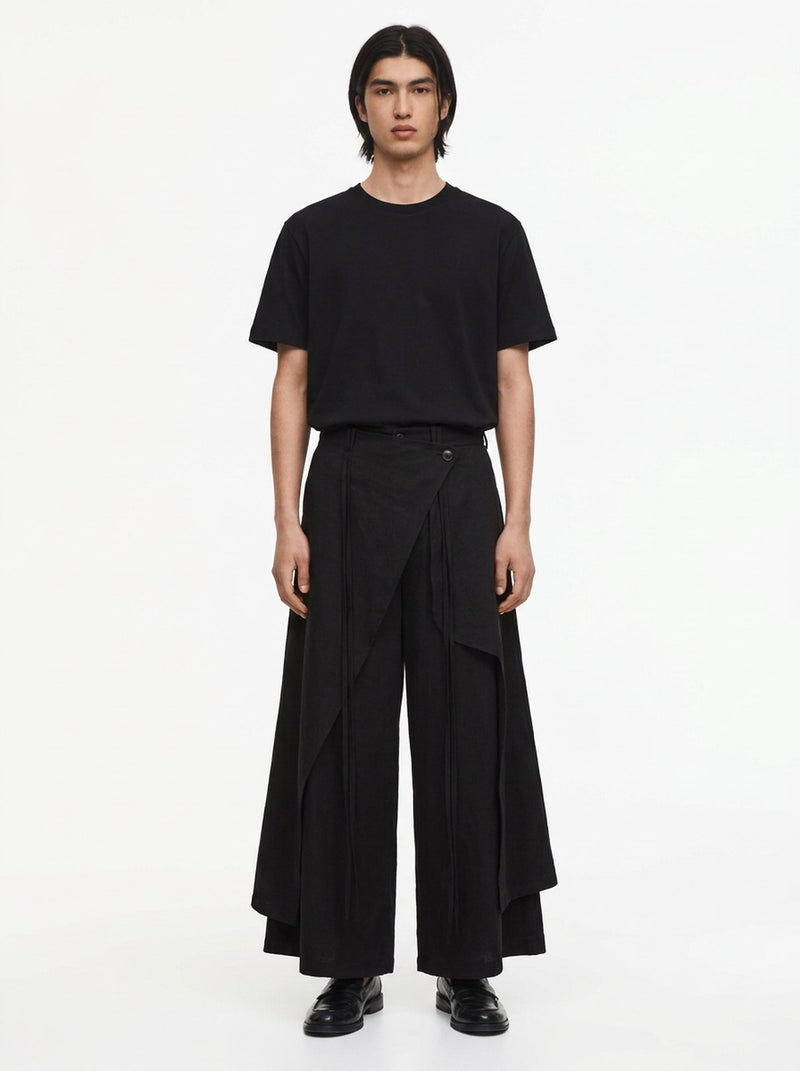
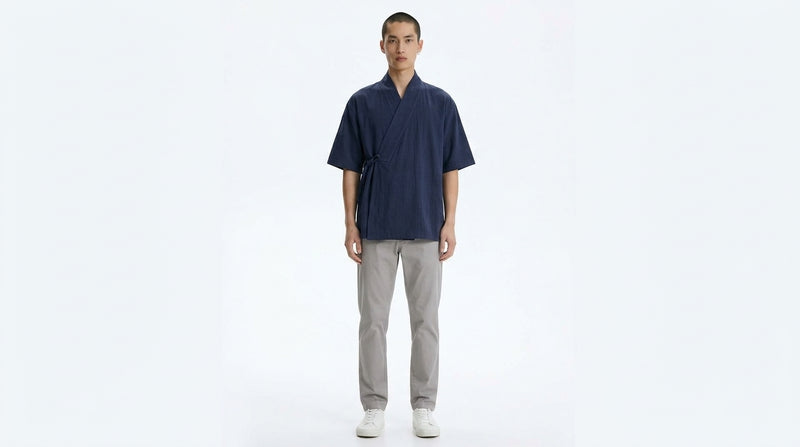

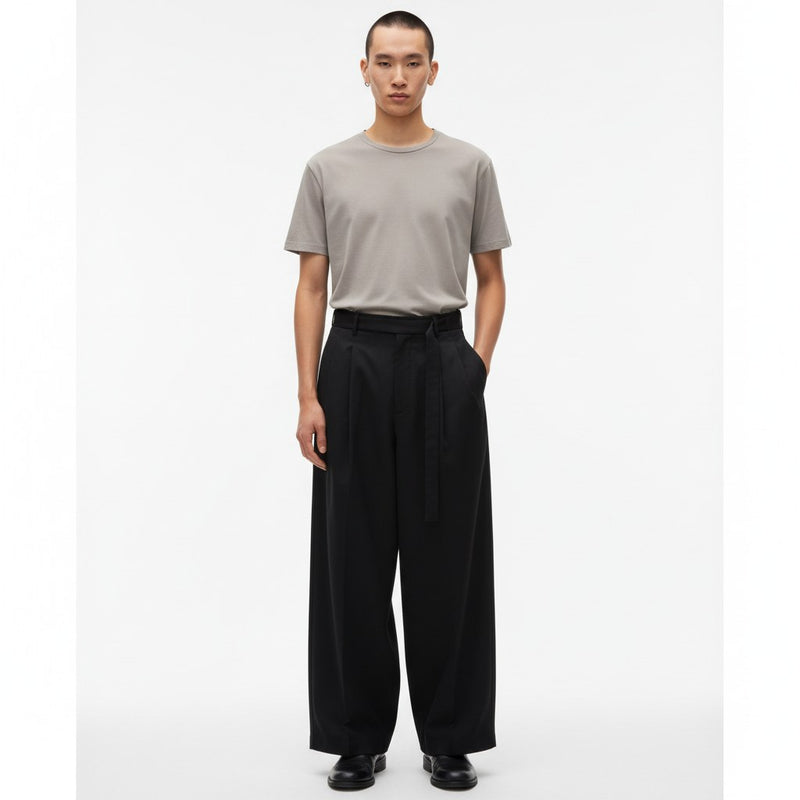
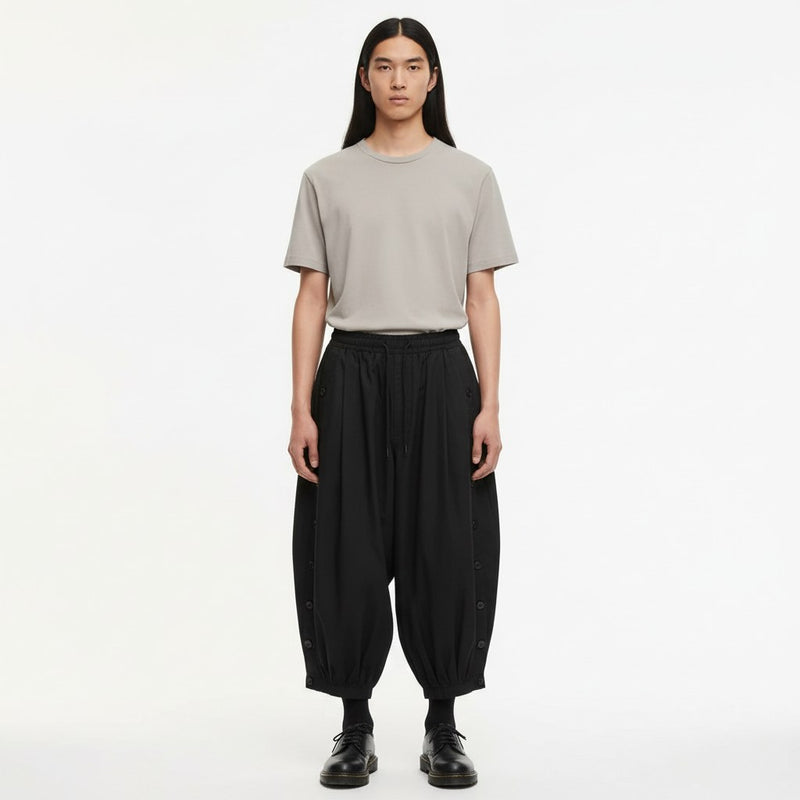
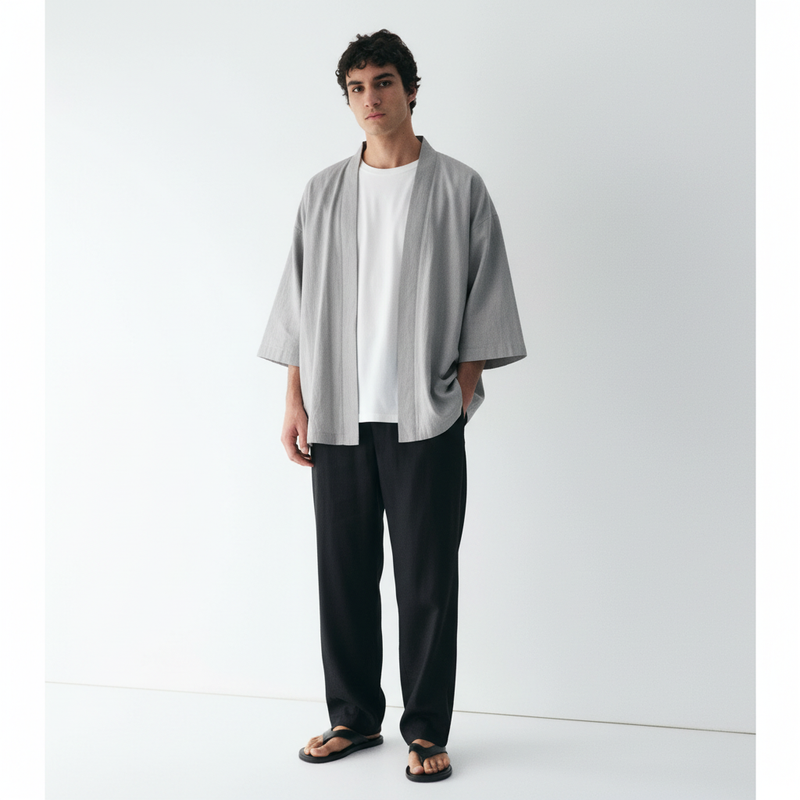
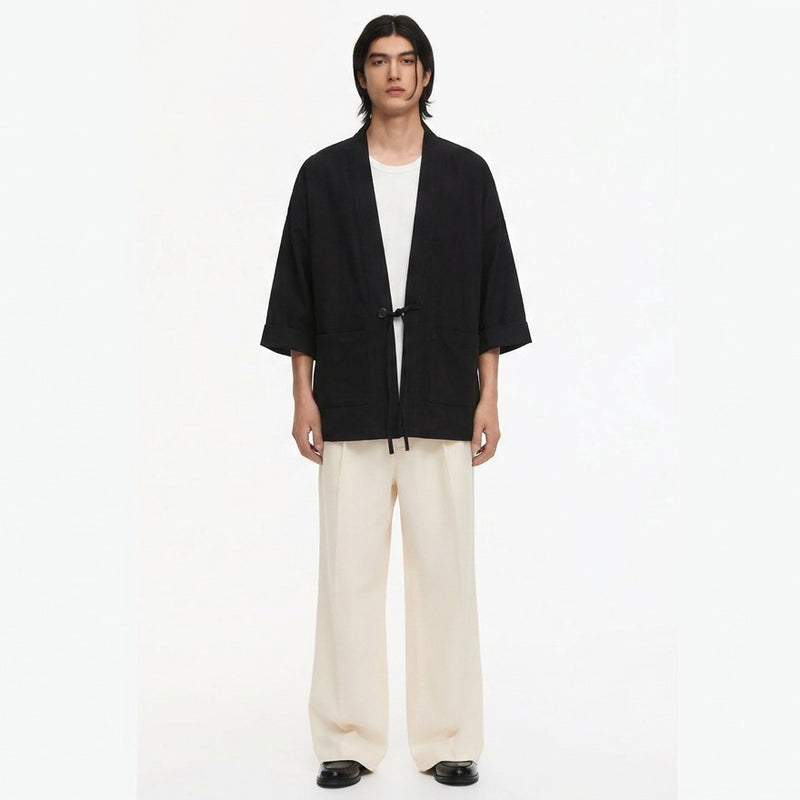
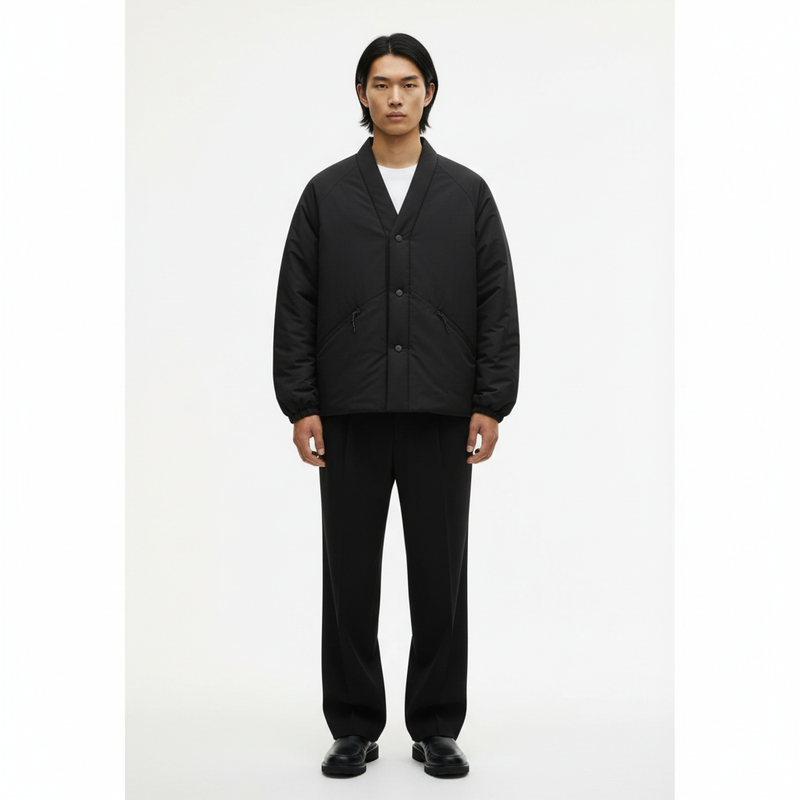
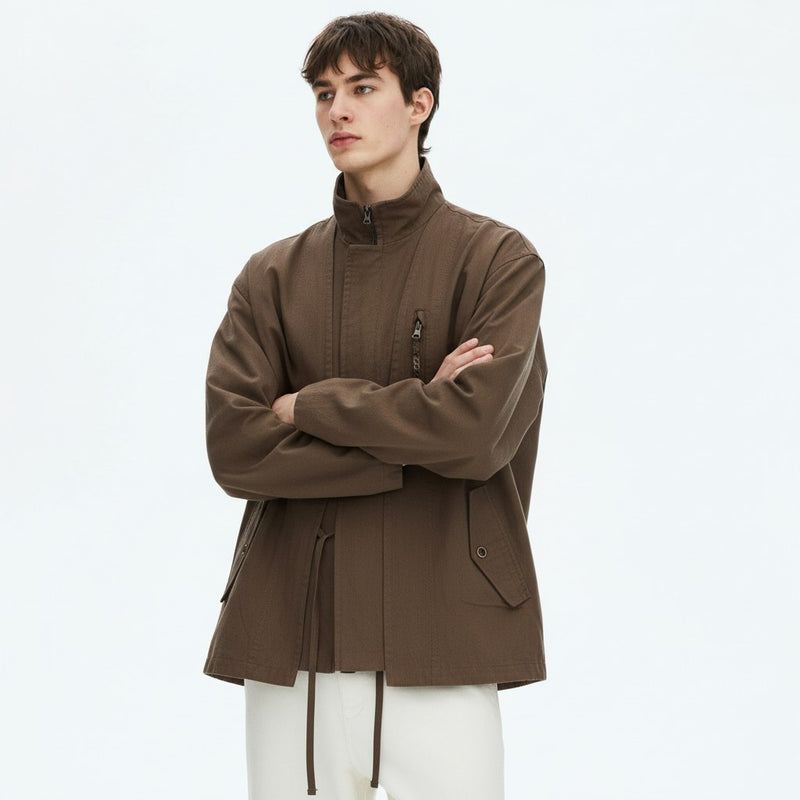
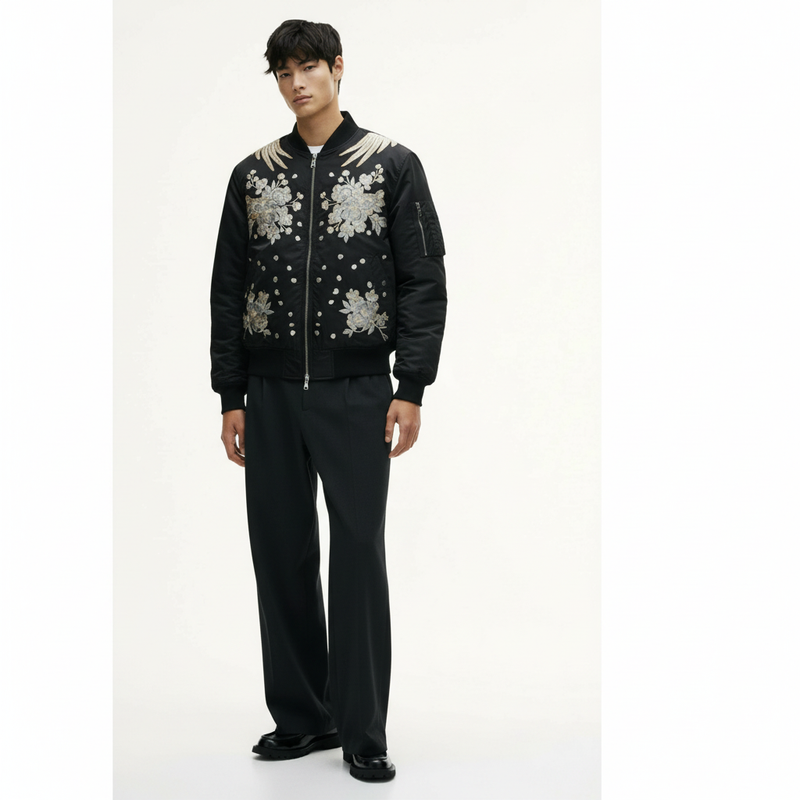

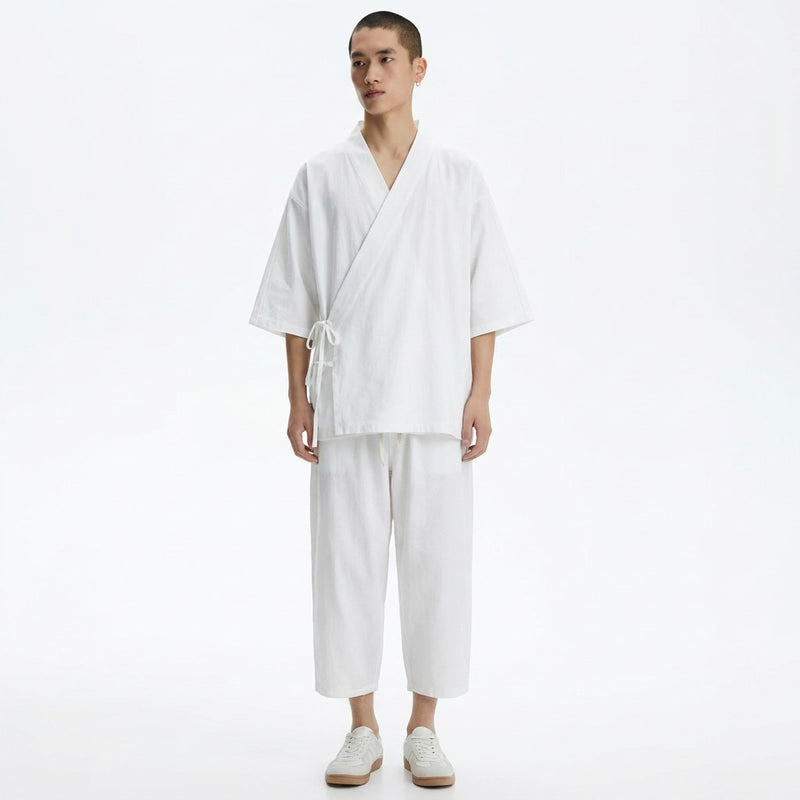


Short answer: wear hakama pants with a fitted or cropped top, so the volume stays below the waist, and with shoes that let the hem fall just clear of the floor. A plain T-shirt and white sneakers work every day. Add a kimono jacket or a haori when you want it dressier, and a padded layer when it turns cold.
A hakama is wide by design. The pleats and the wrap panel are what make it look like a hakama and not just loose trousers, so the outfit around it has one job: give that shape room and keep everything else simple.
Three rules that make hakama work
- Fitted on top, wide below. A boxy, long top on a wide hakama turns you into a rectangle. A T-shirt that ends at the hip, a cropped knit or a shirt tucked at the front keeps the waist visible.
- Mind the hem. The hem should clear the floor by a centimetre or two. Flat shoes make it longer, chunky soles shorten it. If you are between lengths, pick the shoe first.
- One statement at a time. The hakama is already the statement. Let the top and shoes be plain, or bring in one other traditional piece, not three.
Five hakama outfits
| Occasion | Top | Layer | Shoes | Which hakama |
|---|---|---|---|---|
| Every day | Plain heavyweight T-shirt | None | White leather sneakers | Cotton hakama |
| Dinner, smart casual | Black knit or button-up shirt | Kimono jacket or haori | Loafers or plain derbies | Cotton hakama |
| Cold weather | Hoodie or chunky knit | Noragi or hanten | Boots | Pleated samurai hakama |
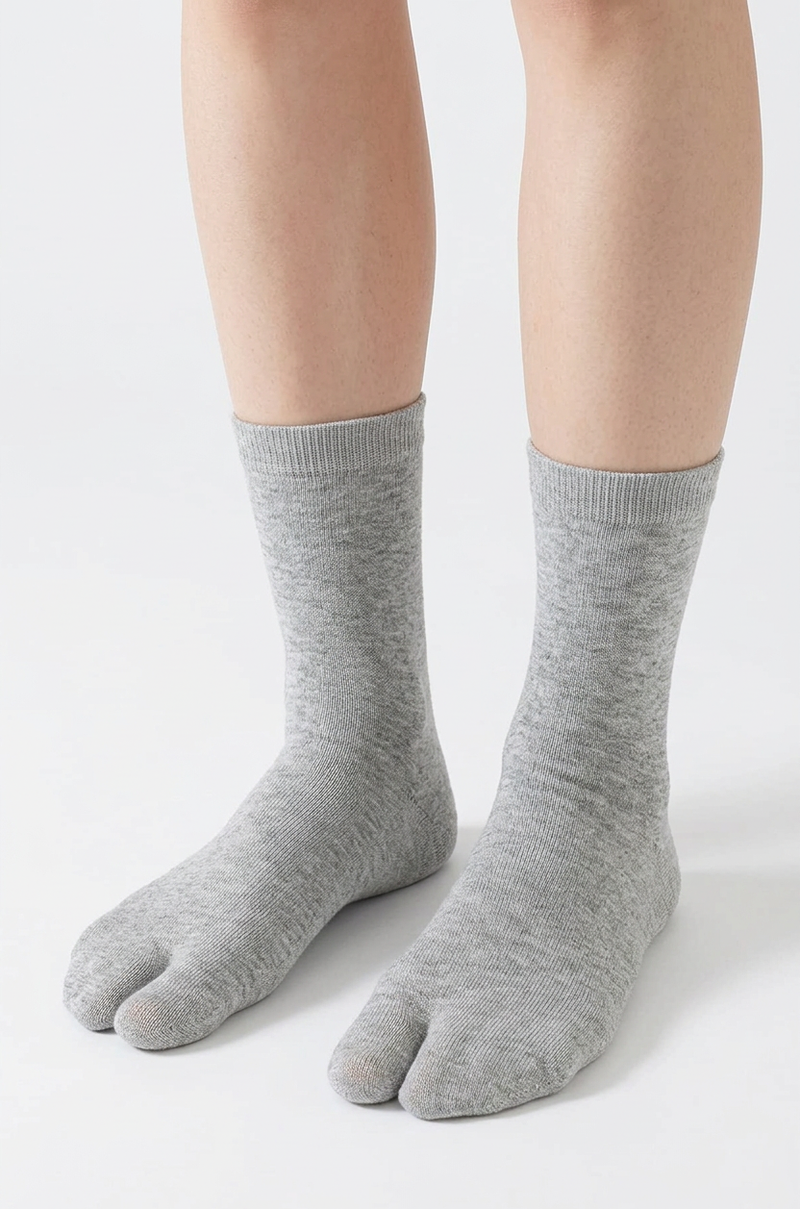
| Summer | Linen shirt or a tank | None | Sandals with tabi socks | Hakama shorts |
| All-black streetwear | Oversized T-shirt, tucked at the front | Long kimono jacket | Chunky black sneakers | Wide pleated hakama |
Tops: keep the waist in view
The most common mistake is a long, loose top that covers the waistband. A hakama is cut to sit at the waist, and the ties and wrap panel are part of the look. A T-shirt that ends at the hip shows them. If your top is longer, tuck the front only and leave the back out, which keeps it relaxed.
Plain colours work best. Black on black is the easiest start, then white, grey or an earthy olive. Prints compete with the pleats.
Shoes and socks
White sneakers are the everyday answer: they make a black hakama look deliberate rather than costume. Loafers dress it up. In summer, sandals with split-toe tabi socks are the most Japanese option, and the socks keep the hem from catching on bare skin. Our guide to tabi socks explains how they are worn.
Layering: kimono jacket, haori, noragi
A traditional layer over a plain top is what turns a hakama into an outfit. A kimono jacket is the lightest option and works most of the year. A haori is longer and dressier, worn open. A noragi, the farm jacket, is sturdier cotton for cooler days, and a padded hanten covers winter. Keep the layer shorter than the hakama hem so both shapes read.
Fit, size and tying
The cotton hakama has an elastic back and long side ties, so it takes your usual size from XS to XL. The one-size styles tie or belt to fit a wide range of waists. Our hakama size guide has the measurements, and how to tie a hakama walks through the ties. New to the garment? Start with what a hakama is and where it comes from.
Where to start
If you buy one pair, make it a black cotton hakama: it goes with every outfit above. Two pairs come to $69.80 with free shipping, and every style is in our hakama pants collection.