

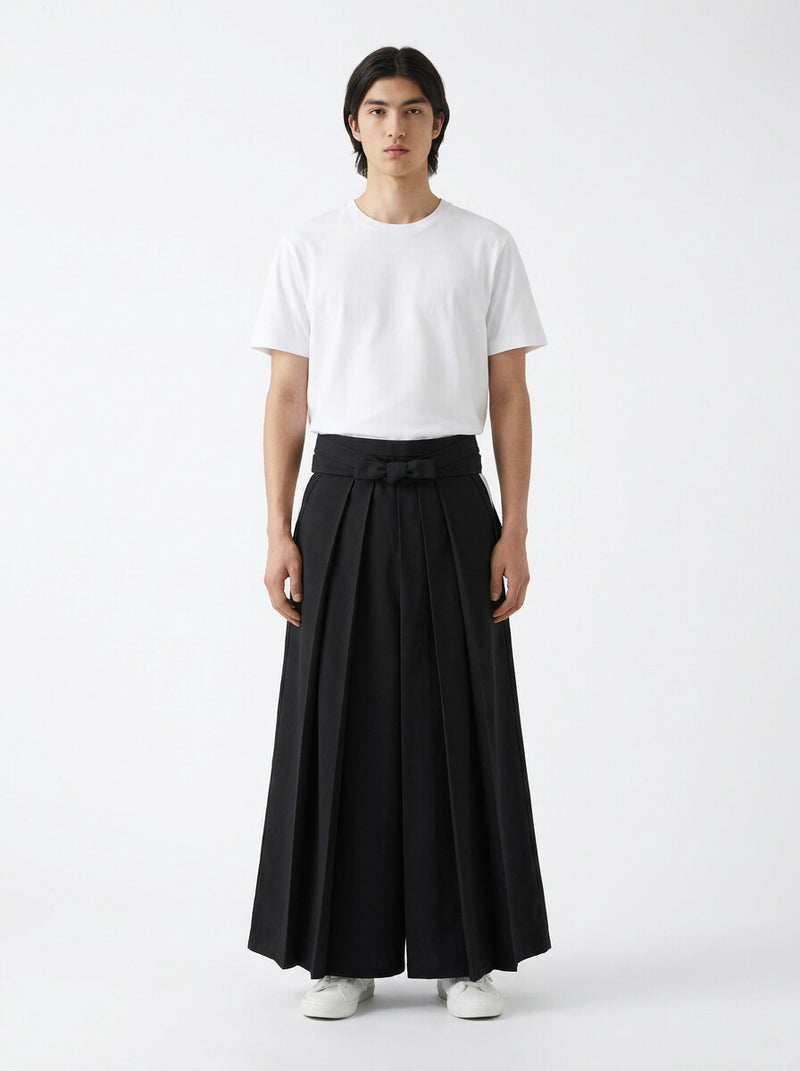

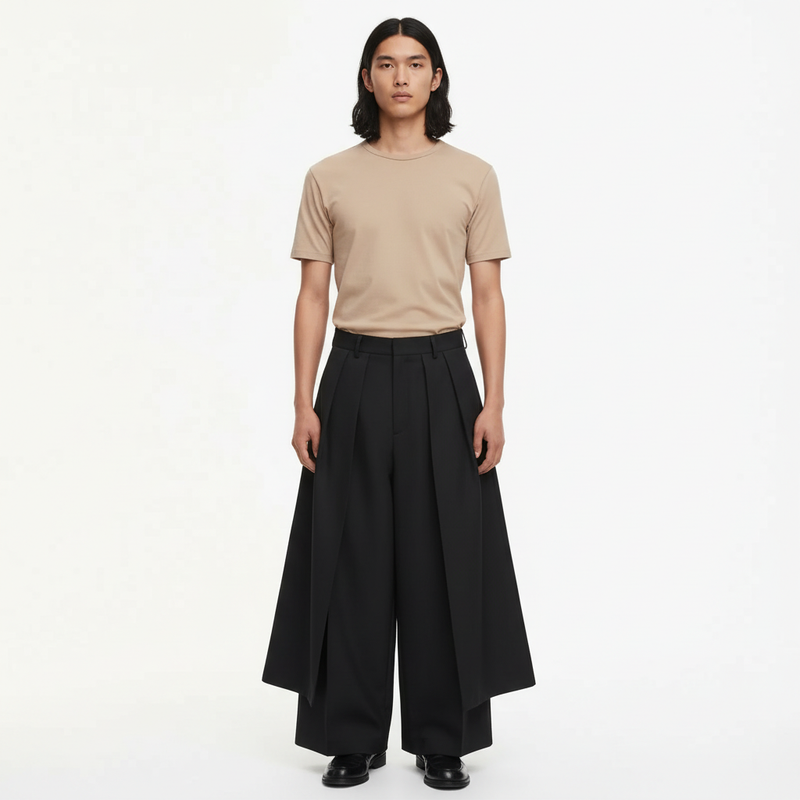
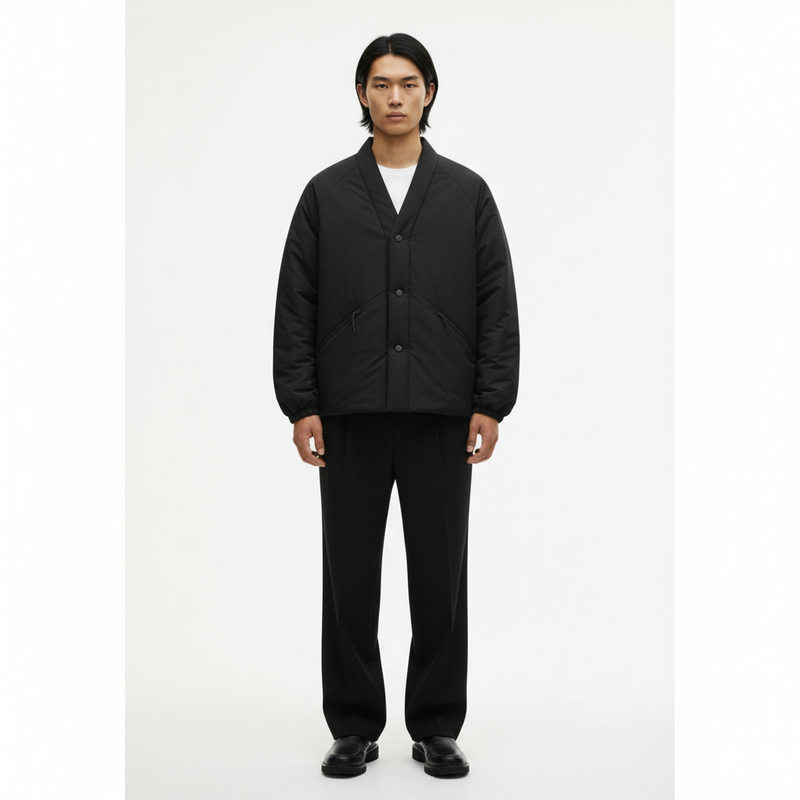
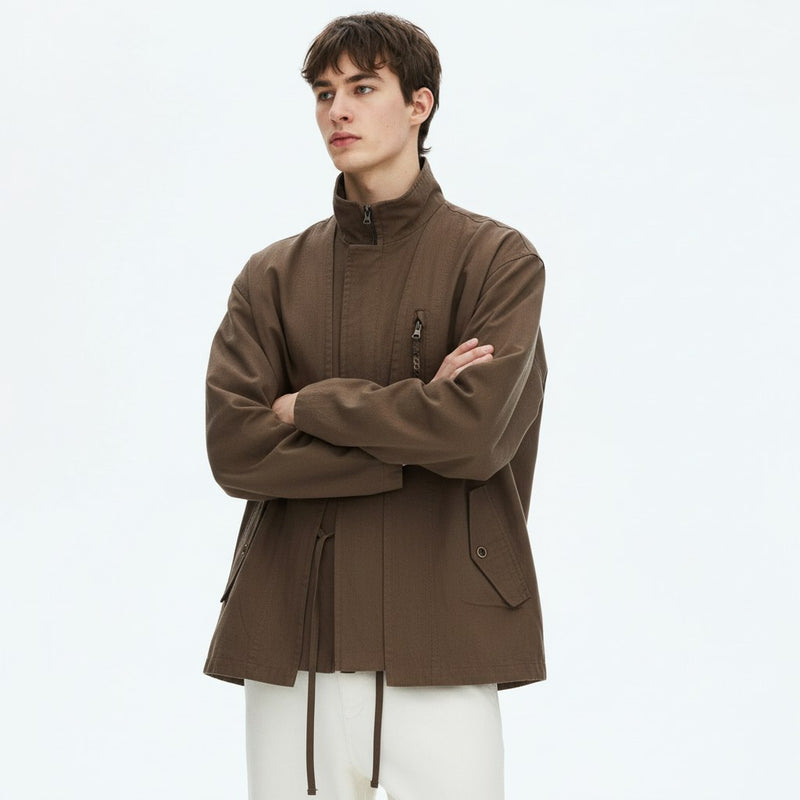
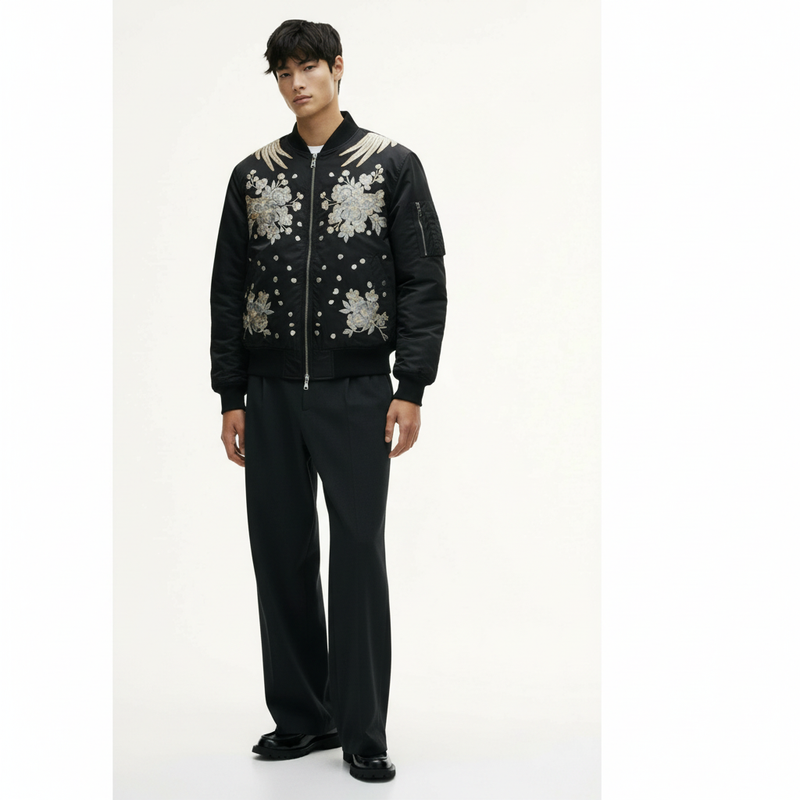

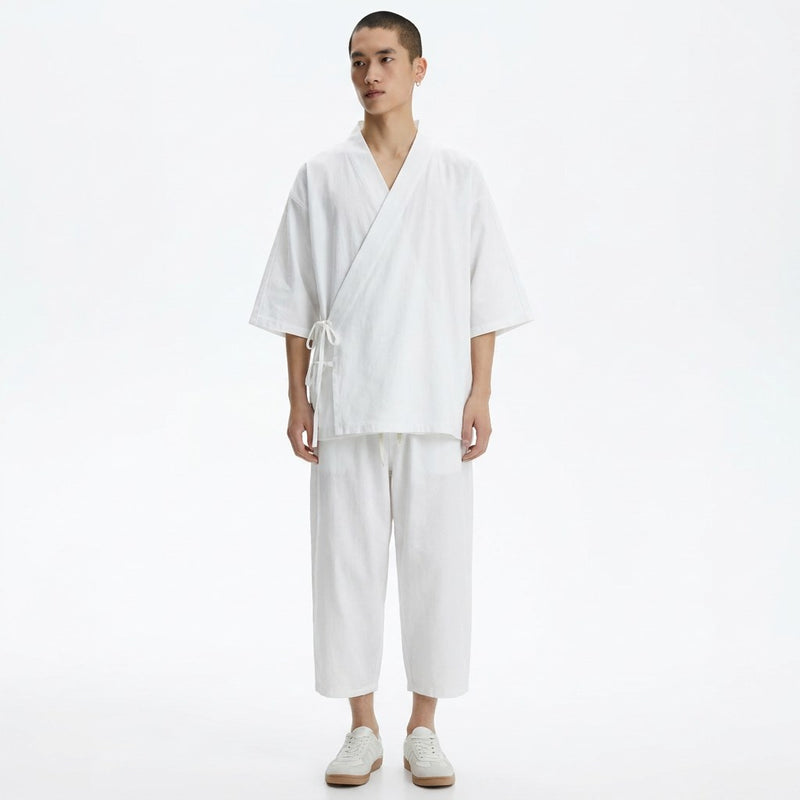


The trousers people call samurai pants are hakama. They are wide, pleated trousers tied at the waist and worn over a kimono, and they have been part of Japanese dress for well over a thousand years. The samurai wore them, which is where the nickname comes from, but so did the imperial court, and today they are worn by martial artists, Shinto priests and graduating students. To wear the shape every day, see our samurai pants and the wider range of Japanese pants built on it.
What hakama are
Hakama are made from a long piece of cloth pleated at the front and back and tied around the body with long cords. The pleats give them volume without weight, and the ties let one pair fit a range of waists. They sit high, over the kimono, and fall wide to the ankle.
They were designed for movement. A mounted warrior needed legs that did not bind, and a pleated trouser that hid the feet made footwork harder for an opponent to read. That practical origin is why so much modern Japanese clothing still puts its room in the same places.
The two kinds of hakama
There are two forms, and the difference is between the legs.
- Umanori hakama have divided legs, like very wide trousers. The name means horse riding, and these are the samurai version.
- Andon hakama are undivided, closer to a long pleated skirt. They are easier to wear over a kimono and became common in everyday and ceremonial dress.
From a distance the two look almost identical, which is exactly the point of the pleats.
| Umanori hakama | Andon hakama | |
|---|---|---|
| Legs | Divided, like wide trousers | Undivided, like a pleated skirt |
| Origin | Riding on horseback | Everyday and ceremonial dress |
| Worn for | Martial arts, men's formal dress | Ceremonies, graduation, some shrine dress |
| Movement | Free stride, easy to kneel | Quicker to put on over a kimono |
How a hakama is tied
A hakama has four cords. The two long front cords go on first. They wrap round the waist, cross at the back and come forward again to tie below the navel. The back section carries a stiff board called the koshiita, which sits against the lower back and keeps the garment upright. Its two shorter cords come round to the front and knot over the first pair.
In formal dress the cords finish in a cross-shaped knot at the front. In the dojo most people tie a simpler knot and tuck the ends away, because a loose cord catches on everything. Putting a hakama on well takes practice, which is one reason modern versions use an elastic back waist instead.
What the seven pleats mean
A traditional hakama has seven pleats, five at the front and two at the back. In the martial arts they are traditionally said to stand for the virtues of the samurai code, usually given as benevolence, honour, courtesy, wisdom, sincerity, loyalty and piety. Teachers differ on the exact list, but the idea that the garment carries a code of conduct is a large part of why it is still worn in the dojo.
Who still wears hakama
Hakama are standard dress in kendo, aikido, iaido and kyudo, and the International Kendo Federation still grades in them. Shinto priests and shrine attendants wear them, as do some performers of traditional theatre. And every spring, many women in Japan wear hakama over a kimono to their university graduation, a tradition that goes back to the first women students of the late nineteenth century.
The other names you will see
Searches for this garment arrive under half a dozen labels, and they mostly mean the same thing.
- Samurai pants and samurai trousers: both mean hakama, and neither is a term used in Japan.
- Hakama-style pants: usually a modern trouser borrowing the pleats and the width, not a real hakama.
- Modern samurai clothing: a catch-all for contemporary pieces cut on traditional lines — wide trousers, wrapped jackets, tied closures.
- Samue: not hakama at all. These are the loose work clothes of Zen monks, a wrap jacket with drawstring trousers, and they are the shape most modern "samurai pants" actually resemble.
What was worn with them
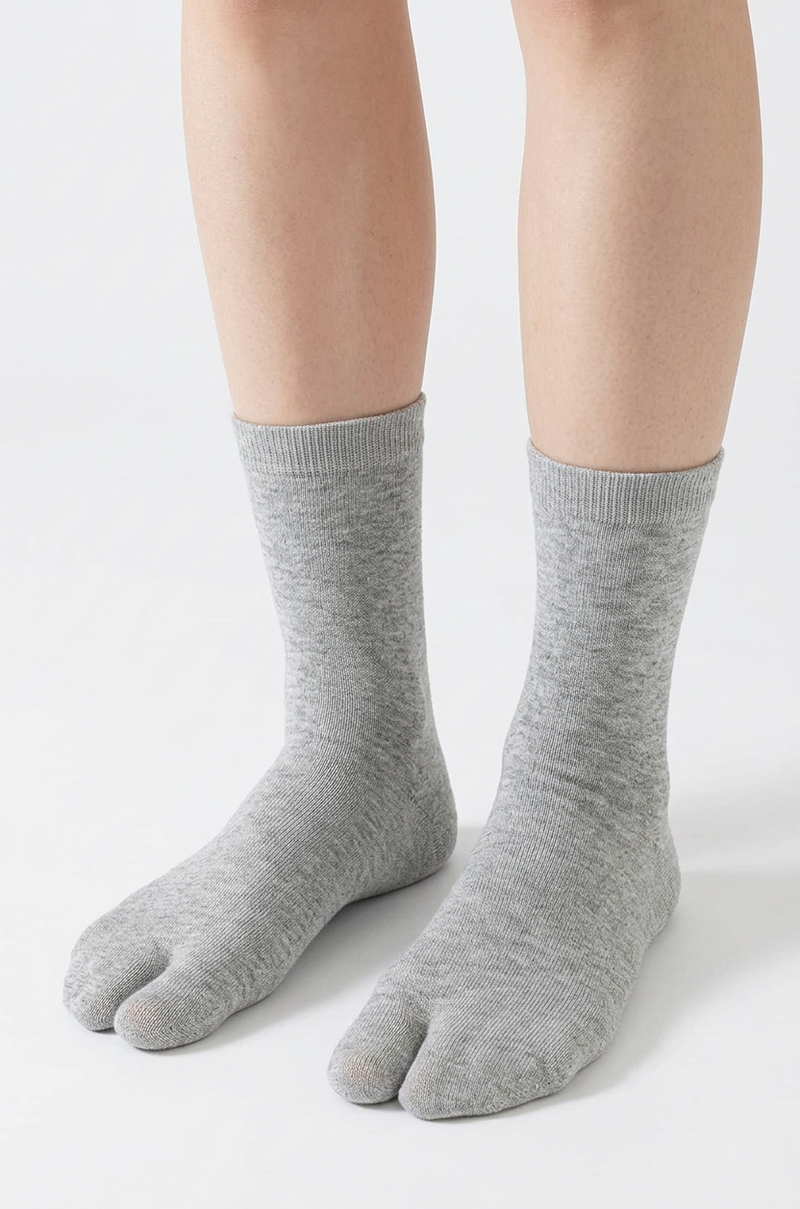
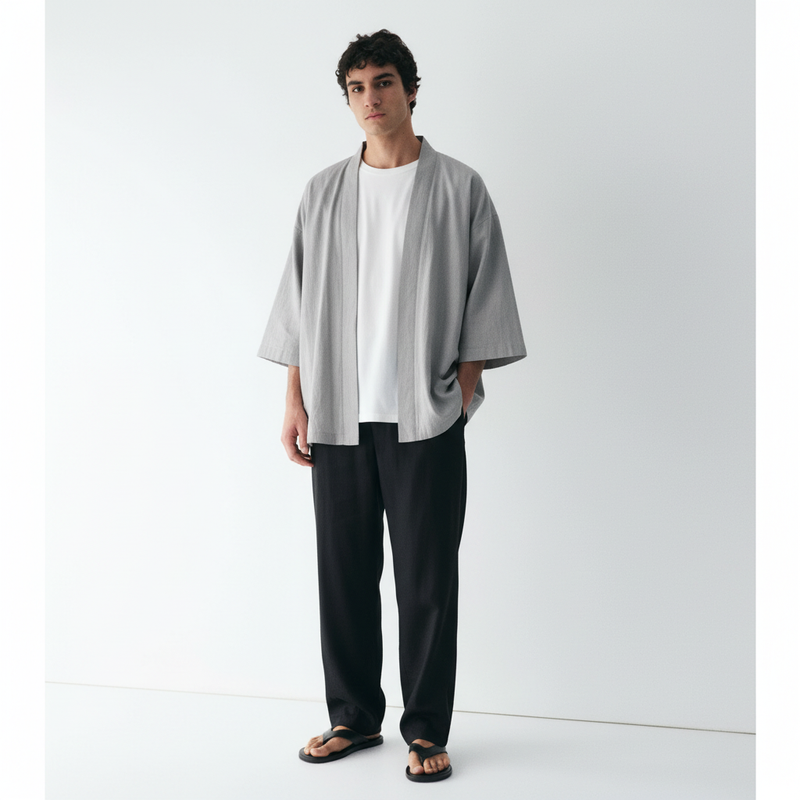
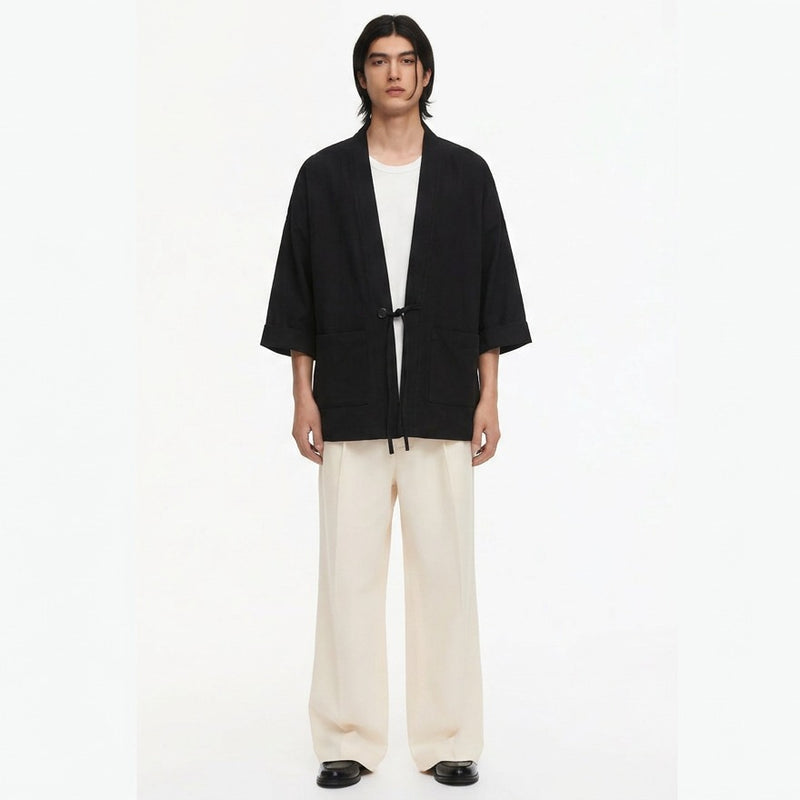
A hakama was never worn alone. Underneath sat the kimono, held by an obi at the waist; the hakama tied over the top, its cords crossing and knotting at the front. On the feet went tabi, the split-toe socks, and sandals. Over the top, for formal dress, a haori — the short jacket that survives today as an everyday layer, which you can see in haori jackets.
The layering logic still holds in the modern range: a straight, wrapped or open top half over a trouser carrying the volume, with nothing fitted anywhere in the outfit.
Hakama and the Japanese pants you see now
Very few people wear a traditional hakama day to day, but the shape never left. Modern Japanese pants borrow its proportions: room through the seat and thigh, a leg that falls rather than clings, and a waist that ties or gathers instead of fastening tight. The Japanese pants you find in streetwear are mostly harem, wide-leg and cropped cuts built on that logic.
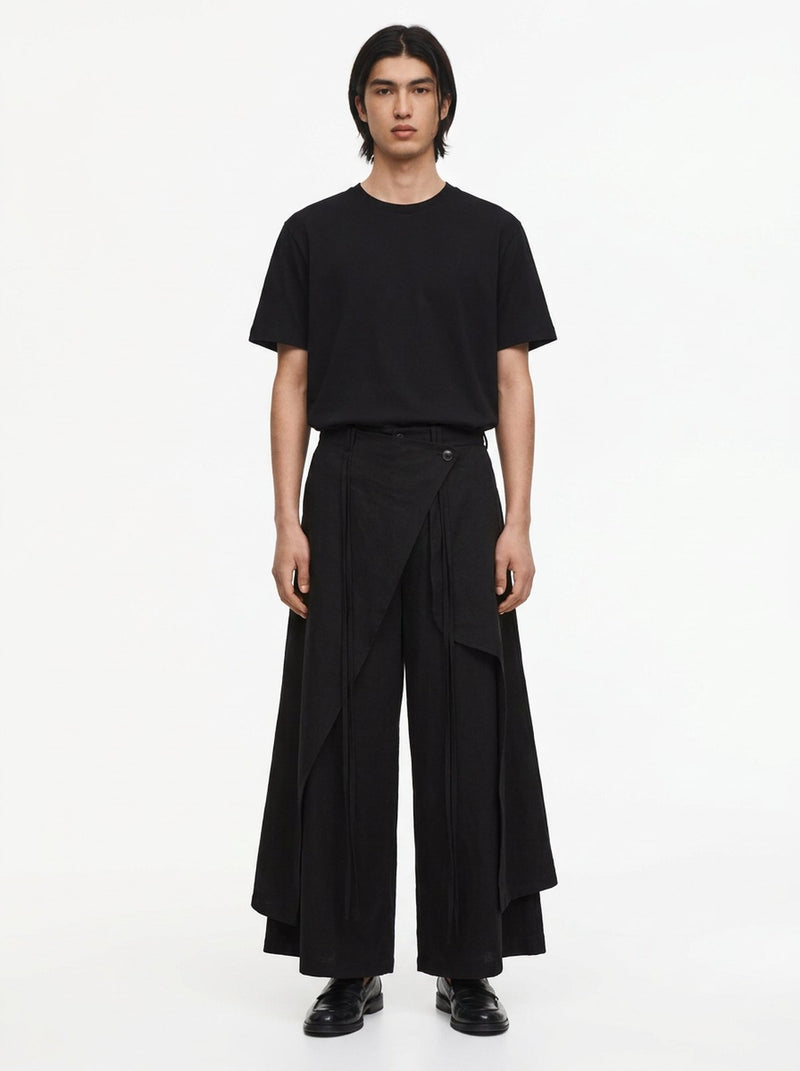
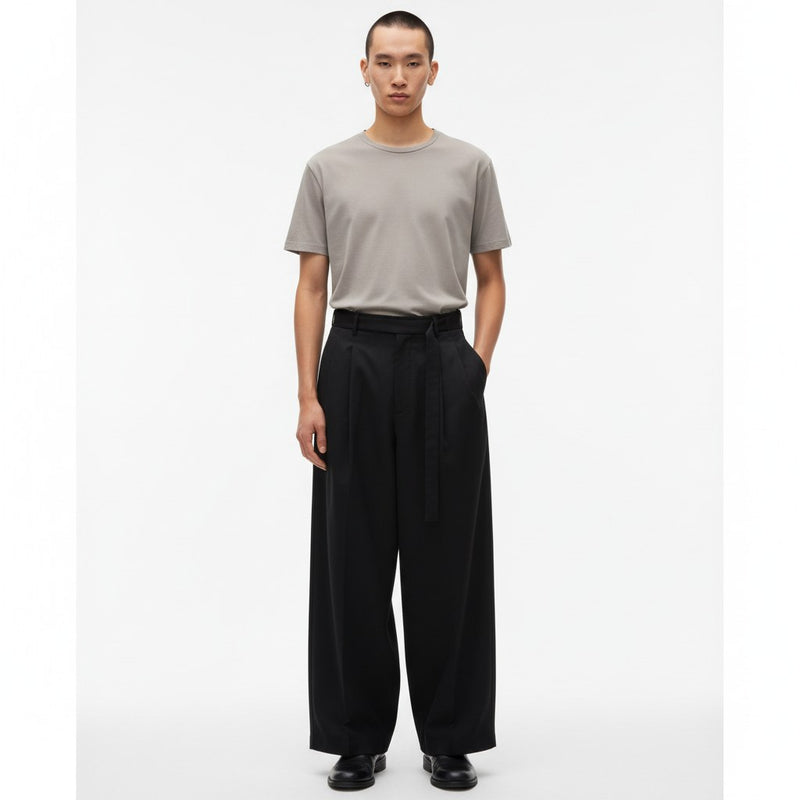
The range is gathered in hakama pants, all cut on the silhouette rather than to the traditional pattern. The pleated samurai hakama crosses a pleated panel over the front the way a kendo hakama does. The wrap-front hakama pants have a wrap panel over a wide leg and long side ties. The kendo samurai pants are the pair most people mean by samurai pants: a fixed pleated panel over a full leg, with belt loops in place of cords. Beyond it the closest shapes are the wide and baggy cuts and the dropped-rise harem pants, which take the same room through the seat without the wrapped front. Hakama against harem pants sets out exactly where the two differ. Every piece linked in this guide is one we sell at Amaji.


How to wear samurai pants today
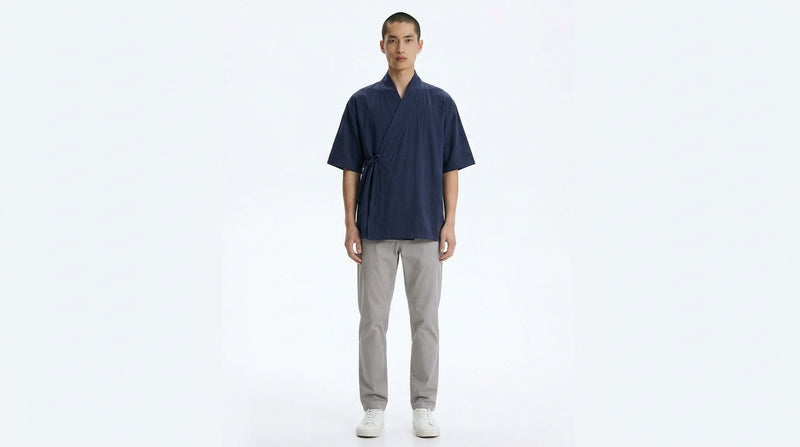
The rule is the same as it was four hundred years ago. Keep the top half simple and let the trouser carry the volume. A plain tee, a short kimono shirt or a noragi tied shut all work. A long coat or a baggy hoodie does not, because it buries the pleats.
Our everyday versions tie or belt at the waist instead of using four cords. The Belted Hakama Trousers run full length with a front buckle. The Belted A-Line Hakama Pants open into a wide A-line leg. The Pleated Hakama Style Pants are the widest, at 138 cm around the hem.
On the feet, go flat. Tabi socks with sandals are the traditional choice. A plain black leather shoe or a low canvas sneaker works in town. The hem should break on the top of the foot or just above it, so the width falls straight to the ground. If the pair drags on the floor, it is too long for daily wear.
What to check before you buy
- The front. A real hakama shape has pleats or a wrap across the front. A plain wide trouser is just a wide trouser.
- The waist. Traditional cords take practice. An elastic back waist with side ties is far easier to live with.
- The cloth. The pleats need cotton or a blend with some body. Soft jersey loses the shape within a wash.
- The length. Check the outseam against your own. Wide legs look best just clearing the floor.
Lay a trouser you already like flat, measure its outseam and hip, and compare those numbers with the size table before you order. It beats guessing from a size letter.
Other traditional Japanese trousers
Hakama are not the only ones. Samue are the loose drawstring trousers of Zen monks, worn for temple work and now common as lounge wear. Tobi trousers belong to the construction workers who work at height, ballooning to below the knee and narrowing at the calf, and they are the root of most Japanese work pants sold today. Monpe are loose farm trousers gathered at the ankle. Between them they explain nearly every Japanese trouser shape in use today.
For all sixteen garments in one place, with their Japanese names, see traditional Japanese clothing.