

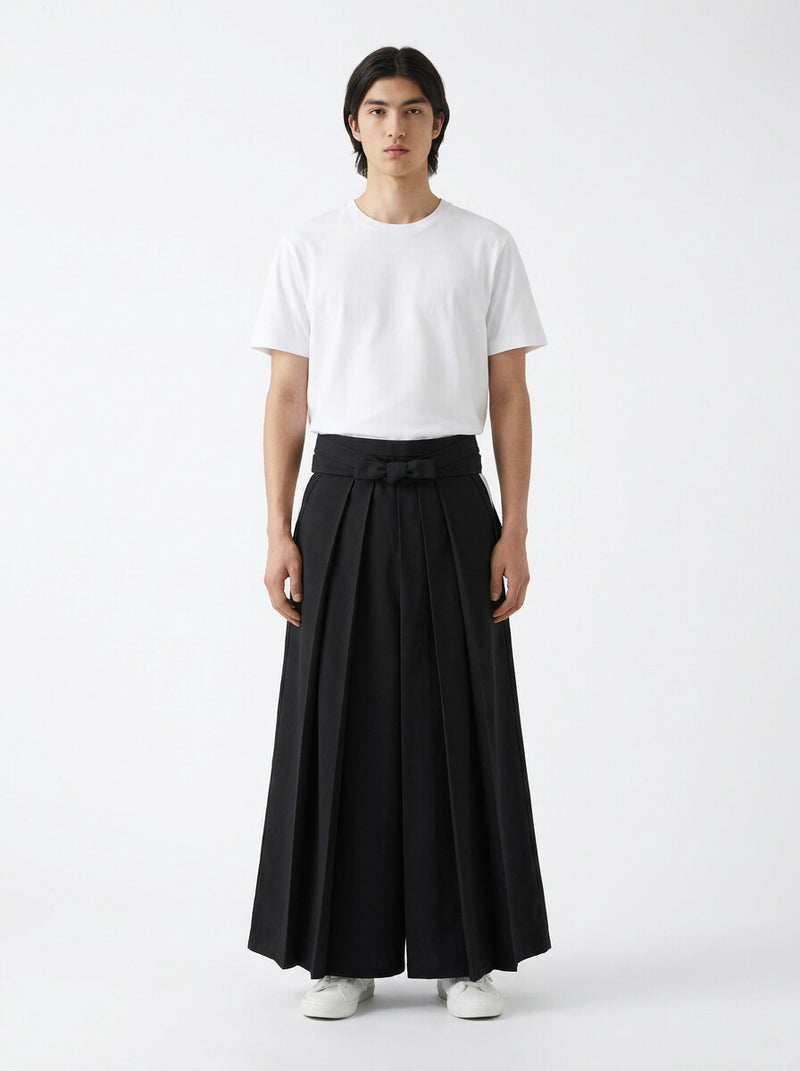

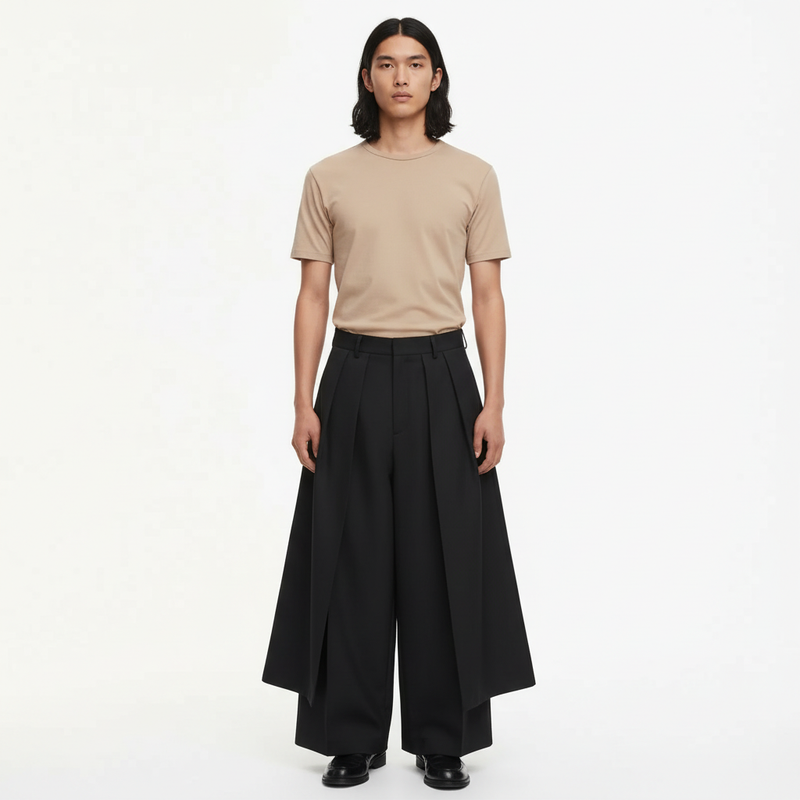
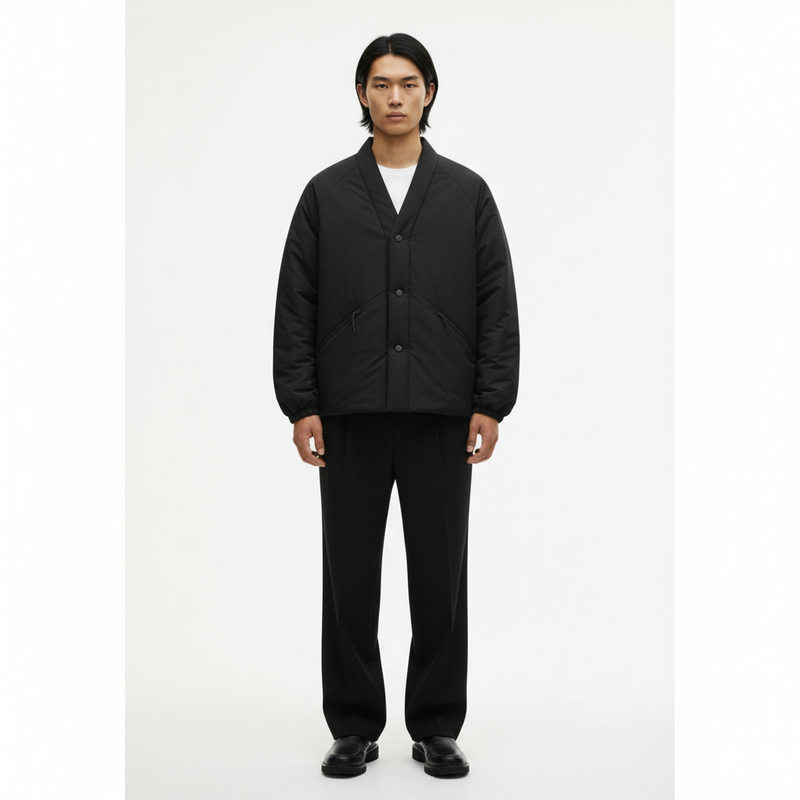
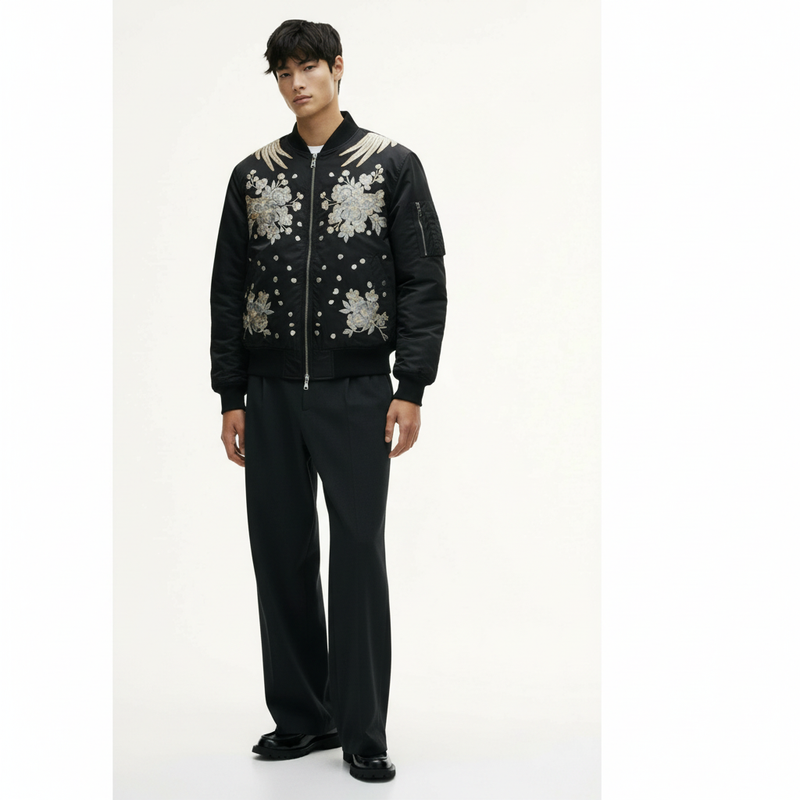

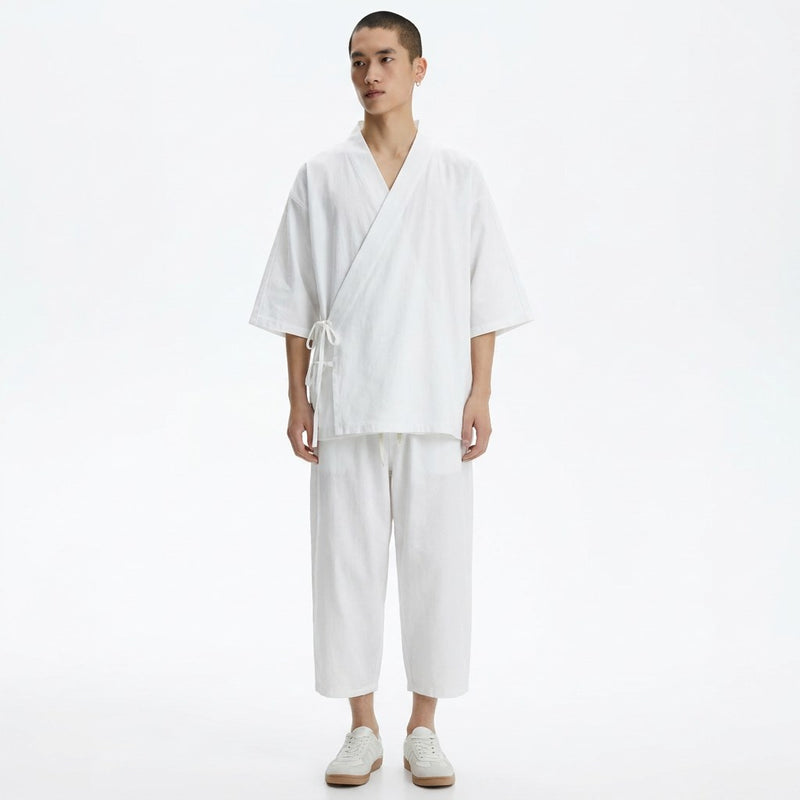


Hakama are traditional Japanese trousers: a long cloth pleated front and back, tied at the waist with cords, and falling wide to the ankle. Harem pants are a dropped-rise trouser, loose through the seat and thigh and gathered or tapered at the ankle, with an elastic or drawstring waist. One gets its volume from pleats. The other gets it from the rise.
Shop the hakama pants or the harem pants, or compare prices across six shops in our harem pants buying guide.
Hakama and harem pants get confused because from a few metres away they do the same thing. Both are loose, both keep the thigh free, and both read as unmistakably not a Western trouser. Up close they are built in opposite ways, and that decides where each one works.
Where the volume comes from
A hakama gets its width from pleats. A long piece of cloth is folded into pleats at the front and back and allowed to fall wide from a high waist, so the volume runs the full length of the leg.
A harem pant gets its room from the rise. The crotch is dropped, so fabric hangs below the seat instead of pulling across it. The volume sits high, through the seat and thigh, and the leg usually narrows or closes towards the ankle. Sarouel is another name for the same cut.
How they fasten
Hakama tie. Long cords wrap around the body and tie at the front, which lets one pair fit a range of waists and sit high over a kimono.
Modern harem pants mostly use elastic and drawstrings. On our own, Gelyu, Shinbo and Kireina all have elasticated waists with room to adjust. It is less ceremony and more everyday convenience. Every piece linked in this guide is one we sell at Amaji.
The hem
A hakama falls open and wide to the ankle, often covering the feet. Harem pants vary. Kireina closes with an elastic cuff and Gelyu with a ribbed cuff, which gathers the volume and stops it cleanly. Pokku tapers and rolls. Shinbo finishes just short of the ankle.
Where each one is worn
Hakama are formal and traditional. They are worn over a kimono, in kendo, aikido and kyudo, by Shinto priests and at graduation ceremonies. Wearing one to the office would read as costume.
What each one costs is in our 2026 Japanese clothing price survey.
Harem pants are everyday clothes. They go with a tee and a low sneaker, and the Japanese-cut versions, pleated at the waist and closed at the ankle, read as a considered trouser rather than loungewear.
Where each name comes from
Hakama is a Japanese word, and the garment has been worn in Japan for more than a thousand years, first at court and later by the samurai class. The history of the hakama covers its forms in detail. Martial arts bodies such as the International Kendo Federation still treat it as standard dress.
Harem pants come from the other end of Asia. The cut descends from the shalwar and the sirwal, loose trousers worn from Persia to South Asia, and sarouel is the French form of sirwal. Paul Poiret brought the shape into Paris fashion in the 1910s, and it came back as streetwear in the 1990s. The history of harem pants traces that route. Two separate traditions arrived at a loose trouser for the same reason. Both were cut for room to move.
Hakama vs harem pants at a glance
| Hakama | Harem pants | |
|---|---|---|
| Volume | Pleats, the full length of the leg | A dropped rise, high on the leg |
| Fastening | Long cords tied at the front | Elastic waist or drawstring |
| Hem | Wide and open, often over the foot | Cuffed, tapered or cropped |
| Fabric | Cloth with body that holds a pleat | Linen or cotton that falls |
| Sizing | By length, the ties cover the waist | By hip, the waist adjusts |
| Origin | Japanese court and samurai dress | Persian and South Asian trousers |
| Setting | Ceremony, martial arts, graduation | Everyday wear |
Fabric does different work in each
A hakama needs cloth with enough body to hold a pleat. Traditional pairs are woven cotton or a stiff polyester blend precisely so the folds stay open down the full length of the leg; in a soft fabric the pleats collapse and the garment loses its shape entirely.
A harem cut has the opposite requirement. The volume comes from the rise, not from folded cloth, so the fabric has to fall. Linen and cotton-linen blends do this best, which is why the pairs cut this way are almost always in one of the two. A stiff fabric on a dropped rise stands away from the body and reads as a mistake rather than a shape.
How each one is sized
Hakama are sized by length, not waist. The cords wrap and tie, so one pair covers a wide range of waists, and what you actually choose is the drop from waist to ankle for your height.
Our hakama follow that rule. The Pleated Samurai Hakama Pants close with a long tie. The Belted Hakama Trousers and the Pleated Hakama Style Pants come in one size with an adjustable waist.
Harem pants are the reverse: the hip figure decides the fit, because the waist is usually elasticated and adjusts itself. That is why a size letter tells you so little on this shape and why the hip measurement on each product page is the number worth reading.
If you want the hakama line without the hakama
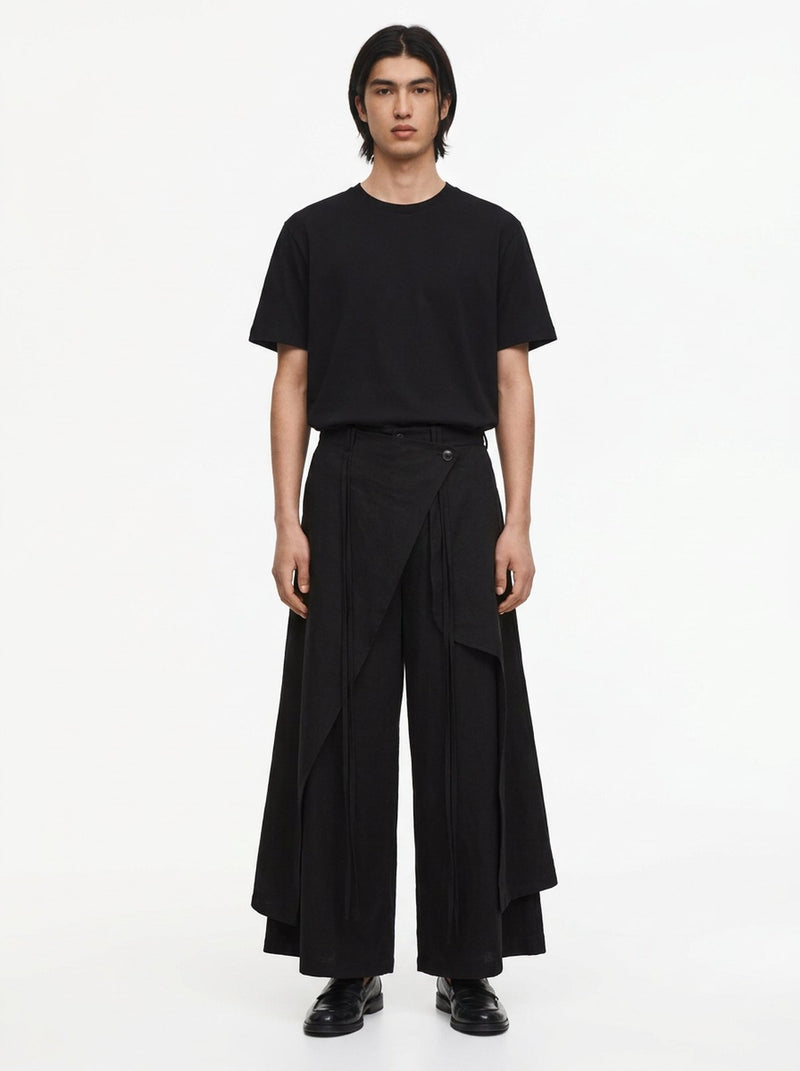
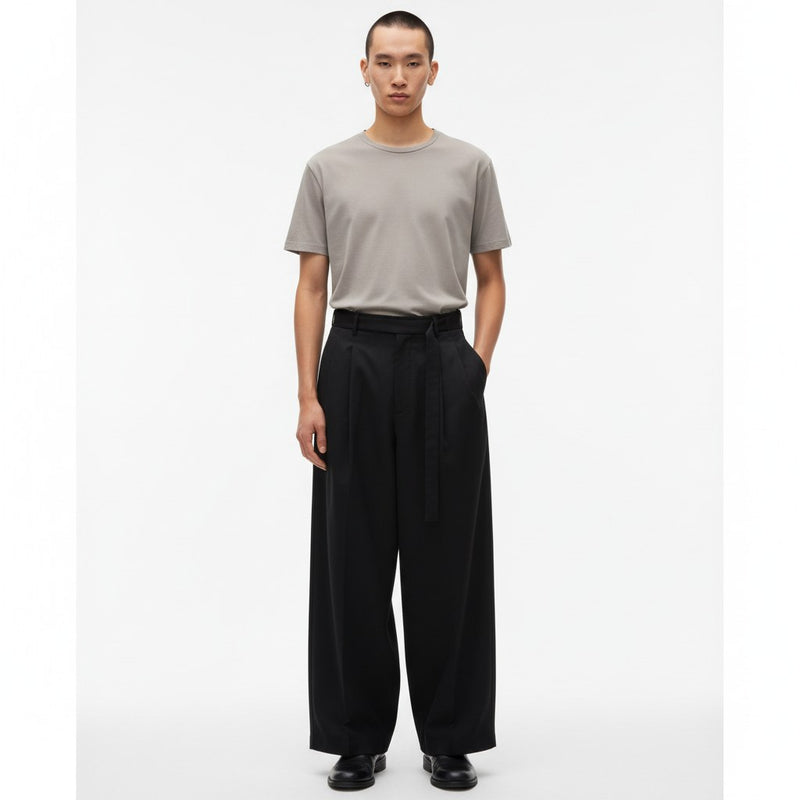
This is the common case. The hakama pants collection holds the modern cuts. The Hakama Pants, Wide Leg Wrap Front wrap across the front and fall open over a wide leg, with side ties and an elasticated back waist instead of the traditional straps. The kendo samurai pants keep a fixed pleated panel over a full, belted leg that breaks over the shoe. If neither is the shape you want, what gets you closest otherwise is a wide, straight leg with the volume kept high — the cuts in Japanese pants and the fuller ones in baggy pants. A pleated waist helps, because pleats read as the hakama detail even when the leg is nothing like as wide.
What will not get you there is a dropped-rise harem cut with a cuffed ankle. It is a comfortable trouser and a good one, but the volume sits in the wrong place for the hakama look and the closed hem contradicts it.


How to wear each one
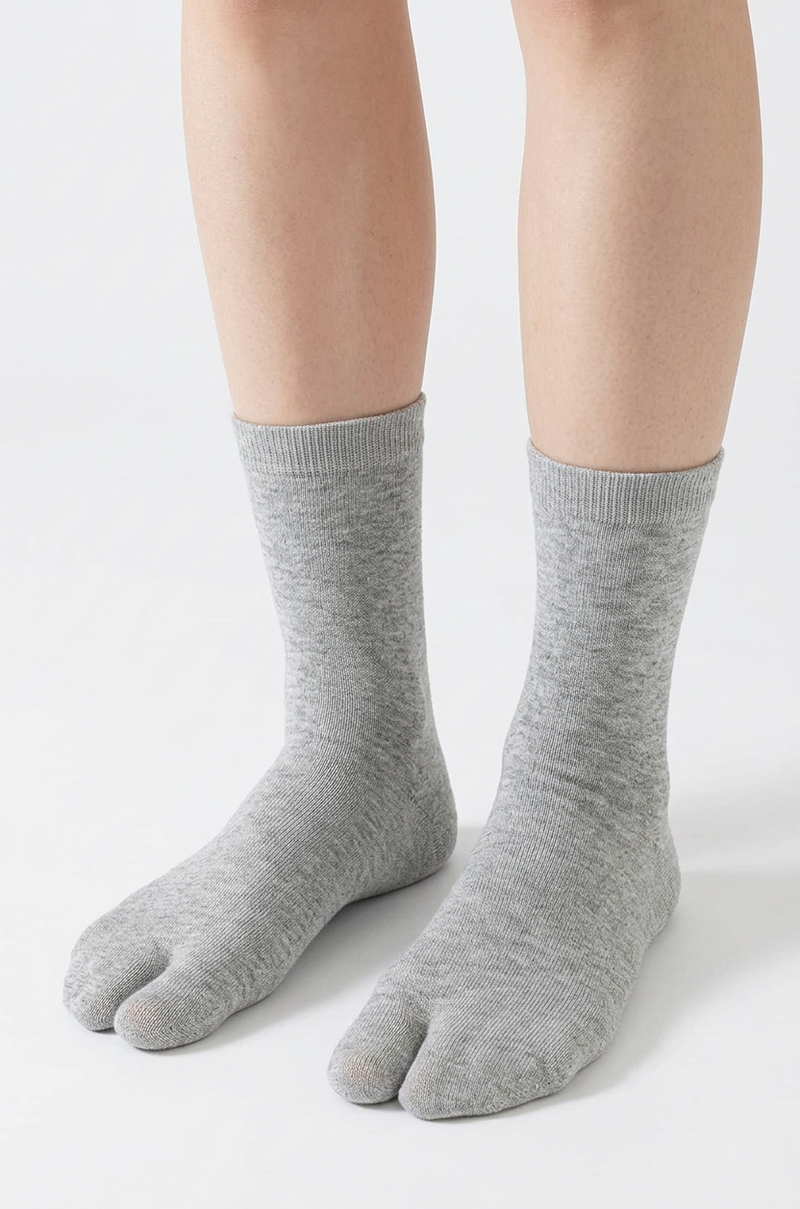
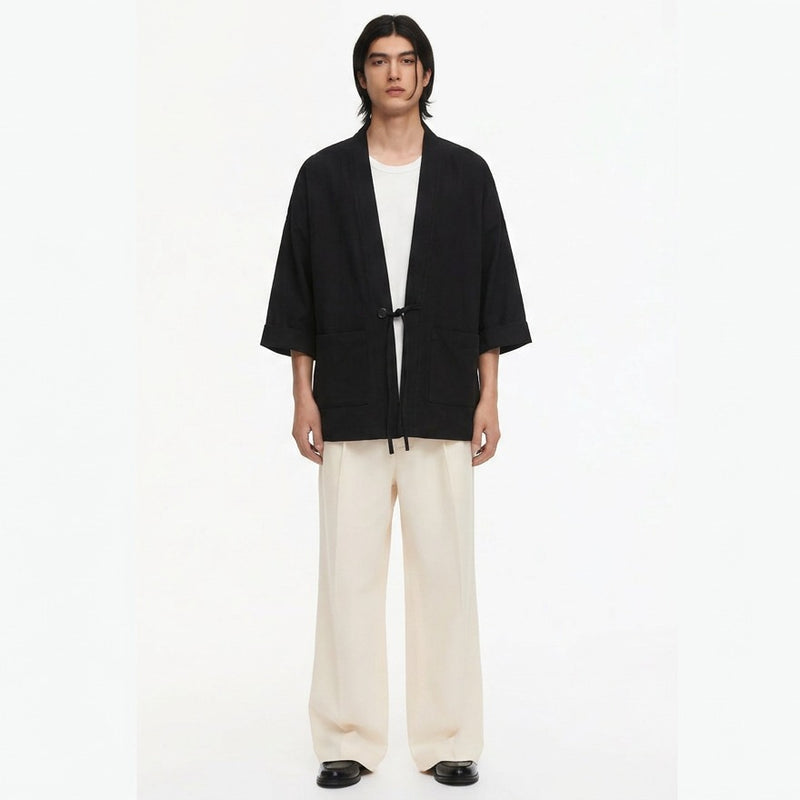
A hakama shape wants a plain, close top half. A fitted tee or a short, straight jacket lets the leg do the talking. Anything long or loose on top turns the whole outfit into one block of cloth. Keep the shoes flat and low. Tabi socks with sandals are the traditional answer, and a plain black leather shoe works for the city.
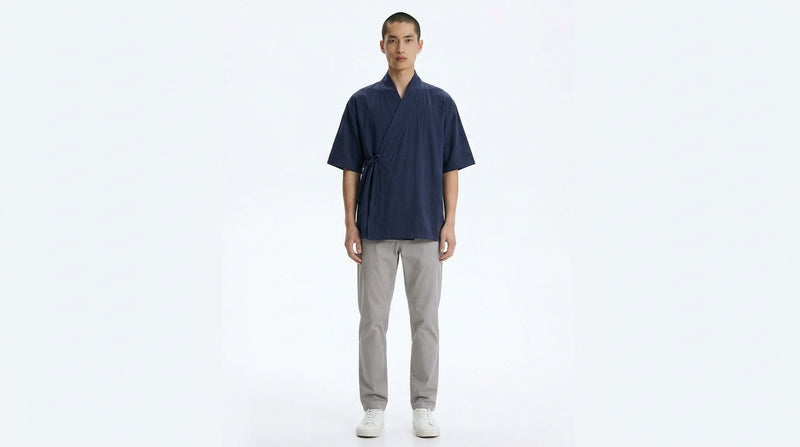
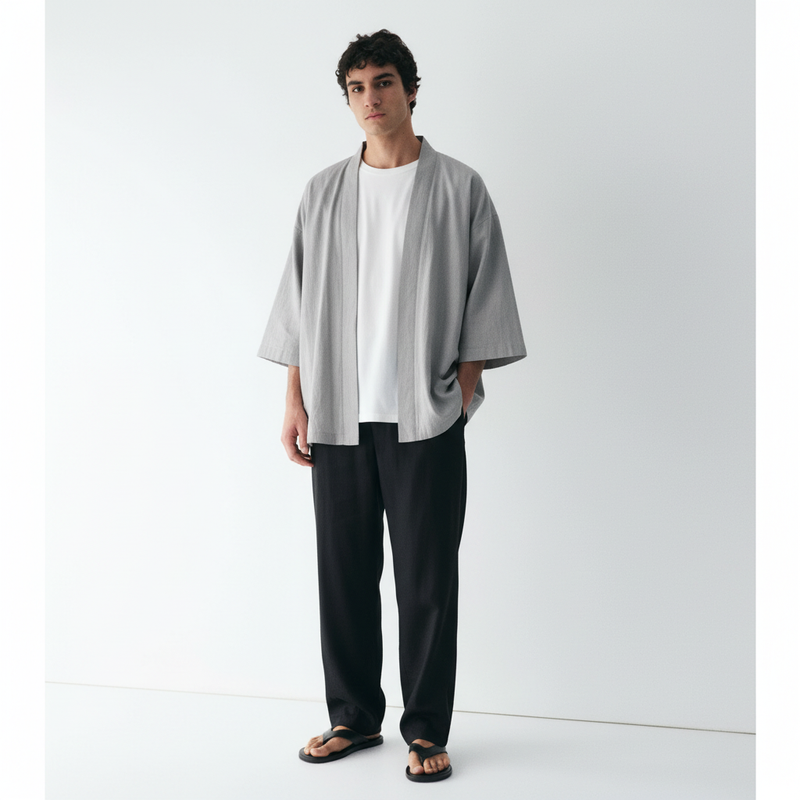
A harem cut is easier. The volume stops at the knee, so the ankle is on show and the shoe matters. A low white sneaker keeps it casual. A clean leather trainer or a loafer makes it look deliberate. On top, a boxy tee or an open overshirt carries the relaxed line up the body. Tuck nothing in, because a tucked shirt draws a hard line at the waist that the dropped rise then contradicts.
The one mistake common to both is a long, heavy coat. It hides the shape you chose the trouser for.
Caring for both
Pleats are the part of a hakama that suffers in a machine. Wash cold, hang the pair by the waist while damp and let the pleats fall back into line. A short press along each fold restores them if they drift. Never tumble dry.
Harem pants are forgiving. Most are cotton, linen or a knit, and they wash cold and line dry without complaint. Linen softens with every wash. Knit cuffs keep their grip longer if the pair dries flat instead of hanging from the cuff.
Which one to choose
If you practise a martial art or are dressing for a ceremony, you want a hakama. For wearing out of the house, a harem pant gives you the same freedom through the seat in a shape that works with ordinary clothes. The hakama pants here are modern takes on the first shape, worn best with tabi socks as the originals were, the Japanese harem pants collection has five dropped-rise cuts of the second, and what samurai pants are called covers the hakama side in depth.
For all sixteen garments in one place, with their Japanese names, see traditional Japanese clothing.