

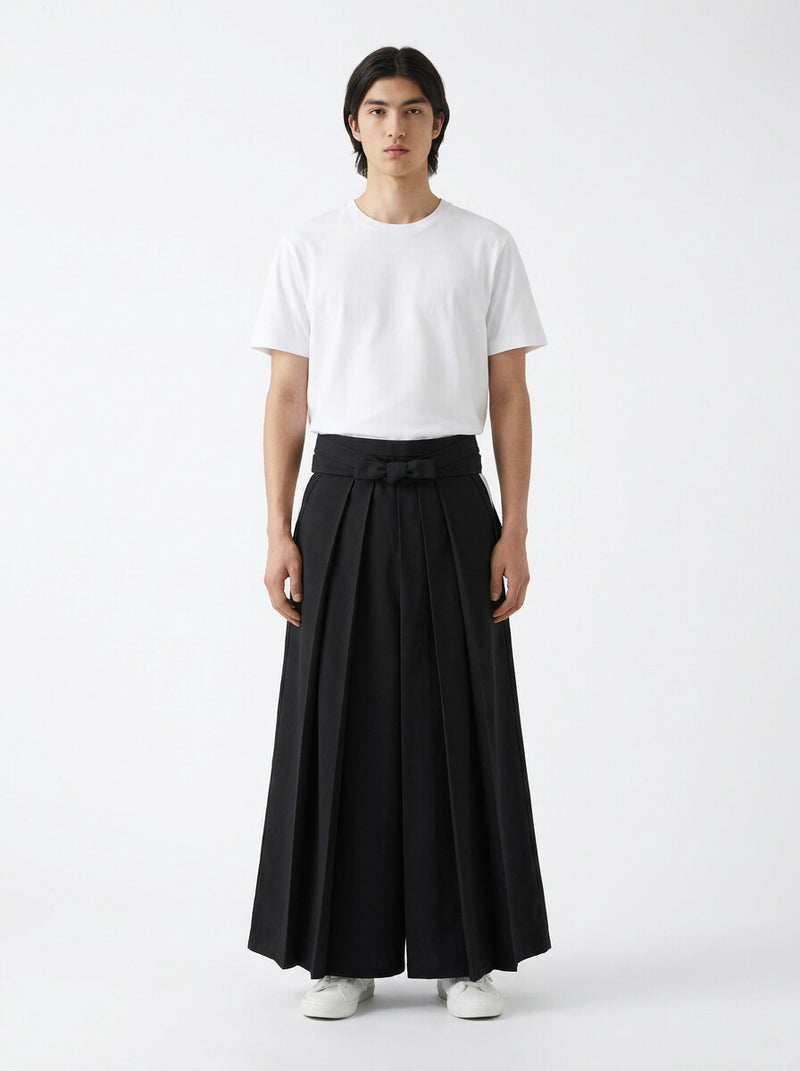

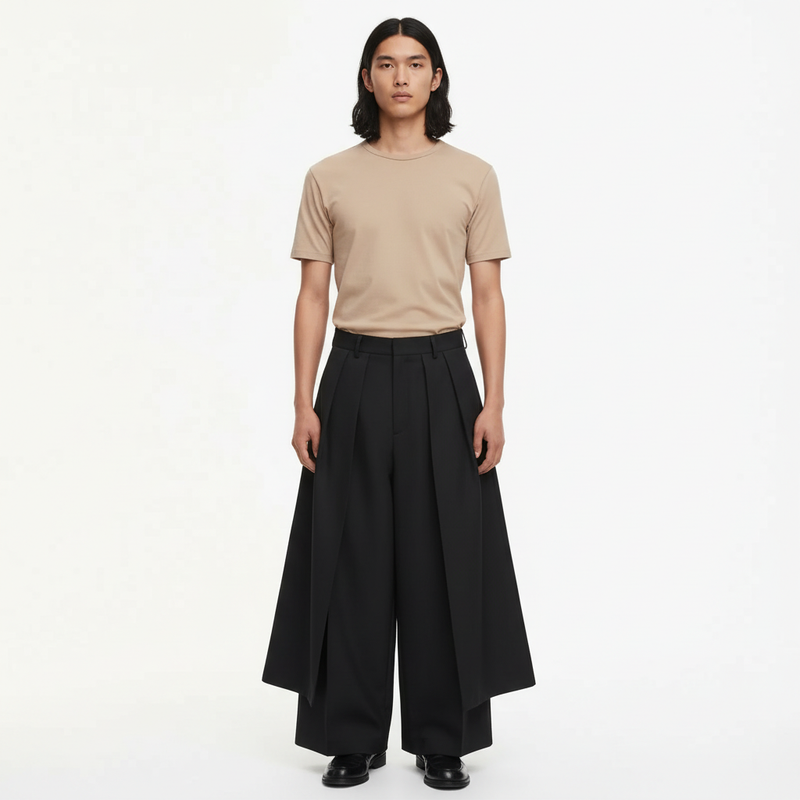









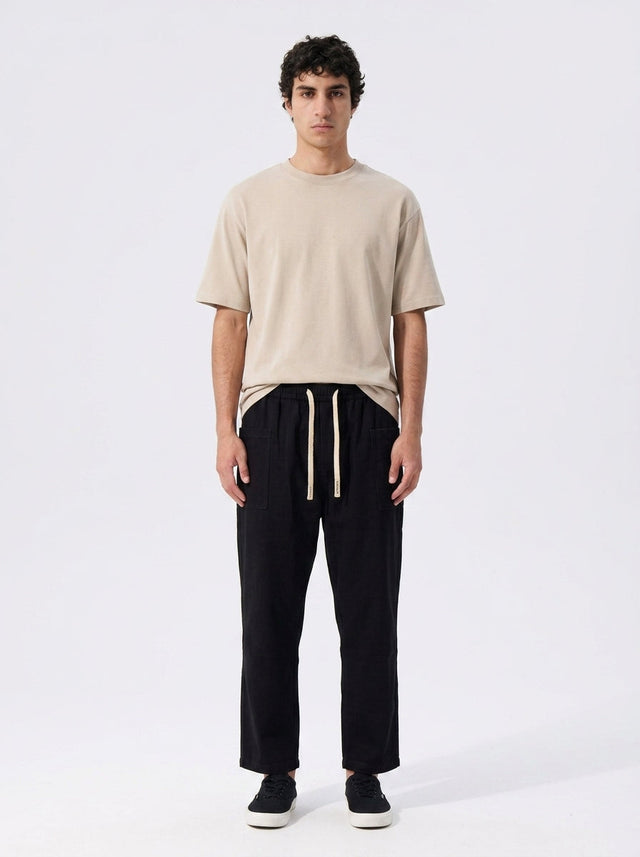
Drawstring comfort, Japanese cut
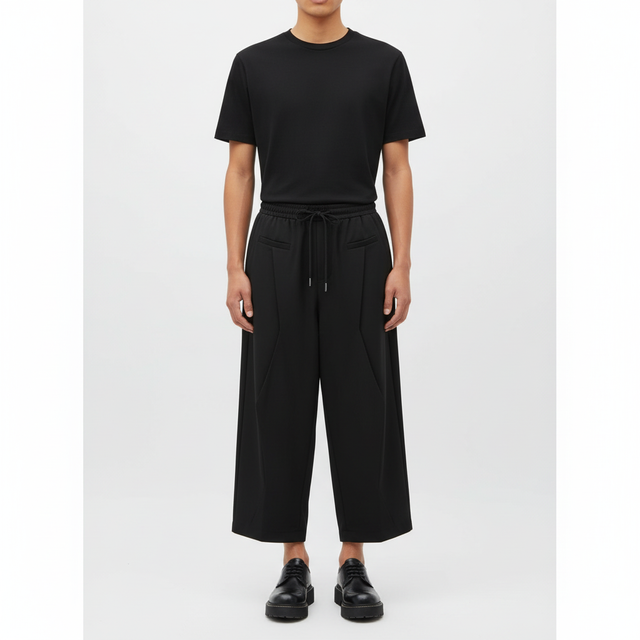
Most sweatpants are cut like jeans, then softened. These start from the other end. Every pair here pulls on with a drawstring or an elastic waist, and the shape comes from Japanese pattern cutting: a low seat, room through the thigh and a leg that falls. You can sleep in some of them. You can wear all of them to dinner.
From a true sweatpant to a harem cut
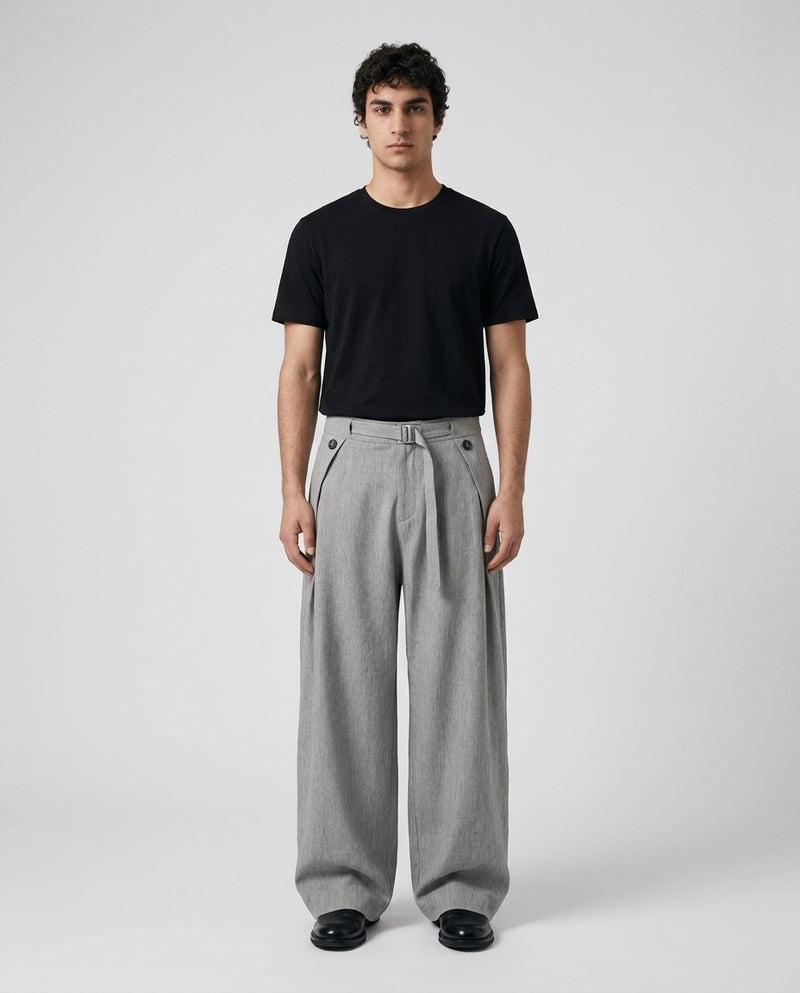
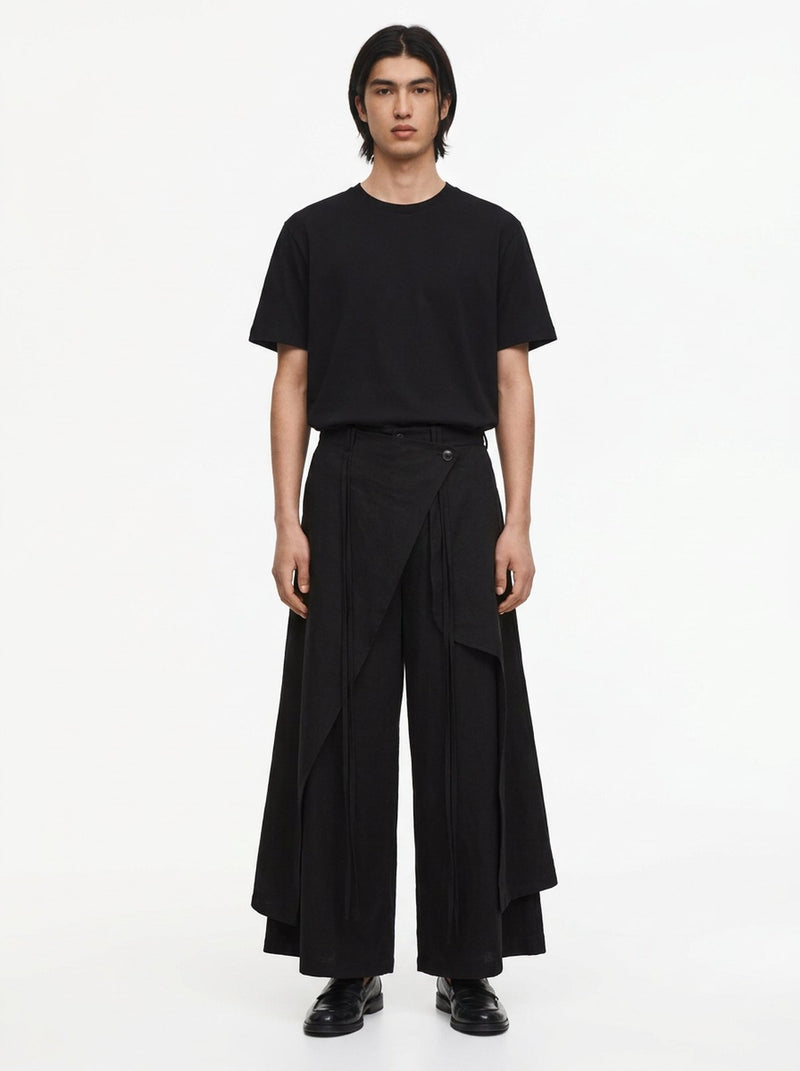
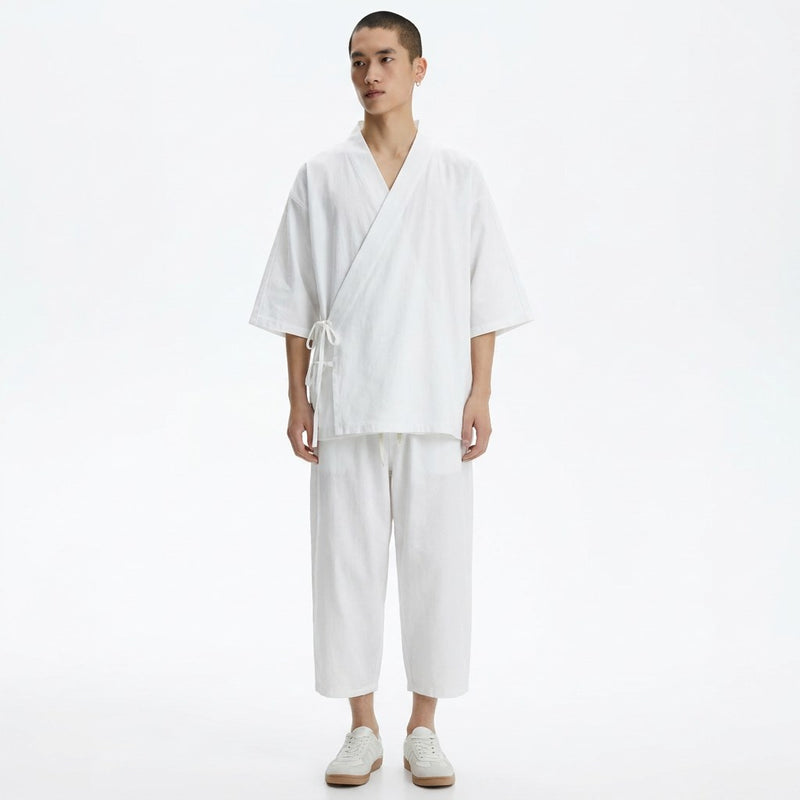
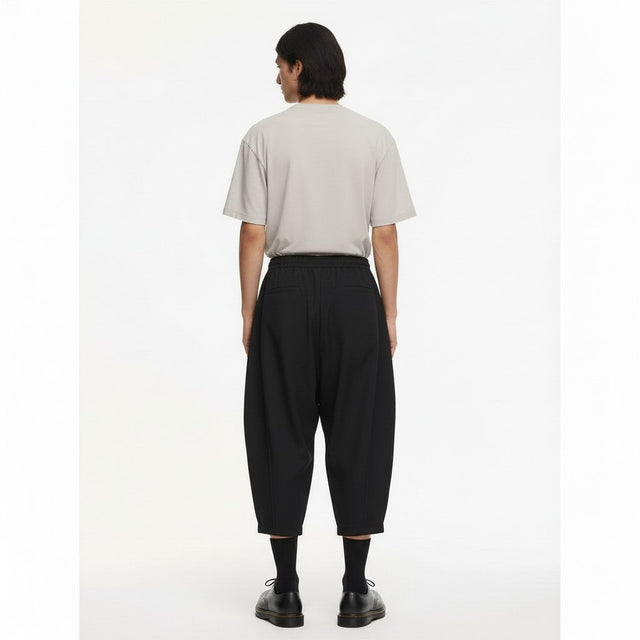
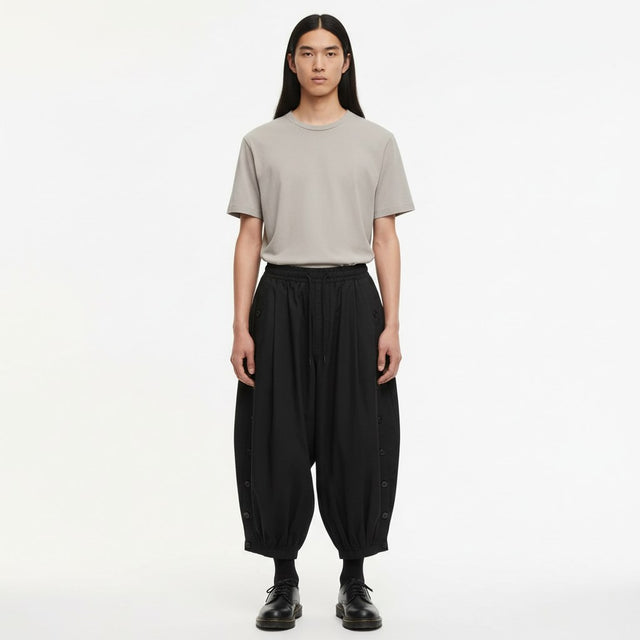
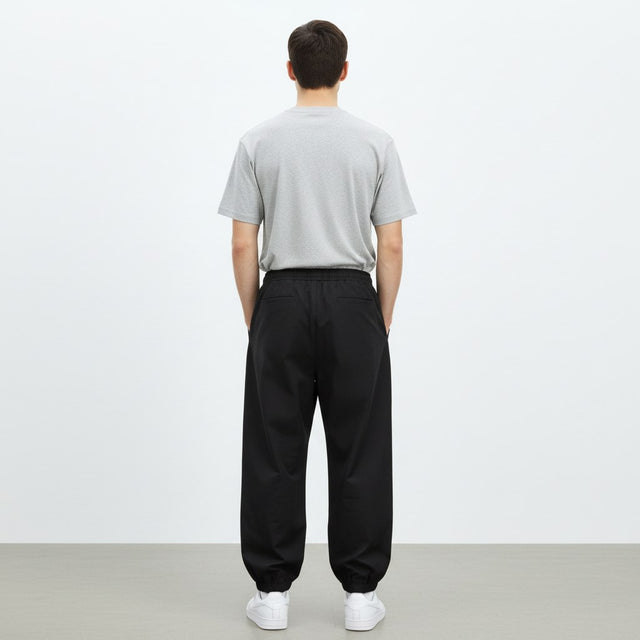
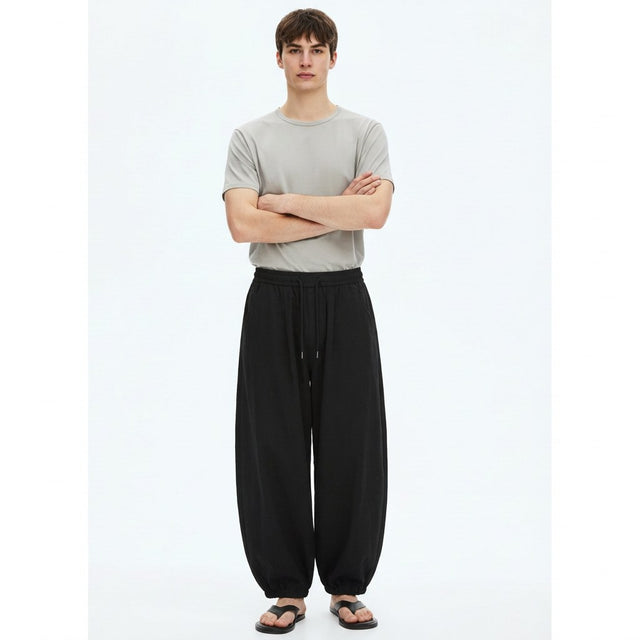
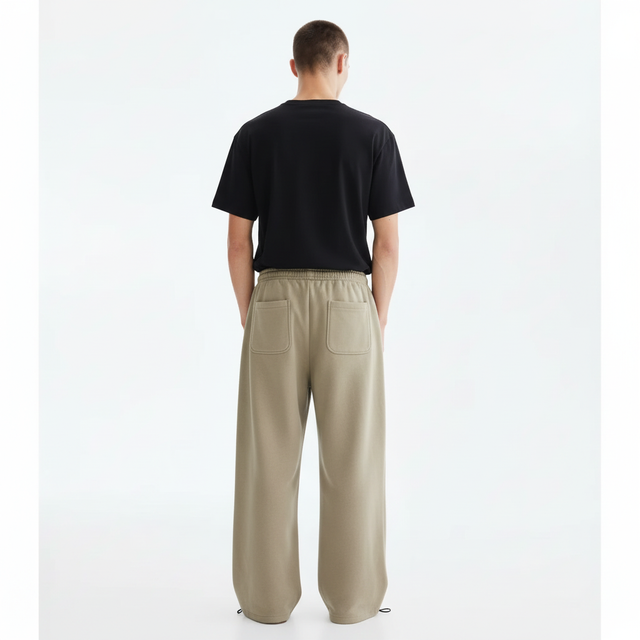
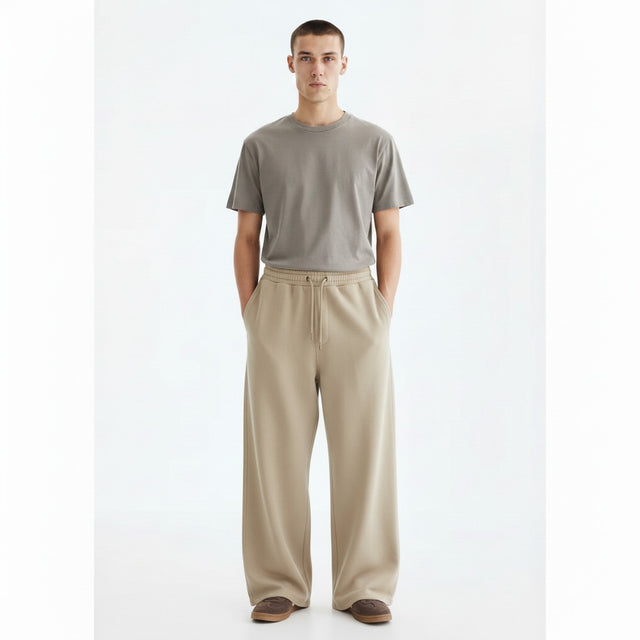
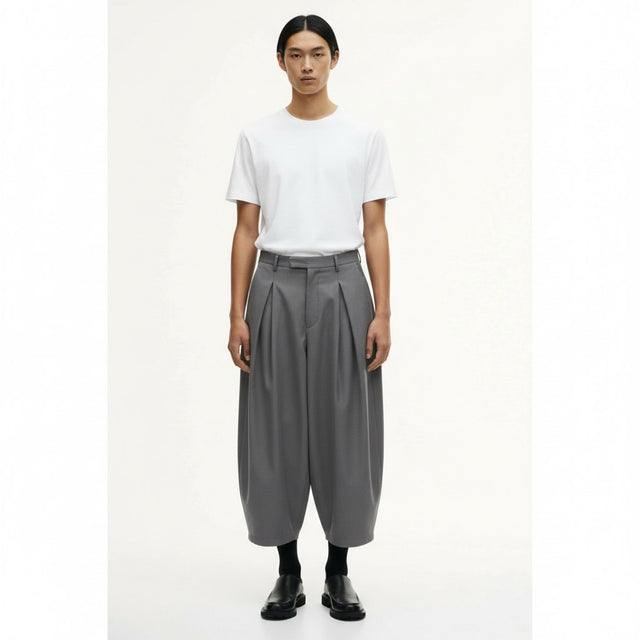
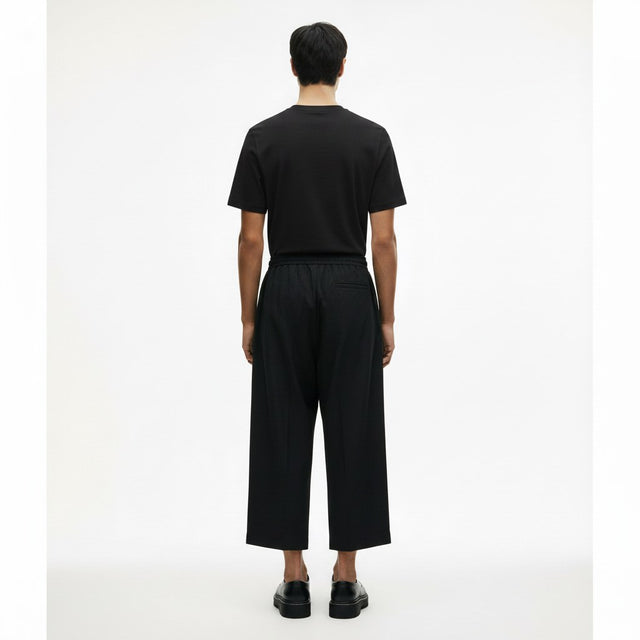
The closest to a classic sweatpant is the heavy sweatpant, thick 100% cotton with a relaxed wide leg. The Japan style drawstring pants are lighter and straighter. For more drop in the seat, the Gelyu, Shinbo, Kireina and Sokai are harem pants in cotton and linen blends, with elastic and a drawstring at the waist. Kireina also closes at the ankle with elastic cuffs.
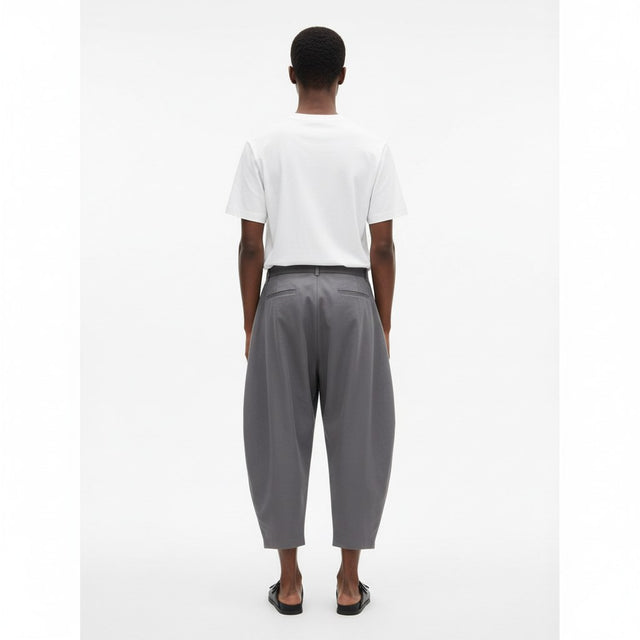
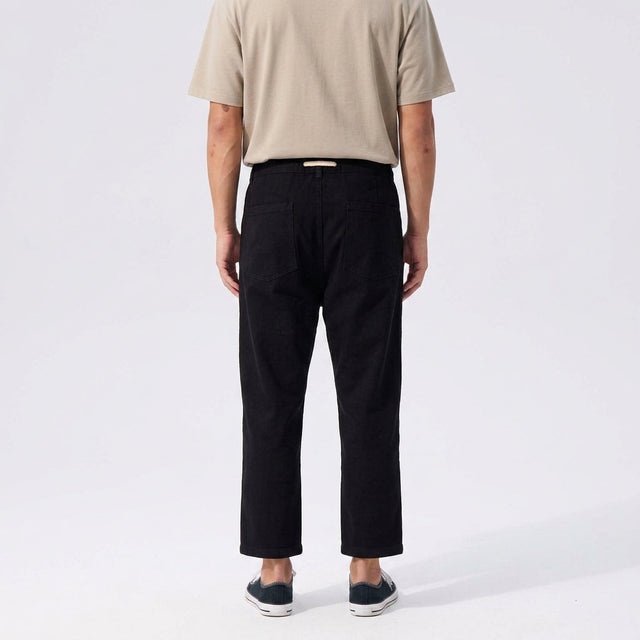
Prefer a shorter hem? The Kotona and Sekino are 100% cotton and stop above the ankle, the length known as high water pants. For volume, the Monpe, the lantern pants and the tobi trousers balloon out and gather low, the way Japanese farm and building-site trousers do. More of those sit in Japanese work pants.
Sizing a drawstring waist
A drawstring forgives the waist, not the hip. Read the hip and the length on each size chart before you choose. Sizes run XS to 3XL on most cuts. The Kotona waist adjusts from 74 to 89 cm at M, and the one-size tobi drawstring covers 66 to 115 cm. Take your usual size. Wash cold and line dry, since heat is what shrinks cotton and linen.
For every Japanese trouser, from hakama to linen, see Japanese pants. Wider straight legs live in wide leg pants.
Les mesures proviennent du tableau de tailles à plat du fabricant pour chaque vêtement, converties en centimètres et ramenées sur une même échelle de tailles. Disponible pour 10 vêtements sur 11 ici, vérifié le 2026-10-24. Notre méthode de mesure.
Japanese Sweatpants en un coup d’œil
| Pièce | Tissu | Coupe | Tailles | Prix |
|---|---|---|---|---|
| Sarouel Gelyu homme, coton et lin | Mélange coton et lin (65 % coton) | Coupe ample et décontractée | XS–3XL | €37,95 |
| Pantalon tobi à jambe ballon | 80 % polyester, 20 % coton | Ballon | Taille unique | €43,95 |
| Pantalon lanterne homme, 95 % coton | 95% cotton, 5% other fibres | Wide | XS–XXL | €37,95 |
| Pantalon Kireina, sarouel homme en mélange de lin | Mélange lin (32 % lin) | Coupe décontractée | XXS–2XL | €39,95 |
| Sarouel Shinbo homme, mélange de lin | Mélange lin (30 % lin) | XXS–3XL | €41,95 | |
| Pantalon jogging large homme en coton épais | 100% cotton, heavyweight | Wide | XS–L | €53,95 |
| Pantalon monpe à jambe ballon | Polyester | Ballon | XXS–S | €51,95 |
| Pantalon Sekino | 100 % coton | Coupe décontractée, jambe raccourcie, légèrement fuselée | XS–XL | €46,95 |
| Sarouel coton lin Sokai | 50 % coton, 50 % lin, poids moyen | Coupe décontractée | XXS–XXL | €70,95 |
| Pantalon japonais ample à cordon | 80 % polyester, 20 % coton | Large | Taille unique | €50,95 |
Questions fréquentes
Are Japanese sweatpants different from regular sweatpants?
The waist is the same idea, a drawstring or elastic. The cut is not. Japanese sweatpants drop the seat and leave room through the thigh, so they sit easily cross-legged or on a bike.
Which pair is the warmest?
The heavy sweatpant, in thick 100% cotton. The linen-blend harem cuts are the ones for summer.
Can I wear Japanese sweatpants outside the house?
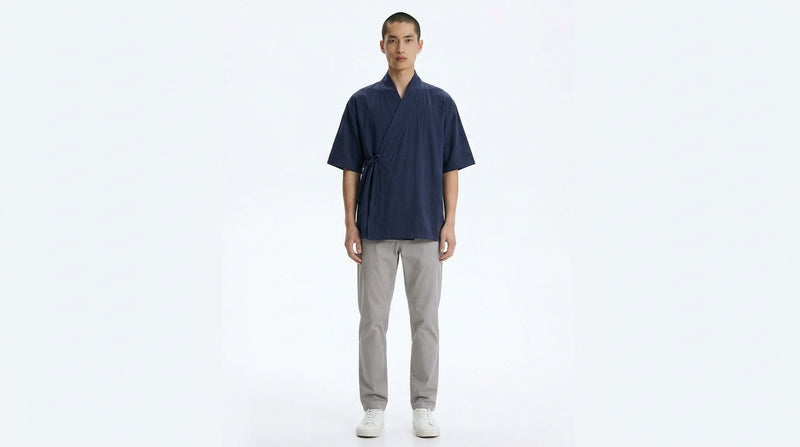
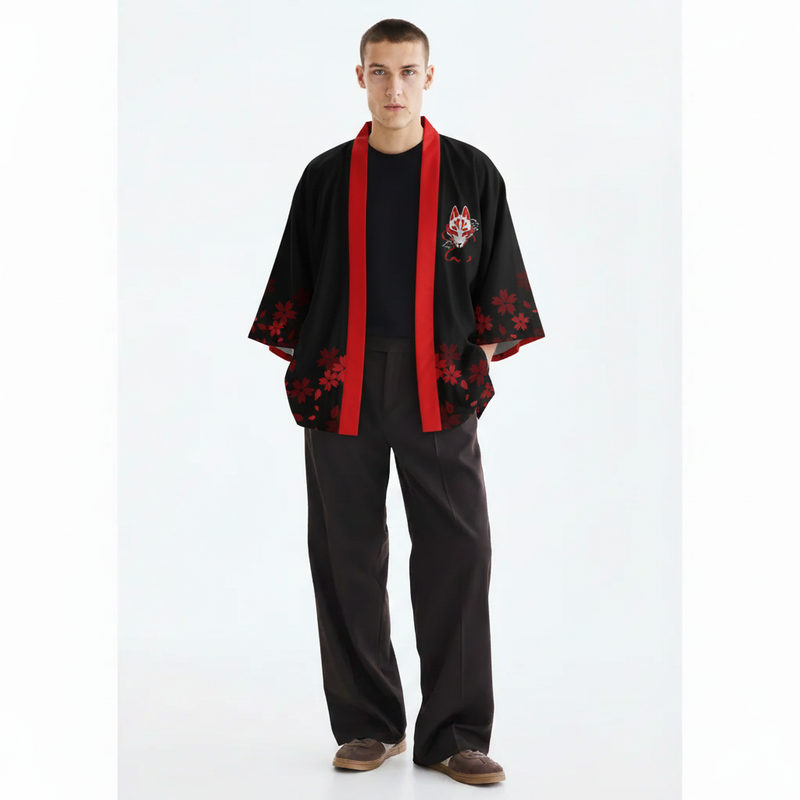
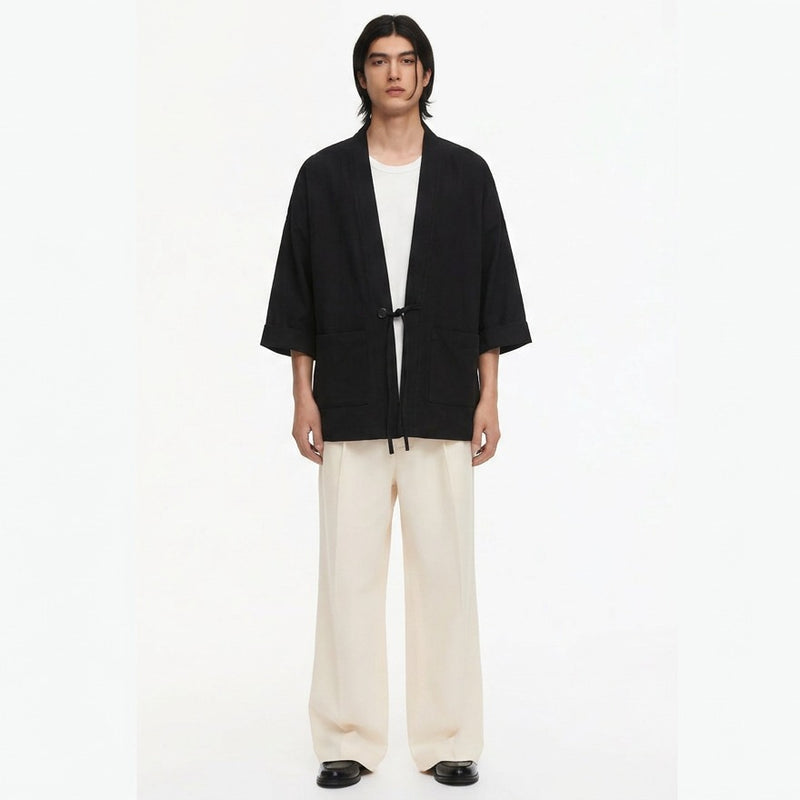
Yes. The harem and cropped cuts read as trousers, not loungewear. Wear them with a plain tee, a shirt or a haori.