

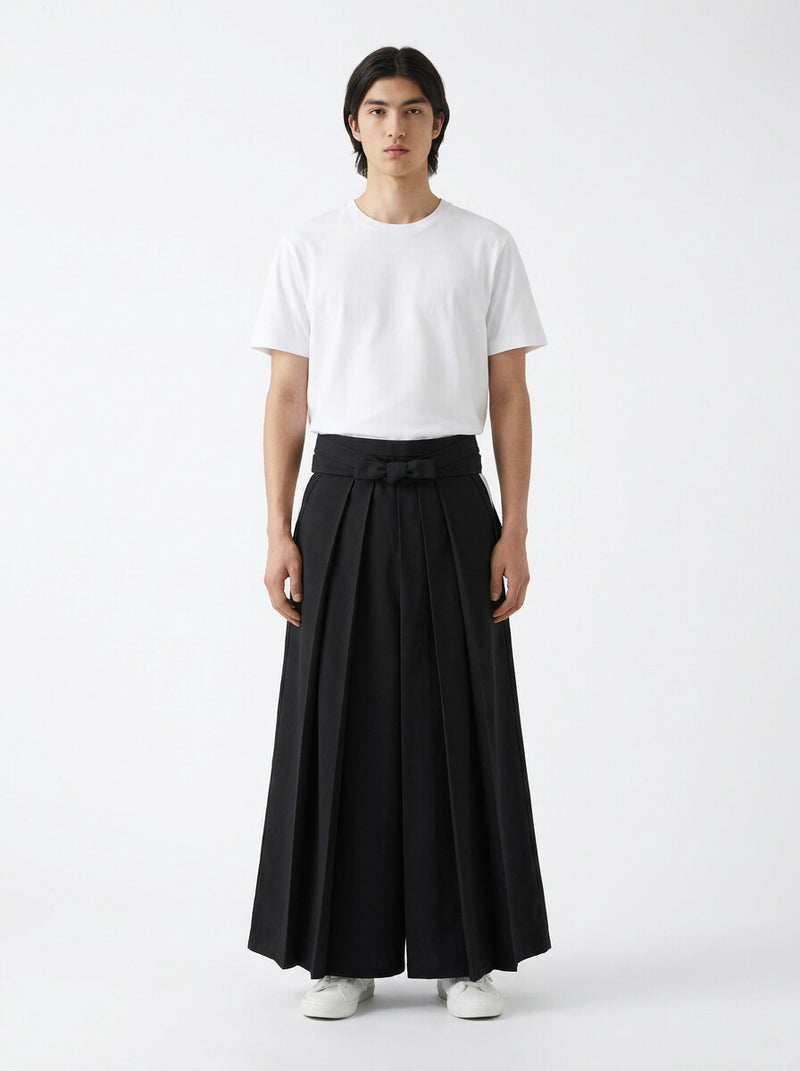





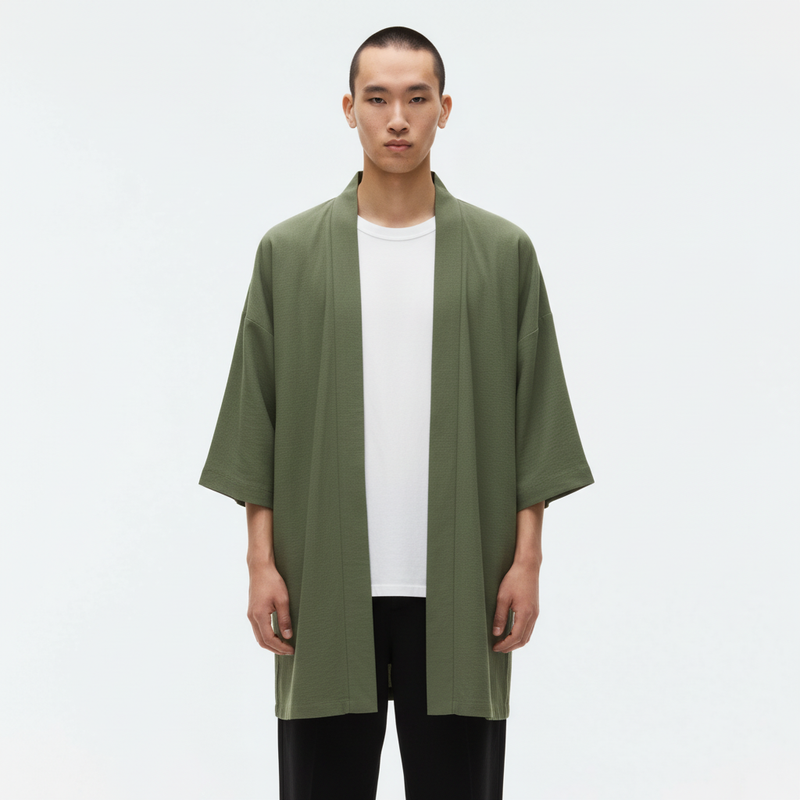






Traditional Japanese winter clothing kept people warm by layering, not with one heavy coat. Over a lined kimono went a hanten (半纏), a short padded jacket, and on the feet went tabi (足袋), split-toe socks. The hanten is the piece that stayed in everyday use, and it is the core of our hanten collection. Ours are affordable everyday jackets made in China, for wearing at home or over modern clothes.
Why traditional Japanese winter clothes come in layers
Old Japanese houses were built for summer. Paper screens, raised floors and deep eaves let humid air through in July, and they let the cold in every January. With little heat beyond a charcoal brazier, clothing did most of the work.
In the cold months people switched to awase (袷), a lined kimono, and in the hardest weeks to wataire (綿入れ), kimono with padding sewn between the layers. Indoors, families sat with their legs under the kotatsu (炬燵), a low table covered by a quilt with heat underneath. Many winter garments were made for that life: indoors, seated, a little bulky.
Traditional Japanese winter clothing, layer by layer
The table runs from the skin outward. Farm, town and samurai households dressed differently, but these are the names you will meet.
| Garment | What it is | Still worn? |
|---|---|---|
| Momohiki (股引) | Close-fitting leggings for workers and travelers | Yes, the word now also means long underwear |
| Awase (袷) | Lined kimono for the cold months | With kimono |
| Haori (羽織) | Open-front jacket worn over kimono | Yes, also as a modern jacket |
| Hanten (半纏) | Hip-length padded jacket | Yes, mostly at home |
| Dotera (褞袍) | Long padded robe for indoors | In homes and hot-spring inns |
| Michiyuki (道行) | Outdoor coat for kimono, with a square neckline | With formal kimono |
| Tabi (足袋) | Split-toe socks, thicker in winter | Yes |
| Haramaki (腹巻) | Band worn around the stomach for warmth | Yes |
The hanten, a traditional Japanese winter coat that never went away
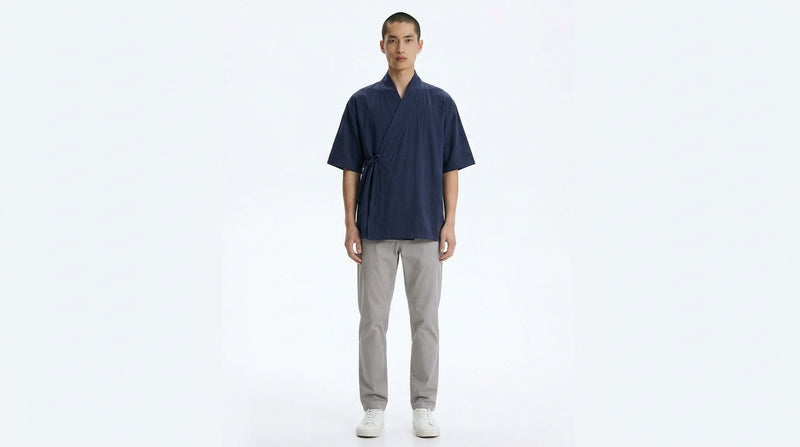
A hanten stops at the hip. It has wide sleeves and a collar band that runs from the neck down both front edges, and most have no buttons. You wear it open, or cross the fronts left over right and let your arms hold it shut. The hanten spread among townspeople in the Edo period (1603 to 1868), and versions bearing a shop's crest became work jackets for craftsmen and firefighters. Today it is what you pull on over pajamas to read, study or eat at the kotatsu. Our guide to the hanten covers its history and fit in more detail.
We sell three at Amaji. Amaji's Padded Hanten Jacket is the plainest, at $84.90 in Black or Army Green, sizes XS to L. The Koi Hanten Jacket ($64.90, Black or Navy) and the Seigaiha Hanten Jacket ($62.90, Red Seigaiha or Grey Seigaiha) come in one size, which suits a jacket meant to sit loose over other layers. Seigaiha (青海波), "blue sea waves", is the pattern of overlapping arcs. Our guide to Japanese patterns covers what it stands for.

These are easy jackets for the house and the weekend, not hand-quilted heirlooms. If you want a heavy made-in-Japan hanten, or a dotera, buy from a Japanese maker. We don't sell either.
Hanten, dotera or haori: which one you want
Shop listings mix these three up. Length, and where you wear each one, tells them apart.
Dotera, which parts of western Japan call tanzen (丹前), is the long one. It falls below the knee, wraps like a kimono and stays indoors. Hot-spring inns hand one out in winter to wear over the yukata (浴衣), a light summer kimono.
The hanten is the short one. Ending at the hip, it lets you cook, walk the dog or sit at a desk without a hem in the way. Over jeans and a sweatshirt it looks like a jacket, not a costume.
A haori is for going out. It hangs straight, stays open at the front and is held by a cord called a haori himo (羽織紐). It marked you as properly dressed as much as it kept you warm. Amaji's Southwestern Haori Jacket ($89.00, Blue or Gray) is our cold-weather haori. It only comes in XS and S, so check the size table first. For context, the median haori across the specialist shops we tracked in September was $47.99.

Japanese winter clothes for everyday wear now
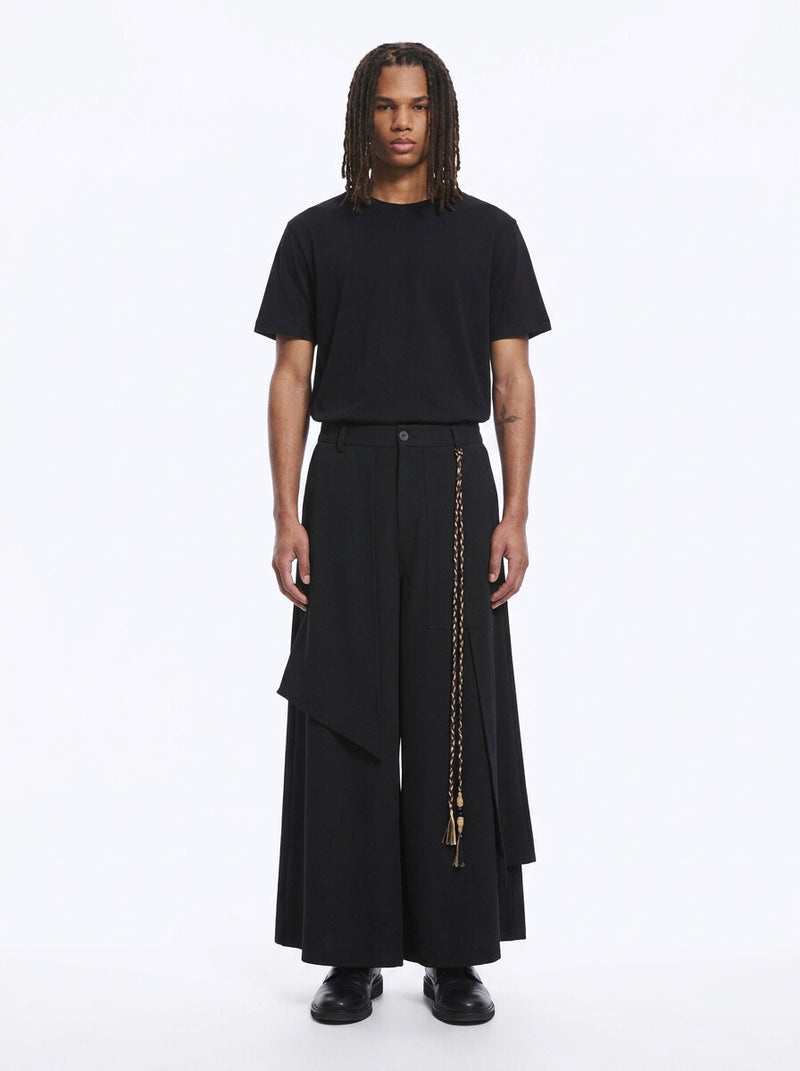
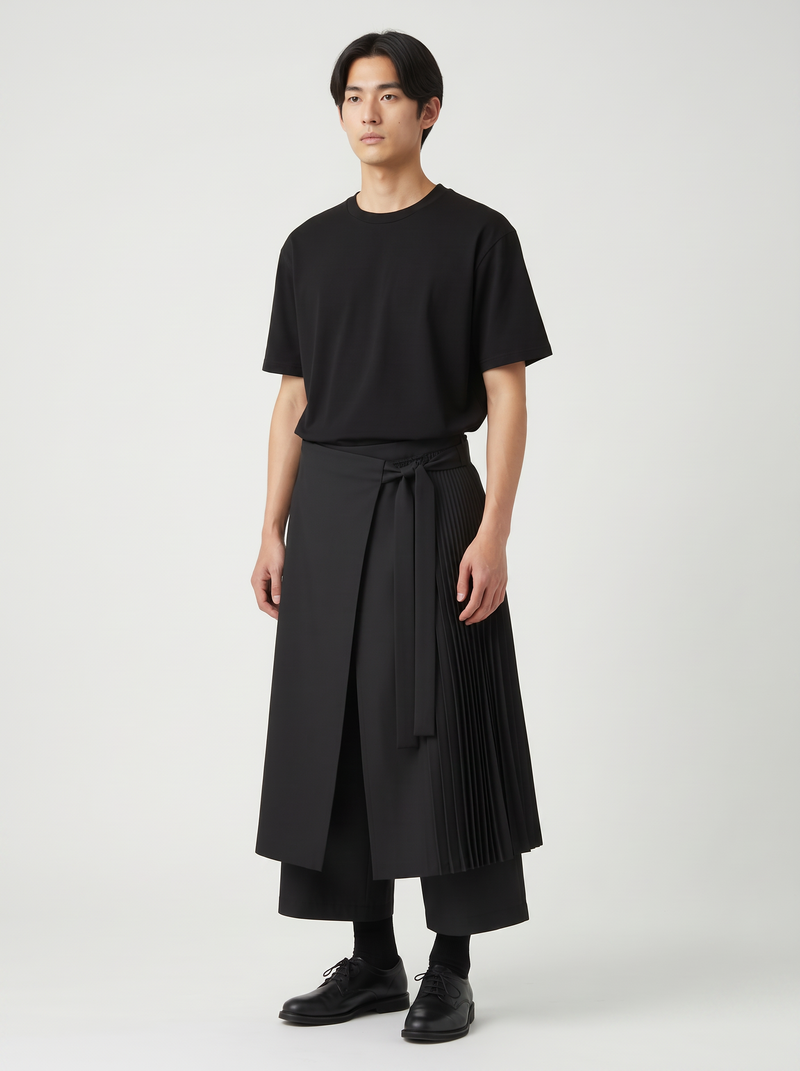
Outside Japan, the look travels better than the kimono does: wide sleeves, collarless and stand-collar jackets, quilting, knit caps and split-toe socks. Besides the hanten, these are the cold-weather pieces we carry at Amaji:
- Japanese-Style Liner Jacket, $49.90, quilted and collarless, XXS to XXL. It layers under a coat the way a hanten layers over a kimono.
- Japanese Style Puffer Jacket, $69.90, patchwork with a stand collar, XS to L in Black or Brown.
- Diamond Knit Scarf, $24.90 in Grey, Black, Red or Brown.
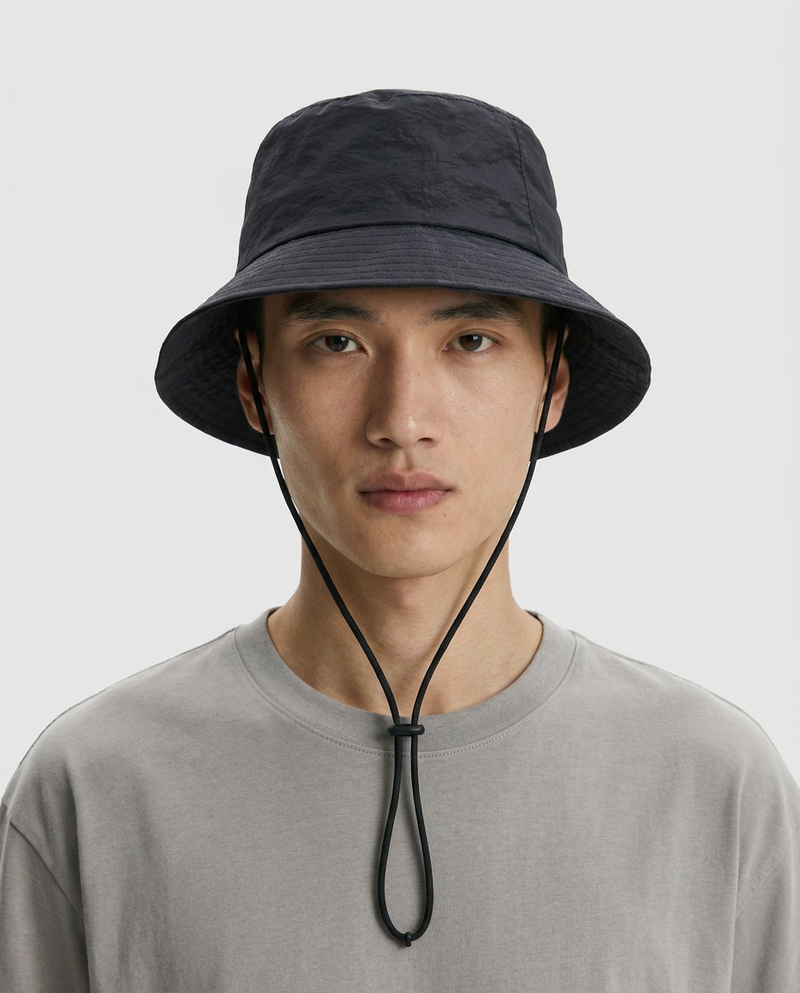
- Fisherman Beanie, $9.90, short with a round top, in ten colors.
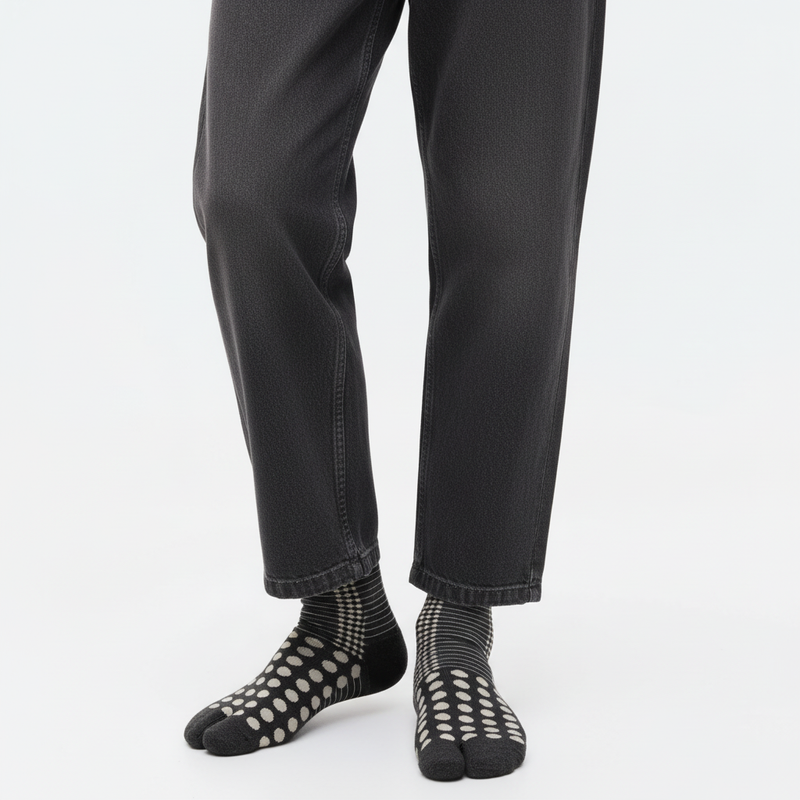
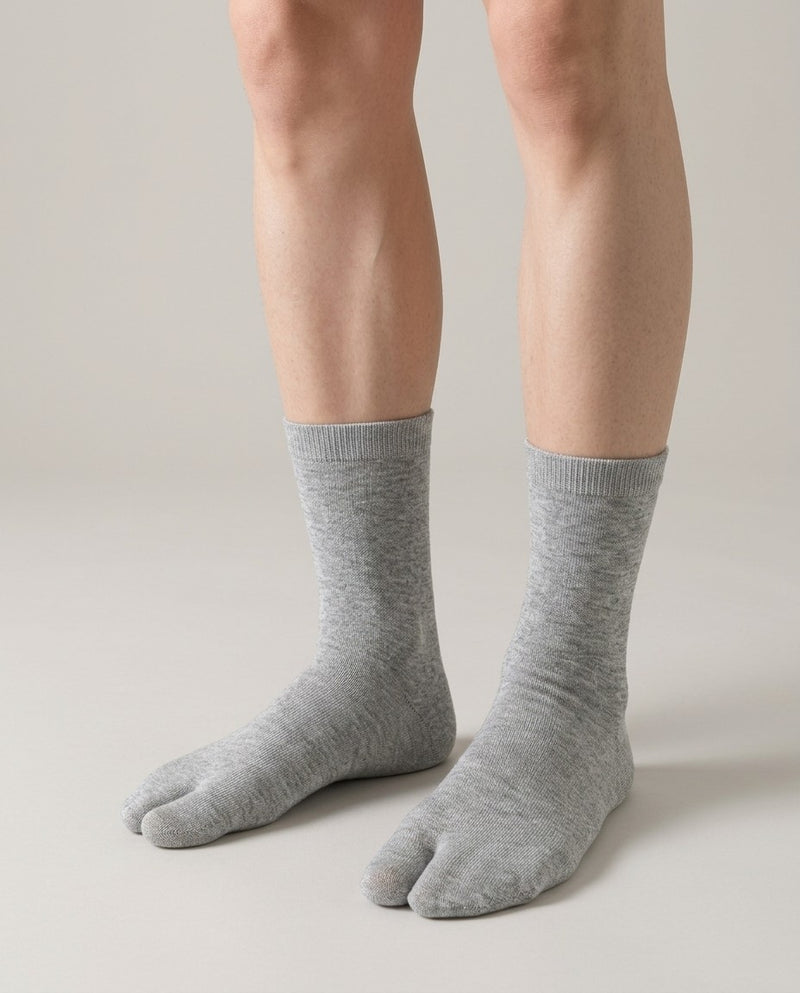
- Plain Tabi Socks, $12.90, one size in six colors.
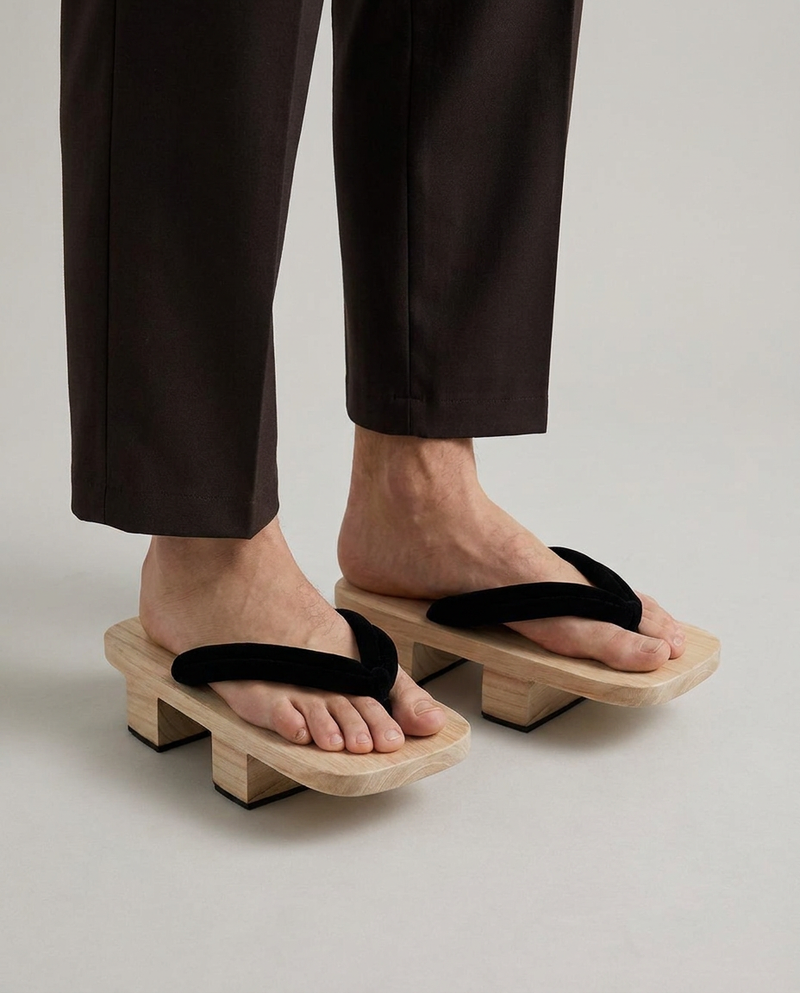
Tabi are the easiest traditional piece to start with. They go with geta (下駄), raised wooden sandals, and zori (草履), flat thong sandals, and they show at the ankle under cropped or wide-leg pants. Tabi ship with many of our orders: Amaji's grey ninja tabi socks were in 16 of our last 74 orders over the past 90 days, and the plain tabi socks in 2. At $12.90 they sit between the $12.00 lower quartile and the $16.95 median for tabi socks at specialist shops.

How to wear a hanten when it is cold
At home, wear it the old way: over pajamas or a sweatshirt, fronts crossed left over right like a kimono, with thick socks or tabi. Right over left is how the dead are dressed in Japan, and people notice.
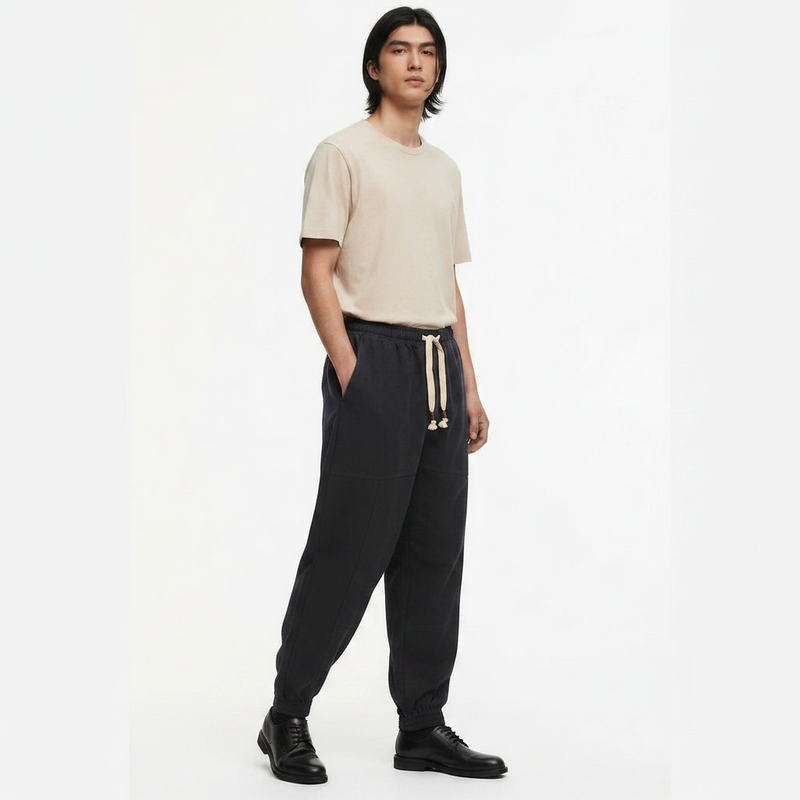
Outside, treat it like a chore coat over a hoodie or heavy sweater, with straight or wide pants and boots. Most hanten have no buttons, so wind finds the front. On raw days put the liner jacket underneath and add the beanie and scarf. For the names of other pieces worth knowing, see our list of 36 traditional Japanese garments.
Written by the Amaji team, November 9, 2026. How we write our guides.