









Sashiko (刺し子, "little stabs") is Japanese running-stitch embroidery: white thread sewn in straight or curved lines through indigo cloth, in geometric patterns. Farm families in northern Japan used it to layer and mend their work clothes for warmth and strength. Today people stitch it for mending, for decoration and for the calm of the work itself. Below are nine traditional patterns, each with a free printable template, and the basics you need to start. The jacket the stitching grew up on is the noragi, the farmer's work jacket.
Where sashiko comes from
In the Edo period (1603 to 1868), cotton was precious in the cold north of Japan, where it did not grow well. Families stitched layers of worn cloth together so a jacket would last another winter. The stitches held patches in place, made the cloth thicker and spread wear across the surface. Patched, re-patched cloth of this kind is called boro (ぼろ, rags), and the best old pieces now hang in museums. Wikipedia's boro article shows several.
Three regional styles are often named the great sashiko of Japan: kogin-zashi from Tsugaru and hishi-zashi from Nanbu, both in Aomori, and Shonai sashiko from Yamagata. Kogin and hishi count threads to build small diamond motifs, a little like counted cross stitch. Shonai sashiko is the style most beginners learn first, with patterns drawn on the cloth and stitched along the lines.
The stitch went to work in the cities too. Edo firefighters wore thick quilted sashiko coats soaked in water before they faced a fire. The heavy weave of a judo jacket is still called a sashiko weave.
Moyozashi and hitomezashi: the two families of patterns
Moyozashi (模様刺し) patterns are lines: waves, circles, hexagons, stars. You mark the lines, then run stitches along them. The stitches never cross each other at a corner or a junction, which is what keeps the design crisp.
Hitomezashi (一目刺し, one-stitch) patterns are built on a grid. Every stitch is exactly one square long, you work all the horizontal rows first and then the vertical ones, and the pattern appears where the two meet. It is slower to mark and almost meditative to stitch.
Nine sashiko patterns, with free templates
We drew every pattern below ourselves, in code, so the lines are exact. Each one has a printable A4 template at 300 dpi: print it, trace or transfer the lines onto your cloth, and stitch. They are free for personal projects, classes and blogs, with a credit link to this page ("Template: Amaji").
Asanoha (麻の葉): hemp leaf

Hemp grows fast and straight, so this star was stitched on children's clothes as a wish for healthy growth. It looks hard and is not: every line is a straight run. Download the Asanoha template (A4).

Seigaiha (青海波): blue sea waves

Overlapping fans of waves, a wish for calm seas and a quiet life. The curves take practice, so stitch it after a straight-line pattern. Download the Seigaiha template (A4).

Shippo (七宝): seven treasures

Linked circles named after the seven treasures of Buddhism. Each ring touches its neighbours, so the pattern reads as harmony and connection. Download the Shippo template (A4).

Kikko (亀甲): tortoise shell

A honeycomb taken from the shell of the tortoise, a sign of long life. Short straight runs make it a good second pattern. Download the Kikko template (A4).

Yamagata (山形): mountains

Rows of zigzag peaks. It is the easiest pattern here to mark freehand, and it hides an uneven stitch well. Download the Yamagata template (A4).

Yabane (矢羽根): arrow feathers

An arrow flies straight and does not come back, which made this a pattern for determination and for brides. The chevrons flip direction every column. Download the Yabane template (A4).

Hishi (菱): diamonds

A diamond lattice named after the water chestnut. Two sets of parallel diagonals, nothing else, which makes it a fine first project. Download the Hishi template (A4).

Juji-zashi (十字刺し): crosses

Small crosses on every other point of a grid. It is a hitomezashi pattern: you stitch all the horizontal arms first, then all the vertical ones. Download the Juji-zashi template (A4).

Hitomezashi (一目刺し): one-stitch

Every stitch is one grid square long. Rows of horizontal stitches, then rows of vertical ones, shifted by one square or not, and the pattern appears where they meet. Download the Hitomezashi template (A4).

The same motifs turn up printed on cloth, not only stitched. Our guide to Japanese patterns covers their meanings in more depth, with free swatches.
What you need to start
- A sashiko needle. Longer than a sewing needle, so you can load several stitches before pulling through.
- Sashiko thread. A soft, lightly twisted cotton thread used whole. Embroidery floss works for a first try if you keep all its strands together.
- Cloth. A medium-weight, tightly woven cotton or linen. Indigo or navy is traditional and makes white thread glow, but any plain colour works.
- A thimble. Traditional stitchers use a ring thimble (yubinuki) on the middle finger of the hand that holds the needle.
- A marking tool. A chalk pencil, a water-soluble pen, or a printed template and dressmaker's carbon paper.
How to sashiko, step by step
- Mark the pattern on the right side of the cloth, using one of the templates above.
- Knot the thread and start from the back so the knot is hidden, or between two layers if you are stitching a patch.
- Load three to five stitches onto the needle with a rocking motion, then pull through. Aim for stitches about 3 to 4 mm long, with the stitch on the front a little longer than the gap.
- Smooth the cloth along the thread after each pull. Leave a little slack where the line turns, so the cloth does not pucker.
- At a corner or where lines meet, place the gap, not the stitch, on the meeting point. Stitches that cross look messy and pull the cloth.
- Finish on the back with a small knot or by running the thread under a few stitches.
Your first rows will be uneven. That is fine. Even spacing comes with a few hours of practice, and an uneven line still holds a patch as well as a neat one.
Sashiko for mending
Mending is where sashiko started, and it is how most people use it now. Put a patch behind a hole or a worn knee, stitch a simple grid or the hishi diamonds through both layers, and the repair becomes the decoration. This is visible mending: instead of hiding the fix, you show it. It is wabi-sabi in practice, where the repair becomes part of the story. Denim, canvas and work jackets take it best because the cloth is firm.
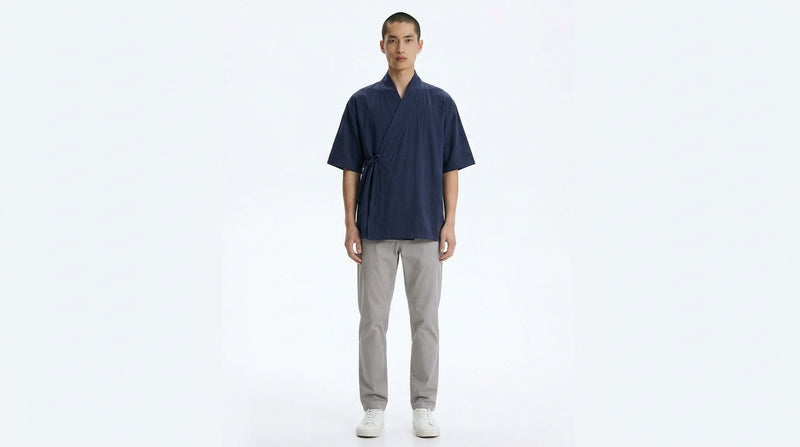
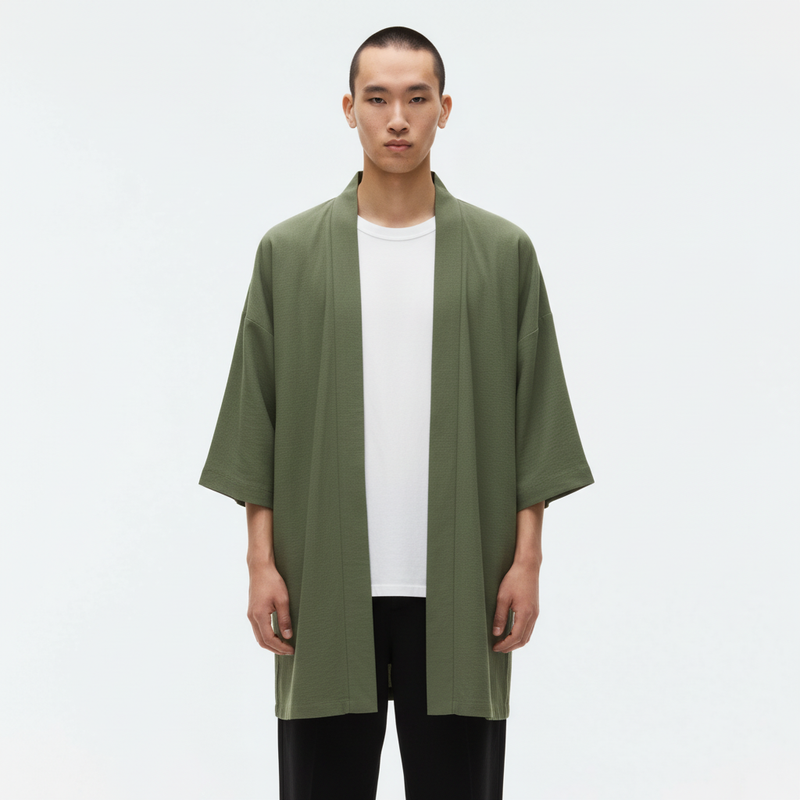
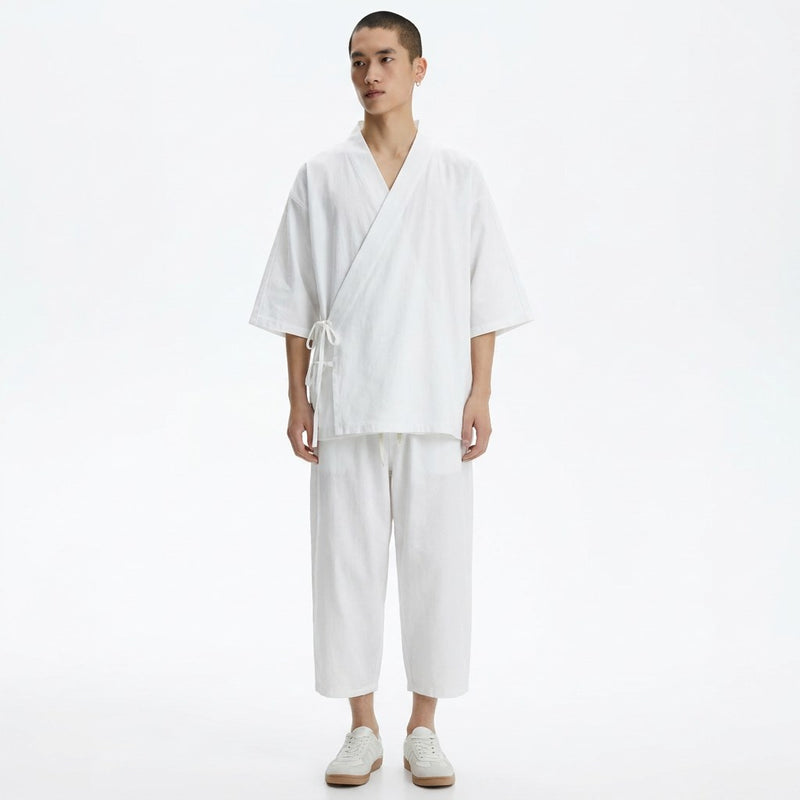
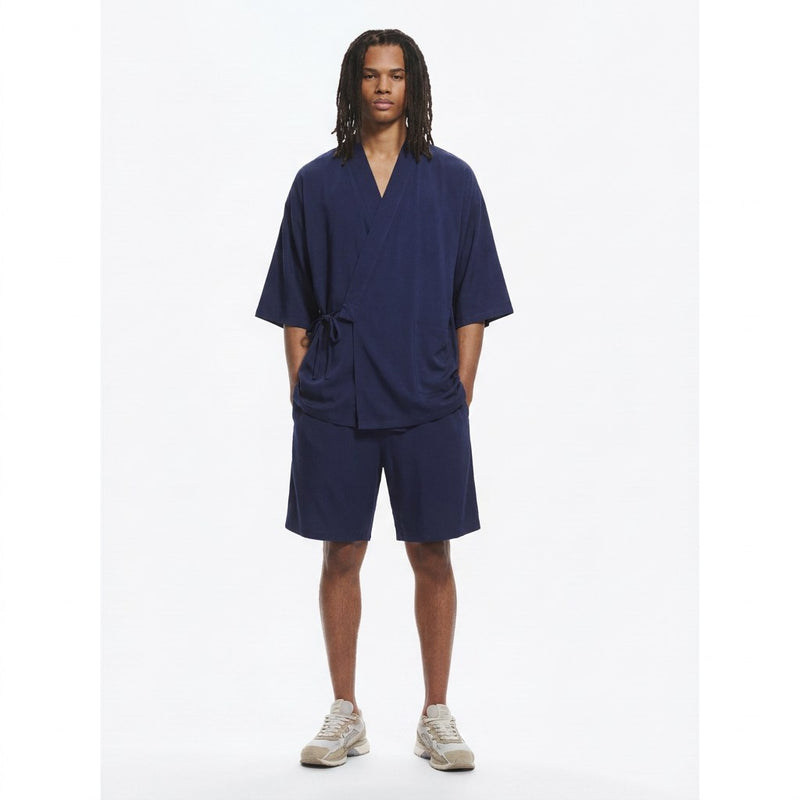
The noragi is the classic canvas for it: a plain, boxy work jacket with a crossed front and wide sleeves. Amaji's Indigo Noragi Jacket, $149.00, is a plain indigo jacket with no stitching on it, so it is a blank surface if you want to add your own. We do not sell sashiko kits or thread. For those, a craft shop is the right place to go.
Wikipedia's sashiko article has photographs of old pieces, and its kogin-zashi page covers the counted style from Tsugaru.
Written by the Amaji team, November 12, 2026. How we write our guides.