


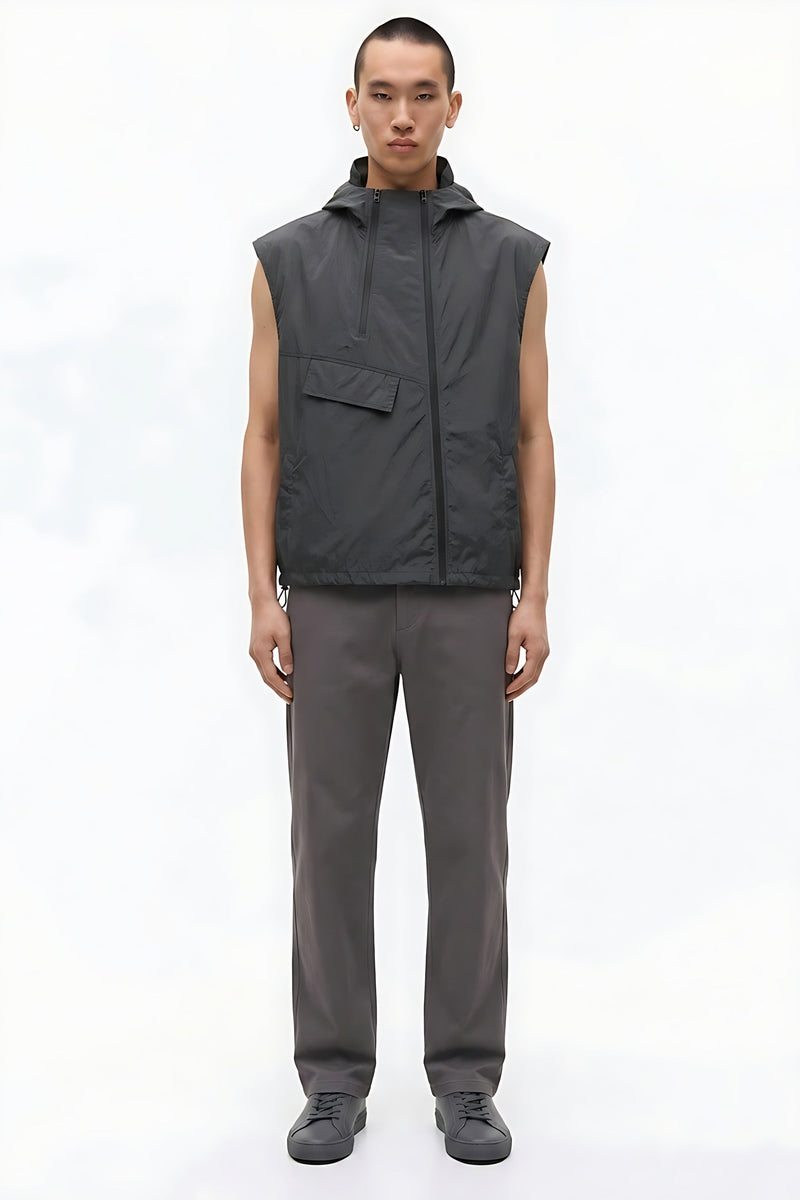


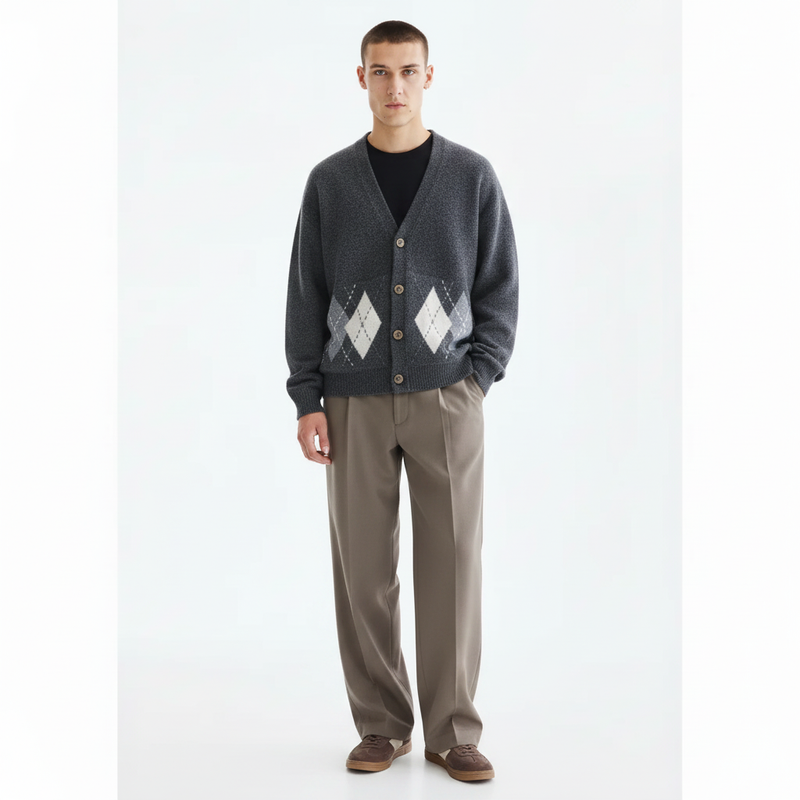


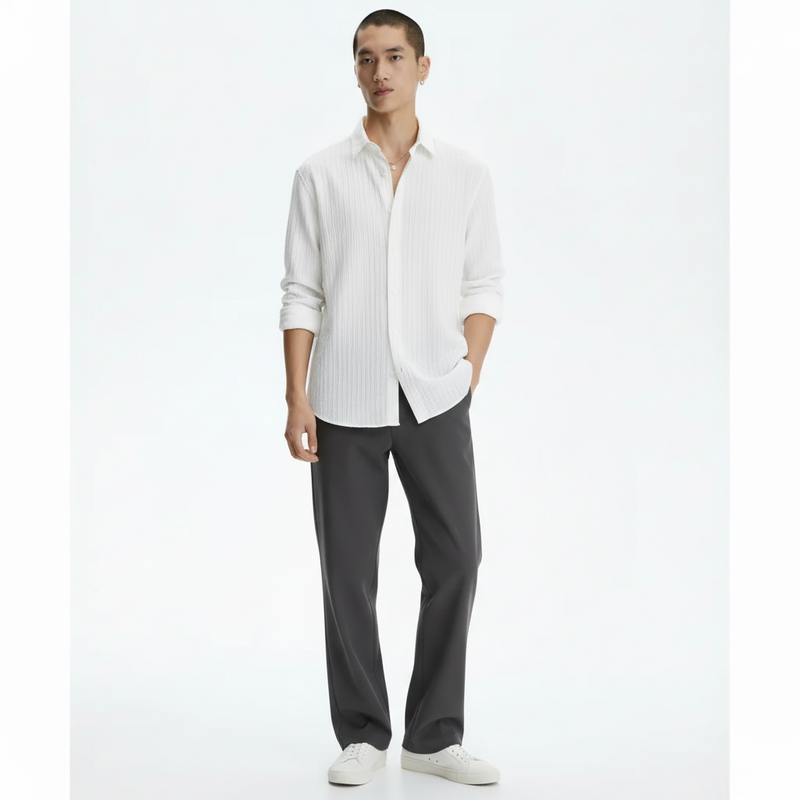










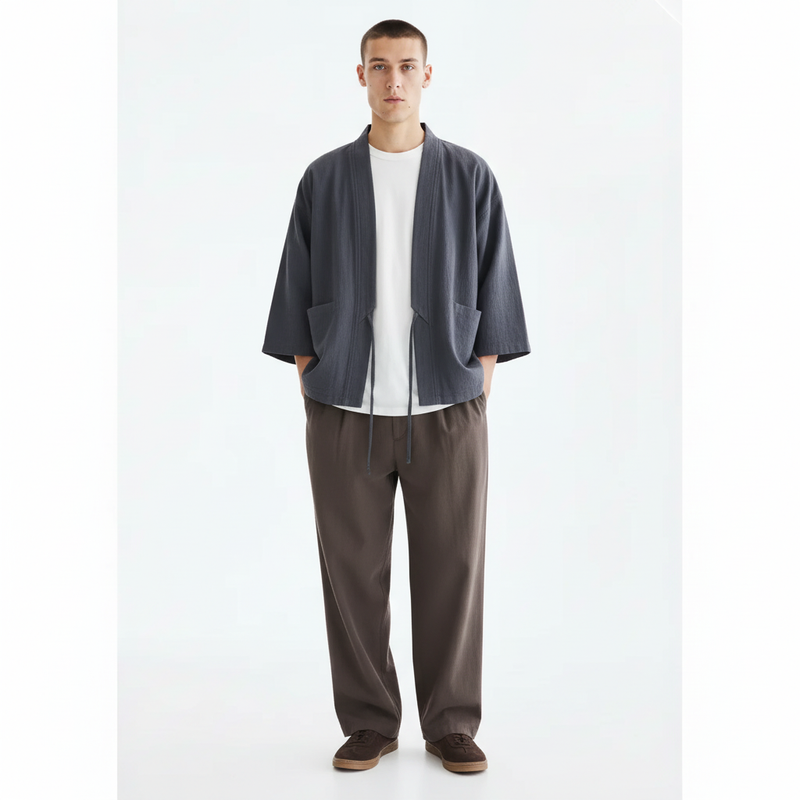
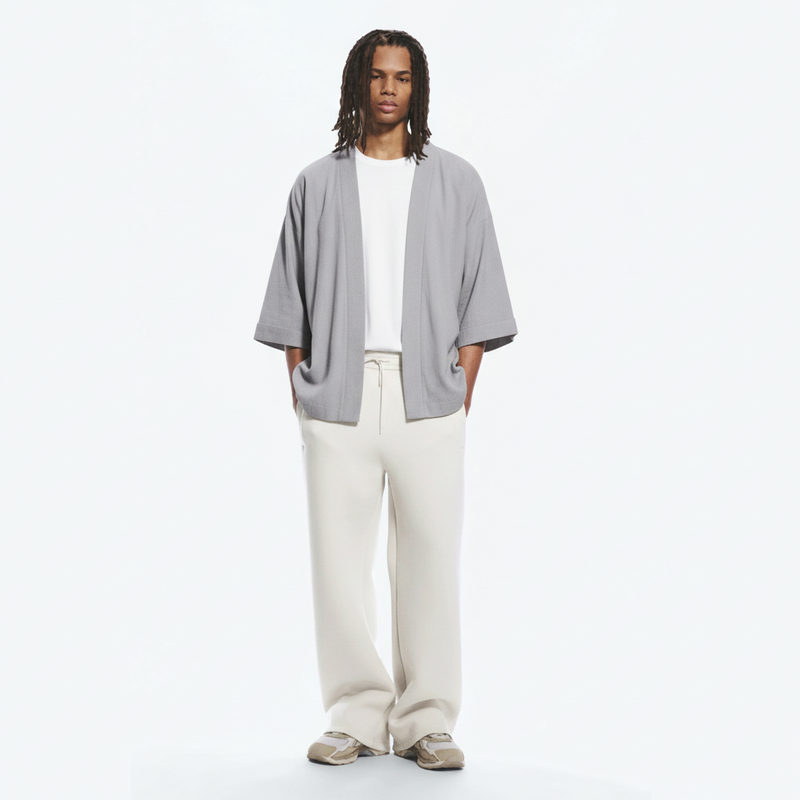
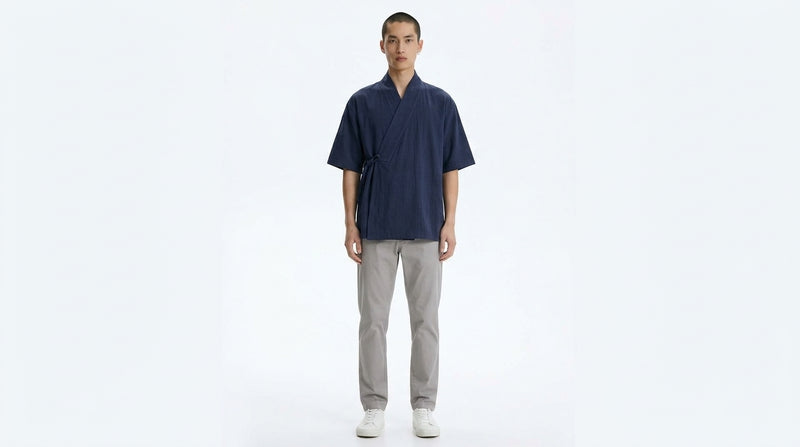



Workwear jacket is a shape, not a style. Before it meant anything on a rail it described a jacket a person put on to do a job in, and the things that define it are all consequences of that: room to move, pockets you can reach with full hands, and cloth that survives being worn every day.

The four things that make one
- A square cut. Straight through the body, no waist suppression. It has to work over other layers.
- Patch pockets. Sewn on the outside, not set into the seam. Cheaper to make, easier to repair, reachable while wearing gloves.
- A flat front. Buttons or a tie, rarely a heavy zip, because a zip is the first thing to fail.
- Cloth chosen for abrasion. Cotton drill, canvas, denim, herringbone. Nothing delicate.
Where the Western and Japanese versions part
The European chore coat and the American work jacket both descend from one line: buttoned front, three or four patch pockets, drill cotton. Japan's equivalent came from a different garment entirely. The noragi was field clothing - a crossover front held by a tie instead of buttons, cut wide through the sleeve, with the same square body and patch pockets.
The result looks softer and fastens differently, but it was built to the same brief. Tie instead of button, crossover instead of placket, and the same reasoning underneath.
Why the crossover survives
A buttoned front fixes the opening. A crossover held by a tie adjusts - you can wear it loose in warm weather, pulled across in cold, and it does not strain at a fastening when you reach. It is also the reason a noragi layers over almost anything without fighting the collar underneath.
The fabrics, and why they were chosen
Workwear cloth is picked for abrasion resistance and for how it fails. Cotton drill and canvas go soft at the stress points rather than tearing. Herringbone is a twill that reverses direction every few threads, which balances the cloth so it does not skew with wear the way a straight twill can. Indigo was practical before it was aesthetic - it hid dirt, and it faded where the garment was used, which is why worn indigo reads as honest rather than damaged.
What none of them are is delicate. If a workwear jacket needs careful washing, something has gone wrong in the specification.
Boro, and why repairs are visible
Japanese field clothing was patched rather than replaced, and the patching was not hidden. Boro - literally rags - describes cloth built up over years of repair, and sashiko is the running stitch used to do it. Both are now decorative references, but the reason they look the way they do is that the repair was structural and nobody had a reason to disguise it.
What to look at before buying
Weight first: a workwear jacket that feels light in the hand will not hold its shape. Then the pockets - patch pockets sewn through, not tacked at the corner. Then the sleeve, which should be cut wide enough to work in, because the moment it is trim the garment is a fashion jacket wearing a workwear costume.
What that looks like in practice
The Herringbone Noragi Jacket is the clearest example of the type: crossover front on an inside tie, patch pockets at the hip, three-quarter sleeves cut wide, in cotton washed soft. The Indigo-Dyed Noragi Jacket is the heavier version of the same shape, and the Reversible Denim Noragi Robe adds a shawl collar and a waist tie. All three sit in Noragi Jackets.
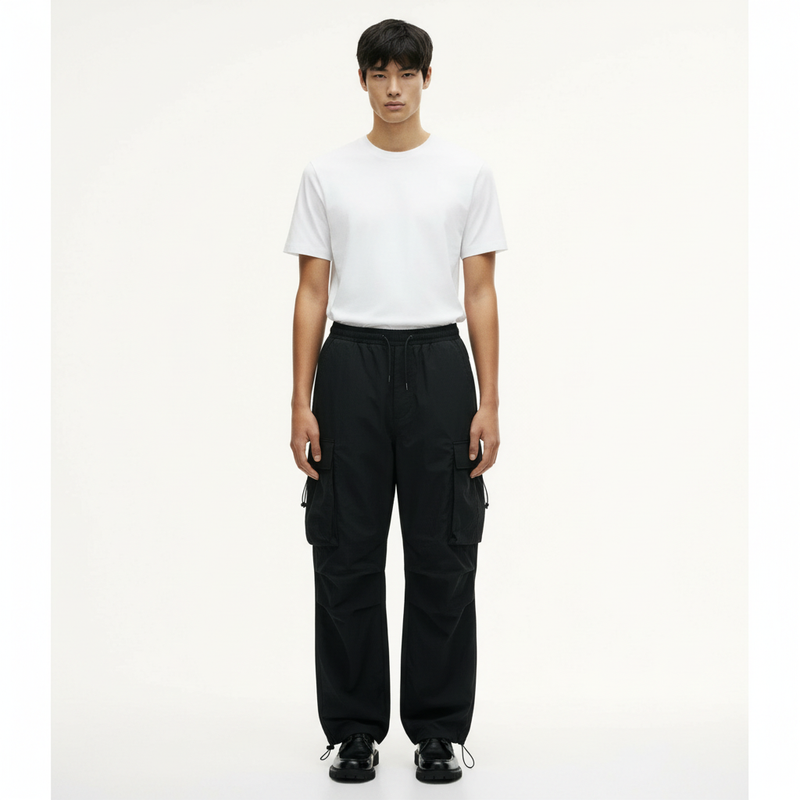
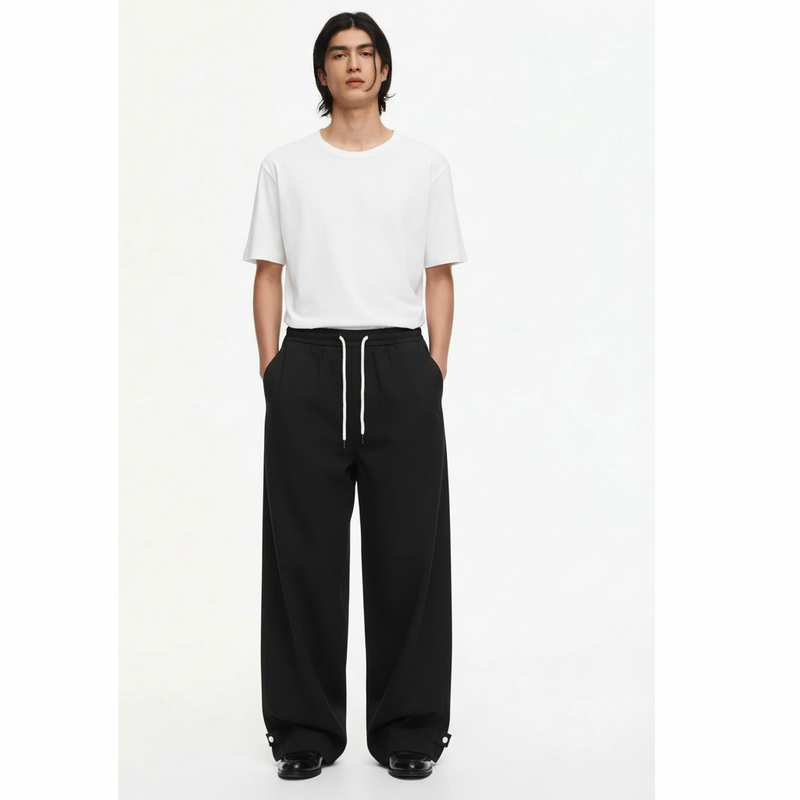
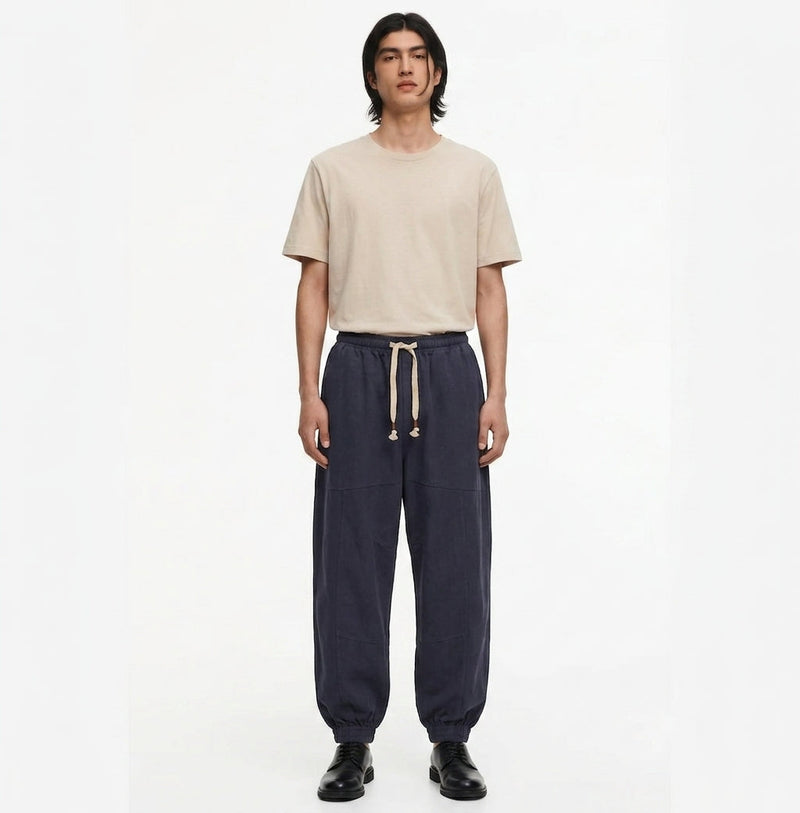
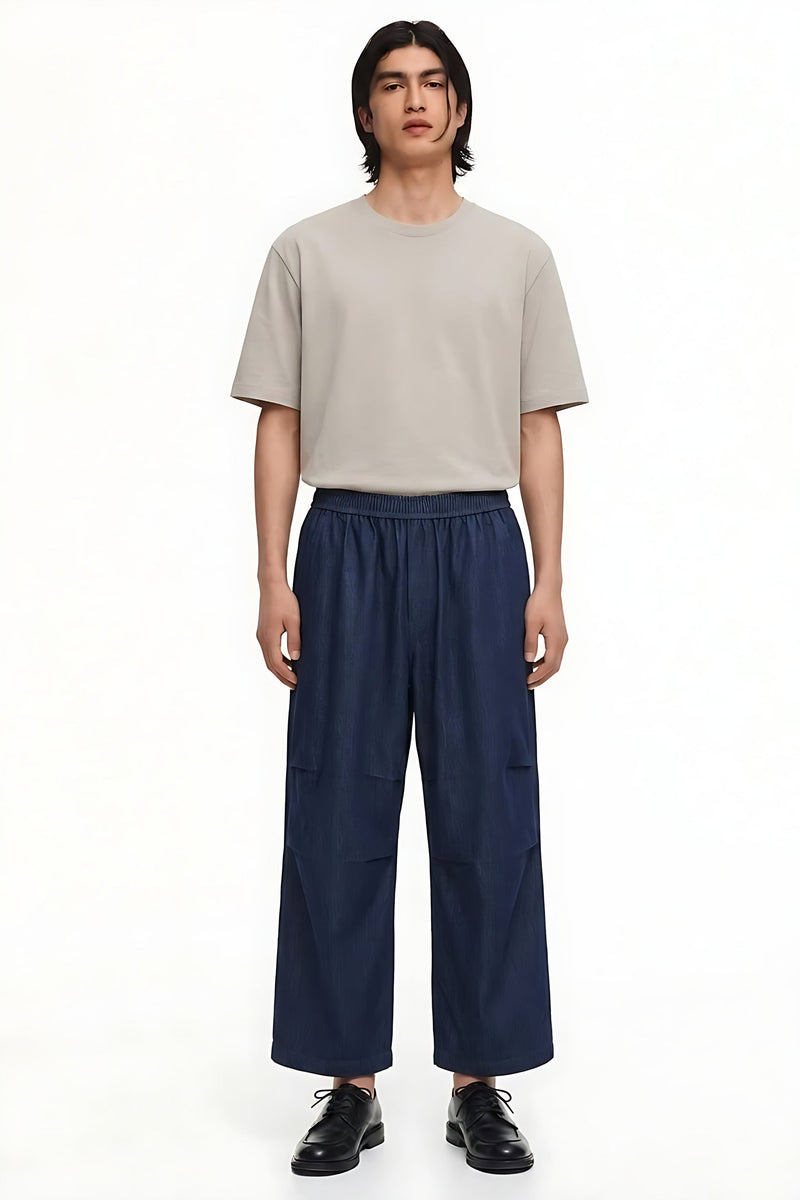
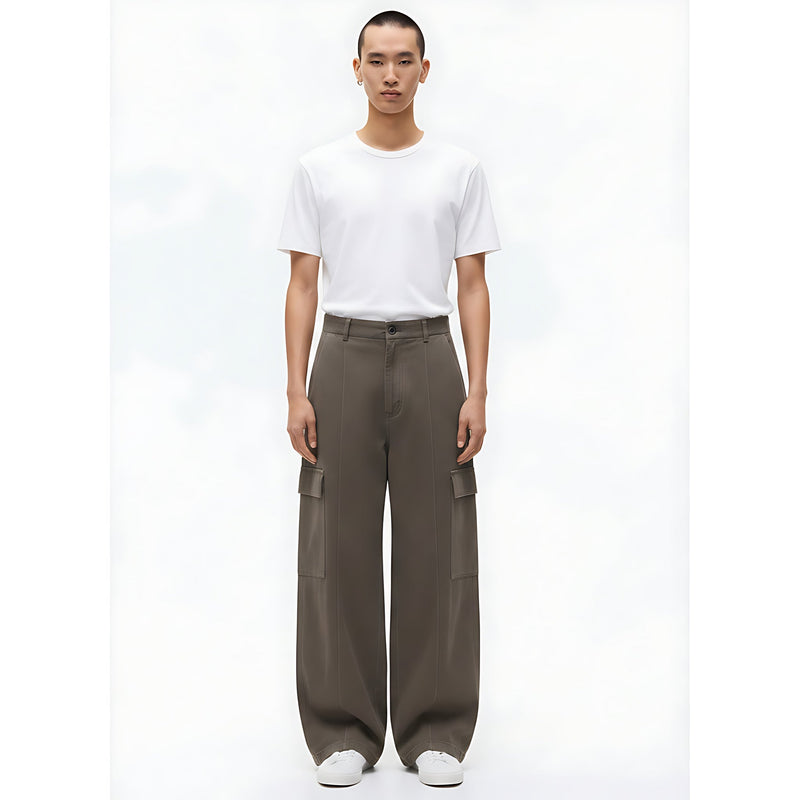
For the trouser half of the same wardrobe, Japanese Work Pants runs the same logic: the Deconstructed Cargo Work Pants are 100% cotton in a structured weave that holds its shape at the knee and seat through a full day.
The short version
If you want a workwear jacket that reads Japanese rather than American, you are looking for a noragi: same square body, same patch pockets, same honest cloth, fastened by a tie instead of a row of buttons. Everything else is detail.