
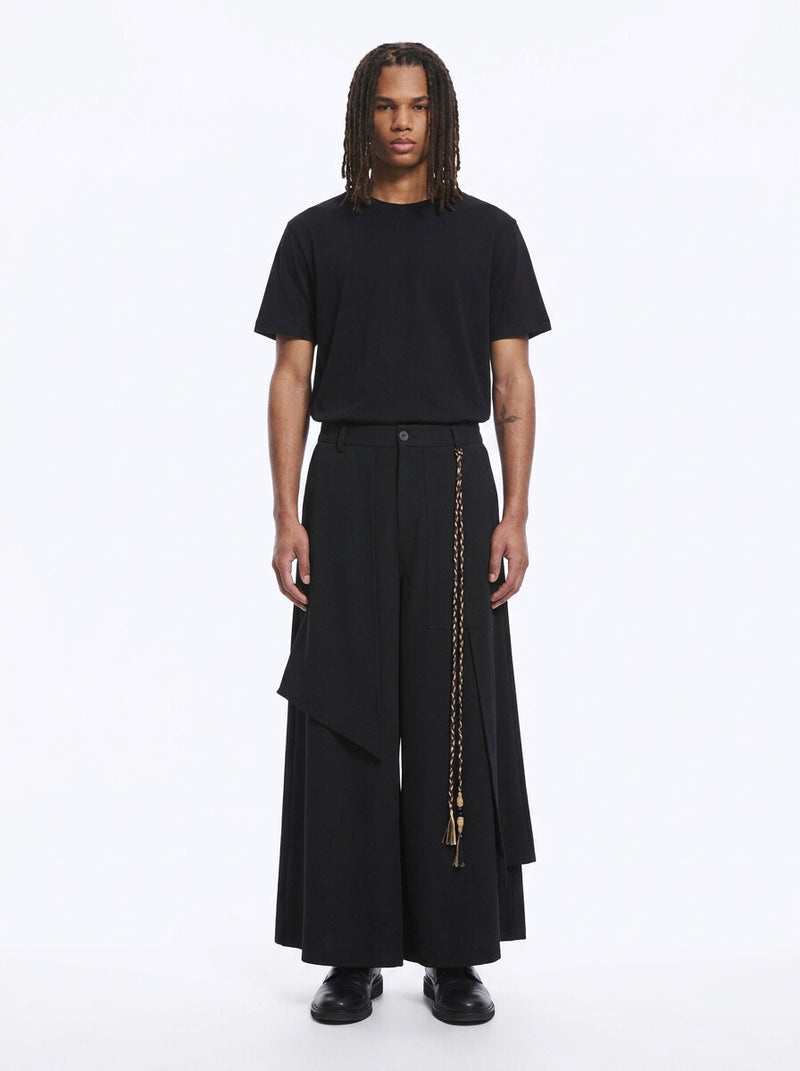
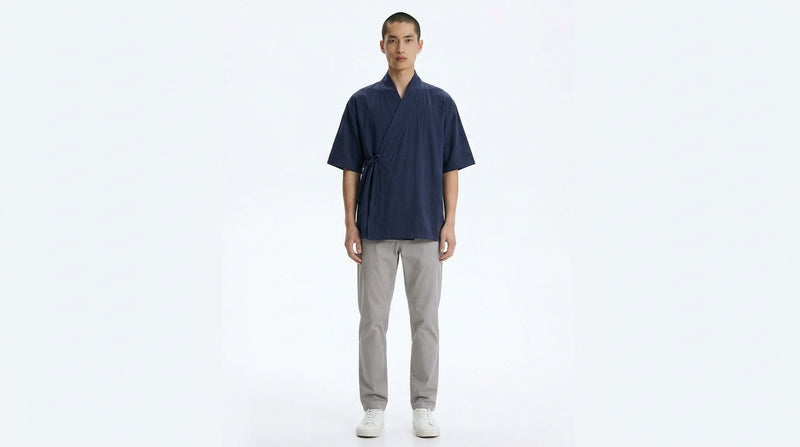
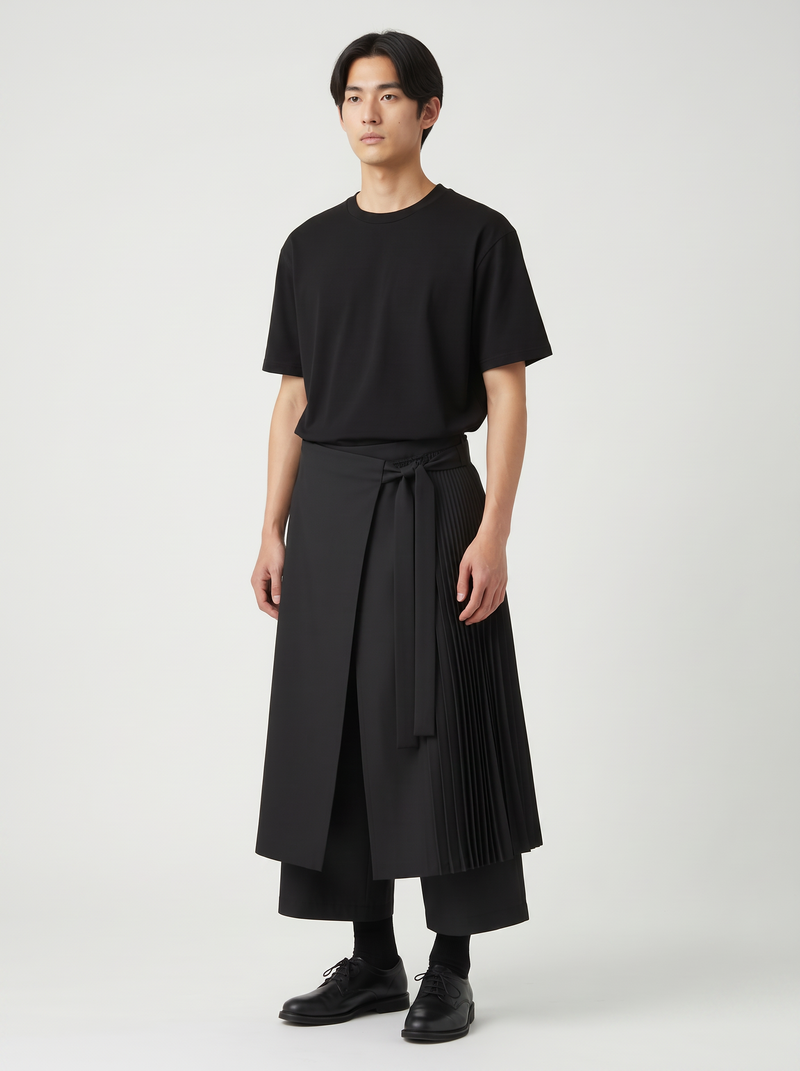

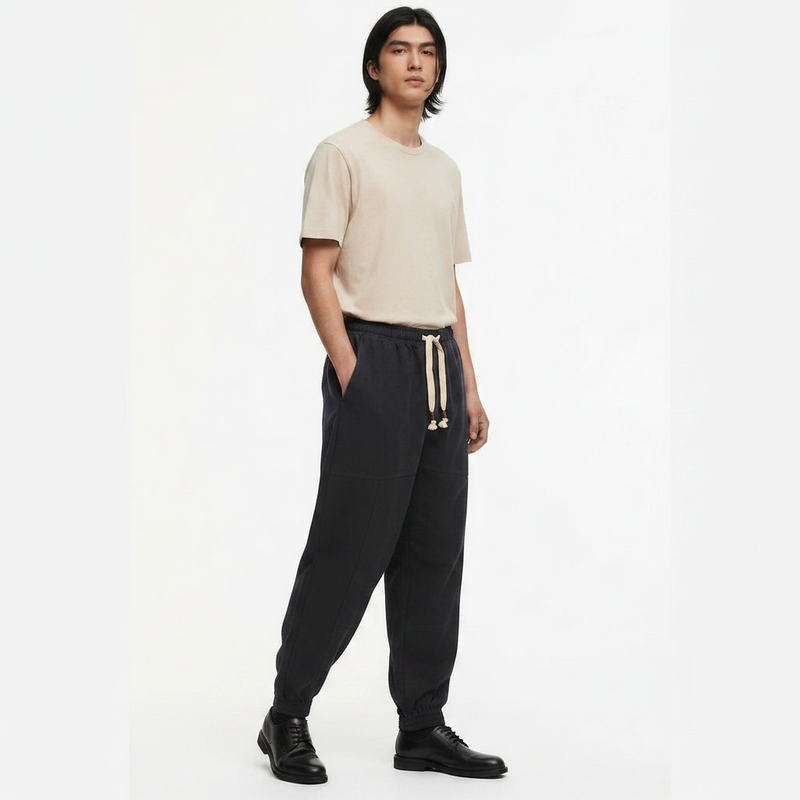









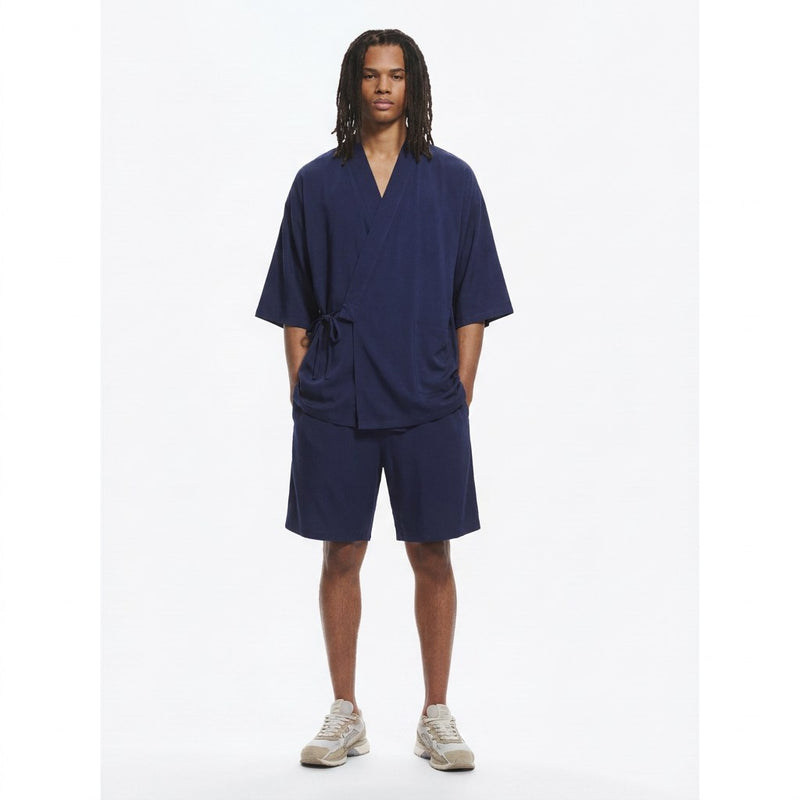

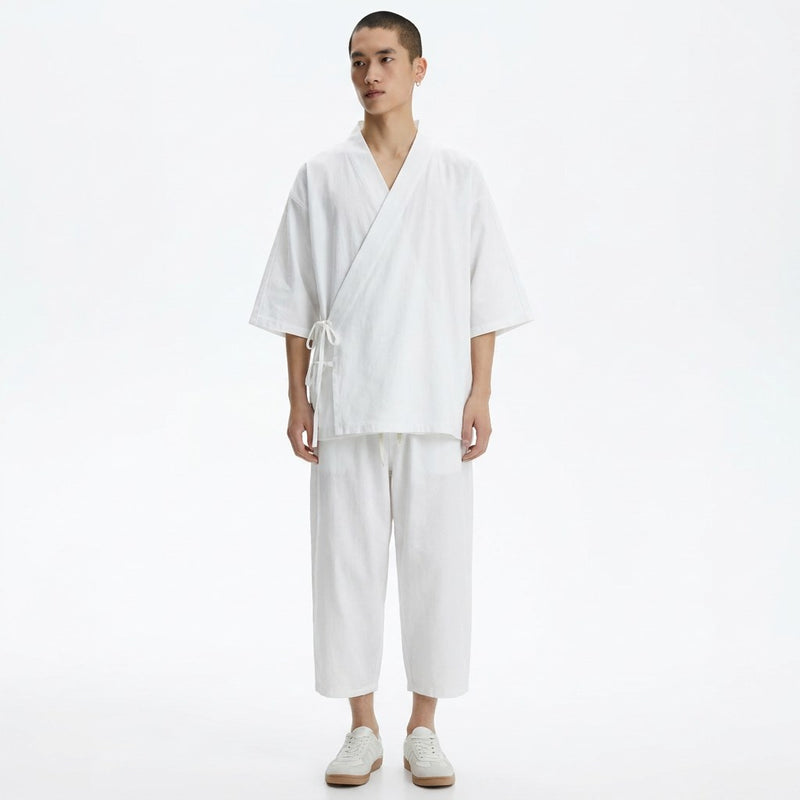
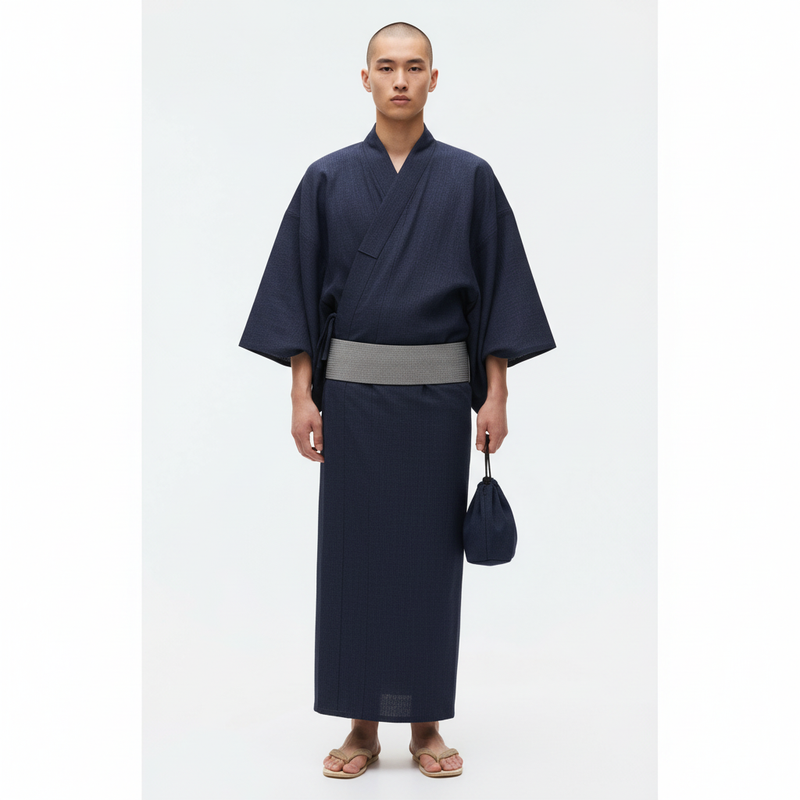
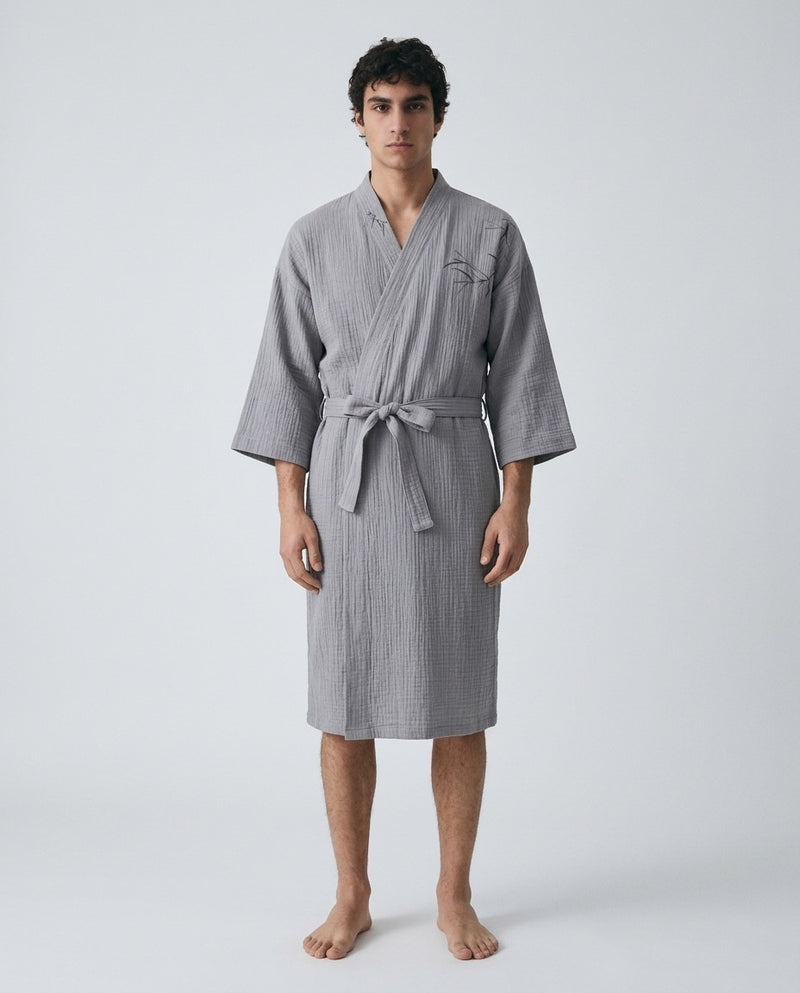

Japanese pajamas for women come in three main shapes. The jinbei (甚平) is a two-piece summer set: a short wrap top that ties at the side, worn with shorts or cropped trousers. The nemaki (寝巻き, "sleep wrap") is an ankle-length cross-front robe, the kind Japanese inns lay out for guests, while button-front sets in soft double gauze are the everyday pick in Japanese stores today. Every set in our jinbei collection is cut on men's sizing, so for women they work as a roomy lounge set in the smallest sizes rather than a fitted pajama.
Japanese pajamas for women: the three styles side by side
Each style does a different job, and the table compares them on shape, closure and when people in Japan actually wear them.
| Style | Shape | How it closes | When it's worn |
|---|---|---|---|
| Jinbei (甚平) | Hip-length wrap top with short sleeves, plus shorts or cropped trousers | Two pairs of ties, one inside and one outside at the right hip | Summer nights, festivals, lounging at home |
| Nemaki or ryokan yukata | Ankle-length robe with wide sleeves | Wraps left over right, held with a soft sash | Bed, after the bath, inn stays |
| Gauze pajama set | Button shirt and elastic-waist trousers | Buttons | Bed, all year |
Most visitors meet the robe first. At a ryokan (旅館), a traditional inn, the robe folded in your room is a yukata (浴衣, "bath clothing"), and guests sleep in it, eat dinner in it and walk to the hot spring in it. Outside the inn, a yukata is a summer kimono worn to festivals and fireworks, so it is sleepwear only in that one setting.
Jinbei for women in Japan
The jinbei began as summer wear for men and boys. Women's versions have become common in recent years, mostly at summer festivals, and they tend to come in brighter prints such as goldfish, morning glories and fireworks.
Its appeal is practical. A jinbei goes on in a minute, and you can sit on the floor, ride a bike or chase a toddler in it, none of which a yukata makes easy.
Look at the sides of a traditional jinbei and you will often see the seams left partly open or joined with loose decorative stitching, so air moves through. That is why it makes a good hot-night pajama. One thing to know if you sleep on your side: the outer ties sit right at the hip, so knot them loosely or tuck the bow flat.
Wearing a men's jinbei set as a woman
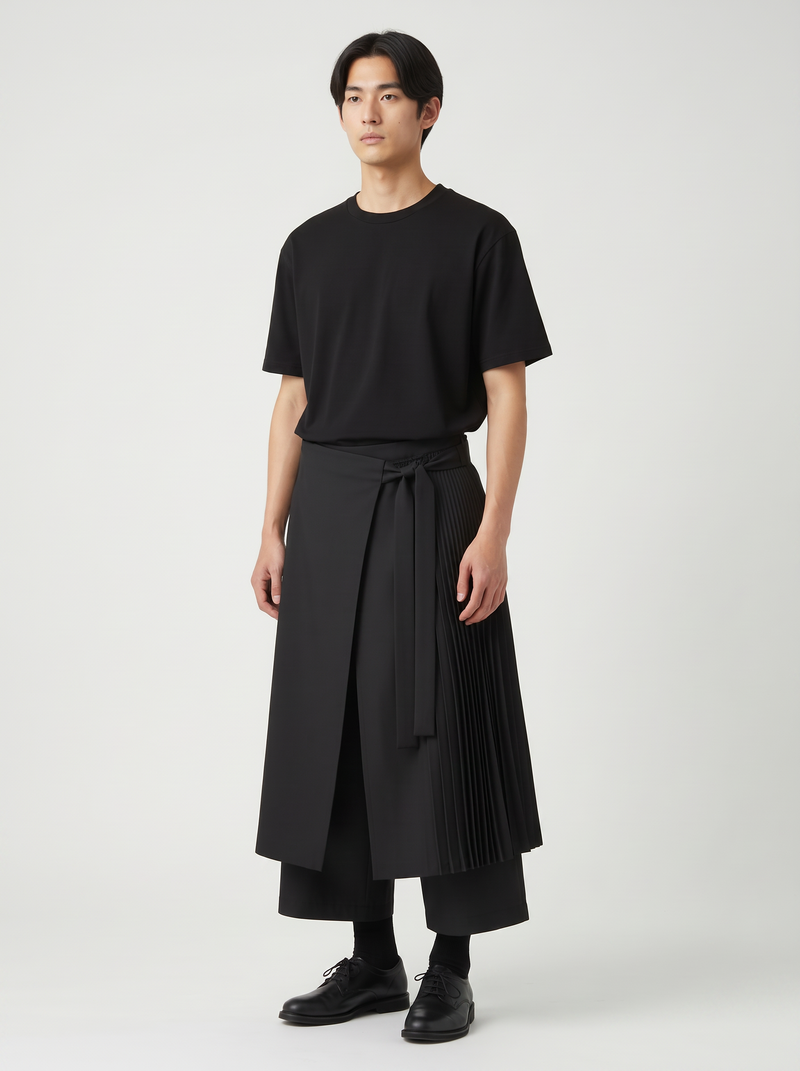
We only sell jinbei cut for men. With a wrap top that matters less than you might think, because Japanese wrap garments close left over right for everyone, so there is no men's side to the opening. What changes is the shoulder width and the length.
Start with the smallest size and compare the measurements on the product page with a loose top you already own. Expect the shoulder seam to drop a little and the top to sit lower on the hip than a women's cut would.
These are the jinbei sets we sell at Amaji, with the sizes each one comes in:
- Amaji's Seigaiha Wave Jinbei Set: $52.90, XS and S, Black Wave or Grey Wave. Seigaiha (青海波) means "blue sea waves", explained in our guide to Japanese patterns.
- Amaji's plain Jinbei Set: $54.90, XS, S and M, Black, Light Grey, Navy or Royal Blue.
- Amaji's Jinbei Kimono Set: $54.90, XS and S, Dark Grey, Green Jacquard, Grey Jacquard or Light Grey.
- Amaji's black Jinbei Set: $57.90, XS to XXL, black only, the widest size range of the five.
- Amaji's Tie-Front Jinbei Shirt and Trousers Set: $64.90 to $104.90, one size, so it sits loose on a smaller frame.

Our plain set is the quiet one in the range: it appeared in 1 of our last 80 orders over the past 90 days. For a woman it is still the easiest place to start, since it goes down to XS and comes in four colors.

Men's Japanese pajamas: jinbei, samue and robes
For men, the jinbei covers summer too. When the nights cool down, the long-sleeved alternative is a samue (作務衣, "work clothes"), the set Zen monks wear for temple chores. It has the same crossed front and side ties as a jinbei, with full-length sleeves and trousers usually gathered at the ankle.
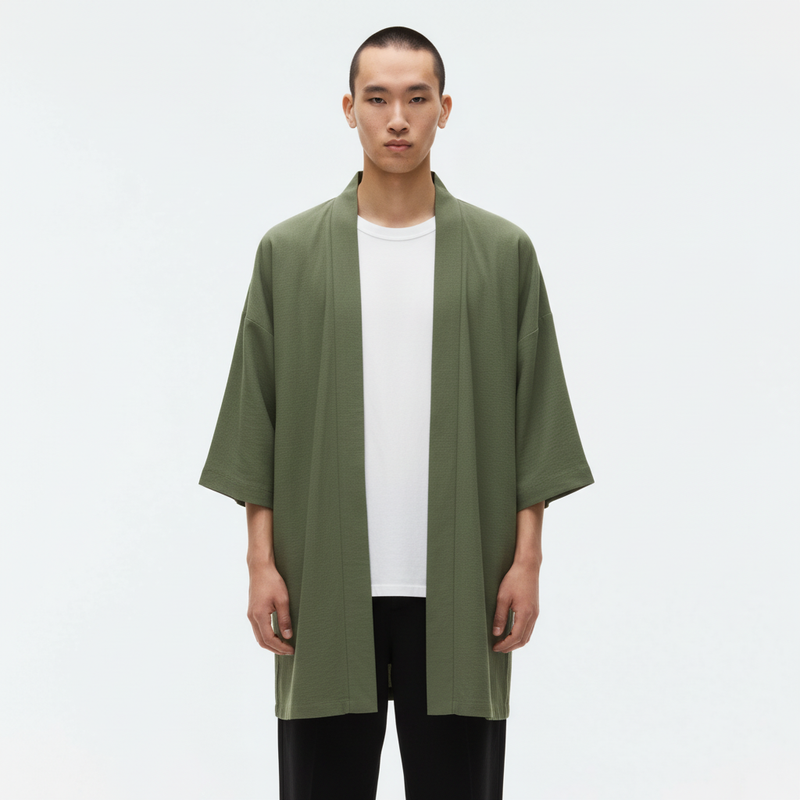
We sell samue as well, including Amaji's Cross-Tie Samue Set, and men's robes such as Amaji's Japanese Bathrobe, which fills the after-bath role a ryokan yukata plays. In winter, the Japanese home layer is a hanten (半纏), a short padded jacket worn over pajamas. Amaji's Padded Hanten Jacket does that job, and our guide to Japanese winter clothing covers the other cold-weather layers.
What a jinbei set costs
Specialist shops we checked in September 2026 priced a jinbei set at a median of $76.00, and a quarter of them sat at $59.99 or below. The sets we sell at Amaji run from $52.90 to $104.90, and four of the five cost $57.90 or less.
Be clear on what you are buying. Ours are affordable everyday pieces made in China. If you want a jinbei sewn in Japan, a Japanese maker is the better route.
Choosing for sleep or for lounging
Hot nights and slow mornings: a jinbei. Winter sleep: a gauze pajama set with a hanten on top. The ryokan feeling at home: a robe.
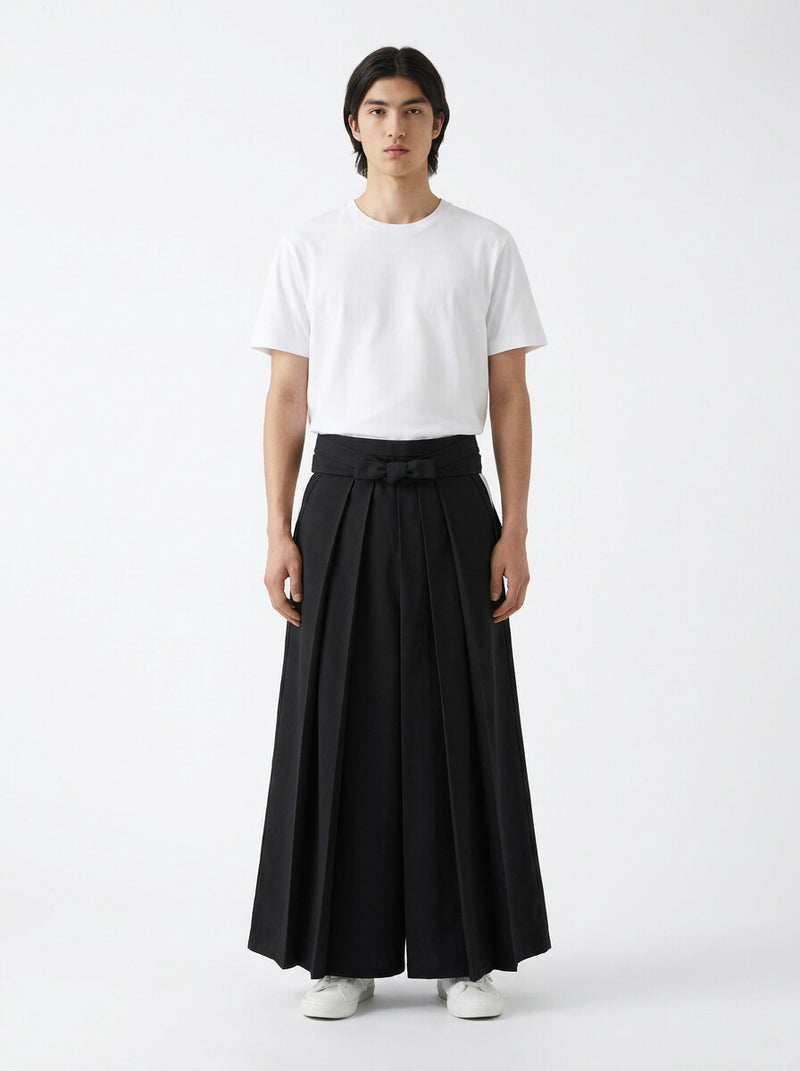
And if what you really want is a fitted women's set in a festival print, search Japanese shops for レディース甚平 (redīsu jinbei, "ladies' jinbei"). Ours are men's sets first. The one piece we do cut for women is a hakama, covered in our guide to hakama pants for women.
Written by the Amaji team, November 12, 2026. How we write our guides.