


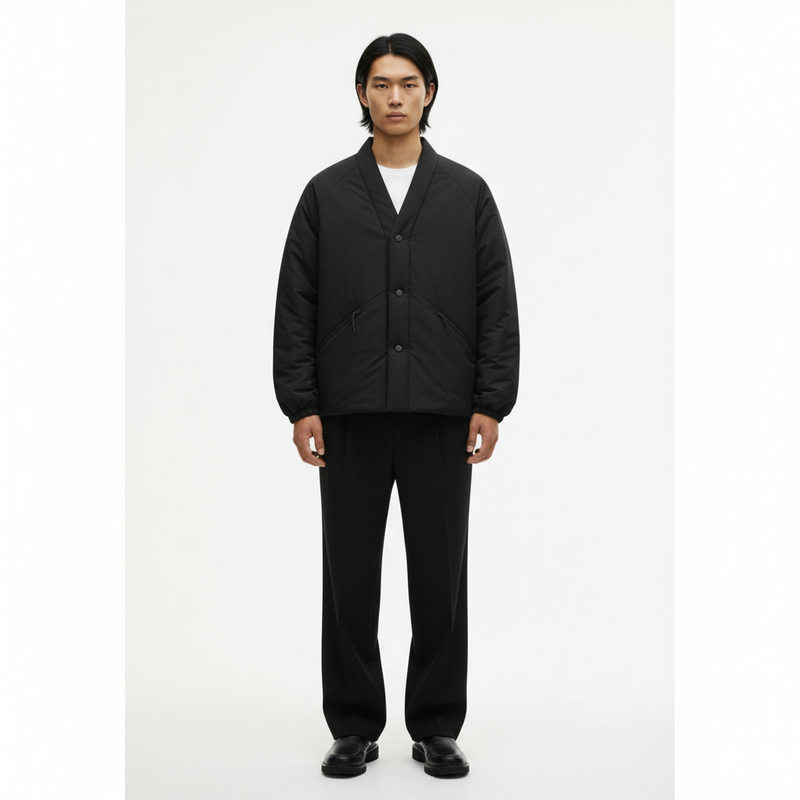
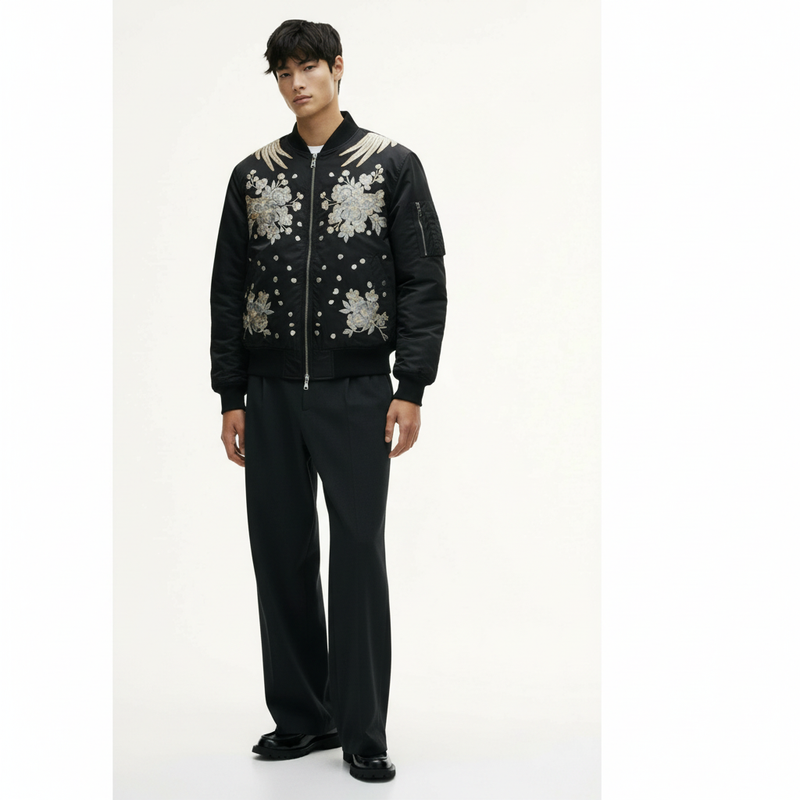



Short answer: a sukajan is a satin bomber jacket with heavy embroidery across the back, usually a tiger, dragon, eagle or koi. The name joins Yokosuka, the port city south of Tokyo, and "jumper": the first ones were embroidered as souvenirs for American sailors stationed there after the Second World War. See our sukajan jackets.

Where it came from
After the Second World War, American servicemen stationed in Japan wanted something to take home. Shops near the naval base at Yokosuka, on and around Dobuita Street, sold them jackets in shiny rayon and acetate satin, embroidered to order with tigers, dragons, eagles and maps of the places the wearer had served. The garment was a receipt for having been somewhere.
Much of the embroidery was done by workshops in Kiryu, a textile town north of Tokyo, on yokoburi machines that swing the needle from side to side. A skilled operator steers the cloth by hand, which is how a sukajan gets thread that stands up off the satin and shades from one colour into the next.
Why the embroidery is the point
Strip the embroidery off a sukajan and you have a bomber jacket. The shape is borrowed; the needlework is the garment. That is also why quality varies so widely on the second-hand market - the jacket underneath is often ordinary, and what you are paying for is thread count, density and whether the design was built for the body it sits on.
How to read one
- Raised thread. Good embroidery stands off the cloth. Flat, thin stitching is the first sign of a cheap one.
- Composition across seams. A design that runs over the shoulder onto a sleeve was planned. One that stops dead at a seam was not.
- Backing. Dense embroidery needs stabilising behind it or it puckers after a wash.
- Ribbing. Collar, cuffs and hem should recover their shape. Slack ribbing ages a jacket immediately.
Sukajan motifs and their meanings
Traditional subjects are drawn from Japanese iconography rather than chosen at random, and the pairings are conventional too.
| Motif | What it stands for |
|---|---|
| Tiger | Courage and protection. Paired with a dragon it stands for balance, the tiger ruling the land and the dragon the sky and water. |
| Dragon | Power, water and good fortune. Its long body suits the curve across the shoulders, which made it the classic back panel. |
| Eagle | The American emblem, added for the servicemen who bought the first jackets. |
| Koi | Perseverance, from the story of the carp that swims up a waterfall and becomes a dragon. |
| Phoenix (hoo) | Renewal and good fortune, a bird long linked in Japan with peace and the imperial court. |
| Nine-tailed fox | The kitsune of folklore, which gains a tail with age and has nine at the height of its power. Cunning and longevity. |
| Raijin | The thunder god, drumming up storms inside a ring of taiko drums. |
| Cherry blossom | Something beautiful and brief. It often runs down a sleeve beside a fiercer animal on the back. |
| Maps | Japan, Korea or wherever the wearer had served, embroidered as a record of the tour. |
A jacket that puts a tiger on the back and blossom on the sleeve is making a fairly legible statement, whether or not the wearer intended it. For the patterns woven into Japanese cloth rather than stitched on, see traditional Japanese patterns.
Reversible, and why so many are
A large share of sukajan are built reversible, usually with a quieter face on one side. One side was for wearing home and showing off, the other for wearing when you did not want to be looked at. If you buy a reversible one, check that the ribbing and the lining are finished to the same standard on both faces, because on cheap examples only one side is really made.
Caring for heavy embroidery
The embroidery is the expensive part and the part that fails first. Wash cold and inside out, never wring the panel, and dry flat rather than hanging - a soaked embroidered back is heavy enough to pull the shoulders out of shape on a hanger. Avoid ironing the stitching directly; press from the reverse with a cloth between if you must press at all.
What we stock
Every piece linked in this guide is one we sell at Amaji.
| Jacket | Motif | Sizes | Price |
|---|---|---|---|
| Raijin Souvenir Jacket | The thunder god in his ring of drums. Black, or black padded for winter | XS to XL | $79.90 |
| Phoenix Sukajan Bomber Jacket | A phoenix across the back in pink thread; gold wings, red wings or a floral front. Unlined or padded | XXS to XL | $74.90 |
| Nine Tailed Fox Sukajan Bomber Jacket | The fox across the back in raised thread, cherry blossom over the chest and down one sleeve. Blue | XS to XL | $129.00 |
| Embroidered Dragon Bomber Jacket | A dragon in gold and silver thread through clouds and blossom, more down each sleeve. Red or khaki | XS to XXL | $129.90 |
| Reversible Phoenix Sukajan Souvenir Jacket | A phoenix in silver and gold, a tiger on the chest. Reverses to plain black satin | XS to XL | $219.90 |
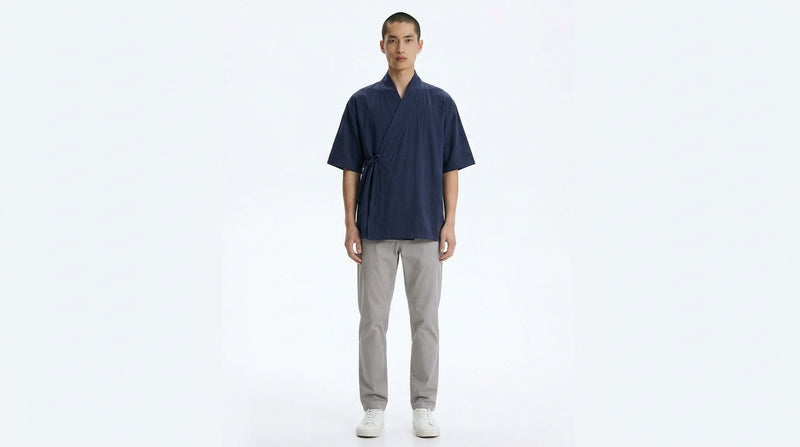
All five are in sukajan jackets, and compared with other makers in our guide to the best sukajan jackets. For the quieter end of the same wardrobe, the Japanese jackets collection covers noragi and haori cuts, which carry their detail in the cloth rather than on it.
How to wear one without it wearing you
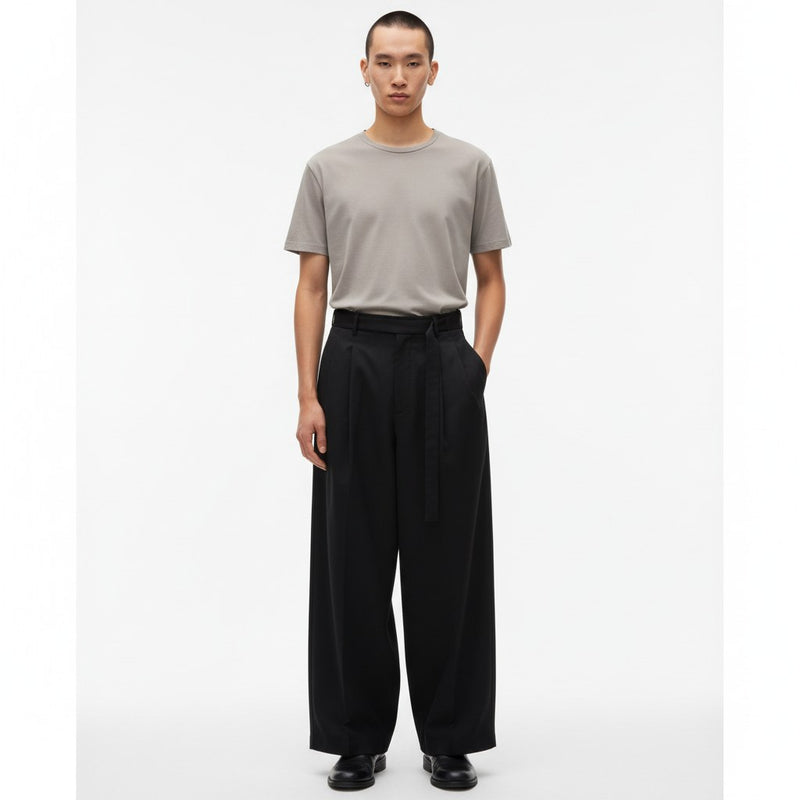
A sukajan is the loudest thing in any outfit it appears in, so everything else should get quieter. Plain trousers, plain shoes, nothing else competing for attention at the back. Treat it the way you would a printed silk shirt: one statement, then stop.
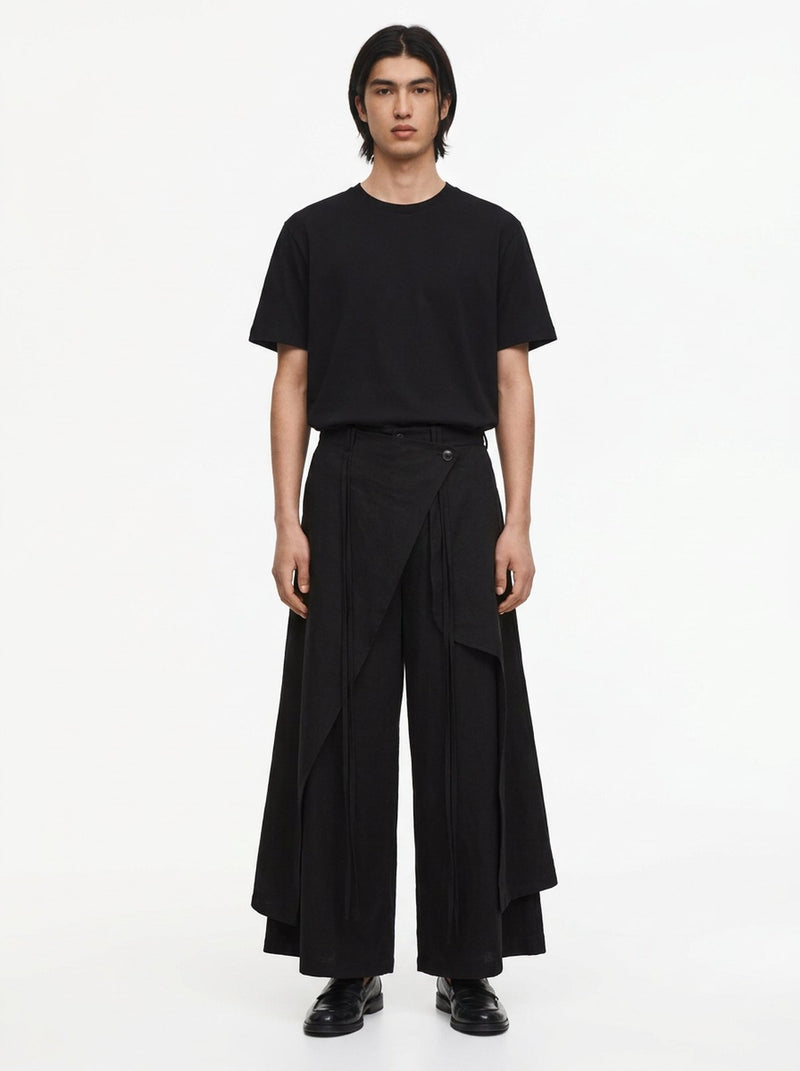
That rule extends to the trouser. A dropped-rise cut underneath gives the jacket a wide base to sit on without adding a second point of interest - the harem and sarouel cuts work well for exactly that reason. If you want the Japanese line without the noise, the haori carries its detail in the cloth instead of on it.
For all sixteen garments in one place, with their Japanese names, see traditional Japanese clothing.