




Short answer: jika-tabi (地下足袋) are Japanese split-toe work boots: a cloth upper, a thin rubber sole and a row of metal clasps up the back, with the big toe in its own pocket. The name means tabi worn straight on the ground. Builders, gardeners and festival crews in Japan still wear them, because the thin sole lets you feel the surface and grip a beam or a ladder with your toes. They are worn over split-toe tabi socks.
We sell tabi socks, not jika-tabi, so this guide comes from a shop that makes the sock, not the boot. It says where to look for the boots themselves.
Where jika-tabi come from
Tabi began as cloth socks with a split toe, worn with thonged sandals. Labourers then sewed tougher soles onto them so they could work without sandals at all. Rubber soles arrived in the 1920s, and the rubber-soled jika-tabi became the standard footwear of Japanese building sites and farms. The company that grew into Bridgestone started out making them.
How a jika-tabi is built
| Part | What it is |
|---|---|
| Split toe | The big toe sits apart from the other four, which gives balance and grip on uneven ground. |
| Upper | Cotton canvas or denim, close-fitting, with no laces. |
| Kohaze | Small metal clasps up the back of the ankle that hook onto cord loops. The count tells you the height: low jika-tabi have around five, the common work height has ten to twelve, and the tallest reach the calf. |
| Sole | Thin, flexible rubber, often with a tread pattern. Some have a thicker cushioned sole for long days on hard ground. |
Jika-tabi, tabi socks and tabi boots
Three different things share the word tabi, and shops mix them up.
| Tabi socks | Jika-tabi | Fashion tabi boots | |
|---|---|---|---|
| What it is | A knitted sock with a split toe | A split-toe work boot with a rubber sole | A designer shoe or boot with a split toe |
| Worn | With sandals, inside jika-tabi, at home | Outdoors: building sites, gardens, festivals | Anywhere, as fashion |
| Closes with | Nothing, it is a sock | Kohaze clasps at the back | Zip, laces or slip-on |
| Typical price | $5 to $30 | About $40 to $120 | Several hundred dollars |
The fashion tabi boot, made famous by Maison Margiela, borrows the split toe from the jika-tabi. The work boot is the original.
How to size and wear jika-tabi
- Size in centimetres. Jika-tabi are sold by foot length in cm, and they fit close, like a glove. Measure your foot from heel to longest toe and choose that size, or half a size up if you wear a thick sock.
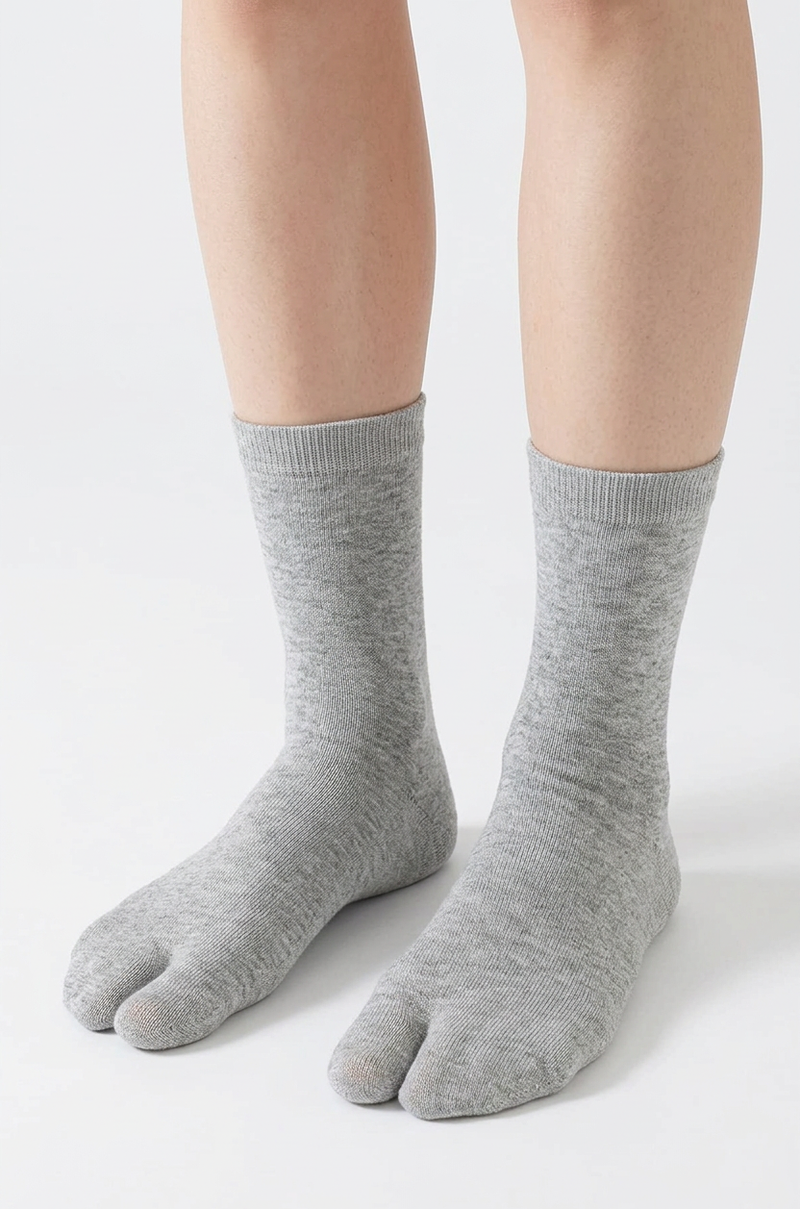
- Wear split-toe socks. A normal sock bunches at the split. A tabi sock lets the big toe slide into its pocket. Our plain cotton tabi socks come in six colours and fit EU shoe sizes 39 to 46, and the pattern tabi socks add a print at the ankle.
- Fasten from the bottom. Hook the lowest kohaze first and work up, pulling the cloth snug as you go.
- Expect to feel the ground. The thin sole is the point. Give your feet a few days to get used to it, the way barefoot runners do.
Who wears them today
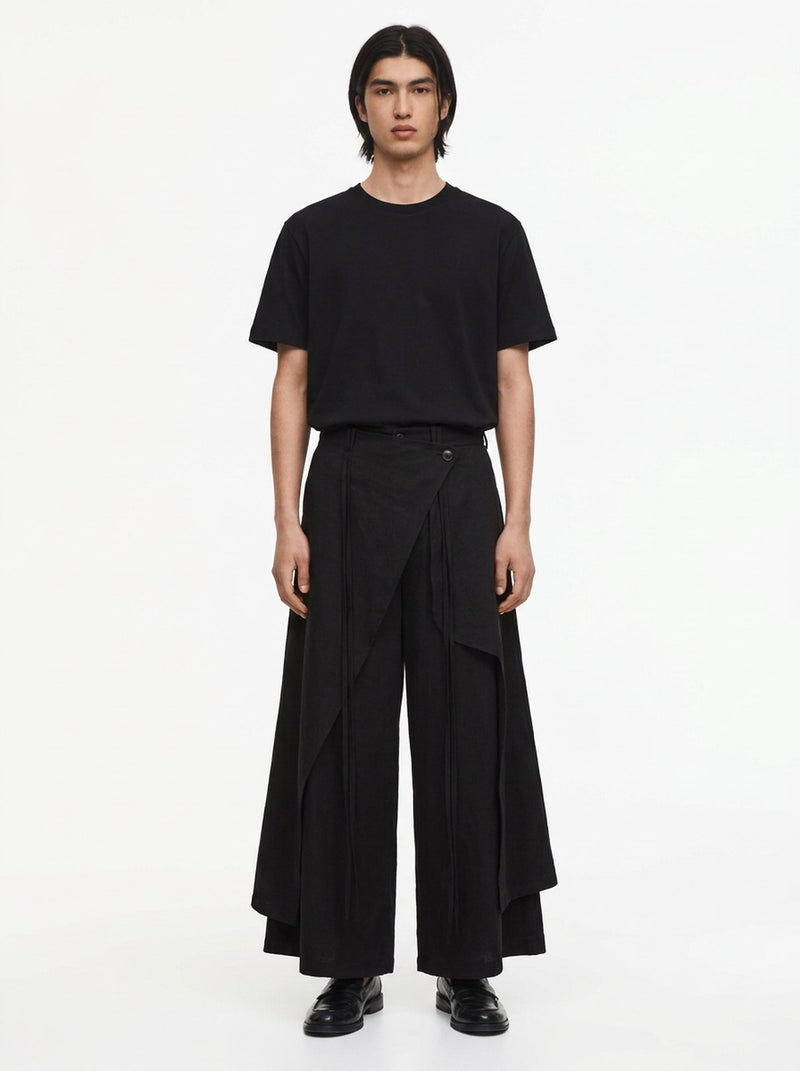
Tobi, the scaffold and steel workers whose wide trousers gave their name to tobi pants, are the classic wearers: a jika-tabi lets them feel a beam underfoot. Gardeners and farmers wear them in wet ground. At summer festivals, the crews who carry portable shrines wear them with happi coats. Outside Japan they turn up with barefoot runners, martial artists who train outdoors, and people who like the look with wide hakama pants.
Where to buy jika-tabi
Look for a Japanese workwear or martial arts supplier that ships abroad and lists sizes in centimetres. Specialists such as Japanese Workwear, Japan Zone and Yamato Budogu appeared on the first page of US search results for jika-tabi in October 2026. Japanese makers sell work grades with cushioned soles and festival grades with thinner ones. Whichever pair you buy, wear it with split-toe socks.
For the sock that goes inside, see our tabi socks, or compare sock shops and prices in where to buy tabi socks. The history of the split toe itself is in what are tabi socks.