








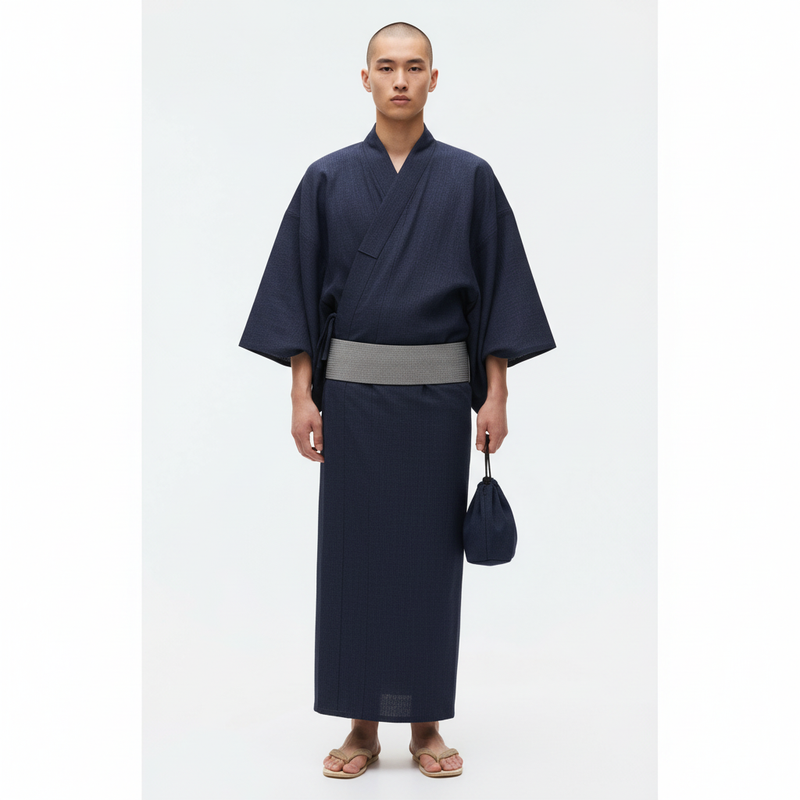

A yukata (浴衣), the light unlined summer kimono, goes on in one order: arms through the sleeves, right panel against your body, left panel crossed over it, then an obi (帯), a sash, tied around the middle. Men tie the obi low on the hips and women tie it at the waist. Either way the hem should land at the ankle. If you want the festival look without the wrapping, the two-piece sets in our jinbei collection close with ties instead.
How to wear a yukata, step by step
- Start with what goes underneath. The yukata began as a bath robe and has no proper underlayer. Men usually wear shorts and a V-neck undershirt that stays hidden at the collar. Women often wear a thin slip, which also stops the yukata clinging in the heat.
- Put your arms through the sleeves and line the back seam up with your spine so both sides hang evenly.
- Set the hem at your ankle bone. A man's yukata is cut to length, so there is little to adjust. A woman's is cut longer, and the spare fabric gets folded at the hip in step 5.
- Wrap right, then left. Bring the right panel across to your left hip, then lay the left panel over it so its edge runs toward your right hip.
- Tie a waist cord. A koshi himo (腰紐), a thin waist cord, holds the wrap while you finish. Men tie it at hip level. Women tie it at the hip bones, smooth the extra length above it into a neat fold called ohashori (お端折り), and hold that with a second cord under the bust.
- Fix the collar. Men keep the back of the collar against the neck. Women ease it a little away from the nape, which is how a woman's yukata is meant to sit.
- Tie the obi over the cord and turn the knot to the back. Our yukata obi guide walks through the knots.
Left over right, every time
The left panel goes on top for men and women alike. In Japanese this is migi mae (右前), “right front”, which trips people up: it means the right panel goes on first, closest to the body. Crossing it the other way is how the dead are dressed for a funeral, so it is the one detail people in Japan will notice.
Two quick checks. Your right hand should slide easily into the front of the yukata at the chest. And to anyone facing you, the collar reads as a lowercase y.
How to wear yukata for men
A man's yukata looks right when everything sits lower than you expect. The obi wraps around the hips, under the belly, a little lower in front than at the back. Tie it at the navel and the whole thing starts to look like a bathrobe.
Most men use a kaku obi (角帯), a stiff narrow belt, tied flat at the back in a knot called kai no kuchi (貝の口), “clam's mouth”. The softer choice is a heko obi (兵児帯), a gathered sash tied in a loose bow, traditionally a boy's sash and easier on a first try. We sell a kaku obi at Amaji for exactly this.
With your arms down, the sleeve should reach about the wrist bone.
Men and women: what changes
| Men | Women | |
|---|---|---|
| Obi position | Low on the hips | Higher, from the waist to under the bust |
| Obi type | Kaku obi or heko obi | Hanhaba obi (半幅帯), a half-width obi |
| Usual knot | Kai no kuchi, flat at the back | Bunko musubi (文庫結び), a box-shaped bow at the back |
| Length | Cut to length, no fold | Extra length folded at the hip (ohashori) |
| Back of the collar | Against the neck | Eased away from the nape |
| Which side on top | Left over right | Left over right |
Common mistakes with a Japanese yukata
- Right panel on top. Fix it before anything else.
- A man's obi at the navel. Drop it to the hips.
- An undershirt showing at the V. Round necklines peek out, so wear a V-neck or nothing.
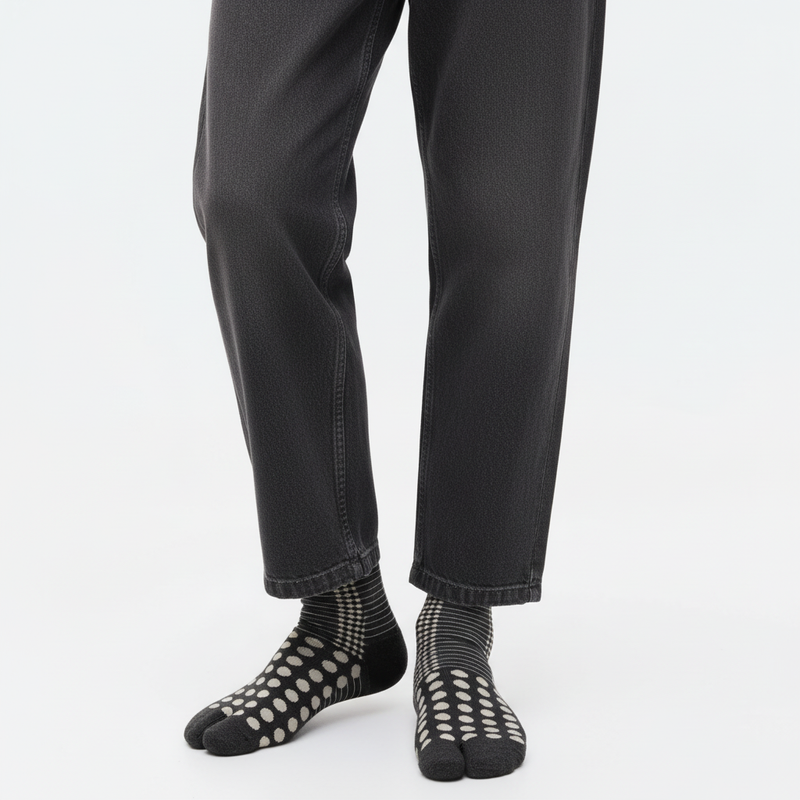
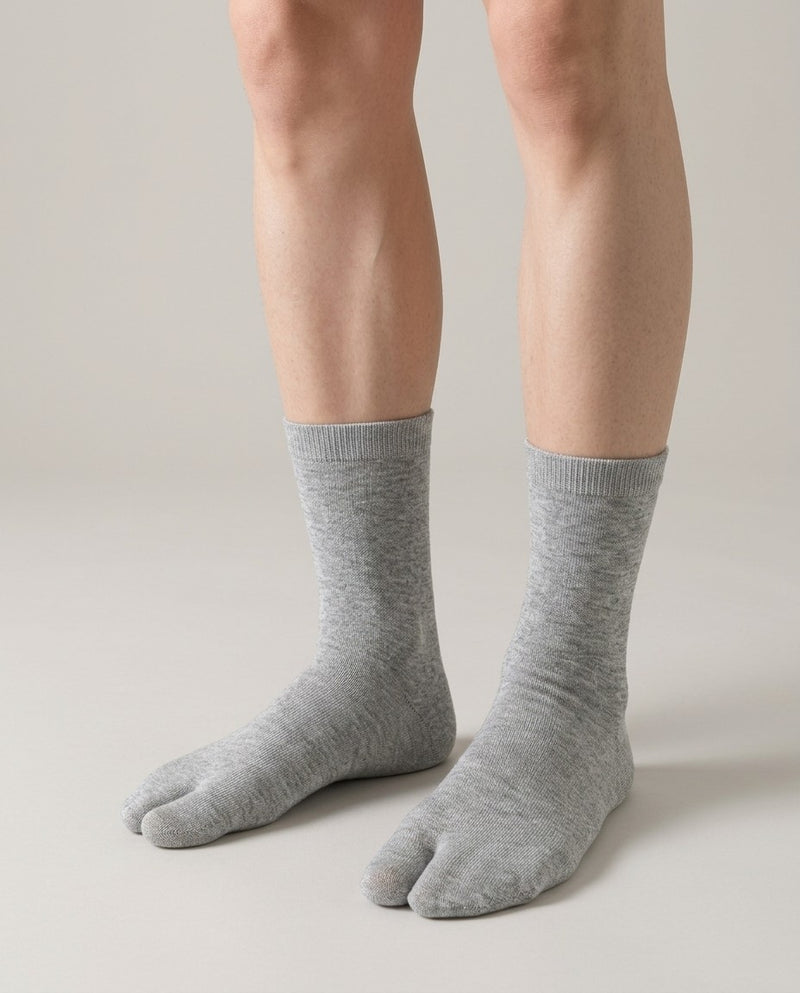
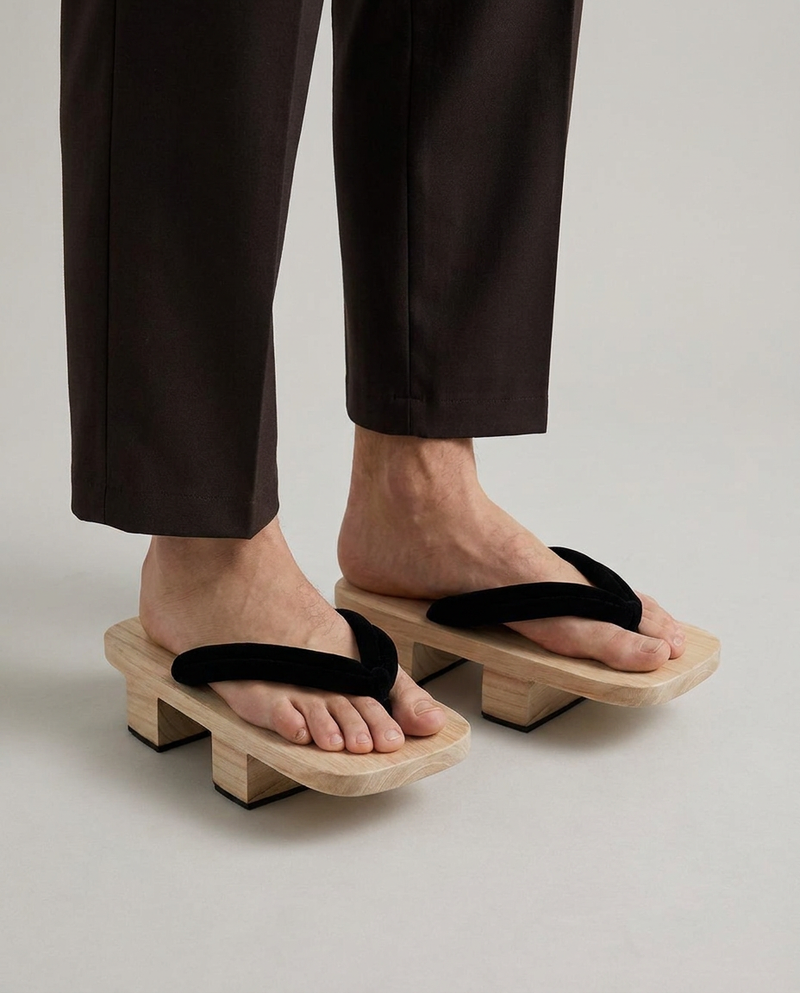
- Socks with sandals. A yukata is worn barefoot in geta (下駄), wooden sandals, or flat zori (草履), thong sandals. Tabi socks go with formal kimono. We carry both kinds of sandal at Amaji.
- Long strides. The front panels open if you walk as you would in jeans. Shorter steps keep the wrap closed.
How to wear a Japanese yukata at a ryokan
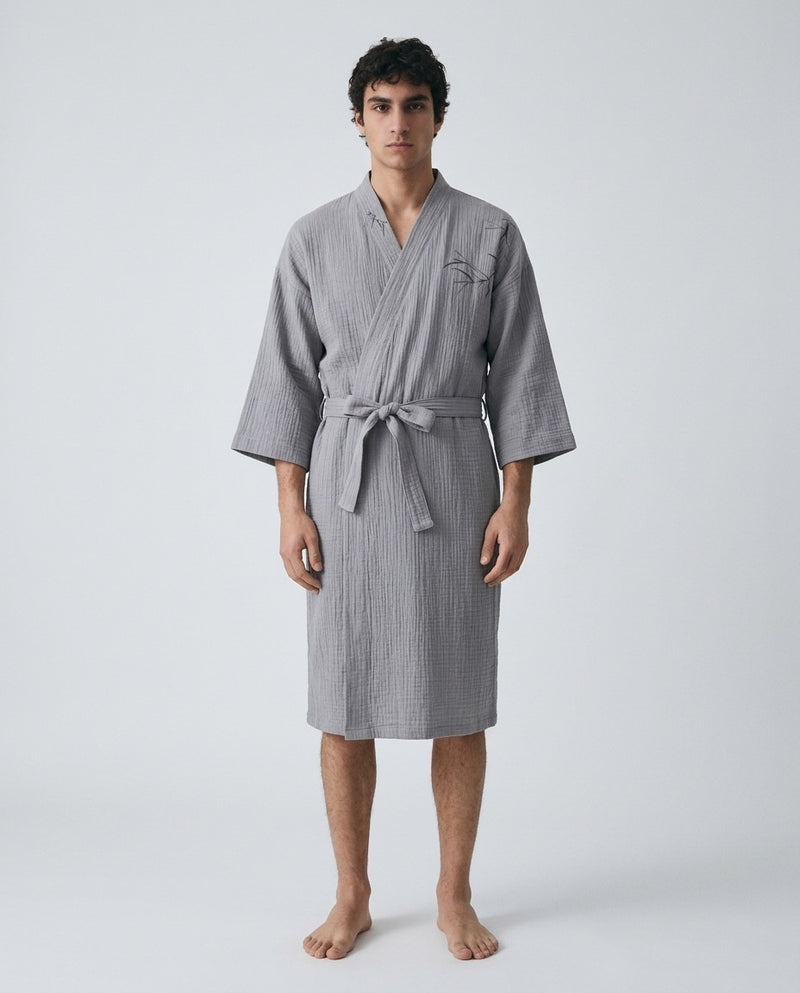
At a ryokan (旅館), a traditional inn, the yukata in your room goes on the same way, with the thin obi at the hips for men and at the waist for women. Inns usually keep several lengths, so ask for a longer one if the hem stops mid-shin. In cooler months a padded jacket, a tanzen (丹前), often goes on top.
When a jinbei is the easier choice
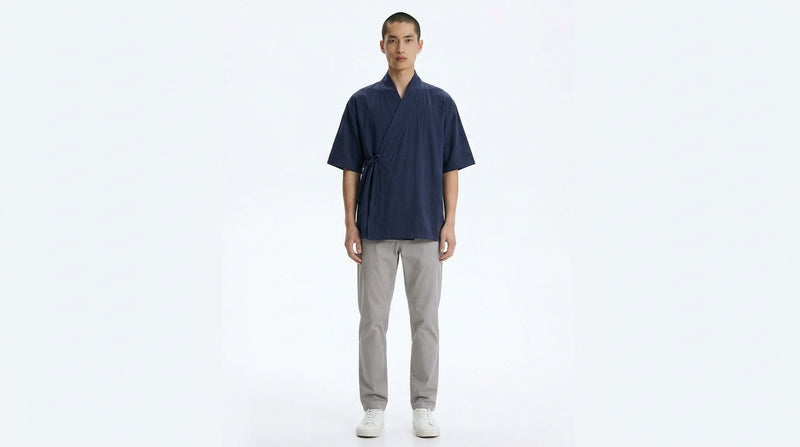
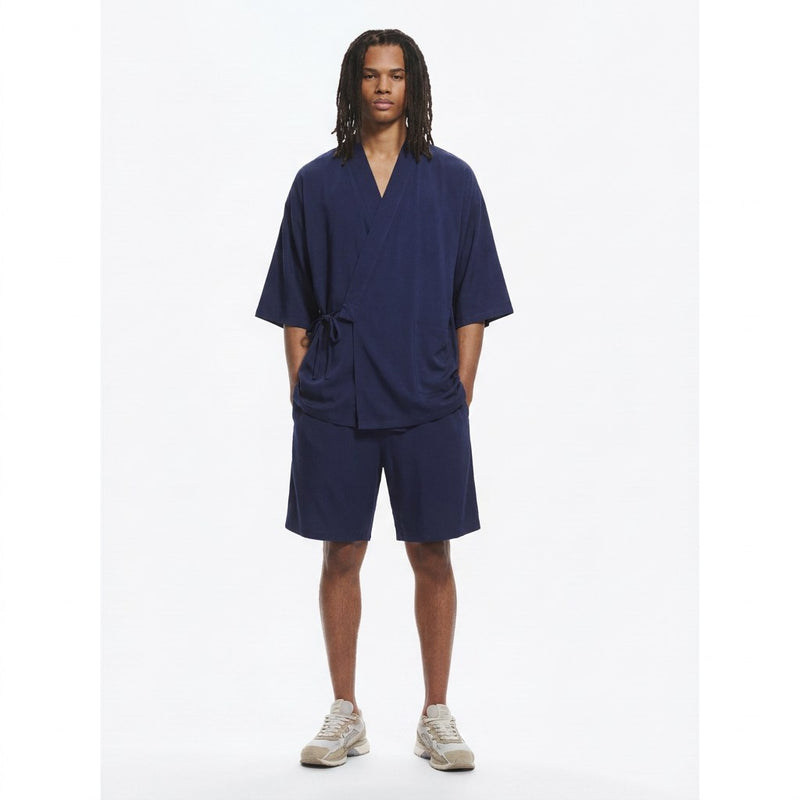
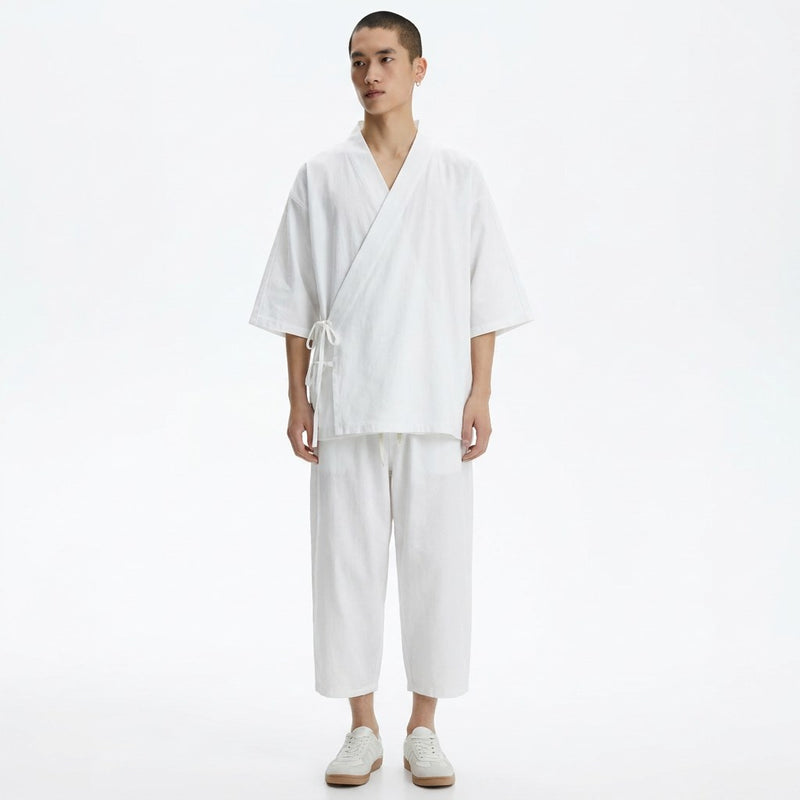
A jinbei (甚平), a two-piece summer set of a wrap top with shorts or trousers, follows the same left over right rule but closes with ties, so there is no obi to manage. It is also the cheaper route: specialist shops priced jinbei at a median of $76.00 in September 2026, against $115.00 for yukata.

Amaji's Tie-Front Jinbei Shirt and Trousers Set is one size and runs $64.90 to $104.90. Amaji's four-color Jinbei Set is $54.90 in XS, S and M, in black, light grey, navy and royal blue. Jinbei are a small part of our sales: that four-color set was in 1 of our last 80 orders over 90 days.

We also stock a few men's yukata at Amaji. Like everything we sell, they are affordable everyday pieces made in China, not made-in-Japan yukata. We do not sell women's yukata, so for those the table above is your guide. For how the two garments differ, see yukata vs kimono.
Written by the Amaji team, November 12, 2026. How we write our guides.