


















Short answer: a men's kimono is a straight, ankle-length robe that crosses left over right and is held by a narrow obi at the hip. It is plainer than a woman's kimono, in muted colours, with no tuck at the waist. Men wear one for weddings, tea, festivals and at home, and a kimono jacket gives the same shape for everyday wear.
We sell kimono jackets, a kimono shirt, haori, jinbei and samue. We do not sell full-length kimono. This guide covers the real garment first, then the pieces that bring its shape into ordinary clothes.
For the whole wardrobe, from hakama to tobi pants, see Japanese clothing for men.
What makes a kimono a men's kimono
The pattern is the same rectangle construction for everyone. The differences are in length, sleeve and colour.
- Length. A man's kimono is made to his height and worn at full length. A woman's is longer and the extra is folded at the waist, a tuck called ohashori. Men have no tuck.
- Sleeve. Men's sleeves are sewn to the body along most of their depth, so there is no open slit under the arm. They hang shorter than women's sleeves.
- Obi. Men tie a narrow belt low on the hips, below the belly, not at the waist. Women tie a wide obi high.
- Colour. Navy, black, grey, brown and deep green. Pattern, if any, is small or woven in.
The meaning behind each motif, from seigaiha waves to asanoha hemp leaves, is in our guide to traditional Japanese patterns.
Every kimono closes left over right, for men and women alike. Right over left is how the dead are dressed, and it is the one mistake worth never making.
The types of men's kimono
Kimono is also the family name. Several garments in it are what men actually wear today.
| Garment | What it is | When it is worn |
|---|---|---|
| Montsuki | Black silk kimono with five family crests, worn with haori and striped hakama | Weddings, the most formal events |
| Awase | Lined kimono in silk, wool or cotton | October to May |
| Hitoe | Unlined kimono | June and September |
| Yukata | Unlined cotton kimono worn without an under-layer | Summer festivals, inns, home |
| Jinbei | Short tie-front top with shorts or trousers | Summer at home and at festivals |
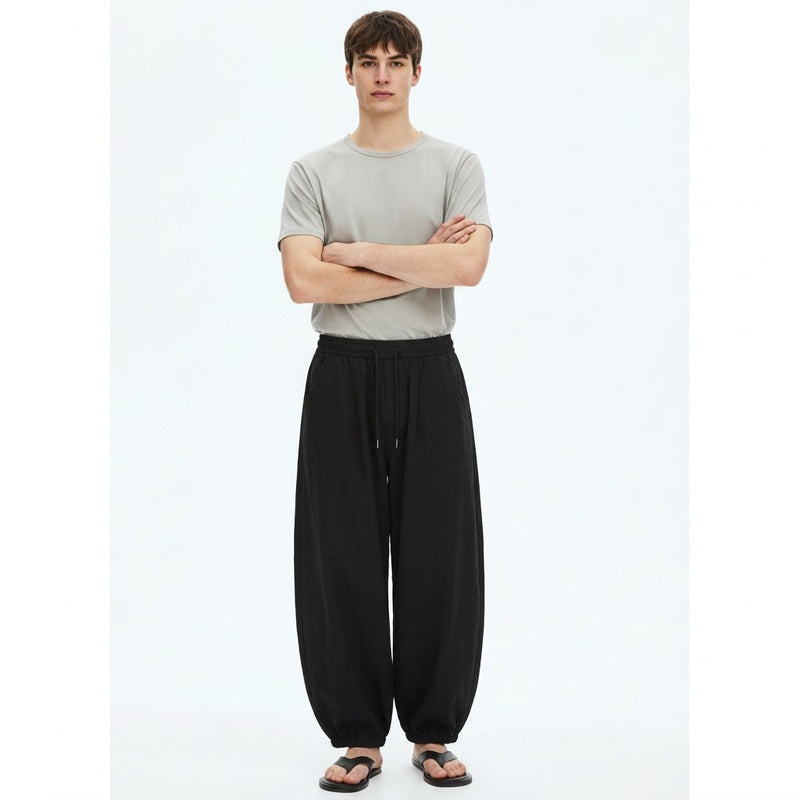
| Samue | Crossover jacket and loose trousers, the monks' work set | Work, loungewear |
| Haori | Hip-length jacket worn open over a kimono | Over any kimono, now over anything |
The yukata vs kimono guide explains the lining difference in detail. The rest of the family, with the kanji for each, is in our traditional Japanese clothing glossary.
How a man wears a kimono
- Put on the under-layer, a nagajuban, crossed left over right. Its collar should show a finger's width at the neck.
- Put on the kimono. Pull the back seam to your spine, then cross the right panel under and the left panel over.
- Set the hem at the ankle bone. There is no tuck, so the length has to be right before you tie.
- Tie a thin cord at the hip to hold it, then wrap the obi over it, low on the hips.
- Tie the obi at the back, slightly off centre. The stiff kaku obi takes a flat knot called kai no kuchi. The soft heko obi is simply bowed.
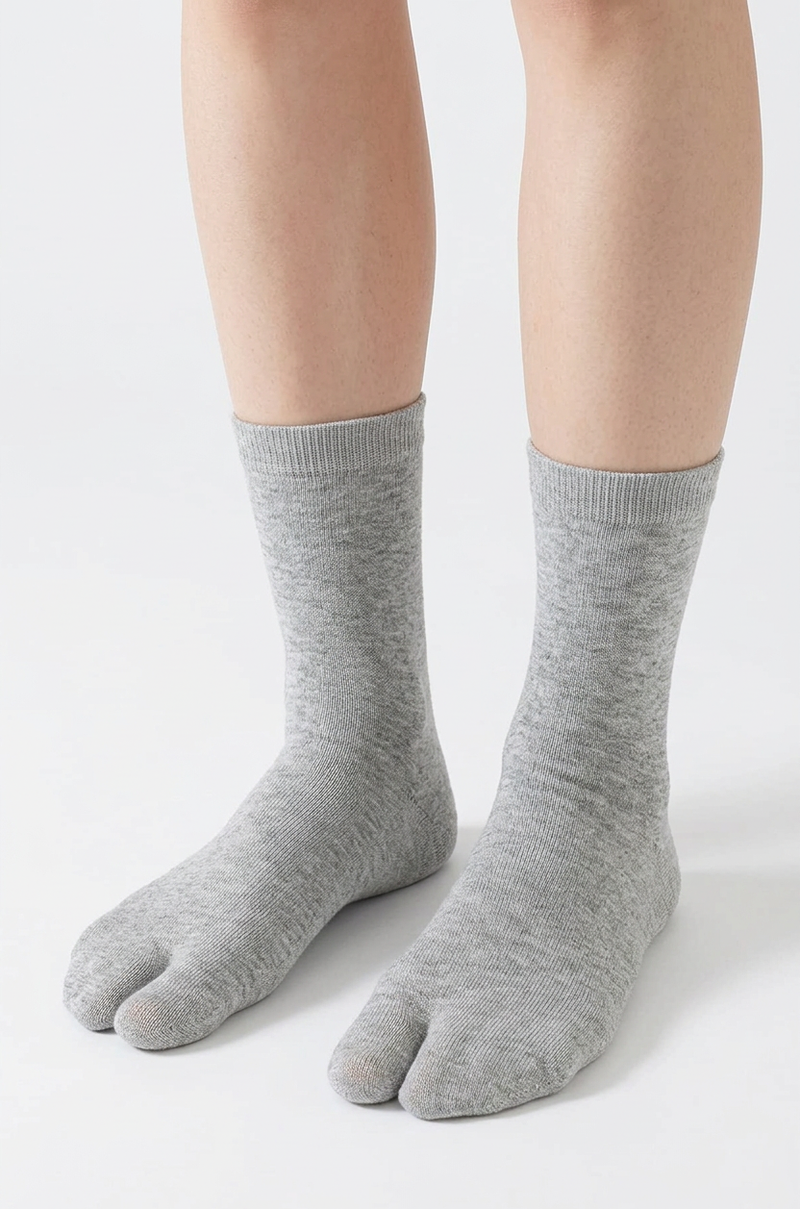
- Add tabi socks and zori for formal wear, or bare feet and geta with a yukata.
On the formal montsuki the five white family crests sit on the back, the sleeves and the chest. What those crests are is in our guide to kamon, the Japanese family crest.
The formal outfit adds hakama pants over the kimono and a haori on top. Our samurai pants guide shows how the hakama cords tie.
Do men wear kimonos today?
Yes, but mostly for occasions. Grooms wear the black crested montsuki. Men wear yukata to summer fireworks and festivals, and at hot-spring inns, where one is laid out in the room. Tea ceremony, traditional theatre and martial arts keep the kimono and hakama in daily use.
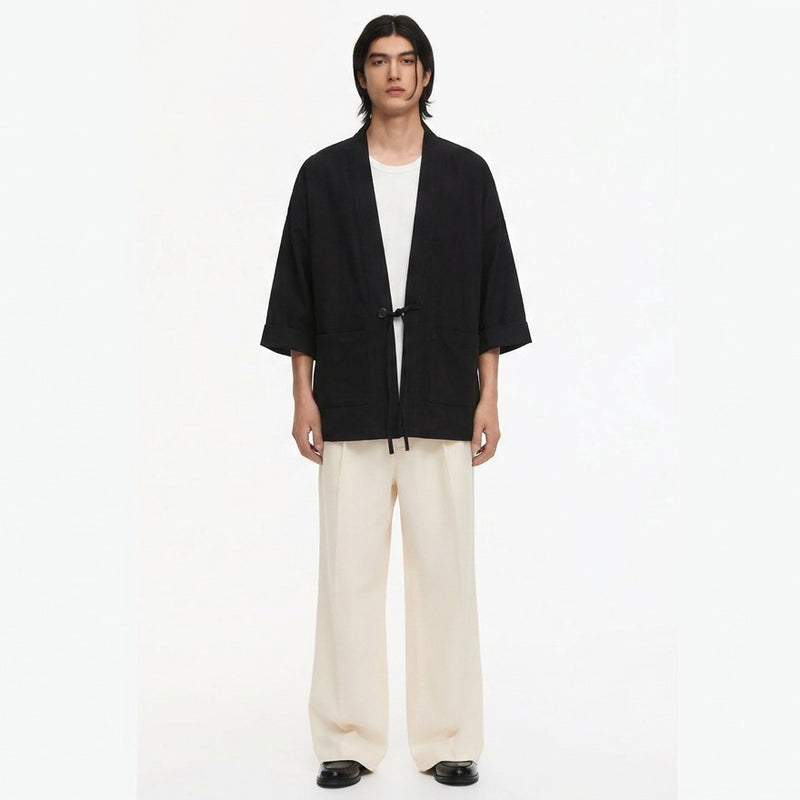
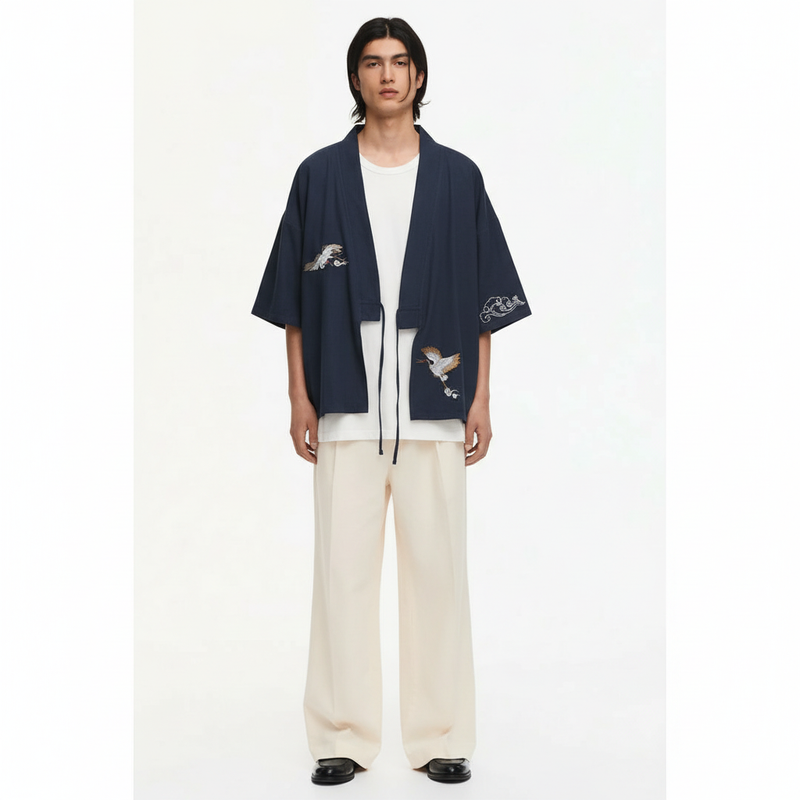
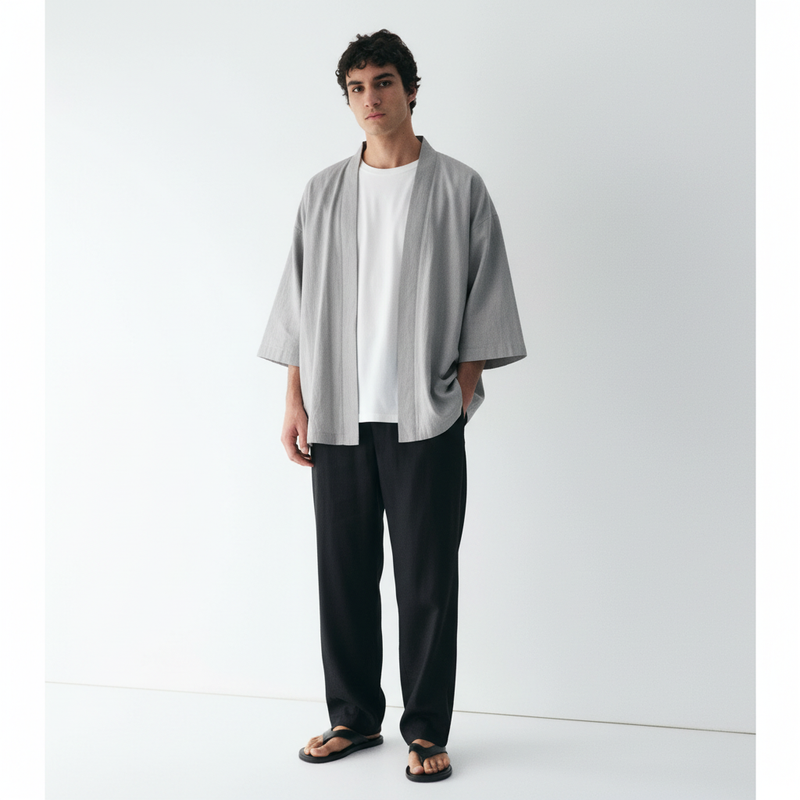
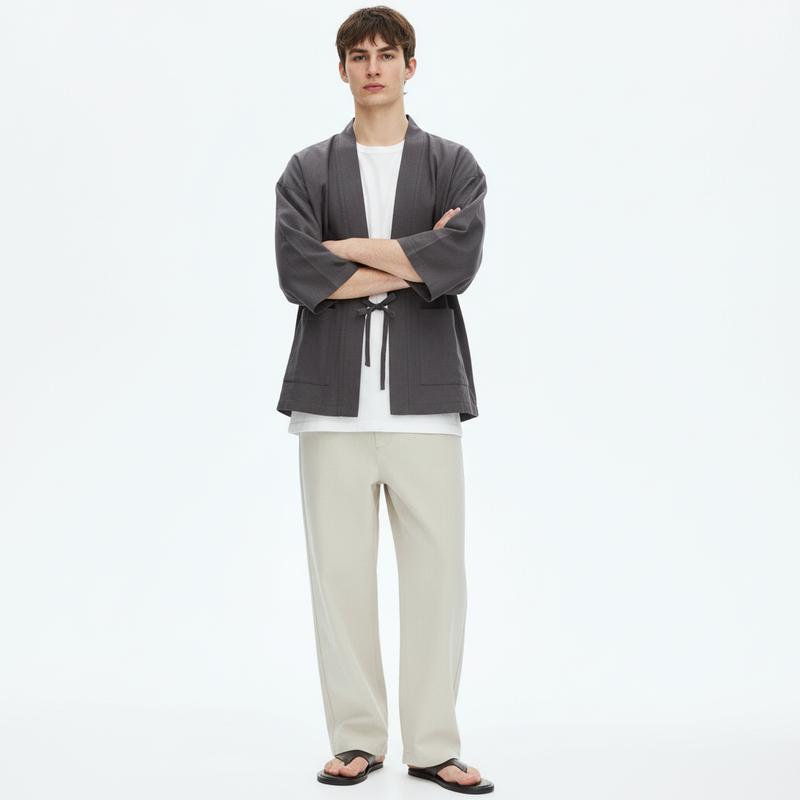
At home, the jinbei and the samue do the everyday job. On the street, the kimono shows up as its parts. A haori over a tee, a kimono jacket over jeans, or wide hakama pants with a plain top.
What a men's kimono costs
We checked 837 men's and unisex listings in 15 online Japanese clothing stores on 29 September 2026. The median yukata cost $115, the cheapest real kimono for most men. The median haori was $47.99 and the median kimono jacket $47.95. A silk montsuki set costs several hundred dollars and more, often rented rather than bought. The full figures are in our Japanese clothing price survey.
Kimono-style pieces for everyday wear
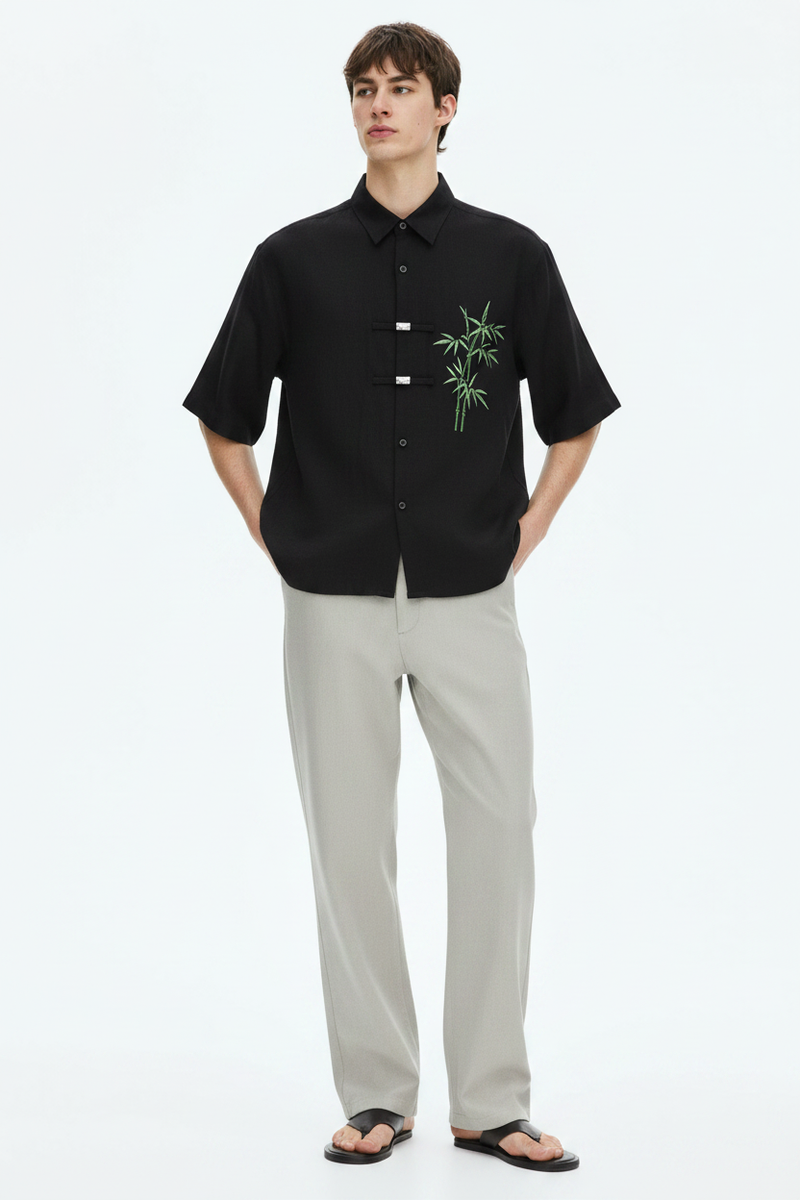
If you want the shape without the ceremony, these carry the kimono's straight body and crossed front into normal clothes.
| Piece | What it keeps from the kimono | Our price |
|---|---|---|
| Cotton Kimono Jacket | Straight body, wide sleeves, open front | $19.90 |
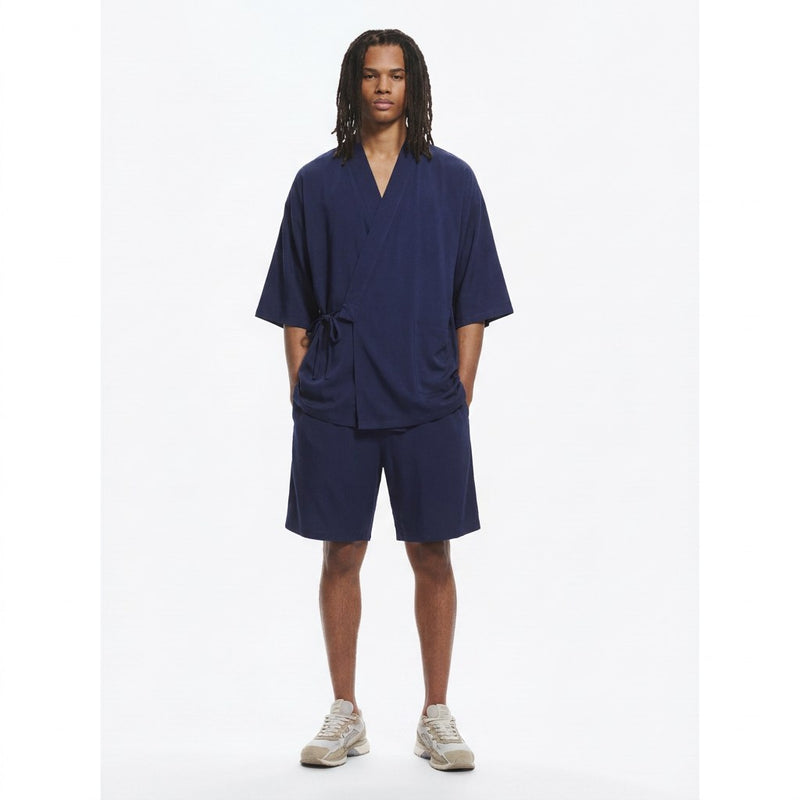
| Cross-Collar Kimono Shirt | The crossed front, tied at the waist | $39.90 |
| Open-Front Cotton Haori Jacket | The haori, cut to hang open | $19.90 |
| Tie-Front Jinbei Set | Kimono collar and ties, summer weight | $39.90 to $79.90 |
| Wrap-Front Samue | Crossover top with loose trousers | $39.90 to $89.90 |
All our kimono-cut jackets are in men's kimono jackets and haori jackets. How to style one without it reading as a robe is in how to wear a men's kimono jacket. Finish with tabi socks.
How to choose
Buy a yukata if you want a real kimono for summer, a festival or the house. Buy a lined kimono from a Japanese specialist if you need one for a wedding or tea, and consider renting the formal set. Buy a kimono jacket or haori if you want to wear the shape every week. It goes over a tee and trousers and needs no obi.