

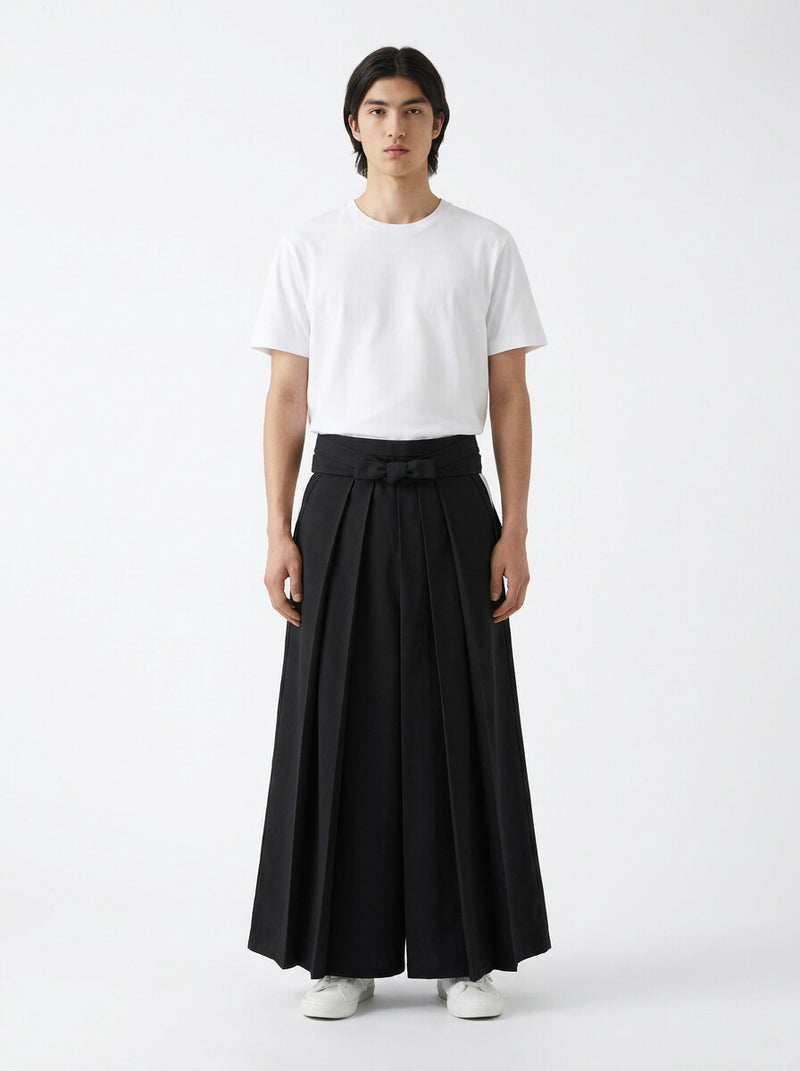

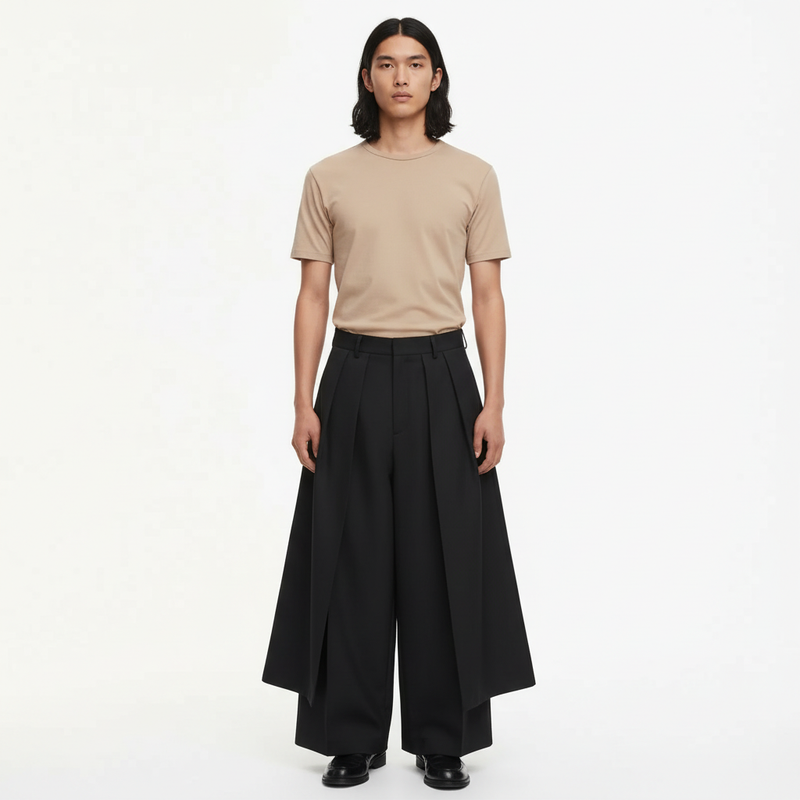
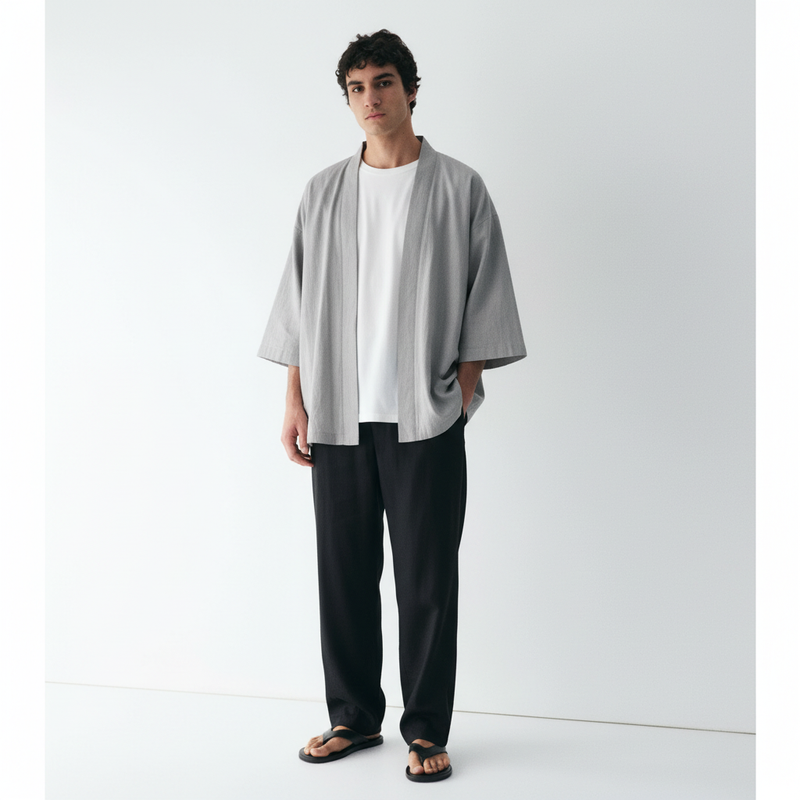
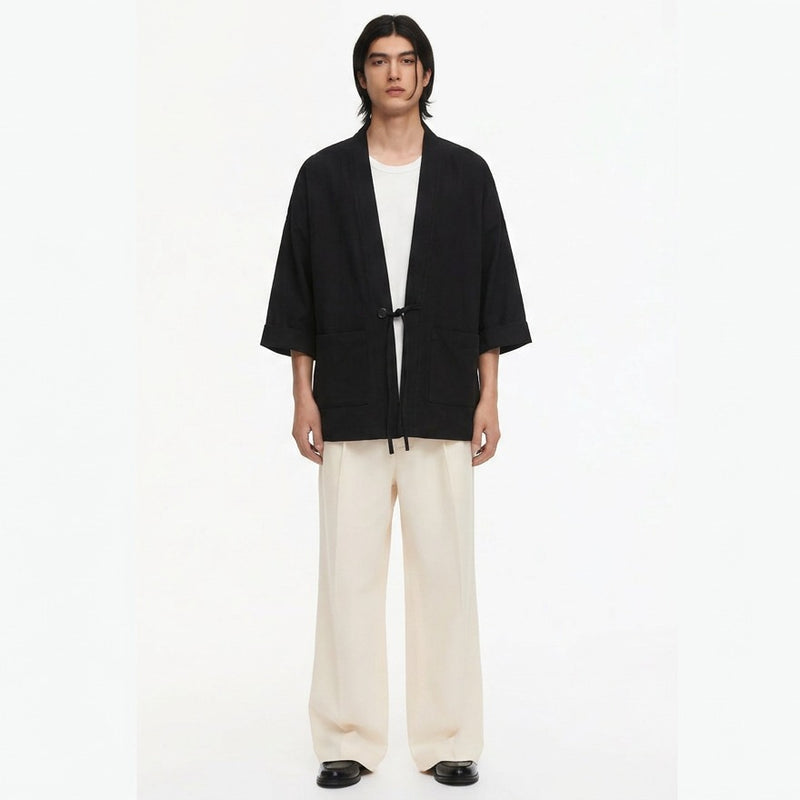
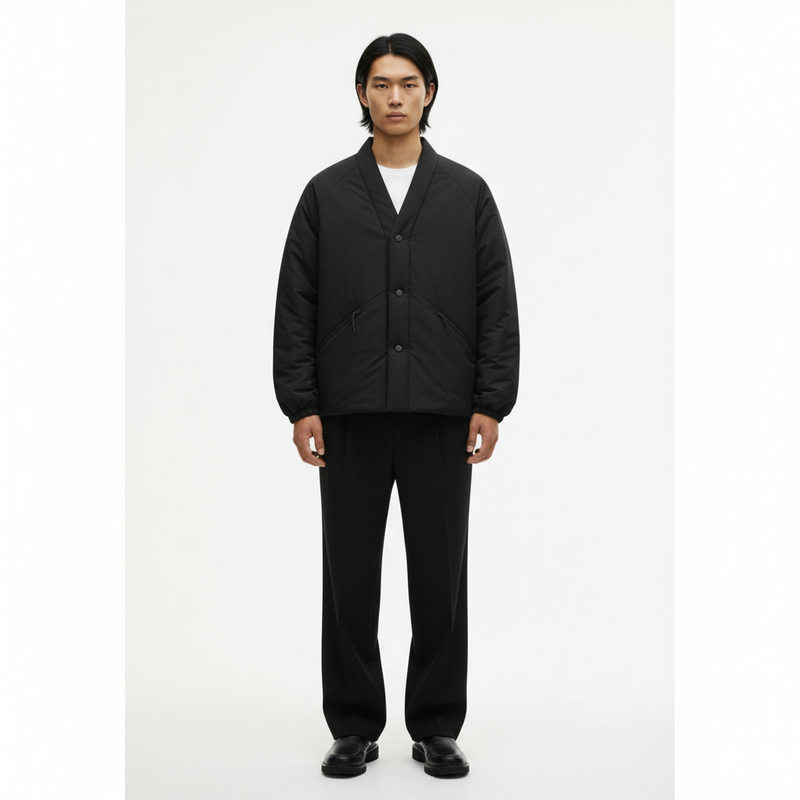
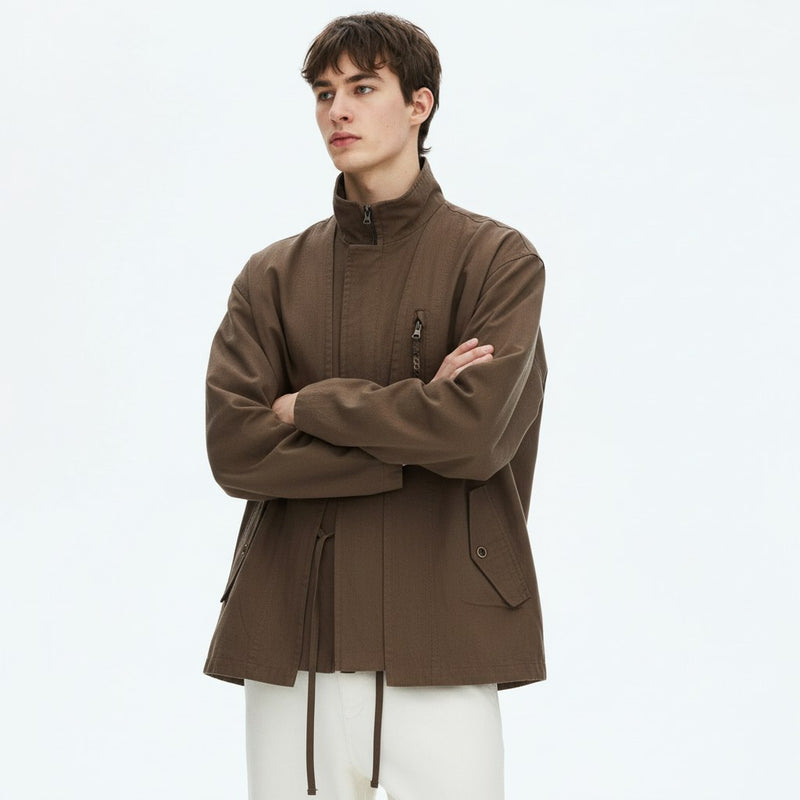
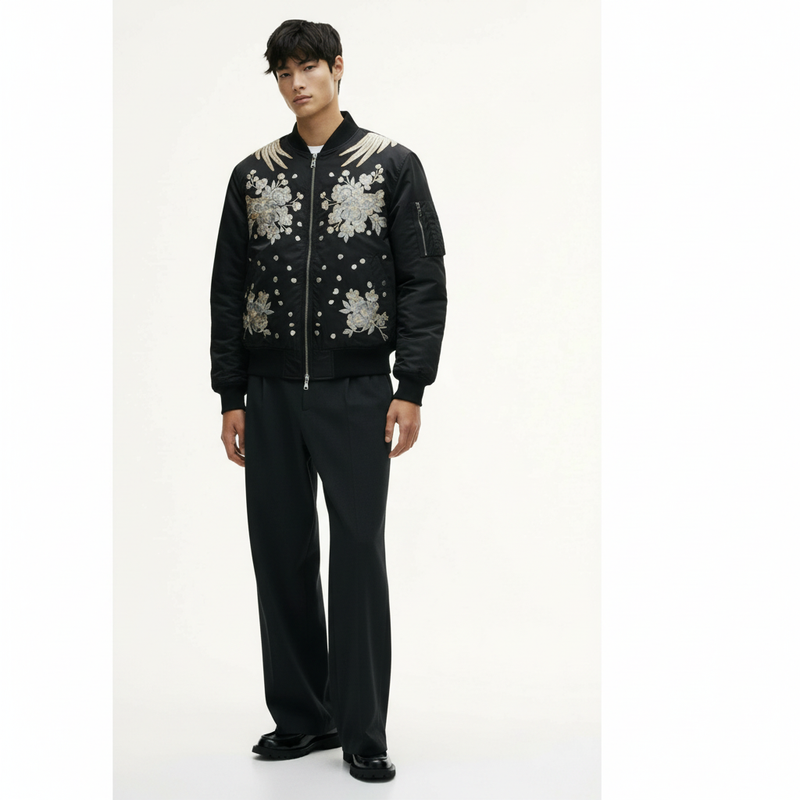

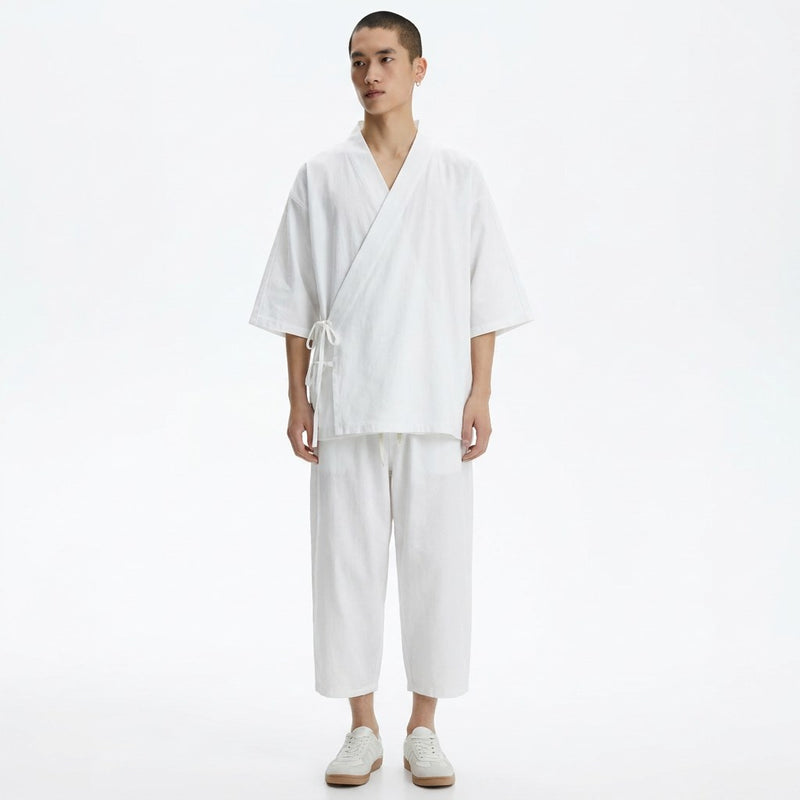


A kimono robe for men is a wrap-front robe with wide, square sleeves and a tie belt. It is cut like a Japanese kimono but worn mostly as a bathrobe or lounge robe. Silk looks dressy, linen and cotton breathe better for daily use, and short robes are easier to move in. If you want the same shape to wear outside over a T-shirt, a men's kimono jacket is the better fit.
What a men's kimono robe actually is
In Japan, the kimono (着物, "thing to wear") is a full-length, T-shaped garment that wraps left over right and closes with a sash called an obi (帯). The robe sold in the West as a kimono robe borrows that outline: straight panels, a wrap front, wide sleeves and a belt. It is a house garment, something you put on after a shower or wear with Sunday coffee.
Japan has its own versions of the idea. The yukata (浴衣, "bathing clothes") began as a light robe worn after bathing and is now a casual summer kimono for festivals and hot spring inns. The nemaki (寝間着, "sleeping clothes") is a simple robe for bed. Our guide to yukata vs kimono explains where the lines fall.
Kimono robes for men: the main styles
A men kimono robe search usually means one of five things. The last one, the haori (羽織), is a light coat traditionally worn open over a kimono, and today it is the version people wear on the street.
| Style | Length | Typical fabric | Where it is worn |
|---|---|---|---|
| Lounge or bath kimono robe | Knee to ankle | Satin, silk, cotton, waffle weave | At home |
| Yukata | Ankle | Cotton | Summer festivals, inns |
| Nemaki | Knee to ankle | Cotton gauze or flannel | Bed |
| Short kimono robe | Mid-thigh to knee | Cotton, linen, satin | Home, beach |
| Kimono jacket or haori | Hip to knee | Varies widely | Over everyday clothes |
If you want the real thing, a yukata from a specialist shop costs a median of $115.00.
Men's silk kimono robe: is it worth it?
A men's silk kimono robe is what most people picture when they think of a dressing gown: smooth, cool on the skin, with a soft shine. Real silk is light and warm for its weight, and formal kimono in Japan are traditionally silk. It also costs far more than other fabrics and shows marks easily, so it suits an occasional robe better than one you live in.
Many robes with "silk" in the title are polyester satin, which copies the shine at a lower price but breathes less. Read the fabric line, not the headline. Amaji does not sell silk robes, so if real silk is the goal, a specialist robe maker is the right place to look.
Linen kimono robe and cotton options
A linen kimono robe is the pick for hot weather. Linen moves moisture away from the skin and dries quickly, though it wrinkles as soon as you sit. Cotton is the everyday middle ground: soft, easy to live with and usually cheaper than linen. Waffle weave cotton has that spa feel and dries fast after a shower. Our comparison of linen vs cotton for summer goes further.
Men's short kimono robe or a long one?
A long robe that reaches the ankle is closest to a true kimono and keeps you warmer. A men's short kimono robe stops between mid-thigh and the knee, so it is easier to walk around in and doubles as a beach cover-up. Taller men often find a "long" robe lands at mid-calf, so check the length measurement rather than the size letter.
White, green, red and pink kimono robes
A white kimono robe gives the clean hotel look, and white with indigo is the classic yukata pairing. Traditional men's kimono in Japan stay muted: navy, black, gray, brown and deep green. Bright red and pink show up more in women's kimono, but at home, wear what you like. A green kimono robe in olive or forest reads calm. A red kimono robe in deep burgundy is easier to wear than fire-engine red. A pink kimono robe in a dusty shade feels relaxed and modern.
How to wrap and tie a kimono robe
- Wrap the left side over the right. Right over left is reserved for dressing the dead at Japanese funerals.
- Tie the belt low on the hips, not at the waist. That is where men wear an obi. Our kimono belt guide shows the knots.
- Keep the collar close to the back of the neck so the front forms a clean V.
When a kimono jacket works better
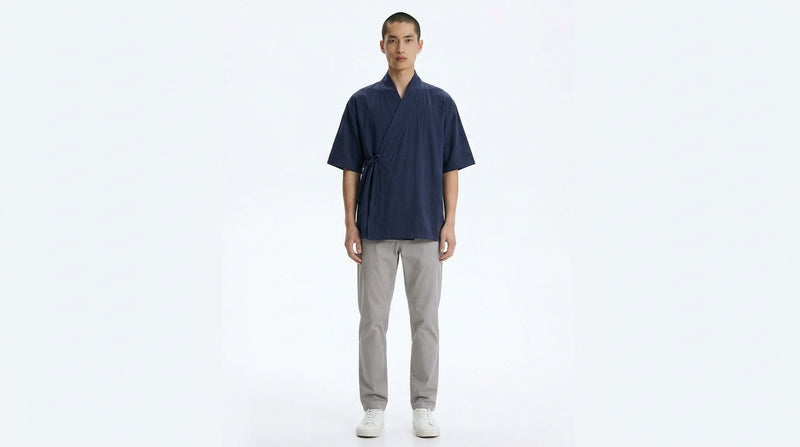
A robe belongs in the house. If you like the wrap shape and want it outdoors, go for a kimono jacket or haori: shorter, worn open or loosely tied over a T-shirt and jeans. Our guide on how to wear a men's kimono jacket covers keeping it from looking like a bathrobe, and men's kimono types gives the wider picture.
What Amaji has, and what it does not
Amaji sells affordable everyday pieces made in China. We do not sell silk robes or anything in pink. For a robe to wear at home, the Men's Cotton Gauze Kimono Robe is our lounge option. We do carry kimono-cut jackets and coats that take the robe shape outside:

- Men's Kimono Coat, Side-Tie Wrap Cardigan, $66.90, the closest to a robe silhouette, in Brown, Gray or Black, sizes XS and S.
- Men's Tied Kimono Cardigan, $46.90, with a tie closure, in Black, Grey, Burgundy or Navy, sizes XS to XXL.
- Men's Crane Embroidered Kimono Jacket, $49.90, a short cut in Red, Navy, Slate Blue or Grey, sizes XS to XXL.
- Men's Summer Haori Jacket, $44.90, available in White plus Blue, Light Grey, Dark Grey and Black.
- Men's Long Haori Coat, $59.90, a longer line in Black, Army Green or Navy.
For lounging at home in summer, the Japanese answer to a robe is the jinbei (甚平), a two-piece summer set of a tied top and shorts. Ours is the Men's Jinbei Set at $49.90 in sizes XS to M. Browse everything in the men's kimono jacket collection.
Written by the Amaji team, October 18, 2026. How we write our guides.