










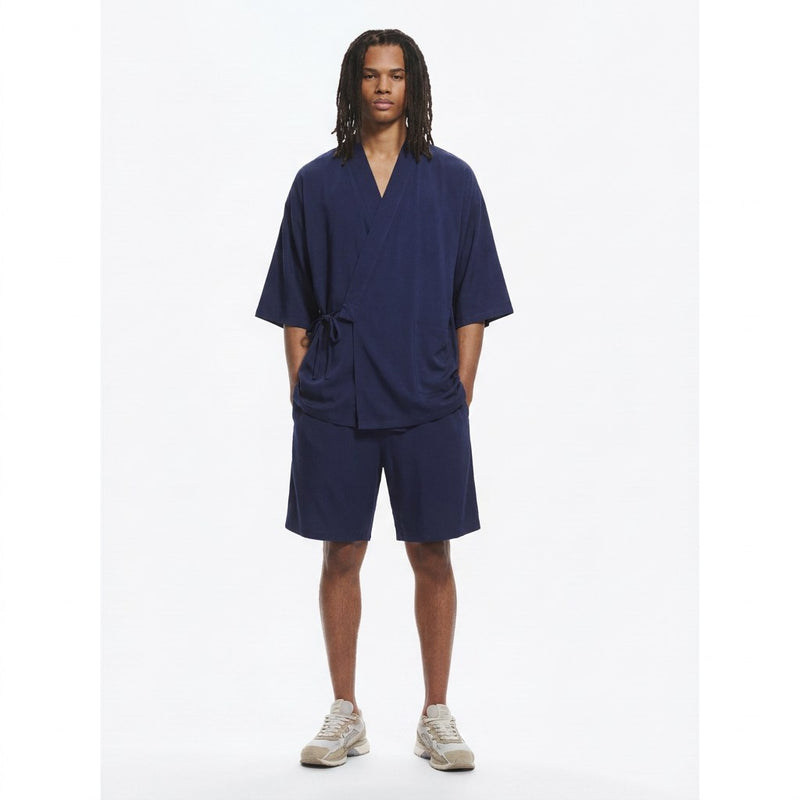

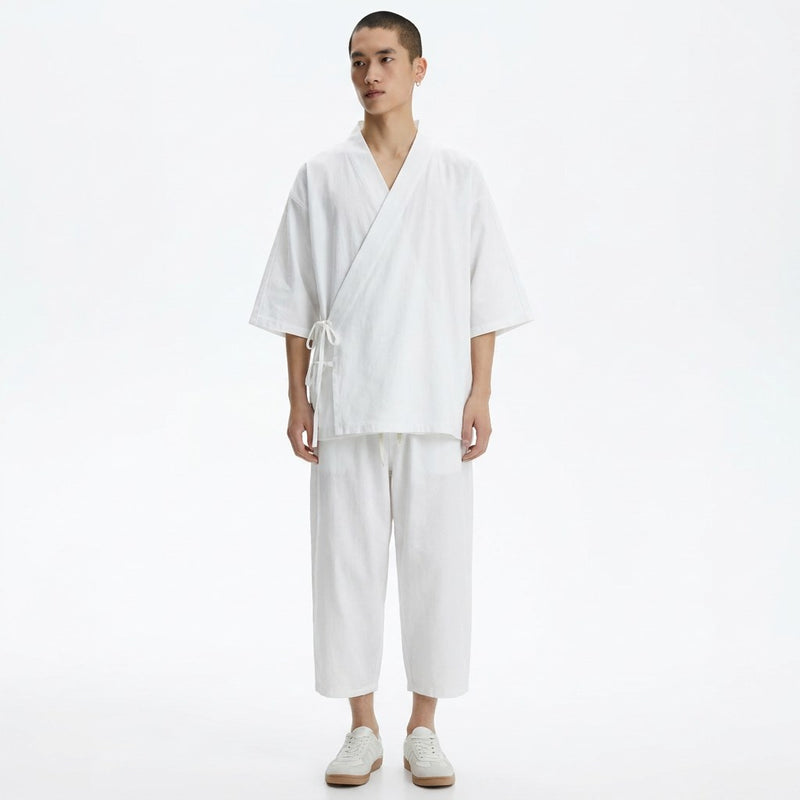
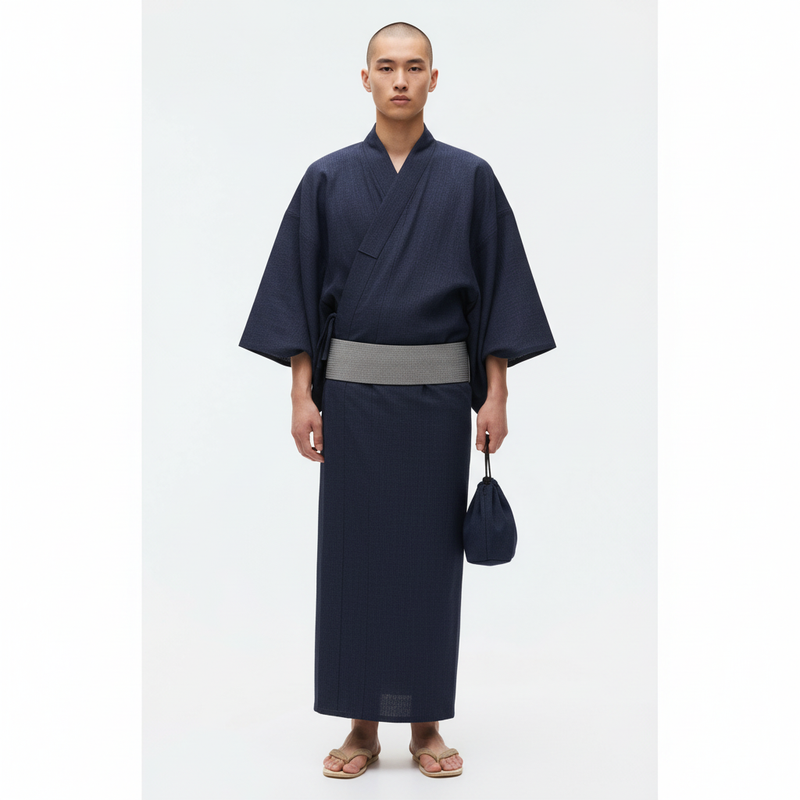
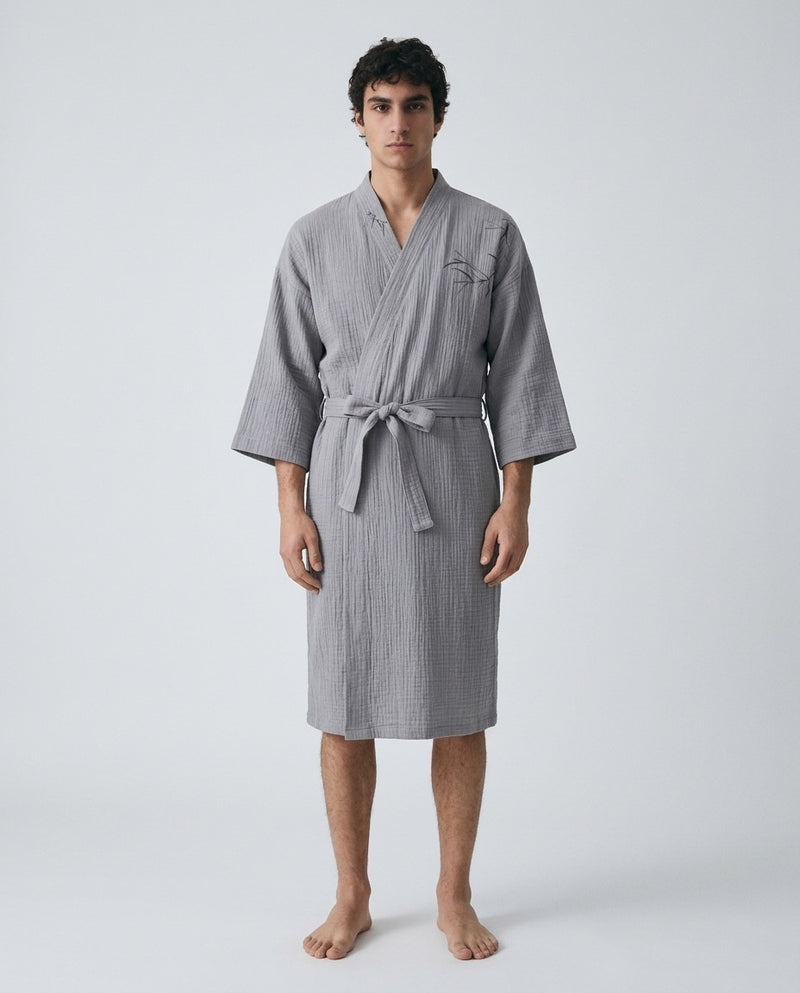

A jinbei (甚平), a two-piece summer set, is a short wrap top that ties closed plus matching shorts. A yukata (浴衣, "bathing cloth") is a single ankle-length robe held shut with an obi (帯, sash). You can see the sets we carry in the Amaji jinbei collection. The jinbei is the easy, casual one, with no belt to tie and nothing shortening your stride. The yukata is dressier and is what most people picture at a summer festival.
Both are informal summer clothes, a long way below a formal kimono. If that comparison is the one you need, our yukata vs kimono guide covers it. This page sticks to the two summer pieces.
Jinbei vs yukata, side by side
| Jinbei | Yukata | |
|---|---|---|
| Pieces | Top plus shorts, sometimes long trousers | One robe |
| Length | Top to the hip, shorts to about the knee | Ankle length |
| How it closes | Ties sewn inside and outside the top | Wrapped, then held with an obi |
| Belt needed | No | Yes |
| Traditionally worn by | Men and boys, now women too | Men, women and children |
| Typical setting | Home, the neighborhood, relaxed festivals | Festivals, fireworks, inns, summer dates |
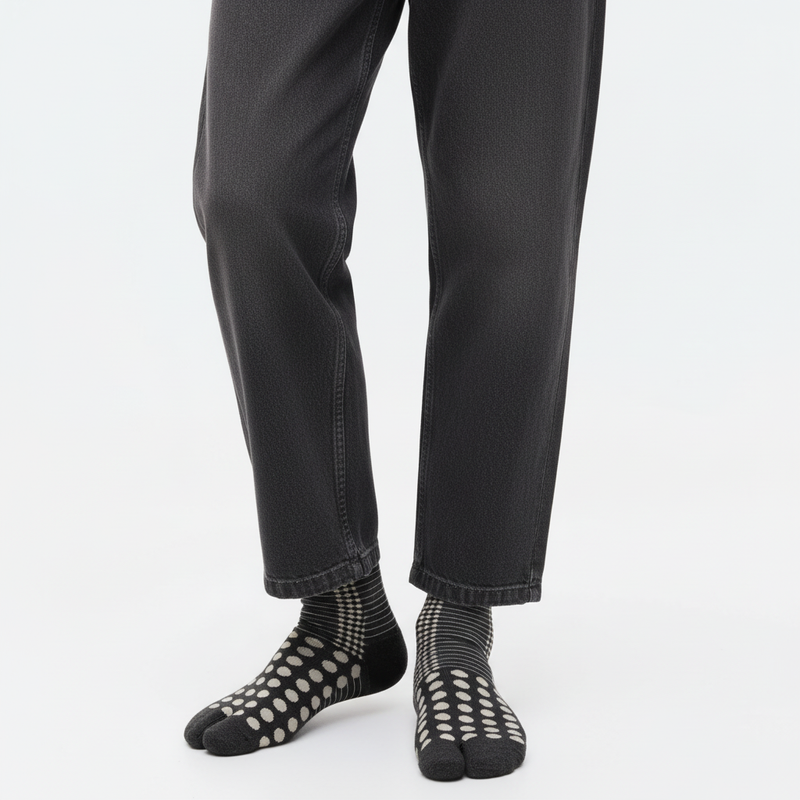
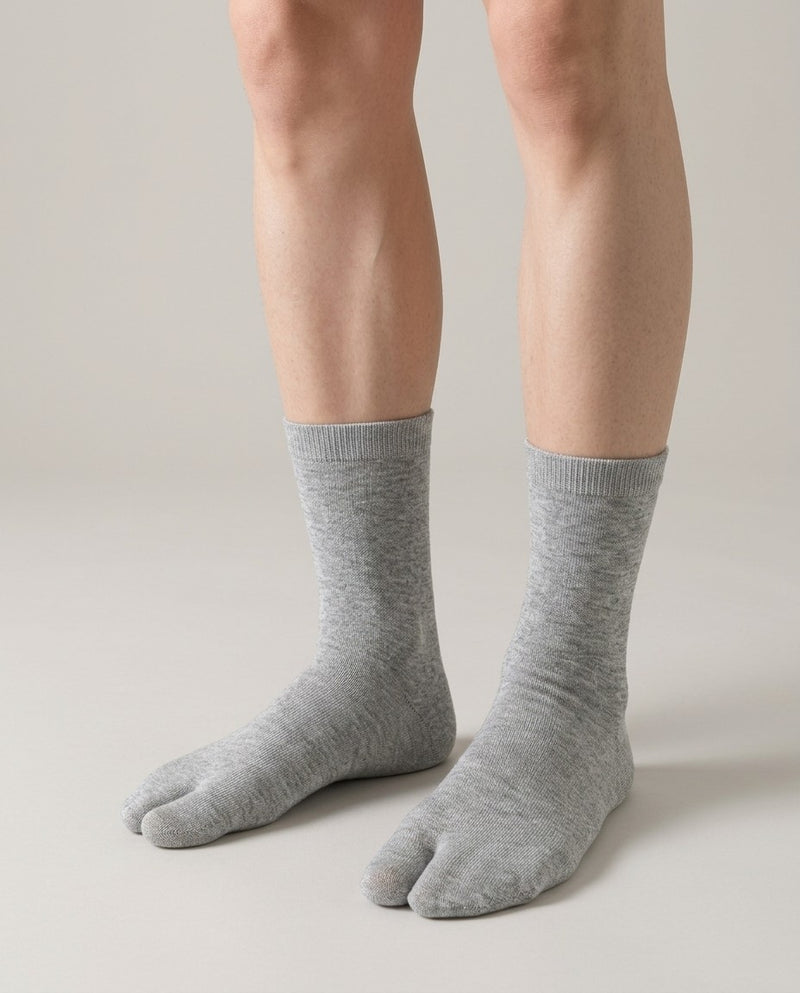
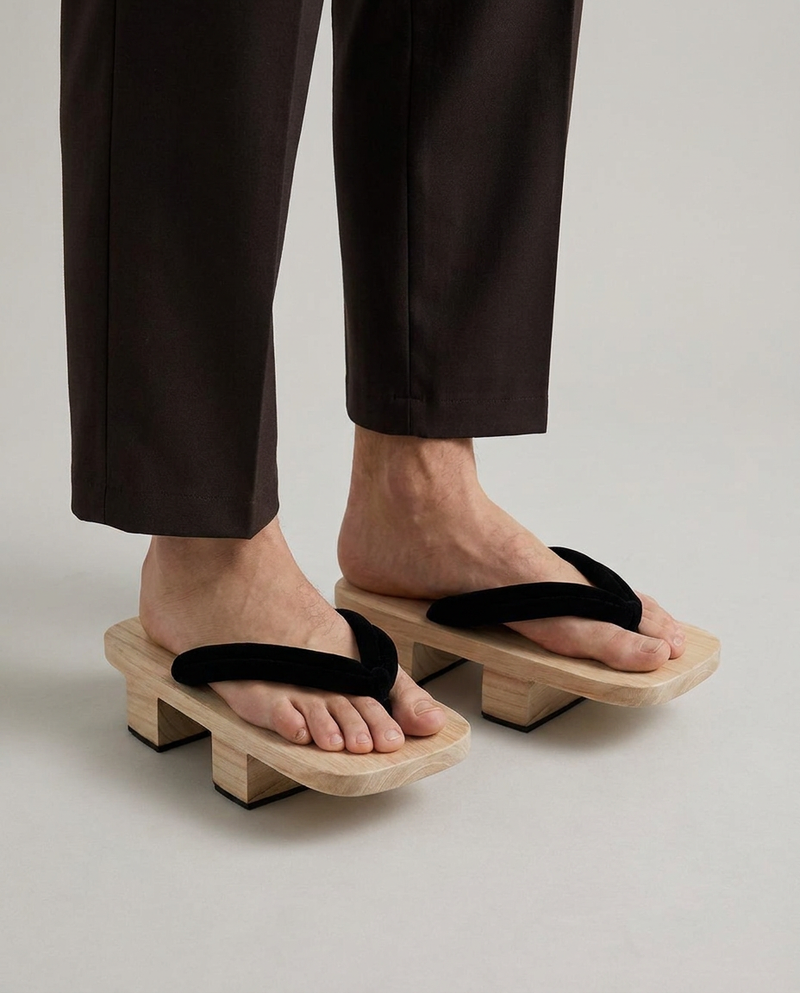
| Footwear | Geta (下駄, wooden sandals) or plain sandals | Geta, worn barefoot |
| Median price at specialist shops, Sept 2026 | $76.00 | $115.00 |
How each one goes on
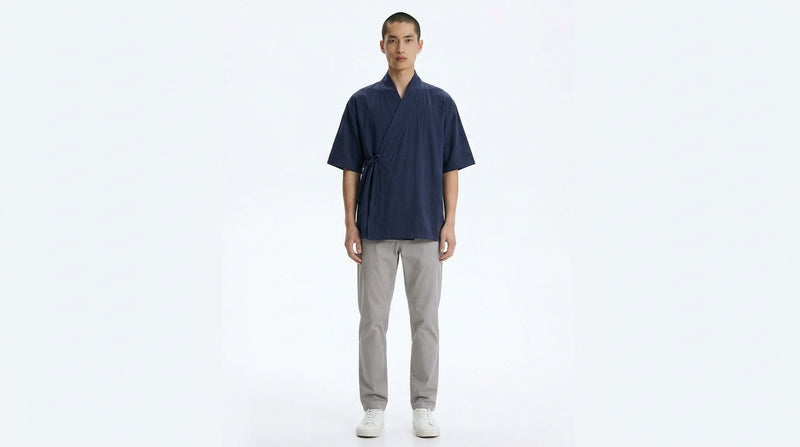
The jinbei top closes like a wrap jacket. Traditional versions have one tie inside and one outside: you tie the right panel first, lay the left panel over it, then tie again at the hip. The shorts have a drawstring or elastic waist. That is the whole routine, and it holds when you sit on the ground or pick up a child.
A yukata asks for more care. You wrap the left side over the right (right over left is how the dead are dressed in Japan, so this detail matters), then hold the overlap closed with an obi. Men usually wear a soft heko obi (兵児帯, a soft sash) or a narrow kaku obi (角帯, a firm men's sash), tied low on the hips rather than at the natural waist. Our step-by-step yukata guide walks through the wrap, and the yukata obi guide covers the knots.
Same rule for the jinbei, by the way: left panel on top.
Yukata vs jinbei for a summer festival
At a matsuri (祭り, festival) or a hanabi taikai (花火大会, fireworks display) you will see plenty of both. Yukata are the dressier pick, the one couples and groups of friends wear for photos. Jinbei show up mostly on men and children, and increasingly on women. The Wikipedia entry on jinbei has more background on the garment.
Plan around the evening you actually have. A festival means food lines, curbs, riverbanks and shrine steps. A yukata shortens your stride, and the wrap can work loose over a long night. A jinbei has neither problem. If the night is about looking put together, wear the yukata. If it is five hours on your feet, the jinbei is the easier choice.
A ryokan (旅館, traditional inn) is its own case. Inns lay out a simple yukata for the bath and your room, and guests wear it to dinner and down the halls. It comes with the stay, so you do not need to pack one. There is more on that use in the Wikipedia yukata article.
Which one is cooler in the heat
The jinbei, clearly. Short sleeves, shorts that stop near the knee and a top that hangs loose at the hip let air move through. Some traditional jinbei also join the side seams with an open stitch so the sides breathe. Traditional yukata are cotton and breathe well, but a full-length robe with a sash wrapped around the hips is still more cloth against your body.
That is why, in Japan, the jinbei is the classic thing to change into at home on a hot evening.
Where Amaji's jinbei sets fit in
The jinbei we sell at Amaji are affordable everyday sets made in China, not made-in-Japan pieces. Prices start at $52.90 for Amaji's Seigaiha Wave Jinbei Set, printed with seigaiha (青海波, "blue sea waves"), a pattern of overlapping wave arcs, in Black Wave or Grey Wave, sizes XS and S. At the top of the range is the black jinbei set at $57.90. If you wear L or bigger, look at that one first: it is the only set we sell sized from XS all the way to XXL.

Amaji's four-color jinbei set is $54.90, in Black, Light Grey, Navy and Royal Blue, sizes XS to M. Jinbei are a small part of what we sell: this set was in 1 of our last 80 orders over the past 90 days. There is also Amaji's Jinbei Kimono Set at $54.90, in XS and S, with Dark Grey, Light Grey, Green Jacquard and Grey Jacquard options.

For long legs instead of shorts, Amaji's Tie-Front Jinbei Shirt and Trousers Set ($64.90 to $104.90, one size) pairs the tie top with full-length trousers. You keep the jinbei's easy ties, and the longer line looks a little dressier on an evening out, without the obi a yukata needs.

One honest limit: a jinbei will not stand in for a yukata. If your plan is a fireworks date in a robe, get a yukata. Amaji carries a few men's yukata too, and our where to buy a jinbei guide lists other places to shop for a set, with prices.
Picking between them
- Pick a jinbei for house wear, hot nights, festivals with kids, long walks and anywhere you will sit on the ground.
- Pick a yukata for fireworks dates, festival photos and evenings when your group is dressing up.
- Own both if you go to several summer events: the yukata for the big night, the jinbei for every other evening.
Still unsure? Start with the jinbei. It costs less, it goes on in a minute, and it works on ordinary days, not only special ones.
Written by the Amaji team, November 13, 2026. How we write our guides.