






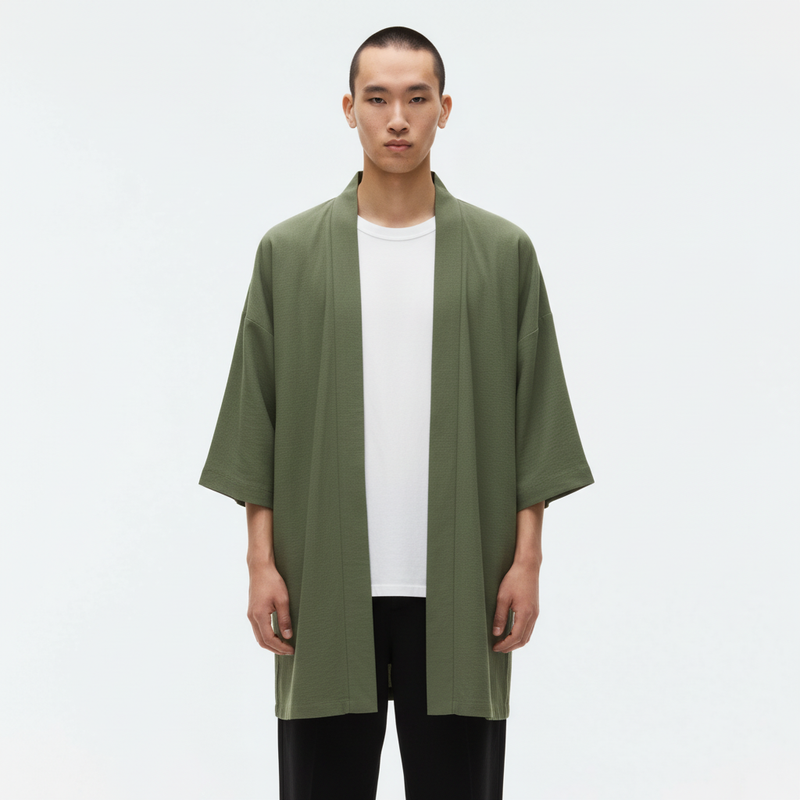




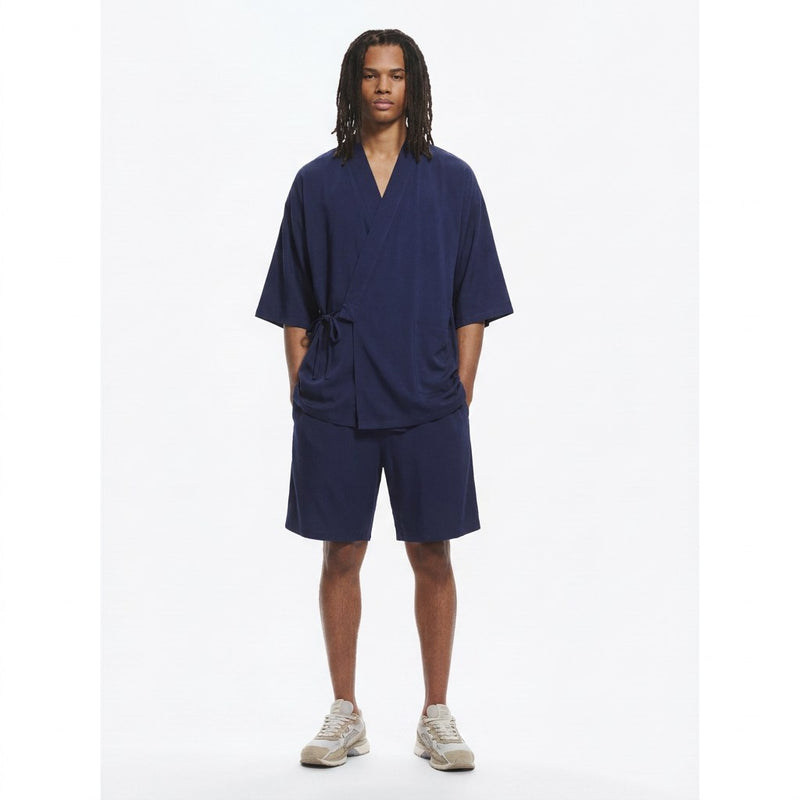

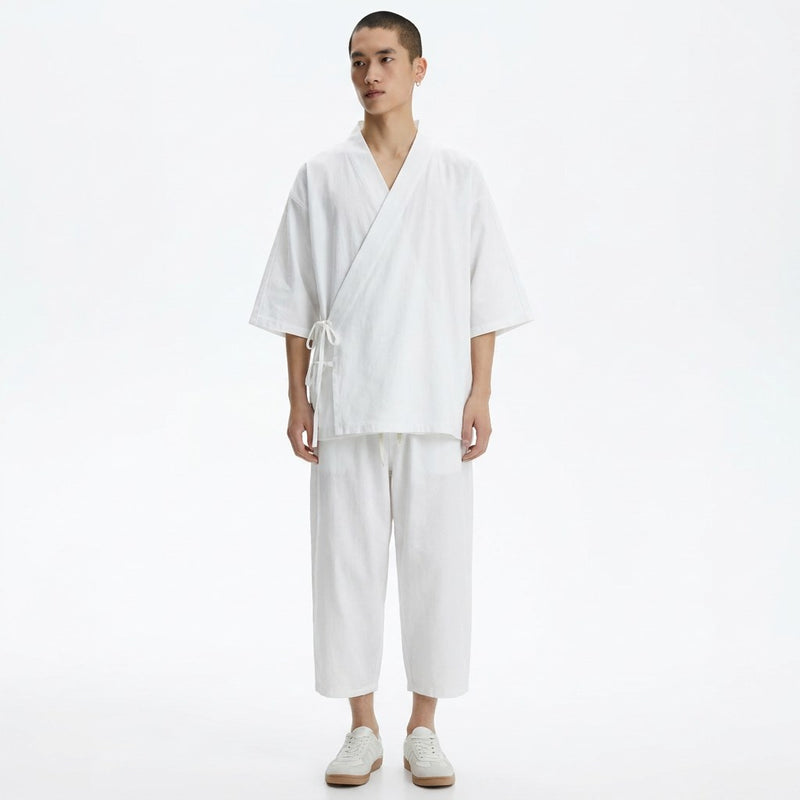
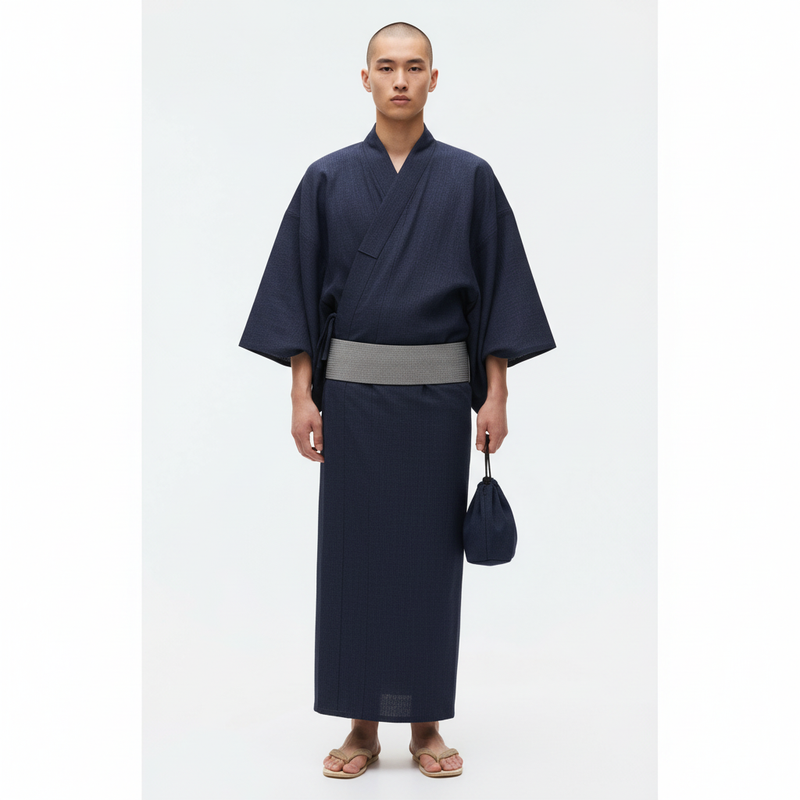
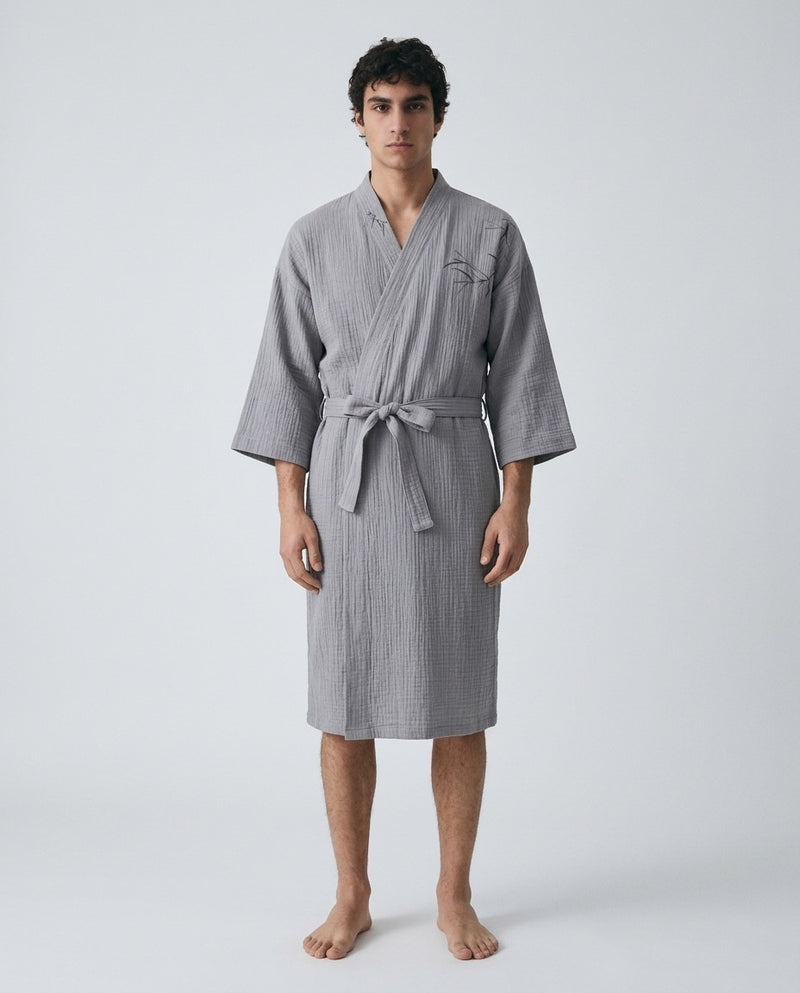

A yukata (浴衣), the light summer kimono, is held closed by an obi (帯), a long sash wrapped around the waist and tied. Men usually wear a narrow, firm kaku obi (角帯, "angular belt") low on the hips with the knot at the back. Women usually wear a hanhaba obi (半幅帯, "half-width belt") higher at the waist, finished in a bow. We carry the men's style: Amaji's Kaku Obi is $34.90, one size, in five colors.
Choosing an obi for yukata
Three belts cover nearly every yukata you will see at a Japanese summer festival. They differ in stiffness and width, which decides how the knot looks and how long it holds.
| Obi | Usually worn by | Feel and width | Common knot |
|---|---|---|---|
| Kaku obi (角帯) | Men | Firm and flat, roughly 9 to 10 cm wide | Kai no kuchi (貝の口, "clam's mouth") |
| Heko obi (兵児帯) | Men at home, children, many women today | Soft and wide, gathers into folds | A simple bow |
| Hanhaba obi (半幅帯) | Women | About 15 cm wide, half a formal obi | Bunko musubi (文庫結び), a squared bow |
For a man heading out in a yukata, the kaku obi is the safer pick. It stays flat, the knot keeps its shape through an evening of walking and sitting, and it reads as dressed rather than loungewear. The heko obi, a soft sash that bunches up around the waist, is easier to tie but looks relaxed, which is why you see it at inns and on children. The Wikipedia entry on obi lists the formal women's styles too, most of which belong with kimono rather than yukata.
Where the obi sits on a yukata
Check the overlap before any belt goes on. Everyone, men and women, wraps the left panel over the right. Right over left is how a body is dressed for a funeral, and people in Japan will notice.
On men, the kaku obi sits low. Its top edge rests around the hip bones, under the belly, dipping slightly lower in front than at the back. Tie it at the natural waist like a trouser belt and the yukata puffs out above it.

Women wear the hanhaba obi higher, over the natural waist and up toward the lower ribs. The extra length of the yukata is folded at the waist first, a tuck called ohashori (お端折り), and the obi covers it. Our page on yukata vs kimono explains how this light robe differs from formal kimono, and the Wikipedia article on yukata covers where it came from.
Tying a yukata with obi: the kai no kuchi knot
Kai no kuchi is the knot most men use with a kaku obi. The name comes from the two ends, which open at an angle like a clam shell. It feels fiddly the first time and gets quick after a few tries.
- Put the yukata on, right panel first and left over it. A koshi himo (腰紐), a thin waist cord, holds the overlap while you work if you have one.
- Fold the short end of the obi in half lengthwise for about 40 cm and hold it at the front of your waist.
- Wrap the long end around your hips two or three times, pulling snug on each pass with the edges lined up.
- Tuck any surplus of the long end inside the last wrap, so the free part is roughly as long as the short end.
- Cross the short end over the long end and tie one plain knot, short end on top, pulled firm.
- Fold the long end across the knot to form a loop, bring the short end over and through it, then pull both ends out so they splay a little.
- Slide the belt around until the knot rests at your back, slightly off center, turning in the same direction you wrapped so it tightens rather than loosens.
A firm belt makes this far easier. A soft obi folds over on itself as you pull and the shell shape collapses, which is why a kaku obi is the easier first belt.
Yukata obi for women
Amaji does not sell a women's hanhaba obi or a heko obi, so for a women's yukata a kimono specialist is the better stop. The usual knot is bunko musubi, a squared bow tied in front and turned to the back. If that feels like a lot, a tsuke obi (付け帯), a pre-tied obi, clips on with the bow already made.
Some women do wear a kaku obi with the men's knot for a plainer, sharper line. The kaku obi we sell at Amaji works for that, though it sits narrower than a hanhaba obi.
Matching Amaji's kaku obi to your yukata
Amaji's Kaku Obi comes in White and Black, Beige, Navy, Black and Purple, all one size. Contrast is the easiest rule. A navy or black yukata looks sharp with beige or the white and black obi, since the knot then shows at the back. White and striped yukata take navy or black well. Purple is the festival choice: bright, but not loud.

A few of the yukata we sell at Amaji come with their own belt. A separate kaku obi gives you a second look and the firm, flat knot described above.
The same belt under a hakama
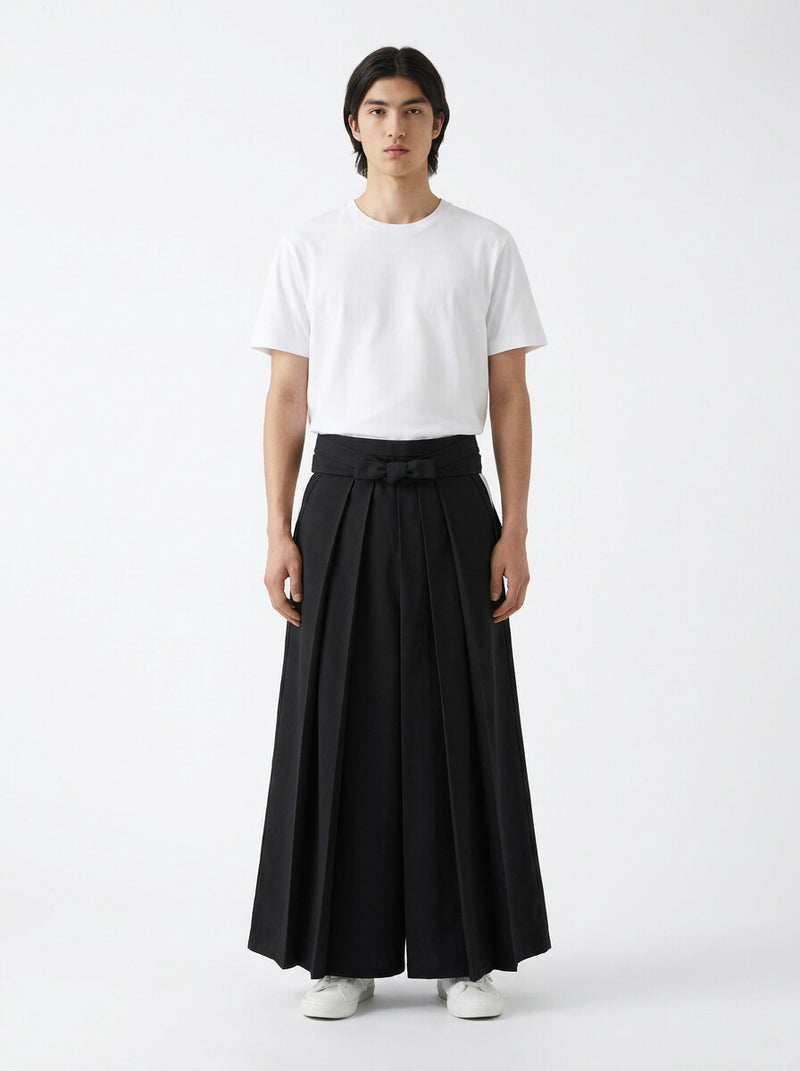
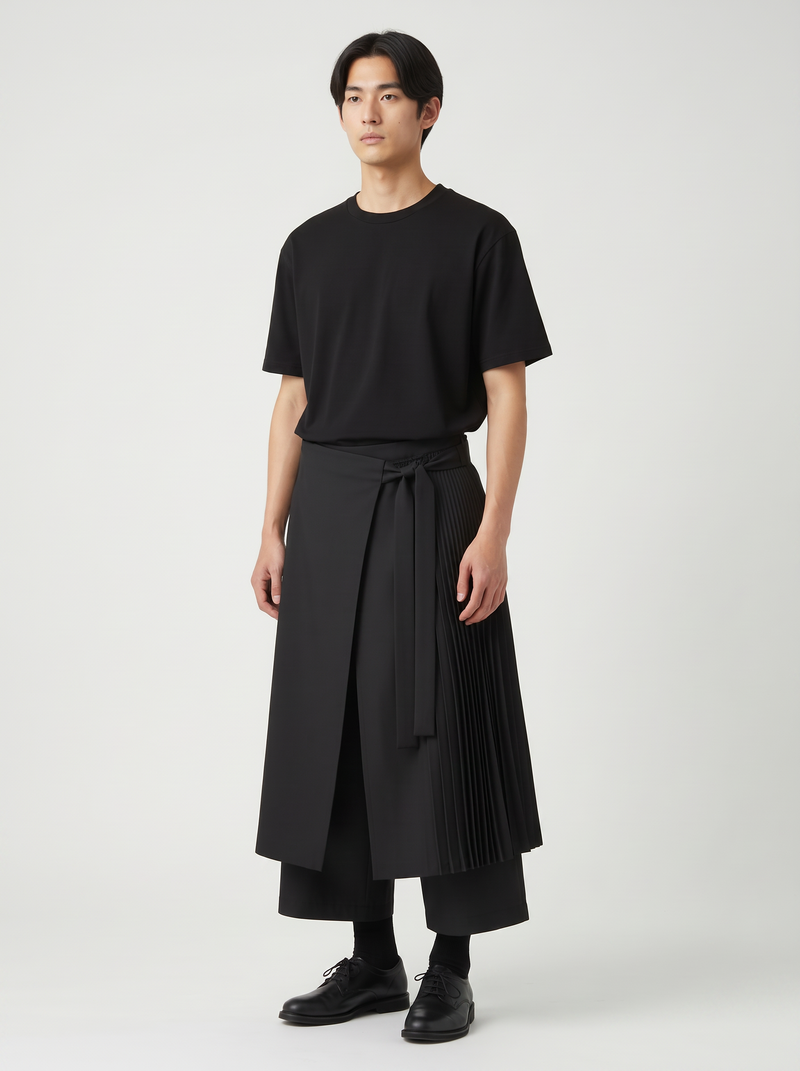
Under a hakama (袴), the pleated wide trousers worn in iaido, aikido and at formal events, the kaku obi does a second job. The hakama ties wrap over it, and the knot at the back props up the stiff back panel so it does not slide down. Many kendo players skip the obi and tie the hakama straight over the jacket.

Amaji carries a hakama in the kendo cut. Amaji's Kendo Hakama, Seven Pleats was in 6 of our last 78 orders over the past 90 days, and 2 of the 7 pieces ordered were size L. It costs $59.90, against a $79.97 median at specialist hakama shops in September 2026. It is an everyday hakama made in China, not a graded dojo uniform, so if your club has a dress rule, ask your teacher first.
Written by the Amaji team, November 12, 2026. How we write our guides.