









Japanese masks, called men (面) or omen (お面), come from three places: the Noh theater, shrine festivals and folk ritual, and samurai armor. The best-known faces, oni, hannya, kitsune, tengu and okame, each belong to one of those worlds, and each one means something specific. Most masks sold today are festival-style copies, not carved stage pieces. Amaji sells two of those, a fox and a cat half mask, and you will find both in our Japanese gifts collection.
Masks of Japan at a glance
| Mask | What the face shows | Where you see it |
|---|---|---|
| Ko-omote (小面) | A young woman, calm and pale | Noh plays |
| Hannya (般若) | A woman turned demon by jealousy, with horns | Noh plays, wall charms, prints |
| Oni (鬼) | An ogre, red or blue, with horns and tusks | Setsubun in February |
| Kitsune (狐) | A white fox, messenger of Inari | Shrine festivals and mask stalls |
| Tengu (天狗) | A red mountain spirit with a long nose | Festivals and mountain shrines |
| Hyottoko and okame | A comic man and a smiling, round-cheeked woman | Kagura dances and festivals |
| Menpō (面頬) | A snarling face, often with a moustache | Samurai armor |
Noh masks, from the ko-omote to the hannya
Noh took shape in the 14th century under the actor Kan'ami and his son Zeami, and it is still performed today. The lead actor wears a nōmen (能面), carved from Japanese cypress, coated in gofun (ground shell) and painted. They are small. A Noh mask is narrower than the actor's face, so the chin shows below it, and the eye holes are so tiny that actors find their place on stage by the pillars. Japan Guide's page on Noh explains how a performance runs and where to see one.
The faces are carved neutral on purpose. Tilt one up and it seems to brighten. Tilt it down and it falls into shadow and looks grieved, so the actor plays the mood with the smallest movements of the head.
If you searched for a traditional Japanese female mask, you probably mean the ko-omote, the "little face" of a young woman: white skin, high painted eyebrows, a faint smile. The same woman, eaten up by jealousy, becomes the hannya, with horns, gold eyes and a mouth stretched almost to the ears. Noh even grades that change, from the namanari (生成), who is only starting to turn, through the hannya, to the shinja (真蛇), who has become a serpent. Hannya plays include Aoi no Ue and Dōjōji, and one old story says the name comes from Hannya-bō, a monk who carved the first one.
Hannya mask meaning
The meaning of the hannya mask is jealousy, and the grief inside it. The face is a woman so consumed by resentment that she has turned into a demon. Tilted down, the mask looks furious. Tilted up, the same carving seems to weep, which is how the actor shows the woman still inside the demon. Hannya (般若) is also the Buddhist word for wisdom, and on charms and in tattoos a Japan hannya mask is worn to keep bad luck away.
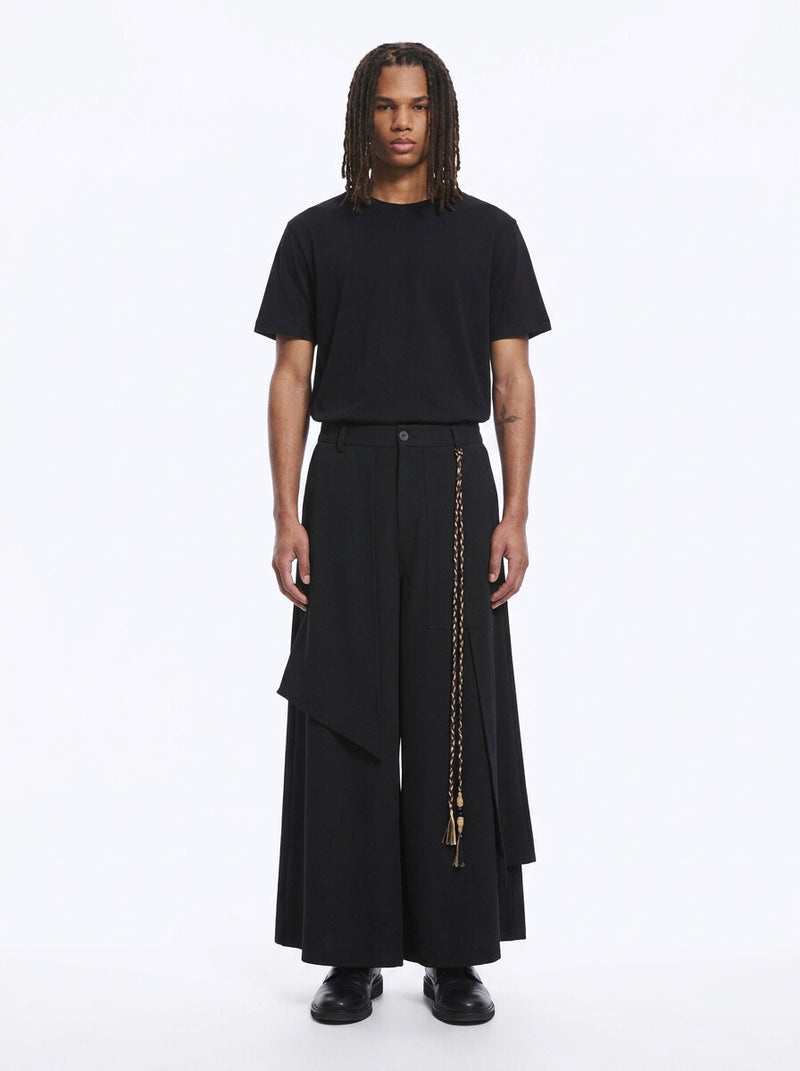
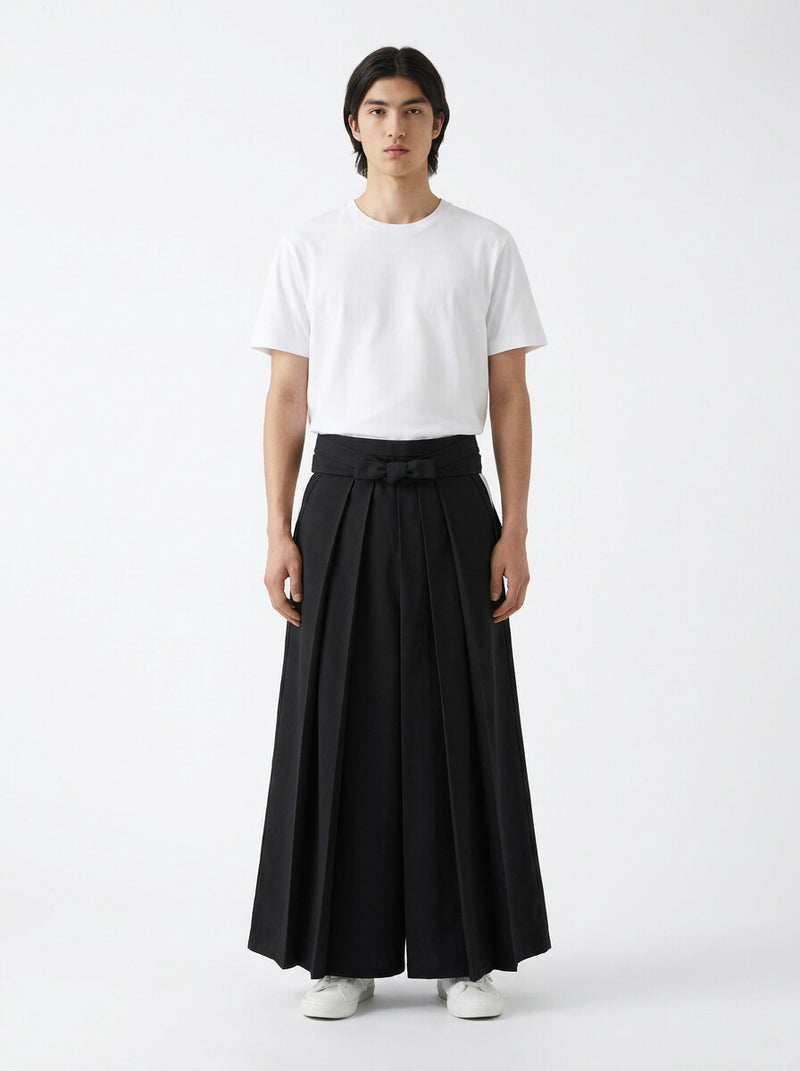
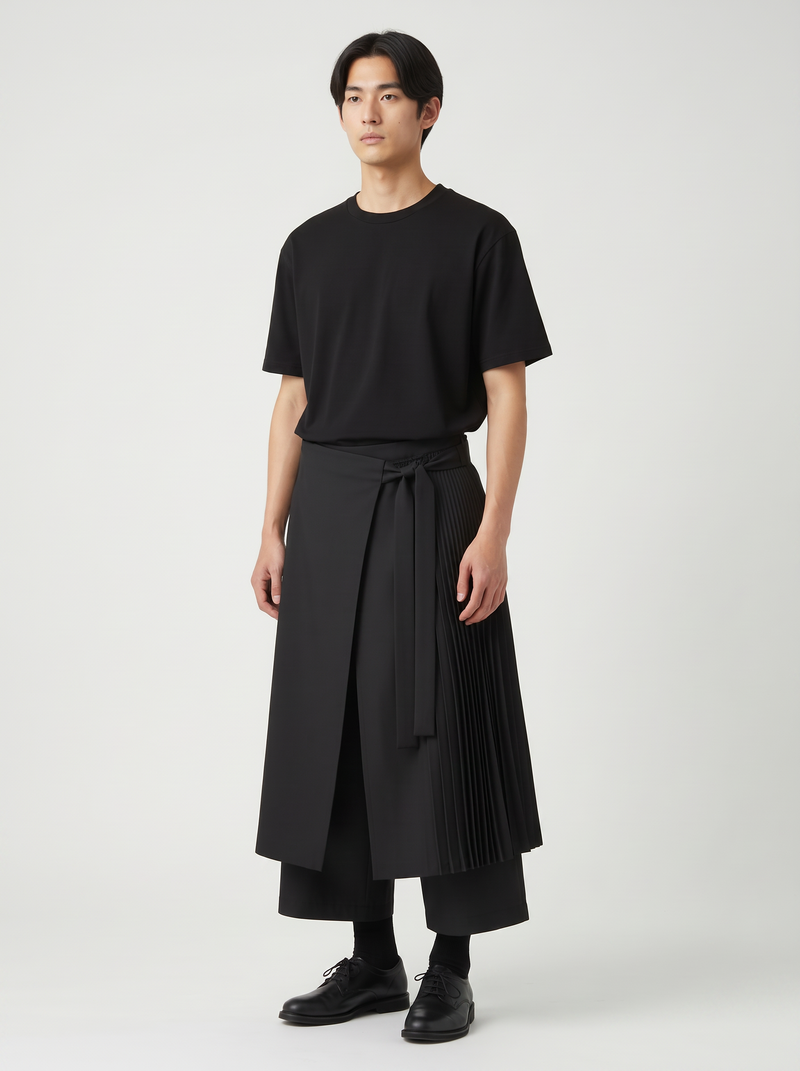
Watch the chorus and musicians at a Noh play and you see the rest of stage dress: black crested kimono over hakama (袴), wide pleated trousers. Amaji's Hakama Pants, $49.90, are an everyday take on that cut, and they were in 5 of our last 69 orders.
Oni masks and the beans of Setsubun
An oni is an ogre of folklore, usually red or blue, with horns, tusks and a tiger-skin loincloth. People mix up oni and hannya all the time. The difference is easy to hold on to: an oni was always a monster, while the hannya was a woman first. Wikipedia's oni article goes deep into the folklore.
Many Japanese children meet their first oni mask at Setsubun (節分), the day before spring on the old calendar, around February 3. One person in the family puts on a paper oni mask, often the one printed on the bag of roasted soybeans, and everyone else throws beans at them while shouting "oni wa soto, fuku wa uchi," demons out, luck in. It is loud and quick.
Fox, tengu and the comic pair at festivals
Walk through a summer festival and you will pass a stall hung with masks, the omen-ya (お面屋). The fox is the classic. Kitsune are the messengers of Inari, the Shinto god of rice, which is why stone foxes guard Inari shrines all over Japan (more on kitsune and their nine tails). Fox masks turn up in shrine processions and in the fox wedding parades some towns hold, and festival-goers often wear theirs pushed to the side of the head instead of over the face.
The tengu is a mountain spirit with a red face and a very long nose, tied in legend to the monks who trained in the mountains. Hyottoko (ひょっとこ), the man with a puckered mouth blowing on a fire, and okame (おかめ), the smiling woman also called otafuku, are a comic pair from kagura dances. Okame stands for good fortune, so her face shows up at Setsubun and in New Year decorations.
Samurai face guards, and why kabuki has none
A samurai mask is a piece of armor. The menpō covered the face below the eyes, anchored the helmet cords and gave its wearer a snarling iron face, often with a horsehair moustache. Old ones are collector and museum pieces.
Kabuki is different. It uses no masks at all. Actors paint the face instead, in a style called kumadori (隈取), with red lines for heroes and blue for villains and ghosts.
The two half masks in our shop
Amaji sells two masks, both festival-style half masks that cover the eyes and nose and leave the mouth free, so you can talk and drink while wearing one. Masks are a small corner of the shop for now: the kitsune mask was in 1 of our last 69 orders, a Black Cloud one.
Amaji's Kitsune Mask is $14.90 and comes in six designs: Sakura with pink eyes, Sakura with gold eyes, Black Cloud, Red Flame, Blue Floral and Sky Blue. It is 16.5 cm wide and 22 cm tall, weighs about 28 g and ties on with a black cord, with red ribbon streamers, a small bell and a tassel at the sides.

The Japanese Cat Mask we sell at Amaji, also $14.90, keeps the same half-mask shape with rounder cat ears. In Japanese a cat mask is a neko mask, from neko, the word for cat. It is 18.5 cm wide and 17.5 cm tall, in Black Sakura, Red Fire or Gold.

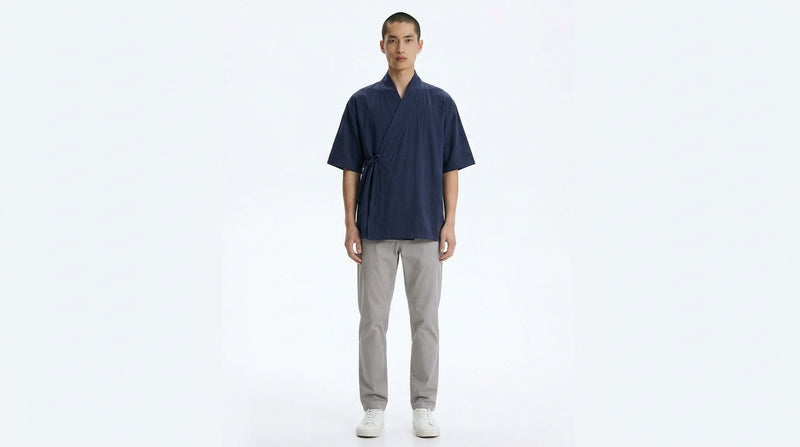
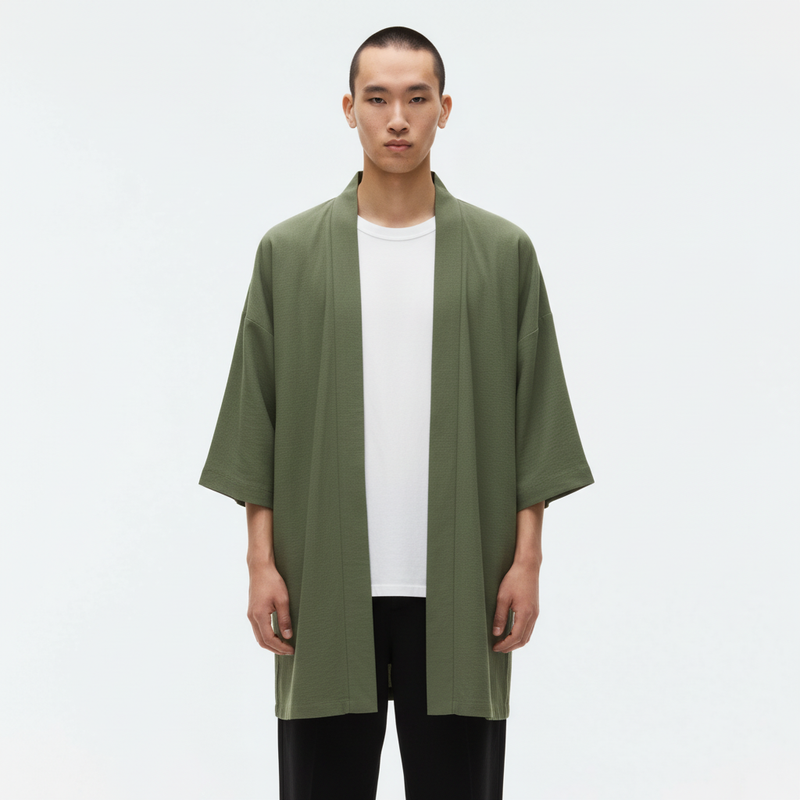
Both are light festival pieces, for an evening out, a wall or a small present, and like everything we sell they are made in China. They are not carved Noh masks. We do not stock oni, hannya, tengu or samurai masks either. The only hannya at Amaji is a print, on the Men's Hannya Kimono jacket, $24.90.
For the clothes that go with these traditions, our guide to traditional Japanese clothing covers the full wardrobe, and Japanese gifts for men has more small presents.
Written by the Amaji team, November 6, 2026. How we write our guides.