

















Four families of Japanese jacket
Four families of Japanese jacket
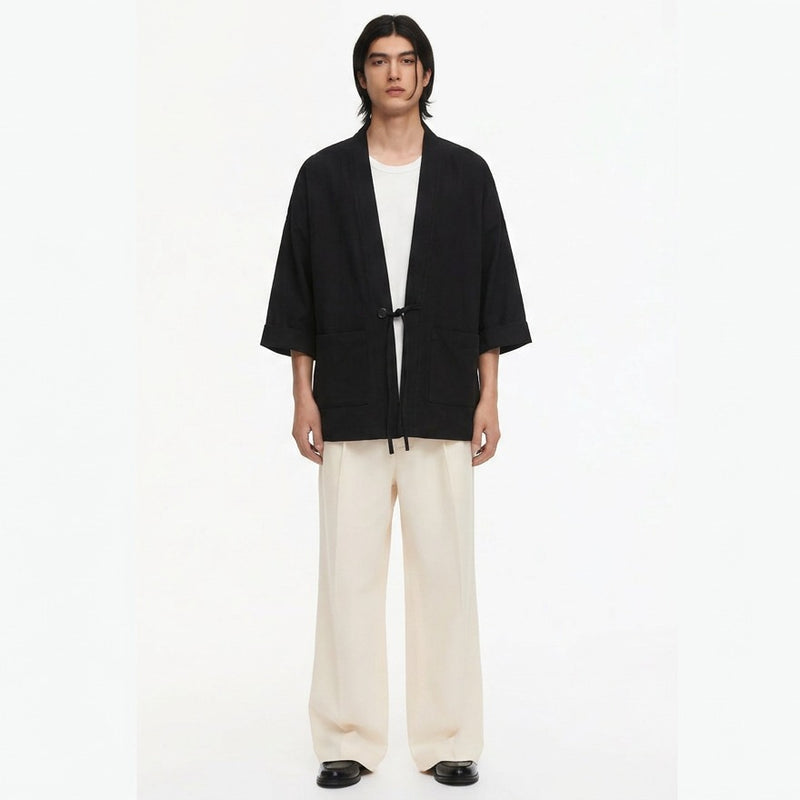
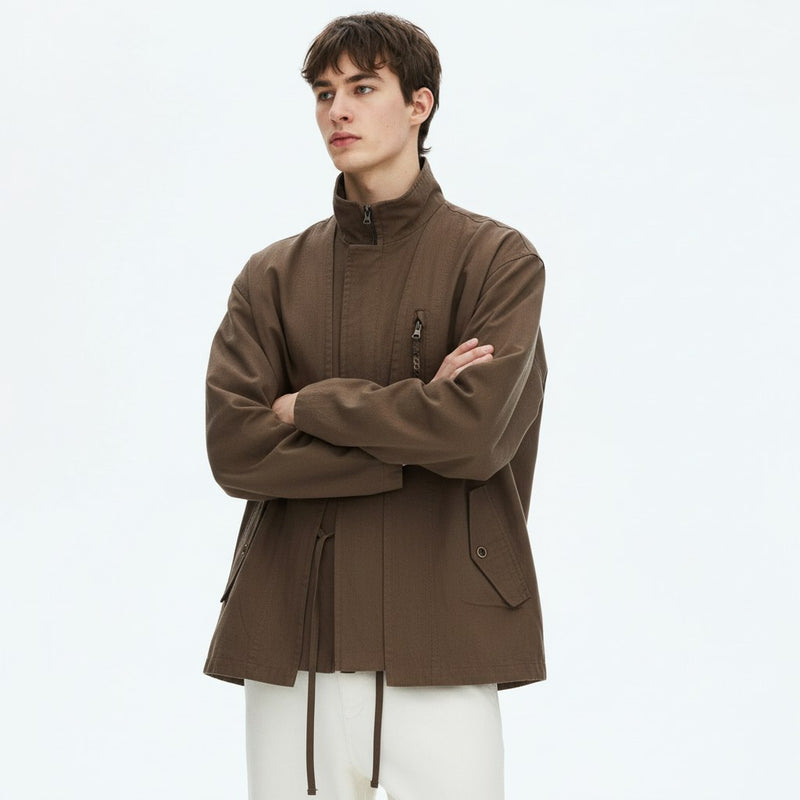
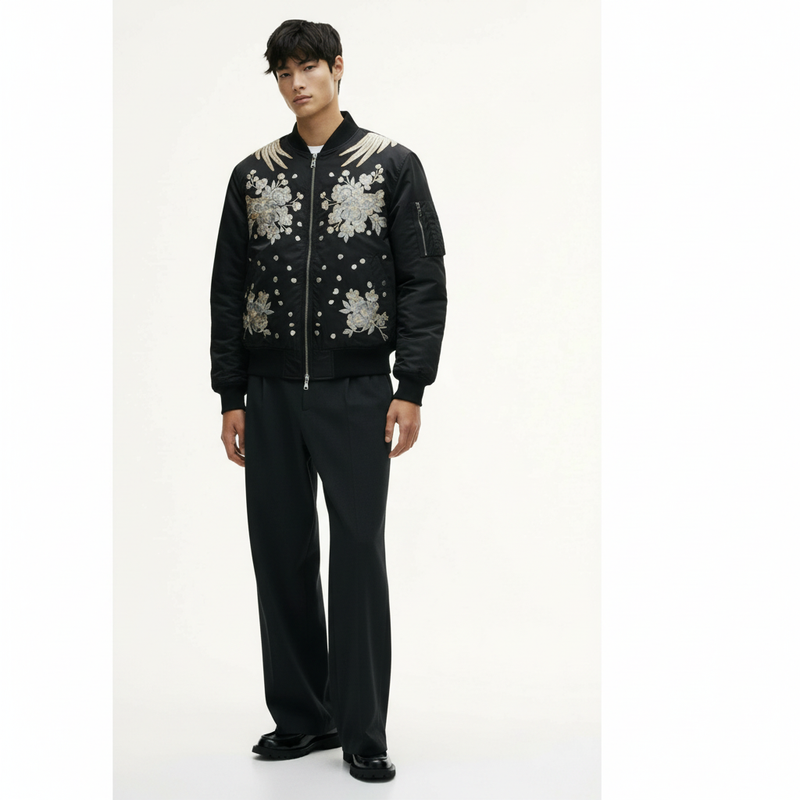
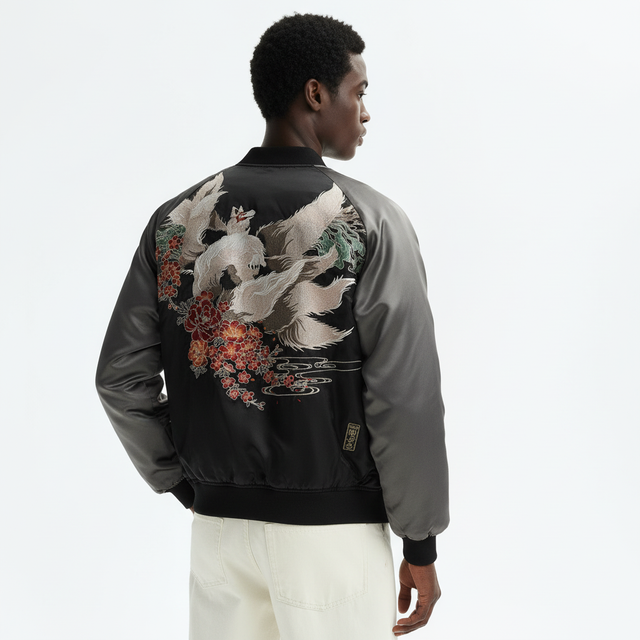
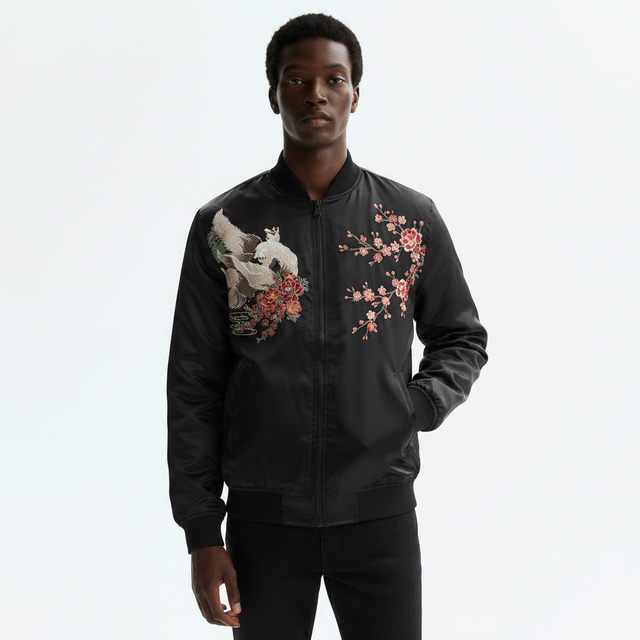
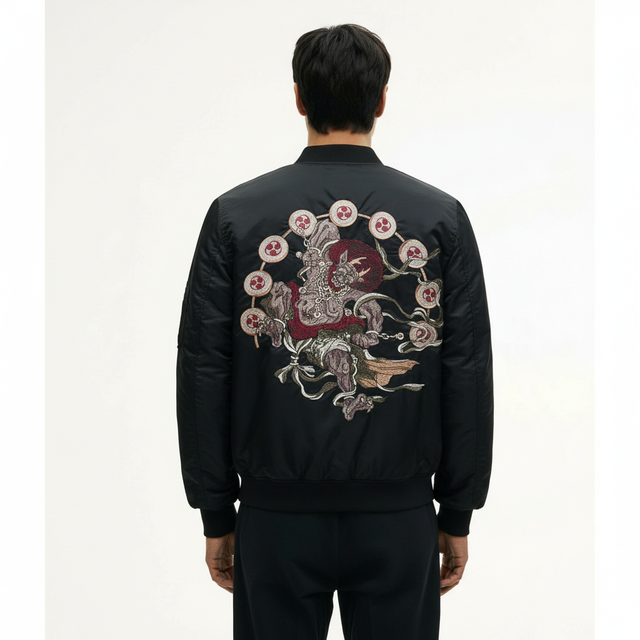
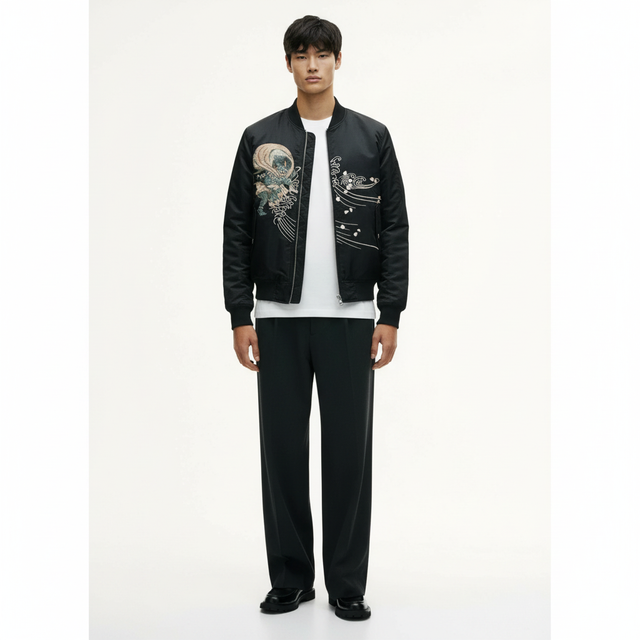
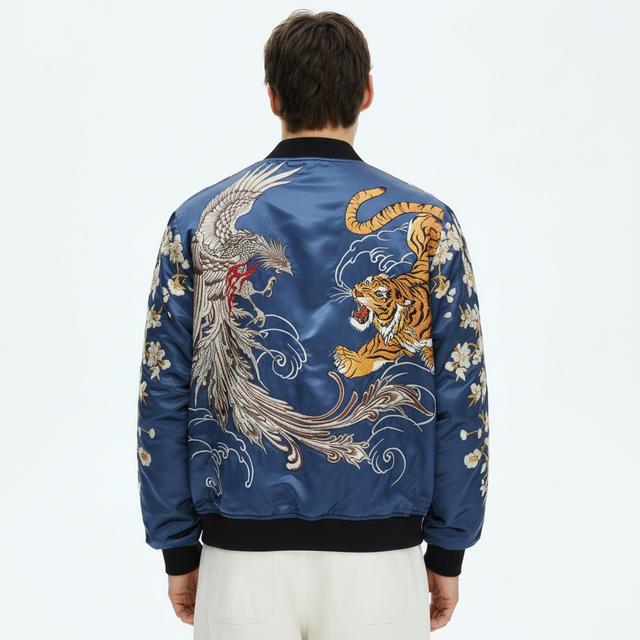
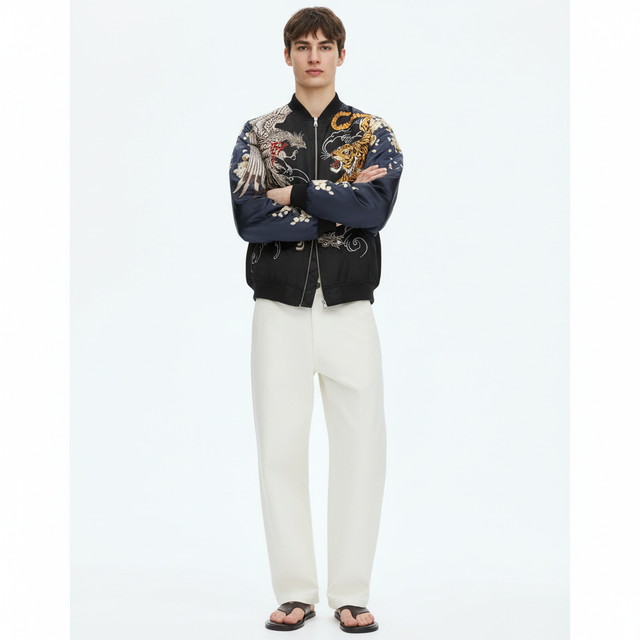
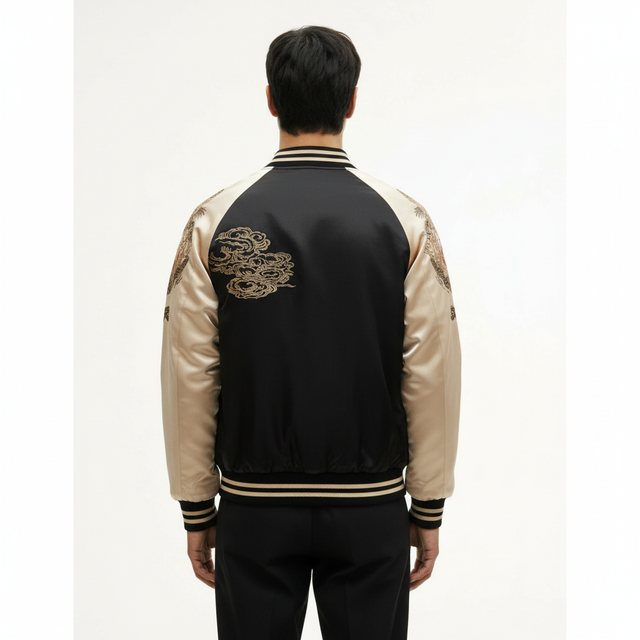
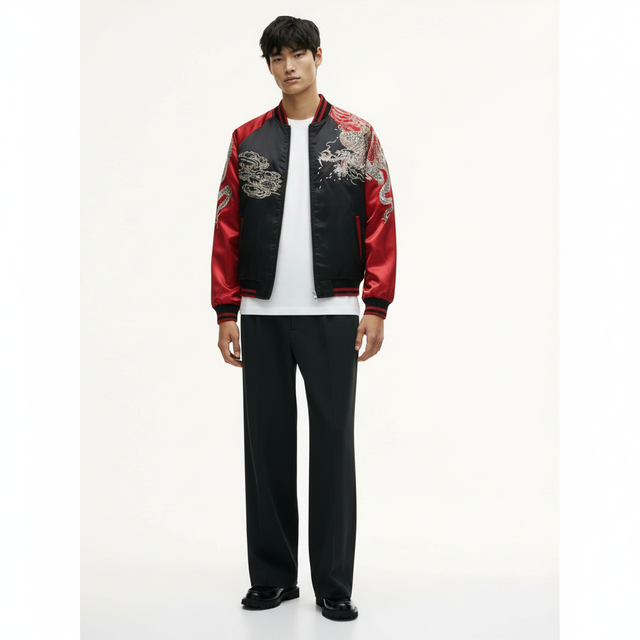
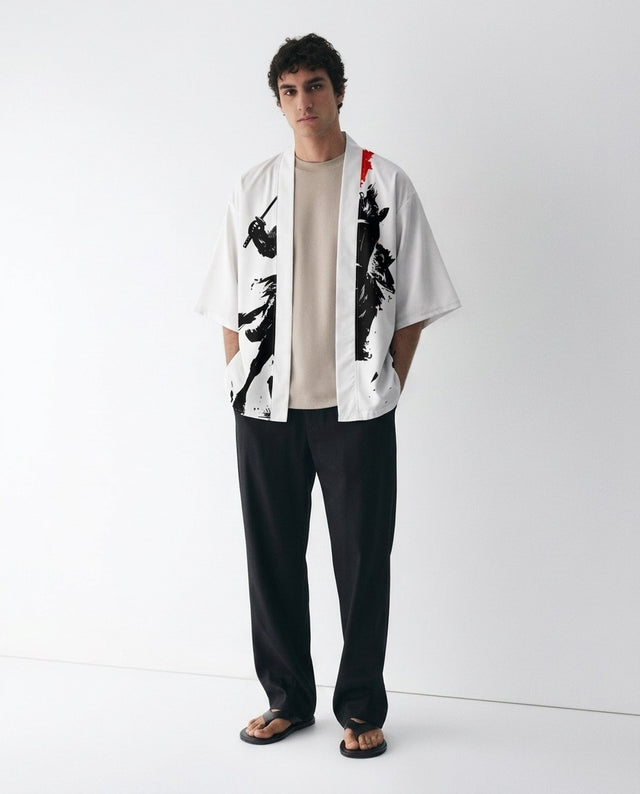
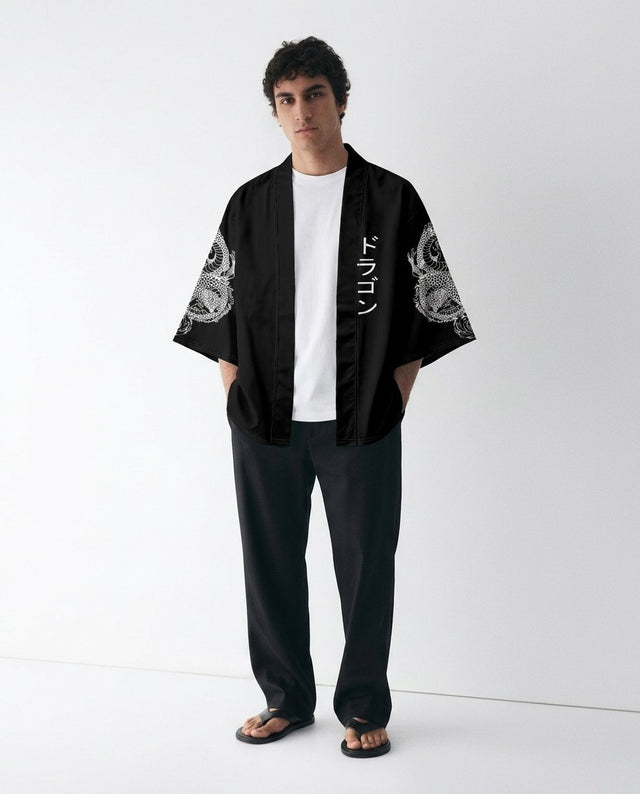
Every jacket here belongs to one of four families. The haori hangs open and began as formal dress. The noragi ties shut and began as farm work wear. The kimono jacket keeps the wrap and the wide sleeve, and the sukajan is the embroidered souvenir bomber first sold to American servicemen in Yokosuka.
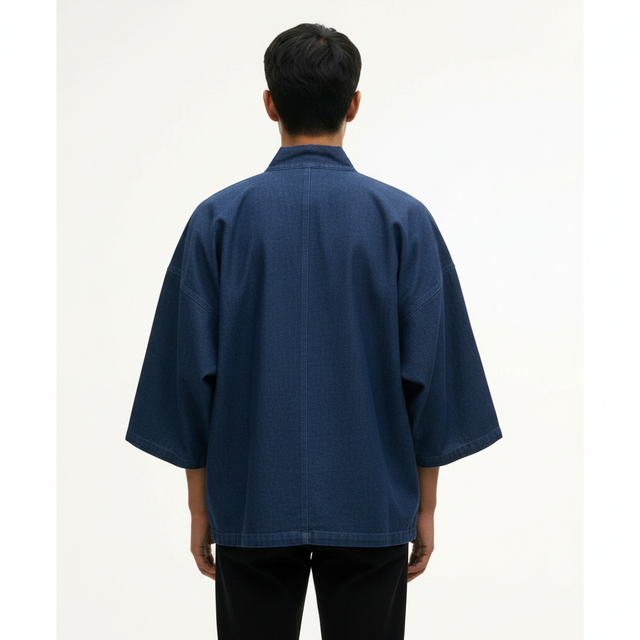
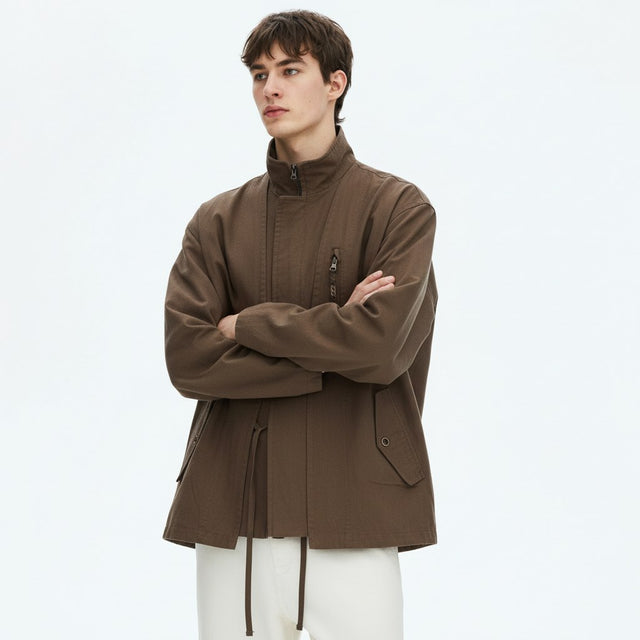
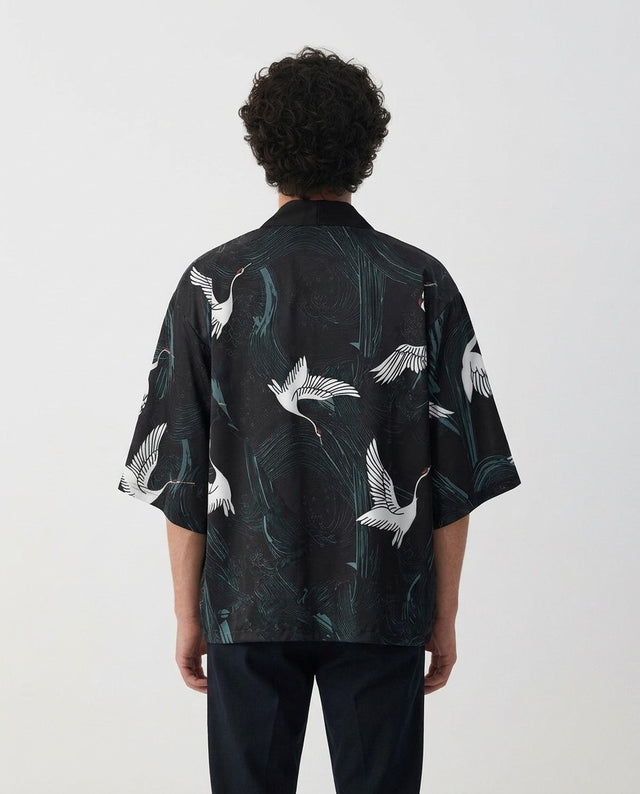
All 45 are cut from straight panels. No shaped Western block. The sleeve drops from the body line, so the jacket hangs on you instead of gripping the shoulder.
Haori and noragi
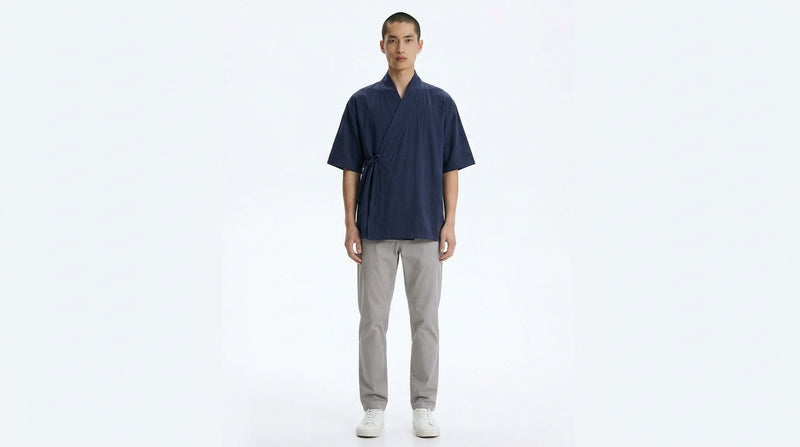
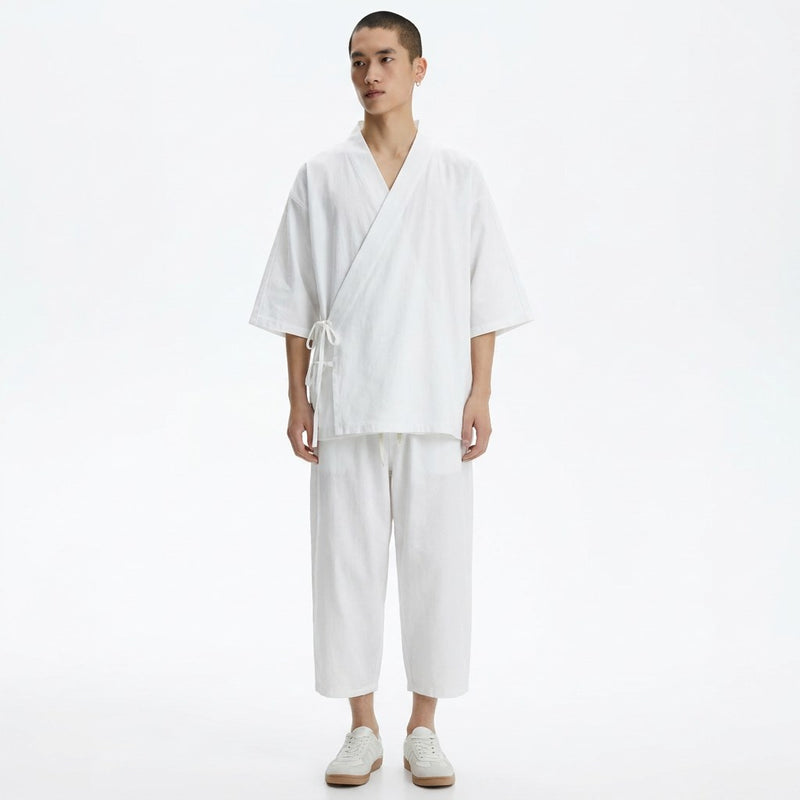
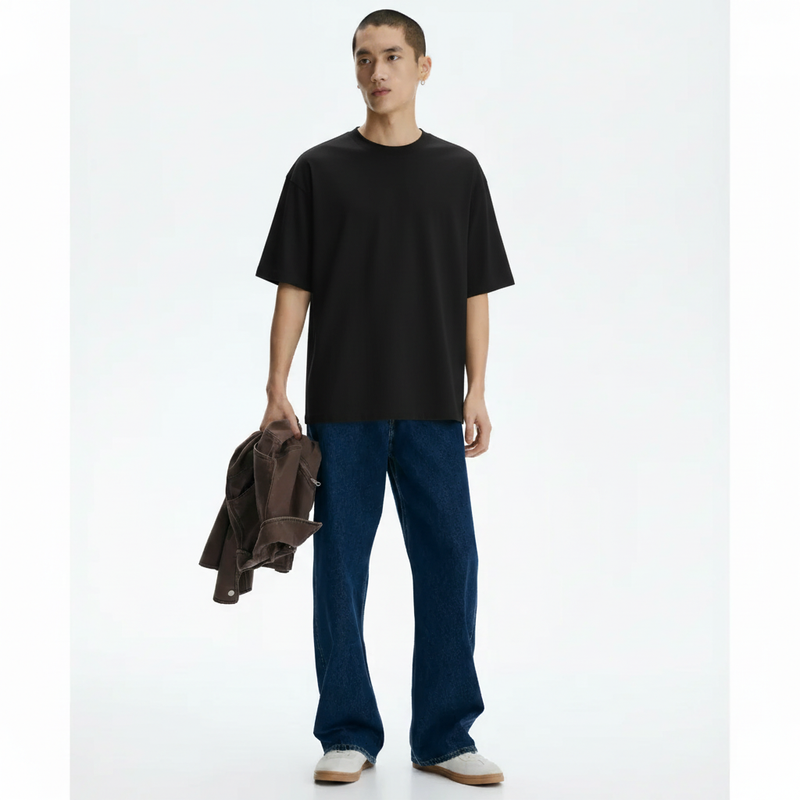
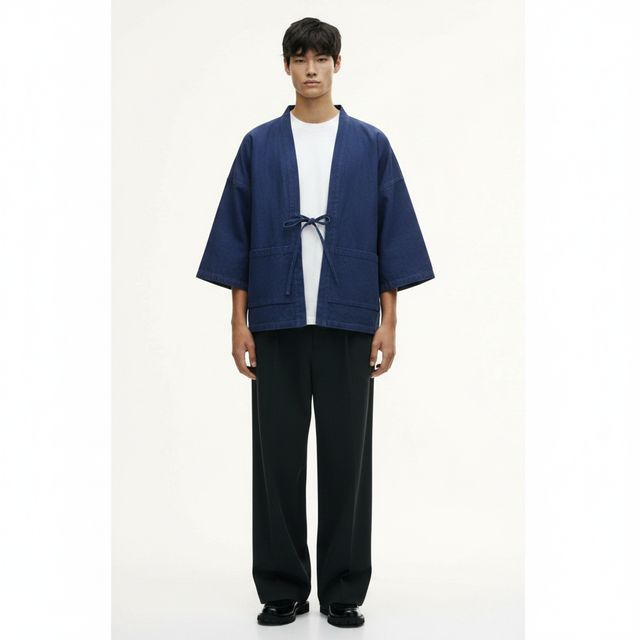
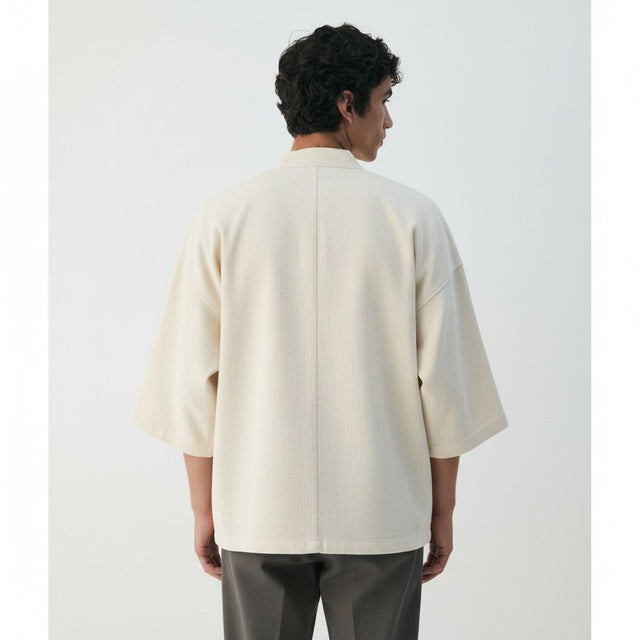
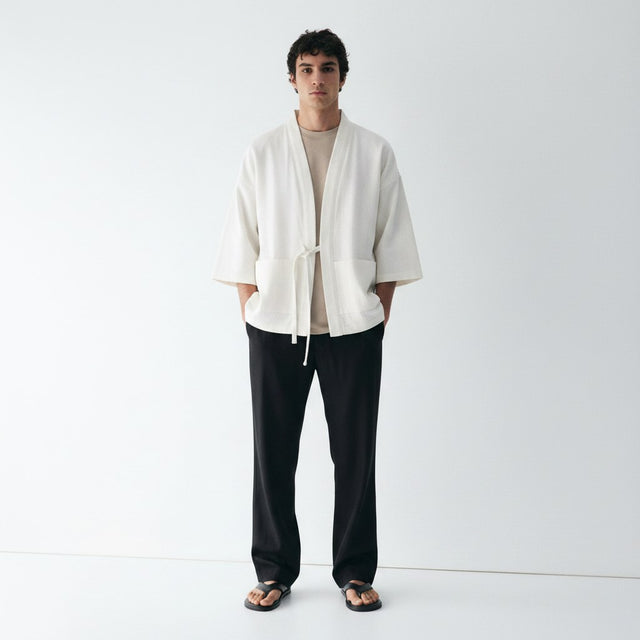
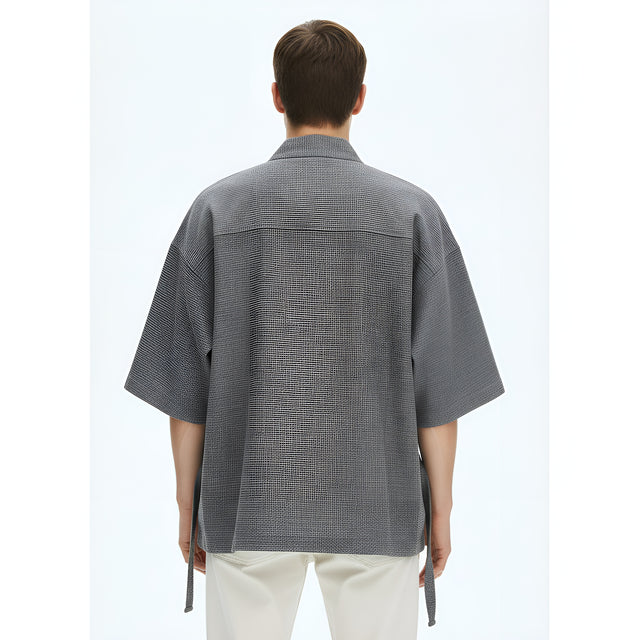
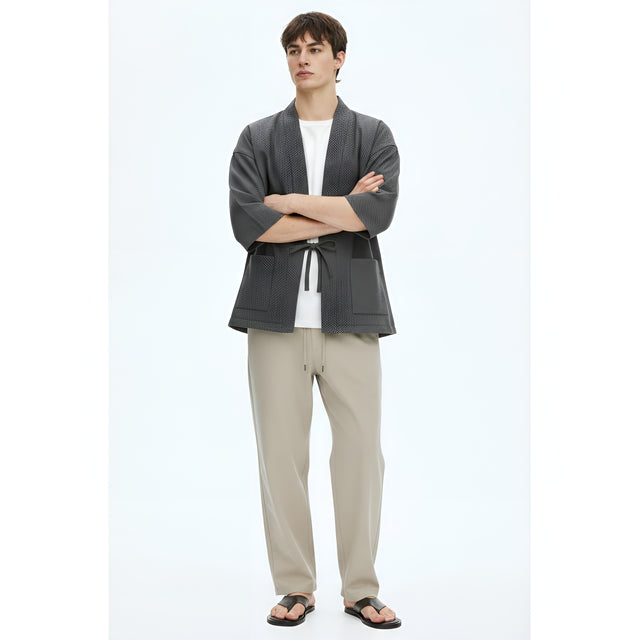
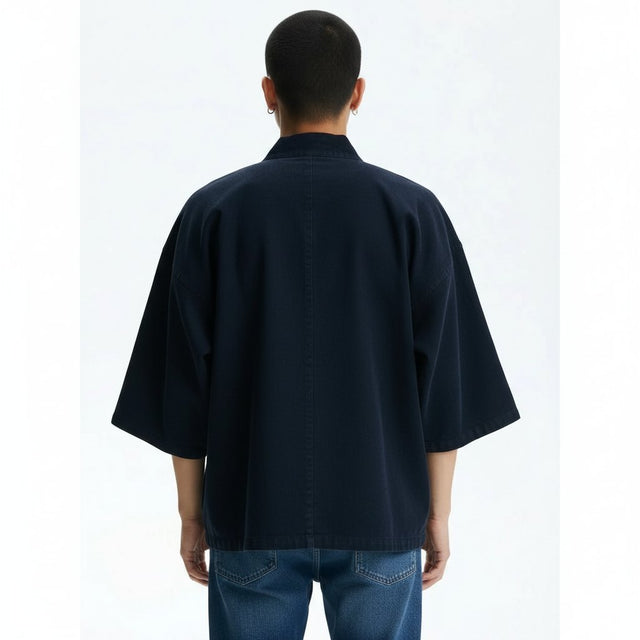
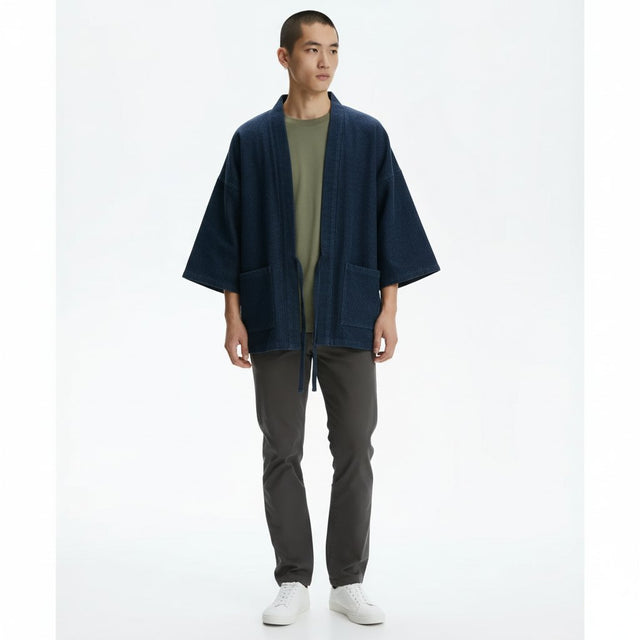
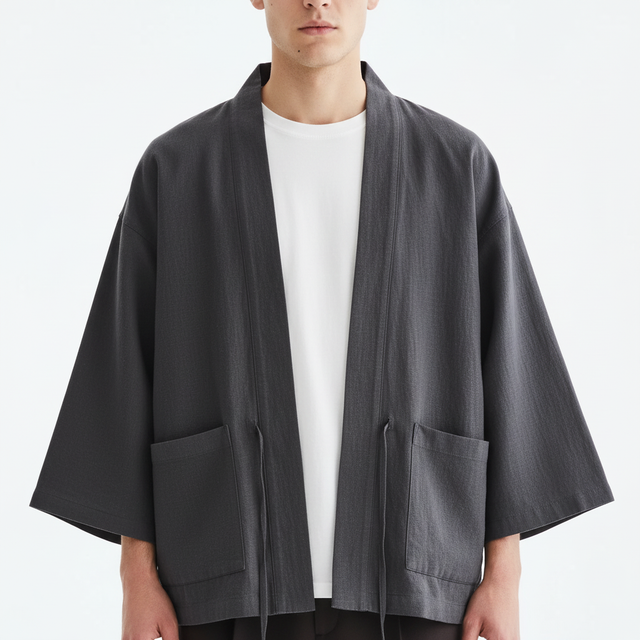
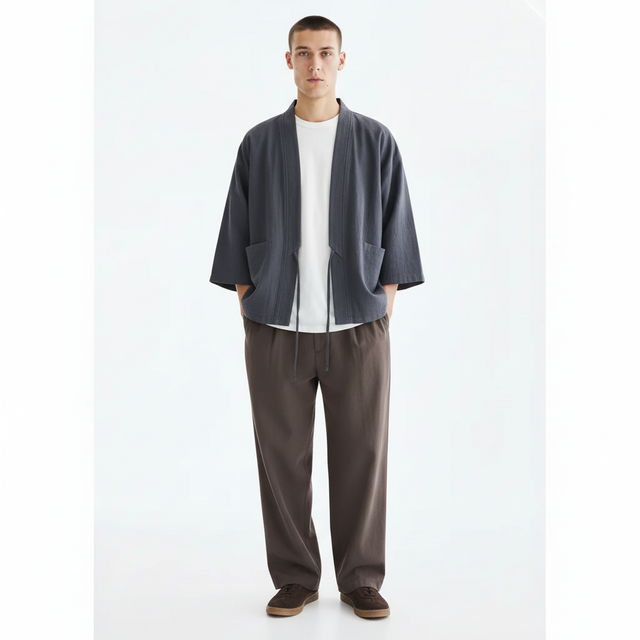
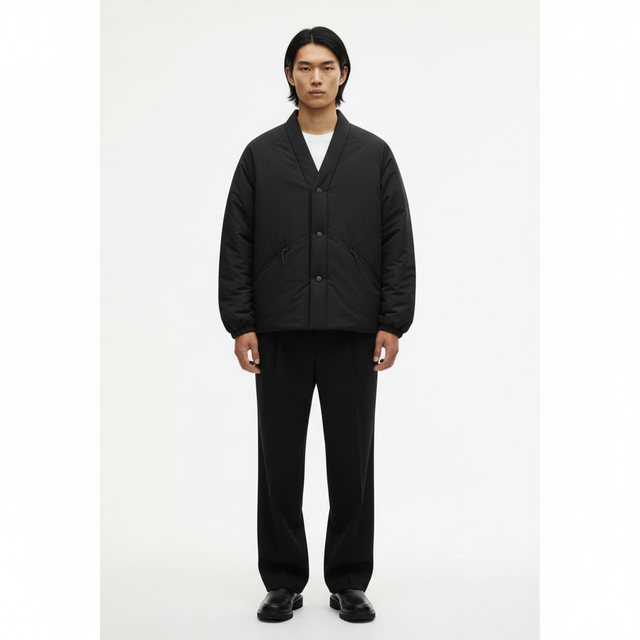
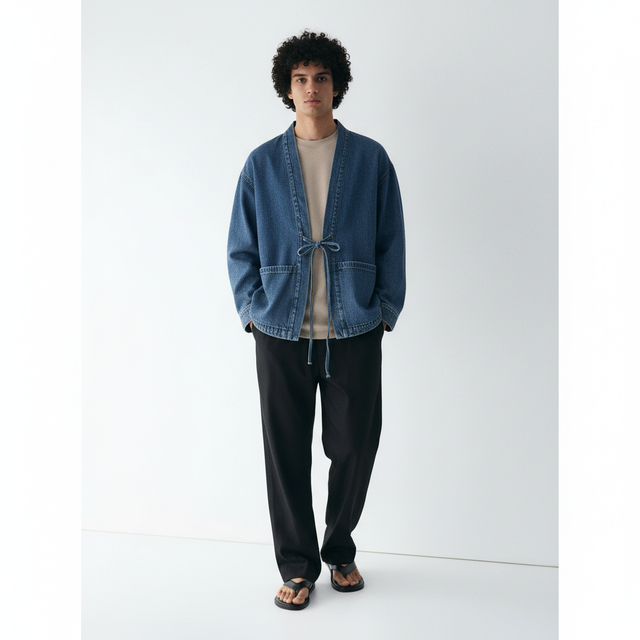
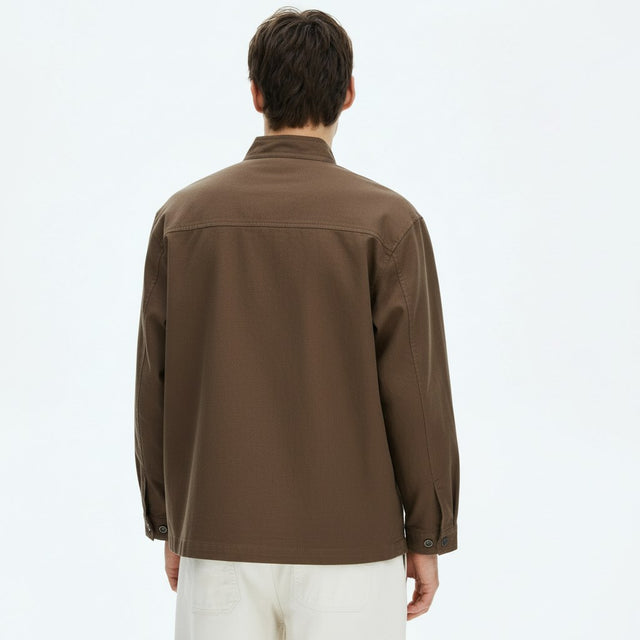
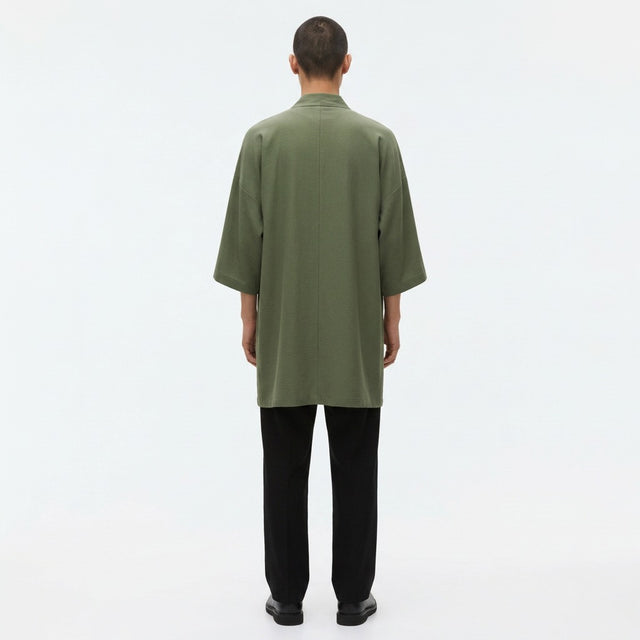
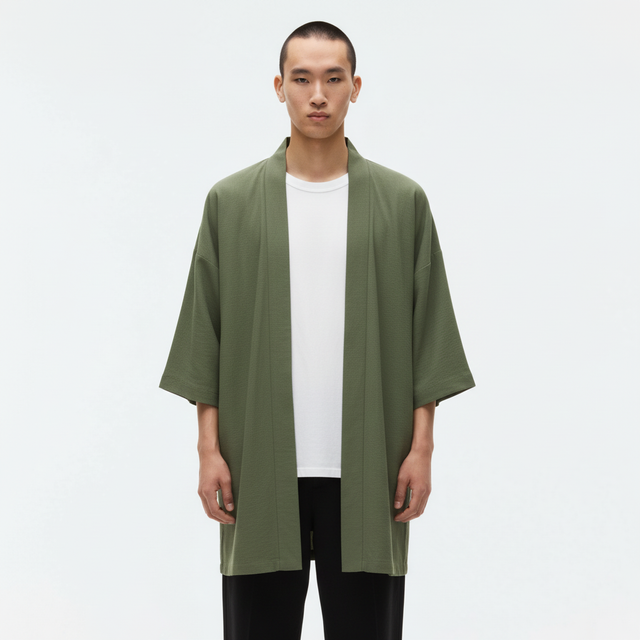
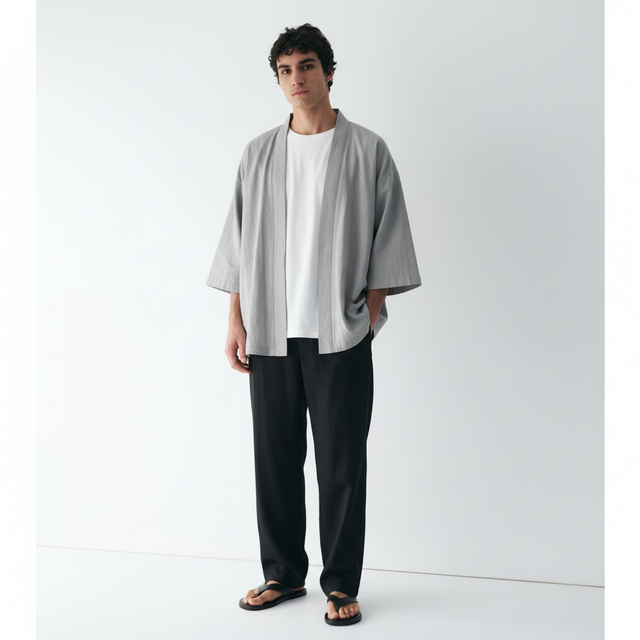
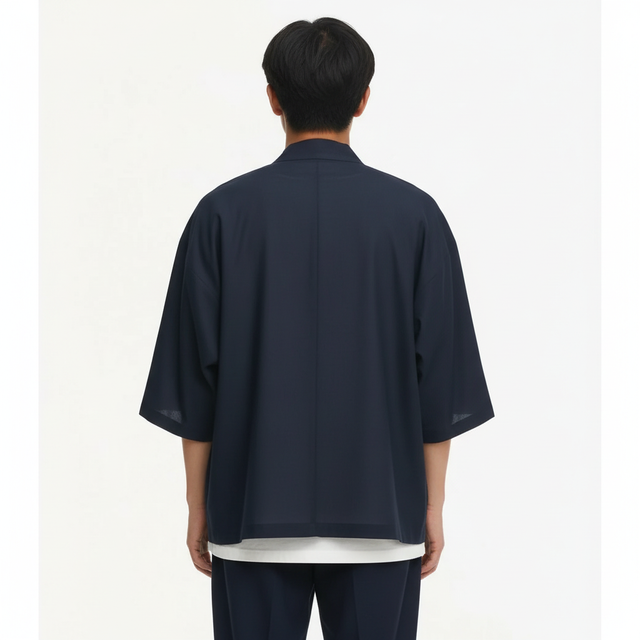
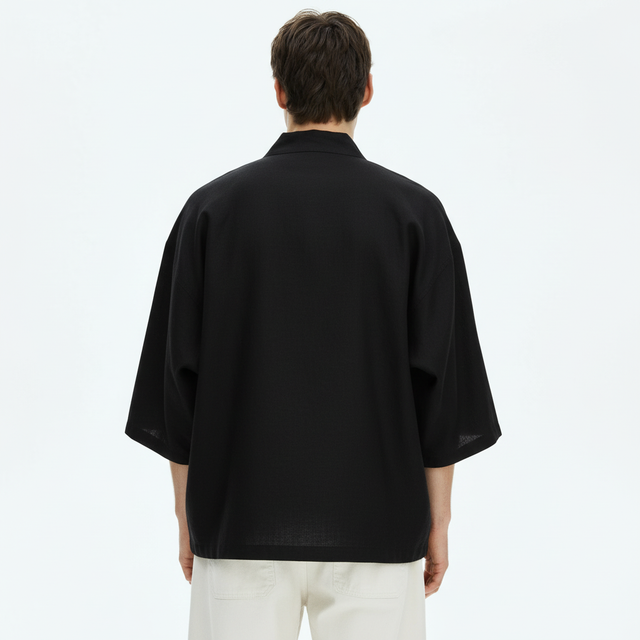
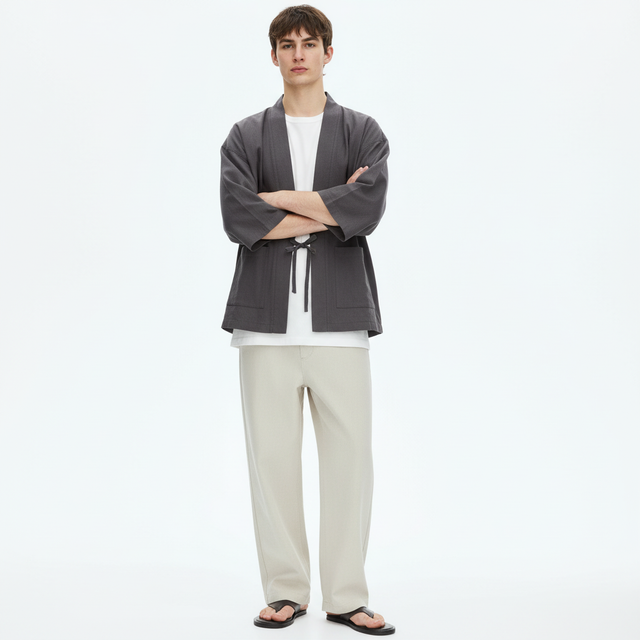
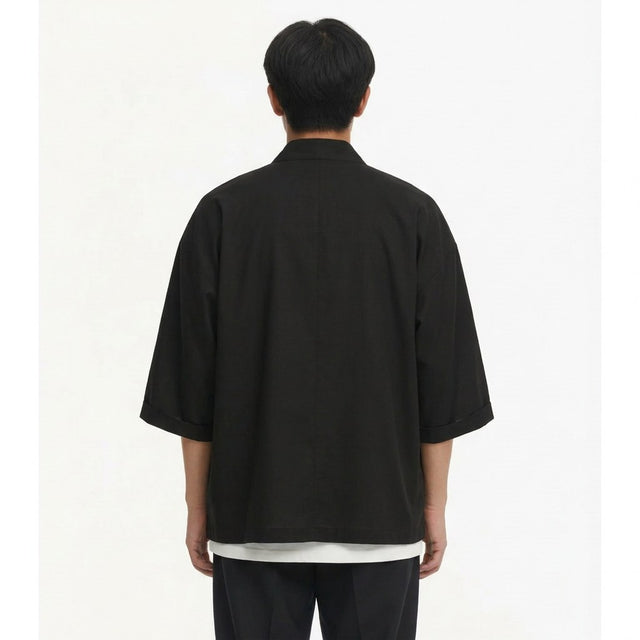
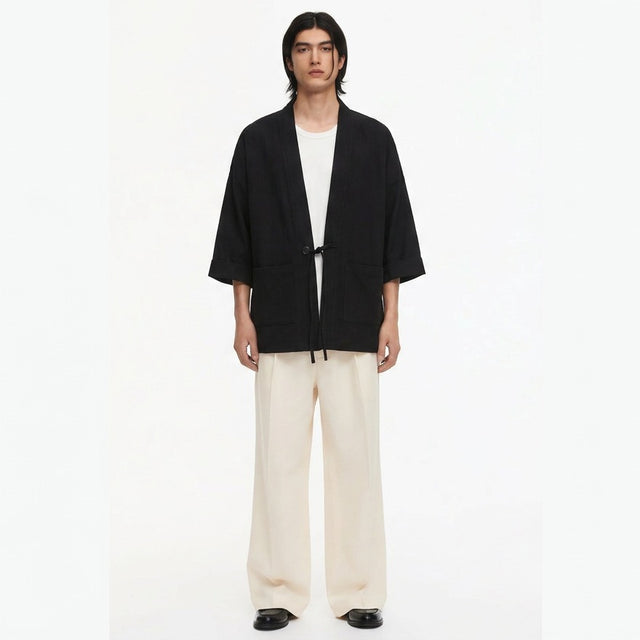
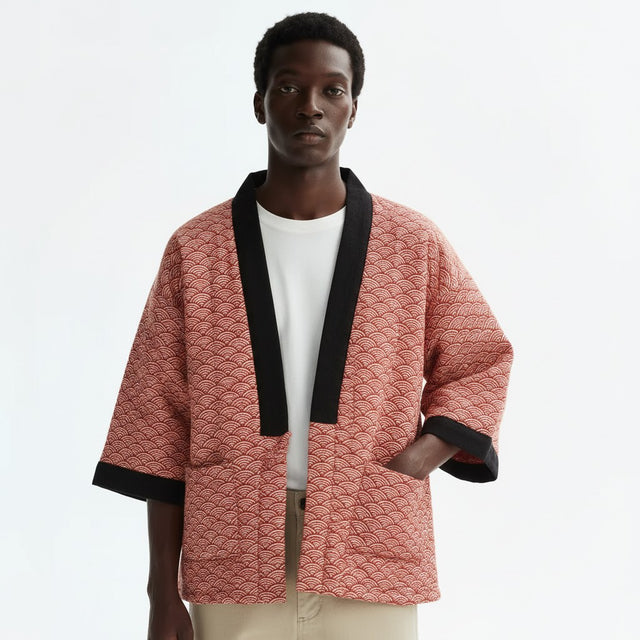
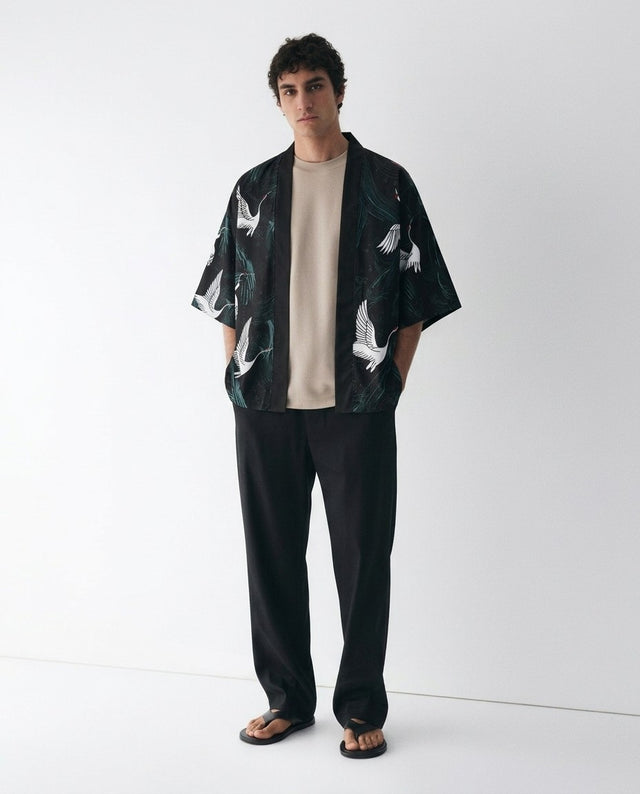
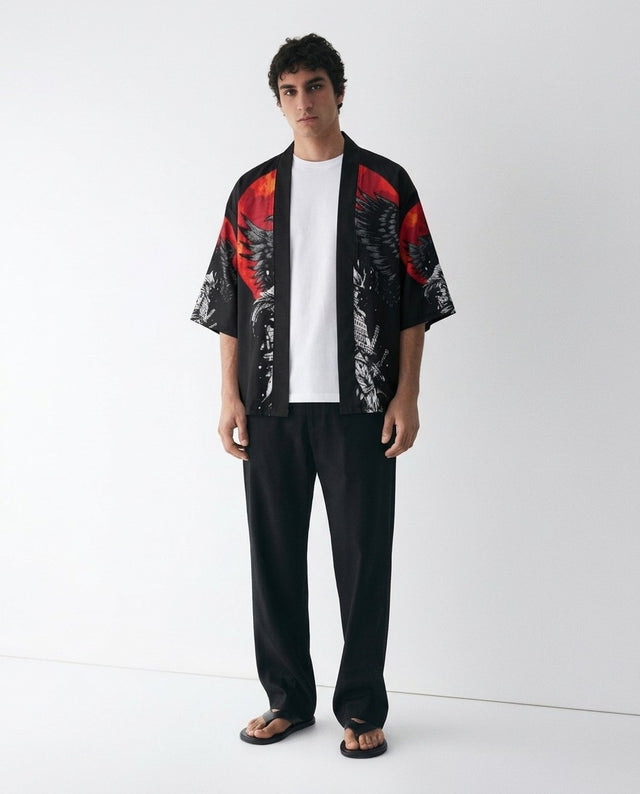
A haori is the open overlayer, hip length, worn over a tee or a shirt. The cotton open-front haori starts at $37. A noragi is the farmer’s jacket. It crosses over and ties at the side, in cotton, cotton linen, denim or indigo-dyed cotton.
Pick the haori to finish an outfit. Pick the noragi to work in one. Both go over a plain tee.
Kimono jackets and sukajan
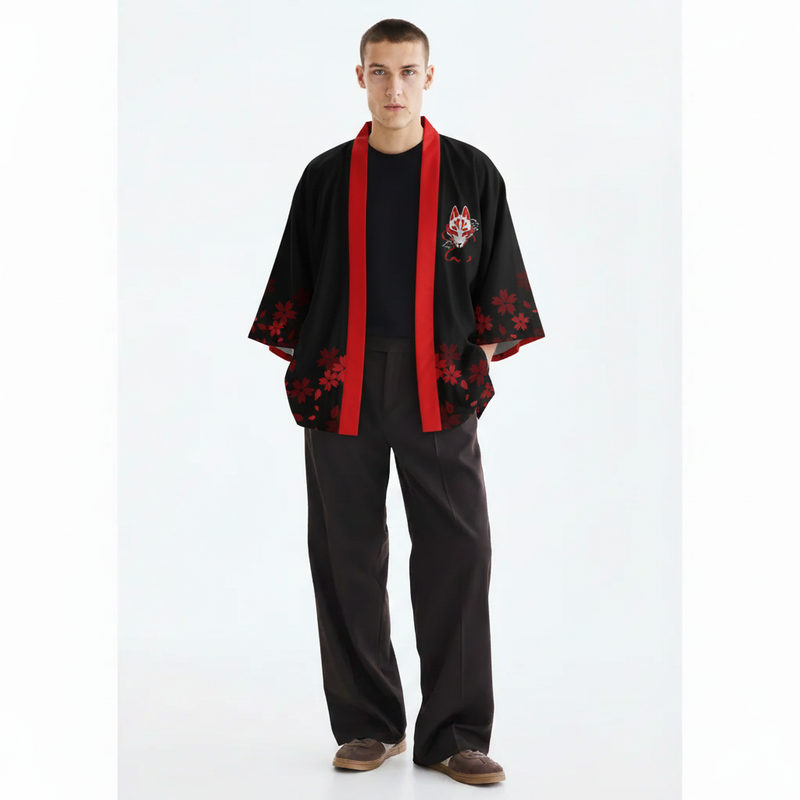
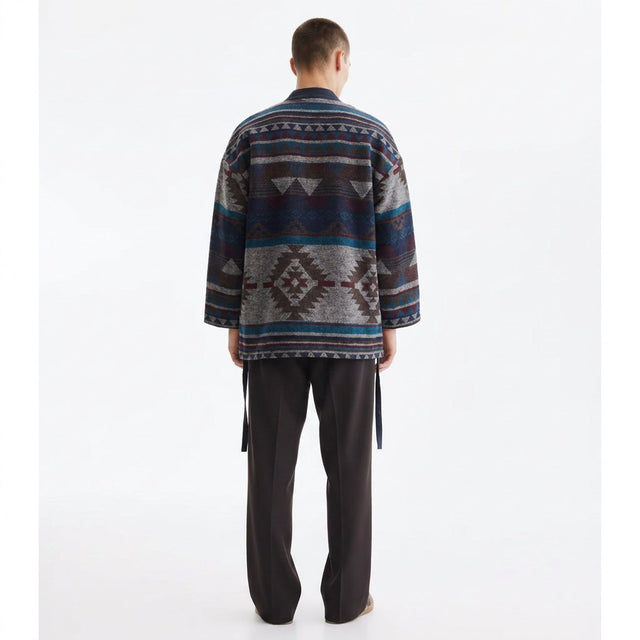
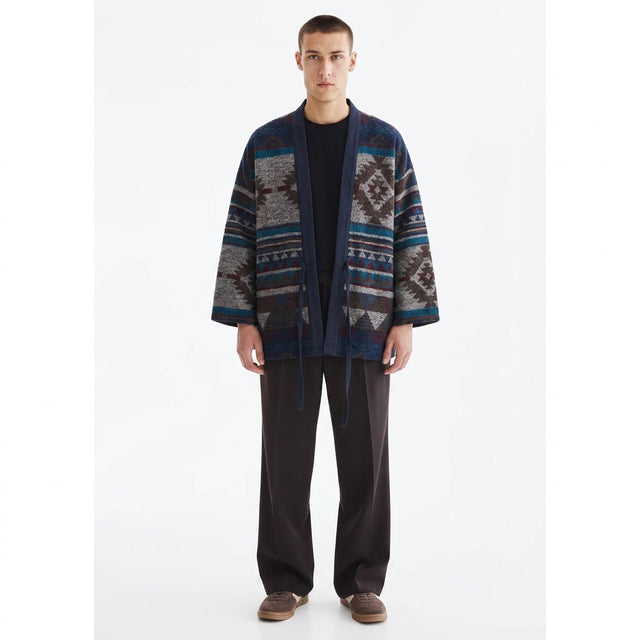
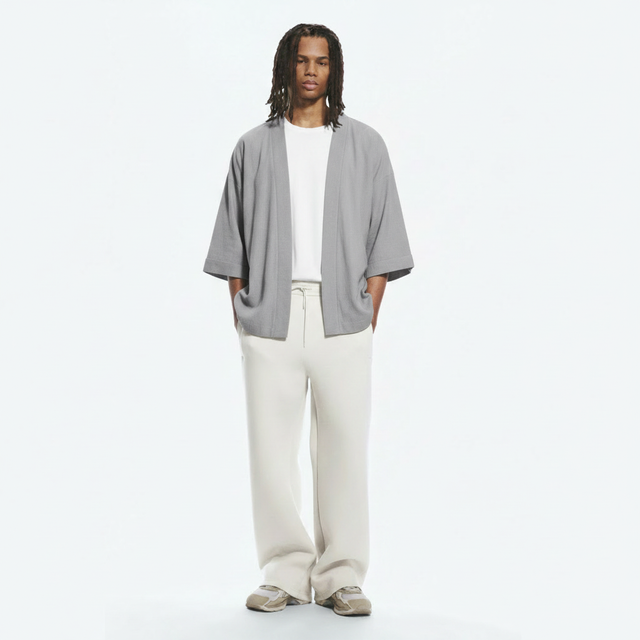
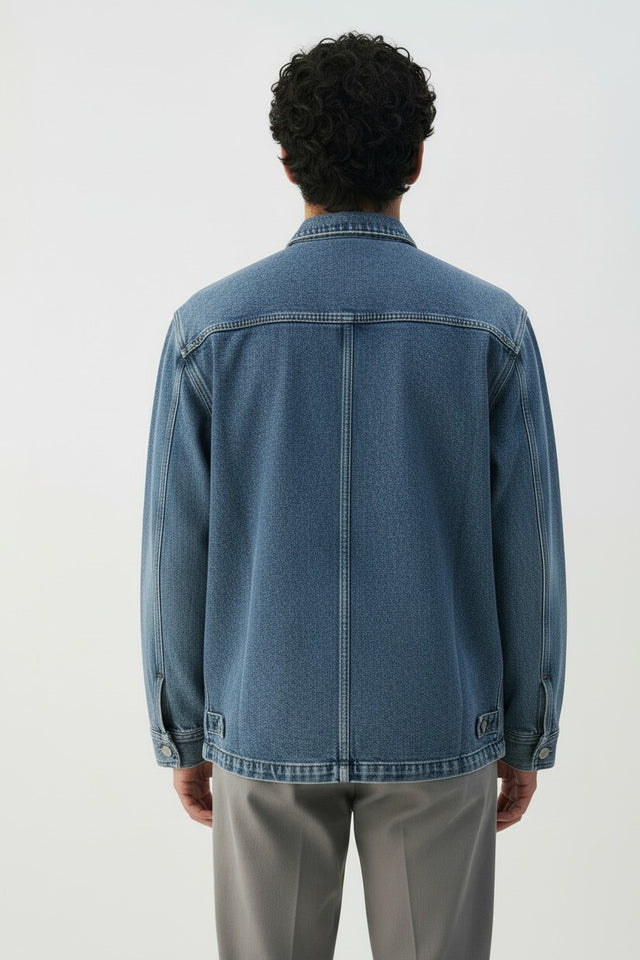
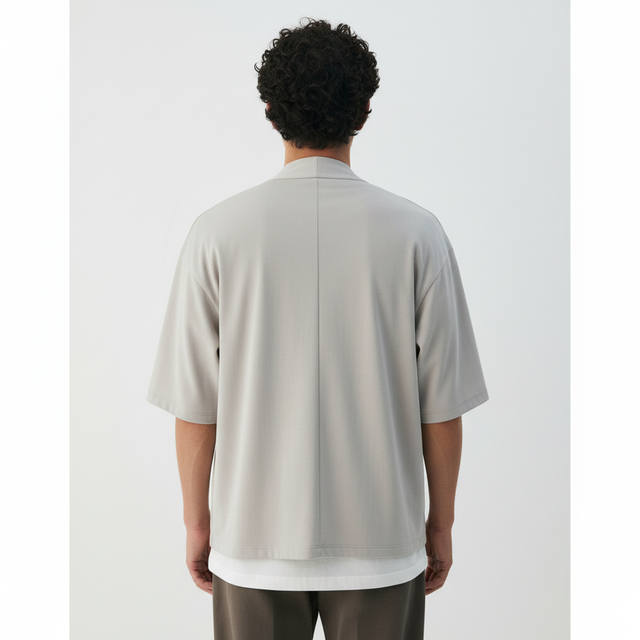
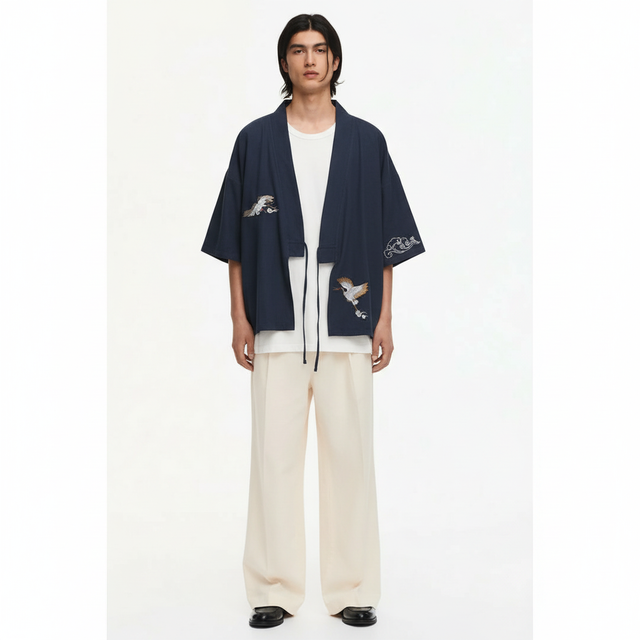
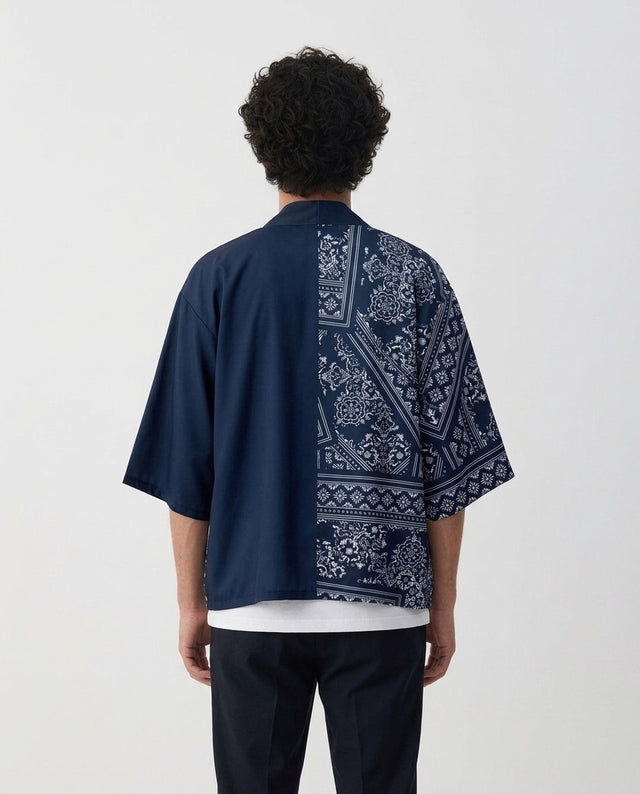
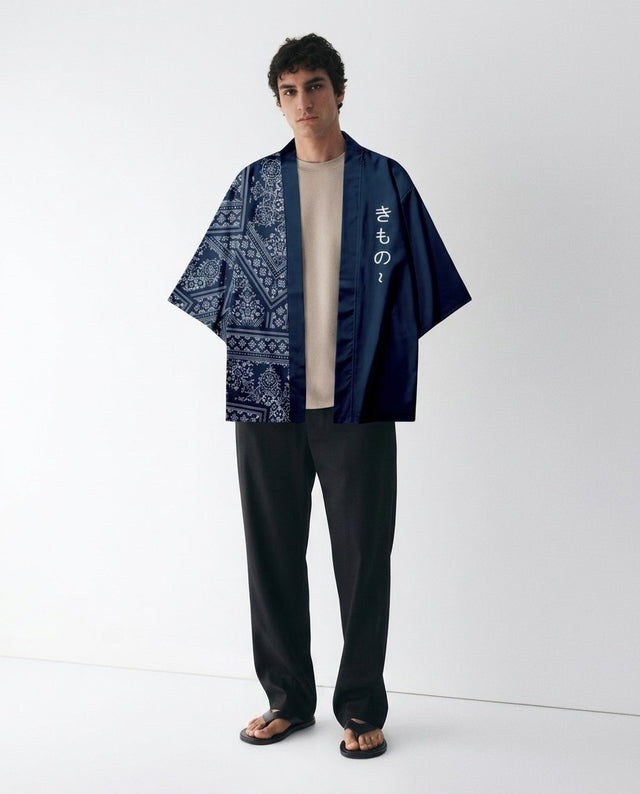
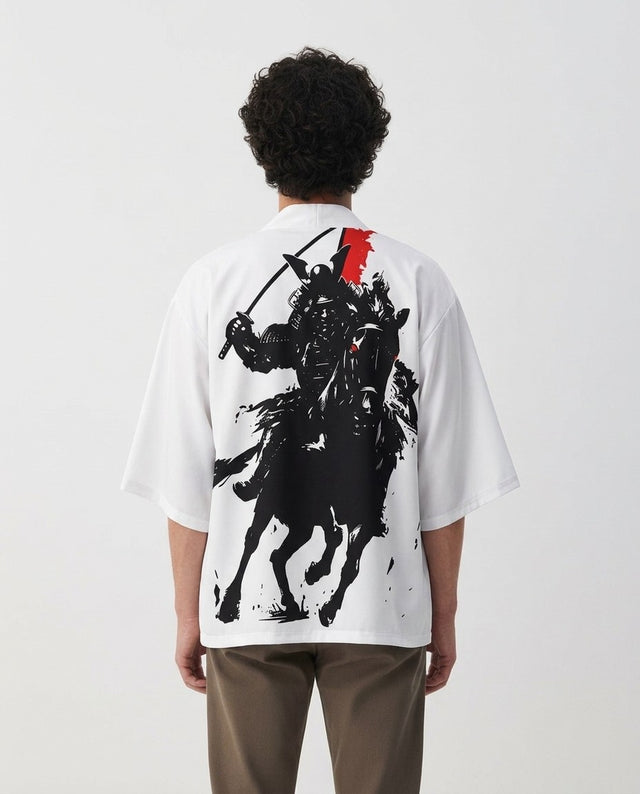
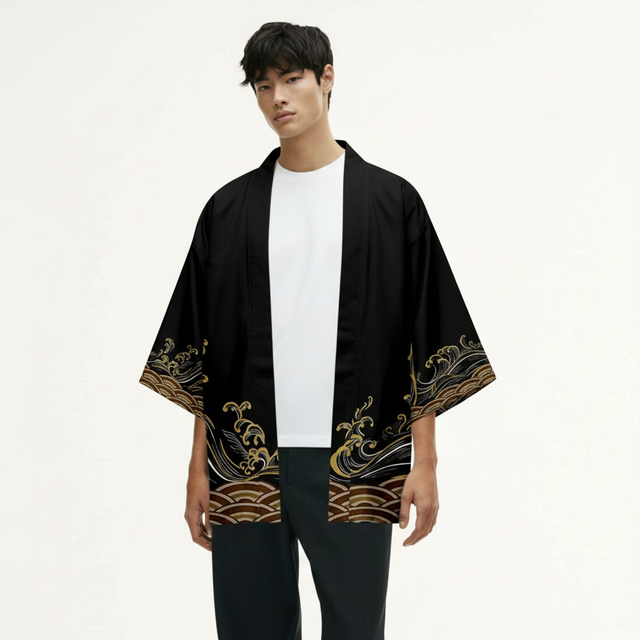
The men’s kimono jackets keep the wrap and drop the formality. The denim kimono is 100% cotton denim and the tied kimono cardigan is 98% cotton. The sukajan jackets are the loud ones: polyester bombers with a dragon, a phoenix, Raijin or a nine-tailed fox embroidered on them.
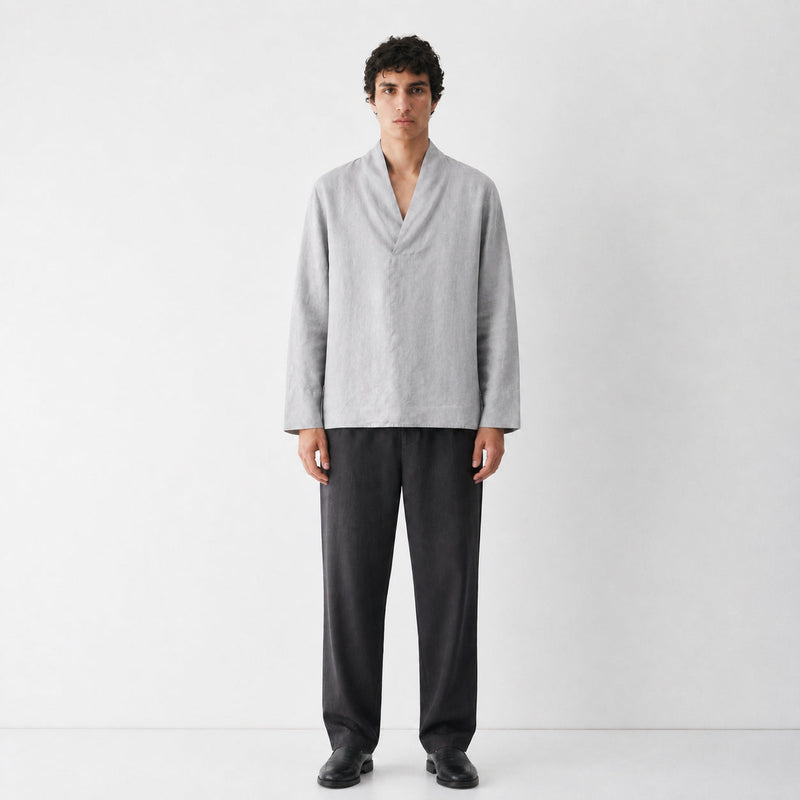
Want the frog closure? The plant-indigo Tang jacket is 100% cotton, fastens with knotted cord loops instead of buttons and lightens at the creases the way raw denim does over a year of wear.
A traditional japanese jacket, or a modern one
Japanese jackets for men here run from the old shapes to the new. For a traditional japanese jacket, the haori, the noragi and the padded hanten keep the cut Japan has worn for centuries. Each japanese style jacket in the second group, the sukajan and the tang jacket, is newer, but still a jacket from Japan in its history: the sukajan began as a souvenir from Yokosuka.
A japanese coat for the cold
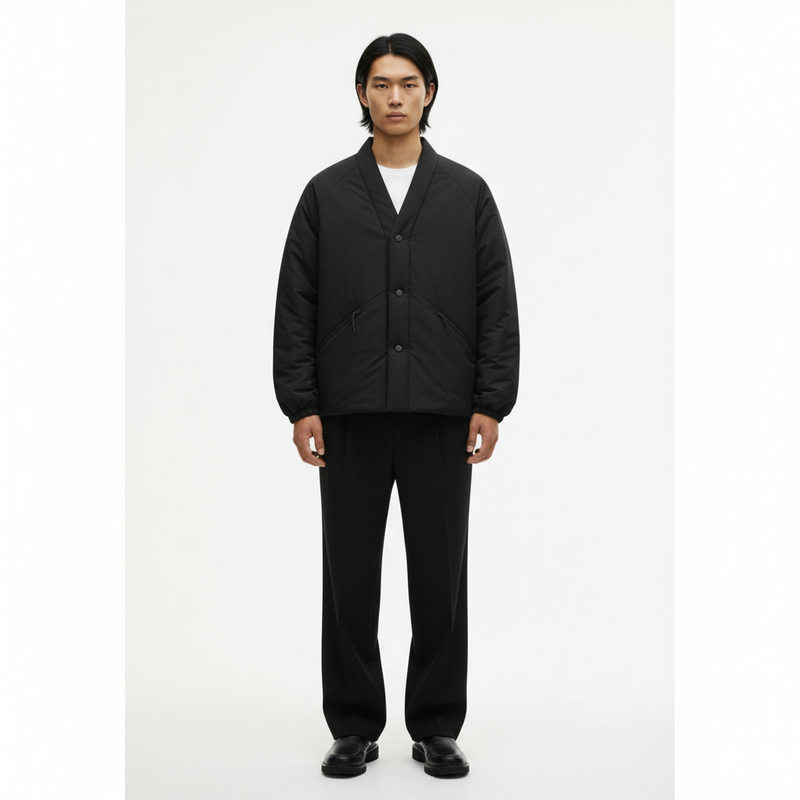
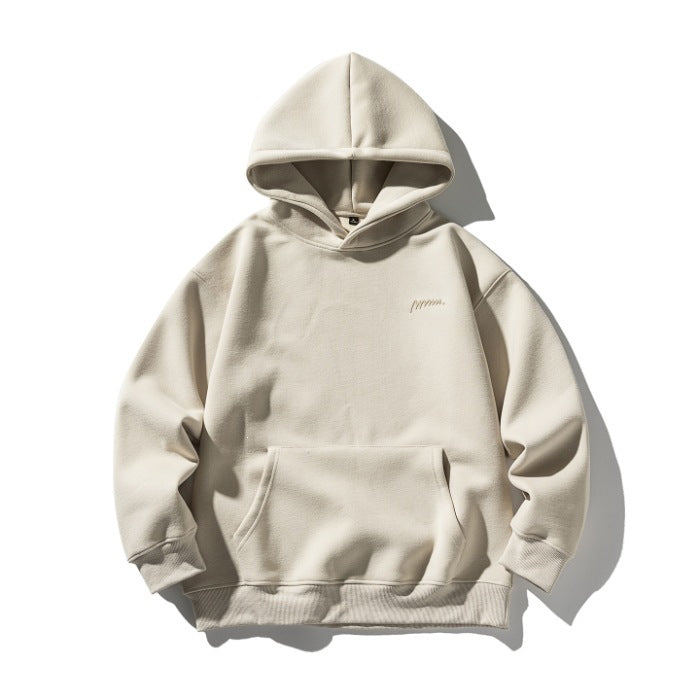
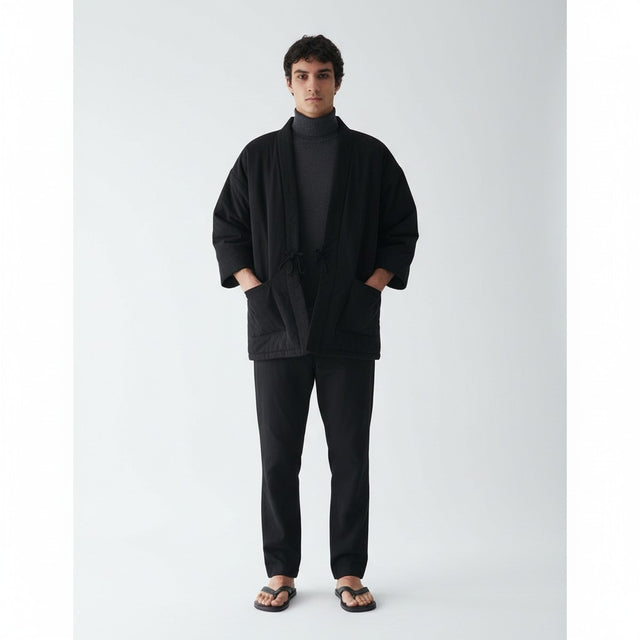
For a japanese coat, the padded hanten is the warm one, a short padded cotton jacket cut like a kimono and worn at home through Japanese winters. The kimono coat is lighter, a hip-length wrap that ties at the side. Most jackets from Japan are cut to layer, so both go over a hoodie as easily as over a tee.
How they fit
Chest runs 112 cm to 148 cm across the range and body length 68.5 cm to 82 cm. Sizes go XS to 2XL. These are loose cuts. Take your usual size, or go one up if you plan to wear a heavy hoodie underneath through the winter months. The shoots use a 187 cm model. Wash cold and hang dry, and wash the indigo pieces alone at first.
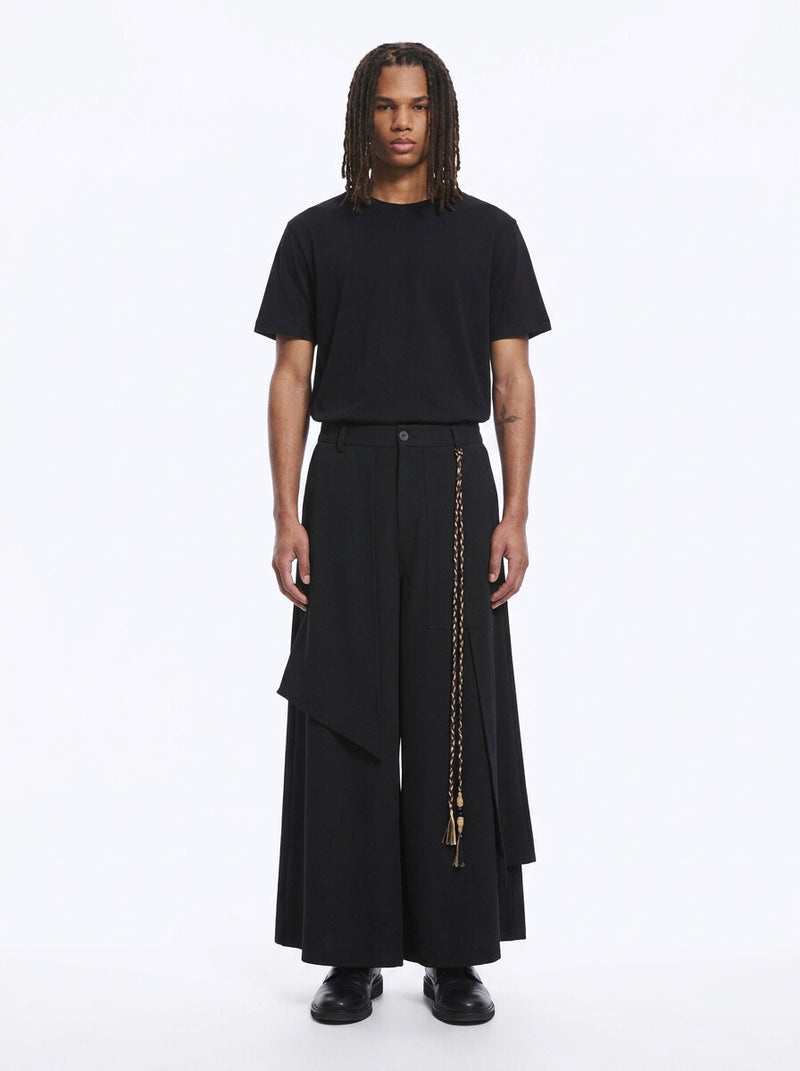
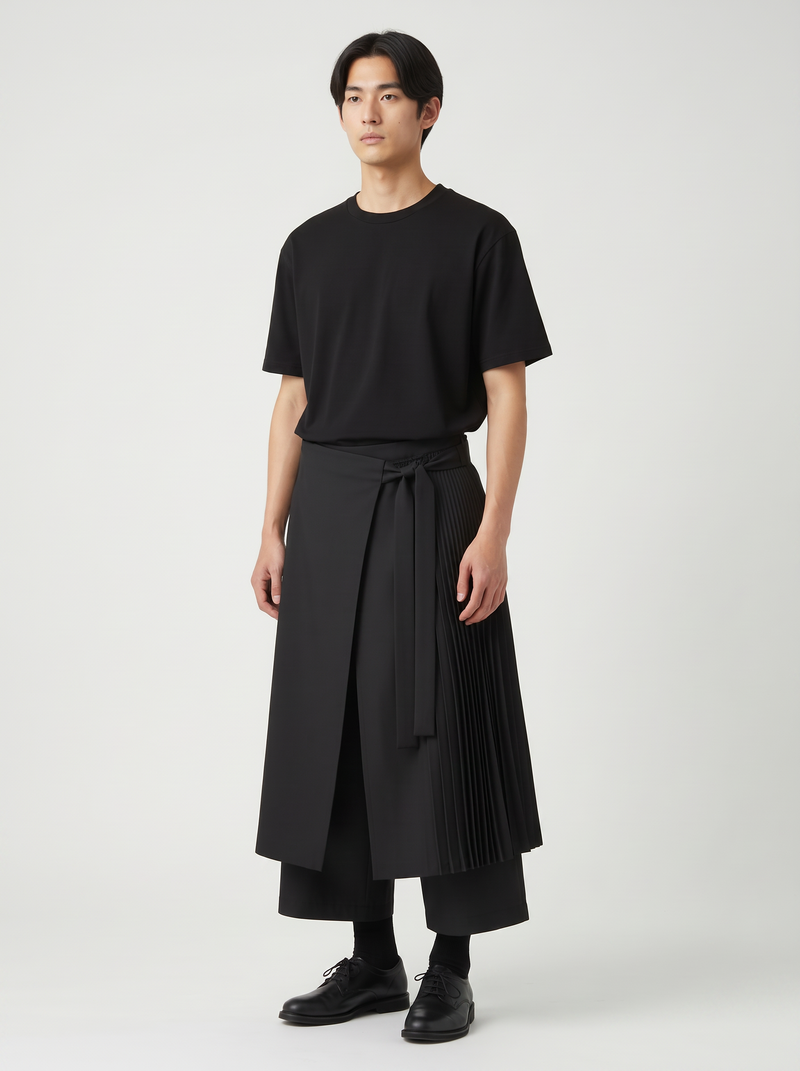
For the bottom half, see japanese pants and hakama pants.
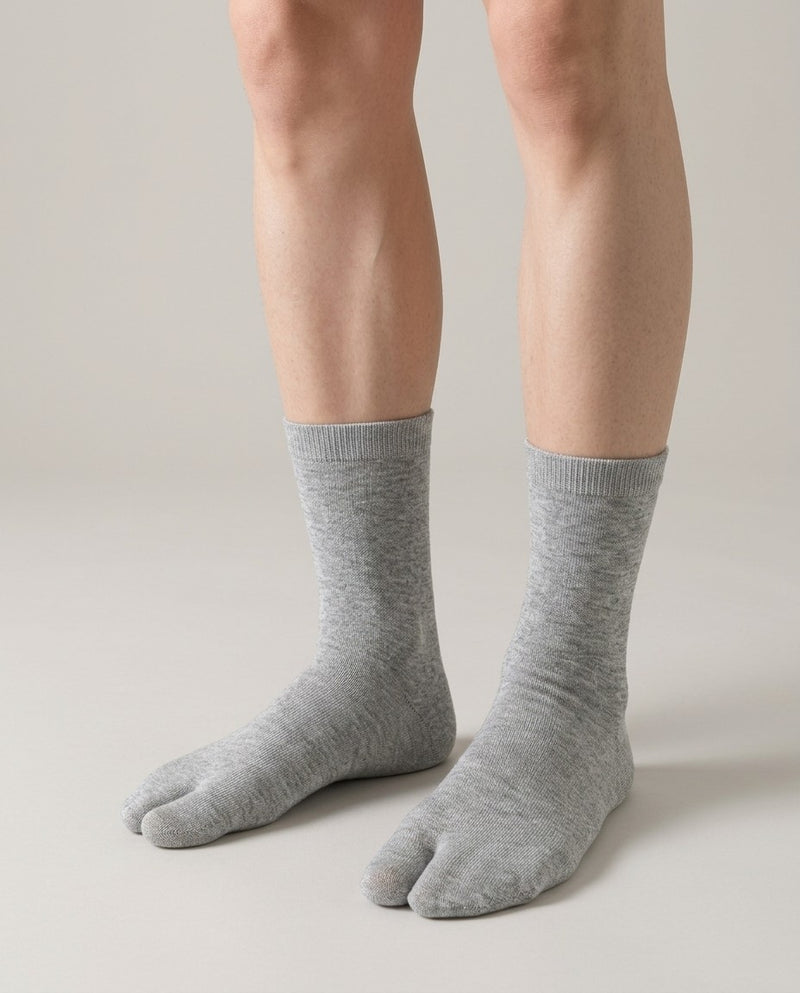
Jackets, trousers, sets and tabi in one place: Japanese clothing for men.
Measurements come from the manufacturer's flat size table for each garment, converted to centimetres and mapped onto one size ladder. Available for 20 of the 45 garments here, last checked 2026-10-27. How we measure.
Shop all Jackets and Outerwear
Read the guide: Traditional Japanese Clothing: 36 Garments and Their Names
Frequently asked questions
What counts as a Japanese jacket?
A jacket cut from straight panels that closes with a tie, a frog or an open front instead of a zip. Haori, noragi, kimono jackets and sukajan all qualify.
What is the difference between a haori and a noragi?
The haori hangs open and began as formal dress. The noragi crosses over, ties at the side and began as work wear for farmers.
Is a sukajan a Japanese jacket?
Yes. It is a souvenir bomber first embroidered in Yokosuka for American servicemen after the war. Today it is streetwear.
How do Japanese jackets fit?
Loose. Chest runs 112 cm to 148 cm across the range, so take your usual size, or one up if you layer a hoodie underneath.
How do I wash the indigo jackets?
Cold and on their own for the first few washes. Plant indigo gives up colour early and tints anything else in the drum.