
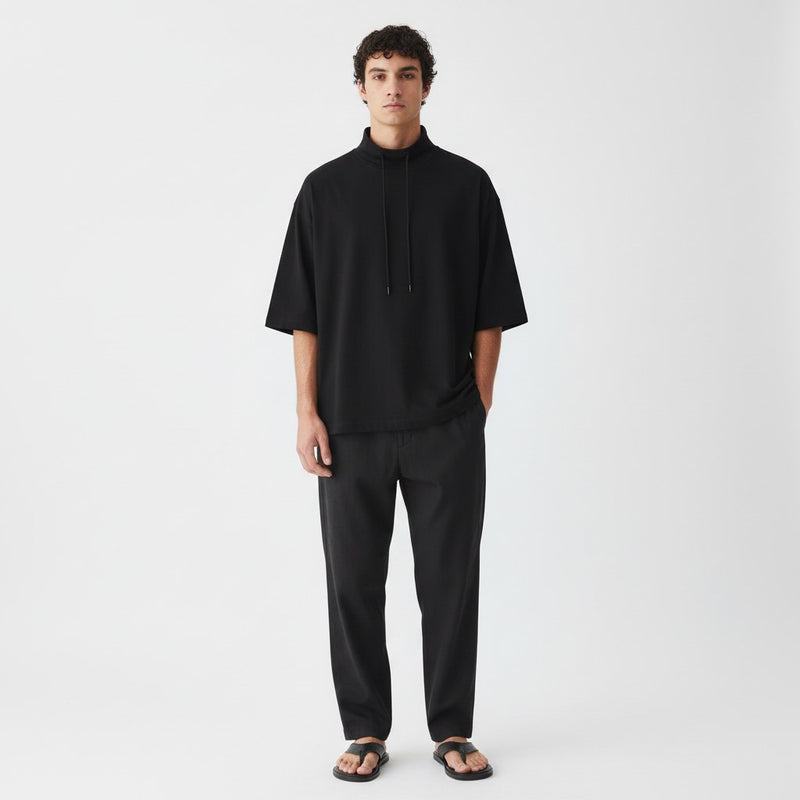


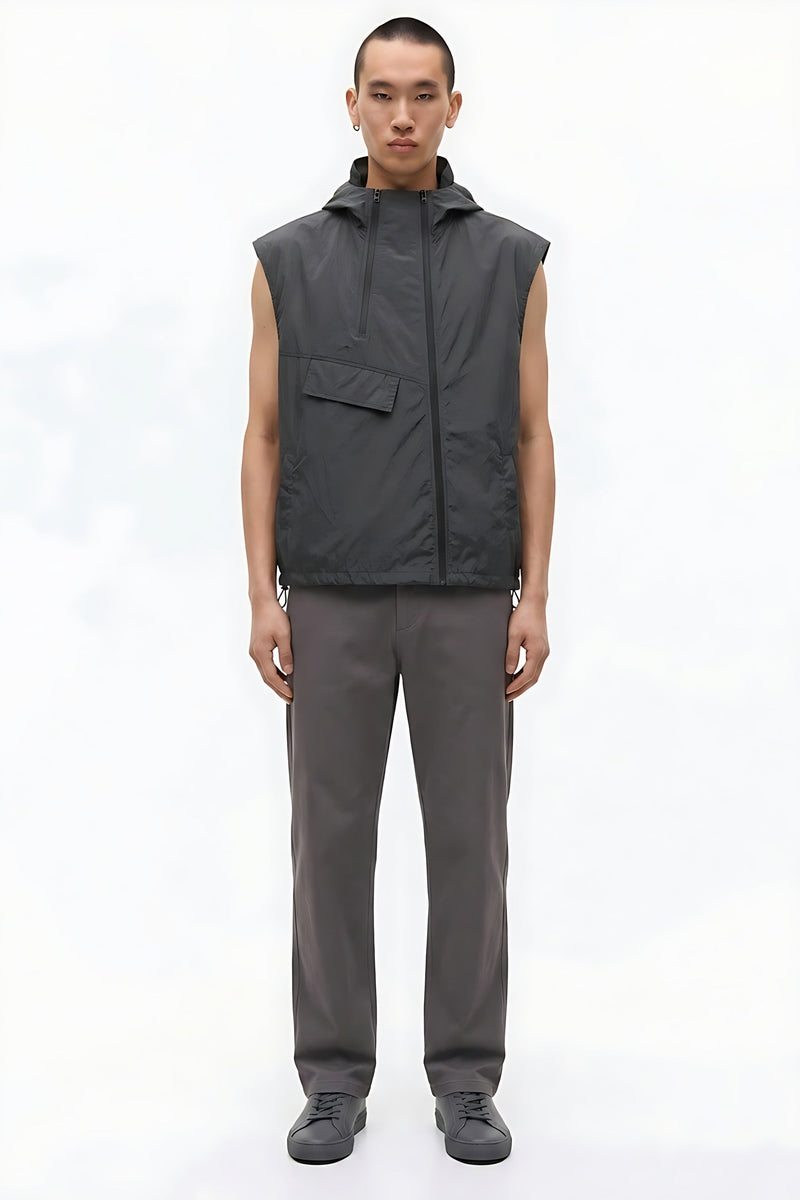


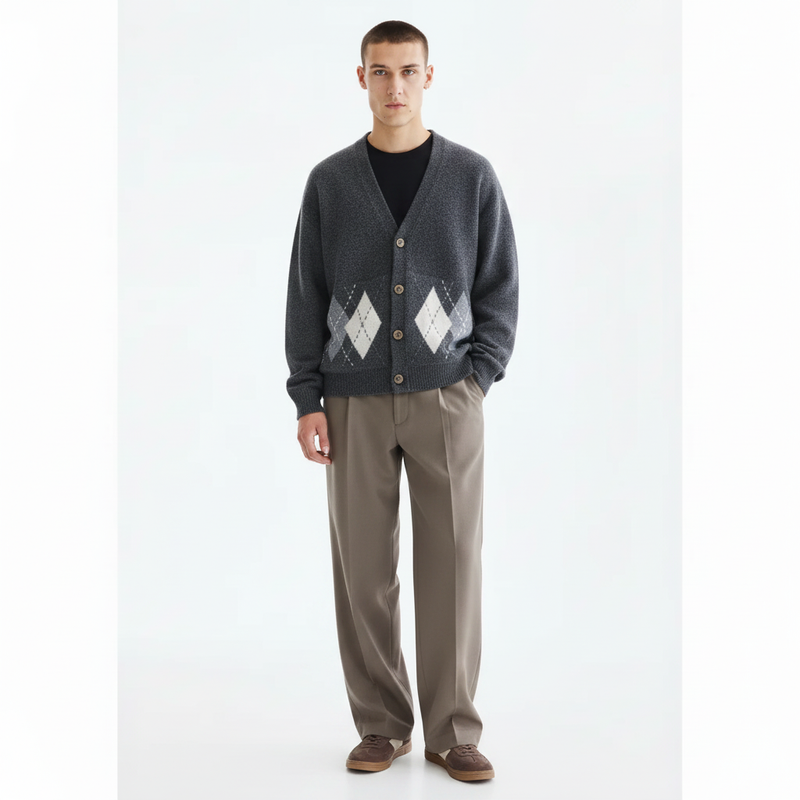


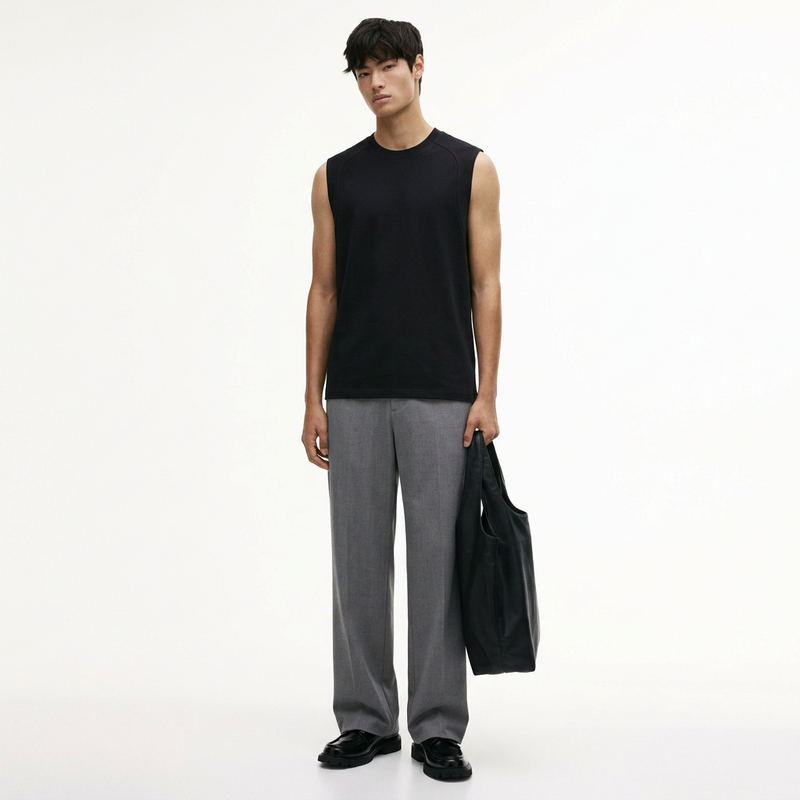
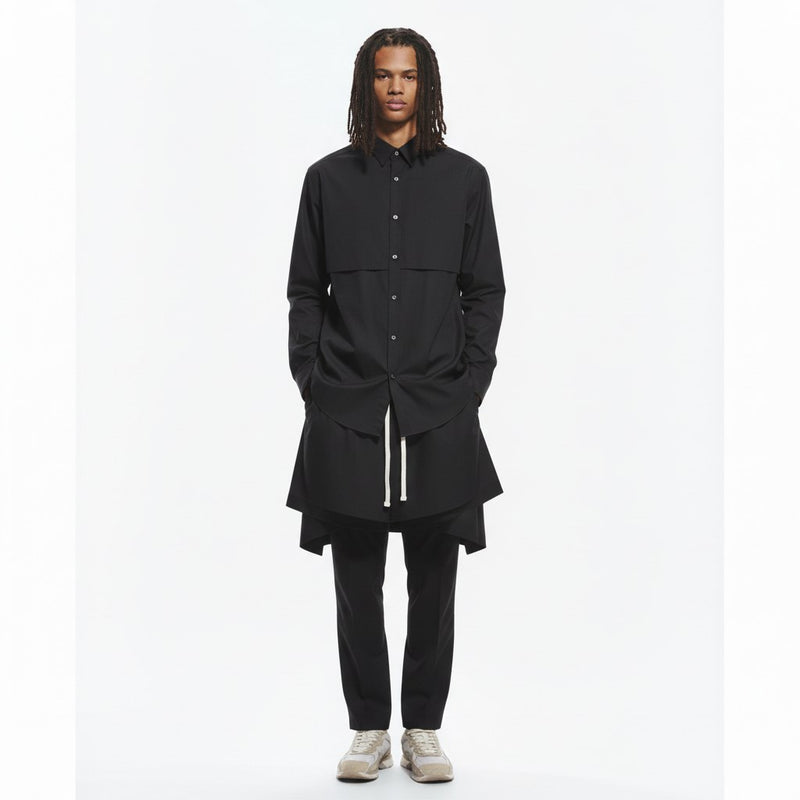


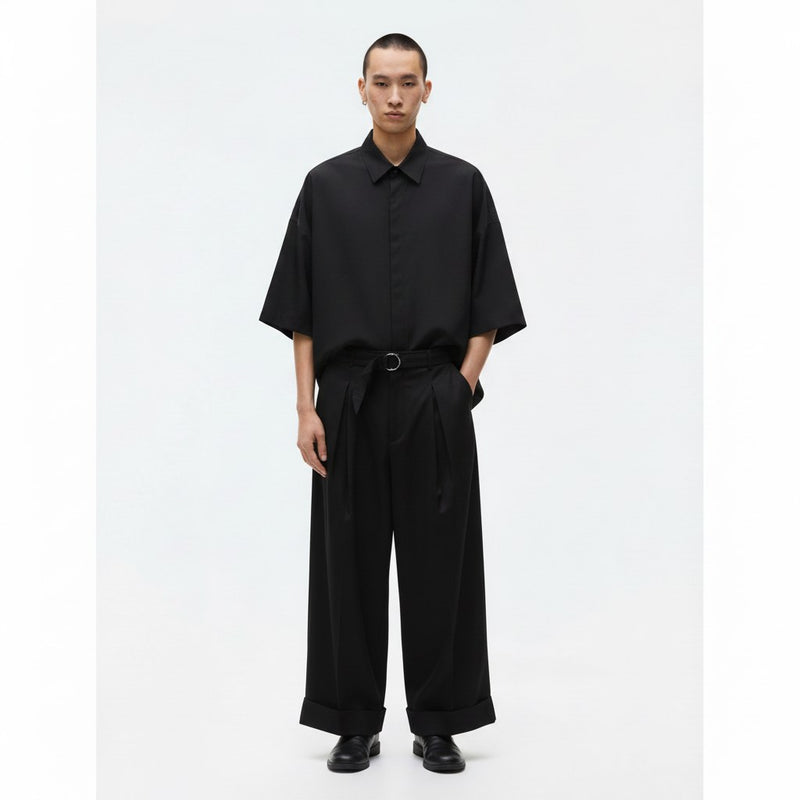







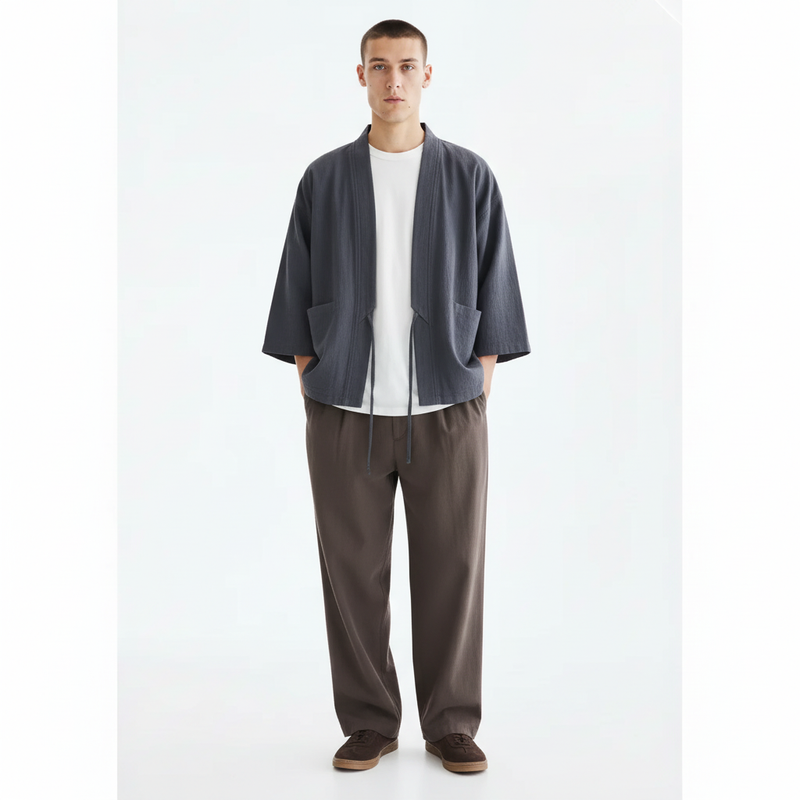
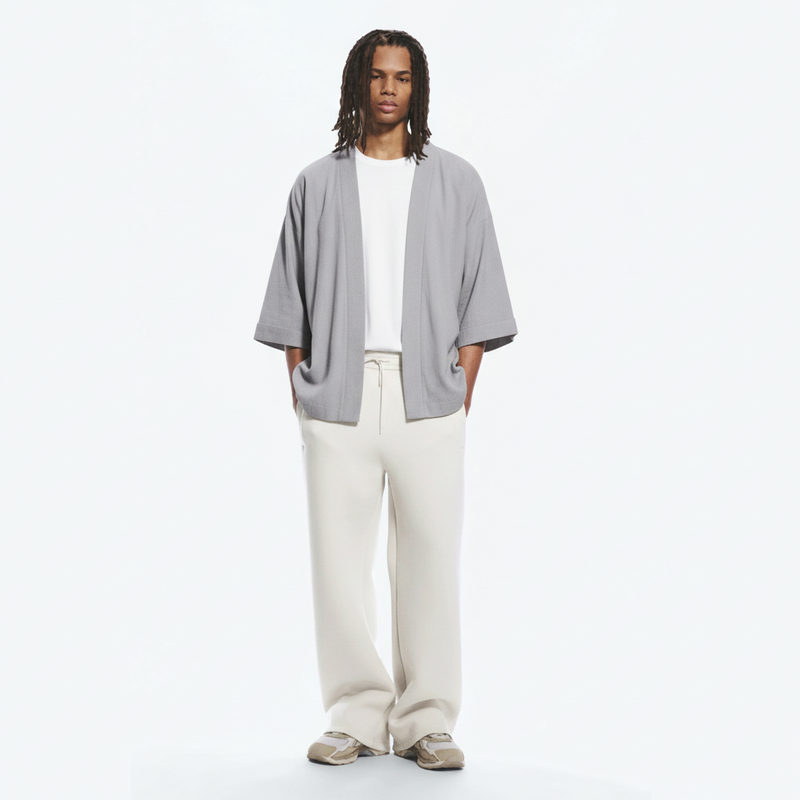



Western shirts are usually described by fit. Japanese shirt shapes are more often described by the collar, because that is where the construction differs and where the decision about layering actually gets made.

The crossover
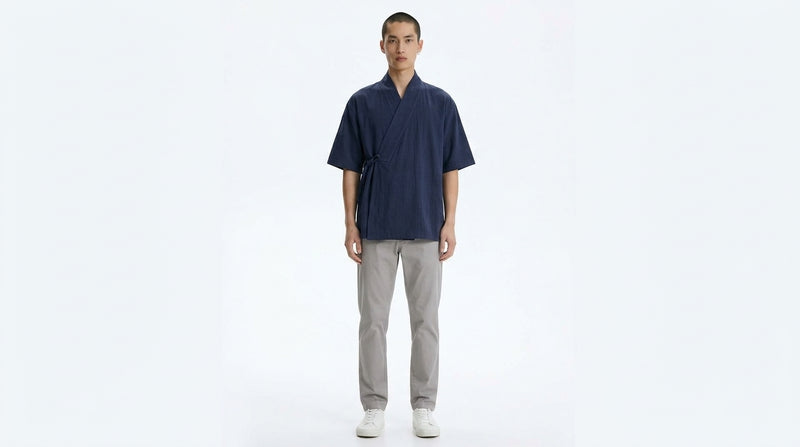
Inherited from the kimono: the front panels cross left over right and fasten with a tie rather than buttons. It gives a clean diagonal at the chest and no placket, so nothing interrupts the front. It also adjusts - loose in warm weather, pulled across when it is not.
The stand collar
A band with no fold-over. It sits closer to the neck than a Western collar and keeps the neckline narrow, which is why it reads tidy under a jacket without a tie. The Cross-Collar Kimono Shirt combines both - a stand collar with a deep crossover, tied inside the seam.
The mandarin
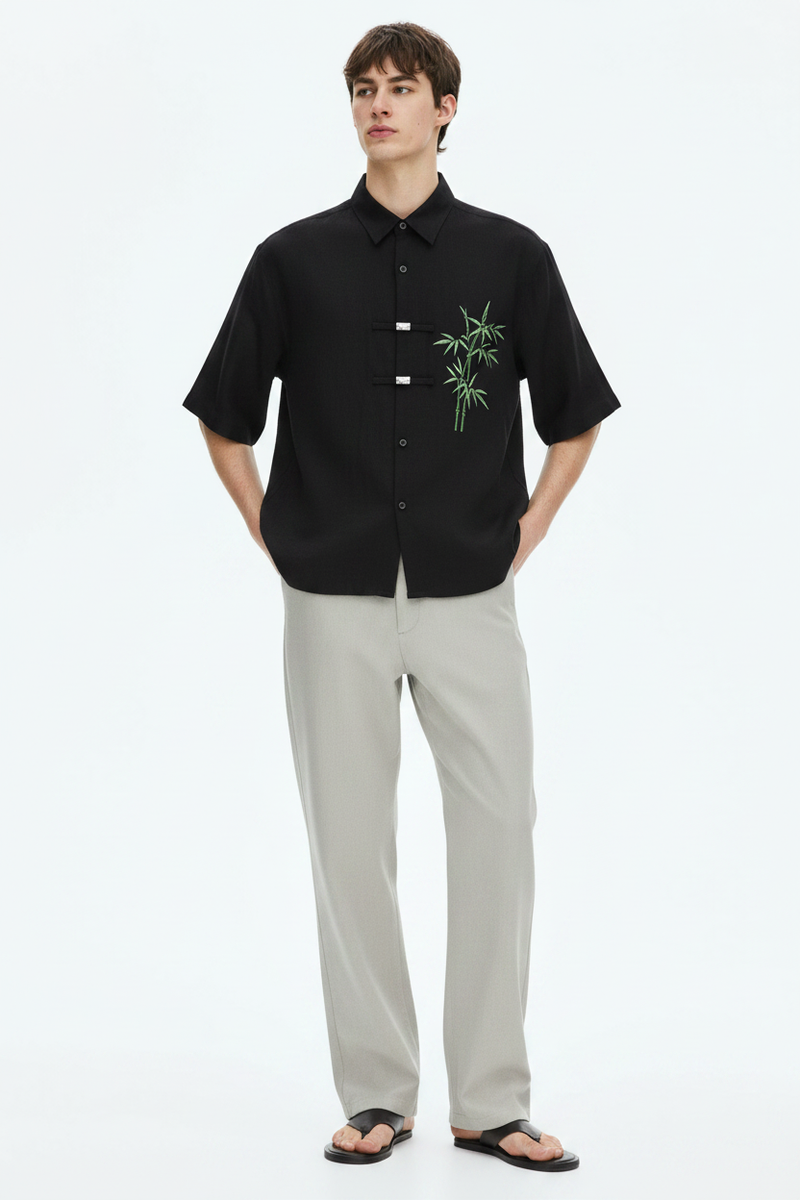
Short and upright, buttoned to the throat or left open. Structurally close to the stand collar but usually stiffer and finished with a button rather than a tie.
The folded V
No collar structure at all - the neckline is folded back into a soft V. It is the most forgiving of the four because there is no stiffener to sit badly. The Shinu Sleeve Shirt uses it, in a textured linen blend with a relaxed boxy body and side slits at the hem.
Sleeve length is a real choice here
Three-quarter sleeves are common across Japanese shirting and are not a compromise between short and long - they are cut to sit clear of the wrist so the forearm shows, which is part of why these shapes look right loose. If you want full coverage, check the sleeve measurement rather than assuming.
The side slit, and what it is for
Many of these shirts are left open a few inches at the side seam above the hem. It is not decorative. A boxy body with no waist shaping has to move somehow, and a slit lets the hem sit flat over trousers instead of riding up or flaring when you sit. It also lets the shirt be worn untucked without looking like it escaped - the split gives the hem two shorter edges rather than one long one.
How they are meant to fit
Boxy, through the body, with the shoulder seam often dropped past the actual shoulder. That is deliberate, and it is why sizing these by chest measurement misleads - a Japanese-cut shirt in your usual size will measure wider and hang straighter than a Western shirt with the same label. If you are between sizes, take the smaller one; the cut supplies the room.
Fabric does the rest
Linen and linen blends dominate the warm-weather end because they hold a shape away from the body instead of clinging to it - the same property that makes linen look rumpled is what keeps a boxy shirt boxy. Heavier cottons take over in cooler months and are the better choice under a jacket, where a crisp linen can bunch at the shoulder.
What to layer over what
- Crossover and folded-V shirts sit well under an open haori, because neither has a collar that fights.
- A stand or mandarin collar works under a noragi, where the crossover of the outer layer needs a narrow neckline beneath it.
- Two crossovers together rarely work. One diagonal at the chest is a line; two is a mess.
Where to look
The shirts above sit in Shirts, and the jackets they layer under are in Japanese Jackets. If the collar question is really a jacket question, start with the haori instead.
The short version
Pick the collar for what goes over it. Everything else about these shirts - the boxy body, the wide sleeve, the side slits - is consistent enough across the category that the neckline is the decision that changes the outfit.