

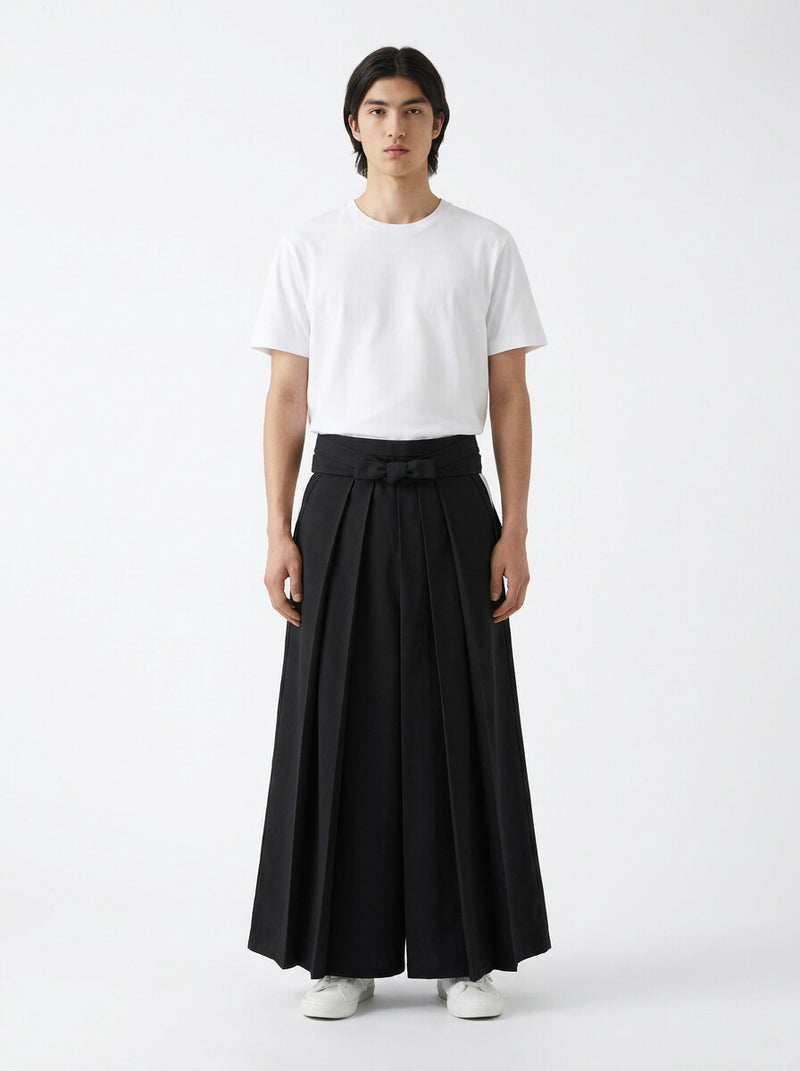

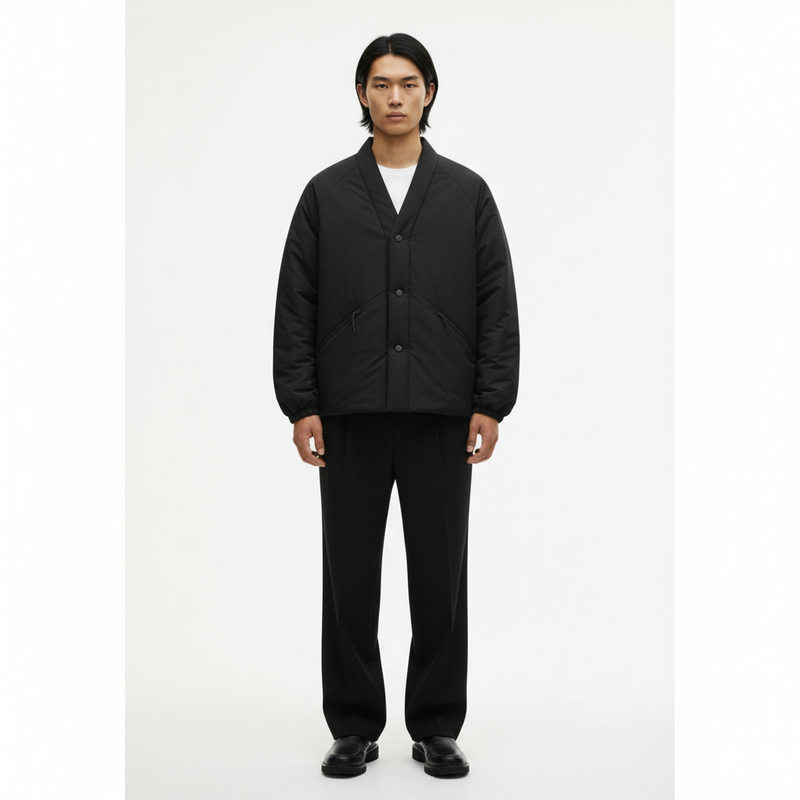
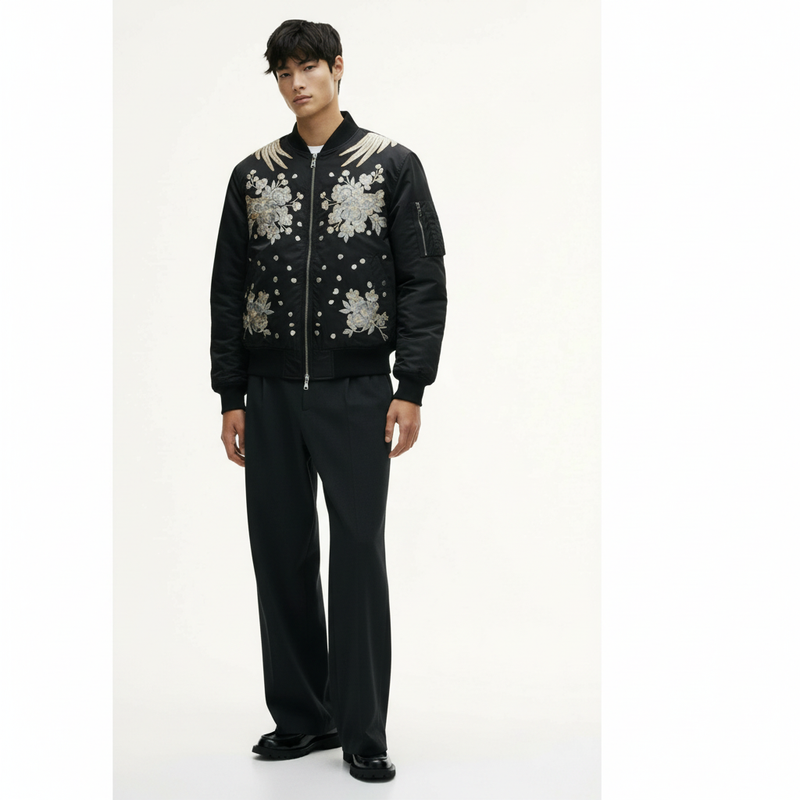

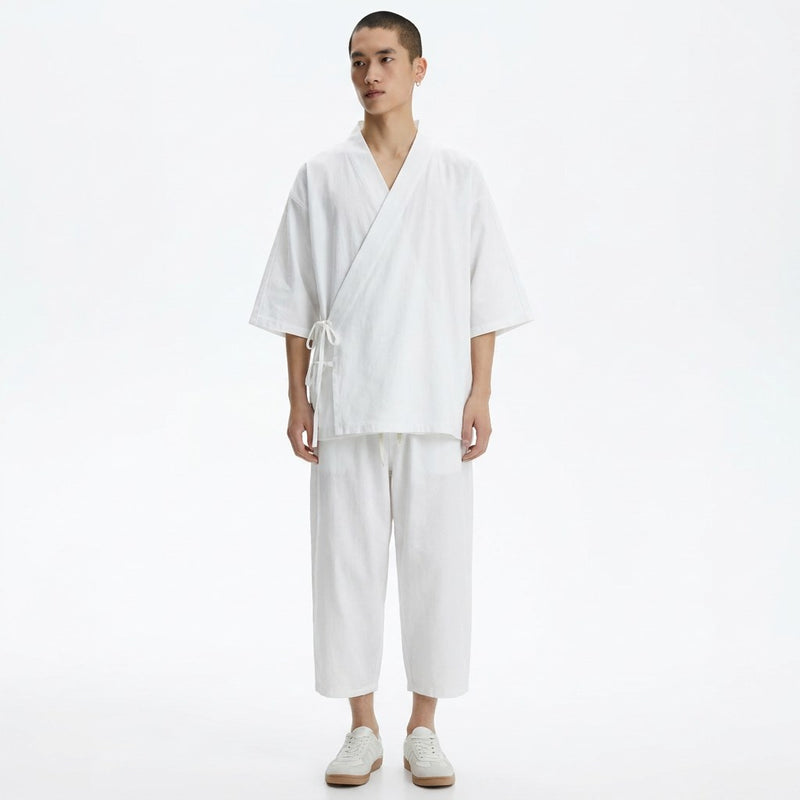


Hakama embroidery means stitching on the pleated Japanese trousers called hakama (袴). It usually takes one of three forms: a name sewn onto a martial arts hakama, the flower embroidery on women's graduation hakama in Japan, or a design someone adds to a plain pair. On a dojo hakama the name goes on the koshi-ita (腰板), the stiff back panel, or on the ties, never across the pleats. The hakama pants we sell at Amaji come plain, with no embroidery.
Name embroidery on a dojo hakama
Hang a row of black and navy hakama in a dojo changing room and they all look alike. That is the practical reason kendo, iaido and aikido players get their names stitched on. Martial arts suppliers usually offer it as a paid option when you order, in kanji, katakana or Latin letters. White or gold thread is the usual choice on dark hakama, and navy or black on white ones.
The pleats stay clean. They have to fold neatly, and in the martial arts they carry meaning, since the seven pleats are often linked to seven virtues. Wikipedia's hakama article covers that background, and our guide to the parts of a hakama shows where the koshi-ita and the himo (紐), the long waist ties, sit. That leaves three usual spots.
| Spot | What it looks like | Good to know |
|---|---|---|
| Koshi-ita, outside | Name in one short line on the back panel | Seen by everyone behind you. Some dojo prefer something quieter, so ask your teacher. |
| Koshi-ita, inside | Name on the inner face of the panel | Only you see it. A sensible pick if all you want is to get the right hakama back. |
| End of a himo | Small characters near the tip of one tie | Mostly hidden once the ties are knotted and tucked. |
A common mix-up: the big name panel kendo players wear at the waist is not on the hakama. It is the zekken (ゼッケン), a cloth tag fixed to the tare (垂れ), the armor flap that hangs over the front of the hakama. It shows the dojo or country and the family name, and tournaments set rules for it. Our hakama gi guide lists what a full kendo set includes.
Amaji's Men's Kendo Hakama, Seven Pleats costs $44.90 in white, black or navy, and it comes plain. We don't stitch names. If you train seriously and want your name on a hakama for gradings, buy from a martial arts supplier that embroiders to order.
Family crests sit on the haori, not the hakama
Some people searching for hakama embroidery mean the family crest, or kamon (家紋). In men's montsuki (紋付), crested formal dress, the crests go on the kimono and on the haori (羽織), the jacket worn over it. The most formal version has five: one at the center back, one on the back of each sleeve and one on each side of the chest. The striped hakama underneath normally has no crest at all.
Crests are either dyed or stitched. A dyed crest, some-nuki mon (染め抜き紋), ranks as more formal than an embroidered one, nui-mon (縫い紋), so stitched crests turn up more on semi-formal pieces. The Wikipedia page on mon shows many of the designs.
Shishu bakama, the embroidered graduation hakama
The other big use of hakama embroidery is women's graduation dress. At university ceremonies in Japan, many women wear a hakama over a kimono with mid-length sleeves called nishaku-sode (二尺袖). These hakama are often shishu bakama (刺繍袴), embroidered hakama, with cherry blossoms, plum blossoms or other flowers stitched near the hem, sometimes over a color that fades from dark to light. Many are rented for the day from kimono shops.
We don't sell these, and a plain pair of pants won't stand in for one. Our piece on who wears hakama in Japan today covers the graduation custom. Women looking for an everyday pair can start with our hakama pants for women guide.
Adding hakama embroidery to a plain pair
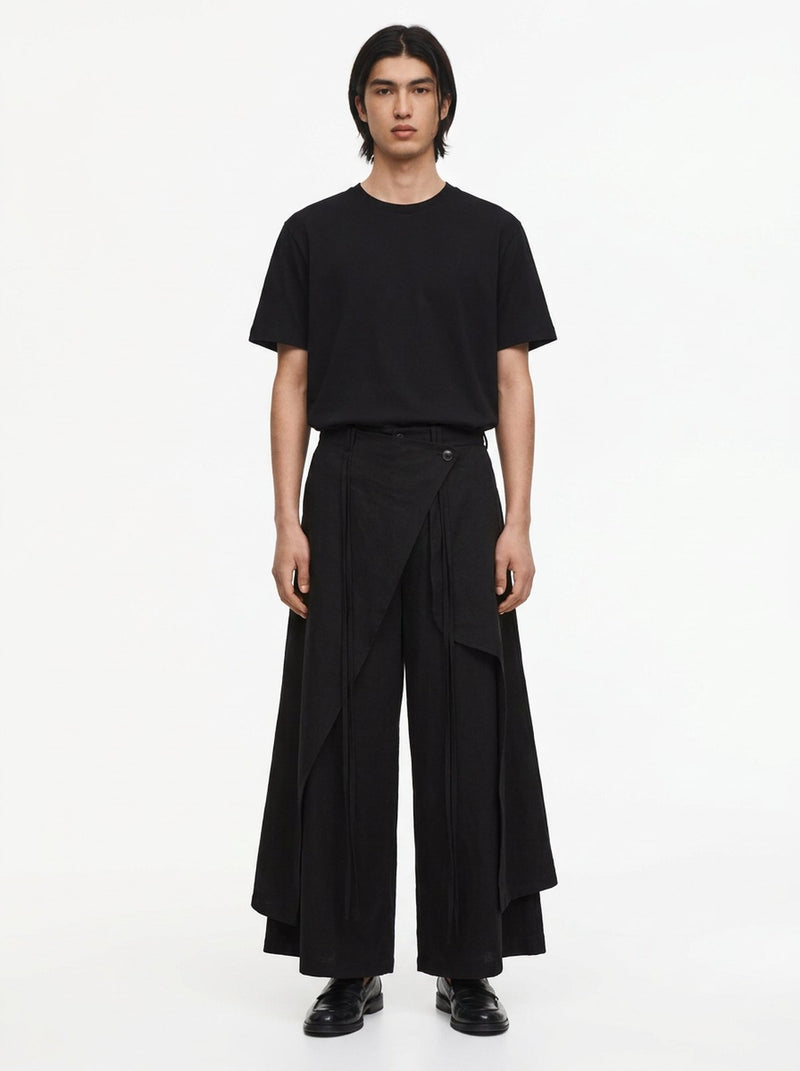
A plain pair makes a good base for custom work, and a local embroidery shop can usually handle trousers. Amaji's wide leg wrap front style is the one our customers pick most: it was in 26 of our last 38 orders, and 10 of the 27 pieces ordered were size XL. At $39.90 it costs about half the $79.97 median for hakama at specialist shops in September 2026, which leaves money for the stitching.

- Settle the size first. Embroidery can't be moved to another pair. On our size table for Amaji's Hakama Pants, Wide Leg Wrap Front, M is for 170 to 175 cm and 65-73 kg, and the other sizes are in our hakama size guide.
- Keep the design off the pleats. Dense stitching stiffens cloth, and a pleat that runs through it will no longer fold flat.
- Choose a spot that moves well. The outer side of one leg near the hem shows with every step. A back waist panel suits a name or a single kanji, the way a koshi-ita does.
- Start small. One kanji, a crest-sized circle or a short name is easier to place on wide trousers than a full scene.
- Go for contrast. On black, white, grey, gold and deep red thread all read clearly from a few steps away.
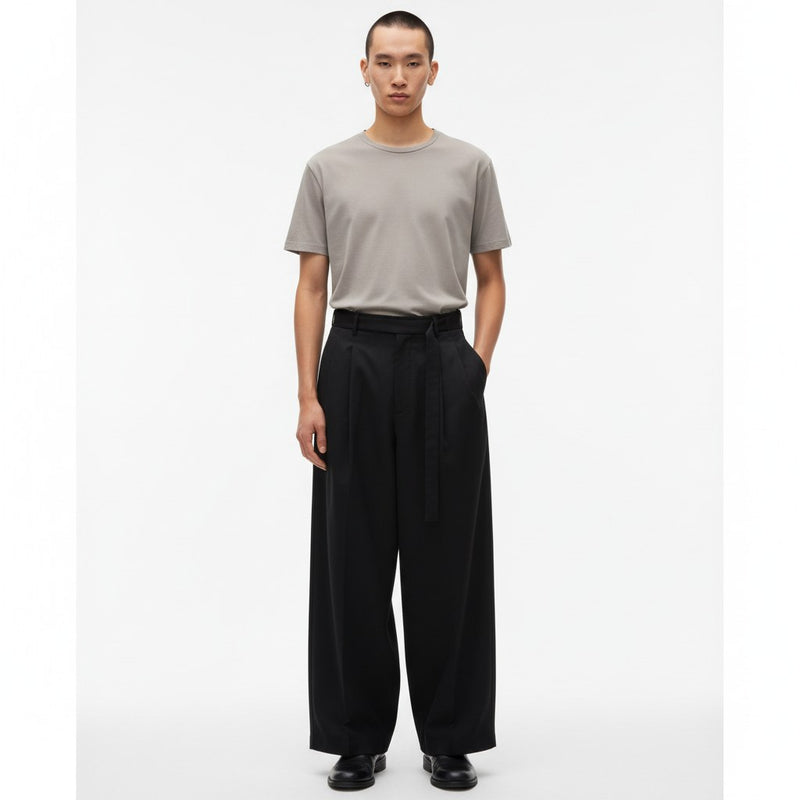
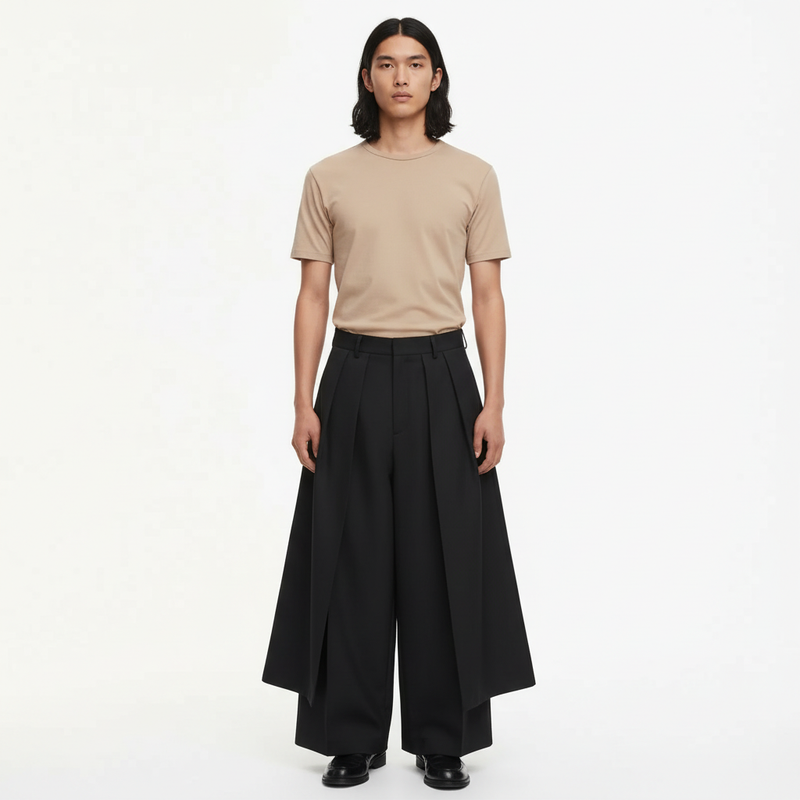
Wider cuts give an embroiderer more room near the hem. The Men's Wide Pleated Japanese Hakama Pants we sell at Amaji ($89.00, one size) have a broad leg, so a motif on the outer lower leg shows and hides as you walk.

Embroidery in the outfit, not on the pants
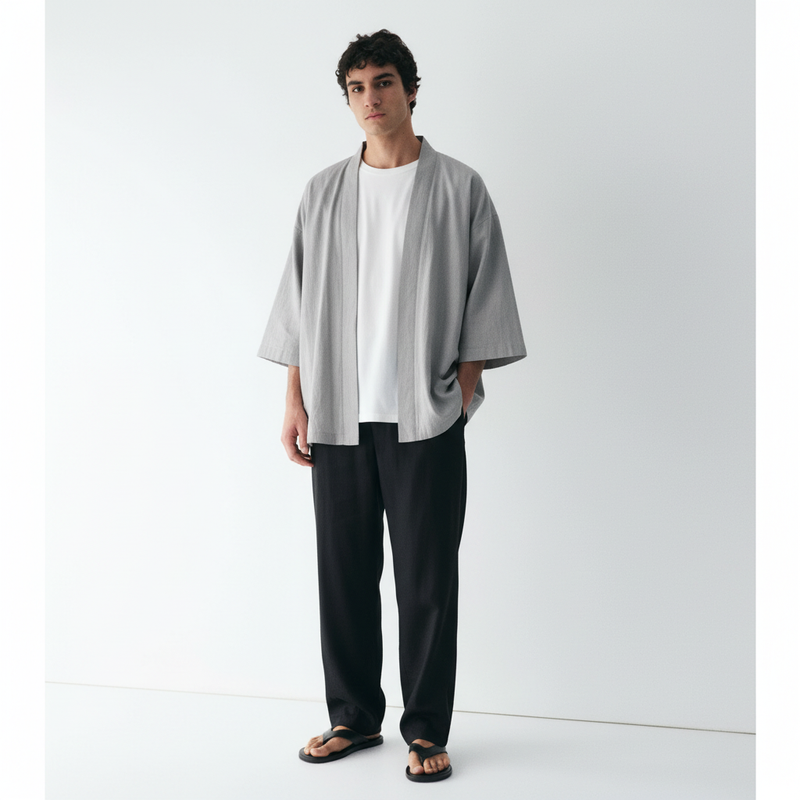
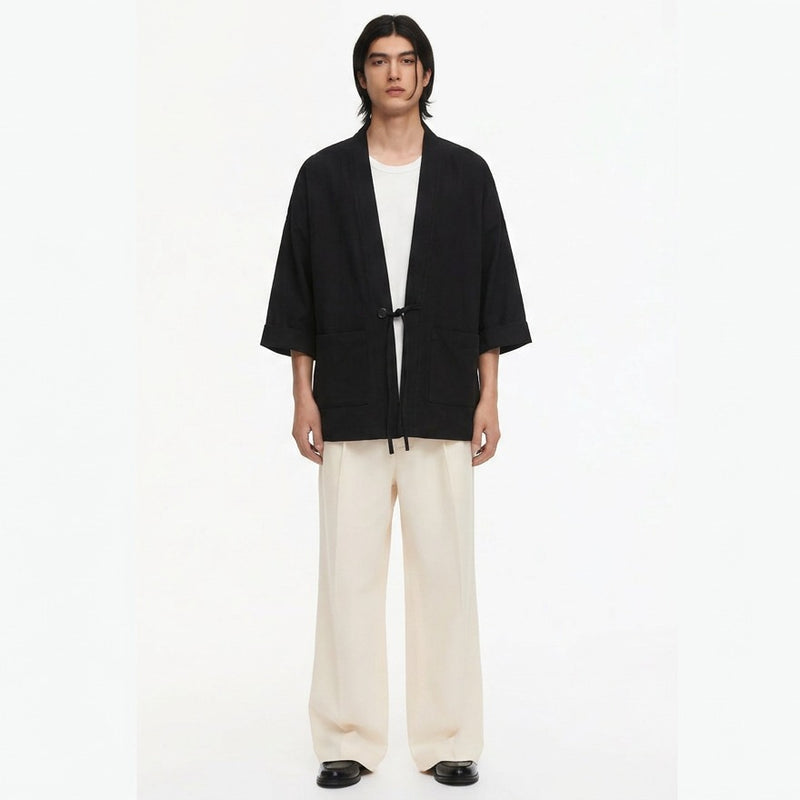
You can also put the embroidery on top. Amaji's Men's Crane Embroidered Kimono Jacket and Men's Sakura Embroidered Sweatshirt both sit well over plain black hakama pants, and our hakama outfit guide has more pairings.
To be clear about what we are: Amaji sells affordable everyday Japanese-style clothes, made in China. For a name-stitched hakama to wear at gradings, go to a martial arts supplier. For a graduation shishu bakama, go to a kimono rental shop in Japan. For a plain pair to wear daily or hand to your own embroiderer, start with the hakama pants collection.
Written by the Amaji team, October 19, 2026. How we write our guides.