





Why the toe is split
Why the toe is split
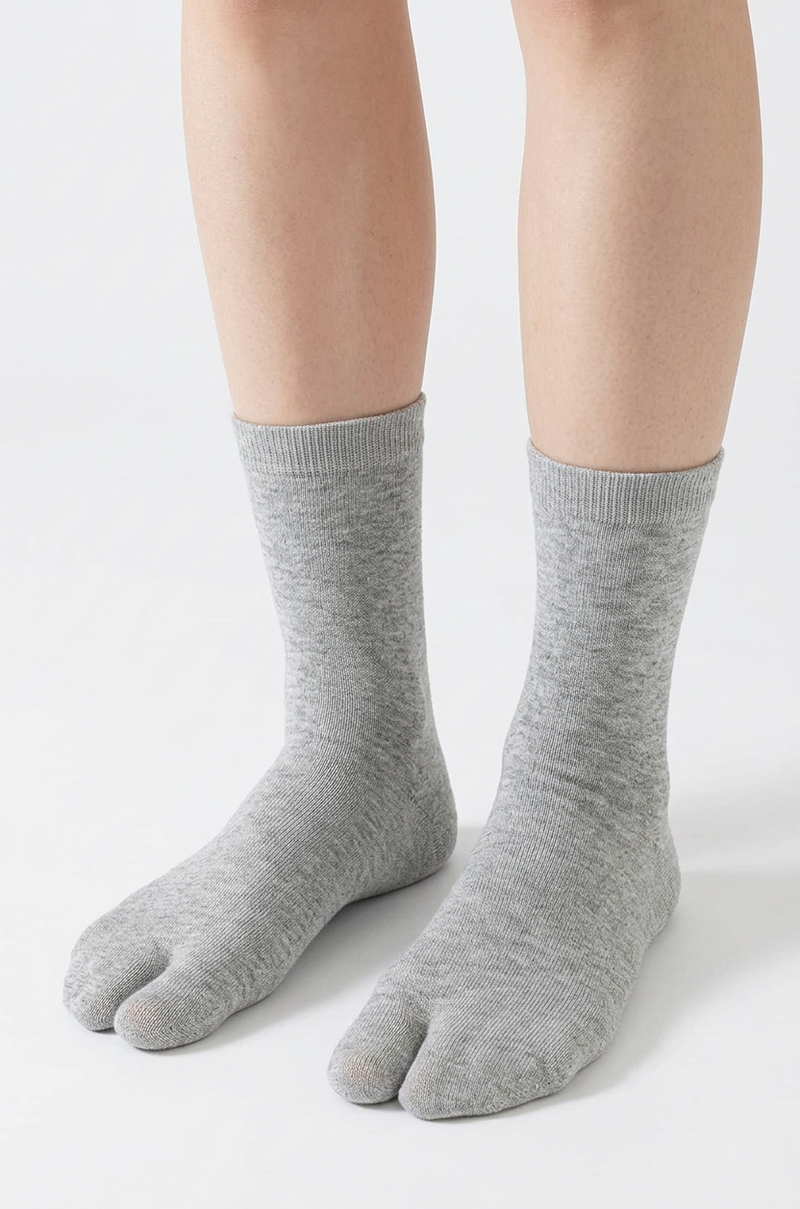
A tabi sock separates the big toe from the other four. The split is not decoration: it exists so the sock can be worn with a thonged sandal, where a strap passes between those same two toes. Japan has been making footwear this way for centuries, and the sock shape survived because nothing else lets you wear a sandal and a sock at once without one of them fighting the other.
The side effect is that your foot sits differently. With the big toe working on its own you get a little more grip through the ball of the foot, which is why the split toe turns up again in jikatabi, the split-soled boots Japanese builders and gardeners still wear.
The three here
The Split Toe Cotton Tabi Socks are knitted in a cotton rich yarn and finished with a reinforced seam across the toe, which is the place a split-toe sock wears through first. The cuff is ribbed to hold at mid calf without gripping. They come in grey, in one size, for $9.90.
The Japanese Pattern Tabi Socks are a thinner combed cotton jacquard in seven patterns: Beige Dots, Black Dots, Black Patchwork, Green Maple, Indigo Waves, Olive Patchwork and Teal Stripe. Also one size, mid calf, $9.90.
The Plain Cotton Tabi Socks are a ribbed cotton crew in six solid colours: black, white, dark gray, navy, medium gray and brown. One size for EU shoe sizes 39 to 46, mid calf, $9.90.
Wearing them with sandals, and without
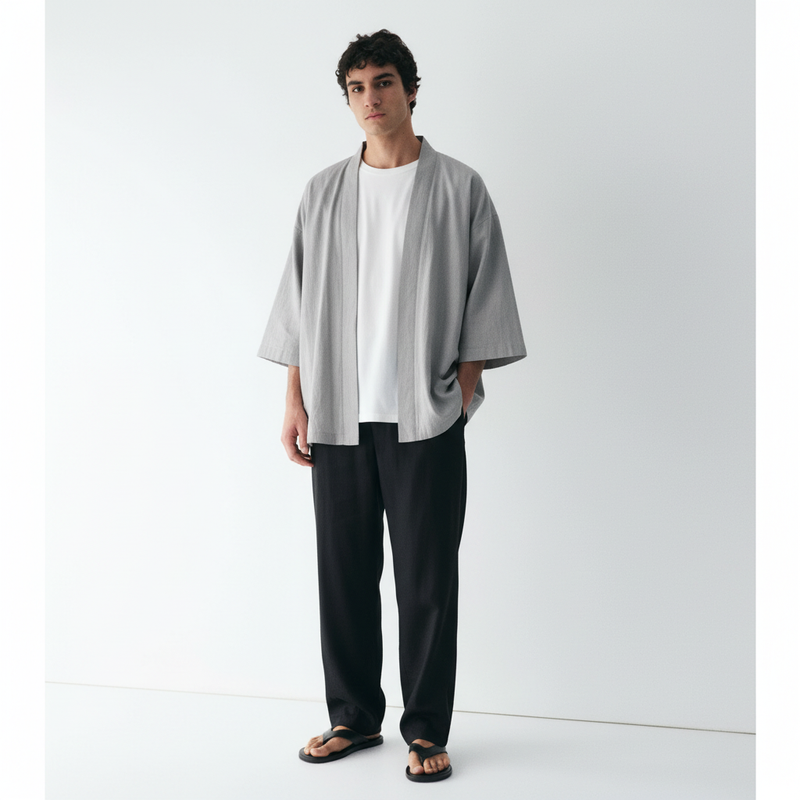
With a thonged sandal the split does its original job and the strap sits between the toes with the sock still on. Worn with anything closed they read as an ordinary mid-calf sock until you take your shoes off. Under a wide or cropped trouser the cuff is the part that shows, so the mid-calf length matters more than the toe does.
With hakama
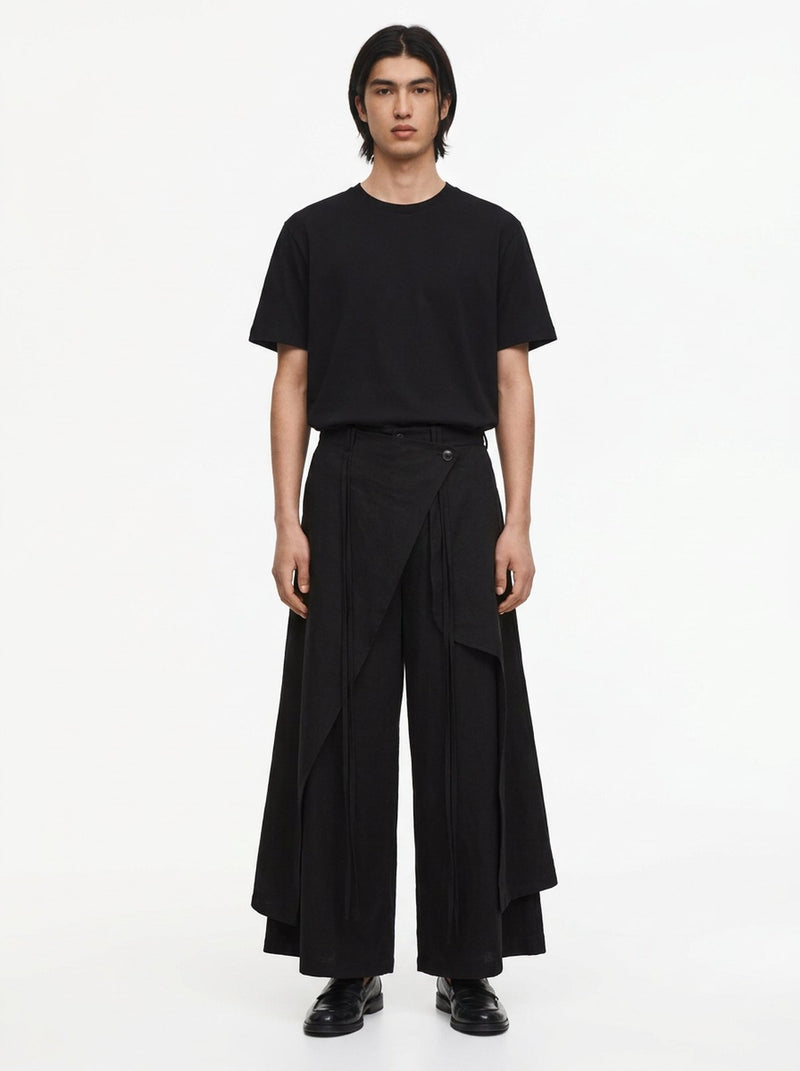
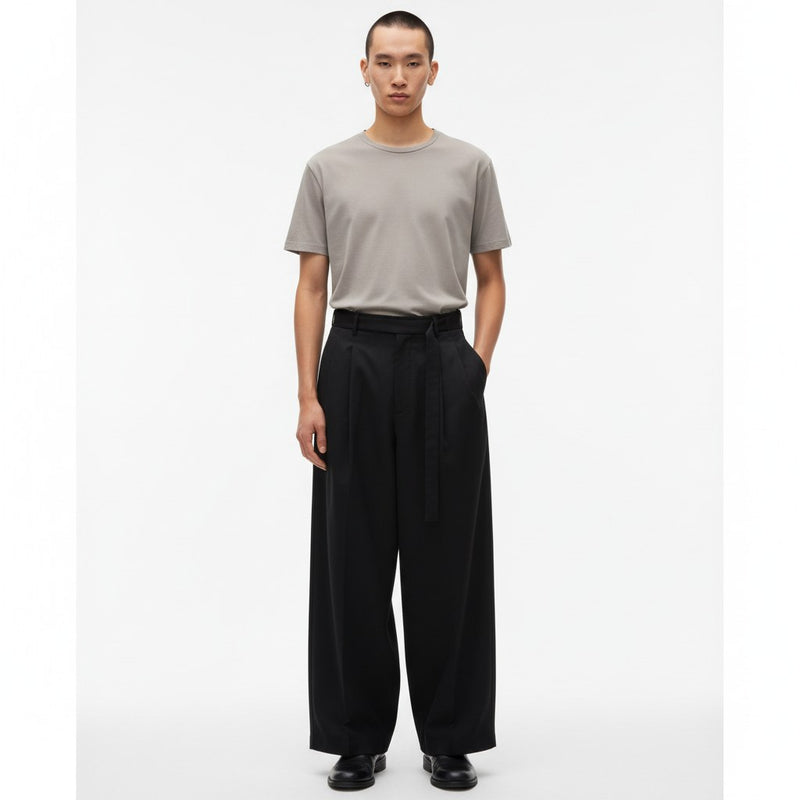
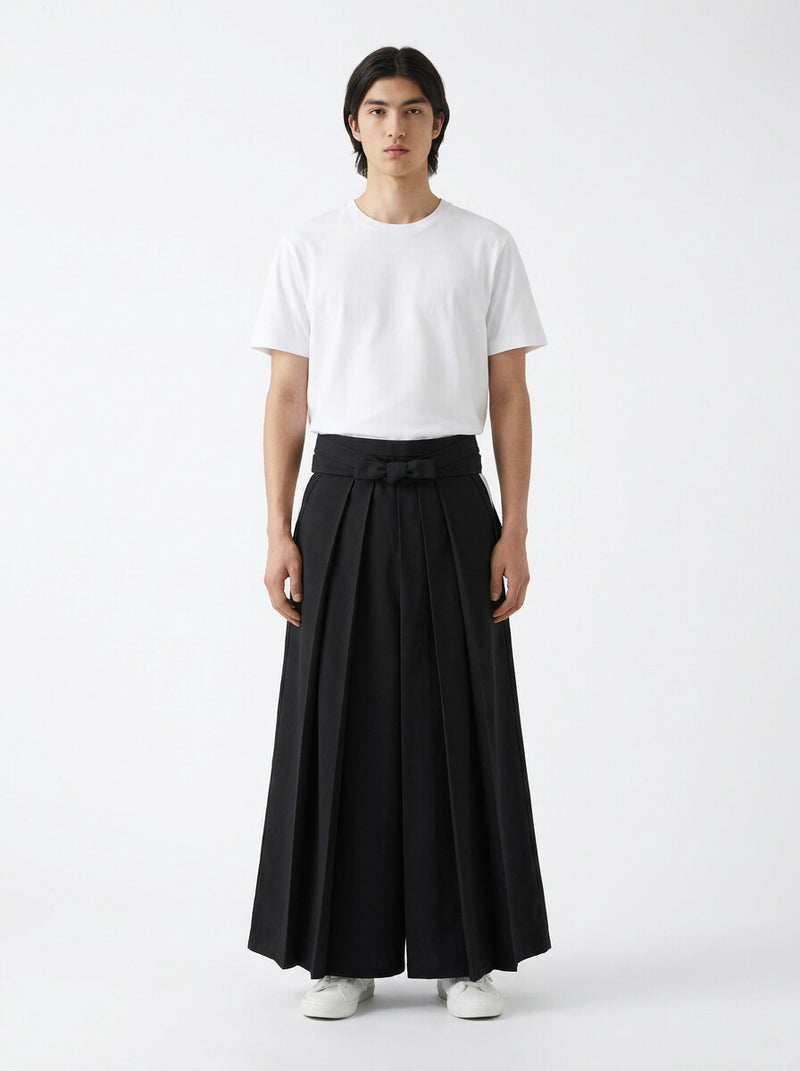
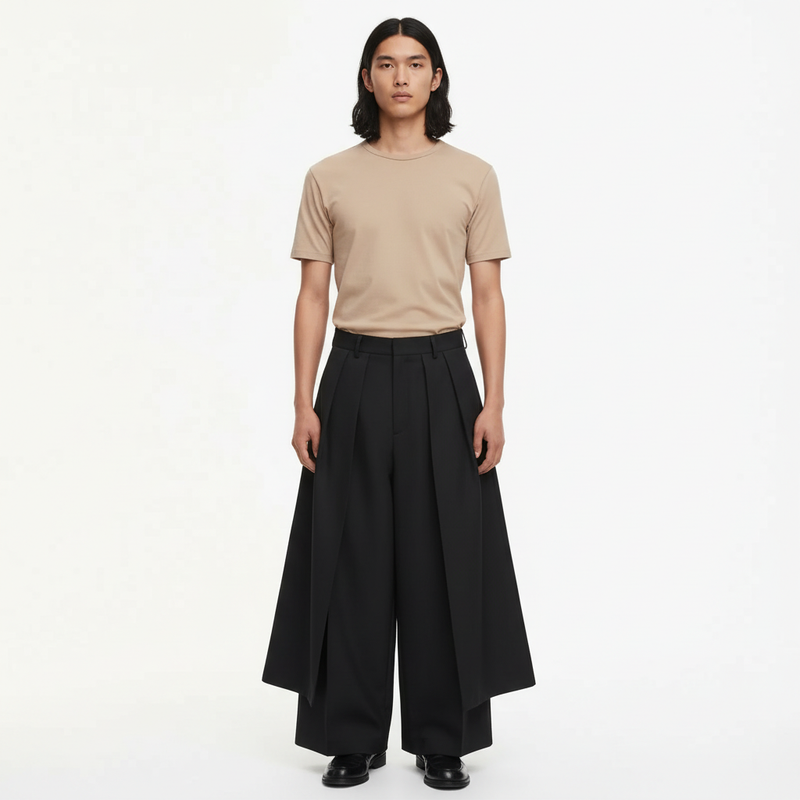
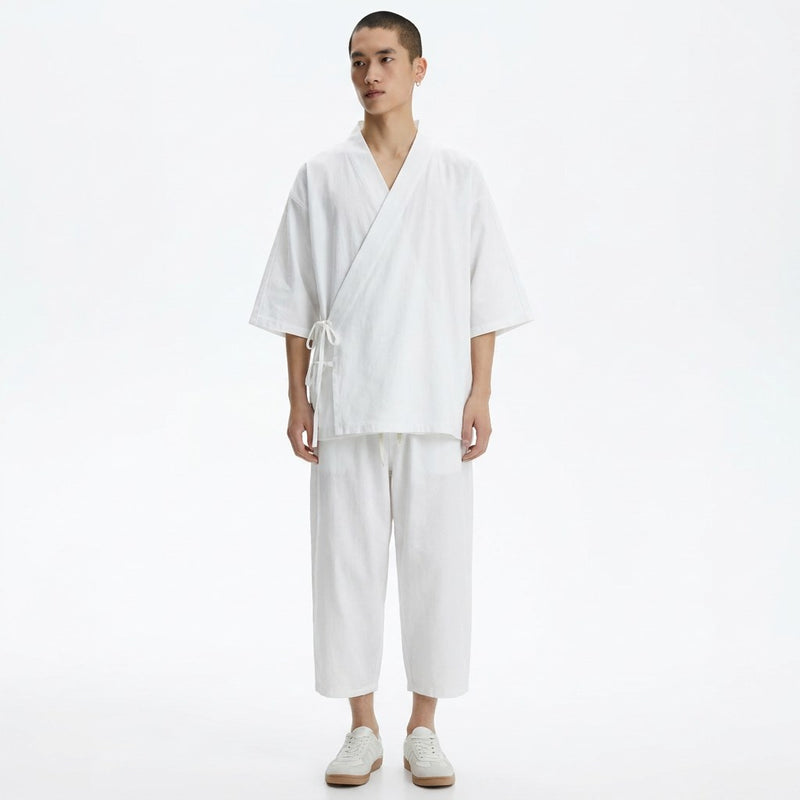
Tabi and hakama were worn together for centuries, and they still are. A wide hakama pants hem stops just above the ankle, and a mid-calf tabi fills the gap with the split toe showing in sandals. Plain grey keeps it quiet. A pattern makes the sock the point of the outfit.
One size, and what that means
These are a single size rather than a size run. The knit and the ribbed cuff carry a normal range of adult men's feet, but there is no small or large to choose between, so if you are at either extreme of shoe size this is worth knowing before you order. The toe split is fixed in position, and on a very wide foot it will sit slightly across rather than between the toes.
Washing them
Machine wash warm with like colours, no bleach, tumble dry low. The toe seam is the stress point on any tabi sock, so turning them inside out before washing is worth the second it takes.
Elsewhere in the range
Comparing shops? Our guide to where to buy tabi socks lists prices from MUJI, Tabio and others. For the clothes these were designed to sit under, see Japanese trousers, and for the jackets that share the same tradition, Japanese jackets. What are tabi socks goes through the split, the sandal it was designed around and how they wear day to day.
Tabi Socks at a glance
| Piece | Fabric | Fit | Sizes | Price |
|---|---|---|---|---|
| Split Toe Cotton Tabi Socks | Cotton | One size | $15.00 | |
| Japanese Pattern Tabi Socks, Split-Toe Cotton Jacquard | Combed Cotton | One size | $15.00 | |
| Men's Plain Cotton Tabi Socks, Split-Toe Mid-Calf | Cotton | One size | $15.00 |
Read the guide: What Are Tabi Socks? The Split Toe, Explained
Frequently asked questions
What are tabi socks?
Japanese socks with a split between the big toe and the rest, originally so they could be worn with a thonged sandal that passes a strap between those two toes.
Why do tabi socks have a split toe?
So a sandal strap can sit between the big toe and the second toe while the sock stays on. The same split also gives a little more grip through the ball of the foot.
What size are these tabi socks?
One size, knitted to mid calf. The ribbed cuff carries a normal range of adult men’s feet, but there is no small or large option to choose between.
What colour do they come in?
Grey, six solid colours (black, white, dark gray, navy, medium gray and brown) and seven Japanese jacquard patterns.
How do I wash tabi socks?
Machine wash warm with like colours, do not bleach, tumble dry low. Turning them inside out first protects the toe seam, which is where a split-toe sock wears first.
Are tabi socks for men or women?
Both. They are one size in a stretchy knit, so the same pair fits most adult feet.
How long does delivery take?
Orders leave within 1 to 2 business days and usually arrive 5 to 9 business days after dispatch, with tracking. Shipping is free over $60, and returns are open for 30 days from delivery.
Are these traditional Japanese tabi socks?
Traditional tabi (足袋, literally "foot pouch") are ankle-high split-toe socks, usually white, that fasten at the back with small metal clasps called kohaze and are worn with kimono and zori sandals. Ours keep the split toe but are made for everyday wear. They come as plain mid-calf pairs and patterned jacquard designs that go with sandals, geta or sneakers.
Are tabi stockings the same as tabi socks?
Mostly, yes. Some shops use "tabi stockings" as another name for split-toe socks, and sometimes for thinner or longer pairs. Ours are one-size split-toe socks in plain mid-calf and patterned styles. They are not sheer hosiery.
Can I wear these socks with tabi slip-ons?
Yes. Tabi slip-ons are split-toe shoes you step into, and they need a split-toe sock because a regular sock pulls awkwardly at the divide. We sell the socks but not the shoes, so wear them with your own tabi slip-ons, jika-tabi (地下足袋, rubber-soled split-toe work boots) or sandals.
Will tabi make my feet look like goat hooves?
Some people do think the split toe looks like a cloven hoof, and it is a running joke online about designer tabi boots. On a sock the split is much less noticeable, especially in darker shades like black or navy, and tabi have been worn in Japan for hundreds of years. We sell split-toe socks, not designer tabi boots.
What are calcetines japoneses tabi?
It is Spanish for Japanese tabi socks, also called calcetines tabi. They are split-toe socks that separate the big toe from the others, so you can wear them with zori, geta or flip-flops. The socks in this collection are that style and come in one size, in plain colors and Japanese patterns.