





A hanhaba obi (半幅帯), literally "half-width obi," is a casual kimono belt about 15 cm (6 in) wide and roughly 3.6 to 4.2 m (12 to 14 ft) long. It is the everyday obi for women's yukata (浴衣), the light summer kimono, and for casual kimono. You tie it in a bow or a flat knot, with no pads or cords. Its men's counterpart is the narrower kaku obi (角帯), about 10 cm wide.

What is a hanhaba obi?
An obi (帯) is the sash that holds a kimono closed. Formal obi like the fukuro obi (袋帯) and Nagoya obi (名古屋帯) are about 30 cm wide, and tying them takes a pillow, cords and some practice. The hanhaba obi is the relaxed version. It is half that width, needs no padding, and you can tie it yourself in a few minutes.
The name is literal: han (半) means half and haba (幅) means width. Because it is so easy to wear, it turns up wherever kimono are worn casually: summer festivals, fireworks nights, hot spring towns, or just a day out in town.
Hanhaba obi size: width and length
Most hanhaba obi are 15 to 17 cm wide (about 6 to 6.7 in). Length varies more:
- About 3.6 m (12 ft): the classic length. It gives two wraps and a bunko bow on most waists.
- About 4 to 4.2 m (13 to 14 ft): easier on larger waists, and it leaves room for fuller bows and knots with extra loops.
If you are between the two, go longer. Extra length can be folded into the knot. Missing length cannot be added.
Hanhaba obi vs kaku obi, heko obi and formal obi
| Obi | Width | Typical length | Usually worn by | Occasion |
|---|---|---|---|---|
| Hanhaba obi (半幅帯) | about 15 to 17 cm | 3.6 to 4.2 m | Women | Yukata, casual kimono |
| Kaku obi (角帯) | about 9 to 10 cm | about 4 m | Men | Yukata through formal kimono, under hakama |
| Heko obi (兵児帯) | soft and gathered | about 3 to 4 m | Men, children, now women too | Yukata, at home |
| Nagoya obi (名古屋帯) | about 30 cm at the knot | about 3.6 m | Women | Semi-formal kimono |
| Fukuro obi (袋帯) | about 31 cm | about 4.2 to 4.5 m | Women | Formal kimono |
The kaku obi and the hanhaba obi get confused because both are flat, narrow, and tied in some of the same knots. The real differences are width and placement. A kaku obi is narrower and sits low on the hips with a flat knot at the back. A hanhaba obi sits higher, at the waist, and usually ends in a bow.
How to tie a hanhaba obi in a bunko bow
The bunko musubi (文庫結び) is the standard yukata bow. Here is a simple version:
- Fold the first 50 to 60 cm of the obi in half lengthwise. This short end is the tesaki (手先). Hold it at your front, a little to one side.
- Wrap the long end around your waist twice, snug but not tight. If you use an obi ita (帯板), a thin board that keeps the front smooth, slide it under the second wrap.
- Cross the tesaki over the long end and tie a single knot at center front, with the tesaki pointing up.
- Fold the long end back and forth into a flat bow about 30 cm wide, two or three layers thick.
- Pinch the bow in the middle. Bring the tesaki down over the pinch, wrap it around once or twice, and tuck the end under the wraps at your waist.
- Spread out the wings, then turn the whole obi clockwise until the bow sits at the center of your back.
Other common hanhaba obi knots:
- Kai no kuchi (貝の口), "clam's mouth": a flat, tidy knot. It is also the standard men's knot for a kaku obi.
- Karuta musubi (かるた結び): a flat square knot that stays comfortable on long car or train rides.
- Cho musubi (蝶結び): a soft butterfly bow, popular with younger wearers and children.
When to wear a hanhaba obi
Wear one with yukata in summer. For the rest of the year, pair it with casual kimono such as komon (小紋), which have small all-over patterns, and tsumugi (紬), a sturdy slubbed weave. It also looks good under a haori (羽織), the hip-length kimono jacket. Leave it at home for weddings, formal tea gatherings and ceremonies, where people expect a Nagoya or fukuro obi.
Types of hanhaba obi
- Hitoe obi (単帯): a single layer, light and easy, common with yukata.
- Kobukuro obi (小袋帯): woven as a tube and often reversible, so you get two colors from one obi.
- Hakata ori (博多織): a firm weave from Fukuoka, known for knots that hold.
- Tsukuri obi (作り帯): a pre-tied bow in two pieces. No knot skills needed, so beginners and children often start here.
Obi made for yukata are usually cotton or polyester. Silk hanhaba obi are worn with dressier casual kimono.
Does Amaji sell a hanhaba obi?
Not right now. Amaji is a small shop that sells affordable, everyday Japanese-style clothing made in China. If you want a women's yukata bow, buy a true hanhaba obi from a kimono specialist.
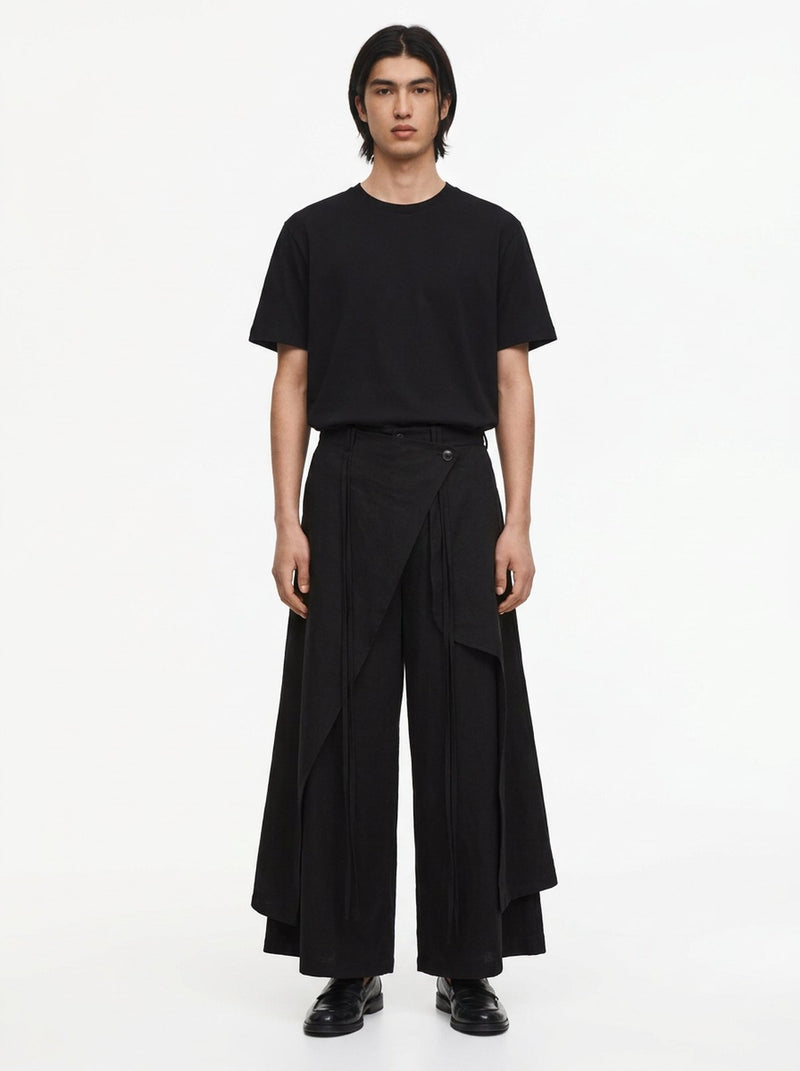
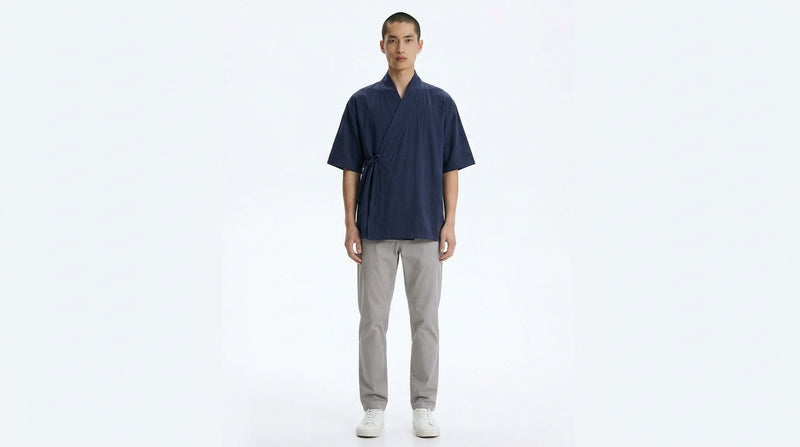
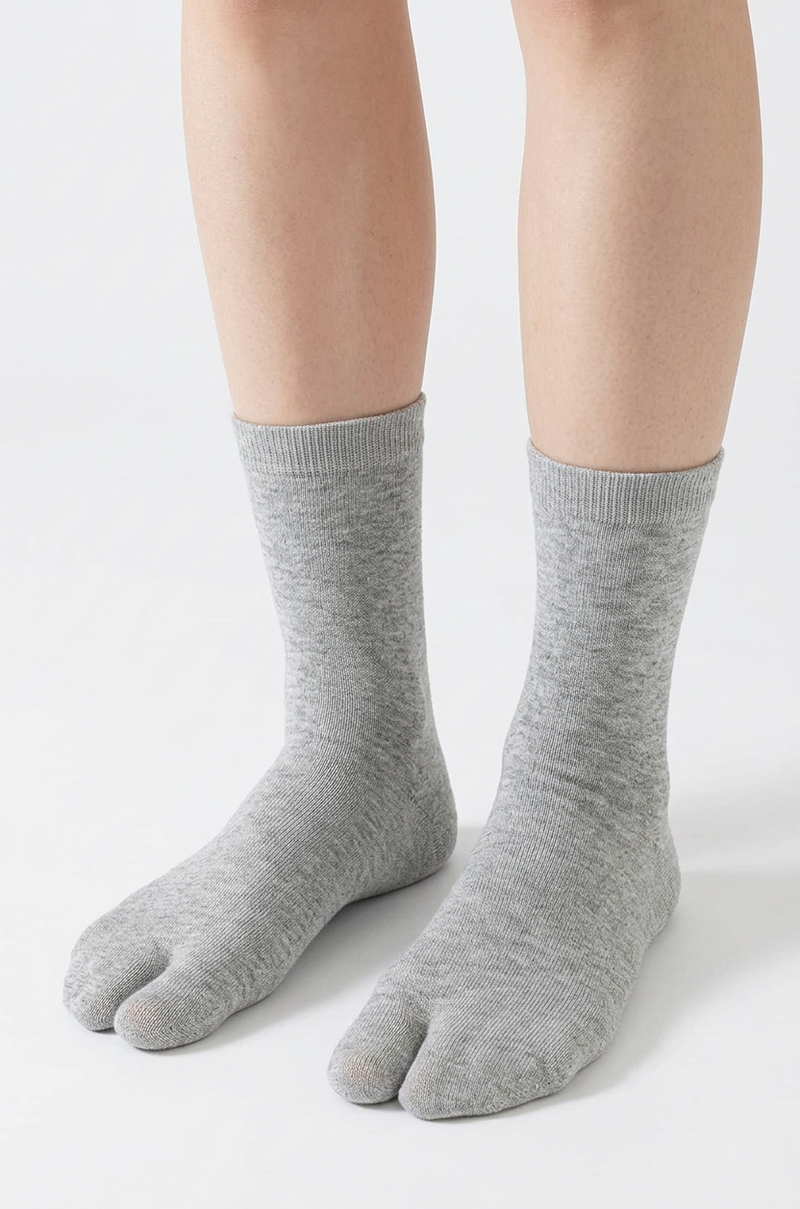
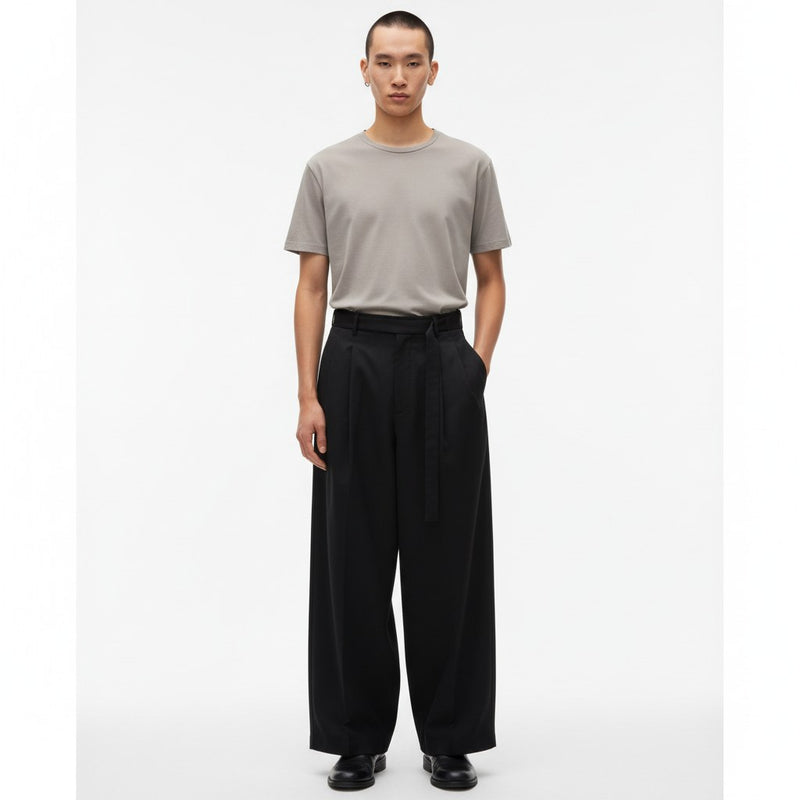
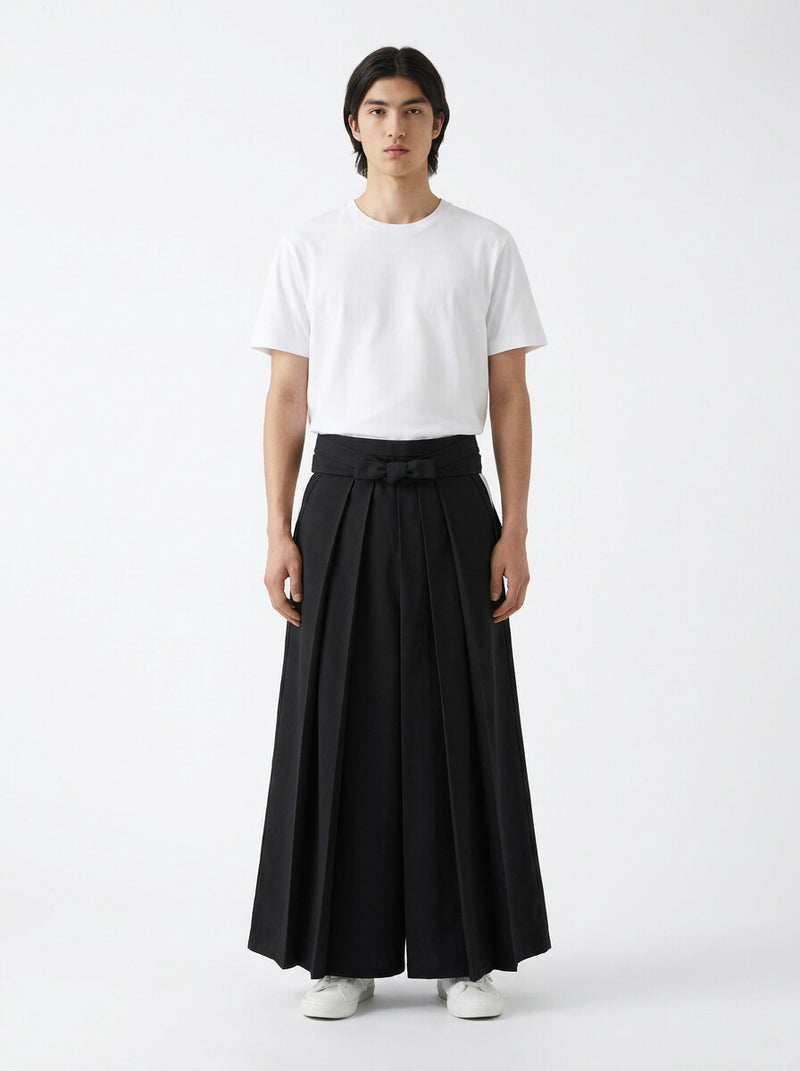
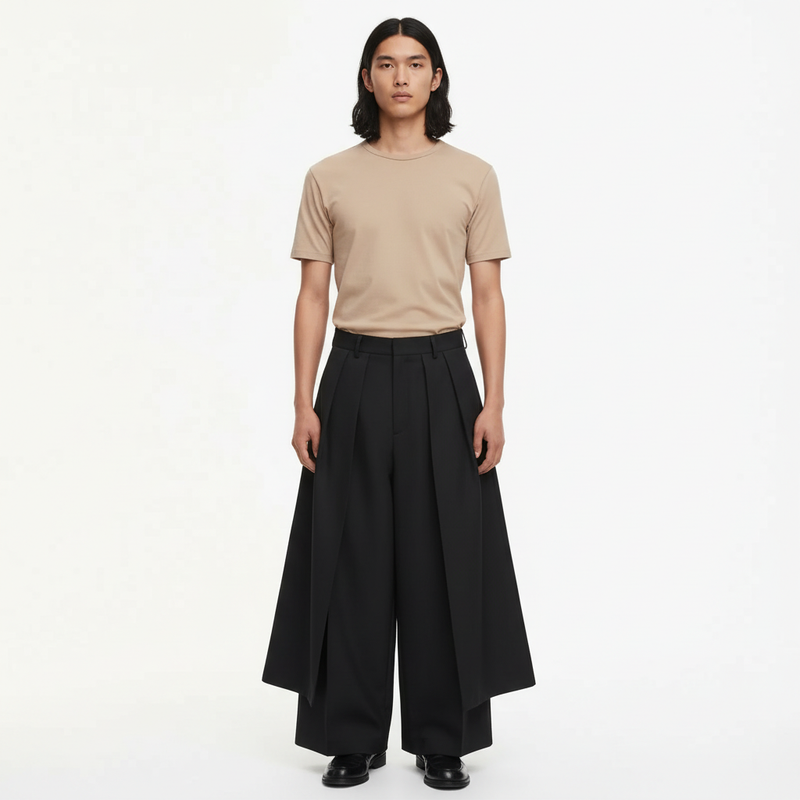
What we do carry is the men's version. The Men's Kaku Obi costs $29.90 and comes in one size, 400 x 10 cm, in White and Black, Beige, Navy, Black and Purple. Tie it in kai no kuchi over a yukata or casual kimono. You can also wear it under our Hakama Pants, Wide Leg Wrap Front ($39.90, XS to XL, Black), since kaku obi are traditionally worn under hakama (袴), the wide pleated trousers. To finish the outfit, add a pair of split toe tabi socks ($9.90, one size, Grey). Tabi (足袋) are the split-toe socks worn with sandals.
Written by the Amaji team, October 18, 2026. How we write our guides.