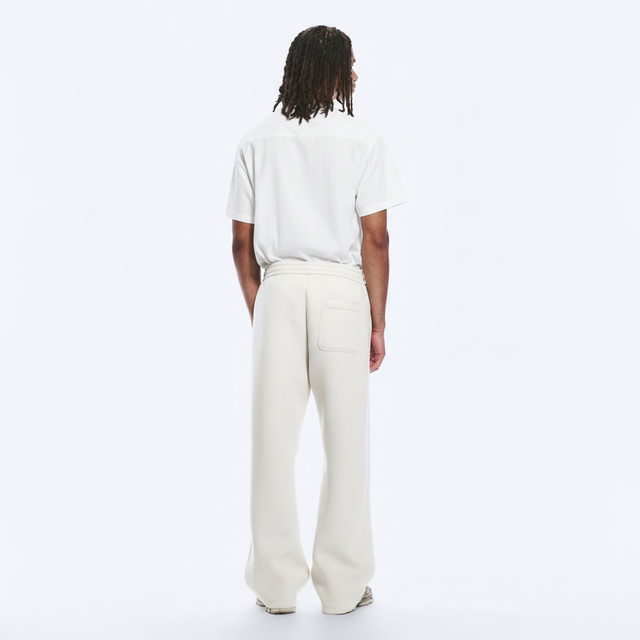
Japanese streetwear rarely leans on graphics. The interest is in the cut: a drop shoulder, a collar that stands instead of folding, fastenings that knot instead of button, a hem left raw. The seven pieces here are chosen for that, and they cover the whole range from a plain heavyweight tee to a shirt that crosses at the front.
The oversized tee
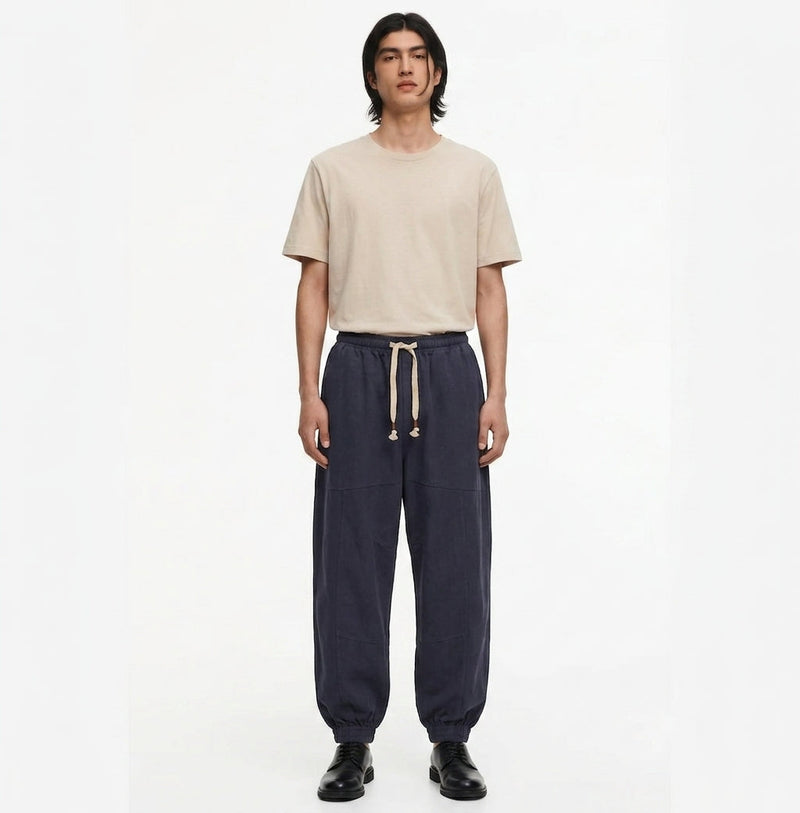
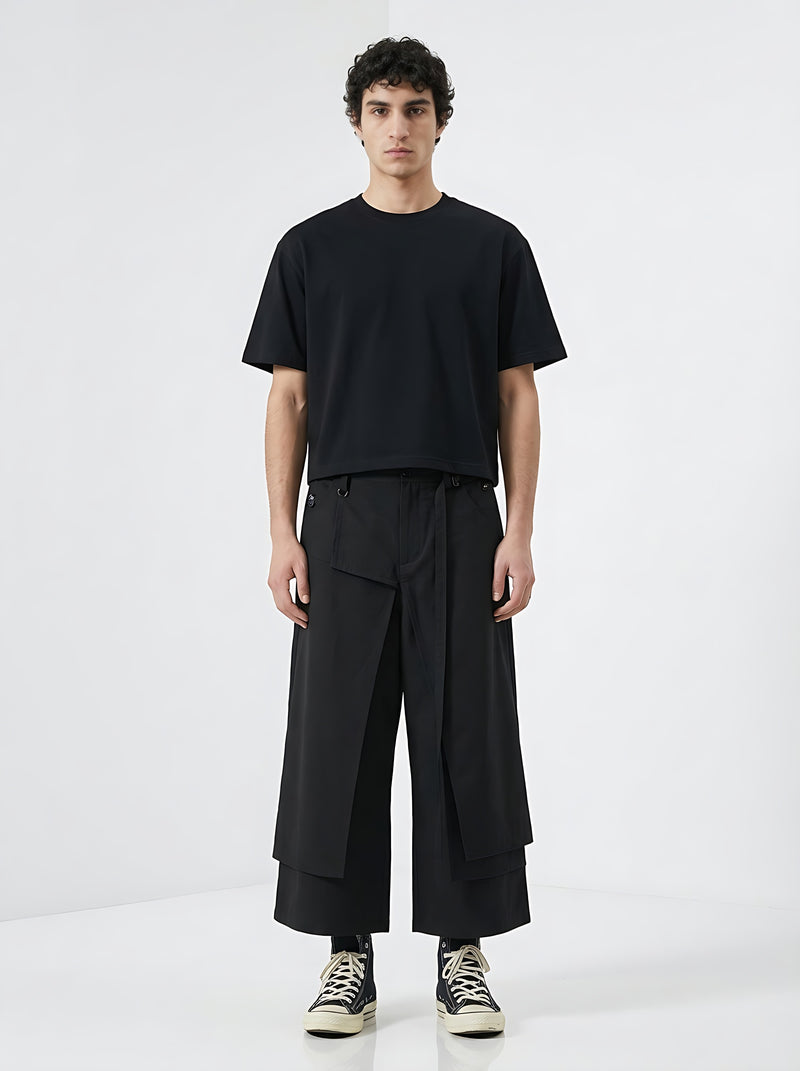
The Nobi Oversized T-Shirt takes its name from the Japanese word for relaxation. It is 100% premium cotton at 275gsm, heavyweight but soft enough to wear on repeat, with drop shoulders, raw-edge hems and a washed finish that reads worn in from the first day. The Nagomi Cropped Cotton Tank Shirt is the warm-weather version of the same idea, a boxy cropped tank in washed 100% cotton with raw-edge hems and armholes.
The kimono shirt
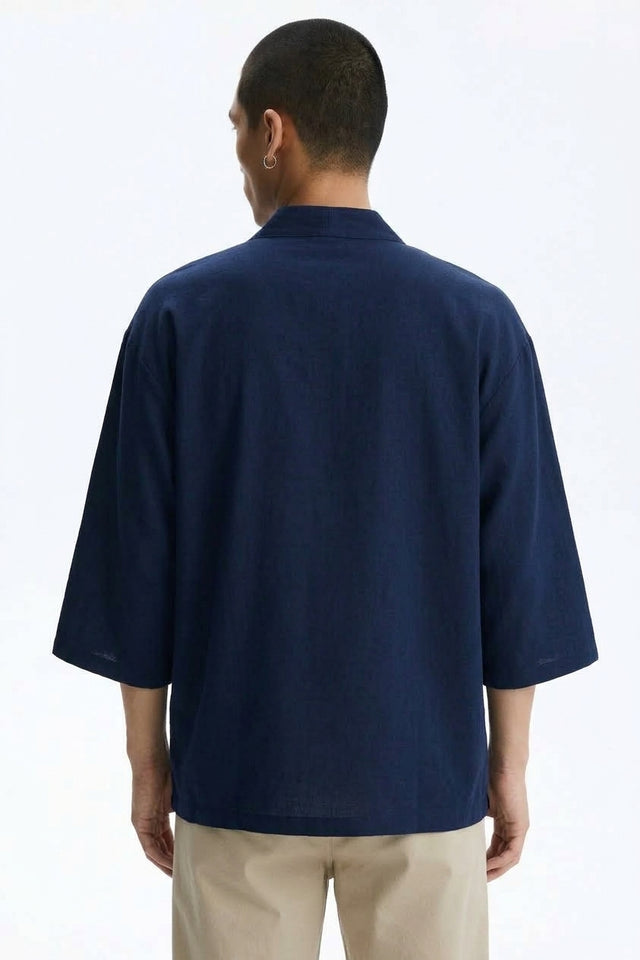
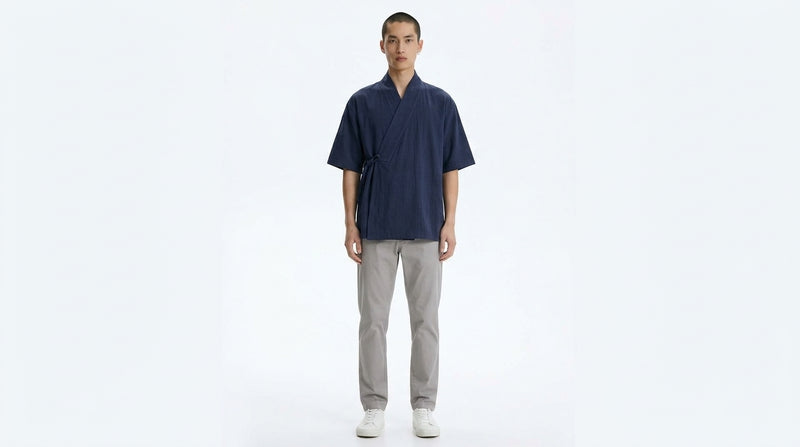
The Cross Collar Kimono Shirt is the one here with a Japanese construction. It crosses at the front and ties at the waist, with a stand collar, a deep crossover and wide three quarter sleeves, fastened by a single tie inside the seam. Wear it closed on its own or open over a tee. It also sits in men's kimono jackets.
Tang suit and mandarin collar shirts
Three shirts here use knotted fastenings and a stand collar. These come from Chinese dress rather than Japanese: the tang suit and the mandarin collar are Chinese in origin, and they sit comfortably in Japanese streetwear for the same reason the kimono shirt does, a clean collar and no buttons to break the front.
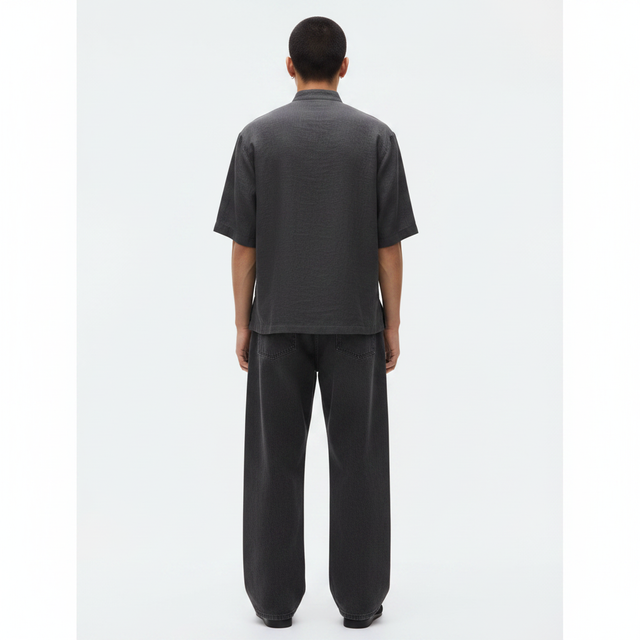
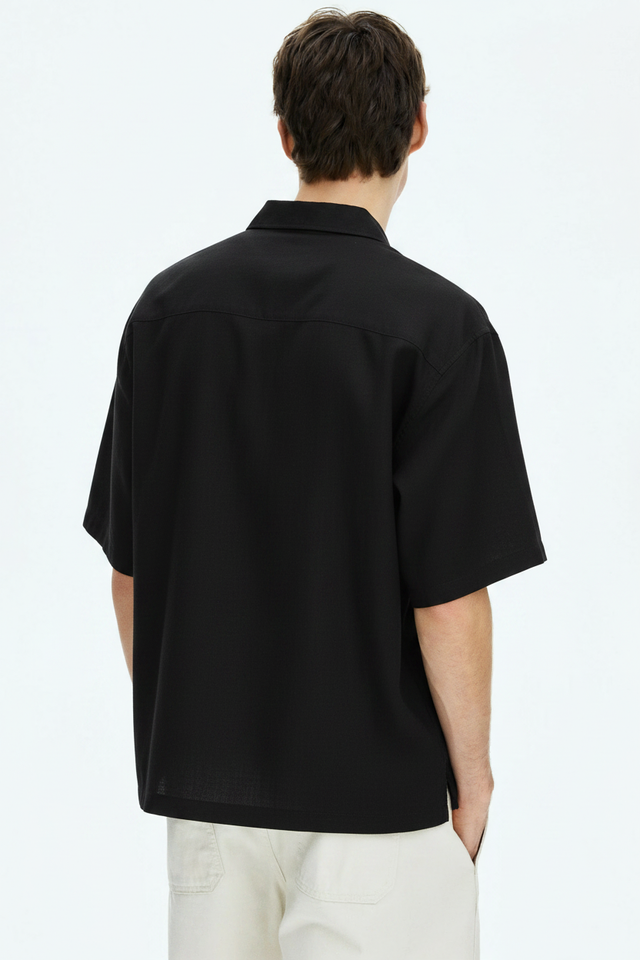
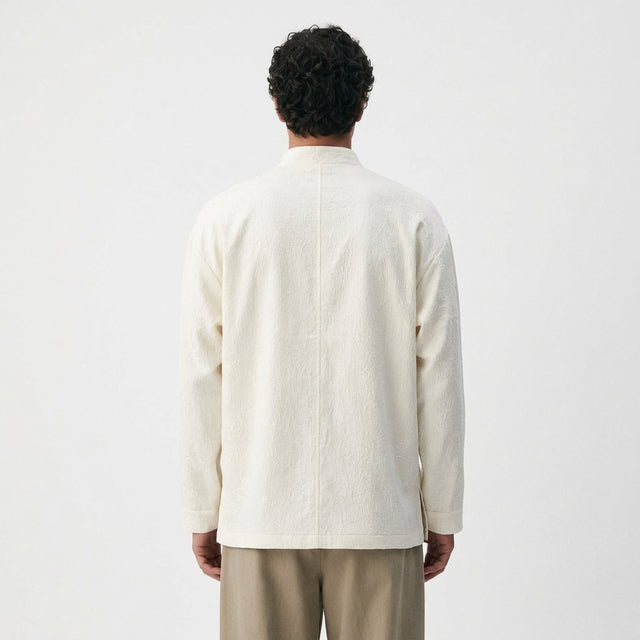
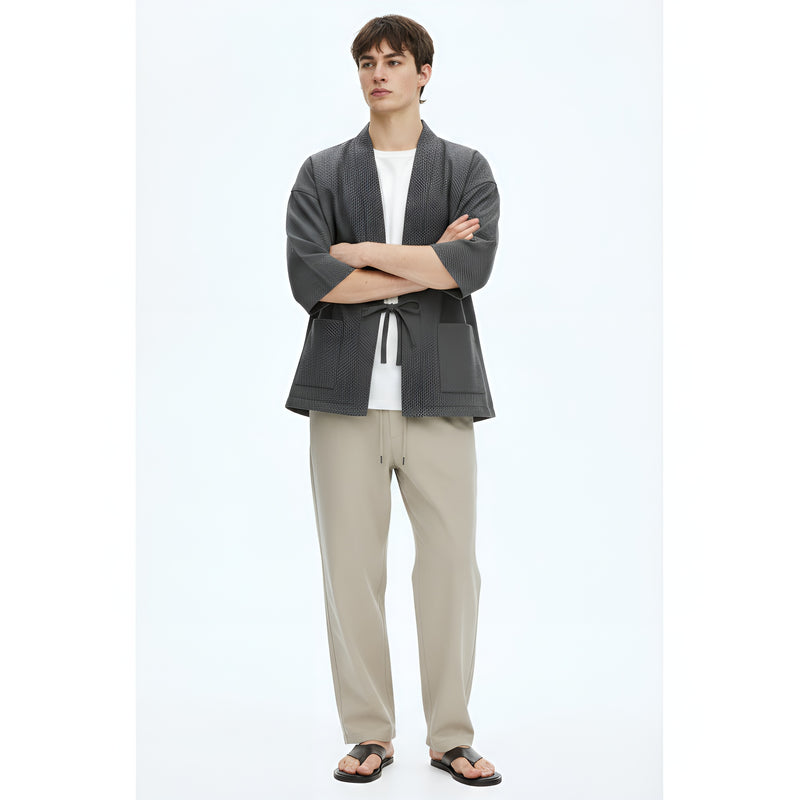
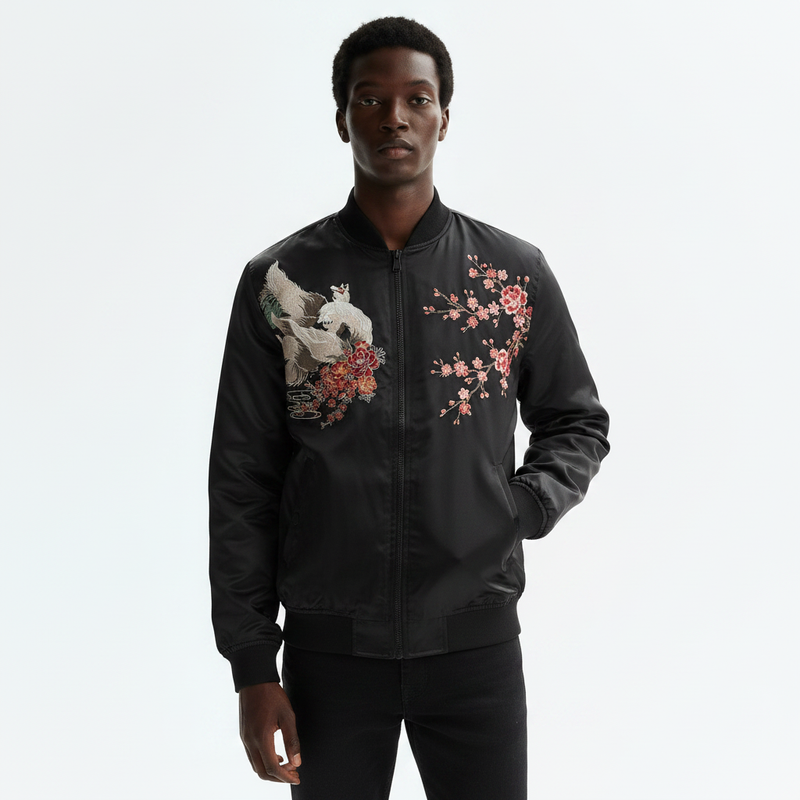
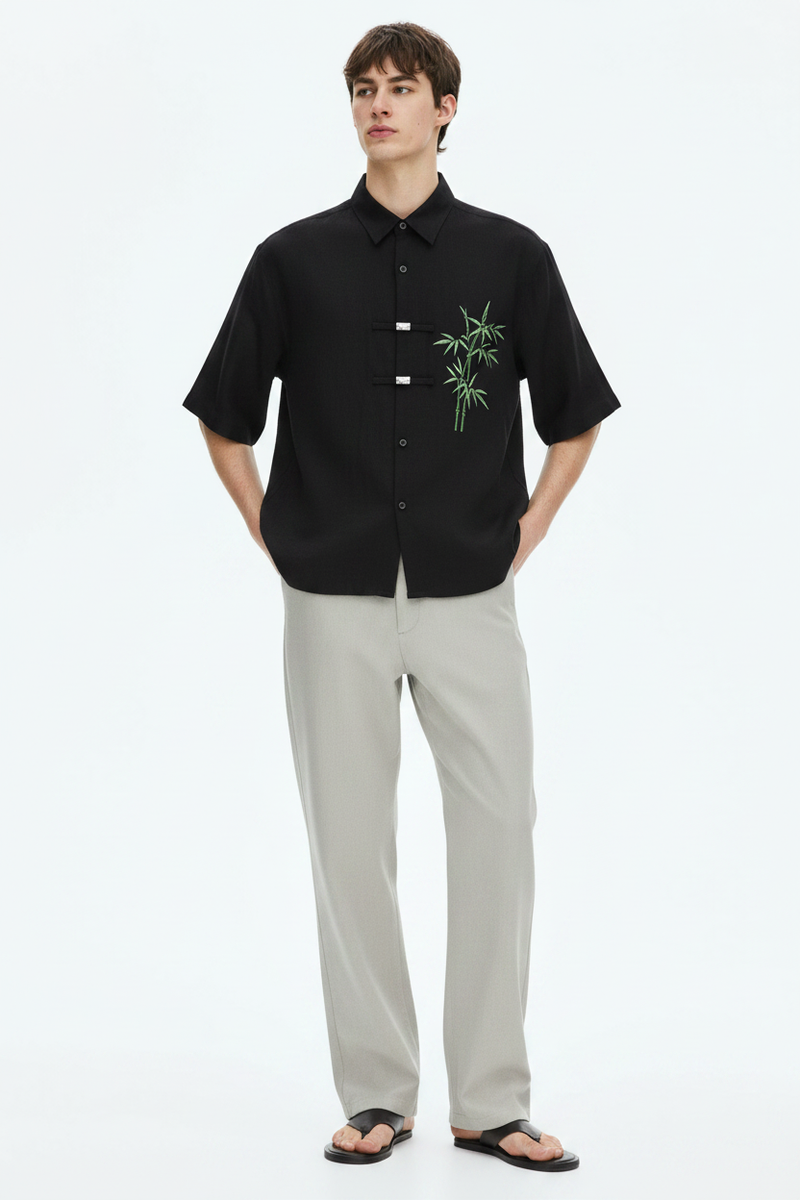
The Coarse Cotton Tang Suit Shirt is a loosely woven, unfinished cotton that breathes and softens with each wash, with short sleeves and low patch pockets. The Jacquard Tang Suit Shirt has a pattern woven into the cloth rather than printed, and a welt chest pocket. The Embroidered Mandarin Collar Shirt is long sleeved, with a fine tonal pattern embroidered across the chest; the Embroidered Short Sleeve Shirt carries bamboo embroidery set to one side. Both embroidered shirts are also in Japanese embroidered.
How to wear them
Every piece here is cut relaxed or oversized, so they sit best over wide trousers. The tang suit shirts wear open over a plain tee or closed on their own; the Coarse Cotton one is made for summer over Japanese pants. Under a noragi or haori, keep to the Nobi tee.
Caring for them
The cotton pieces wash cold with like colours. The polyester shirts, the jacquard and both embroidered shirts, take a gentle cold cycle, hang to dry and a cool iron only.
Les mesures proviennent du tableau de tailles à plat du fabricant pour chaque vêtement, converties en centimètres et ramenées sur une même échelle de tailles. Disponible pour 4 vêtements sur 7 ici, vérifié le 2026-09-16. Notre méthode de mesure.
The cut rather than a print: a drop shoulder, a stand or crossover collar, ties or knotted fastenings instead of buttons, and a relaxed or boxy body.
Is a tang suit shirt Japanese?
No, the tang suit and the mandarin collar are Chinese in origin. They are carried here because they are widely worn in Japanese streetwear alongside kimono shirts.
How does the Nobi tee fit?
Oversized, with drop shoulders. It is 275gsm cotton and runs S to 2XL, so take your usual size for the intended loose fit.
How do I wash these?
Wash the cotton pieces cold with like colours. The polyester shirts take a gentle cold cycle, hang to dry and a cool iron only.






 SML+2
SML+2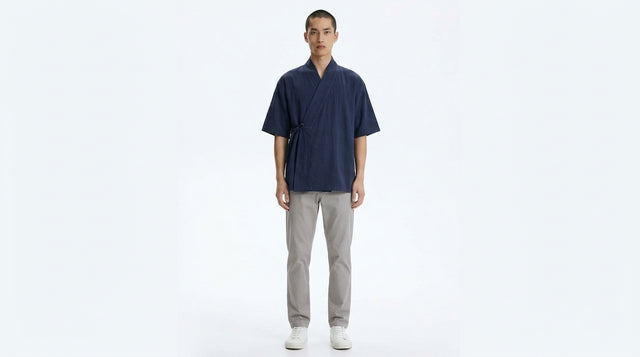 Chemise kimono à col croisé
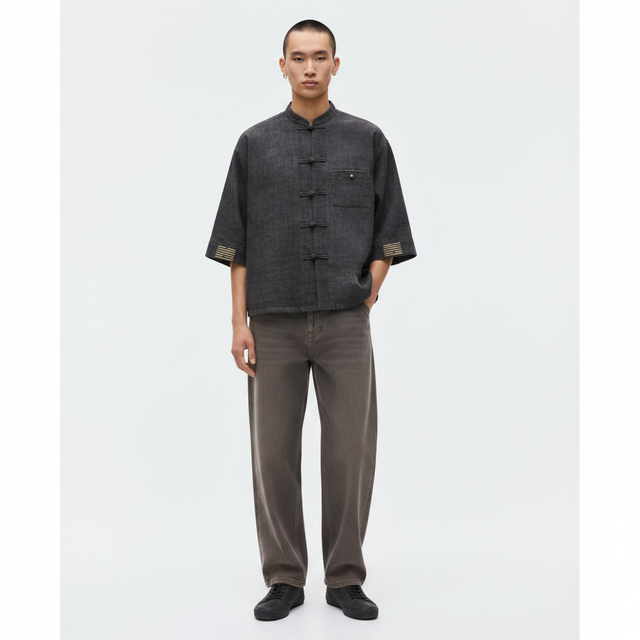 SXSM+1Jacquard Tang Suit Shirt
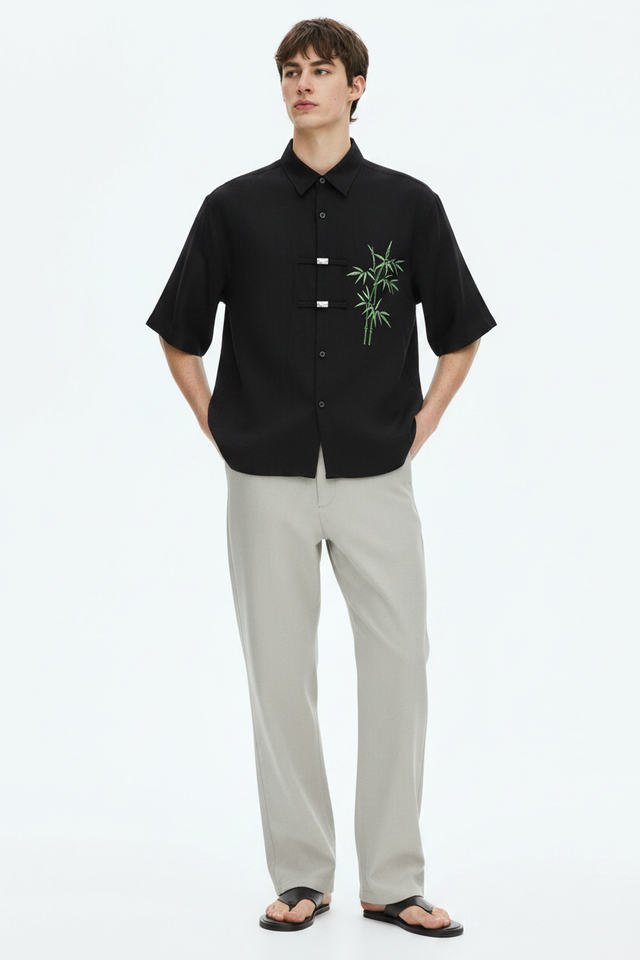 XSSMEmbroidered Short Sleeve Shirt
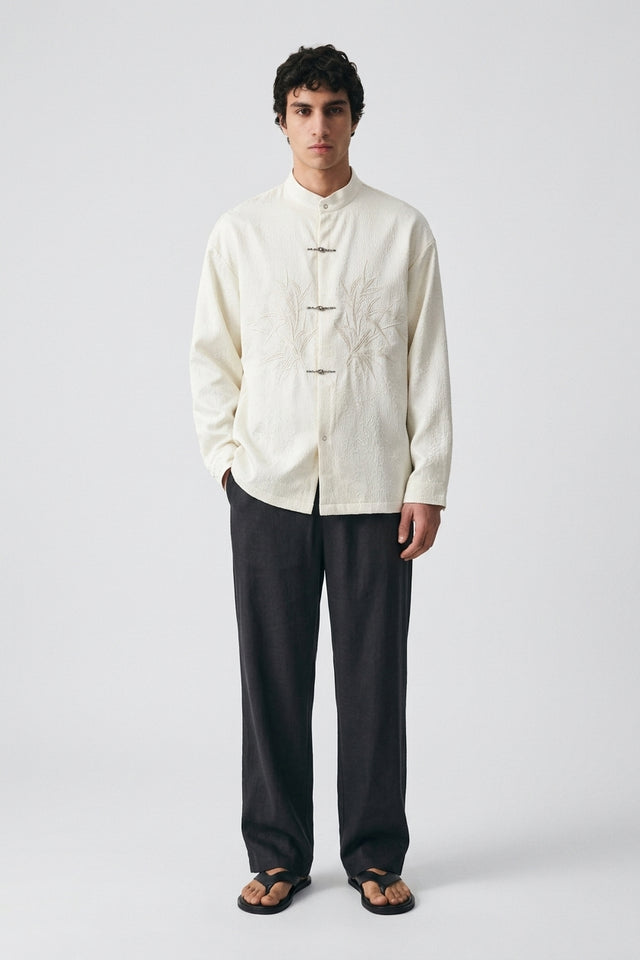 XSSM+2Embroidered Mandarin Collar Shirt
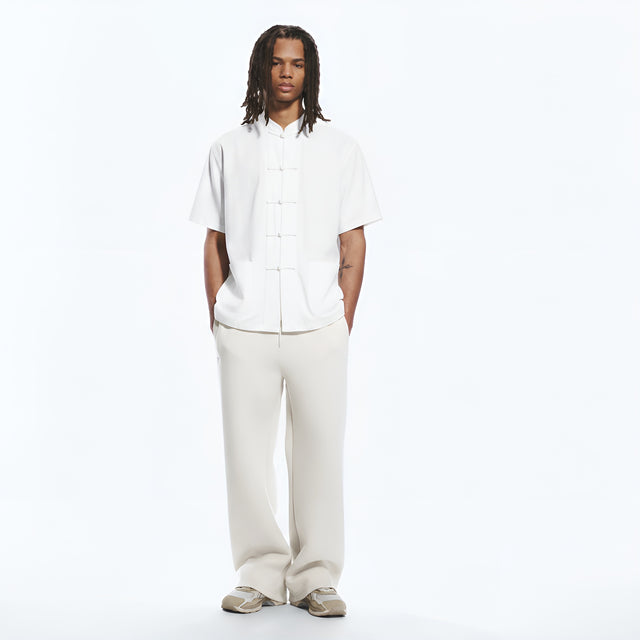 XSSM+3Coarse Cotton Tang Suit Shirt
 SML+2Nobi Oversized T-Shirt