

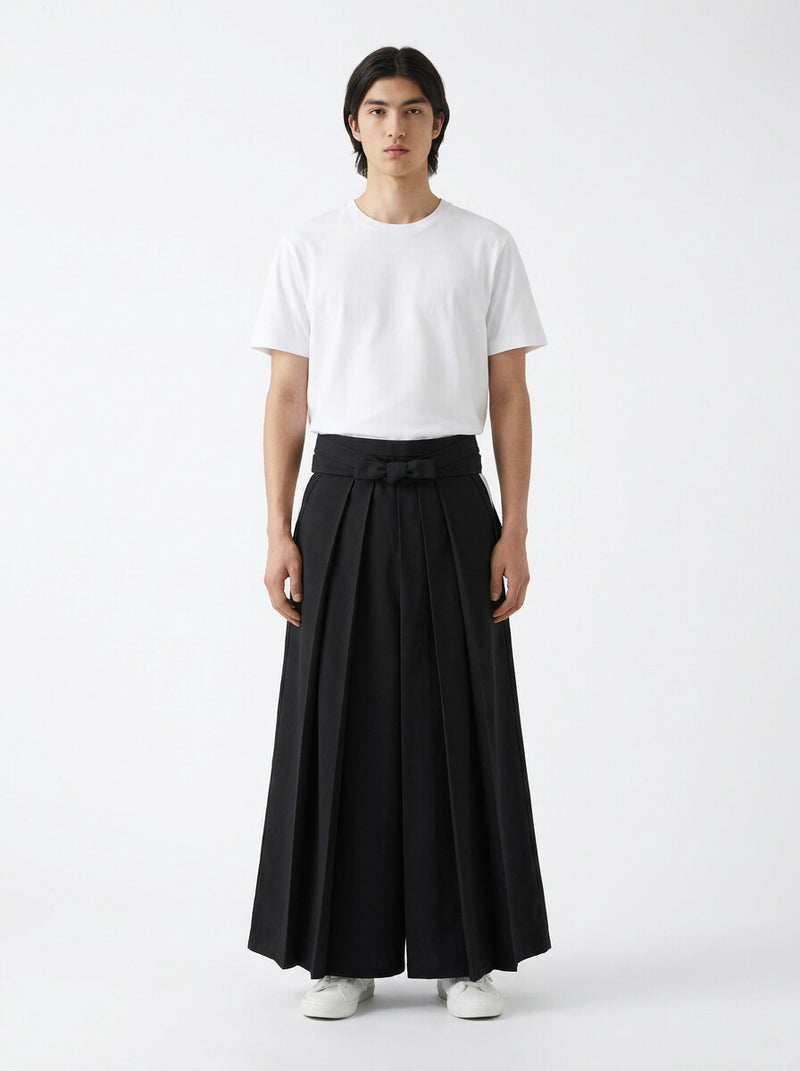

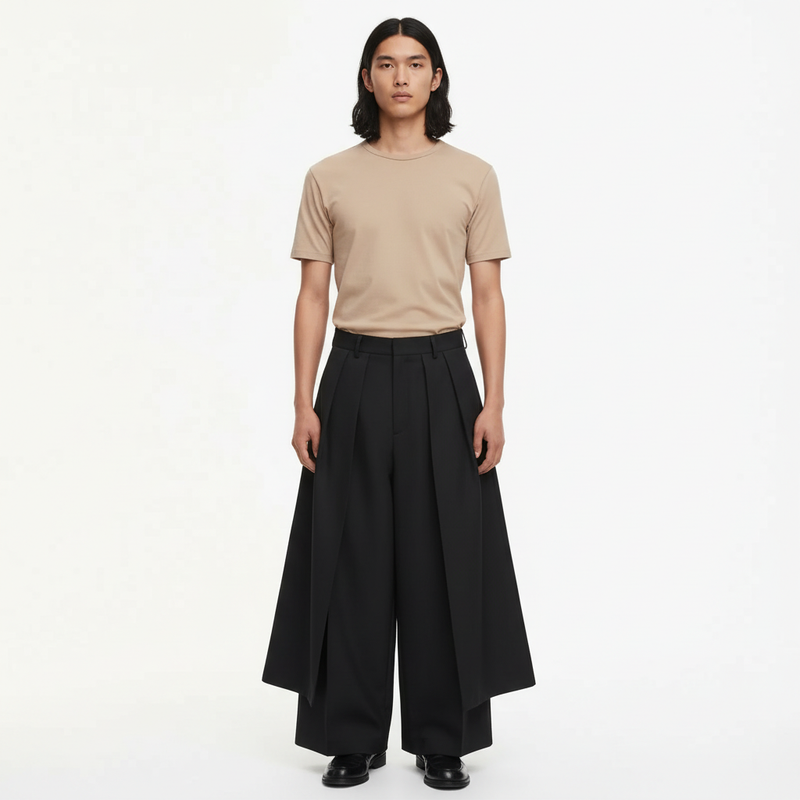
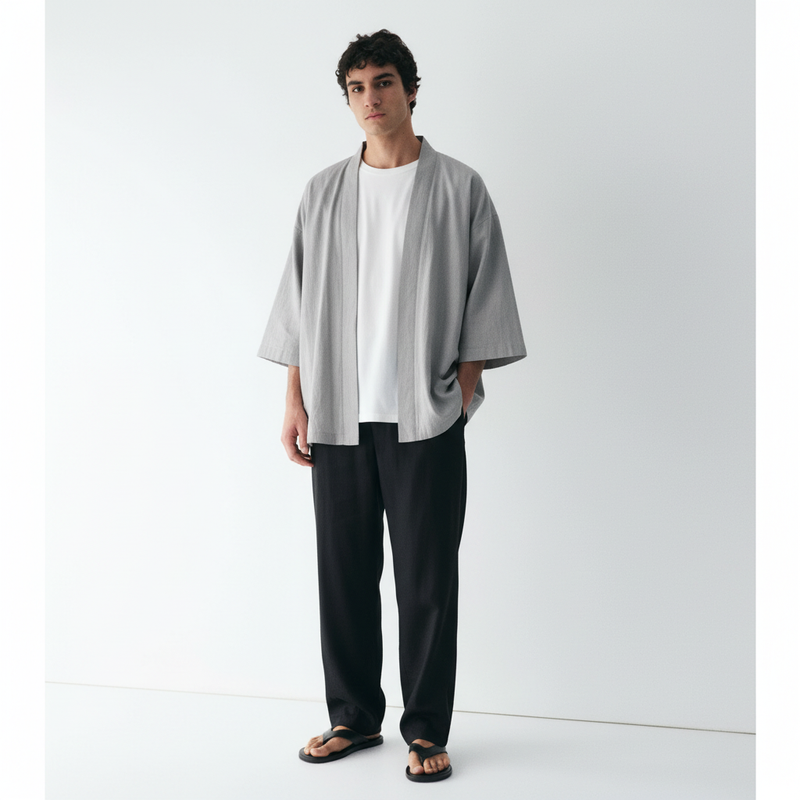
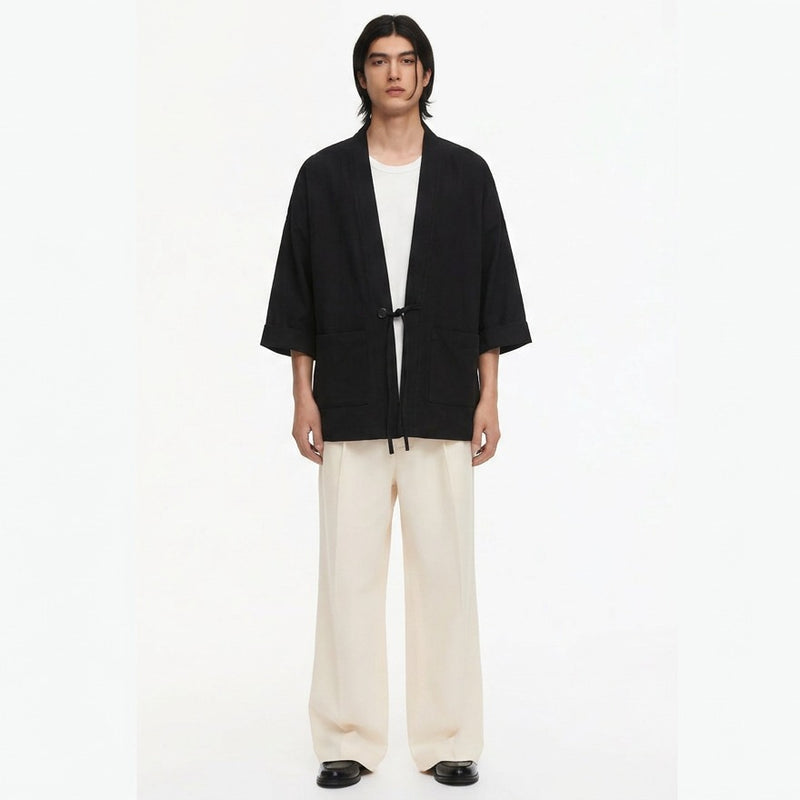



A "hakama gi" is the two-piece uniform worn in kendo, aikido, iaido and kyudo. It is a wrap jacket called the gi (着, "wear") with wide, pleated trousers called the hakama (袴) on top. In kendo both pieces are usually indigo or navy, and they are often sold as a set. If you want the hakama shape for everyday wear rather than the dojo, start with our hakama pants collection.
What a hakama gi is
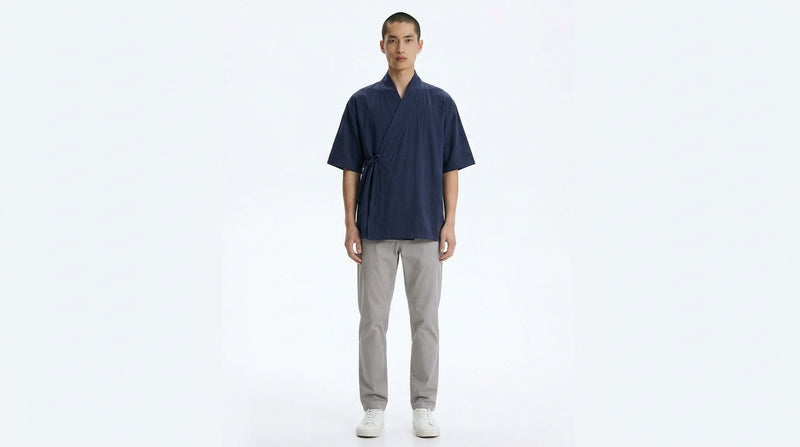
The phrase joins two garments. The keikogi (稽古着), "practice clothes," is a jacket that wraps left over right and closes with ties. In English it gets shortened to gi, and many people use "gi" to mean the whole uniform.
The hakama is the pleated, divided trouser worn over it. Long ties called himo (紐) hold it on, and a stiff back plate called the koshiita (腰板) sits against the lower back. In judo and karate you wear a gi with plain trousers and a belt. Arts that grew out of sword and bow training add the hakama, which covers the legs, hides footwork from an opponent, and gives the outline most people picture when they think of a samurai. For the parts in more detail, read What Is a Hakama?
Kendo gi and hakama
A kendo uniform has three layers. First the kendogi (剣道着), a thick practice jacket. Then the hakama. Then the bogu (防具), the armor that goes on top. Traditional kendogi are made of cotton dyed with indigo, a process called aizome (藍染). The heavy weave soaks up sweat and holds up under the armor.
The kendo hakama has seven pleats, five at the front and two at the back. Many teachers link the five front pleats to virtues: jin (benevolence), gi (義, righteousness), rei (courtesy), chi (wisdom) and shin (trust). The back two are often said to stand for loyalty and respect for parents. So in a kendo class, "gi" can mean the jacket or one of the pleats on your hakama.
Most kendo dojos expect navy or indigo for both pieces, and black is widely accepted. Some clubs wear white sets, often for women or younger students, but that is up to each dojo.
Hakama gi by martial art
| Art | Top | Usual hakama color | When the hakama is worn |
|---|---|---|---|
| Kendo | Kendogi, a thick jacket, usually indigo or navy | Navy or black, sometimes white | Often from the start, or once you train in armor |
| Aikido | White keikogi, close to a judo jacket | Black or navy | Often from black belt, earlier in some styles |
| Iaido | Keikogi in black, navy or white | Black or navy | Usually from the start, with a belt (obi, 帯) underneath to hold the sword |
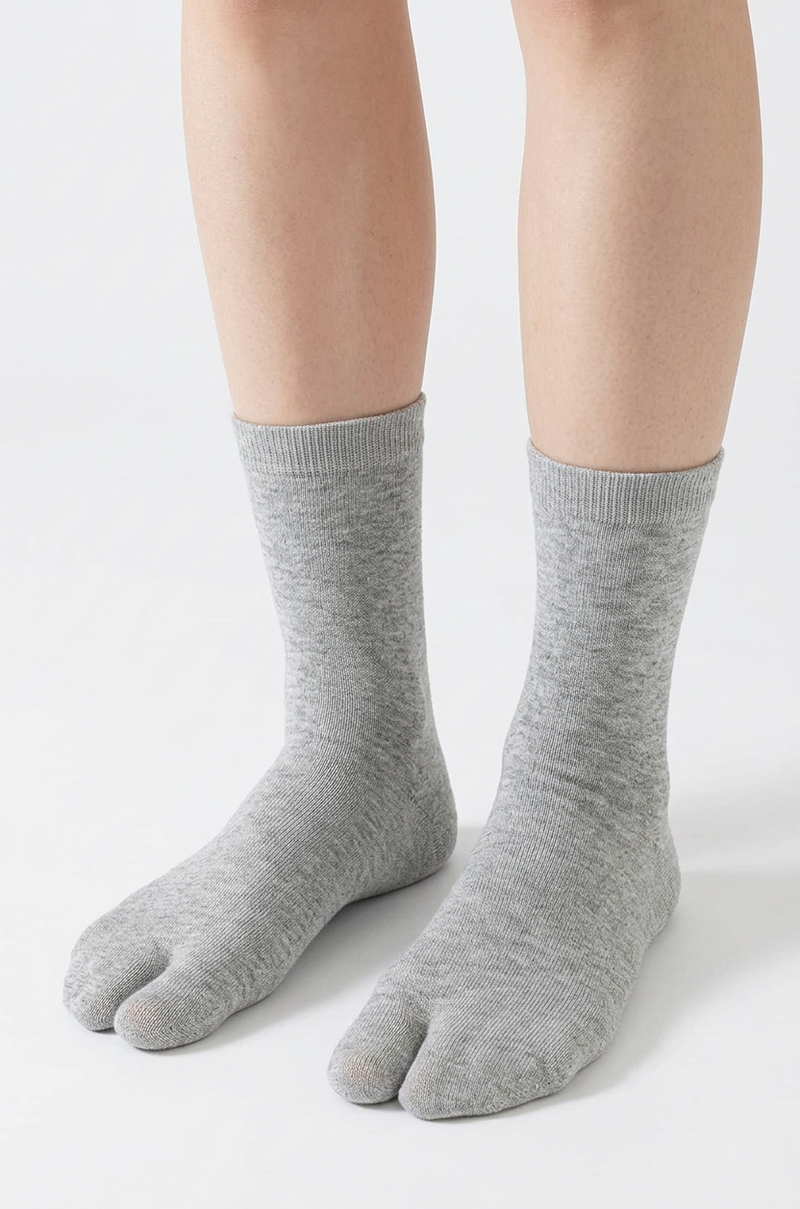
| Kyudo | White top called a kyudogi | Black or navy | From the start, with white tabi (足袋), split-toe socks |
These are common patterns, not fixed rules. Each federation and dojo sets its own.
Kendo hakama and gi: what to check before buying
- Dojo rules first. Ask your teacher before you spend anything. Some clubs want beginners in a plain gi and trousers for the first months, some want a hakama from day one, and some set the color.
- Jacket weight. Kendogi come in single and double layer weaves. Double layer is heavier and warmer. Single layer is lighter and easier in summer.
- Hakama length. Tied at the waist, the hem should land around the ankle bone. Too long and you step on it, too short and it flaps above the ankle when you move. Our hakama size guide shows how to measure.
- Set or separates. A matched set means the dye matches. Buying the pieces separately lets you size the jacket and the hakama on their own, which helps if your height and waist do not follow the usual chart.
- Budget. At specialist shops a hakama on its own costs around $69.90 at the lower end of the market and $79.97 at the median, before you add the jacket.
Putting on a gi and hakama
The gi goes on first, left side over right, tucked flat. Then the hakama: front panel first, front himo wrapped around the waist and tied, then the koshiita pressed against your lower back and the back himo tied at the front. The knots differ a little between arts. Our how to tie a hakama guide walks through each step.
Where Amaji fits
To be clear about what we sell: hakama, not complete dojo uniforms. We have no gi jacket and no matched kendo set. Our pieces are affordable everyday clothes made in China. If your dojo asks for a set weight, a set brand, or a uniform for grading, a specialist budo shop is the better place to buy.
If you want the hakama shape for practice at home, for daily wear, or for an outfit that reads as kendo, these are the closest matches in our range:
- Men's Kendo Hakama, Seven Pleats, $44.90, sizes XXS to XXL, in White, Black or Navy. It has the seven pleat layout described above.
- Men's Kendo Samurai Trousers, $39.90, sizes XS to XL, in Black.
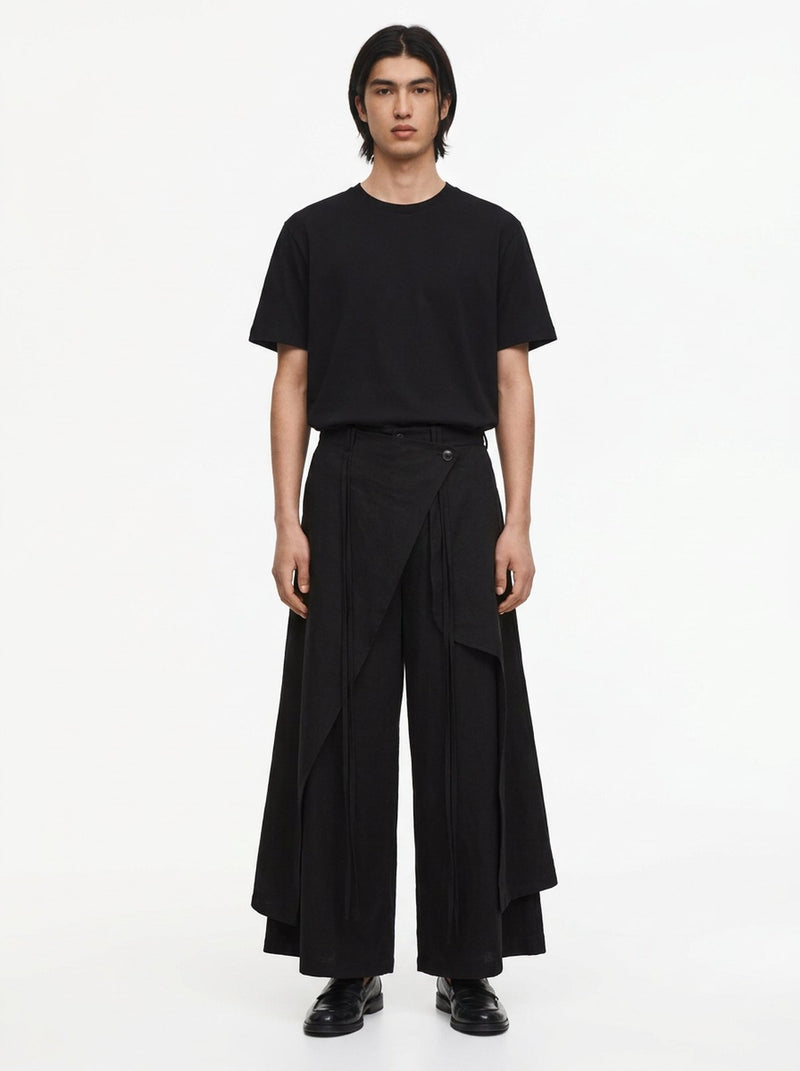
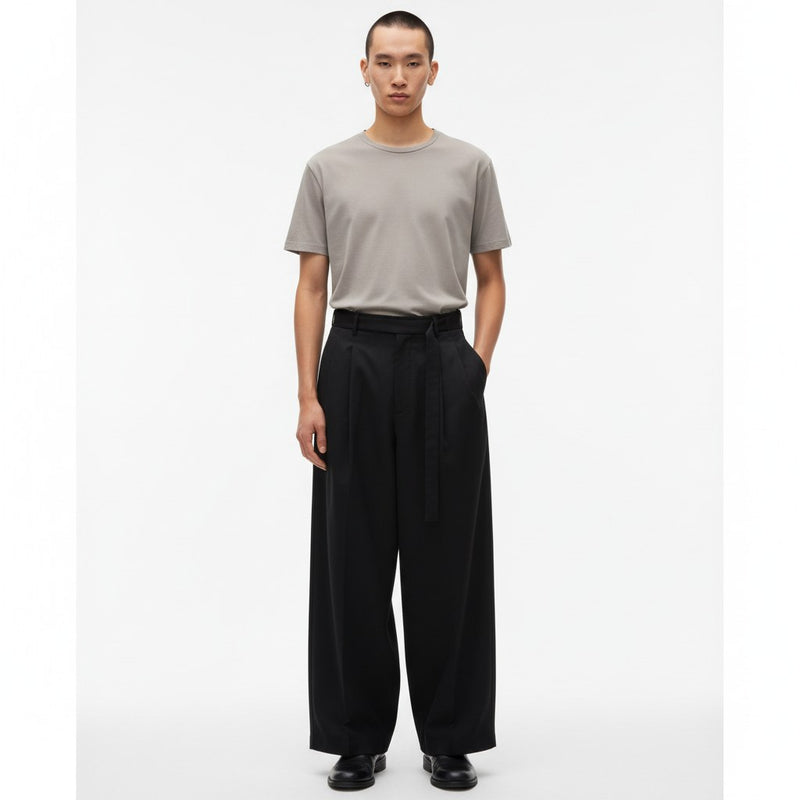
- Men's Lightweight Hakama Pants, Wide Leg with Front Ties, $57.90, sizes XS to 3XL, in Black, Grey or Army Green, cut for everyday wear.
- Men's Kaku Obi, $34.90, a 400 x 10 cm men's kimono belt in five colors, worn under a hakama the way iaido students wear theirs.

For outfit ideas outside the dojo, see how to wear hakama pants.
Written by the Amaji team, October 18, 2026. How we write our guides.